
Getting from Civitavecchia port to Rome shouldn’t feel like solving a puzzle, but with nine different transport options and conflicting advice everywhere, it’s easy to feel overwhelmed. The good news is that all the main options work reliably, and the real trick is simply matching your choice to your specific situation—your budget, how much luggage you’re dragging, and whether you’re racing against your ship’s departure time.
Here’s the honest breakdown of every transport option, tested repeatedly by people who’ve made this journey dozens of times, so you can stop second-guessing and actually enjoy your day in Rome.
The Regional Train: Best Value for Solo Travellers and Couples
The direct regional train from Civitavecchia to Roma Termini is the option most seasoned cruise passengers use, and for good reason. It runs roughly every 20–30 minutes, takes about an hour (sometimes slightly longer depending on stops), and costs just a few euros per person. You’ll find ticket machines at the station, though buying online through Trenitalia saves you queuing time.
From the cruise port, you can walk to Civitavecchia station in about 10–15 minutes with quality hardside luggage that rolls smoothly, or grab a local shuttle bus if one’s running. Once you’re at Termini, you’re in the heart of Rome with metro connections to everywhere that matters.
Pros:
- Cheap and frequent
- Gets you directly to Termini station
- No traffic delays
- Easy to catch the return train
Cons:
- You’re handling your own luggage up and down stairs
- Can get crowded during peak times
- Standing room only on busy services
Here’s something most guides won’t tell you: if you’re comfortable with a slightly longer walk from the port, you can sometimes catch faster intercity services that shave 20–30 minutes off your journey. Check Trenitalia for “IC” or “FB” services rather than just the regional “REG” trains. They cost a bit more but the time saving can be worth it if you’re maximising your day in Rome.
Private Transfer: Worth Every Penny for Groups and Families
A private transfer from Civitavecchia port to Rome runs anywhere from €90 to €210 depending on your group size and exact drop-off point. The driver meets you right at the pier—often with a name sign—handles your bags, and delivers you door-to-door in about an hour (traffic permitting).
This is the option that makes sense when you’re travelling with three or more people, have significant luggage, or simply can’t be bothered with the mental load of public transport after a long day at sea.
Pros:
- Door-to-door convenience
- Fixed price agreed upfront
- No stress about missing trains or connections
- Great value when split among four or more passengers
Cons:
- Most expensive option per person if travelling solo
- Traffic can occasionally delay you
- Need to book in advance for best rates
Many private transfer services also offer direct routes to Rome’s airports—particularly useful if you’re finishing your cruise and need to catch a flight from Fiumicino. Expect around €170–€200 for port-to-airport transfers. If you’re flying into Rome at the start of your cruise, the same transfer services work in reverse.
Shared Shuttle: The Middle Ground Option
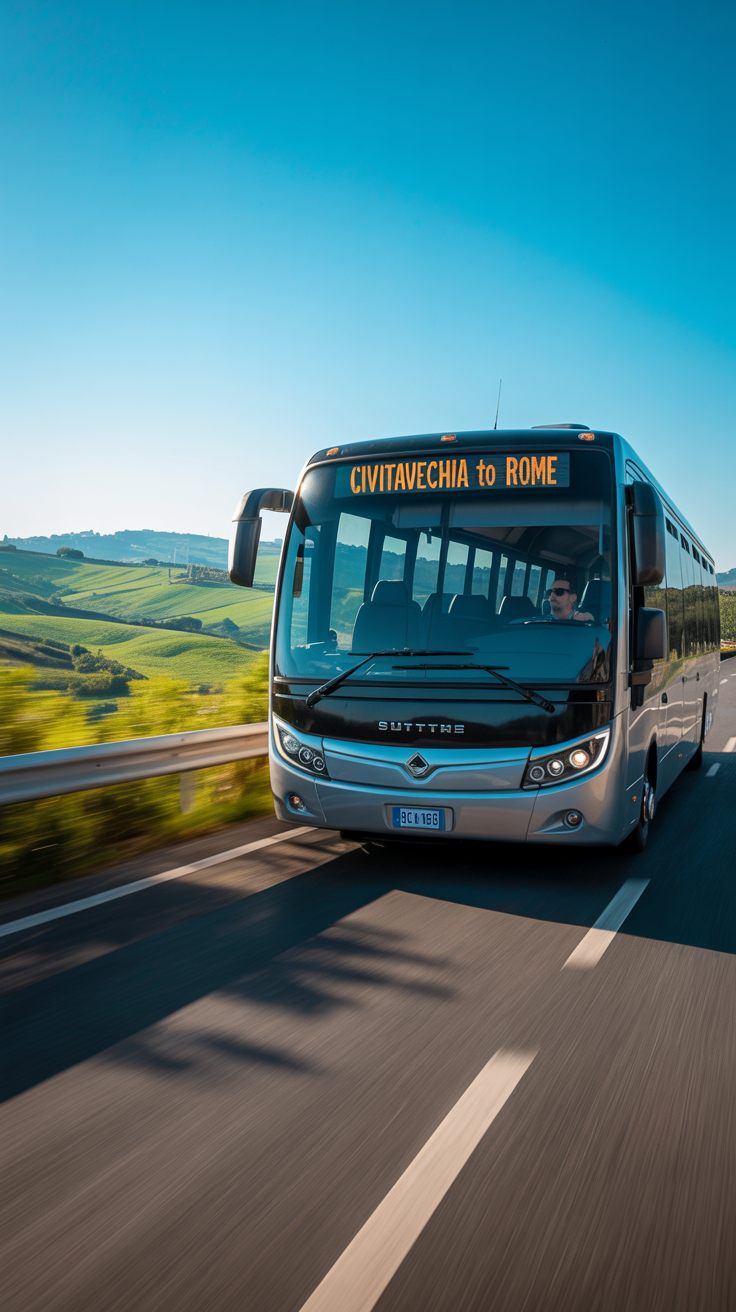
Shared shuttles occupy the space between trains and private transfers. You’ll pay roughly €50–€90 per person for a seat in a minibus that collects passengers from the port and drops everyone at their hotels or at central Rome locations.
The main advantage is that you get door-to-door service without paying private-transfer prices. The downside is that you’re dependent on other passengers’ schedules, and the shuttle needs to make multiple stops before you reach your destination.
Pros:
- Cheaper than private transfer for solo travellers
- No luggage-handling stress
- Direct to your hotel or central location
Cons:
- Slower than private options due to multiple stops
- Fixed departure times that might not suit your schedule
- Can feel rushed if your cruise ship docks late
Shared shuttles make particular sense for cruise passengers who are staying overnight in Rome and want to reach their hotel without navigating public transport. They’re less useful if you’re doing a quick day trip and need flexibility with your return timing.
Taxi and Rideshare: Fast but Pricey for Solo Travellers
Taxis wait at Civitavecchia port and will happily take you to Rome for a fixed fee of around €130–€160. The journey takes about an hour in light traffic, and you’ll get the same door-to-door convenience as a private transfer.
The catch is that taxis work out expensive unless you’re splitting the cost. For two passengers, you’re each paying roughly €65–€80, which starts to feel steep compared to the €8 train ticket.
Pros:
- Available immediately—no booking required
- Direct and fast
- Good for last-minute decisions
Cons:
- Most expensive per-person option
- Price can vary between drivers
- Always confirm the fare before setting off
Rideshare apps do operate in the area, though availability can be patchy at the port itself. If you’re planning to use rideshare, walk into Civitavecchia town where pickup is more reliable.
Bus Services: The Budget Option If You’re Not in a Hurry
Several bus companies run services from Civitavecchia to Rome, including Cotral and SIT shuttle buses. These typically take 1 hour 45 minutes to 2 hours or more, depending on traffic and the number of stops. Fares hover around €11–€16 per person.
Buses are fine if you’re watching every euro and don’t mind the extra travel time. They’re less useful if you’re trying to maximise a single day in Rome and want to spend your time seeing the Colosseum rather than sitting in traffic.
Pros:
- Inexpensive
- Direct service to central Rome locations
Cons:
- Significantly slower than trains
- Schedules vary by season
- Less frequent than trains
Here’s the insider tip: buses make sense if you’re combining your Rome visit with stops in smaller towns along the way, but for a straight port-to-Rome journey, the train beats the bus on almost every measure except rock-bottom price.
Driving Yourself: Flexibility at a Cost
Renting a car and driving from Civitavecchia to Rome takes about 60–90 minutes covering roughly 70 kilometres via the A12 motorway. This option appeals to people who want to explore beyond Rome itself or who are combining multiple stops in Lazio.
But let’s be clear about the challenges: parking at the port when you return can be tricky and expensive, and parking in Rome’s historic centre is even worse. The city operates strict ZTL (limited traffic zone) restrictions that can result in hefty fines if you drive into restricted areas without authorisation.
Pros:
- Complete schedule flexibility
- Good for exploring multiple destinations
- Can work well for families with specific needs
Cons:
- Parking costs and challenges in Rome
- ZTL fines if you’re not careful
- Traffic can be unpredictable
- Not cheaper than other options once you factor in rental and parking
If you do drive, your best strategy is to park in a suburban area with good rail links—places like EUR or Tiburtina—and then use public transport to reach central Rome. This gives you flexibility without the stress of navigating Rome’s impossible traffic.
Port Mobility Services and Combined Options
Some cruise lines offer their own shore excursion packages that include transport to Rome and a guided tour. These typically cost significantly more than independent travel but come with the major advantage of guaranteed return to your ship—if the excursion runs late, the ship waits.
Independent port mobility services also exist, offering a range of combined transport and tour options. These can be good value if you want some structure to your day without paying cruise-line prices.
Pros:
- Zero risk of missing your ship
- Structured itinerary handled for you
- Often includes skip-the-line access to major sites
Cons:
- Much more expensive than independent travel
- Less flexibility to explore at your own pace
- You’re tied to a group schedule
For more context about what to expect at Rome’s cruise port, including how port services work and what facilities are available, that guide covers everything from terminal layouts to how shuttle services operate.
Airport Connections: Civitavecchia to Fiumicino or Ciampino
If your cruise starts or ends at Civitavecchia and you’re flying through Rome’s airports, you’ve got dedicated transfer options. Fiumicino (Leonardo da Vinci) is the main international airport, located closer to Rome than to Civitavecchia. Ciampino is the smaller airport used mainly by budget carriers.
Private transfers from Civitavecchia port to Fiumicino airport cost around €170–€200 and take roughly 60–90 minutes depending on traffic. The alternative is to take the train from Civitavecchia to Roma Termini, then catch the Leonardo Express train to Fiumicino, which adds time and complexity but costs far less.
For Ciampino, you’re looking at a longer journey with at least one connection, so private transfer or taxi makes more sense unless budget is your absolute priority.
| Route | Private Transfer Cost | Journey Time | Public Transport Alternative |
|---|---|---|---|
| Civitavecchia to Fiumicino | €170–€200 | 60–90 minutes | Train to Termini + Leonardo Express (total ~2–2.5 hours) |
| Civitavecchia to Ciampino | €180–€220 | 90–120 minutes | Train to Termini + bus to Ciampino (total ~2.5–3 hours) |
Quick Comparison: All Nine Options at a Glance
| Transport Option | Typical Cost | Journey Time | Best For | Watch Out For |
|---|---|---|---|---|
| Regional Train | €5–€16 | ~60 minutes | Solo travellers, couples, budget-conscious | Luggage handling, crowding |
| Private Transfer | €90–€210 (per group) | ~60 minutes | Groups, families, heavy luggage | Cost for solo travellers |
| Shared Shuttle | €50–€90 per person | ~90–120 minutes | Solo travellers wanting door-to-door | Multiple stops, fixed schedule |
| Taxi | €130–€160 | ~60 minutes | Last-minute travel, small groups | Price for solo travellers |
| Bus | €11–€16 | ~105–120+ minutes | Tight budgets, flexible schedules | Longer journey time |
| Rental Car | Variable + parking | ~60–90 minutes | Multi-destination trips | ZTL zones, parking challenges |
| Cruise Excursion | €100–€200+ | Full day package | Risk-averse, guided experience | High cost, less flexibility |
| Port to Fiumicino Transfer | €170–€200 | ~60–90 minutes | Flight connections | Traffic delays |
| Port to Ciampino Transfer | €180–€220 | ~90–120 minutes | Budget airline connections | Longer journey |
Timing Your Rome Visit to Avoid Chaos
Transport choice matters, but so does timing your visit to Rome’s major sites. The Colosseum, Vatican Museums, and Trevi Fountain all get genuinely unpleasant during peak hours, and you didn’t come all this way to spend half your day in queues.
The Vatican Museums are notoriously busy, with weekend mornings and the free-entry last Sunday of each month being particularly insane. If you’re visiting major attractions, book timed-entry tickets well in advance. For more detailed guidance on timing your visits to Rome’s famous sites, that resource breaks down exactly when to show up at each major attraction.
Here’s a pro tip that most tourists miss: if you take an early morning train from Civitavecchia (around 7:00–7:30), you’ll reach Rome by 8:30 and can be at the Colosseum or Vatican right when they open. You’ll see everything in relative peace while everyone else is still having breakfast at the port.
Making the Choice That Actually Suits You
The “best” transport option depends entirely on your specific circumstances. A solo traveller watching their budget should take the train without a second thought. A family of four with two young kids and a pram should book a private transfer and not look back.
Think about these factors:
- Number of passengers: Private transfers become better value with three or more people
- Luggage situation: Staying overnight in Rome? Private transfer or shared shuttle makes sense
- Time pressure: Day trip from a cruise? Train or private transfer get you there fastest
- Confidence with public transport: Happy navigating stations? Train saves money. Would rather not? Book a transfer
- Return flexibility: Need to come back at a specific time? Train gives you options every 20–30 minutes
Rome is also one of several excellent Mediterranean cruise ports in Italy, and the transport principles you learn here apply elsewhere—trains usually offer the best combination of speed and value, while private transfers make sense for groups or when you’re juggling complicated logistics.
Want to know more about Civitavecchia port facilities, shuttle services, and what to expect when you dock? That guide covers terminal layouts, where to find the train station, and how port shuttles operate.
Common Questions & FAQ
Can I buy train tickets at Civitavecchia station on the day?
Yes, ticket machines at the station accept cards and cash, and there’s usually a ticket office if you prefer to buy from a person. That said, buying online through Trenitalia before you travel saves you queuing time, particularly during busy cruise ship days when hundreds of passengers all hit the station at once. Just make sure you validate your ticket at the yellow machines on the platform before boarding—inspectors do check, and there’s a fine if you forget.
How early should I book a private transfer?
Book at least a week or two before your cruise, particularly during peak season (April through October) when demand is highest. Last-minute bookings are often possible but you’ll pay more and have less choice of departure times. The best rates come from booking a month or more in advance, and you’ll have guaranteed availability at the time that suits your ship’s schedule.
What happens if my cruise ship docks late and I miss my booked transfer?
Reputable transfer companies monitor cruise ship arrivals and will adjust pickup times if your ship is delayed. Always provide your ship name and sailing details when booking. If you’ve booked a train ticket for a specific time and your ship runs late, regional train tickets are usually valid for any train that day on the same route—just board the next available service. Cruise excursions booked through the ship are the only option with an absolute guarantee that transport will wait.
Is there luggage storage in Rome if I’m doing a day trip?
Roma Termini station has left-luggage facilities where you can store bags for a few euros per item. There are also several private luggage-storage services near major tourist sites. If you’re staying on your ship and just visiting Rome for the day, you obviously don’t need this—but if you’re starting or ending your cruise and have bags before a flight, storage at Termini is reliable and convenient. Consider using compression packing cubes to minimize your luggage in the first place.
Do I need to worry about strikes affecting trains?
Italian transport strikes do happen, usually with at least a few days’ notice. Trenitalia publishes strike information on their website and app. If there’s a strike on your travel day, essential services usually still run during guaranteed time windows, but it’s worth having a backup plan—knowing that taxis and private transfers will still operate even if trains are disrupted. Check the Trenitalia strike calendar a few days before your visit.
Can I use the same transport options in reverse for getting back to the port?
Absolutely. Trains run from Roma Termini back to Civitavecchia just as frequently, and the same private transfer companies will collect you from your Rome hotel or the city centre. The critical thing is allowing enough buffer time—aim to be back at the port at least 90 minutes before your ship’s all-aboard time, accounting for traffic or minor delays. Missing your ship is expensive and stressful, so don’t cut it fine.
Are there any transport options that include a Rome tour guide?
Several transfer companies offer combined transport and guided tour packages, where you get driven to Rome and then spend the day with a guide who shows you the major sites. These cost more than simple transport but less than cruise-line excursions, and you get the benefit of a knowledgeable local plus the flexibility to customise your itinerary. Look for “shore excursion” or “private tour” options when booking transfers—many companies offer this hybrid service.
What’s the absolute fastest way to get from the port to central Rome?
A private transfer or taxi in light traffic will get you door-to-door in about an hour. The train is nearly as fast once you factor in the short journey from port to station, and it’s immune to traffic delays. If you’re trying to maximise sightseeing time, take the earliest possible train—around 7:00—and you’ll be in Rome before most tourists have finished breakfast, giving you genuinely crowd-free access to major sites.
Essential Packing Tips for Your Rome Day Trip
Before you head to Rome from Civitavecchia, make sure you’re prepared for a full day of walking and sightseeing. Rome involves serious amounts of walking on cobblestones and ancient streets, so wearing comfortable walking shoes for men or supportive walking shoes for women is non-negotiable. Trust me, fashion trainers won’t cut it after your first hour at the Forum.
Keep blister prevention treatments in your day bag, especially if you’re wearing new shoes. There’s nothing worse than developing painful blisters halfway through your Vatican Museums visit. An anti-theft crossbody bag or secure backpack is essential for carrying your valuables in crowded tourist areas—pickpocketing does happen around major sites.
Rome’s weather can be unpredictable, particularly in spring and autumn. A packable rain jacket for women or lightweight rain jacket for men takes up minimal space in your bag but saves your day if unexpected showers roll in. In cooler months, consider a warm puffer jacket for women or quality puffer jacket for men for early morning departures.
Since you’ll likely be charging your phone heavily while taking photos and navigating, bring a high-capacity portable charger and a European power adapter if you’re staying overnight. There’s nothing worse than your phone dying right when you need to navigate back to Termini station. A collapsible water bottle is perfect for refilling at Rome’s many drinking fountains, keeping you hydrated without buying overpriced bottles near tourist sites.
If you’re staying overnight in Rome and then returning to your ship, packing cubes keep your overnight bag organized, and a hanging toiletry organizer makes hotel bathrooms much more functional. Consider a portable luggage scale to avoid overweight bag fees on your flight home, and shoe storage bags keep dirty walking shoes separate from clean clothes.
For those taking the train and concerned about luggage security while dozing or distracted, a portable door lock works brilliantly for hotel rooms if you’re staying overnight in Rome. And if you’re planning to visit sites like the Colosseum where you’ll be standing for extended periods, travel compression socks significantly reduce leg fatigue and swelling during long days of sightseeing.
Personal Experience
After docking at Civitavecchia a dozen times over the years, I’ve pretty much tried every way possible to get into Rome, and trust me, choosing the right transport can make or break your day. The regional train remains my go-to for budget-friendly trips—it’s about 8 euros and takes roughly 80 minutes to Termini station. Sure, you might stand for part of the journey during busy times, but it runs frequently and gets you right into the heart of the city. I’ve also used the shuttle buses when travelling with friends who weren’t keen on navigating train stations, and while they cost a bit more (around 15-20 euros), they drop you directly at major landmarks.
The times I’ve splurged on private transfers were when I was with family or on a tight cruise schedule, and honestly, the peace of mind was worth every cent. Your driver meets you right at the port with a name sign, handles all the stress of timing, and you’re in Rome within an hour. I’ve learned that faster trains exist if you walk to Civitavecchia’s main station instead of using the port shuttle, but that only makes sense if you’re comfortable with a 15-minute walk and want to save about 30 minutes. The key is matching your choice to your comfort level and how much time you actually have—there’s no point saving money if you’re anxiously watching the clock all day instead of enjoying the Colosseum.
Last Updated: 7 January 2026