
River cruises stick to inland waterways like the Rhine, Danube and Mississippi, on ships carrying under two hundred guests that moor right in the middle of town. No formal nights, no big stage shows, no three-thousand-seat theatre. Ocean cruises head out to sea on ships holding thousands, built around sea days, speciality dining and West End style productions. Neither one is better than the other. They just suit different people.
If small ships appeal more than a giant liner, you’re already leaning toward river cruising. Lines like AmaWaterways’ fleet and itinerary guide and Avalon Waterways’ fleet and itinerary guide build their whole offering around that idea, gliding along waterways like the Rhine, Danube and Douro with a couple of hundred passengers rather than a couple of thousand. Ocean cruises still dominate by sheer volume, holding nearly four fifths of the global cruise market, but river cruises are forecast to grow faster than any other segment over the coming years, according to Grand View Research.
What separates a river ship from an ocean ship
Size is the first thing you notice. Ocean-going ships average around three thousand passengers, while river vessels typically carry closer to one hundred and fifty, according to CLIA-sourced cruise industry data. That’s not an accident. European riverboats are built low and narrow so they can fit under bridges and through locks, which is also why the cabins are on the snug side. Booking an older vessel? Pack a European power adapter and save yourself a trip to reception, since not every cabin has a UK-friendly socket.
| Feature | River cruise | Ocean cruise |
|---|---|---|
| Typical passenger numbers | Under 200, often closer to 150 | Up to several thousand |
| Where you dock | Right in the town or city centre | A purpose-built terminal, often outside town |
| Dress code | Smart casual most evenings | Formal nights on many lines |
| Entertainment | A single lounge, local musicians, guest speakers | Theatre shows, casino, several bars |
| Motion at sea | Minimal, calm inland water | Can be felt in open ocean swell |
Are river cruises safe, rough, or safer than an ocean crossing?
River cruises are generally considered safe. Every line runs some kind of security procedure, though it’s a lot less formal than on a big ocean ship, and most river vessels skip the metal detectors altogether. AmaWaterways and Tauck’s river cruise line profile are among the few operators known to use card scanners at the gangway.
They’re rarely rough, either. Rivers don’t throw up hurricanes, high winds or the rolling swell you get out at sea, so seasickness barely gets a look-in. Ships are still certified to sail safely in wind up to Level 6 on the Beaufort Scale, a measure of wind strength equal to roughly 25 to 31 miles an hour, and brand new ships start out certified lower, often Level 3, until they’ve clocked a month on the water.
The catch is the river itself. It can run too low or too high for a ship to get through certain stretches, and that’s a real risk in late spring, high summer and early autumn, depending on snowmelt, rainfall or drought. The Elbe and Loire are the ones most likely to run low, while the Rhine, Danube, Rhone, Saone and Seine are more likely to flood. In one recent summer, a run of heatwaves across Europe left stretches of the Danube in Romania at their lowest level in three decades. The usual fix is a coach transfer between towns, so the itinerary carries on even if the ship has to stay put, though in the worst case a badly affected sailing can be shortened or cancelled.
So, are river cruises safer than ocean cruises? In one sense, yes. They avoid the weather that can send an ocean ship rerouting around a storm. Their risk is different, water level rather than wave height. For a broader look at safety across all ship types, see our general cruise safety guide for all ship types.
Best value river cruises: how the major lines compare
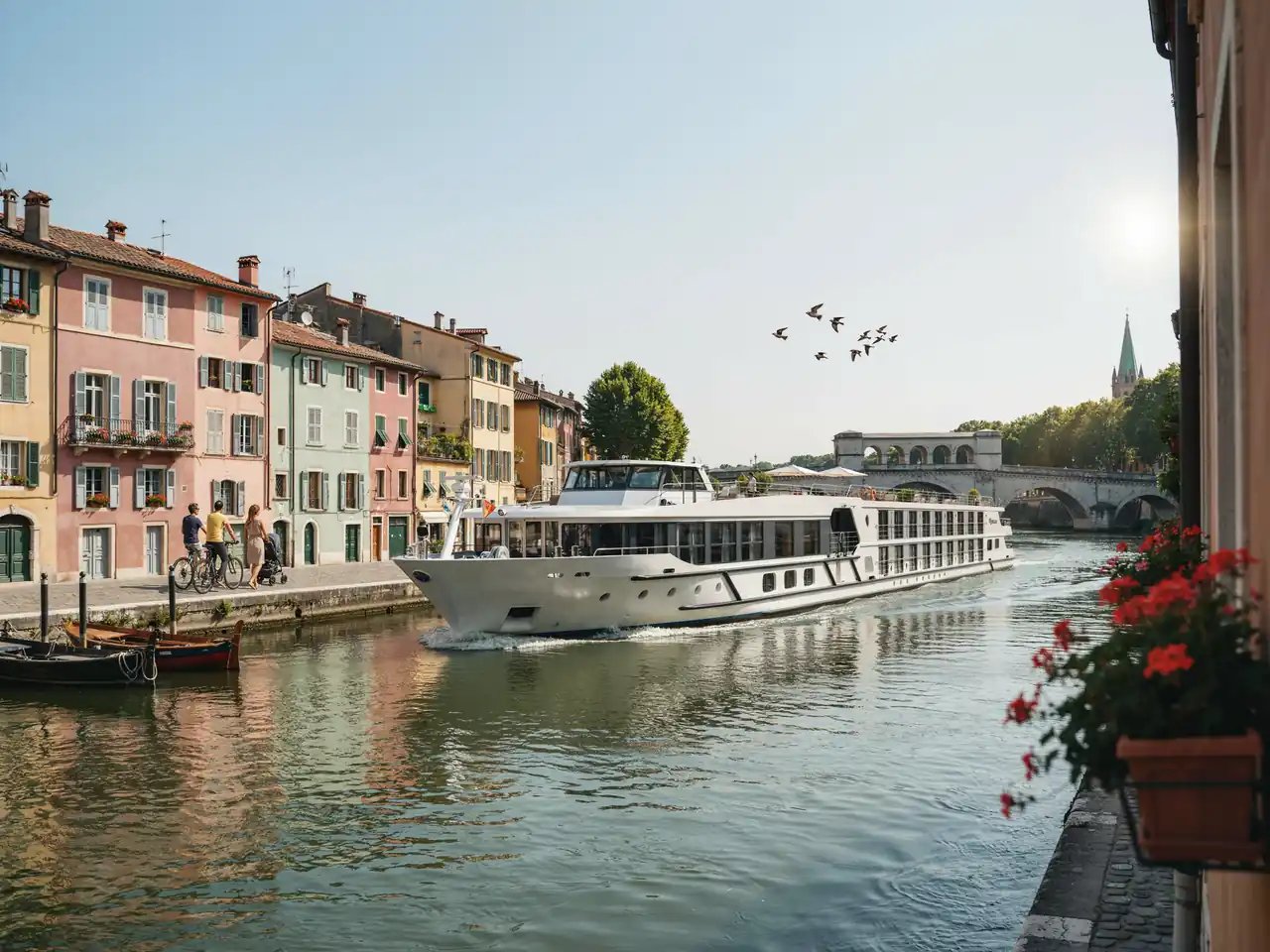
“Best value” on a river cruise usually comes down to what’s already built into the fare, not just the headline number. Here’s how four of the best-known operators stack up on scale, region and reputation.
| Line | Fleet and ship size | Regions sailed | Known for |
|---|---|---|---|
| AmaWaterways | Fleet average around 156 guests, expanding toward more than 40 ships | Danube, Rhine, Rhone, Douro, Main, Moselle, Seine, Dordogne, Garonne, plus the Mekong, Nile, Chobe and Colombia’s Magdalena | Spacious suites and a choice of gentle, general or active shore excursions |
| Viking | Over 80 river ships, capacity from 80 to 386, most around 190 | Rhine, Danube, Mississippi and the Brahmaputra, see river cruise ports across India | The widest choice of departure dates of any river line |
| American Cruise Lines | 28 small ships across six ship types, 90 to 180 passengers | The Mississippi, Columbia and Snake Rivers, plus protected waterways from Alaska to Florida | The only 100% US-flagged riverboat fleet, with themed sailings such as Mark Twain or Civil War cruises |
| Avalon Waterways | Part of the Globus family of brands | Rhine, Danube, Main, Moselle, Saone, Rhone, Seine, plus the Mekong, Irrawaddy, the Yangtze and the Amazon, see our Yangtze river cruise guide | Flexible, family-adaptable itineraries through its Avalon YourWay programme |
Affordable small cruise ships: the smallest vessels afloat
If it’s proper small ships you’re after, not just “smaller than an ocean liner”, here are the vessels and fleets that fit the bill, and our guide to small ship cruising explained in full covers the wider category beyond rivers.
- Zambezi Queen boutique river ship profile, carrying a maximum of 28 guests
- AmaWaterways’ fleet, averaging around 156 guests across the line
- AmaMagna, AmaWaterways’ widest ship on the Danube, carrying 196 guests with suites up to 710 square feet and a family lounge with a PlayStation, Nintendo Switch and board games, plus a pool
- Viking’s Longships, most carrying around 190 guests, with the smallest Viking vessels from 80
- American Cruise Lines’ fleet, spread across six ship types from 90 to 180 passengers
AmaWaterways grades its shore excursions as gentle, general or active, so if you already know you’re the active-option type for cycling or longer walks, a decent pair of walking shoes earns its place in the case more than it would on a beach holiday.
Cheapest river cruises in Europe: which rivers offer more choice
None of the major lines publish prices river by river, but how much competition there is on a route is a fair guide to how accessible it tends to be. The core Rhine, Danube, Main and Moselle corridor gets sailed by AmaWaterways, Viking and Avalon Waterways alike, and that overlap usually means more sailings and more choice of date. Narrower or newer routes like the Douro in Portugal are sailed by smaller, more specialist ships with less capacity, which tends to push them toward the pricier end.
| River or region | Who sails it | General price position |
|---|---|---|
| Rhine, Danube, Main, Moselle | AmaWaterways, Viking, Avalon Waterways | More accessible, most competition and choice |
| Rhone, Saone (France) | AmaWaterways, Avalon Waterways | Mid-range, shorter sailing season |
| Douro (Portugal) | Avalon Waterways among others | Tends toward premium, smaller ships and a narrower river |
| Seine (Normandy to Paris) | AmaWaterways, Avalon Waterways | Mid to premium, strong demand near Paris |
What counts as a casual river cruise?
“Casual” on a river ship generally means no formal nights, a relaxed dress code and a pace that doesn’t rush you, rather than being tied to one particular brand. CroisiEurope leans furthest that way, being the only river line noted to allow children under three without exception, which says a lot about how relaxed and family-friendly the onboard culture is. See the CroisiEurope river cruise line profile for more. Even on smarter lines like AmaWaterways, evenings stay informal by ocean-ship standards. Leave the black tie at home. For what’s expected onboard more generally, our cruise ship etiquette and dress code guide covers the basics.
Cheap river cruises from the UK: what to check before you book
A low headline fare from the UK doesn’t tell you the whole story, since river lines vary a lot in what’s bundled in. Run through this before you compare two sailings side by side.
| What to check | Why it matters |
|---|---|
| Are flights included | Most river sailings start in a European city, so getting there changes the real total |
| Drinks included with dinner | Several lines include house wine or beer as standard, others charge separately |
| Shore excursions included | Many river fares bundle at least one excursion per port as standard |
| Minimum age policy | This can rule a sailing in or out before you even look at cost, see below |
Are river cruises good for families?
They can be, but check the small print first. Most lines recommend children are at least 8 to 10, and because ships are built narrow and low to pass under bridges and through locks, hardly any have room for a kids’ club. None offer babysitting on a regular sailing, either.
| Line | Minimum age policy |
|---|---|
| Viking | 12 and older, and may limit the number of under-18s on a given sailing |
| Avalon Waterways | Doesn’t accommodate under-8s, though its Avalon YourWay programme helps tailor sailings for older families |
| AmaWaterways | Accepts children from age 4, recommends 8 and older, and its AmaMagna ship has a family lounge with a PlayStation, Nintendo Switch, board games and a pool |
| CroisiEurope | The only line noted to allow under-3s without exception |
| Emerald, Riviera, Scenic | All require children to be 12 or older |
You can dig into three of those stricter lines via the Emerald river cruise line profile, Riviera river cruise line profile and Scenic river cruise line profile. For a deeper look at planning a family river sailing, see our European river cruises for families guide.
American river cruises: how the USA operators compare
American Cruise Lines’ river cruise profile is the largest river cruise line in the USA, and the only one with a fully US-flagged fleet of riverboats and small ships. It runs 28 small ships across more than 50 domestic itineraries, including five ships dedicated to the Mississippi and its tributaries, plus sailings on the Columbia, Snake and protected waterways from Alaska to Florida, along with themed options such as Mark Twain, Civil War or holiday cruises.
Viking’s river cruise line profile is a newer name on US rivers, having arrived more recently with the purpose-built, 386-passenger Viking Mississippi, done out in the line’s signature Scandinavian style. It’s a bigger, more modern-feeling ship than most of American Cruise Lines’ smaller vessels, so it often comes down to a choice between a larger, newer build and a more intimate, long-established US operator.
Are river cruises worth the money?
River fares tend to bundle more into the headline price than ocean fares do. Many include most shore excursions and a house wine or beer with dinner as standard, so day-to-day spending can look quite different once you compare like for like. Ocean ships tend to keep the ticket price low, then add extras once you’re aboard, things like booking speciality restaurants at extra cost and premium drinks packages.
Newer river vessels also lean on sustainable cruise ship technology explained, which Avalon Waterways credits as part of what keeps its sailings smooth even on narrower stretches of water. Whether a river cruise ends up better value depends on how much you’d normally spend on excursions and drinks aboard an ocean ship, not on the ticket price alone.
Common Questions
Are river cruises safe?
Yes. Every river line runs safety and security procedures, though checks are less formal than on ocean ships since most river vessels skip the metal detectors. AmaWaterways and Tauck are among the few lines using card scanners at the gangway.
Are river cruises rough?
No. Rivers don’t produce the swell you get out at sea, so seasickness is rare. Ships are still rated to sail safely in wind up to Level 6 on the Beaufort Scale, roughly 25 to 31 miles an hour.
Are river cruises safer than ocean cruises?
They avoid hurricanes, high winds and rough seas entirely, unlike ocean ships, which sometimes have to reroute around storms. Their risk is different, low or high river water levels, which can alter or cancel an itinerary rather than threaten the ship itself.
What’s the minimum age for children on a river cruise?
It varies a lot by line. AmaWaterways accepts children from age 4, Avalon Waterways from 8, and Viking from 12. CroisiEurope is the only line noted to allow under-3s without exception.
Are shore excursions included in the fare?
Often, yes, more so than you’d get on an ocean ship. Most river lines build at least one excursion per port into the standard fare, though premium or active options can cost extra depending on the line.
What happens if a river’s water level is too low or high?
The line typically adjusts the itinerary, sometimes swapping a day’s sailing for a coach transfer between towns. In the worst case, a badly affected sailing can be shortened or cancelled.
Is river cruising more affordable than ocean cruising?
Not always headline for headline, but river fares often include more as standard, things like excursions and sometimes drinks, while ocean fares tend to add these later. Compare like for like rather than the ticket price alone.
Do river ships have entertainment like casinos or a theatre?
No. There’s rarely room for a casino or a large theatre. Expect a single lounge, local musicians or guest speakers, and a quieter, slower evening than you’d get on an ocean ship.
Why Trust About2Cruise
About2Cruise researches cruise lines, ship specifications and itinerary patterns from operator information and cruise industry reporting, to help UK travellers compare river and ocean options before they book. We haven’t sailed every ship named on this page, our job is to gather and check what’s publicly known so you can make a more informed choice. Find out more about how About2Cruise researches and fact-checks its cruise content.