
Dubrovnik’s hidden café scene is not one famous coffee shop. It is a series of wall ledges, cliff terraces, alley courtyards and stone-lane counter spots that only reveal themselves once you leave the Stradun. Use this guide to find a genuine stop, avoid the search-result trap around Cafe on the Wall, time it around cruise crowds and heat, and still get back to the ship before all-aboard.
What “Hidden Café” Actually Means in Dubrovnik
In Dubrovnik, a hidden café usually means one of four things: a wall-top ledge inside the paid city walls circuit, a cliff or beach bar reached through a hole in the wall, a tiny speciality counter in a side lane, or a courtyard table behind a church or palace. It rarely means a branded cafe with a big sign. The further you move from the Stradun, the more likely you are to get shade, a seat, and a price that does not double.
Use Old Town’s narrow alleyways as shortcuts away from the main drag. The café scene is tied to the wall and lane geography, so a quick look at the city wall viewpoints guide helps you place each stop. If you want the full scenic lay of the land before wandering, see the panoramic views guide.
Dubrovnik Old Town hidden cafes map
Each pin shows how far that place is from the nearest cruise pier. Tap a pin for directions.
- Gruz Cruise TerminalWhere ships dock
- Caffe Bar Sv. Petar / Caffe on the WallWall-top café · About 3 km from Gruz
- Second wall caféWall café · About 3 km from Gruz
- Buža Bar and Buža IICliff bars · About 3 km from Gruz
- Cogito Coffee Old TownSpeciality coffee counter · About 3 km from Gruz
- Cogito Ploče Gate / Life According to KAWASpeciality coffee outside the walls · About 3 km from Gruz
- Gradska Kavana ArsenalSquare and old-port terraces · About 3 km from Gruz
- Beach Bar DodoCove café below Fort Lovrijenac · About 2 km from Gruz
- Troubadour Jazz BrasserieCourtyard jazz bar · About 3 km from Gruz
- South lanes off Od PučaTiny caffe bars · About 3 km from Gruz
- PrijekoEarly-morning coffee · About 3 km from Gruz
The Wall Café: Caffe on the Wall / Sv. Petar, Without the Mystery
The place people mean by Cafe on the Wall is inside the paid walls circuit, not on the street. Google lists it as Caffe on the Wall (SV. PETAR), while Tripadvisor also carries Caffe Bar Sv. Petar. It opens around 08:00–20:00 in season. It sits on the sea side near St Peter’s bastion, usually reached through a small door just past the Dominican Monastery. Seating is on stone terraces above the Adriatic, looking towards Lokrum. You cannot reach it without a City Walls ticket, and there are a lot of stairs.
There is a second terrace about 90 seconds further along the wall with a larger menu, so if the first is packed, keep walking. Coffee prices in the wall cafés are reported around €3.50–5. No official operator website or published menu exists, so do not expect to confirm exact dishes in advance. Some reviewers mention wifi and a guest toilet at Sv. Petar, and card payment is accepted, though one visitor reported a prompt that the tip is not included. The wall circuit itself costs €40 for adults, €15 for ages 7–18 and ISIC students, and is free for under-7s. The ticket includes Fort Lovrijenac, takes 1.5–2 hours, is one-way anti-clockwise, and has roughly 1,000 steps. Use the city wall viewpoints guide to make the most of the walk.
Hard Rock Cafe Dubrovnik Is Not the Hidden Wall Café
Search confusion happens because Hard Rock Cafe Dubrovnik is in a former monastery at Poljana Paska Miličevića 4, seats more than 400 people, and has an indoor area, courtyard atrium and outside patio facing the old city fountain. It is not a wall ledge and not hidden. If you want a quiet alley terrace, skip Hard Rock unless you specifically want it. The actual hidden wall café requires a walls ticket and is inside the fortification. Hard Rock is reachable without one.
Buža Bar and Buža II: The Cliff Cafés Through a Hole in the Wall
Buža means hole. The entrance is a low gap in the southern wall with a black iron gate and hand-painted cold drinks signs, followed by uneven stone steps down to rock terraces. There are two Buža bars side by side on the same cliff stretch: the original at Crijevićeva ul. 9 and Buža Bar II, also called Mala Buža. If one has a queue, walk 50 metres to the other. The most reliable approach is from Gundulić Square, up the Jesuit stairs toward St Ignatius, then the lane running left along the base of the wall. There are no restrooms on site, and the bars usually only take cash. They open only in spring and summer. Buža markets itself on swimming, jumping from the rocks and sunsets over the Adriatic. It is a bar first and a café second, and it is not for anyone uneasy with low doorways and uneven stone steps. If you want a proper beach alternative afterwards, the nearby beaches guide helps.
The Speciality Coffee Counters: Cogito Old Town and Ploče Gate
For flat whites, filter coffee, Chemex, cold brew or a properly made espresso, Cogito Coffee has two Dubrovnik branches. The Old Town branch is at Stajeva ulica 5 beneath one of the broad stone archways. It is tiny, listed at 08:00–17:00, with a counter inside and a couple of wooden benches outside. A double espresso costs around €5 and 275g bags of beans around €15. Seating is extremely limited, so plan on takeaway. The Ploče Gate branch shares space with the craft coffee shop Life According to KAWA. It is more of a coffee machine at the back of a shop, with hot coffee only, benches outside and good wifi. There is no Starbucks anywhere in Croatia; the dense local café network and sit-down coffee culture are the reason.
The Old-Port and Square Terraces: Gradska Kavana Arsenal
Gradska Kavana Arsenal is less hidden than the wall or cliff bars, but it is useful for passengers who want breakfast, coffee, a proper table and an accessible Old Town terrace. It sits in the former state arsenal building on Luža square. The square-side terrace serves coffee, drinks and breakfast, and a larger terrace looks over the Old City Port. The local dessert rožata is on the menu at around €6. If you need somewhere calm before hunting the lanes, or you are travelling with a family or someone who uses a wheelchair, this is the safer first stop. See the port dining guide for more sit-down options.
Beach Bar Dodo Below Fort Lovrijenac
Beach Bar Dodo sits on Šulić beach below Fort Lovrijenac, about ten minutes on foot out of Pile Gate. It serves coffee in the morning and drinks later, with swimming off the rocks right below the fort. It opens only in the warm months and its hours shift with season and weather, so treat it as a lucky find rather than a fixed plan. Bring cash. It is one of the best hidden cove stops if you want sea air without the Buža cliff steps. The nearby beaches guide has more context.
Troubadour Jazz Brasserie for Evening Calls
Troubadour Jazz Brasserie is at Bunićeva poljana 2 beside the Cathedral. It runs live jazz in summer with no cover charge, sets usually starting around 21:00–22:00, and stays open until about 01:00. Arrive 30–45 minutes before the music starts to get a seat in the small open-air courtyard. It is a tucked-away option for an evening café-cocktail rather than a daytime hidden coffee detour.
The Quiet South Lanes and How to Hunt Unnamed Hidden Cafés
Walk south of the Stradun through Od Puča, Između Polača and the area behind the Cathedral. These lanes are quieter, shadier and often have tiny caffe bars with only two or three tables, a worn sign and a stone doorway. Prijeko is the restaurant alley and has a lot of touts; it is calmer very early in the morning but becomes pushy by midday. The best unnamed hidden cafés are the ones with a small terrace under an arch or a courtyard you can only see by stepping sideways. Ask Slobodno? before joining a shared table. The narrow alleyways guide explains the Old Town layout that makes this café hunting possible.
Hidden Café Finds to Look For
Some of these are named places. A few are the spot you earn by walking two minutes from the crowd.
- Caffe Bar Sv. Petar / Caffe on the Wall: the first wall-top terrace reached from Pile Gate on the anti-clockwise wall circuit.
- The second wall café about 90 seconds further along the circuit: similar view, often a larger menu and occasionally easier to get a seat.
- Original Buža Bar at Crijevićeva ul. 9: the classic cliff terrace reached through the wall hole.
- Buža Bar II / Mala Buža: the neighbouring cliff bar, useful when the first one queues.
- Cogito Coffee Old Town, Stajeva ulica 5: a tiny speciality counter in a less touristy lane.
- Cogito Coffee Ploče Gate / Life According to KAWA: speciality coffee outside the walls with benches and wifi.
- Gradska Kavana Arsenal square-side terrace: breakfast and coffee on Luža square in the former arsenal.
- Gradska Kavana Arsenal old-port terrace: the quieter harbour-facing side of the same building.
- Beach Bar Dodo: a cove café below Fort Lovrijenac with swimming off the rocks.
- Troubadour Jazz Brasserie: a cathedral-side courtyard for late jazz and drinks.
- A tiny caffe bar in the south lanes off Od Puča: look for a stone doorway, two or three tables and a wine-red sign.
- The early-morning served coffee on Prijeko before the restaurant touts wake.
- A harbour-edge bench with a takeaway from Cogito Old Town or Gradska Kavana Arsenal.
- The shaded stone ledge outside Sv. Petar on the wall circuit: not a separate bar, but the best wall rest point with Adriatic air.
- The back-room benches at Cogito Ploče Gate / KAWA: shared, cool and wifi-friendly for a quick sit-down.
Fitting a Café Stop Around Cruise Crowds, Heat, and All-Aboard
The worst window is late morning to mid-afternoon. Cruise passengers flood the Old Town between roughly 10:00 and 17:00, and the walls are at maximum capacity and temperature. The best windows are the first and last wall hours, an early alley coffee between 07:00 and 09:00, and the stretch after 18:00 for Buža or a shaded local bar. The Stradun is most comfortable before 08:00 or after 20:00. Pile Gate, where shuttle buses and cruise coaches meet, can take up to ten minutes to squeeze through at peak times. The wall circuit has little shade and about 1,000 steps, so a café stop is realistically the only place to sit down on the circuit.
All-aboard is the hard deadline, not sail-away. Be back at Gruž at least 30 minutes before all-aboard, and allow extra time in both directions when several ships are in port. If your ship is alongside at 08:00, be at Pile by 09:00, walk the walls from 09:00 to 11:30 including a 30-minute wall café break, then take a lane café from 11:45 to 12:30 and the old port until 13:00. A 15:30 bus or taxi back gives you a large buffer for a 17:30 all-aboard. If you are tendering in front of the Old Town, add at least 30 minutes. Check the Dubrovnik cruise port guide for all-aboard and port-day specifics. If you want to save time on the wall walk or a small-group Old Town tour, book direct and save.
Getting from Dubrovnik Cruise Port to the Old Town
The Port of Dubrovnik sits in Gruž, about a 30–40 minute walk from the Old City. Buses from the port to Pile take around 10–15 minutes and run every 10–20 minutes. Tickets cost €1.73 at kiosks or €1.99 on the bus, with exact change easier. Taxis rank outside the port, take about 7–10 minutes and usually start around €10. Some cruise lines run a shuttle to Pile, free on premium lines and around €15 return on others, so check the drop-off point and the last return departure. On some days a ship anchors in front of the Old Town and passengers tender in rather than dock at Gruž. No taxi, bus or car enters the Old Town; Pile and Ploče gates sit on opposite sides, and the flat, pedestrianised Stradun connects them over about 300 metres. For walking routes from a specific berth, see the walking routes through the port guide and the port terminal guide. The route from port to city walls page also breaks down transfer times.
Ordering Coffee Like a Local
Croatian café culture is slow, social and table-based. Kava on its own means a single espresso. Kava s mlijekom is a small coffee with a dash of milk, bijela kava is the milky latte-style order, produžena kava is espresso lengthened with water, and kava sa šlagom comes with whipped cream. Cappuccino is kapučino, and instant coffee is nes. Plant milk is uncommon in traditional caffe bars but easier in speciality cafés.
Cafés generally expect you to order at the table and ask for the bill. It will not usually arrive unbidden. Ask Račun, molim when you are ready to pay. Terrace tables are communal in spirit, and asking Slobodno? before taking a neighbouring seat is normal. Dalmatians call the local art of lingering fjaka, and nobody will rush you through one coffee. Smoking is almost always allowed in Croatian caffe bars, and most have outdoor seating.
Prices, Cards, Cash, and Wi-Fi
Dubrovnik is the most expensive city in Croatia, with Old Town prices on a par with western Europe. A typical espresso or cappuccino in town is quoted at €1.50–3.00, Old Town locations commonly charge €1.80–4, Stradun cafés run €3.50–5, and wall-top cafés are reported at €3.50–5. Croatia uses the euro. Cards and contactless are widely accepted in Dubrovnik, but cash still helps at market stalls, small cafés, beach bars, some toilets and for tips. Buža usually only accepts cash, and Dodo is easier with cash. ATMs are common, but choose to be charged in euros rather than your home currency to avoid poor exchange rates. Many card machines now prompt a 5/10/15% tip. In sit-down restaurants, rounding up at cafés and about 10% at restaurants is normal. Ask for an itemised receipt if a total seems high.
Shade, Seating, Steps, and Accessibility
The wall-top cafés are shaded refuges on a very exposed circuit, but reaching Sv. Petar involves a large number of stairs. Buža requires ducking through a low doorway and negotiating uneven stone steps, with no toilets. Cogito’s Old Town branch is tiny and reviewers describe seating for at most two at one table. The Stradun, Ulica od Puča and the harbour area are largely flat and easier for wheelchairs and strollers. Gradska Kavana Arsenal is the best hidden-adjacent option for a proper seat and accessible terrace. There are wheelchair-accessible public toilets near the Ploče Gate. If you are travelling with mobility equipment, use the wheelchair access guide to plan the step-free route from Pile along the Stradun. Bring proper walking shoes for cobbles, steps and slippy polished stone.
Seasonal Opening, Weather Closures, and Booking
Traditional caffe bars open around 07:00 and have rushes around 11:00–12:00 and 15:00–17:00. After about 18:00–19:00 almost nobody orders coffee, though bars continue with drinks. Buža opens only in spring and summer, and Dodo’s season and hours shift with weather. The cable car does not run December to March and stops in high wind or lightning, so Mount Srđ plans should be checked separately. Public holidays in summer rarely close Old Town cafés in tourist areas, but early and late shoulder season can vary. The warmest months average just over 25°C, July is driest, and November and December are wettest. Wildfires are common in hot, dry summers, open fires are illegal from 1 June to 31 October, and the emergency number is 112. You do not usually need to book a hidden café, but tables at Buža and the wall terraces turn over by the moment rather than by reservation.
Drinks-Only Versus Breakfast or Brunch
Most hidden Old Town stops are drinks-only caffe bars, perhaps with a pastry or gelato. The wall cafés serve drinks, gelato or dessert depending on the day. Cogito is takeaway speciality coffee rather than brunch. The most reliable breakfast or brunch café with a table is Gradska Kavana Arsenal. For a broader meal before or after hidden café hunting, see the port dining guide and the Croatian food scene page.
What to Eat and Drink Around Your Café Stop
If one coffee leads to lunch, look for black risotto coloured by cuttlefish ink, mussels or prawns na buzaru cooked in garlic, olive oil and white wine, and pašticada beef braised with prunes served with gnocchi. Rožata is Dubrovnik’s crème caramel with rose liqueur, and arancini here means candied orange peel, not rice balls. Šporki makaruli, or dirty macaroni with a meat ragù, is the local comfort plate. A main course in a mid-range Old Town restaurant runs €20–30, while a burek from a kiosk or bakery is €2.60–6 and cheaper away from the Stradun. Use the port dining guide for sit-down picks near the port and Old Town.
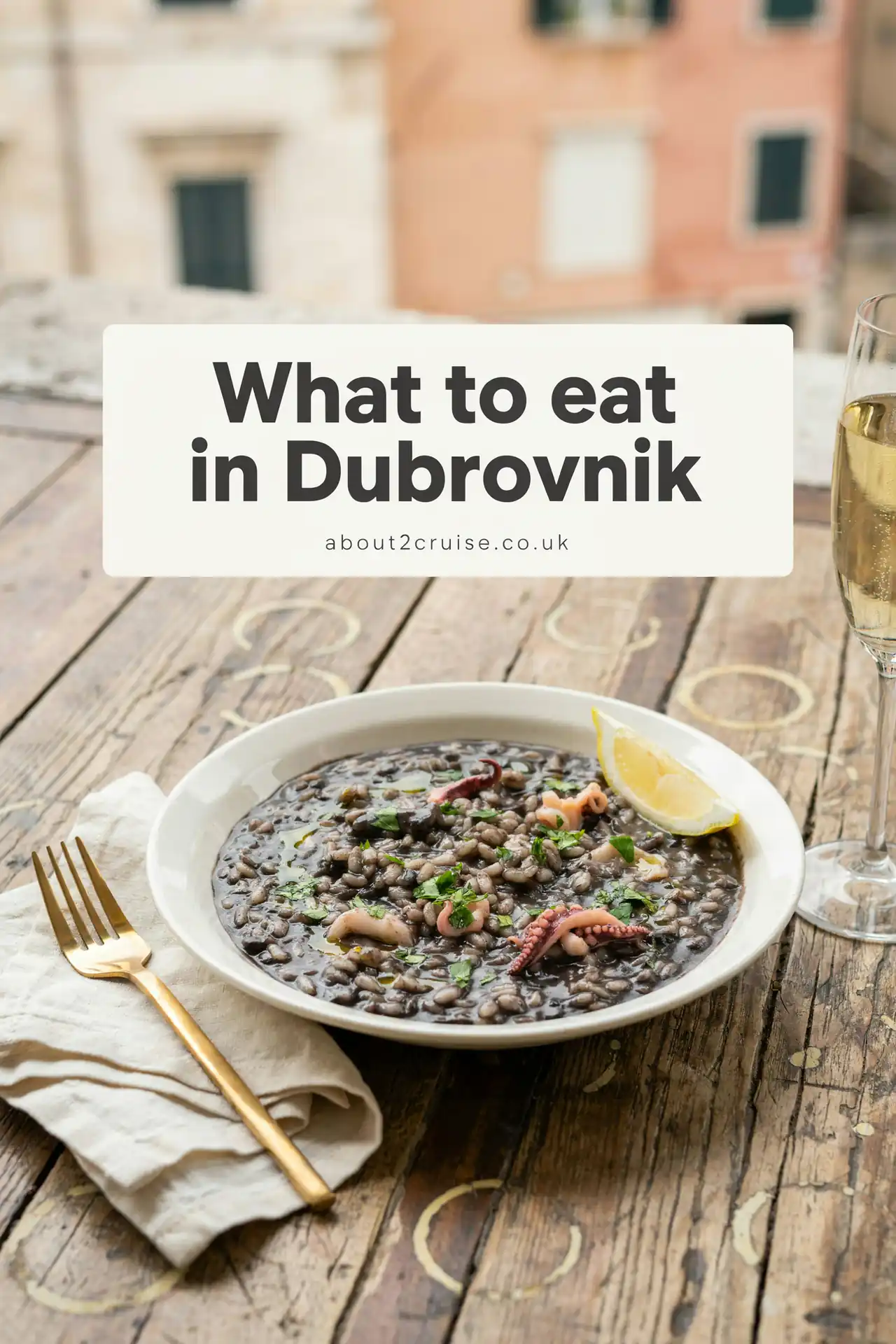
Photo Spots and Film Locations Near Café Stops
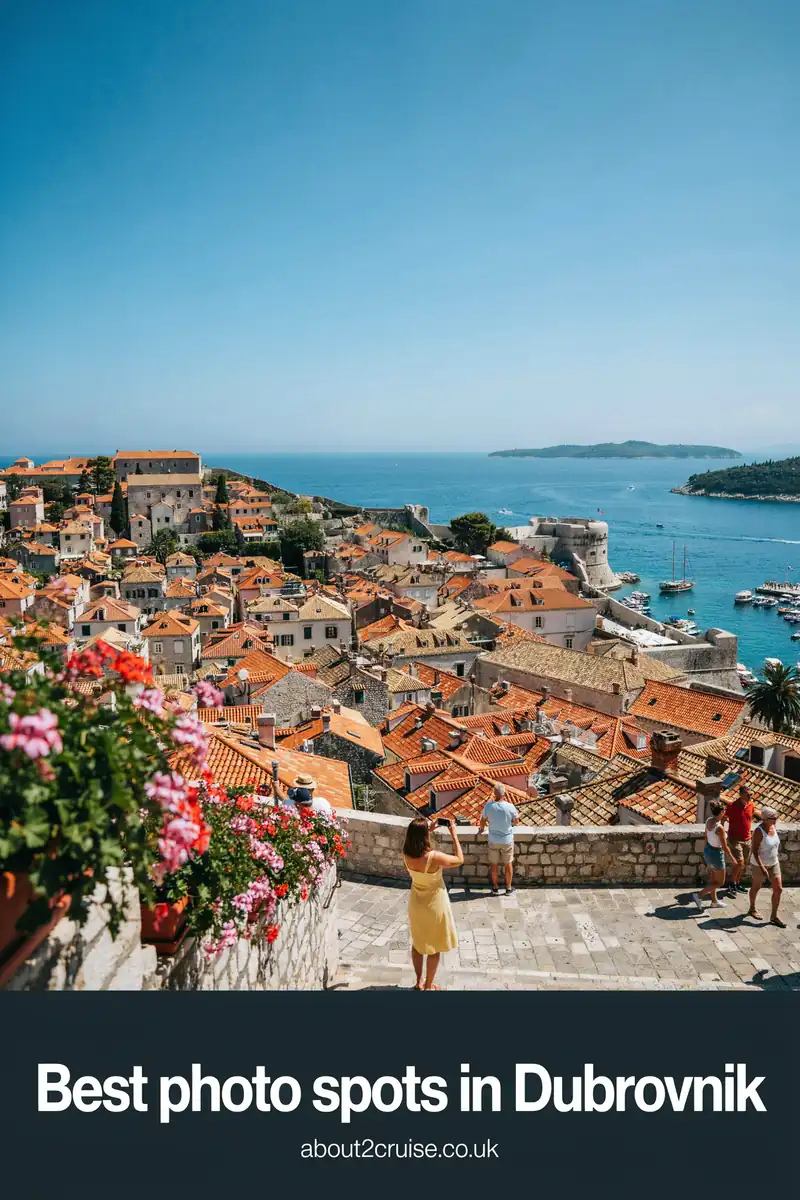
The Stradun photographs best before 08:00 or after 20:00, when the café tables are out and the stone holds warm light. The Jesuit Stairs are best before 09:00 before tour groups and umbrellas arrive. Buža is a natural sunset shot over the Adriatic and Lokrum, and Šulić beach below Fort Lovrijenac frames the fort, walls and open sea. Mount Srđ at 405 metres gives the classic full view, but the cable car is a separate €30 return ticket and closes in winter. For film-location detours around the same lanes, use the Game of Thrones filming locations guide. A lightweight travel camera is much easier than a phone for late-afternoon lane light, and it will not slow you down on the walk back to the ship.
Route Planning: Combining Cafés with Stradun, Walls, Buža, and Sights
A sensible hidden-café circuit starts at Pile Gate before 09:00, walks the walls anti-clockwise with a stop at Sv. Petar or the second terrace, then exits near Ploče or continues to the south lanes. From there, move through Od Puča toward the Jesuit stairs and the wall hole for Buža, or take an early Buža if you are not doing the wall walk. End with the Stradun, the Cathedral or the old port. A self-guided Old Town route with a refreshment stop is commonly budgeted at 2–3 hours excluding port transfers. If you want to break up café hunting with retail, see the shopping adventures guide. For a longer call, compare Dubrovnik day trips and book direct and save on a small-group walking or walls experience. If you are staying before or after a cruise, the hotels near the port page may help.

Safety, Tourist Traps, and Essentials
Crime levels are low but pickpockets operate in tourist areas, so do not carry large sums of cash. Tourists have been overcharged at certain clubs and by some taxis, so agree taxi fares or insist on the meter, and ask for an itemised receipt. In Dubrovnik you can be fined for drinking alcohol in public spaces, sleeping or urinating in public, walking through town shirtless or in swimwear, and climbing on monuments. Carry your passport, ideally in a leather passport cover that keeps it protected from scratches and pickpockets. Restaurant overcharging, fish sold by weight, menus without prices and unmetered taxis are the recurring Old Town complaints. The Old Town and the area immediately outside Pile Gate see the most overcharging and touting, and Gruž is a second concentration point when ships dock. If a café looks tourist-trapped but the view is right, ask the price before ordering and keep the stop short.
Quick Answers to Questions That Often Come with This Search
Is Panorama restaurant worth it?
It depends. Panorama sits at the upper cable-car station on Mount Srđ with a full view over the Old Town, Lokrum and the Elaphiti islands. But the cable car is a separate €30 return ticket, mains run roughly €29.80–44.80, and two courses with wine land around €70–90 a head before the cable car. Front-row sunset tables often go four to five days ahead. If you only have a cruise day, the hidden cafés inside the walls are better value and easier to time.
Who built the Dubrovnik walls?
The fortification system runs about 1,940 metres around the historic core. It was regulated by plan from the 13th century and built up to the 17th, comprising the main wall, towers, forts, bastions and corner fortifications. The Minčeta tower at the north-west corner was built by Michelozzo and Georgius Dalmaticus.
Can you walk from Dubrovnik Old Town to Lapad?
Yes. Lapad is about 3–4 km from the Old Town. A walk from Pile to Lapad takes roughly 35 minutes on foot, but buses 2, 4 and 6 run from Pile and take 10–20 minutes. If you are considering it with a café stop, do the Old Town coffee first and leave time for the return.
Does Croatia have Starbucks?
No. There is no Starbucks anywhere in Croatia. The company has confirmed no concrete plans for the market, and the dense local café network plus sit-down coffee culture are the usual explanation. Look for a local caffe bar or a speciality counter like Cogito instead.
What is the main street in Dubrovnik?
The Stradun, a roughly 300-metre pedestrianised limestone street, connects Pile Gate in the west to Ploče Gate in the east. It is flat and step-free, but its cafés are the most expensive in the Old Town.
What films were shot in Dubrovnik?
Game of Thrones is the most famous. Many scenes around the Old Town, walls and forts were used for King’s Landing. The Game of Thrones filming locations guide covers the spots.
Where should I avoid in Dubrovnik?
The Old Town and the area immediately outside Pile Gate see the most overcharging and touting, with Gruž as a second concentration point when ships dock. That does not mean avoid them entirely, just be aware of menu prices, taxi meters and touts, especially on Stradun and Prijeko at peak times.
Is there live music in Dubrovnik Old Town?
Yes. Troubadour Jazz Brasserie beside the Cathedral has live jazz in summer with no cover charge, sets from around 21:00–22:00, and stays open until about 01:00. It is a good evening café stop for late departures or overnight calls.
FAQs
Do I need to book hidden cafés in advance?
Most Old Town cafés, including the wall terraces and Buža, do not take advance bookings. You turn up, wait for a table, or move to the next lane. Only high-demand restaurants like Panorama or evening table-service restaurants are worth booking ahead.
Are wall cafés included in the City Walls ticket?
Access to the wall-top café terraces is included, but food and drinks are extra. You must have a valid City Walls ticket to reach them, and re-entry is not allowed once you complete the circuit.
Can I visit the wall café without doing the full wall circuit?
Technically you can reach Sv. Petar early in the circuit and then retrace or continue, but the ticket is one-way, anti-clockwise and valid for one circuit. There is no separate café-only entry.
Can I pay by card at Buža?
Do not count on it. Buža usually only accepts cash, and the nearest ATM may be a walk away. Bring euros in small denominations if you plan to stop at either Buža or Dodo.
Are hidden cafés family-friendly?
Some are, some are not. Gradska Kavana Arsenal and the Stradun-side cafés are easier with children and strollers. The wall cafés involve many steps, Buža has low doorways and uneven rock terraces with no toilets, and Cogito Old Town is extremely small.
What if I do not drink coffee?
Caffe bars serve hot chocolate, tea, lemonade, beer, wine and soft drinks throughout the day. Juices and bottled water are easy to order. In a tourist area, simply ask for the menu or point.
Is smoking allowed in Dubrovnik cafés?
Yes, smoking is almost always allowed in Croatian caffe bars, and most have outdoor seating. If you want smoke-free, look for a speciality café or sit outside upwind.
Do hidden cafés have Wi-Fi?
Many do, but it is not guaranteed. Sv. Petar reviewers mention wifi, and Cogito Ploče Gate has good wifi. Ask for the password when you order, or keep a travel data plan if you need to check maps and all-aboard times.
Are there fully accessible hidden cafés?
The hidden cliff and wall cafés are not wheelchair-accessible. The best accessible Old Town café stop is Gradska Kavana Arsenal or a flat Stradun-side terrace. The wheelchair access guide covers step-free routes and accessible sights.
How do I find a good hidden café without Google walking in circles?
Leave the Stradun, head south into Od Puča or Između Polača, look for small caffe bar signs and open stone doorways, and check whether locals are already sitting outside. Early morning is the best hunting window because the lanes are cooler and less crowded.
If you are visiting other Croatian ports on the same sailing, the Croatian Mediterranean cruise ports guide can help you compare café cultures, transfer times and Old Town stops.
Last Updated: 14 November 2026