
Glacier Bay National Park in Southeast Alaska features tidewater glaciers, fjords, and abundant wildlife including humpback whales, sea otters, and brown bears. Most visitors explore by cruise ship with park rangers providing narration. The protected wilderness spans over 3 million acres and showcases dramatic ice formations calving into pristine waters, offering spectacular scenery and photography opportunities.
Quick Facts: Glacier Bay Cruising
| Detail | Information |
|---|---|
| Daily Ship Permits | Only 2 cruise ships and 3 tour vessels allowed per day |
| Time in Park | Typically 8-9 hours from entrance to exit |
| Best Viewing Season | Late May through early September |
| Number of Glaciers | Over 1,000 glaciers, with 7 tidewater glaciers |
| Park Ranger Narration | National Park Service rangers board ships for full commentary |
| Distance from Open Ocean to Terminus | Approximately 65 miles |
Want to know more about Alaska cruise ports and what to expect at each destination?
Why Glacier Bay Is Different From Other Alaska Glacier Experiences
Unlike drive-by glacier viewing, Glacier Bay offers an intimate wilderness experience that few other locations can match. The National Park Service strictly limits access to protect this pristine environment, which means your cruise ship is one of only two allowed in on any given day. This creates an almost private viewing experience that feels remarkably uncrowded compared to other popular ports.
The park rangers who board your ship aren’t just reading from a script. These naturalists live and work in the park and bring genuine enthusiasm and current wildlife sightings to their commentary. They’ll adjust the narration based on what’s actually happening around the ship rather than sticking to generic facts you could read online.
While Hubbard Glacier offers its own spectacular views and Tracy Arm Fjord provides dramatic scenery, Glacier Bay stands apart because of its sheer diversity. You’ll see multiple glaciers in a single day, transition through different ecosystems, and witness wildlife in their natural habitat without the commercial development present at traditional ports.
What Actually Happens During Your Glacier Bay Day
Your ship enters Glacier Bay very early, usually around 6:00 AM, which means setting an alarm if you want to see the approach. The entrance at Icy Strait looks deceptively ordinary until you realize you’re leaving civilization behind for the next nine hours.
Two National Park Service rangers board your ship via a small boat transfer near the entrance. They’ll set up in key viewing areas and rotate through different decks throughout the day. Here’s the typical progression:
- Early Morning (6:00-9:00 AM): Transit through lower Glacier Bay with focus on spotting whales and sea otters. The lighting is perfect for photography as the sun hits the mountains.
- Mid-Morning (9:00-11:00 AM): Approach to the first major glaciers. Rangers explain the geology and point out wildlife on shore.
- Late Morning to Early Afternoon (11:00 AM-2:00 PM): The ship positions in front of Margerie Glacier and sometimes Grand Pacific Glacier for extended viewing. This is when glacier calving events are most likely to occur.
- Afternoon (2:00-4:00 PM): Transit back down the bay with stops at additional glaciers and continued wildlife viewing.
- Late Afternoon (4:00-5:00 PM): Rangers disembark and the ship exits the park.
The Permit System Nobody Tells You About
Here’s something that affects your cruise choice but rarely gets explained clearly: Glacier Bay National Park issues permits to specific cruise lines for specific dates up to two years in advance. This means not every Alaska cruise goes to Glacier Bay, and some cruise lines have significantly more permits than others.
The permit system creates a hierarchy among cruise lines. Major lines like Princess, Holland America, and Celebrity hold numerous permits while smaller or newer cruise lines might have very few or none at all. If Glacier Bay is your priority (and it should be), verify your specific sailing actually goes there before booking. Some itineraries substitute Tracy Arm Fjord or Hubbard Glacier when they couldn’t secure a Glacier Bay permit.
Ship size matters too. The park service caps vessels at 10,000 gross tons for most permits, though some exceptions exist. This naturally favors smaller ships and creates a better viewing experience since you won’t be jockeying for deck space with 3,000 other passengers.
Choosing the Right Cabin for Glacier Bay
The port side of the ship (left side when facing forward) provides better glacier viewing on the journey into Glacier Bay, while starboard offers better views on the way out. Since ships typically spend more time approaching and positioning in front of the glaciers, port side cabins have a slight advantage.
However, ships often rotate 360 degrees when positioned in front of major glaciers, giving all sides equal viewing time at the main attraction. The real advantage of any cabin with a balcony is the ability to step outside at 6:00 AM in your pajamas when the ship enters the bay without claiming deck space in the cold.
Don’t overpay for a high-floor cabin thinking you’ll get better views. For glacier viewing, lower decks (Deck 6-8 on most ships) actually work better because you’re closer to the waterline where wildlife appears and the perspective on the glaciers feels more dramatic. Save your money for the specialty dining or excursions at other ports.
Weather Reality and What to Wear
Glacier Bay creates its own weather system and temperatures on the water run 10-15 degrees cooler than at traditional ports. Even in summer you’ll need serious layering. Here’s what actually works:
- Base layer: Long underwear or thermal leggings under your pants. This sounds extreme but standing on a moving ship in 45-degree weather with 15 mph winds creates a wind chill you’ll regret not preparing for.
- Mid layer: Fleece or wool sweater that you can remove if you duck inside.
- Outer layer: Waterproof windbreaker or rain jacket. The “waterproof” part matters because glaciers create their own precipitation.
- Accessories: Warm hat that covers your ears, gloves (not fashion gloves but actual winter gloves), and a neck gaiter or scarf.
- Footwear: Waterproof shoes with good traction since decks get wet and slippery.
The observation decks will be packed during prime viewing times. Dress warmly enough that you can stay outside for extended periods rather than constantly retreating inside to warm up and losing your viewing spot.
Photography Tips From Someone Who Learned the Hard Way
Photographing glaciers from a cruise ship presents unique challenges. The ship moves constantly, you’re shooting through atmospheric haze, and the scale of glaciers makes them surprisingly difficult to capture effectively.
Camera Settings That Actually Work:
- Use a fast shutter speed (1/500 or faster) to compensate for ship movement
- Include foreground elements like the ship’s railing or other passengers for scale
- Shoot in RAW format if possible since the blue ice tones need post-processing adjustment
- Bring a polarizing filter to cut glare off the water and make the ice appear more vibrant
- Pack extra batteries because cold temperatures drain them quickly
For Smartphone Photographers:
- Use burst mode when you think calving might occur
- Clean your lens frequently since sea spray creates spots you won’t notice until you’re reviewing photos later
- Shoot in panorama mode to capture the massive scale of the glaciers
- Turn off auto-HDR which often makes ice look gray instead of blue
- Bring a phone grip or lanyard because cold fingers and excited crowds make dropped phones common
Wildlife Viewing Strategy
The rangers will announce wildlife sightings over the ship’s PA system but by the time you get outside and figure out where to look, you’ve often missed it. Here’s the insider approach:
Position yourself on deck during the early morning transit when whale activity peaks. Humpback whales feed in Glacier Bay’s nutrient-rich waters and you’ll often see bubble net feeding where multiple whales cooperate to catch fish. Watch for “blows” (the spray when whales surface to breathe) on the horizon and birds diving which indicates fish and therefore whales nearby.
Sea otters float in kelp beds near the shore. Look for what appears to be small logs in the water near the kelp. When you scan with binoculars you’ll realize those logs have faces and are often holding tools to crack open shellfish.
Brown bears appear along the shoreline particularly in early summer when they’re grazing on sedge grass in the tidal areas. The rangers will position on whichever side has recent bear activity. Follow them.
Mountain goats frequent the cliffs and rocky outcrops but blend into the landscape remarkably well. They appear as small white dots that don’t move like snow patches. Once you spot one, scan the entire cliff face because they’re usually in groups.
Understanding What Makes Those Glaciers Blue
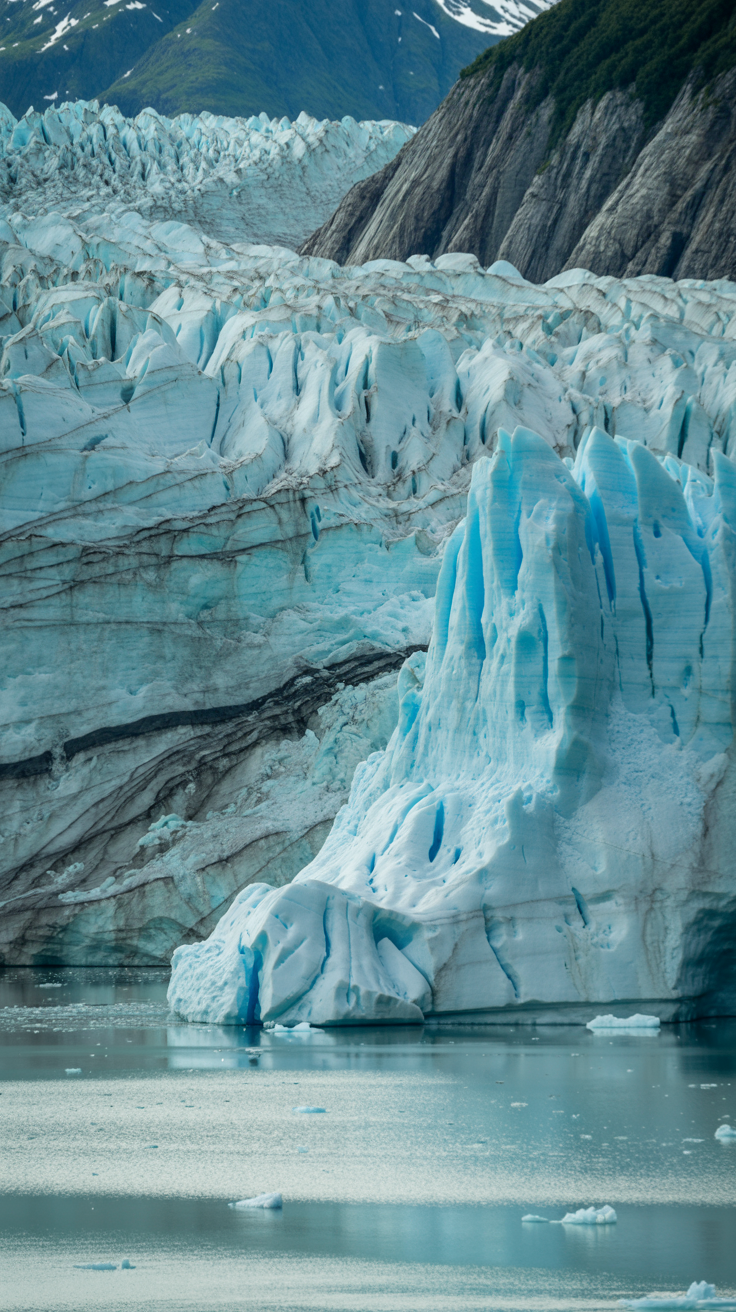
The brilliant blue color in tidewater glaciers comes from ice density and light physics. As snow accumulates and compresses over centuries, air bubbles get squeezed out creating incredibly dense ice. This dense ice absorbs all colors of light except blue, which reflects back to your eyes.
Fresh snow and recently exposed ice appears white because it still contains air bubbles. The deepest, oldest ice shows the most intense blue. When you see a glacier face during the best viewing conditions, you’re looking at ice that fell as snow hundreds or thousands of years ago.
The black stripes running through many glaciers aren’t dirt but medial moraines formed where two glaciers merged. Rock debris from the valley walls gets incorporated along the edges and creates these distinctive patterns.
The Sound of Calving
Watching ice calve off a glacier face provides the iconic Glacier Bay moment everyone hopes for. The sound arrives before your brain processes what you’re seeing—a deep crack like thunder echoing across the water followed by a rumbling crash as thousands of tons of ice hit the bay.
Calving happens unpredictably though glaciers in active retreat calve more frequently. Margerie Glacier calves multiple times per hour during active periods which is why ships position in front of it for extended viewing. The ranger narration will quiet down during these positioning periods so everyone can watch and listen.
If you hear the crack, keep watching that section of the glacier face because large calving events sometimes happen in sequences. The initial collapse destabilizes adjacent ice that follows seconds later.
Bonus Tips Nobody Mentions in the Cruise Brochures
- Book the earliest dining seating: Late breakfast and lunch seatings during Glacier Bay day mean you’ll miss prime viewing while you’re stuck in the dining room.
- Bring hand warmers: The chemical heat packs you stick in your gloves and pockets. Your ship’s gift shop will sell out by 8:00 AM if they even stock them.
- Claim your deck spot by 5:45 AM: Serious photographers and experienced cruisers stake out the best positions before most passengers wake up.
- The back decks work better than you think: Everyone crowds the bow but the stern decks offer excellent views with fewer people and better protection from wind.
- Bring a insulated mug: Most ships set up hot chocolate and coffee stations on the outer decks but in paper cups that cool down in minutes.
- Download the park map beforehand: Cell service disappears the moment you enter the park. Having a map on your phone helps you understand what you’re seeing.
- The ship’s webcams show different angles: Most cruise ships broadcast multiple camera angles on your cabin TV. Watch them while you’re warming up to see what’s happening on other decks.
- Tip your cabin steward extra: Ask them to wake you at 5:30 AM and bring coffee to your cabin. They’re usually happy to do this for regular passengers who’ve been friendly.
- Bring microfiber cloths: Your camera lens and eyeglasses will fog up constantly when moving between the cold deck and warm interior.
- The library or observation lounge offers heated viewing: If you can’t tolerate the cold outdoors all day, these indoor spaces have large windows and seating without the crowds of the main atrium.
When Glacier Bay Disappoints
Weather occasionally forces itinerary changes. Heavy fog can reduce visibility to near zero, making it unsafe for ships to navigate the narrow passages between glaciers. In rare cases, ships will enter Glacier Bay but turn back if conditions deteriorate. Your cruise line won’t offer compensation since this counts as an “act of nature” under cruise contract terms.
Some passengers expect constant action and glacier calving on demand. The reality involves long periods of slow cruising through beautiful but relatively unchanging scenery. If you need constant stimulation, bring a book or plan to alternate between outdoor viewing and other ship activities.
The rangers leave the ship after Glacier Bay day and subsequent glacier viewing at other locations lacks the same expert narration. Some passengers feel disappointed by this contrast once they’ve experienced the National Park Service approach.
Comparing Glacier Bay to Other Alaska Glacier Experiences
Glacier Bay, Hubbard Glacier, and Tracy Arm Fjord each offer distinct experiences. Glacier Bay provides variety and wilderness immersion with expert rangers, multiple glaciers, and extensive wildlife. Hubbard Glacier delivers sheer scale as North America’s largest tidewater glacier with frequent and dramatic calving. Tracy Arm Fjord offers narrow, dramatic scenery with towering cliffs and a more intimate, fjord-like environment.
Some Alaska itineraries include two glacier viewing days. The ideal combination pairs Glacier Bay’s diversity with Hubbard’s spectacle or Tracy Arm’s intimacy. Each has merit but Glacier Bay remains the most comprehensive glacier experience because of the extended time in park and the ranger interpretation.
Preparing Kids for Glacier Bay
Children often struggle with the long, slow-paced day that Glacier Bay requires. The Junior Ranger program helps keep kids engaged. Rangers distribute activity books when they board and kids who complete them earn an official Glacier Bay National Park Junior Ranger badge before the rangers disembark.
Bring binoculars specifically for your kids. Cheap ones work fine and giving them the job of “wildlife spotter” creates purpose during the long transit periods. Make it a game to see who spots the most animals or finds the bluest ice.
Pack substantial snacks since regular mealtimes might not align with hunger patterns during the excitement and cold weather. Kids burn energy trying to stay warm and will get cranky if they’re hungry while you’re trying to enjoy the glacier viewing.
The Carbon Footprint Conversation
Cruise ships in Glacier Bay operate under strict environmental regulations including speed restrictions to protect whales, wastewater management requirements, and air quality standards. The National Park Service monitors compliance constantly and can revoke permits for violations.
Ships in Glacier Bay must use their cleanest-burning fuel and cannot discharge wastewater within park boundaries. The limited permit system itself serves as environmental protection by capping the total number of visitors and preventing overuse of this fragile ecosystem.
If environmental impact concerns you, smaller ships typically have lower per-passenger environmental footprints and some newer vessels use hybrid propulsion systems or advanced scrubber technology to reduce emissions. Research your specific ship’s environmental features when booking.
Common Questions and FAQ
Do I need to book a special excursion to see Glacier Bay?
No. Glacier Bay isn’t a port where the ship docks. Instead, your entire ship enters the park and cruises through it for the day. All passengers experience the same views from various decks on the ship. There are no excursion packages to purchase or special viewing areas requiring additional payment.
Will I get seasick in Glacier Bay?
Glacier Bay itself offers very calm waters since you’re in protected fjords surrounded by mountains. The waters here are typically much calmer than the open ocean portions of your cruise. Most people who experience seasickness on Alaska cruises feel fine during the Glacier Bay day.
Can I hear the glacier calving from inside the ship?
Yes, major calving events produce sound loud enough to hear clearly inside the ship. However, you’ll miss the visual spectacle and the full sensory experience if you’re not on deck. The sound alone doesn’t capture the drama of watching the ice fall and crash into the water.
Are the rangers available to answer questions during the day?
Absolutely. The two National Park rangers aboard your ship are incredibly accessible. When they’re not actively narrating, they position themselves on the outer decks and genuinely enjoy talking with passengers. They’ll answer questions about glaciers, wildlife, their jobs as park rangers, or anything else related to Glacier Bay.
What if I see something interesting and the rangers haven’t announced it?
Tell a crew member or approach the rangers directly. They can’t watch every direction simultaneously and appreciate passengers alerting them to wildlife or unusual activity. They’ll often make an announcement so other passengers can see what you’ve spotted.
Does my cruise ship guarantee Glacier Bay even if weather is bad?
No cruise line can guarantee Glacier Bay access in all weather conditions. Severe fog, high winds, or dangerous seas can force captains to cancel or modify the Glacier Bay portion of your itinerary for safety reasons. This happens infrequently but it does occur, particularly in the shoulder seasons of May and September.
Will my cell phone work in Glacier Bay?
No. You’ll have no cell service or internet connectivity once the ship enters Glacier Bay National Park. Some cruise ships offer satellite-based internet but it’s typically very slow and expensive. Plan to disconnect for the day and enjoy the experience without the distraction of your phone.
Is Glacier Bay worth using a sea day if my cruise offers an alternative itinerary?
Yes, without question. Some cruise lines offer itineraries with an extra sea day instead of Glacier Bay. Unless you strongly prefer onboard activities over natural scenery, choose the Glacier Bay itinerary. It’s the highlight of most Alaska cruises and you can relax on sea days during many other cruises. You can’t see Glacier Bay from anywhere but Alaska.
Personal Experience
I spent months researching the perfect time for our Glacier Bay cruise, and I’m so glad we settled on early June. The weather was surprisingly mild, and we caught the park right when wildlife activity peaks. Our naturalist guide pointed out humpback whales breaching near the ship, sea otters floating on their backs just yards away, and a brown bear ambling along the shoreline. The highlight was watching massive chunks of ice calve off Margerie Glacier with a thunderous crack that echoed across the water. We picked a smaller ship with only 100 passengers, which meant we could actually move around the deck without fighting crowds when something exciting appeared.
The choice of cruise line really matters for Glacier Bay since only a limited number of ships get permits to enter each day. We went with a mid-sized vessel that had a ranger come aboard to narrate our journey through the park, and her knowledge made everything so much richer. She explained why the glaciers have that brilliant blue color and helped us spot mountain goats on the cliffs that we would have completely missed otherwise. If you’re planning this trip, book early because those park permits fill up fast, and try to get a cabin on the port side since that’s where most of the glacier viewing happens on the way in.