
Devon Island, located in Nunavut’s Canadian Arctic Archipelago, is the world’s largest uninhabited island. Cruise visitors explore the Haughton Crater research station, dramatic polar desert landscapes, and wildlife including muskoxen and Arctic foxes. The remote destination offers unique scientific and geological attractions with minimal infrastructure, typically accessed through expedition-style Arctic cruises.
Quick Port Facts
| Fact | Detail |
|---|---|
| Official Port Status | No dedicated cruise terminal; visitors typically tender ashore at Dundas Harbour or nearby locations |
| Main Landing Site | Dundas Harbour on the southern shore near Croker Bay |
| Territory | Nunavut, Canada |
| Population | Uninhabited (zero permanent residents) |
| Currency | Canadian Dollar (CAD) – though no commercial facilities exist on the island |
| Language | English and Inuktitut (expedition staff communication) |
| Official Information | Government of Nunavut |
Want to know more about other Canadian cruise ports and Arctic expedition destinations?
Devon Island Map
Devon Island’s primary cruise landing site is Dundas Harbour, located on the southern shore facing Croker Bay. The abandoned RCMP post, cemetery, and surrounding glacial landscape lie within a compact area near the traditional landing zone, making this one of the few accessible points on an otherwise rugged and remote island.
There is no town on Devon Island
The island is completely uninhabited and has been since the RCMP post at Dundas Harbour was abandoned decades ago. Here’s what you need to understand about getting around:
- Ships anchor offshore and passengers tender to the beach via Zodiac boats or similar landing craft
- The “attractions” consist of the derelict RCMP buildings, a small cemetery, and the dramatic Arctic landscape itself
- Everything worth seeing lies within a short walk from the landing site, typically 100-500 metres depending on conditions
- You’ll always be accompanied by expedition staff and guides who monitor for wildlife and environmental conditions
- The terrain is rocky, uneven, and potentially muddy or icy depending on season and weather
- There are no paved paths, signage, or infrastructure of any kind beyond the ruins
How to Get Around Devon Island
Transport on Devon Island is strictly managed by your expedition cruise operator. This isn’t a port where you can rent a car or hop on a bus. Everything is coordinated as part of your ship’s organized landing.
Zodiac Landings
- All passengers transfer from ship to shore via Zodiac boats operated by expedition crew
- Life jackets are mandatory and provided by the ship
- Landings are weather-dependent and can be cancelled or rescheduled at short notice
- You’ll receive a safety briefing before disembarking covering boarding procedures and wildlife protocols
- Expect to get your feet wet during beach landings even with waterproof boots
On-Shore Movement
- All shore time is as part of guided groups led by expedition staff
- Independent exploration is not permitted due to wildlife risks and environmental protection regulations
- Walking pace is slow and accommodating to all fitness levels
- Distances are short but terrain can be challenging for those with mobility issues
- Armed polar bear guards accompany all shore parties
What to See Within Walking Distance from the Port
The entire Dundas Harbour “experience” is within walking distance of the landing site, as there’s nowhere else to go. Here’s what you’ll actually see:
- Abandoned RCMP Post: The main attraction is this derelict Royal Canadian Mounted Police outpost from the 1920s-1930s, built to assert Canadian sovereignty in the High Arctic. The wooden structures are weathered and partially collapsed but hauntingly photogenic. The post was occupied intermittently until the 1950s. Walking time from beach: 5-10 minutes over rocky ground.
- Historic Cemetery: A small gravesite near the RCMP post contains graves of police officers and traders who died during the early years of Arctic occupation. It’s a sombre reminder of how harsh conditions were for those stationed here. Walking time from post: 2-3 minutes.
- Croker Bay Shoreline: The glacial scenery surrounding the harbour is spectacular, with table-top mountains and ice-carved valleys providing endless photo opportunities. The beach itself is Arctic desert with little vegetation. Walking time: you’re already there at the landing site.
- Wildlife Viewing Areas: Depending on the day, you might spot Arctic foxes, seals hauled out on rocks, or various seabird species. Polar bears are possible but rare during landing operations. Your guides will position the group for optimal viewing while maintaining safe distances. A good pair of compact binoculars makes all the difference for wildlife observation at safe distances. Walking time: varies based on wildlife locations.
Must See Attractions in Devon Island for a One Day Cruise Visit
Given that Devon Island shore visits typically last only 2-4 hours and everything is tightly managed by expedition staff, your “must see” list is really about making the most of this unique Arctic landing rather than choosing between multiple options.
Dundas Harbour RCMP Post Ruins
- What it is: The skeletal remains of Canada’s northernmost police outpost, established in 1924 to reinforce sovereignty claims. The main building and several outbuildings still stand in various states of decay.
- Why it matters: This site represents one of the most isolated postings in Canadian law enforcement history. Officers stationed here endured months of darkness, extreme cold, and complete isolation. It’s a tangible connection to Arctic exploration and colonisation history.
- Time needed: 30-45 minutes including the walk from the landing site, photo stops, and interpretive talks from expedition staff.
- Practical tips: Don’t enter or climb on the structures as they’re fragile and potentially dangerous. Watch for nesting birds in summer. The site has no facilities whatsoever so go before you tender ashore. Photography is unrestricted but be respectful of the historic nature of the location.
Arctic Wildlife Observation
- What it is: Opportunistic viewing of muskoxen, Arctic foxes, seals, seabirds, and occasionally polar bears in their natural habitat.
- Why it matters: Devon Island offers a chance to see High Arctic species in an environment virtually unchanged by human activity. The wildlife here has minimal exposure to humans, making observations particularly authentic.
- Time needed: Integrated throughout your shore time; dedicated viewing might be 15-30 minutes if wildlife is present.
- Practical tips: Bring quality binoculars and a camera with good zoom capability. Listen to your guides about safe viewing distances. Wildlife sightings are never guaranteed and depend entirely on conditions that day. Patience and quiet are essential. Never approach wildlife or make loud noises.
Polar Desert Landscape Experience
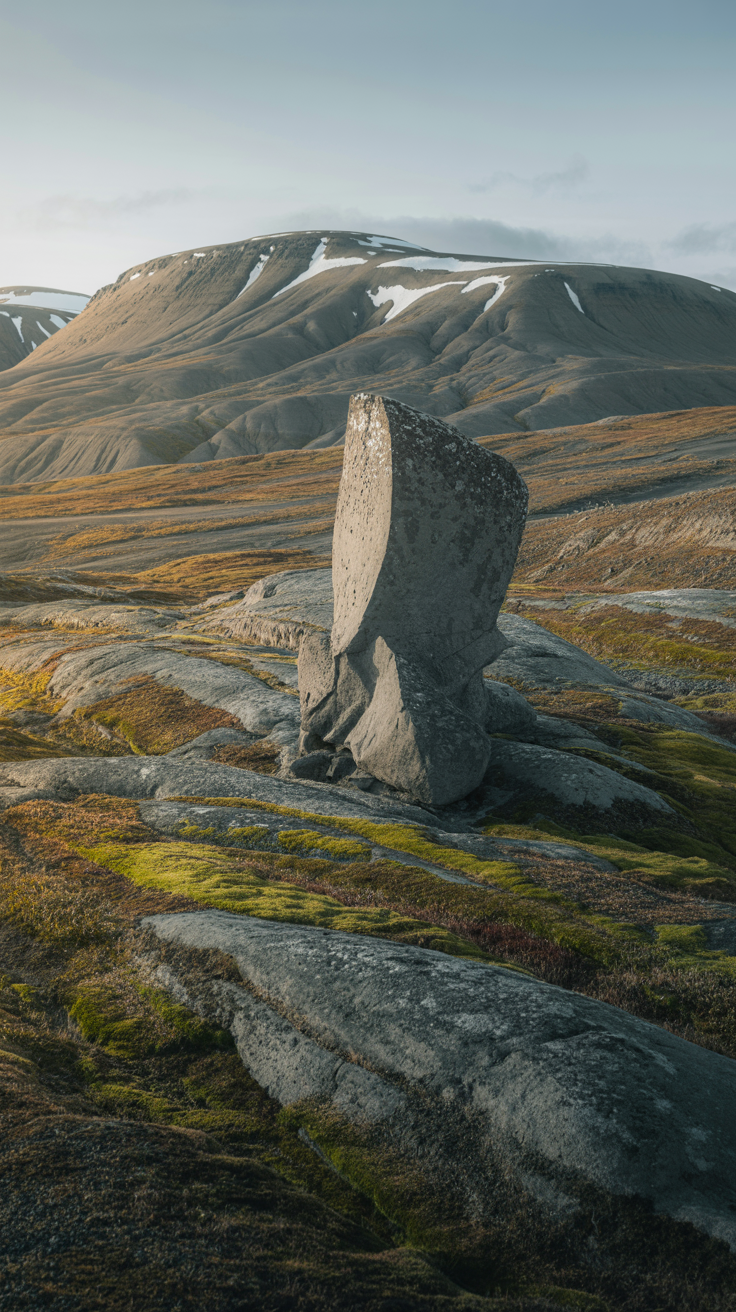
- What it is: The unique high Arctic polar desert environment with minimal precipitation, sparse vegetation, and dramatic geological features shaped by glaciation.
- Why it matters: Devon Island receives less precipitation than some hot deserts and represents one of Earth’s most extreme environments. NASA studies the Haughton Crater here as a Mars analogue site. The landscape is otherworldly and unlike anything most visitors have experienced.
- Time needed: This is the backdrop to your entire visit; allow 20-30 minutes to really take in the environment, away from focusing solely on the ruins.
- Practical tips: Despite being a desert, it’s cold. Wind chill can be severe even in summer. The ground is covered in rocks, gravel, and permafrost-affected soil. Watch your footing constantly. UV reflection off rock and ice is intense so wear sunglasses and sunscreen. The silence and scale of the landscape can be disorienting.
Glacial Geology Features
- What it is: Visible evidence of past glaciation including erratics (large boulders transported by ice), striations on bedrock, and U-shaped valleys.
- Why it matters: Devon Island’s geology tells the story of repeated ice ages and provides insight into how glaciers shape landscapes. The island was completely covered by ice during the last glacial maximum.
- Time needed: 15-20 minutes with expedition staff explaining features.
- Practical tips: Your expedition team will include geologists or naturalists who can explain what you’re seeing. Ask questions and engage with the interpretive programme. This isn’t obvious unless explained so pay attention during the guided portions.
Port Day Itinerary: Things to Do in a 3-Hour Landing
Here’s a realistic schedule that fits a typical Devon Island shore landing. Remember that exact timing depends entirely on weather, ice conditions, and wildlife activity. Flexibility is essential in the Arctic.
- Ship Time -60 minutes | Pre-Landing Briefing: Attend the mandatory safety and wildlife briefing in the ship’s lounge. You’ll learn about polar bear safety, environmental protocols, what to wear, and how Zodiac operations work. This isn’t optional.
- Ship Time -30 minutes | Gear Up: Layer up in your cabin with all your cold-weather gear. Even if it looks calm from the ship, conditions ashore can be significantly windier and colder. Don’t forget hat, gloves, sunglasses, and camera.
- 09:00-09:20 | Zodiac Transfer: Board your assigned Zodiac by group number and transfer to the landing beach. The ride takes 5-15 minutes depending on where the ship anchored. Hold on and keep your camera protected from spray.
- 09:20-09:45 | RCMP Post Exploration: Walk from the beach to the ruins with your group. Listen to the historical briefing from expedition staff. Take photos but watch where you step as the ground is uneven and there may be wildlife or nesting birds nearby.
- 09:45-10:00 | Cemetery Visit: A short walk brings you to the graves. This is a respectful, quiet stop. Your guide will explain who is buried here and why. It’s a powerful moment that grounds the harshness of early Arctic settlement.
- 10:00-10:45 | Free Exploration Time: Walk the beach area, scan for wildlife with binoculars, photograph the landscape, or simply sit and absorb the scale and silence of this environment. Stay within the designated landing zone marked by your guides. Arctic foxes sometimes appear during this time.
- 10:45-11:00 | Environmental Education: Gather for a final talk about the polar desert ecosystem, climate change impacts on the Arctic, or geological features. This is when you can ask questions about what you’ve observed.
- 11:00-11:20 | Zodiac Return: Transfer back to the ship in your assigned group. The expedition team will do a headcount before departing to ensure everyone is accounted for.
- 11:20+ | Debrief and Warm-Up: Back aboard, warm up with hot drinks in the lounge and attend the optional recap session where staff share photos, answer more questions, and review what you saw.
This timing assumes good conditions. If weather deteriorates or a polar bear appears near the landing zone, operations may be shortened or cancelled entirely. That’s the nature of expedition cruising in the Arctic.
Safety Tips
Safety in this extreme environment requires serious attention and absolute adherence to expedition protocols.
- Polar Bear Risk: This is real and present. Armed guards accompany every landing and regularly scan the perimeter. If they say move, you move immediately without question. Never wander away from the group or assume you can outrun a polar bear.
- Hypothermia and Cold Injury: Even in summer, temperatures hover just above freezing with brutal wind chill. Exposed skin can develop frostbite in minutes. Dress in proper layers including windproof outer shell, insulated mid-layers, and moisture-wicking base layers. Bring spare gloves in case one pair gets wet.
- Terrain Hazards: The rocky ground is treacherous with loose stones, hidden holes, and uneven surfaces. Ankle injuries are common. Wear proper hiking boots with ankle support and grippy soles. Watch every step and use trekking poles if you have them.
- Weather Changes: Arctic weather can deteriorate rapidly. If expedition staff say it’s time to return to the ship, there’s no arguing or requesting “five more minutes.” Missing the last Zodiac could put you and others at serious risk.
- Group Discipline: Stay with your assigned group and guide at all times. Independent exploration is not permitted and could result in you being denied future landings during the cruise.
- Wildlife Interaction: Never approach, feed, or attempt to touch any wildlife. Arctic foxes may seem curious but they’re wild animals. Disturbing nesting birds can cause them to abandon eggs or chicks.
- Environmental Damage: Don’t remove anything from the site including rocks, plants, or artifacts from the RCMP post. Don’t add to cairns or leave any trace of your visit. These regulations are legally enforced under Canadian Arctic protection laws.
Emergency Contacts
In a genuine emergency on Devon Island, your expedition ship is your first point of contact. However, these regional numbers are essential to know:
- Nunavut Emergency Management (24/7): 1-800-693-1666 or 1-867-979-6262
- RCMP Resolute Bay (nearest detachment): 867-252-1111 (emergency)
- Canadian Coast Guard (Arctic operations): *16 on VHF marine radio
- Joint Rescue Coordination Centre (search and rescue): 1-800-267-7270
Save your cruise ship’s emergency contact number before going ashore. Your ship will have satellite communication capability and established protocols for medical emergencies or evacuation if required.
Essential Items for Your Day in Devon Island
Devon Island’s extreme Arctic environment requires specialized gear that goes far beyond typical cruise attire. Since you’re visiting one of Earth’s most remote and challenging environments, proper preparation can make the difference between a memorable adventure and an uncomfortable ordeal. Here’s what you actually need:
- Base Layers: Quality merino wool base layers for women or merino wool base layers for men are essential as your first layer. Cotton will leave you dangerously cold if you sweat during the walk to the RCMP post. Merino regulates temperature and wicks moisture even in sub-zero conditions.
- Waterproof Protection: A packable rain jacket that’s windproof and waterproof is non-negotiable. Weather changes in minutes and wind chill can drop temperatures dramatically. Your outer layer protects all the insulation underneath.
- Waterproof Bags: Keep your camera, phone, and other electronics safe during Zodiac transfers with a waterproof dry bag. Spray from the boat ride can soak regular bags, and Arctic water will destroy electronics instantly.
- Binoculars: Compact travel binoculars let you observe Arctic foxes, muskoxen, and seabirds from the safe distances required by expedition protocols. They’re light enough to carry around your neck all day.
- Sun Protection: The Arctic sun reflecting off ice and snow creates intense glare. Quality sunglasses for men or sunglasses for women with UV protection prevent snow blindness and eye strain during your landing.
- Secure Storage: An anti-theft backpack keeps your gear organized and secure during Zodiac transfers. The slash-proof material and lockable zippers protect your expensive camera equipment and documents.
- Hand Warmers: Even with gloves, your hands can go numb quickly in Arctic conditions. Disposable hand warmers tucked into your gloves make handling camera equipment much more comfortable during extended outdoor periods.
- Waterproof Footwear: You’ll get your feet wet during beach landings. Proper waterproof walking shoes for women with good ankle support and grip are essential for the rocky, uneven terrain around Dundas Harbour.
- Travel Documents Protection: Keep your passport and cruise documents safe with an RFID passport holder. The waterproof design protects against spray during Zodiac transfers.
- Portable Power: Cold weather drains camera and phone batteries rapidly. A portable phone charger with high capacity ensures you don’t miss capturing this once-in-a-lifetime destination.
- Cruise Essentials: A waterproof cruise lanyard keeps your ship card accessible but protected during wet Zodiac landings. The retractable design means you won’t lose it while climbing in and out of boats.
Weather by Month
| Season | Months | Temperature Range | Conditions & What to Expect |
|---|---|---|---|
| Late Spring | May-June | -10°C to +2°C | Ice is still breaking up and cruise access is limited or impossible. Continuous daylight begins but temperatures remain below freezing. Not a typical cruise season. Snow and ice cover the landscape. |
| Summer | July-August | +2°C to +10°C | Peak expedition cruise season when ice conditions allow ship access. Nearly 24-hour daylight. Temperatures are “warm” by Arctic standards but still require full cold-weather gear. Wildlife is most active. Expect wind, possible rain or sleet, and rapidly changing conditions. Sea ice still present but navigable. |
| Early Autumn | September | -5°C to +5°C | Cruise season winds down as ice begins to reform. Daylight decreases rapidly. Temperatures drop and snow becomes more frequent. Some expedition cruises operate in early September but conditions are harsher than summer months. Wildlife begins seasonal migrations. |
| Late Autumn to Early Spring | October-April | -30°C to -45°C | Completely inaccessible to cruise ships. Sea ice locks in the island. Polar night with months of darkness. These are not cruising months and no landings occur during this period. Average winter temperatures would kill an unprotected human in minutes. |
Common Questions & FAQ
How long do cruise ships actually spend at Devon Island?
Most expedition cruises schedule 3-4 hours for Devon Island landings, though the actual time ashore is typically 2-3 hours once you account for Zodiac transfers in both directions. However, this is entirely weather-dependent. Your ship might arrive at Dundas Harbour only to find conditions unsuitable for landing, in which case the captain will move on to the next planned location. Some passengers never set foot on Devon Island despite it being listed on their itinerary. This is normal in Arctic expedition cruising and not considered a service failure. The Arctic environment dictates the schedule, not the cruise line’s marketing materials.
Is Devon Island suitable for passengers with mobility limitations?
Honestly, no. The landing requires climbing in and out of Zodiacs from a platform on the ship, often with the boat moving in swell. Ashore, the terrain is rocky, uneven, and lacks any paved surfaces or handrails. There are no wheelchairs or mobility aids that work effectively on Arctic beach landings. The distance from landing site to the RCMP post involves walking on loose gravel and stones. If you have significant mobility issues, have a frank conversation with your cruise line before booking. Some passengers choose to enjoy Devon Island from the ship’s deck, which still offers spectacular views and wildlife observation opportunities without the physical demands of going ashore.
What’s the Haughton Crater and can cruise passengers visit it?
The Haughton Crater is a 23-million-year-old meteorite impact site about 75 kilometres inland from Dundas Harbour. NASA uses it as a Mars analogue research station to test equipment and protocols for future Mars missions. It’s fascinating stuff, but cruise passengers cannot visit it. The crater is far from any landing site, accessible only by helicopter or serious overland expedition, and reaching it would take days of travel across roadless Arctic terrain. You might see the research station from the air if your cruise includes a flightseeing option, but landing there is not part of any standard cruise itinerary. If the Haughton Crater is a must-see for you, you’d need to arrange an independent scientific expedition completely separate from cruise operations.
Will I definitely see polar bears on Devon Island?
No, and anyone who promises you will is lying. Devon Island and the surrounding waters are polar bear habitat, but these animals range over vast territories and sightings are completely unpredictable. Your ship’s expedition staff will be scanning constantly and armed guards accompany all landings specifically because bears could appear, but that doesn’t mean they will. Many passengers complete entire Arctic cruises without seeing a polar bear ashore. You might see tracks, scat, or other signs of bear activity. Occasionally a bear is spotted from the ship before landing, which typically means the landing is cancelled for safety. If polar bears are your primary goal, focus on locations like Churchill or specific bear-viewing expeditions rather than cruise landings where human safety protocols prevent close encounters.
Can I use my mobile phone on Devon Island?
No. There is no mobile phone coverage on Devon Island whatsoever. The nearest cell tower is hundreds of kilometres away in Resolute or other Arctic communities. Your phone will show no signal. Even satellite phones can be unreliable depending on weather and your position relative to satellite coverage. If you need to contact someone urgently, your ship has satellite communication for emergencies. Many passengers find the complete disconnection refreshing, but if you need to stay in touch with the outside world, plan accordingly. Some expedition ships offer limited paid satellite internet access, but it’s slow, expensive, and often doesn’t work when you want it to. Similar conditions apply at nearby Arctic stops like Beechey Island.
What should I do if I see the expedition team signalling to return to the Zodiacs?
Move quickly and calmly toward the landing area immediately without stopping to take more photos or pack your bag. The signal to return is never given lightly. It usually means dangerous wildlife has been spotted approaching, weather is deteriorating rapidly, or ice conditions around the ship are changing. Expedition staff are monitoring multiple safety factors that passengers cannot see. Delaying or ignoring the recall signal puts yourself, other passengers, and staff at risk. People have been denied future landings for failing to comply promptly with safety instructions. The Arctic is unforgiving and expedition protocols exist for good reason. You can be disappointed about cutting your visit short; you cannot argue with safety decisions in the moment.
Are there toilets available ashore on Devon Island?
No. There are no facilities of any kind on Devon Island. The ruins of the RCMP post do not include functioning buildings or any services whatsoever. Before you board the Zodiac to go ashore, use the facilities on your ship. Shore visits are typically 2-3 hours which most people can manage comfortably. If you have medical conditions affecting your bladder or bowels, discuss this privately with the expedition leader before landing day. They can sometimes arrange for you to return to the ship early if necessary. The expedition team will discreetly brief passengers on Leave No Trace principles which absolutely include not leaving human waste behind in this pristine environment. It’s slightly awkward to think about in advance, but important to plan for.
What’s the difference between Devon Island and other Arctic Canada cruise stops?
Devon Island is unusual because it’s completely uninhabited. Places like Resolute are actual communities with residents, infrastructure, and cultural interactions. Devon Island offers pure landscape, wildlife, and historical ruins with no contemporary human element. It’s more raw and isolated than stops at Inuit communities where you might see traditional demonstrations, visit a co-op store, or interact with locals. Devon Island is about the Arctic environment itself rather than Arctic culture. If you’re looking for cultural exchange and meeting people who live in the Arctic year-round, Devon Island won’t provide that. If you want to stand on terrain that looks like another planet with no evidence of modern civilisation in any direction, Devon Island delivers that experience perfectly. Different stops serve different purposes on polar expedition cruises.
Personal Experience
I never imagined packing seven layers of clothing for a summer trip until I started researching Devon Island. This isn’t your typical cruise stop – it’s the largest uninhabited island on Earth, and honestly, that’s what makes it so incredible. Before heading there, I spent weeks reading up on what to expect, and the biggest surprise was learning that temperatures barely crack 10°C even in July. I grabbed some serious cold-weather gear, invested in quality merino wool base layers, and made sure my camera had extra batteries since the cold drains them fast. The expedition leaders recommend binoculars too, which turned out to be essential for spotting Arctic wildlife from a safe distance.
What struck me most about preparing for Devon Island was understanding that this place operates on nature’s terms, not ours. The landing schedules depend entirely on weather and ice conditions, so flexibility is key. I packed my day bag with snacks, hand warmers, and sunglasses – yes, sunglasses in the Arctic, because the sun reflecting off ice and snow is blinding. The wildlife briefings before disembarking were fascinating and a bit humbling. Learning about keeping distance from muskoxen and Arctic foxes, understanding bear safety protocols, and respecting this fragile ecosystem made the whole experience feel more meaningful. It’s not just a destination you visit; it’s a privilege you earn by being prepared and respectful.