
Victoria’s Ogden Point cruise terminal is located 2.5 kilometers from downtown. The port accommodates large cruise ships and offers basic amenities including shops and information services. Shuttle buses, taxis, and ride-shares provide transportation to the Inner Harbour and city center. Victoria features British colonial architecture, Butchart Gardens, the Royal BC Museum, and numerous outdoor activities along its scenic waterfront.
Quick Port Facts
| Fact | Detail |
|---|---|
| Port Name | Ogden Point Breakwater District |
| Location | 2.5 km from downtown Victoria, James Bay area |
| Docking Piers | Pier A and Pier B |
| Walking Distance to Town | 20-35 minutes (1.5-2 km) |
| Official Port Website | Greater Victoria Harbour Authority |
| Currency | Canadian Dollar (CAD) |
| Emergency Number | 911 |
Want to know more about cruise ports across Canada and what makes each one unique?
Victoria BC Cruise Port Map
Ogden Point sits on the southern edge of Victoria’s James Bay neighborhood, jutting out into the Strait of Juan de Fuca. The terminal is positioned along Dallas Road, with the Inner Harbour and downtown core to the northeast. Fisherman’s Wharf lies about halfway between the cruise terminal and the main downtown area, making it a natural stopping point for those walking into town.
Can You Walk to Town from the Port?
Yes, walking from Ogden Point to downtown Victoria is not only possible but genuinely pleasant when weather cooperates. The distance is manageable for most people, and the waterfront route offers excellent photo opportunities.
- Distance and time: About 1.5 to 2 kilometers (20-35 minutes depending on your pace) from the cruise terminal to the Inner Harbour
- Route quality: The Dallas Road waterfront path is well-maintained and mostly flat, with dedicated pedestrian areas and ocean views throughout
- Weather consideration: Victoria’s weather can be unpredictable. Rain and wind off the strait can make the walk less enjoyable, particularly during shoulder season months. A packable rain jacket is essential for Victoria’s changeable conditions
- Scenic detour: The Ogden Point Breakwater itself is worth a 20-minute stroll before you head into town. It’s a 1.6 km round-trip walk with a lighthouse at the far end and fantastic strait views
- Navigation: Simply follow Dallas Road east along the waterfront, which becomes the Harbour Pathway. You’ll pass Fisherman’s Wharf about halfway, then continue to the Inner Harbour
- Return logistics: The walk back is the same route. Budget time carefully if your ship has an earlier departure, as you’ll need to factor in the 30-minute walk plus any security queue time
How to Get Around from Victoria BC Cruise Port & Shore Transportation
Victoria offers multiple transport options right at the Ogden Point terminal, making it easy to reach downtown attractions quickly. The compact city center means you won’t need transport once you arrive at the Inner Harbour for most sightseeing.
Official Port Shuttle
- Operator: Pacific Northwest Transportation Services (PNWTS) runs the official shuttle between Ogden Point and downtown Victoria
- Frequency: Shuttles typically run every 15 minutes during cruise ship calls, though this can vary by season and passenger volume
- Drop-off location: Downtown near the Inner Harbour and Parliament Buildings
- Ticket options: Both one-way and day pass options available. Purchase at the terminal or sometimes pre-book through your cruise line
- Timing tip: Early morning shuttles can be busy. If you’re among the first off the ship, walking might actually be faster than waiting in the shuttle queue
Taxis and Rideshares
- Availability: Taxis queue directly at the terminal exit. Rideshare services like Uber are available but pickup locations may vary
- Journey time: 5-15 minutes to downtown depending on traffic
- Cost indicator: Expect roughly $15-25 CAD to the Inner Harbour area
- Return journey: Easy to hail taxis around the Inner Harbour. For rideshares, move away from the busiest tourist spots for quicker pickup
Public Transit
- Bus service: BC Transit buses serve the terminal area with routes connecting to downtown
- Practicality: Buses are the cheapest option but not always the fastest. Service frequency varies by time of day
- Fare information: Have exact change in Canadian currency or use a contactless payment card where accepted
- Best for: Budget-conscious travelers who aren’t in a rush and want to experience local transport
Bike Rentals
- Rental locations: Available near the terminal and along the waterfront path toward downtown
- Route quality: The Dallas Road to Inner Harbour path is excellent for cycling, mostly flat and scenic
- Practical consideration: Only worthwhile if you plan to cover more ground beyond the Inner Harbour, such as Beacon Hill Park or farther along the coast
Harbour Ferry
- Service area: Once you reach Fisherman’s Wharf or the Inner Harbour, small harbour ferries offer scenic water taxi service around the harbor area
- Routes: Connect Fisherman’s Wharf, Inner Harbour, and other waterfront points
- Experience value: More of a sightseeing activity than practical transport, but fun if you have time to spare
What to See Within Walking Distance from the Port
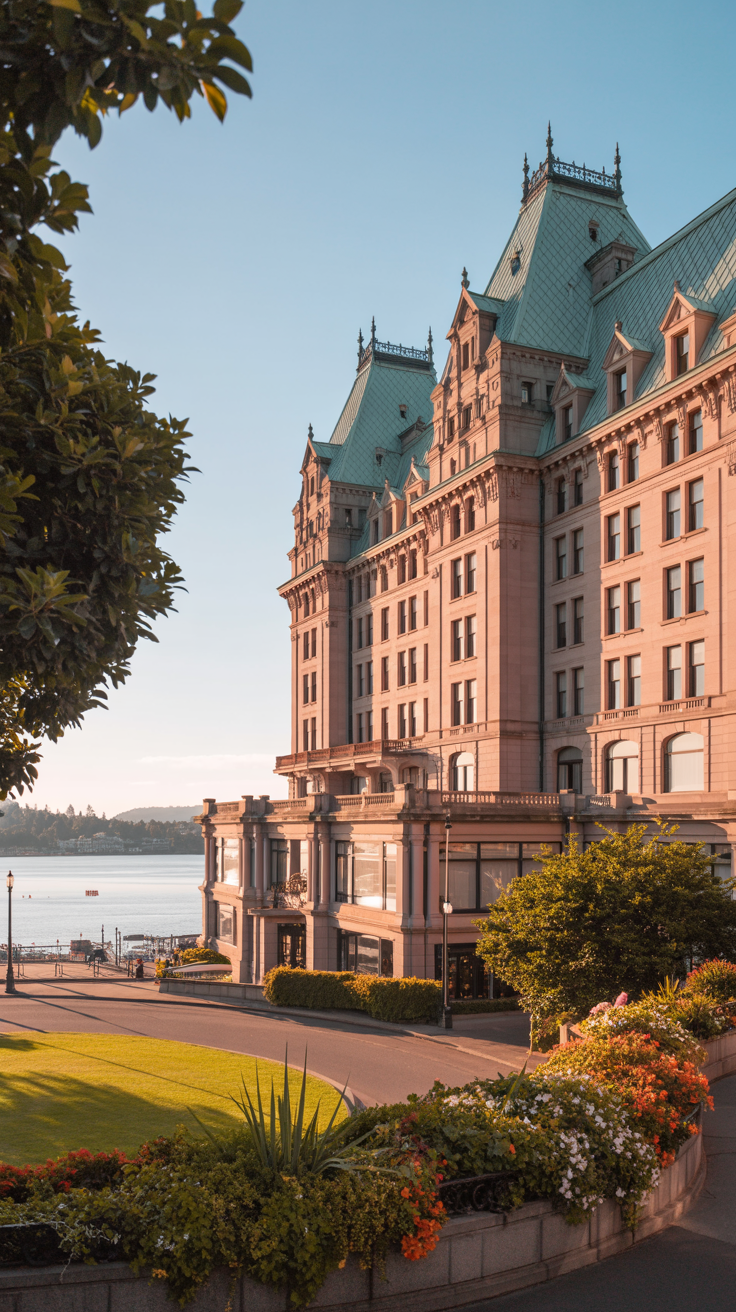
The walk from Ogden Point into downtown puts several worthwhile stops within easy reach, all connected by the waterfront pathway.
- Ogden Point Breakwater: This 1.6 km round-trip walk takes you along a concrete breakwater stretching into the Strait of Juan de Fuca, ending at a lighthouse. It’s an excellent spot for ocean views and watching marine traffic. The walk takes about 20-30 minutes total and can be breezy. Allow 10-15 minutes from the cruise terminal to the breakwater entrance. Bring compact binoculars for spotting marine wildlife and distant ships.
- Fisherman’s Wharf: About 10-15 minutes’ walk from Ogden Point along Dallas Road. This working harbor features colorful floating homes, casual seafood kiosks, souvenir shops, and resident harbor seals that often pop up near the docks. It’s a relaxed spot to grab fish and chips or fresh crab before continuing into town. No entry fee, just bring cash for food vendors.
- Inner Harbour and Parliament Buildings: The classic Victoria postcard view, about 20-25 minutes’ walk from the cruise terminal via Fisherman’s Wharf. The BC Parliament Buildings dominate the harbor with their impressive architecture and manicured lawns. Free to admire from outside; guided interior tours available but may not fit a tight port schedule. The area is compact and easy to explore on foot.
- Royal BC Museum: Located right on the Inner Harbour, roughly 25-30 minutes’ walk from Ogden Point. This museum covers natural history, First Nations cultures, and BC’s colonial history. High-quality exhibits but requires 2-3 hours to see properly. Entry fee applies. Skip it if you’re pressed for time, as the admission cost and time investment don’t suit a quick port call.
- Beacon Hill Park: A short walk south from downtown (about 10 minutes from the Inner Harbour). This large urban park offers peaceful walking paths, ponds, flower gardens, and resident peacocks. Excellent for a nature break away from harbor crowds. The park connects back toward Dallas Road, so you could loop through on your return to the ship.
- Bastion Square: Adjacent to the Inner Harbour area in the historic old town. This pedestrian square features heritage buildings, small galleries, cafes, and restaurants. It’s a pleasant spot to stop for coffee or a meal between other attractions. About 25 minutes’ walk from the cruise terminal.
- Chinatown and Fan Tan Alley: Canada’s oldest Chinatown sits about 1.2-1.5 miles from the cruise terminal (30-40 minutes’ walk). Fan Tan Alley is billed as Canada’s narrowest street and now houses quirky boutiques and tea shops. Worth the walk if you enjoy exploring historic neighborhoods and have time to spare. The area is compact once you arrive.
Must See Attractions in Victoria BC for a One Day Cruise Visit
Victoria offers several standout attractions, but cruise passengers need to be selective. The following are genuinely worth your limited port time, listed roughly in priority order for first-time visitors.
Inner Harbour and Parliament Buildings
- What it is: Victoria’s iconic waterfront centered around the historic Empress Hotel and the British Columbia Parliament Buildings. This is the postcard view of Victoria and the heart of the tourist area.
- Why it matters: It captures Victoria’s British colonial character and offers excellent photo opportunities. Street performers, harbor activity, and the architectural grandeur make this the essential Victoria experience. Most visitors to Victoria start here.
- Time needed: 30-60 minutes to walk around the harbor, take photos, and appreciate the buildings from outside. Add 45-60 minutes if you take a guided tour inside the Parliament Buildings.
- Practical tips: Parliament tours are free but require security screening. Check tour times if interested, as they may not align with your port call. The area gets extremely busy when cruise ships are in port, so early morning or late afternoon offers better photo opportunities without crowds. The Empress Hotel’s afternoon tea is famous but expensive and requires advance booking.
Butchart Gardens
- What it is: A world-renowned 55-acre garden about 20 km north of downtown Victoria, featuring themed garden areas including Japanese, Italian, and Mediterranean sections built in a former limestone quarry.
- Why it matters: Many consider Butchart Gardens the finest horticultural display in North America. If you have any interest in gardens, this justifies the trip from Victoria. Peak bloom season runs spring through early autumn.
- Time needed: Minimum 2.5-3 hours including 30-40 minutes each way for transport, plus 90-120 minutes to walk the gardens properly. Budget a full half-day.
- Practical tips: Entry costs around $40 CAD for adults. Many cruise lines offer shore excursions here, which solve the transport problem but limit your time in the gardens. Independent travelers can book a shuttle from downtown or arrange a taxi (expensive for the round trip). Go early or late afternoon to avoid peak crowds. The on-site dining is overpriced; eat before or after your visit. Wear comfortable shoes as the paths involve some inclines and stairs.
Fisherman’s Wharf
- What it is: A working harbor filled with colorful floating homes, seafood vendors, small shops, and resident wildlife. It’s considerably less polished than the Inner Harbour and feels more authentically local.
- Why it matters: Excellent spot for fresh seafood, unique photo opportunities with the brightly painted float homes, and a chance to see harbor seals up close. It’s also a convenient stopping point on the walk between Ogden Point and downtown.
- Time needed: 30-45 minutes to stroll the docks, grab food, and watch for seals. Add time if you want to take a harbor ferry ride from here.
- Practical tips: No admission fee. Bring cash for food vendors, though some accept cards. The fish and chips and fresh crab rolls are genuinely good and reasonably priced compared to downtown restaurants. Arrive around lunchtime for the full food-vendor experience. Seals tend to appear near the docks in late morning and afternoon.
Chinatown and Fan Tan Alley
- What it is: Canada’s oldest Chinatown, featuring narrow Fan Tan Alley (claimed as Canada’s narrowest street), historic buildings, tea shops, and independent boutiques. The area has been gentrified significantly but retains historic character.
- Why it matters: Offers a different side of Victoria beyond the British colonial theme. The alley itself is atmospheric, and the surrounding blocks contain interesting shops that you won’t find in standard tourist areas.
- Time needed: 45-75 minutes including walking from the Inner Harbour (about 10-15 minutes each way) plus time to explore the alley and browse shops.
- Practical tips: No admission fee. Some shops have irregular hours, so the area is livelier midday. Fan Tan Alley can be easily walked in 5 minutes, but the surrounding streets have more to offer. Combine this with a walk along Government Street for shopping. If you’re tight on time, this is the first attraction to skip in favor of waterfront sights.
Royal BC Museum
- What it is: Major provincial museum covering natural history, indigenous cultures, and colonial history of British Columbia. Well-curated permanent exhibits plus rotating special exhibitions.
- Why it matters: High-quality displays and significant First Nations cultural exhibits. The natural history section includes life-size mammoths and realistic habitat dioramas. Best museum option in Victoria.
- Time needed: Minimum 2-3 hours to see the permanent collection properly. You could rush through in 90 minutes but would miss a lot.
- Practical tips: Admission around $30 CAD for adults. Located directly on the Inner Harbour, so geographically convenient. The time investment is substantial for a port day, so only visit if museums genuinely interest you or weather is terrible. The IMAX theater is separate and adds cost and time. Book timed entry tickets online in advance during busy cruise season to avoid queuing.
Craigdarroch Castle
- What it is: A Victorian-era mansion built in the 1890s by coal baron Robert Dunsmuir. Four floors of period rooms, original furnishings, and city views from the tower.
- Why it matters: Excellent example of late Victorian wealth and architecture. The building itself is striking, and the interior offers insight into BC’s Gilded Age. Great views of Victoria from the upper floors.
- Time needed: 60-90 minutes including transport from downtown (about 10 minutes by taxi or 25-30 minutes walking uphill from the Inner Harbour) plus 45-60 minutes inside.
- Practical tips: Admission around $15-20 CAD. The castle is uphill from downtown, so walking there involves a steady climb. No elevator—you must climb stairs to see all floors, so not suitable for those with mobility issues. Self-guided tour with information sheets in each room. This is a “second visit to Victoria” attraction rather than essential for first-timers with limited time.
Port Day Itinerary: Things to Do in 8 Hours
Here’s a realistic schedule that fits a typical 8am-5pm port day, assuming you want to see Victoria’s highlights without rushing or booking formal shore excursions.
- 8:00-8:30 AM | Disembark and Head Out: Clear customs and exit the terminal. If the shuttle queue looks long, start walking along Dallas Road toward Fisherman’s Wharf. The early morning light on the strait is beautiful, and you’ll beat the crowds into town.
- 8:30-9:00 AM | Ogden Point Breakwater: Before heading downtown, walk out along the Ogden Point Breakwater for ocean views and photos. The 20-minute stroll to the lighthouse and back is worth it, and the area is quiet this early. Watch for marine traffic in the strait.
- 9:00-9:45 AM | Walk to Fisherman’s Wharf: Continue along Dallas Road to Fisherman’s Wharf (10-15 minutes from Ogden Point). Stroll the docks, spot harbor seals, and browse the floating homes. The food vendors won’t all be open this early, but you can explore the area without crowds.
- 9:45-10:30 AM | Arrive at Inner Harbour: Walk from Fisherman’s Wharf to the Inner Harbour (another 10-15 minutes). Take photos of the Parliament Buildings and Empress Hotel, walk around the harbor, and get oriented. This is peak morning light for photography.
- 10:30 AM-12:30 PM | Royal BC Museum OR Butchart Gardens: Choose one major attraction. If staying downtown, spend two hours at the Royal BC Museum. If you booked transport to Butchart Gardens, this is when you’d travel there (30-40 minutes each way plus 90 minutes in the gardens). You can’t do both in one port day.
- 12:30-1:30 PM | Lunch at Fisherman’s Wharf or Bastion Square: Head back to Fisherman’s Wharf for fish and chips or fresh crab from the food kiosks (great value and quality), or try one of the pubs or bistros around Bastion Square for a sit-down meal. Fisherman’s Wharf is more casual and scenic; Bastion Square has more variety.
- 1:30-2:30 PM | Explore Chinatown and Fan Tan Alley: Walk from the Inner Harbour area to Chinatown (10-15 minutes). Wander through Fan Tan Alley, check out tea shops and boutiques, and soak in the historic neighborhood atmosphere. This is a nice contrast to the waterfront areas.
- 2:30-3:30 PM | Government Street Shopping and Browsing: Walk back toward the Inner Harbour via Government Street, Victoria’s main shopping street. Browse stores, pick up souvenirs, grab an afternoon coffee, and slow down before heading back to the ship.
- 3:30-4:00 PM | Return Walk or Shuttle to Ogden Point: Allow 30 minutes to walk back along the waterfront to your ship, or catch the shuttle bus from near the Inner Harbour if you’re tired. Either way, you’ll have comfortable buffer time before the all-aboard deadline.
- 4:00-4:30 PM | Back at Ship with Buffer Time: On board with an hour to spare before the typical 5:00-5:30 PM departure. Relax, or if time allows and you’re energetic, you could walk out to the breakwater one more time from the ship.
This schedule works comfortably without feeling rushed, includes a proper lunch break, and gets you back to the ship with buffer time. Adjust based on your priorities—skip Chinatown if you’d rather spend more time at Beacon Hill Park, or substitute the museum for a longer exploration of the waterfront neighborhoods.
Where to Eat Near the Port
Victoria’s food scene near the cruise port ranges from excellent casual seafood to overpriced tourist traps around the Inner Harbour. Here’s where to focus your dining time.
- Fisherman’s Wharf food kiosks: The best value and quality for seafood near the port. Barb’s Fish & Chips and other floating vendors serve fresh fish and chips, crab rolls, and chowder for roughly $15-25 CAD. Seating is outdoors on picnic tables or benches. Cash is safest though some vendors take cards. This is where locals and cruise passengers in the know eat lunch.
- Bastion Square restaurants and pubs: A cluster of eateries just north of the Inner Harbour in the historic old town. Options range from casual pub fare to slightly more upscale bistros. Expect to pay $20-35 CAD for a main course. The area has better food quality and value than the restaurants directly facing the Inner Harbour, which lean heavily toward tourists.
- Government Street cafes: Numerous coffee shops and quick-bite places line Government Street between the Inner Harbour and Chinatown. Good for breakfast, coffee breaks, or light snacks. Prices are reasonable for a tourist area—$8-15 CAD for pastries and coffee.
- Chinatown tea houses and dim sum: If you’re exploring Chinatown, several tea shops offer traditional Chinese tea service and light snacks. Dim sum options exist but service can be slow, so only stop here if you have time flexibility. Prices are moderate, around $15-25 CAD per person.
- Inner Harbour tourist restaurants: The restaurants with prime views of the harbor and Parliament Buildings charge premium prices for average food. A meal here runs $25-45 CAD per main course. You’re paying for location. If budget matters, eat elsewhere and enjoy the harbor views for free.
- The Empress Hotel afternoon tea: Famous but expensive (around $90-110 CAD per person) and requires advance booking. The experience is lovely if high tea appeals to you, but it’s a significant time and money investment for a port day. You’ll need roughly two hours including waiting and service.
- Quick options near the terminal: There’s a small cafe at the Breakwater District near the cruise terminal itself for coffee and basic snacks before you head into town. Limited menu but convenient if you’re hungry right off the ship.
- Food safety: Tap water is safe to drink throughout Victoria. Restaurant hygiene standards are high. No special precautions needed beyond normal travel common sense.
Shopping: What to Buy & Where to Go
Victoria is decent for shopping but not outstanding. Most cruise passengers browse Government Street and the Inner Harbour area for souvenirs and local specialties.
- What to buy: Indigenous art and carvings (particularly First Nations designs), Canadian maple syrup and other food products, Victoria-themed souvenirs, local artisan crafts, and British-themed items (tea, biscuits, royal family memorabilia) play up Victoria’s colonial heritage.
- Government Street: The main shopping strip running from the Inner Harbour toward Chinatown. Mix of souvenir shops, clothing boutiques, bookstores, and specialty retailers. Quality varies significantly—some stores are touristy junk while others carry genuine local crafts. Browse multiple shops before buying to compare quality and prices.
- Fan Tan Alley and Chinatown: Quirky independent boutiques, tea shops, vintage stores, and art galleries occupy this narrow alley and surrounding streets. More interesting than Government Street if you like hunting for unusual items. Prices can be high for what you get, as the area has gentrified significantly.
- Market Square: Historic courtyard near Bastion Square with small shops and galleries. Less touristy than Government Street but also less selection. Worth a quick browse if you’re in the area.
- Indigenous art galleries: Several galleries around the Inner Harbour and downtown area sell First Nations art, masks, totems, and jewelry. Prices range from affordable small items to expensive investment pieces. Buy from reputable galleries to ensure authenticity—cheap mass-produced “Indigenous-style” items in souvenir shops are often manufactured overseas.
- Haggling: Not expected or appropriate in Victoria. Prices are fixed in shops and galleries.
- Shop hours: Most downtown stores open around 10:00 AM and close between 5:00-6:00 PM. Some tourist-focused shops near the Inner Harbour stay open later when cruise ships are in port. Sunday hours may be shorter. Check ahead if shopping is a priority.
- Public holidays: Major Canadian holidays (Canada Day July 1, Thanksgiving in October, Christmas period) may affect shop hours. Most stores remain open during cruise season but hours may be reduced.
- Realistic expectations: Victoria shopping is fine for picking up souvenirs and local specialties but isn’t a shopping destination in itself. If shopping is your main interest in a port call, other cities offer better variety and value. Browse while you’re sightseeing rather than making shopping your primary focus.
Safety Tips & Avoiding Scams
Victoria is a safe city by North American standards, and violent crime affecting tourists is rare. That said, cruise port areas anywhere attract opportunistic scams and petty theft. Here’s what to watch for specifically in Victoria.
- Unlicensed taxis and “great deal” transport: Some drivers at cruise terminals worldwide approach passengers with offers of cheap private tours or rides. Victoria sees this occasionally. Stick to official taxis queuing at the designated area or use the pre-arranged PNWTS shuttles. Licensed Victoria taxis are metered and regulated.
- Shore excursion upselling: Unofficial tour operators sometimes work the area near the terminal or Inner Harbour offering last-minute tour deals that seem too good to be true. Book excursions through your ship or verify the company is legitimate before handing over money. The GVHA website lists official shuttle and tour providers.
- Overpriced currency exchange: Some exchange bureaus near tourist areas offer poor rates and high fees. You’ll get better rates using ATMs or paying directly with credit cards (most places accept Visa and Mastercard). Avoid exchanging money with anyone on the street—this is never legitimate.
- Pickpocketing and bag theft: Victoria is relatively safe, but busy areas like the Inner Harbour and Government Street see occasional pickpocketing when multiple cruise ships are in port. Keep valuables secure, don’t leave bags unattended, and be aware of your surroundings in crowds.
- “Fake official” approaches: If someone claims you owe a fine or charges for a customs issue while you’re out sightseeing, walk away. No legitimate official will approach you on the street demanding immediate payment. Contact Victoria Police or return to your ship’s guest services if someone tries this.
- Restaurant bill padding: Most Victoria restaurants are honest, but some tourist-focused establishments around the Inner Harbour have been known to add items to bills or charge for things not ordered. Check your bill carefully before paying, especially if there’s a language barrier or the restaurant seems chaotic.
- Lost property scams: If you lose something, report it through official channels (VicPD online reporting system or the police non-emergency line 250-995-7654). Don’t engage with random people offering to “find” your lost item for a fee.
- General precautions: Don’t carry all your cash and cards together. Leave unnecessary valuables on the ship. Take photos of important documents (passport, cruise card) and keep them in your phone in case of loss. Stay alert when using ATMs—use machines in well-lit public areas rather than isolated locations.
Emergency Contacts
- Police, Fire, Ambulance (Emergency): 911
- Victoria Police Department (Non-Emergency): 250-995-7654
- Royal Jubilee Hospital: 1952 Bay Street, Victoria—250-370-8000
- VictimLink BC (24/7 support line): 1-800-563-0808
- Greater Victoria Harbour Authority (Port Operations): Check the terminal information desk or signage for the current emergency port contact
Save your cruise ship’s emergency contact number and the direct number to your ship before going ashore. This should be in your daily program or posted in your cabin.
Essential Items for Your Day in Victoria
Victoria’s changeable weather and waterfront location require some practical gear to make your port day comfortable. Here are items that will genuinely improve your experience based on the city’s specific conditions.
- Weather protection: Victoria’s coastal weather shifts quickly throughout the day. A packable rain jacket is essential even on seemingly sunny mornings—rain can roll in off the strait with little warning. If you prefer poncho-style coverage, a packable rain poncho fits easily in a daypack and keeps both you and your bag dry during sudden showers.
- Comfortable walking gear: The 2.5-kilometer waterfront walk from Ogden Point to downtown is mostly flat but still requires proper footwear. Women’s walking shoes or men’s walking shoes with good support will keep your feet comfortable during hours of sightseeing. Consider blister prevention products if your shoes are relatively new.
- Sun and wind protection: The breakwater walk and waterfront paths offer stunning views but limited shade. Quality sunglasses for women or sunglasses for men protect against glare off the water, while a packable sun hat provides coverage without taking up luggage space. Don’t forget reef-safe sunscreen—Victoria is environmentally conscious, and reef safe sunscreen SPF 50 protects both you and marine ecosystems.
- Layering options: Morning fog often gives way to afternoon sun, making layers essential. A lightweight men’s jacket works over casual clothes for variable conditions. For cooler spring or fall visits, merino wool base layers for men or merino wool base layers for women provide warmth without bulk.
- Day bag and security: You’ll need something to carry your layers, water, and purchases. An anti-theft backpack keeps valuables secure in busy areas like the Inner Harbour, or choose an anti-theft crossbody bag for lighter carry. A packable backpack folds flat in your cruise luggage until needed. Protect important documents with an RFID passport holder and keep daily spending money in an RFID blocking wallet.
- Technology and convenience: Keep your phone charged for navigation and photos with a portable phone charger. A collapsible water bottle fits in any bag and reduces plastic waste while keeping you hydrated during walks.
- Cruise-specific items: Don’t forget your cruise lanyard for easy access to your ship card throughout the day. Back on the ship, magnetic hooks help organize wet rain gear in your cabin.
Currency, ATMs & Money Matters
Victoria uses the Canadian dollar, and handling money is straightforward for international visitors. Most businesses in tourist areas accept cards, but having some cash remains useful.
- Local currency: Canadian Dollar (CAD), divided into 100 cents. Bills come in $5, $10, $20, $50, and $100 denominations. Coins are 5¢ (nickel), 10¢ (dime), 25¢ (quarter), $1 (loonie), and $2 (toonie).
- US dollars: Some tourist-focused businesses near the cruise port and Inner Harbour accept US dollars, but exchange rates are unfavorable. You’ll get better value paying in Canadian dollars or using a card.
- ATM locations: Multiple ATMs are available downtown near the Inner Harbour, along Government Street, and in shopping areas. Major Canadian banks include RBC, TD, Scotiabank, and BMO. ATMs dispense Canadian dollars only. Check with your home bank about foreign transaction fees before withdrawing cash.
- Credit and debit cards: Visa and Mastercard are widely accepted throughout Victoria. American Express less so, particularly in smaller shops and restaurants. Contactless payment (tap) is standard in Canada and works for purchases under $250. Most terminals will prompt whether you want to pay in CAD or your home currency—always choose CAD for better exchange rates.
- Exchange options: Banks and credit unions in downtown Victoria offer currency exchange during business hours (typically Monday-Friday, some Saturday morning). Rates are better than exchange bureaus or hotels. If you’re only in port for the day, using ATMs or cards makes more sense than exchanging cash.
- How much cash to bring: If you plan to eat at Fisherman’s Wharf food kiosks or shop at small vendors, carry $50-100 CAD in cash. For sit-down restaurants, shops, and most attractions, cards work fine. Some public toilets require coins ($0.25-$1.00), though facilities at the cruise terminal and major attractions are typically free.
- Notify your bank: Tell your card issuer you’ll be in Canada before your cruise. Some banks automatically flag foreign transactions as fraud and block your card, leaving you stranded without access to money.
- Taxes: Prices in Canada don’t include tax. Goods and Services Tax (GST) of 5% applies to most purchases, and British Columbia Provincial Sales Tax (PST) of 7% applies to many items, for a combined 12% tax on many goods. Restaurant bills and shop prices will be higher than displayed once tax is added. Some items (basic groceries, prescription drugs) are tax-exempt.
- Tipping: Expected in Canada similar to the US. Tip 15-20% in restaurants for good service. Taxi drivers get 10-15%. Hotel porters (if you venture beyond the port area) typically receive $2-5 per bag. Coffee shop tip jars are common but optional—$1-2 or round up your change. Tipping at food kiosks like Fisherman’s Wharf is appreciated but not required.
Weather by Month
Victoria enjoys Canada’s mildest climate, but weather varies significantly by season. Cruise ships visit primarily from late spring through early autumn, with peak season in summer. Here’s what to expect.
| Season / Months | Temperature Range | Conditions & What to Bring |
|---|---|---|
| Spring (April-May) | 8-16°C (46-61°F) | Mild with frequent rain showers. Gardens begin blooming, making this a beautiful time for Butchart Gardens. Pack layers, a packable rain jacket, and comfortable walking shoes that can handle wet pavement. Cruise season begins in late April. |
| Summer (June-August) | 13-22°C (55-72°F) | Peak season with the warmest, driest weather. July and August see the most sunshine and least rain. Still cooler than many expect—this is coastal BC, not California. Morning fog can linger, burning off by midday. Pack light layers, sunglasses, and sunscreen. A light jacket for evening or breezy waterfront areas is useful. Crowds are highest during these months as this is peak Alaska cruise season. |
| Early Autumn (September-October) | 10-18°C (50-64°F) | Shoulder season with pleasant temperatures and increasing rain as autumn progresses. September can be lovely with fewer crowds than summer. October sees significantly more rain. Pack waterproof layers and prepare for variable conditions. Cruise season winds down through September, with few ships calling after early October. |
| Late Autumn/Winter (November-March) | 5-10°C (41-50°F) | Wet season with frequent rain but temperatures rarely drop below freezing. Few cruise ships visit Victoria during these months. If you do visit in winter, bring serious rain gear and waterproof boots. Indoor attractions like the Royal BC Museum make more sense than outdoor sightseeing. |
Victoria’s weather can change quickly regardless of season. Even in summer, bring a light waterproof jacket. The walk along Dallas Road from the cruise port to downtown can be breezy and cooler than you expect, particularly in morning fog. Check the forecast before your port day and adjust your itinerary if heavy rain is predicted—that’s when indoor options like museums become more appealing.
Common Questions & FAQ
Do I need to go through Canadian customs even though I’m only in port for the day?
Yes. All cruise passengers must clear Canadian customs and immigration when the ship docks in Victoria. The process takes place at the terminal after disembarkation. Have your passport ready and be prepared to answer standard questions about your visit. The process is usually quick but can take longer if multiple large ships are in port simultaneously. Don’t plan shore activities for the first hour after your ship’s scheduled arrival—customs clearance and disembarkation take time.
Is it better to book a shore excursion or explore Victoria independently?
Victoria is one of the easiest ports to explore independently. The downtown area is compact, walkable, and safe. If you’re comfortable navigating on your own and want flexibility, skip the ship’s excursions and walk or take the shuttle into town. Book a shore excursion only if you want to visit Butchart Gardens (transport is easier with a tour) or if you prefer structured activities. The high cost of ship excursions doesn’t provide much value in Victoria compared to other ports where logistics are more complex.
Can I walk from the cruise port to Butchart Gardens?
No. Butchart Gardens is about 20 kilometers north of the cruise terminal—far too distant to walk. You’ll need organized transport (shore excursion bus, pre-booked shuttle, or taxi). A taxi one-way costs roughly $60-80 CAD, so a round-trip taxi is expensive unless you’re splitting the cost among several people. Most visitors either book a ship excursion or use a dedicated Butchart Gardens shuttle service that can be pre-booked online.
What happens if I miss my ship’s departure time from Victoria?
If you miss the ship, you’re responsible for getting yourself to the next port at your own expense. Most Alaska-bound cruise ships departing Victoria head north to Vancouver BC or directly into Alaska waters, making it potentially expensive and complicated to rejoin the ship. Always budget extra time to return to Ogden Point before the all-aboard time. The walk from downtown takes 30 minutes, and you still need to clear security and get back on board. If you’re cutting it close and something delays you (slow restaurant service, miscalculated walking time), you could genuinely miss the ship. When in doubt, grab a taxi rather than walking if time is tight.
Are the food vendors at Fisherman’s Wharf actually good or just tourist traps?
They’re genuinely good. Barb’s Fish & Chips in particular has a strong reputation among locals, not just cruise passengers. The seafood is fresh, prices are reasonable for the quality, and the waterfront setting adds to the experience. You’ll see Victoria residents eating here, which is always a good sign. That said, it’s casual outdoor dining—don’t expect fancy presentation or table service. Order at the window, grab a picnic table, and enjoy. It’s some of the best value eating you’ll find near the cruise port.
Is Victoria accessible for passengers with mobility issues?
Partially. The waterfront walk from Ogden Point to the Inner Harbour is mostly flat and paved, making it manageable for wheelchairs and walkers. The Inner Harbour area itself is accessible. However, attractions like Craigdarroch Castle involve significant stairs with no elevator access. Some areas of Butchart Gardens have inclines and stairs, though accessible routes exist. If mobility is a concern, use the shuttle service rather than attempting the full walk from the port, and research specific attractions ahead of time for accessibility information. The Royal BC Museum is fully accessible with elevators and ramps throughout.
How much time should I allow to see Victoria’s main sights on a port day?
If you’re staying in the downtown area (Inner Harbour, Fisherman’s Wharf, Chinatown, and shopping), you can comfortably see the highlights in 4-5 hours including a lunch break. If you want to visit Butchart Gardens, budget a full half-day (3.5-4 hours including transport). Add time for the Royal BC Museum only if you’re genuinely interested in museums and have at least 2-3 hours to spare. Most first-time visitors focus on the waterfront walk, Fisherman’s Wharf, and the Inner Harbour, which captures Victoria’s character without feeling rushed. If you’re an experienced cruiser already familiar with Victoria, consider exploring Nanaimo BC on a different itinerary for a less-touristy Vancouver Island experience.
Do I need travel insurance for a port day in Victoria?
Your cruise travel insurance should cover you during port calls, but verify this before your trip. Canada has excellent healthcare, but medical treatment for foreign visitors is expensive if you need it. Make sure your insurance includes medical coverage, medical evacuation, and trip interruption coverage in case you miss the ship due to an emergency. If you’re new to cruising, don’t skip travel insurance—the peace of mind is worth the cost, and you’ll need it if anything goes wrong during your trip.
Personal Experience
When our cruise ship pulled into Victoria’s harbor, I was thrilled to learn how incredibly easy it is to explore this charming city. The Ogden Point cruise terminal sits about 2.5 kilometers from downtown, but don’t let that distance fool you – getting there is a breeze. We hopped on the shuttle bus that was waiting right at the terminal, and within minutes we were dropped off near the Inner Harbour, surrounded by the iconic Empress Hotel and the beautiful Parliament Buildings. If you’re feeling adventurous, the walk along Dallas Road is absolutely stunning, with ocean views the entire way. A local taxi driver told us that most cruise passengers don’t realize you can also rent bikes right near the terminal, which is perfect for exploring the scenic waterfront path.
The best advice I got was to skip the typical tourist traps and head to the side streets behind Government Street. We found incredible local coffee shops, unique boutiques, and some fantastic fish and chips that weren’t swarming with cruise crowds. Chinatown is just a short walk away and is actually the oldest in Canada – way more interesting than I expected. If you’re tight on time, focus on the Inner Harbour area and Fisherman’s Wharf, where you can see the colorful floating homes and grab fresh seafood. Just remember that Victoria gets busy when multiple ships are in port, so hitting the popular spots early or later in the afternoon makes a huge difference in your experience.