
Getting from your cruise ship to Naples city center is refreshingly straightforward. Unlike some ports where you’re stuck miles away in an industrial wasteland, Naples actually puts you within walking distance of the action. Most ships dock at either Molo Beverello or Stazione Marittima, both right on the waterfront and remarkably close to the historic center. You can literally see the city from your cabin balcony and be there in minutes.
The quickest option is often just to walk. It takes 10-15 minutes from the main cruise terminals to reach Piazza Municipio, which sits right at the edge of the old town. The route follows the waterfront along Via Cristoforo Colombo, past the Castel Nuovo (that’s the big medieval castle you can’t miss), and straight into the heart of things. Fair warning though – the port area itself isn’t the prettiest stretch. You’ll pass through some functional industrial bits before the scenery improves, but it’s perfectly safe during daylight hours when cruise ships are in.
Want to know more about what to expect at Naples cruise port, including terminal facilities and where your ship will dock?
Metro Line 1 to Municipio Station
The Naples metro offers cruise passengers an excellent alternative to walking, particularly if you want to explore beyond the immediate port area. Line 1’s Municipio station sits just a short walk from the cruise terminals – about 5-7 minutes depending on which berth your ship uses. The station entrance is near Piazza Municipio, which you’ll pass if you’re walking into town anyway.
Here’s what makes the Naples metro worth considering:
- Dirt cheap tickets – A single journey costs around €1.30, making it one of Europe’s bargain transport options
- The stations are genuinely stunning – Naples invested heavily in making Line 1 stations into art installations. Municipio station has actual archaeological remains on display, while Toledo station regularly appears on “world’s most beautiful metro stations” lists
- Air conditioning – Not to be underestimated when you’re visiting in summer and Naples is sweltering
- Connects to key attractions – You can reach the archaeological museum (Museo stop), Vomero neighborhood (Vanvitelli stop), or the shopping district along Via Toledo without walking yourself into the ground
- Runs frequently – Every 10 minutes or so during the day, though service can be a bit patchy on Sundays
The main catch is that if you’re only going as far as the historic center near the port, you’ll spend more time finding the station and buying a ticket than you would just walking. The metro makes sense when you’re heading further north or want to save energy for exploring once you arrive. Buy tickets from the machines in the station or from tobacco shops (look for the “T” sign). You must validate your ticket in the yellow machines before going through the barriers – inspectors do check and fines are steep.
One insider tip: if you’re planning multiple metro journeys, grab a day ticket for about €4.50. It covers unlimited travel and saves you queuing for tickets between attractions. For more details on using Naples public transport from the port, including bus options and ticket types, check out the full guide.
Taxis from Naples Port
Taxis line up at the cruise terminals waiting for passengers, so finding one is never a problem. The official taxi rank is right outside the terminal buildings at both main cruise berths. Naples taxis are white and have a taxi sign on the roof – don’t accept rides from anyone who approaches you offering unofficial transport.
Expect to pay around €15-20 for a taxi from the port into the city center, which is quite steep considering the distance. The meter should be running, and there are legitimate surcharges for luggage, Sundays, and nighttime travel. Make sure the driver uses the meter rather than suggesting a “fixed price,” which usually works out more expensive.
Honestly, unless you’ve got mobility issues, heavy luggage, or are traveling as a group of three or four where the cost splits nicely, taxis don’t offer great value for such a short trip. They’re stuck in the same traffic as everyone else (and Naples traffic is legendarily chaotic), so you won’t save much time compared to walking. Where taxis really earn their keep is for trips out to Pompeii or along the Amalfi Coast, but that’s a different article entirely.
A few things to watch for:
- Some drivers try to refuse short journeys – They’d rather wait for someone going to the airport or Sorrento. Stand your ground; they’re required to take you
- Always check the meter is reset at the start of your journey
- Have small notes ready – The “no change” excuse is a classic way to squeeze extra euros out of tourists
- Note down the taxi number – It’s on the door. If you have a problem, you can report it, and most drivers behave better when they know you’ve clocked their details
Walking Routes and What to Expect
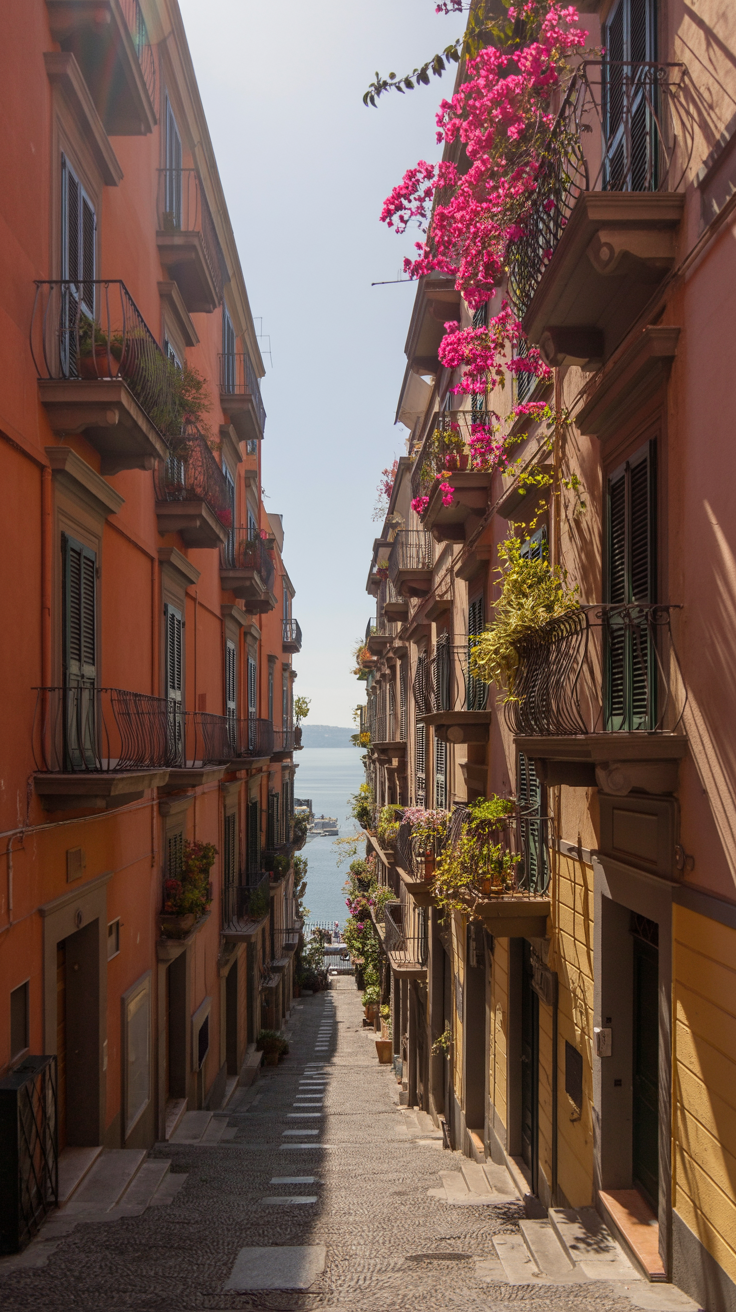
If you’re comfortable on your feet and the weather’s decent, walking from the Naples cruise port into the city center gives you a proper sense of arrival. You’re not sealed in a vehicle or underground – you’re right there watching the city unfold around you. Make sure you’ve got comfortable walking shoes for men or supportive walking shoes for women before you set off, as you’ll be covering quite a bit of ground throughout the day.
The standard route takes you along the waterfront road (Via Cristoforo Colombo) heading northeast. You’ll pass Castel Nuovo on your left – that impressive medieval fortress with the triumphal arch. This becomes your landmark; once you’re level with the castle, you’re basically at Piazza Municipio and the edge of the historic center. From there, Via Toledo (the main shopping street) leads straight into the Spanish Quarter, while Via San Carlo takes you to the Teatro di San Carlo opera house and the Galleria Umberto I shopping arcade.
The walk itself is flat and well-paved, though the port section can feel a bit industrial. You’re walking past working docks, ferry terminals, and some car parks before things get more attractive. The whole stretch is busy with people coming and going, so you’re never alone or in a dodgy situation. That said, keep your wits about you – this is still a major Italian port city and pickpockets do operate, particularly in crowded areas. An anti-theft backpack or secure messenger bag keeps your valuables safe while you explore.
A few practical points for walking:
- Wear sensible shoes – The cobblestones in the old town will destroy your feet if you’re in flimsy sandals or new shoes. Having some blister prevention in your bag is smart insurance too
- Don’t follow Google Maps blindly – It sometimes suggests routes through back streets that aren’t the most pleasant. Stick to the main waterfront road until you reach the castle
- Watch for scooters – Neapolitan drivers use pavements as bonus lanes. Keep your ears open and don’t step into the road without looking
- There are no luggage storage lockers at the port – If you need to store bags, you’ll find facilities in the city center near the station, but that’s a detour
Getting Around the City Center
Once you’ve made it from the port to the historic center, Naples becomes refreshingly walkable. The main sights – Royal Palace, Galleria Umberto I, Spaccanapoli street, the Spanish Quarter – all cluster within a compact area you can cover on foot. Via Toledo runs north-south as the main shopping artery, while east-west streets like Spaccanapoli slice through the old town in remarkably straight lines (they follow the ancient Roman street grid).
The city center has a definite character shift as you move through it. Down near Piazza Municipio and the Royal Palace, things feel grand and somewhat orderly. Head into the Spanish Quarter or along Spaccanapoli into the heart of the historic center, and you’re suddenly in tight alleyways strung with washing, tiny churches packed with baroque excess, and street vendors selling everything from mozzarella to knock-off handbags. This is the Naples people mean when they talk about the “real” Naples – chaotic, noisy, slightly overwhelming, and absolutely compelling.
Navigation can be tricky because street signs are often missing or hidden, and Google Maps struggles with the tangle of medieval lanes. Grab a paper map from your ship or the tourist office near the port – having a physical backup helps when your phone signal drops in the narrow streets. Speaking of phones, keep a 20000mah portable charger or compact 10000mah power bank handy so you’re never left without navigation or camera power. The locals are generally helpful if you look lost, though English isn’t widely spoken once you’re away from the main tourist sites.
For longer distances or if you’re heading to specific attractions further out, here’s what works:
- Metro Line 1 – Already mentioned, but worth repeating. It’s the backbone for getting to the archaeological museum, Vomero, or up to Capodimonte Palace
- Metro Line 2 – Less useful for tourists but connects to the main train station (Napoli Centrale) if you’re taking trains to Pompeii or elsewhere
- Funicolare railways – Three funicular lines climb the hill to Vomero from different starting points in the city center. They’re technically public transport (same tickets as the metro), but they feel like a tourist attraction in themselves. Funicolare Centrale from Via Toledo is the most useful
- Buses – Honestly, skip them unless you’re really confident. Routes are confusing, timetables are approximate, and traffic makes them unreliable. The metro and your feet will serve you better
- Taxis – Available but expensive for short hops. If you’re heading somewhere specific and fed up with walking, they’re there, but negotiate or insist on the meter first
Practical Tips for Cruise Passengers
Naples throws a few curveballs at first-time visitors, particularly those used to more “organized” ports. Here’s the stuff that catches people out:
- The port isn’t secure like some cruise terminals – You don’t need to show your cruise card to leave and re-enter. Just walk out. This freaks some people out, but it’s perfectly normal
- All-aboard time means all-aboard time – Italian punctuality might be a joke elsewhere, but cruise ships wait for no one. The port isn’t huge, but factor in 20-30 minutes to get from the city center back to your ship, longer if you’re at the far berths
- Cash is still king in Naples – Small shops, market stalls, and even some restaurants don’t take cards. Hit an ATM early or bring euros with you
- The city center has no real “tourist zone” buffer – You’re straight into authentic Naples, which means you’ll see washing hanging from balconies, kids playing football in tiny squares, and old men arguing over coffee. This is brilliant for atmosphere but can be a culture shock if you’re expecting Venetian polish
- Street food is safe and delicious – Don’t be put off by vendors who look like they’ve been there since 1952. Pizza fritta, arancini, and sfogliatelle from street sellers are a highlight, not a health risk
- Pickpockets work the tourist areas – Not to make you paranoid, but the streets around Via Toledo and the Spanish Quarter have professional thieves. Keep bags zipped and phones secure. The “helpful stranger” who points out bird droppings on your jacket has an accomplice emptying your pockets
- Many churches and museums close at lunchtime – If you want to see inside a specific church, go before 12:30pm or after 4pm. The siesta is still sacred
- Bring a refillable water bottle – Naples has public drinking fountains scattered around, and a collapsible water bottle saves money and keeps you hydrated without taking up much bag space
- Your phone needs power – European outlets are different, so grab a universal power adapter before you travel, and keep a portable charger with built-in cables in your daypack
Extend Your Stay in Naples
If your cruise schedule allows, spending an extra day or two in Naples before or after your sailing gives you proper time to absorb the city without the pressure of an all-aboard deadline. The frantic energy of Naples rewards slower exploration – lingering over coffee in Piazza Bellini, getting properly lost in the backstreets, or taking an evening passeggiata along the waterfront when the cruise crowds have departed.
Accommodation in Naples spans everything from budget hostels to grand hotels, with the best options concentrated in the historic center or up in the residential Vomero neighborhood. Staying centrally puts you in the thick of the atmosphere, while Vomero offers more space, quieter streets, and excellent views, with the funicular dropping you into the center in minutes. Hotels in Naples tend to be better value than Rome or Venice, and even mid-range places often occupy historic buildings with bags of character. Pack smart with compression packing cubes to maximize your luggage space, and bring a hanging toiletry organizer to keep hotel bathrooms tidy.
The practical advantage of an overnight stay is access to Pompeii and Herculaneum without the cruise ship time pressure. The Circumvesuviana train from Napoli Centrale reaches Pompeii in about 40 minutes, and you can explore the site properly rather than rushing through with a tour group. Similarly, day trips along the Amalfi Coast become feasible – Sorrento is just an hour away, and from there you can catch buses or ferries to Positano and Amalfi itself. Mount Vesuvius is another option for anyone keen to peer into the crater of Europe’s most famous volcano.
If you’re staying overnight, consider these essentials: a portable door lock for added hotel security, compression socks for travel if you’ll be doing lots of walking, and a compact travel steamer to keep your clothes presentable without ironing. Check the weather forecast too – if there’s any chance of rain, pack a lightweight rain jacket for women or packable rain jacket for men.
Personal Experience
Getting from the Naples cruise port to the city center turned out to be much easier than I expected. The walk takes about 10-15 minutes if you’re up for it, and it’s actually quite pleasant once you get past the initial port area. You just follow the waterfront and suddenly you’re right in the thick of things near Piazza Municipio. We opted for the metro on our second day there – Line 1 stops right at Municipio station, which drops you perfectly in the historic center. The stations are surprisingly beautiful too, like little art galleries underground. A ticket costs next to nothing and saves your legs for all the walking you’ll do exploring.
Most cruise passengers seem to do a mix of walking and using the metro, depending on how much energy they have and where they want to go. Taxis are lined up at the port if you’ve got heavy bags or just can’t be bothered with the walk, though they can be a bit pricey for such a short distance. Once you’re in the city center, everything is pretty walkable – the Spanish Quarter, Via Toledo for shopping, and even the climb up to see the views. The metro is handy if you want to venture further out to places like the archaeological museum or the Vomero neighborhood. Really, Naples is set up well for cruise visitors who only have a day or two to explore.
Common Questions & FAQ
How far is the walk from Naples cruise port to the city center?
It’s about 1 to 1.5 kilometers from the main cruise terminals to Piazza Municipio at the edge of the historic center. Most people cover this in 10-15 minutes at a comfortable pace. The route is flat and follows the waterfront road past Castel Nuovo, so you can’t really get lost. If your ship docks at the furthest berth, add another 5 minutes.
Is the metro station easy to find from the cruise terminal?
Yes, Municipio metro station is clearly signposted once you reach Piazza Municipio, about a 5-7 minute walk from where you exit the cruise terminal. Look for the metro “M” signs. The station entrance is modern and obvious – you won’t miss it. Just be aware that the station has quite a few escalators and stairs down to platform level.
Are taxis at Naples port reliable and metered?
Official taxis at the port rank are legitimate and should use meters, but you need to watch them. Make sure the meter is reset to the minimum fare when you start, and expect legitimate surcharges for luggage and Sundays. A trip to the city center should cost €15-20. Avoid anyone who approaches you offering rides – use only the official rank outside the terminal.
Can I walk to Pompeii from the Naples cruise port?
Absolutely not. Pompeii is about 25 kilometers southeast of Naples. You’ll need to take the Circumvesuviana train from Napoli Centrale station, which takes about 40 minutes, or book a shore excursion. Some cruise passengers mistakenly think Pompeii is within walking distance of the port – it’s really not.
Is it safe to walk from the cruise port into Naples city center?
Yes, during daylight hours when cruise ships are in, the route is busy and perfectly safe. You’re walking through a working port area initially, then along the main waterfront road past the castle. Keep your valuables secure as you would in any city, but there’s nothing particularly risky about the walk itself. Thousands of cruise passengers do it every week without incident.
Do I need to book metro tickets in advance in Naples?
No, you can buy tickets from machines in the metro stations or from tobacco shops around the city. A single journey costs about €1.30 and must be validated before you go through the barriers. If you’re planning multiple trips, consider a day ticket for around €4.50, which is better value and saves queuing at machines between journeys.
Where exactly does the walk from the port to city center start?
Exit your cruise terminal building and head northeast along Via Cristoforo Colombo, which runs along the waterfront. Keep the sea on your right initially, then you’ll be walking with the port on your right and the city on your left. Follow this road past all the ferry terminals and you’ll see Castel Nuovo ahead – that’s your landmark. Once you reach the castle, you’re at Piazza Municipio and the center is right there.
Can I use contactless payment on Naples metro?
Unfortunately not yet. Naples metro still requires you to buy paper tickets from machines or shops. The system hasn’t been upgraded to accept contactless cards or phone payments like London or other European cities. Keep some coins or small notes handy for the ticket machines, as they sometimes refuse larger bills.