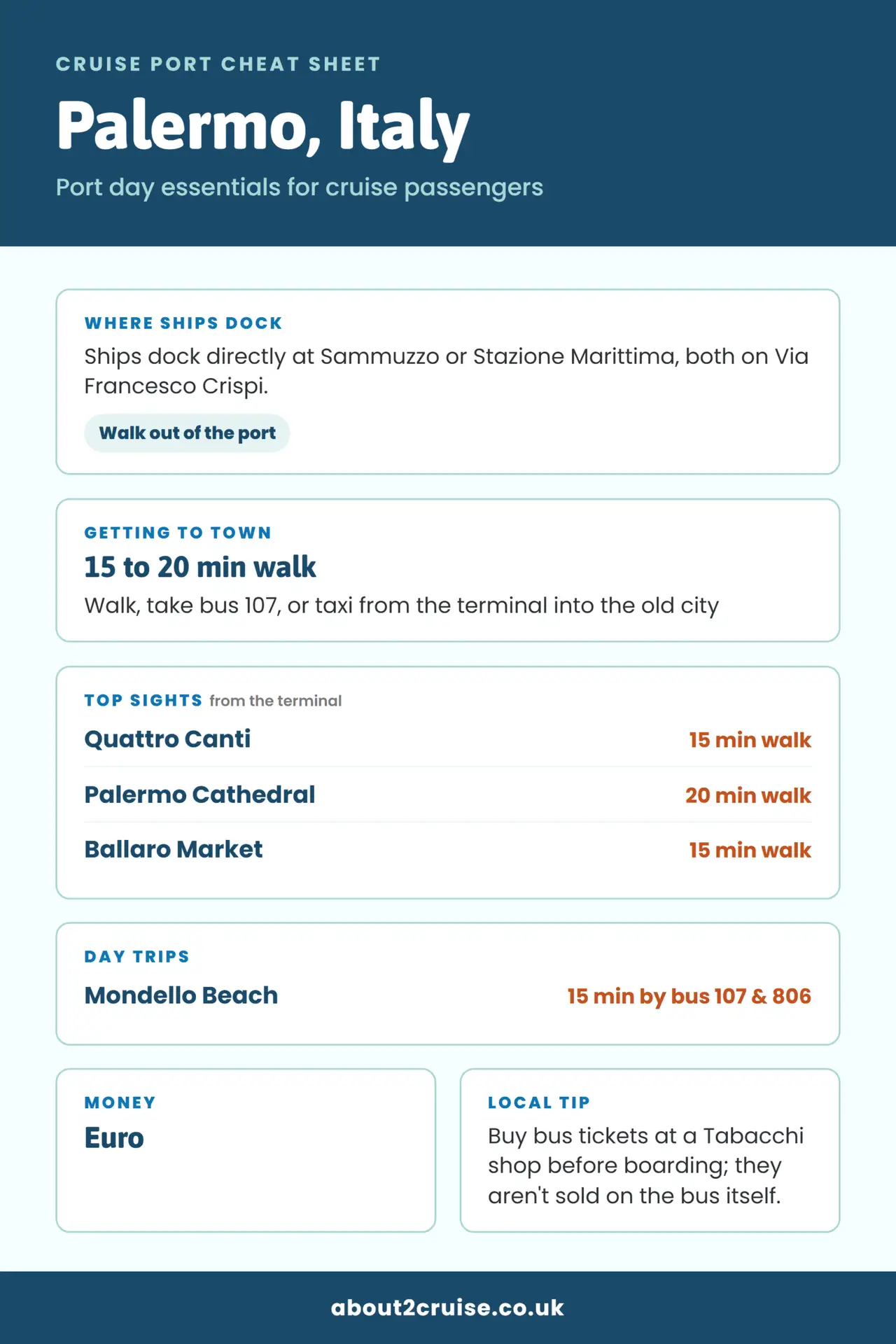
Palermo Cruise Port is Sicily’s main cruise terminal, located near the city center within walking distance of historic attractions. The port offers basic facilities including tourist information, transportation options like buses, taxis, and hop-on-hop-off tours. Key attractions include the Cathedral, Palazzo dei Normanni, and vibrant street markets. Shore excursions cover Monreale and surrounding areas.

Quick Port Facts

FactDetail
Port NameStazione Marittima Palermo
LocationVia Francesco Crispi, Dock Vittorio Veneto
Distance to City Centre25-30 minute walk
Main BerthsMolo Piave, Molo Sammuzzo, Molo Vittorio Veneto
Port Websitewww.portpalermo.it
Time ZoneCentral European Time (CET/CEST)
LanguageItalian (English spoken at tourist areas)
CurrencyEuro (EUR)
Nearest AirportFalcone-Borsellino Airport (40 minutes)

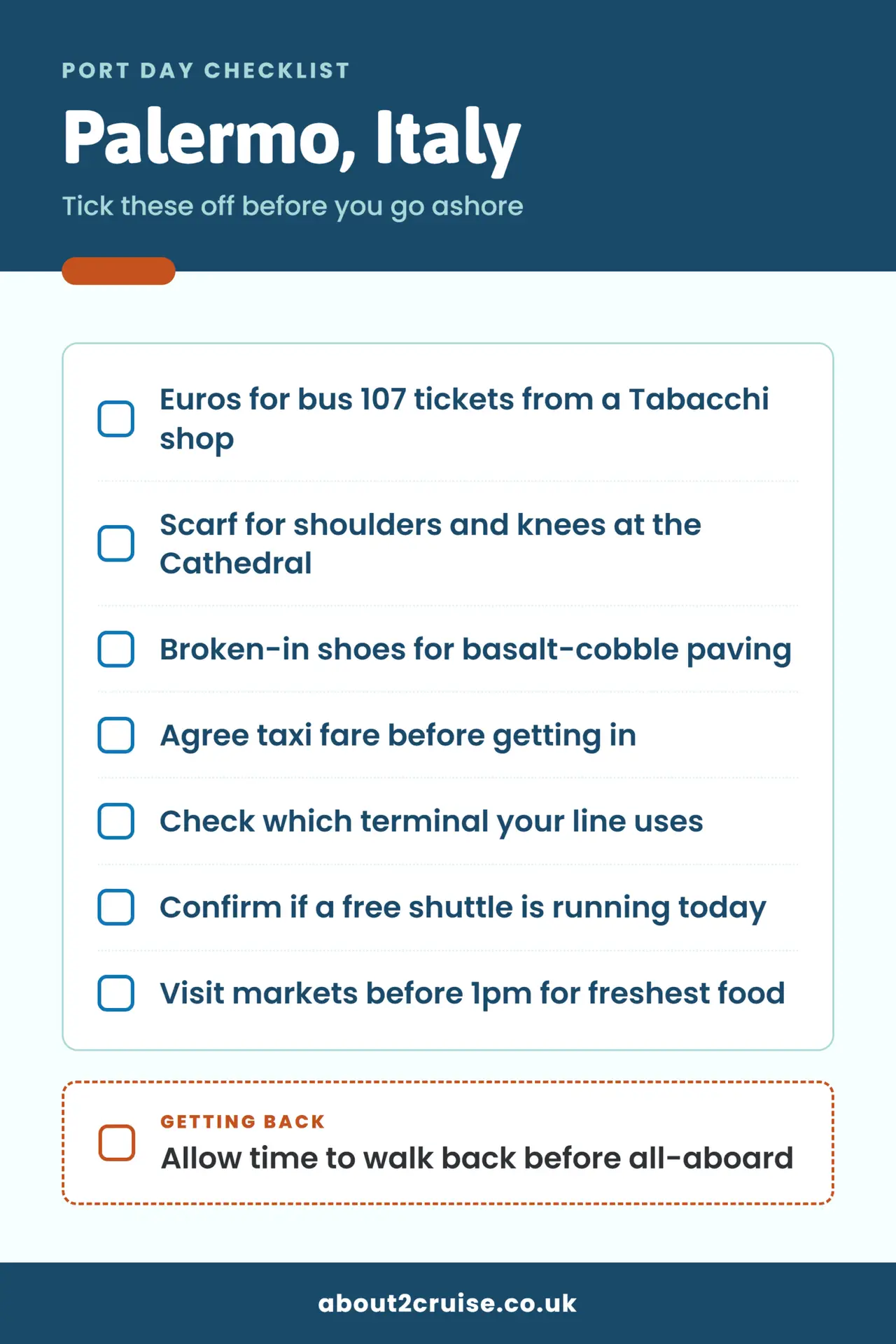
Port Day Checklist

  • Check your ship’s all-aboard time and work backwards from there
  • Download an offline map of Palermo’s historic center before disembarking
  • Grab cash from an ATM for market vendors and street food stalls
  • Pack comfortable walking shoes – Palermo’s streets are cobbled and uneven
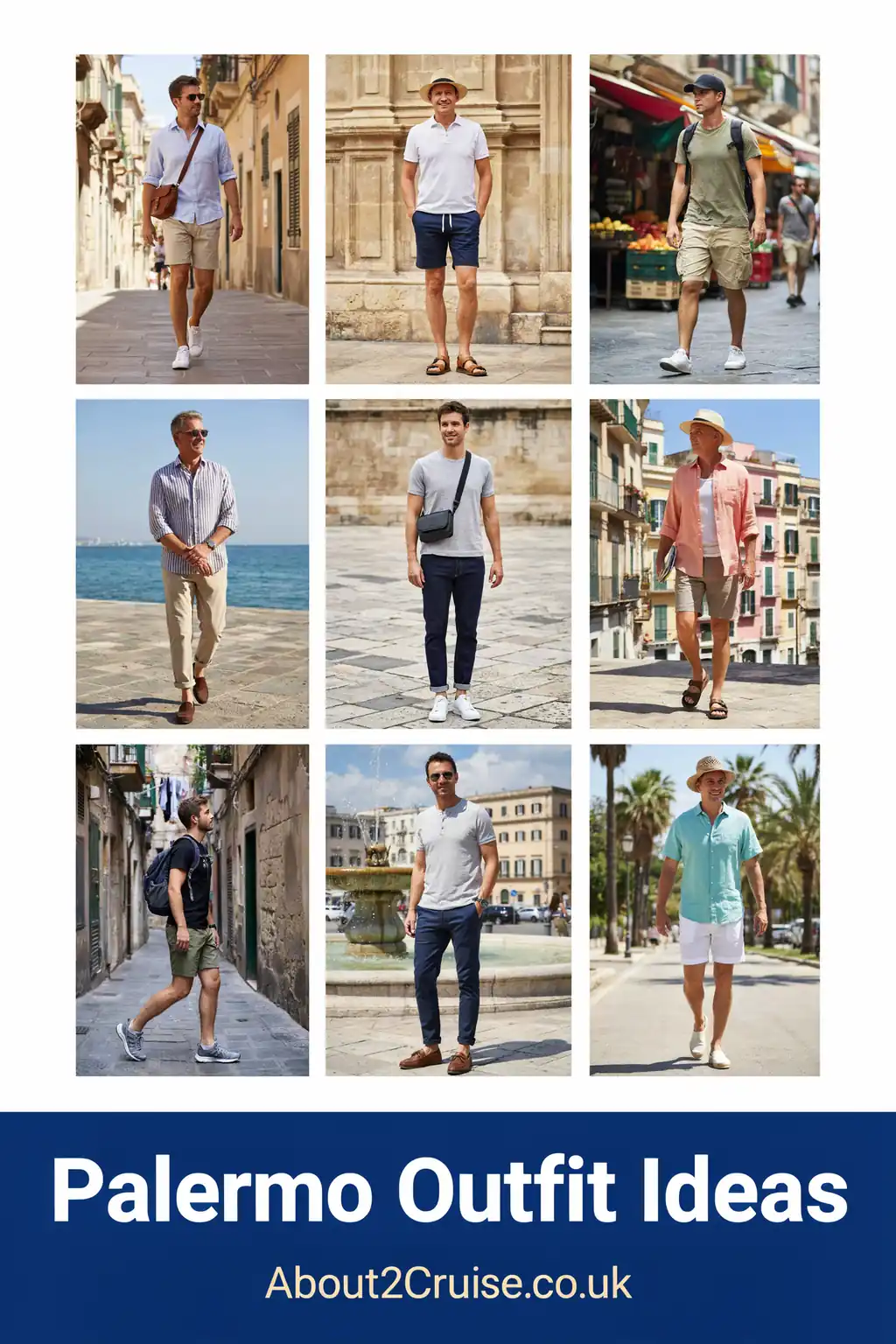
  • Bring modest clothing if you plan to visit churches (covered shoulders and knees required)
  • Save your cruise ship’s emergency contact number in your phone
  • Take a photo of your ship’s berth location so you can find your way back
  • Fill a water bottle and pack sunscreen – Sicilian sun is no joke

Want to know more about other cruise ports? Check out our guides to Mediterranean cruise ports in Sicily and Mediterranean cruise ports in Italy for more planning ideas.

Palermo Cruise Port Map

Palermo’s cruise terminal sits directly on the city waterfront along Via Francesco Crispi, with three main berths stretching along the historic harbor. The terminal building is compact and functional, positioned between the working port area and the old town. From here, you’re looking at a straight shot into the historic center – either a 25-30 minute walk along the waterfront or a quick bus or taxi ride. The Cathedral, Norman Palace, and main markets form a walkable cluster northeast of the port, while the marina and Foro Italico promenade run along the coast just minutes from where you’ll dock.

Can You Walk to Town from the Port?

Yes, you can absolutely walk into Palermo from the cruise terminal, and many passengers do exactly that. The distance to the main historic sights is manageable, though it’s not a quick five-minute stroll.

  • Distance and time: Roughly 25-30 minutes on foot to reach the Cathedral and Quattro Canti area. The route is mostly flat and follows the waterfront or main roads.
  • Route quality: Pavements are generally decent near the port, but once you hit the historic center you’ll be dealing with cobblestones and occasionally uneven surfaces. It’s doable with mobility aids but requires some patience.
  • Signage: Directional signs exist but aren’t always obvious. Having a map or navigation app is essential unless you’re comfortable asking locals for directions.
  • Heat factor: If you’re visiting in summer, that 30-minute walk can feel considerably longer. Early morning departures are more pleasant than midday treks in full sun.
  • Safety: The walk is safe during daylight hours. Stick to main roads and keep an eye on your belongings as you would in any busy Mediterranean city.
  • Alternative: If you’re not keen on the walk, buses and taxis are plentiful and inexpensive. Save your energy for exploring the city itself rather than the approach march.

How to Get Around from Palermo Port & Shore Transportation

Palermo offers several practical ways to get from the cruise terminal into town and beyond. The port area is well-connected, though not all options are immediately obvious when you first step off the ship.

Taxis

  • Availability: Taxis line up directly outside the terminal building. You won’t struggle to find one during normal cruise ship hours.
  • Fares: Expect to pay around €15-20 for a one-way trip into the historic center. Rates can vary with traffic and time of day, but it’s generally affordable compared to other Mediterranean ports.
  • Practicality: A taxi makes sense if you’re travelling as a group of three or four, or if you’re short on time and want to maximize your hours in town.
  • Tip: Agree on a fare before setting off, or ensure the meter is running. Most drivers are honest, but clarity avoids awkward conversations at your destination.

Local Buses

  • Route: Bus 107 serves the route between the port area and central Palermo. The stop is a short walk from the terminal exit.
  • Cost: Tickets are roughly €1.40 and valid for 90 minutes across the AMAT network, covering both buses and trams.
  • Where to buy tickets: Look for a tabacchi (tobacconist) near the port, or check if there’s a ticket machine at the bus stop. You can’t always buy tickets on board.
  • Frequency: Buses run regularly during the day, though schedules can be unpredictable. Budget extra time if you’re relying on public transport to get back to the ship.
  • Best for: Budget-conscious travellers who aren’t in a massive rush and want to experience local Palermo transport.

Hop-On Hop-Off Buses

  • Stop location: HOHO buses typically have a stop near the cruise terminal, making them convenient for passengers who prefer a structured sightseeing route.
  • Routes: Two main lines operate – Linea Blu and Linea Verde – covering major attractions including the Cathedral, Teatro Massimo, and markets.
  • Tickets: Usually available for purchase at the port or online in advance. Prices vary but expect to pay around €20-25 for a day pass.
  • Pros: Easy orientation, commentary in multiple languages, and flexibility to hop off at attractions without navigating public transport.
  • Cons: Palermo’s historic center is compact enough that dedicated walkers can see most sights on foot. HOHO buses work best if you’re covering outlying areas or prefer a guided structure.

Walking

  • Feasibility: Completely viable for reasonably fit passengers. The 25-30 minute walk from port to historic center is straightforward.
  • Route: Follow Via Francesco Crispi inland, or take the waterfront path past the marina and Foro Italico before cutting into the old town.
  • Scenery: The waterfront route offers pleasant harbor views. The inland route is more direct but less scenic.
  • Best for: People who enjoy exploring cities on foot and don’t mind a bit of urban hiking before reaching the main attractions.

Transfers to Airport

  • Airport location: Falcone-Borsellino Airport sits about 40 minutes from the port by road.
  • Options: Taxis, private transfers, and bus services all operate this route. Cruise lines often offer pre-booked transfer packages if you’re flying out the same day.
  • Cost: Taxis run around €40-50. Bus services are significantly cheaper but involve more stops and less convenience with luggage.

If you’re looking for more Western Mediterranean cruise ports to plan your itinerary, we’ve got comprehensive guides for other popular stops in the region.

What to See Within Walking Distance from the Port

Palermo’s historic center is genuinely walkable from the cruise terminal, though you’ll need to commit to a 25-30 minute walk to reach the main cluster of sights. Once you’re there, everything is packed tightly together.

  • La Cala Marina and Foro Italico: The marina area and seafront promenade are just 10-15 minutes from the terminal on foot. It’s a pleasant waterfront stroll with cafĂ©s and views of the harbor – a good warm-up before tackling the historic core or a relaxed spot to kill time before heading back to the ship.
  • Palermo Cathedral (Duomo): The Cathedral is the anchor of the historic center, about 25 minutes on foot from the port. It’s a stunning mix of architectural styles with Arab-Norman heritage and the option to climb to the rooftop for city views. The walk is worth it, though the cobbled streets get busier as you approach. Plan for 1-1.5 hours inside if you’re doing the full rooftop experience.
  • Quattro Canti: The famous octagonal Baroque square sits right in the heart of the old town, roughly 30 minutes from the port. It’s a perfect orientation point and photo stop. You’ll naturally pass through here if you’re walking between the Cathedral and other major sights.
  • Palazzo dei Normanni and Palatine Chapel: Sicily’s Norman Palace complex is a short walk from the Cathedral – add another 5-10 minutes from Quattro Canti. The Palatine Chapel’s Byzantine mosaics are genuinely spectacular and worth the entry fee. Expect queues if you arrive mid-morning with other cruise groups.
  • Church of San Cataldo and La Martorana: These two churches sit near each other close to Quattro Canti, within easy reach once you’re in the historic center. San Cataldo’s distinctive red domes and La Martorana’s mosaics make them worthwhile quick stops if you’re already in the area.
  • Mercato Ballarò: Palermo’s most authentic street market is about 25-30 minutes from the port, tucked into the southern part of the historic center. It’s loud, chaotic, and packed with produce stalls, street food vendors, and local shoppers. Best visited mid-morning when everything is in full swing. Budget time to wander and sample food rather than rushing through.
  • Mercato della Vucciria: Another historic market area, slightly closer to the waterfront than Ballarò. Traditionally a fish and produce market, it’s evolved into a mix of food stalls and nightlife spots. During the day it’s quieter than Ballarò but still offers street food and a slice of local life.
  • Teatro Massimo: Italy’s largest opera house sits in Piazza Verdi, about 20-25 minutes from the port. Even if you’re not catching a performance, the exterior is impressive and the surrounding square is pleasant for a quick break. Guided tours of the interior are available if you have time to spare.

Must See Attractions in Palermo for a One Day Cruise Visit

Must See Attractions in Palermo for a One Day Cruise Visit

With limited time, focus on the historic core’s Arab-Norman highlights and the sensory overload of Palermo’s street markets. These attractions offer the most bang for your buck on a tight schedule.

Palermo Cathedral (Duomo di Palermo)

  • What it is: A massive cathedral blending Norman, Arab, Gothic, and Baroque architecture, housing royal tombs and offering rooftop access for panoramic city views.
  • Why it matters: This is Palermo’s architectural showpiece, representing centuries of Sicilian history in one building. The rooftop walk gives you context for the city layout and is worth the ticket price.
  • Time needed: 1-1.5 hours including the rooftop. If you skip the roof access, 30-45 minutes covers the interior comfortably.
  • Practical tips: Entry to the main cathedral is free, but rooftop access costs around €5. Modest dress required (shoulders and knees covered). Arrive early to avoid tour groups – mid-morning sees the biggest crowds. The rooftop involves stairs and narrow passages, so not ideal if you have mobility issues.

Palazzo dei Normanni and Palatine Chapel

  • What it is: The Norman Palace houses Sicily’s regional parliament and, more importantly for visitors, the Palatine Chapel – a 12th-century chapel covered floor-to-ceiling in Byzantine mosaics.
  • Why it matters: The Palatine Chapel is one of the finest examples of Arab-Norman art in existence. The gold mosaics and wooden ceiling are genuinely breathtaking, and this is arguably Palermo’s single must-see interior.
  • Time needed: 1.5-2 hours including queuing, security checks, and time in the chapel itself. The palace complex is sizeable, though the chapel is the main draw.
  • Practical tips: Entry is around €10-12. Book tickets online in advance during cruise season to skip ticket queues. Modest dress enforced. Photography is allowed but no flash. The chapel has restricted hours when parliament is in session, so check opening times before you go. Get there when it opens to beat the crowds – by 11am it’s packed.

Mercato Ballarò

  • What it is: Palermo’s oldest and most atmospheric street market, sprawling through narrow streets with vendors selling everything from fish and vegetables to clothes and household goods.
  • Why it matters: This is where you experience real Palermo – chaotic, loud, vibrant, and utterly authentic. The street food here is outstanding and dirt cheap. It’s also a brilliant crash course in Sicilian ingredients and food culture.
  • Time needed: 45 minutes to 1.5 hours depending on how much you want to eat and wander. Factor in time to sample street food and navigate the crowds.
  • Practical tips: Free to walk around. Bring cash for street food – most vendors don’t take cards. Best visited between 9am and 1pm when the market is in full swing. Watch your belongings in the crowded lanes. Try arancini, panelle, and sfincione from the street stalls – expect to pay €2-5 per item. Don’t be afraid to point and gesture if your Italian is limited; vendors are used to tourists.

Quattro Canti

  • What it is: An octagonal Baroque intersection where the city’s two main streets cross, with elaborate facades on all four corners representing the Spanish kings, Palermo’s patron saints, and the seasons.
  • Why it matters: It’s the geographic and symbolic heart of old Palermo, and a stunning example of Spanish Baroque urban planning. Also a perfect orientation point for navigating the historic center.
  • Time needed: 10-15 minutes for photos and taking in the architecture. It’s an outdoor space, so you’ll naturally pass through rather than spending extended time here.
  • Practical tips: Free to visit. It’s a working intersection, so watch for traffic. Best photographed in morning light. Use this as a reference point – most other major sights radiate out from here.

Teatro Massimo

  • What it is: Italy’s largest opera house and one of Europe’s biggest, built in the late 19th century in grand neoclassical style.
  • Why it matters: The exterior is imposing and photogenic, and the interior tours offer insight into Palermo’s cultural scene and the building’s impressive acoustics. Film buffs will recognize it from The Godfather Part III’s climactic scenes.
  • Time needed: 15-20 minutes for exterior photos and the square. 45 minutes to 1 hour if you take a guided tour of the interior.
  • Practical tips: Exterior viewing is free. Interior tours cost around €8-10 and run throughout the day, though times vary based on rehearsals and performances. Tours are in Italian and English. The surrounding Piazza Verdi has cafĂ©s if you need a coffee break. Tours require advance booking during busy periods, though you can often walk up and join the next available tour if you’re lucky.

La Martorana (Santa Maria dell’Ammiraglio)

  • What it is: A 12th-century church with spectacular Byzantine mosaics, considered one of Palermo’s finest examples of Arab-Norman architecture.
  • Why it matters: The mosaics rival those in the Palatine Chapel but in a more intimate space. It’s less crowded than the major sights but equally impressive artistically.
  • Time needed: 20-30 minutes. It’s a small church, so you don’t need long, but the interior is worth studying in detail.
  • Practical tips: Entry is around €2-3. Modest dress required. Located right next to San Cataldo (another photogenic church worth a quick look), so easy to combine both in one stop. Can close unexpectedly for services, so don’t leave this for late in the day if it’s a priority.

For similar experiences, you might want to explore other Sicilian ports like Trapani or check out Porto Empedocle, which offers access to the Valley of the Temples.

Port Day Itinerary: Things to Do in 8 Hours

Here’s a realistic schedule that fits a typical 8am-5pm port day, assuming you’re docked at the main cruise terminal and want to see Palermo’s highlights without running yourself ragged.

  • 8:00-8:30am | Disembark and head into town: Clear the ship and walk to the port exit. Grab a taxi or catch Bus 107 into the historic center – save your energy for exploring rather than the initial walk. Taxi gets you to the Cathedral area in 10 minutes; bus takes about 20 minutes.
  • 8:30-10:00am | Palazzo dei Normanni and Palatine Chapel: Hit this first when it opens to avoid the worst crowds. The Byzantine mosaics in the Palatine Chapel are genuinely stunning and worth arriving early for. Budget 1.5 hours for queuing, security, and actually seeing the chapel.
  • 10:00-10:30am | Walk to Quattro Canti via the Cathedral: Stroll past Palermo Cathedral – stop for exterior photos and a quick peek inside if you’re not planning to return. Continue to Quattro Canti, the Baroque intersection at the heart of the old town. Perfect for orientation and photos.
  • 10:30-11:00am | La Martorana and San Cataldo: These two churches sit next to each other just off Quattro Canti. La Martorana’s mosaics are exceptional; San Cataldo’s exterior with its red domes makes for great photos. You can see both in 30 minutes comfortably.
  • 11:00am-12:30pm | Mercato Ballarò: Head to Ballarò market for the full sensory Palermo experience. Wander the stalls, soak up the chaos, and sample street food for an early lunch. Try arancini, panelle in a roll, and grab a cold drink. This is where you really experience local Palermo rather than tourist Palermo.
  • 12:30-1:30pm | Proper lunch break: Find a trattoria near the market or in the historic center for a sit-down meal. Pasta alla Norma, sarde a beccafico, or caponata are Sicilian classics. Budget €15-25 per person for a proper meal with wine. Take your time – you need the break before the afternoon heat.
  • 1:30-2:30pm | Palermo Cathedral rooftop and interior: Return to the Cathedral for a proper visit, including the rooftop walk. The views give you perspective on the city layout, and the royal tombs inside are worth seeing. The rooftop is breezy and cooler than street level – a nice respite from the afternoon heat.
  • 2:30-3:30pm | Teatro Massimo and Piazza Verdi: Walk to Teatro Massimo for exterior photos and a coffee break in the square. If you’ve got energy left, take an interior tour. Otherwise, just enjoy the architecture and people-watching from a cafĂ© table.
  • 3:30-4:15pm | Walk back via Foro Italico or shopping: Head back toward the port at a relaxed pace. Either take the scenic waterfront route along Foro Italico, or detour through shopping streets if you want to pick up souvenirs. Don’t leave this too late – you want buffer time to get back to the ship.
  • 4:15-4:45pm | Return to ship: Get back to the terminal with at least 45 minutes to spare before all-aboard time. This gives you breathing room for any delays or last-minute stops. Security and gangway queues can eat up time, especially when multiple cruise groups return simultaneously.

This schedule works comfortably without feeling rushed, assuming you’re reasonably fit and happy to walk. If mobility is an issue, trim one or two activities and use taxis between major sights to save energy.

Essential Gear for a Full Day Exploring Palermo

You’ll likely walk 15,000+ steps exploring Palermo’s cobblestone streets and historic attractions. Here’s what made our day comfortable and what we wish we’d brought from home.

For Your Feet

The cobblestones and uneven pavements here are no joke. Comfortable walking shoes for men or supportive walking shoes for women saved us from the blisters we got in other Mediterranean ports. The walk from the cruise terminal to the Cathedral alone is 25-30 minutes, and that’s before you start actually exploring. Bring blister prevention just in case – those market visits and church tours add up fast.

Your Daypack

You’ll need something for water, sunscreen, layers for church visits, and souvenirs from Ballarò market. An anti-theft backpack kept our stuff secure in crowded market areas and on the bus back to the port. The slash-proof material gave us peace of mind when we were squeezed into Mercato Ballarò with hundreds of other people. A collapsible water bottle clips on the outside and you can refill it at fountains throughout the historic center – the Sicilian sun is brutal and you’ll go through liters of water.

Staying Charged

Between taking photos at Quattro Canti, using Google Maps to navigate from the port, checking all-aboard times, and messaging your group when someone inevitably wanders off in the markets, your phone will die. A portable charger 20000mah got us through 12-hour port days in Sicily without stressing about battery. The higher capacity models can charge two phones multiple times – essential when you’re traveling with a partner and you both need navigation.

Staying Organized

With limited cabin space on cruise ships, compression packing cubes let us find what we needed without destroying our suitcase every port day. Game-changer for multi-port Mediterranean cruises when you’re unpacking and repacking constantly. A hanging toiletry bag uses the vertical space in tiny cruise bathrooms, and a cable organizer keeps all your chargers manageable instead of tangled at the bottom of your bag.

Church Dress Code

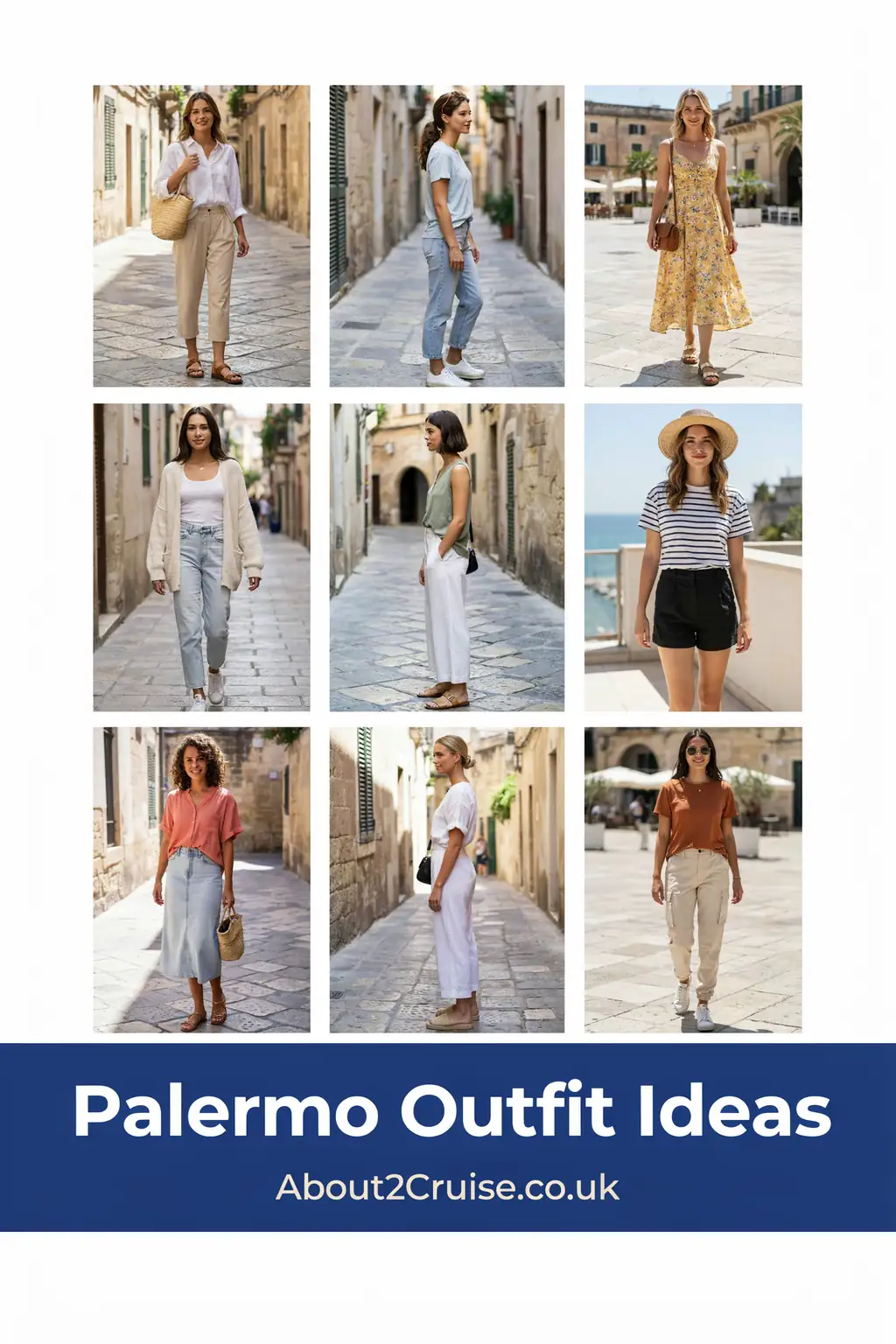
Palermo’s churches (Cathedral, Palatine Chapel, La Martorana) strictly enforce modest dress – covered shoulders and knees required. In summer that’s uncomfortable, but a lightweight scarf or shawl solves the problem and takes up almost no space in your daypack. Some cruise passengers got turned away at the Palatine Chapel entrance, which is heartbreaking when you’ve already queued for 30 minutes.

European Power

Don’t forget a European power adapter to charge all your devices in your cabin. Italy uses Type F plugs, and ship cabins typically only have one or two outlets. The models with multiple USB ports let you charge phones, cameras, and portable chargers simultaneously.

Where to Eat Near the Port

Palermo’s food scene is one of its major draws, though the immediate port area itself is fairly limited. The good news is the historic center is close enough that you’re quickly into proper restaurant and street food territory.

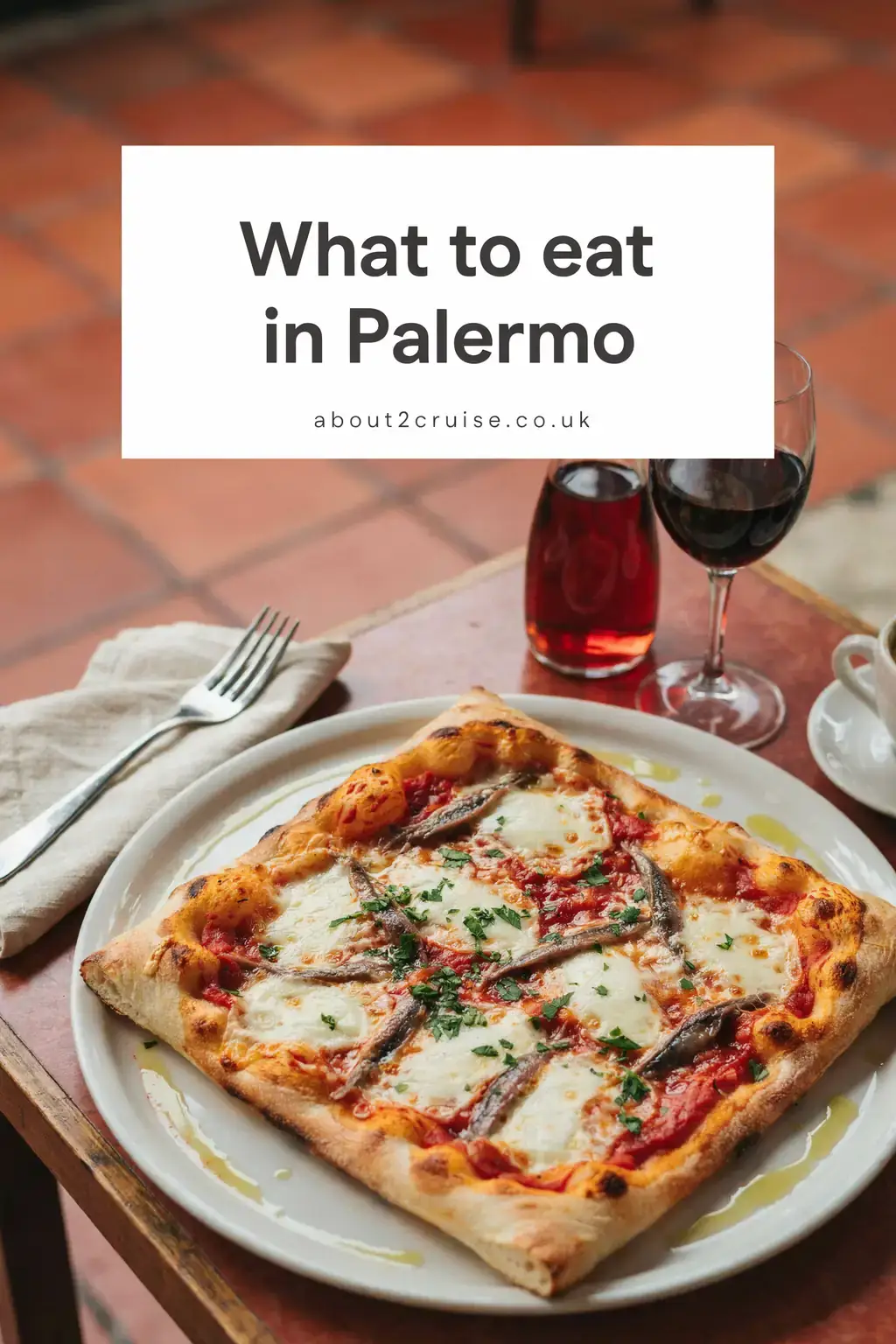
  • Street food in Ballarò and Vucciria markets: This is where Palermo shines. Arancini (fried rice balls, usually €2-3 each), panelle (chickpea fritters in a roll, around €2.50), sfincione (Sicilian pizza, €3-4 a slice), and cannoli (€2-3) are all market staples. The quality is excellent and prices are unbeatable. Ballarò is more authentic and less touristy than Vucciria.
  • Pasta alla Norma: Sicily’s signature pasta dish with fried aubergine, tomato, ricotta salata, and basil. You’ll find it on menus across the historic center. Expect to pay €8-12 for a plate in a sit-down restaurant.
  • Fresh seafood: Palermo is a port city, so fish is everywhere. Sarde a beccafico (stuffed sardines), grilled swordfish, and pasta with sea urchin are all worth trying. A seafood lunch in a mid-range trattoria will run €20-35 per person with wine.
  • Trattorias near the Cathedral: The streets around the Cathedral and Quattro Canti are packed with restaurants ranging from tourist traps to solid local spots. Look for places with Italian-language menus and locals eating – a good sign. Expect €15-25 per person for a two-course lunch with house wine.
  • Quick cafĂ© stops: Palermo has excellent coffee culture. Grab an espresso and cornetto (Italian croissant) at any pasticceria for €2-3. CafĂ©s around Quattro Canti and Piazza Verdi are convenient for breaks between sights.
  • Gelato: You’re in Sicily – have gelato. Quality varies but there are excellent gelaterias in the historic center. Expect €2.50-4 for two scoops. Pistachio from Bronte is the classic Sicilian flavour.
  • Food safety: Tap water is technically drinkable but most locals buy bottled water, so follow suit. Street food is generally safe – vendors have been doing this for generations and hygiene standards are decent. Use common sense: if a stall looks dodgy or the food has been sitting for hours, skip it.
  • Lunch timing: Sicilians eat late. Restaurants get busy from 1pm onwards and many close between 3-7pm. If you want to eat at noon, you’ll have places to yourself. If you want atmosphere and see locals eating, aim for 1-2pm.

If you’re planning a broader Italian cruise, you might also be interested in ports like Savona on the Italian Riviera, which offers completely different culinary experiences.

Shopping: What to Buy & Where to Go

Palermo isn’t a world-class shopping destination, but there are worthwhile purchases if you know what to look for. The focus here is food products, ceramics, and local crafts rather than fashion or luxury goods.

  • Sicilian ceramics: Hand-painted pottery featuring traditional Sicilian patterns in bright yellows, blues, and greens. You’ll find ceramic shops scattered through the historic center. Plates, bowls, and decorative pieces make good souvenirs. Prices vary wildly based on quality – expect €10-20 for a small plate, €40-80 for larger pieces. Check for “Made in Italy” labels; cheap imports get passed off as local work.
  • Sicilian food products: Pistachio products (paste, cream, biscuits) from Bronte, bottarga (cured fish roe), sun-dried tomatoes, capers, and local olive oil are all excellent purchases. Markets and speciality food shops have the best selection. Pack carefully if you’re taking olive oil back to the ship – it’s considered a liquid and needs proper wrapping.
  • Sicilian wine: Nero d’Avola and Marsala are the most famous Sicilian wines. Wine shops in the historic center offer decent selection and can usually advise on what travels well. Expect €10-30 for a good bottle. Check your cruise line’s alcohol policy before buying.
  • Puppets (Pupi Siciliani): Traditional Sicilian marionettes, once used in street theater. Artisan shops sell handmade puppets ranging from tourist tat to genuine craftsmanship. Small decorative puppets start around €20; full-size traditional pupi can run hundreds of euros.
  • Markets for knick-knacks: Ballarò and Vucciria have stalls selling everything from spices to knock-off designer bags. Haggling is expected at market stalls but not in proper shops. Be realistic about quality if something seems suspiciously cheap.
  • Via della LibertĂ  for mainstream shopping: If you want familiar brands and department stores, this is Palermo’s main shopping boulevard. It’s a bit of a trek from the port (20-30 minutes by bus or taxi), so only worth it if shopping is a priority.

Shop hours: Most shops open 9am-1pm and 4-8pm, with many closing on Sunday. August sees widespread closures as Italians take summer holidays. Markets operate morning to early afternoon – by 2pm most vendors are packing up.

Haggling: Expected and encouraged at outdoor markets, especially for non-food items. Start at about 60-70% of the asking price and negotiate from there. Fixed prices apply in shops and food stalls.

Public holidays: Italian public holidays see many shops closed. Major ones include January 1, Easter Monday, April 25 (Liberation Day), May 1 (Labour Day), August 15 (Ferragosto), December 8, and December 25-26. Always check if your port day falls on a holiday.

Emergency Contacts

  • Police: 112 (general emergency number)
  • Carabinieri (military police): 112
  • Ambulance: 118
  • Port Authority: +39 091 6041111
  • Hospital: Policlinico Paolo Giaccone, +39 091 6551111 (main public hospital, about 3km from port)
  • Tourist Police: Questura di Palermo, +39 091 21011

Save your cruise ship’s emergency contact number before going ashore. Your ship will have procedures for medical emergencies and can assist with contacting local authorities if needed.

Currency, ATMs & Money Matters

Italy uses the euro, and Palermo operates largely on cash despite being a major city. Here’s what you need to know about money practicalities.

  • Local currency: Euro (EUR). Coins come in 1, 2, 5, 10, 20, and 50 cent pieces, plus €1 and €2 coins. Notes are €5, €10, €20, €50, €100, €200, and €500 (though the latter two are rarely seen and often refused).
  • ATMs: Widely available throughout the historic center and near the port. Major banks include Unicredit, Intesa Sanpaolo, and Banco di Sicilia. Withdrawal fees depend on your home bank; expect €3-5 per transaction from the Italian side plus whatever your bank charges.
  • Card acceptance: Improving but patchy. Larger restaurants and shops take cards, but many smaller establishments, market vendors, and street food stalls are cash only. Carry at least €50-80 in small notes for a day out.
  • Exchange options: Available but usually offer poor rates. You’re better off using ATMs for cash or paying by card where possible. Avoid airport and port exchange bureaux if you can – rates are worst there.
  • How much cash to carry: For a typical port day with lunch, street food, and a few paid attractions, budget €60-100 per person in cash. More if you’re shopping or planning an expensive meal.
  • Bank notification: Tell your bank you’re travelling to Italy before you leave home. Many banks now allow you to set travel notifications via their app. Failure to do this can result in your card being blocked for suspected fraud – not ideal when you’re off the ship.
  • Tipping: Not obligatory in Italy but appreciated. Round up taxi fares to the nearest euro. In restaurants, service is often included (check for “servizio incluso” on the bill); if not, 5-10% is standard. No need to tip for street food or quick cafĂ© stops.
  • Taxes: VAT (IVA in Italian) is included in displayed prices. Non-EU residents can claim VAT refunds on purchases over €154.94 from participating retailers, though the paperwork is rarely worth it unless you’re making major purchases.

Weather by Month

SeasonMonthsTemperature RangeRainfallWhat to Expect
SpringMarch-May14-23°CModerate, decreasingPleasant weather perfect for walking and sightseeing. March can be changeable with occasional rain. April and May are ideal with warm days and comfortable evenings. Crowds building but manageable. Pack layers and a light rain jacket for March.
SummerJune-August22-31°CVery lowHot and dry, especially July and August when temperatures regularly exceed 30°C. Peak cruise season means crowded attractions and ports. Early mornings and evenings are best for walking. Bring sun protection, hat, and plenty of water. Many locals leave in August (Ferragosto), so some smaller shops close.
AutumnSeptember-November17-26°CIncreasingSeptember and October are excellent – still warm but less intense than summer. November sees more rain and cooler temperatures. Autumn is second-best season for visiting after spring. Crowds thin out after September. Pack a light jacket for evenings and potential rain in November.
WinterDecember-February10-15°CHigherMild by northern European standards but cooler and wetter than most expect. Few cruise ships call in winter. Some attractions have reduced hours. Good time to visit if you want to avoid crowds and don’t mind occasional rain. Pack a proper jacket and umbrella.

For context on other Mediterranean cruise ports in Spain, the weather patterns are similar but Spain’s southern coast tends to be slightly drier and warmer year-round.

Common Questions & FAQ

Do I need to book shore excursions in advance for Palermo?

Not necessarily. Palermo’s main attractions are walkable and accessible independently, so you can easily explore on your own without pre-booking tours. That said, if you want to visit Monreale Cathedral (about 30-45 minutes outside the city) or other sites beyond walking distance, booking a tour or transport in advance saves time and hassle. During peak season, popular shore excursions through your cruise line can sell out, so book early if you want guaranteed space on official ship tours.

Is Palermo safe for cruise passengers walking around independently?

Yes, generally speaking. The historic center and areas near the port are well-trafficked by tourists during the day and perfectly safe to explore. Like any Mediterranean city, you should watch your belongings in crowded markets and busy streets – pickpockets target tourists. Avoid displaying expensive jewelry or leaving bags unattended. Stick to main streets and tourist areas during the day and you’ll be fine. After dark the vibe changes in some neighborhoods, but you’ll be back on the ship by then.

Can I use US dollars or British pounds in Palermo?

No. Italy uses the euro, and you won’t get far trying to pay with other currencies. Some major tourist shops might accept dollars or pounds but at terrible exchange rates. Use ATMs to withdraw euros or pay by card where accepted. Don’t expect market vendors or small restaurants to take anything other than euros.

How much time do I need at the Palatine Chapel?

Budget 1.5-2 hours total from arriving at Palazzo dei Normanni to leaving. This includes queuing for tickets (if you didn’t pre-book), going through security, walking through the palace grounds, and spending proper time in the chapel itself. The chapel is relatively small but the mosaics deserve close attention. If you arrive right when it opens or pre-book tickets, you can trim 20-30 minutes off the total time. Don’t underestimate queue times during cruise ship days – it gets packed from mid-morning onwards.

Are the street markets open every day?

Ballarò operates Monday to Saturday, roughly 8am to 2pm, with peak activity between 9am and 1pm. Vucciria has a similar schedule but is less consistent – some stalls open daily, others are weekend-focused. Both markets are effectively closed on Sundays and public holidays. If you’re docking on Sunday, you’ll miss the full market experience, though some food stalls may still operate in tourist-heavy areas. Check your cruise itinerary and plan accordingly.

Can I visit Monreale Cathedral on a port day?

It’s doable but tight. Monreale is about 8km from Palermo city center – roughly 30-45 minutes by bus or taxi. The cathedral’s mosaics are extraordinary (arguably better than the Palatine Chapel), but you need to factor in travel time both ways plus time at the site. If your ship docks for 8+ hours and you’re organized, it’s feasible to visit Monreale and still see a couple of Palermo highlights. Otherwise, it’s an either/or choice. Taxis from Palermo cost around €25-30 one way; local bus 389 from Piazza Indipendenza is much cheaper (around €1.50) but slower and less predictable.

What’s the dress code for churches in Palermo?

Modest dress is required for all churches, including the Cathedral and Palatine Chapel. This means shoulders and knees must be covered – no shorts, short skirts, or sleeveless tops. Churches enforce this; you’ll be turned away if you’re not dressed appropriately. In summer this can be uncomfortable, but bring a light scarf or shawl to throw over shoulders and you’ll be fine. Some churches provide disposable cover-ups but don’t count on it.

Is taxi meter rigging common in Palermo?

It happens occasionally but isn’t rampant. Most taxi drivers are honest, especially those queuing at official ranks like the cruise terminal. To avoid issues, agree on the fare before getting in (for short trips to the city center, €15-20 is standard), or ensure the meter is running and set to the correct tariff. If you’re seriously overcharged, note the taxi number and report it to the port or local tourist office. Using official taxi ranks rather than random street cabs reduces your odds of problems.

Personal Experience

I remember stepping off the cruise ship in Palermo and feeling completely overwhelmed by how sprawling the port area was. The terminal itself is pretty straightforward, but here’s what I wish someone had told me: grab a map from the information desk right when you exit, and don’t be shy about asking the port staff about shuttle services. We ended up walking about 20 minutes to reach the actual city center because we didn’t realize there was a shuttle bus running from the port gates. The walk wasn’t terrible, but in the Sicilian heat with everyone eager to explore, those extra minutes mattered.

Once we got into town though, everything clicked into place. The Cathedral and the famous markets are genuinely walkable if you’re comfortable with a bit of urban hiking. We made it to the Quattro Canti and the Massimo Theatre before lunch, which felt like a real accomplishment. My advice? Skip the expensive port taxis unless you’re heading somewhere specific outside the city center. The local buses are reliable and dirt cheap, plus you get to experience Palermo like an actual resident rather than just another tourist passing through. Just keep an eye on your ship’s departure time – Palermo has a way of making you lose track of hours when you’re wandering through those incredible streets and markets.

  Last Updated: 9 February 2026