
Kodiak’s Russian heritage stems from its role as the first capital of Russian America from 1792-1808. Visitors can explore the Russian Orthodox Holy Resurrection Cathedral, featuring original icons and artifacts, along with the Baranov Museum in the Erskine House, showcasing the island’s Russian colonial period and Native Alutiiq cultural interactions.
Quick Facts
| Detail | Information |
|---|---|
| First Russian Settlement | 1784 – oldest Russian settlement in Alaska |
| Capital Period | 1792-1808 as Russian America’s capital |
| Main Attractions | Holy Resurrection Cathedral, Baranov Museum |
| Time Needed | 2-3 hours for main sites |
| Walking Distance | Downtown sites within 10-minute walk |
| Active Heritage | Living Orthodox community still practices traditions |
Want to know more about Alaska cruise ports and planning your itinerary?
What Makes Kodiak’s Russian Heritage Different
Unlike the more tourist-oriented Russian sites in Sitka, Kodiak Alaska cruise port offers something refreshingly authentic. This isn’t a place where actors dress up in period costumes or where everything exists solely for cruise passengers. The Russian Orthodox Church here is alive and well, with services held regularly in a fascinating blend of languages that reflect the island’s layered history.
The fur trade brought Russian explorers to Kodiak in 1784 under the leadership of Grigory Shelikhov, who established the first permanent Russian settlement in Alaska. When Alexander Baranov arrived, he made Kodiak the headquarters of the Russian-American Company and the capital of Russian America. This wasn’t just an outpost – it was the center of Russian colonial power in North America.
Must-See Russian Heritage Sites
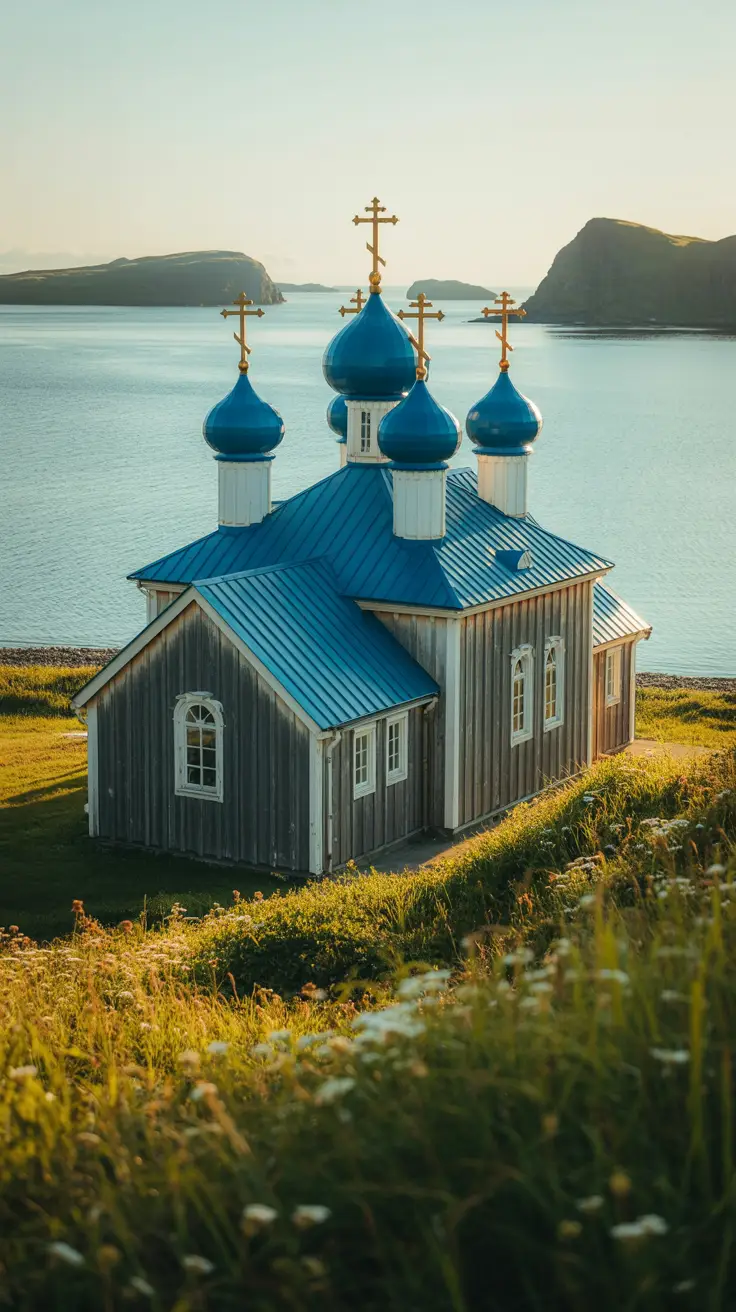
Holy Resurrection Cathedral
The star-blue domes topped with gold crosses are impossible to miss from the harbor. Built on the site of the original church from 1794, this is one of the oldest Russian Orthodox parishes in North America. Inside you’ll find:
- Icons dating back to the Russian colonial period
- Ornate gilt iconostasis separating the sanctuary
- Artifacts including original liturgical items
- Services still conducted in English, Slavonic, and Alutiiq
- Friendly parishioners who often give informal tours between services
Baranov Museum
Housed in the Erskine House, this is the oldest Russian building still standing in Alaska. The structure itself dates to 1808 and served as a warehouse for the Russian-American Company. Now it displays:
- Sea otter pelts that explain why Russians ventured so far
- Russian colonial artifacts and trade goods
- Native Alutiiq items showing cultural exchange
- Historical documents and photographs
- Exhibits on the complex relationship between Russian traders and indigenous peoples
Practical Tips for Cruise Passengers
Most ships dock for 6-10 hours in Kodiak, which gives you enough time to explore the Russian heritage sites without rushing. The downtown area is compact and walkable from the tender dock.
Getting Around
- The Russian heritage sites are within a 10-minute walk of downtown
- Taxis are available but usually unnecessary for these attractions
- Pick up a free walking map at the Kodiak Visitor Center near the harbor
- Wear comfortable walking shoes as sidewalks can be uneven
Timing Your Visit
- The Baranov Museum typically opens at 10 AM – perfect for a mid-morning visit
- The cathedral is often open for visitors outside service times
- Call ahead or check with your ship’s shore excursion desk for current hours
- Russian Orthodox Christmas (January 7) and Easter feature spectacular services if your cruise timing aligns
The Russian-Alutiiq Cultural Blend
What makes Kodiak unique is how Russian and Native Alutiiq cultures merged over centuries. Many Alutiiq people converted to Russian Orthodoxy and the religion became deeply embedded in indigenous culture. Today, you’ll find Alutiiq families with Russian surnames who practice Orthodox Christianity while maintaining their native traditions.
This isn’t the uncomfortable colonial story you might expect. While the Russian period certainly had its conflicts and exploitation, the Russian Orthodox Church’s approach was notably different from other colonial powers. Priests learned native languages, translated liturgy, and the church became a defender of Native rights against harsh treatment by traders.
Comparing Kodiak to Other Russian Heritage Sites
If you’re also visiting Sitka’s Russian heritage sites, you’ll notice some interesting contrasts. Sitka served as the later capital of Russian America and has more grand colonial architecture like St. Michael’s Cathedral. Kodiak feels more working-class and authentic, showing you where the Russian fur trade actually operated rather than where administrators lived in relative comfort.
Challenges to Consider
Let’s be honest about what might disappoint you:
- Kodiak isn’t a major cruise port so it has fewer polished tourist facilities
- The Russian sites are smaller and less grand than Sitka’s attractions
- Not all ships include Kodiak on their itineraries
- Weather can be unpredictable with frequent rain and wind
- The Baranov Museum is small and you can tour it in 30 minutes
- Limited dining options near the heritage sites compared to larger ports
But here’s the thing – these “challenges” are exactly what makes Kodiak special. You’re seeing real Alaska, not a sanitized cruise port version.
Beyond the Main Attractions
If you want to dig deeper into Kodiak things to do, here are some Russian heritage connections most visitors miss:
- St. Herman’s Orthodox Theological Seminary trains priests in the Russian Orthodox tradition
- The cemetery behind Holy Resurrection Cathedral contains graves from the Russian period
- Several downtown buildings incorporate Russian architectural elements
- Local restaurants sometimes serve Russian-influenced dishes like pelmeni or borscht
- The Kodiak History Museum has additional Russian artifacts not displayed at Baranov Museum
Bonus Tips
- Photography is generally not allowed inside the cathedral during services but is fine at other times – just ask first
- The museum gift shop sells excellent books on Russian Alaska that you won’t find elsewhere
- If you’re lucky enough to visit during a service, women should bring a scarf to cover their heads (the church usually has loaners)
- The Kodiak National Wildlife Refuge visitor center has exhibits on how the Russian period affected local wildlife populations
- Many locals have fascinating family stories connecting to the Russian era – strike up conversations in coffee shops
- The library downtown has archival photos and documents available for viewing by appointment
- Pack layers and rain gear even if it looks sunny – weather changes fast
- St. Herman of Alaska, North America’s first Orthodox saint, lived and worked in Kodiak – ask locals about his story
Common Questions and FAQ
Can I attend a service at Holy Resurrection Cathedral?
Absolutely, and visitors are welcome regardless of religious background. Services are usually Saturday evening and Sunday morning. The liturgy is lengthy (1.5-2 hours) and there’s no seating except along the walls, which is traditional for Orthodox worship. Don’t worry about not knowing what to do – just observe respectfully and locals will help if you look confused.
How much does admission to the Baranov Museum cost?
Admission fees are modest, typically around $5-7 for adults. The museum is small but packed with interesting artifacts, and the staff are incredibly knowledgeable. Your admission helps preserve this historic building and maintain the collection.
Are there guided tours specifically focused on Russian heritage?
Some cruise lines offer shore excursions that include Russian heritage sites, though they’re usually combined with other Kodiak attractions like the wildlife refuge or fishing culture. Independent visitors can often arrange informal tours through the museum or by contacting the historical society in advance. The church sometimes has parishioners available who love sharing the history.
What happened to Russian influence after Alaska was sold to the United States?
The sale to America in 1867 marked the end of Russian political control, but cultural influence remained strong. Many Russians stayed, intermarried with locals, and the Orthodox Church continued serving the community. Today, Kodiak has one of the largest Russian Orthodox populations in Alaska, with traditions passed down through generations.
Is the Russian heritage in Kodiak worth visiting if I’m already stopping in Sitka?
Yes, but they offer different experiences. Sitka shows you the administrative and ecclesiastical grandeur of Russian America’s capital with its impressive cathedral and colonial architecture. Kodiak reveals the grittier, working side of the fur trade empire where the actual commerce happened. If you’re a history buff, seeing both ports gives you a complete picture of Russian America.
Can I buy authentic Russian items or souvenirs?
The museum gift shop carries books, reproductions, and locally made items inspired by Russian heritage. You might also find matryoshka dolls and other Russian items at downtown shops, though many are imported rather than locally made. For authentic Kodiak-specific items, look for pieces that combine Russian and Alutiiq artistic traditions.
Personal Experience
Standing inside St. Paul’s Harbor Orthodox Church, with its distinctive onion dome gleaming against the Kodiak sky, I felt like I’d stepped into a different century. The scent of incense still lingered from morning services, and the icons covering the walls seemed to glow in the soft light filtering through the windows. What surprised me most was learning that this isn’t just a museum piece – it’s an active parish where services are still held in a mix of English, Slavonic, and Alutiiq. The church ladies were incredibly welcoming, eager to share stories about how Russian fur traders first arrived here in 1784, making Kodiak Alaska’s first Russian settlement and the capital of Russian America for a time.
After visiting the church, I wandered over to the Baranov Museum in the Erskine House, which happens to be the oldest Russian building still standing in Alaska. The furs on display gave me a real sense of why traders ventured so far from home – sea otter pelts were worth a fortune back then. What makes Kodiak’s Russian heritage so fascinating is how it’s woven into everyday life here. You’ll spot Russian names on storefronts, hear the influence in local speech, and notice how many residents still practice Orthodox traditions. If you only have a few hours in port, hitting the church and museum gives you a solid feel for this unique chapter of Alaskan history that most people don’t realize exists.