
Alert Bay is a small Indigenous community on Cormorant Island, British Columbia, accessible by cruise ship tender. The village showcases rich Kwakwaka’wakw culture through the U’mista Cultural Centre, traditional totem poles, and the world’s tallest totem pole. Visitors can explore Indigenous art, ceremonial masks, local museums, and enjoy scenic walks along the waterfront.
Quick Port Facts
| Fact | Detail |
|---|---|
| Official Port Website | Village of Alert Bay |
| Location | Cormorant Island, British Columbia |
| Terminal Facilities | Basic waiting room, accessible washrooms, Wi-Fi, nearby coffee shop |
| Getting Around | Walking is the main option; limited taxis available |
| Best Known For | U’mista Cultural Centre, world’s tallest totem pole, Kwakwaka’wakw heritage |
| Currency | Canadian Dollar (CAD) |
Want to know more about other cruise ports in Canada? We’ve got comprehensive guides covering the best stops along the Canadian coast.
Alert Bay Map
Alert Bay sits on Cormorant Island, a small island off the northeastern coast of Vancouver Island in British Columbia. The port is located right in the village centre at 10 Fir Street, making it one of the most convenient cruise stops you’ll experience. The entire community spans less than two square kilometres, so everything worth seeing is genuinely within walking distance.
Can You Walk to Town from the Port?
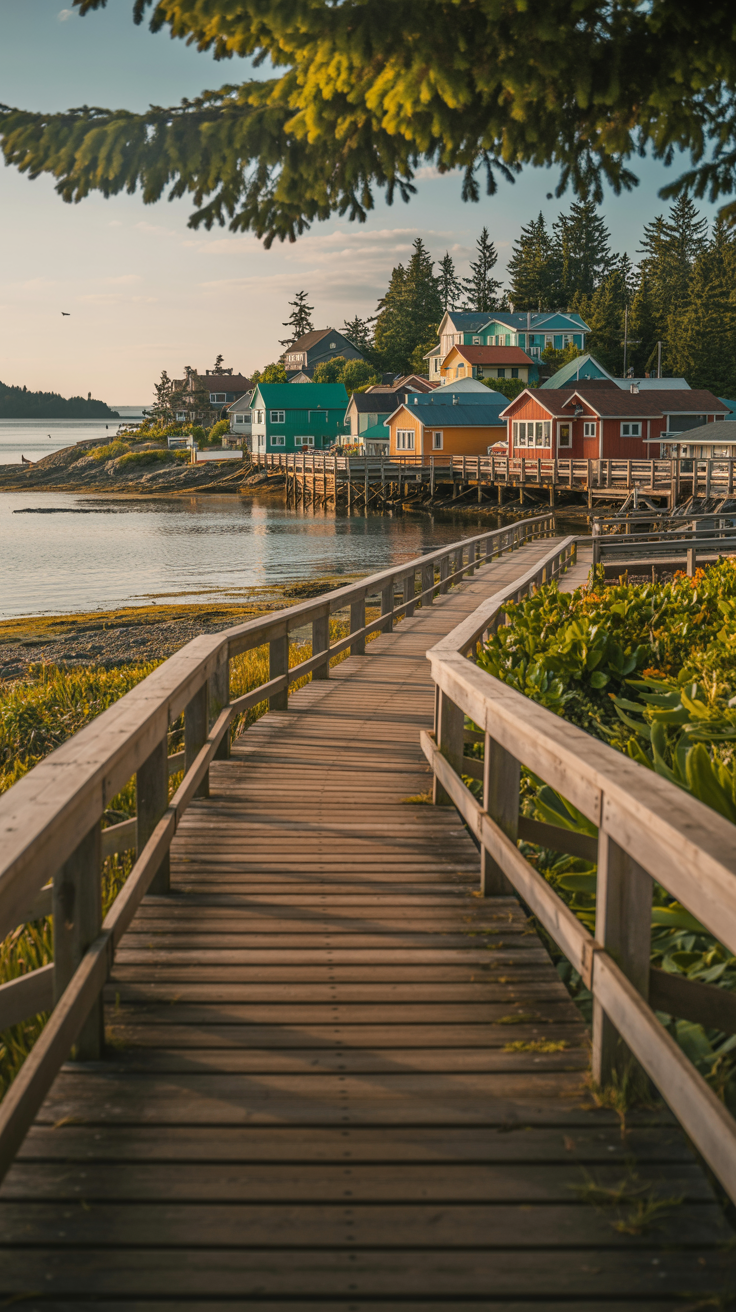
Yes, absolutely. In fact, you’re already in town the moment you step off the tender. This is one of those rare ports where the dock sits right in the heart of the village.
- The ferry terminal and tender dock are located on Fir Street, the main road through Alert Bay
- U’mista Cultural Centre is a 5-minute walk along the waterfront
- The world’s tallest totem pole and Namgis Big House are about 10 minutes on foot
- All restaurants, cafés, and shops line Fir Street within a few hundred metres of where you disembark
- The terrain is flat and paved along the main routes, with boardwalk sections leading to the ecological park
- There’s no need for transportation unless you have mobility issues or want to explore the more remote island trails
How to Get Around from Alert Bay & Shore Transportation
Alert Bay is refreshingly simple when it comes to getting around. The entire village is designed for walking, and most cruise passengers won’t need any form of transport beyond their own two feet. That said, if you have mobility concerns or want to venture further afield, here are your options.
Walking
- The primary and most practical way to see Alert Bay
- Flat, paved paths connect all major attractions along the waterfront
- Boardwalks wind through the ecological reserve with gentle gradients
- Total walking circuit (U’mista Centre, totem pole, Big House, ecological trails) takes roughly 2-3 hours at a leisurely pace
- Free walking maps available at the Visitor Centre on Fir Street
Taxis
- A handful of local taxi operators serve the island, but they’re not always stationed at the dock
- Best to arrange pickups in advance if you need one, especially on cruise ship days
- The village office or your ship’s excursion desk can help with local taxi numbers
- Honestly, unless you have specific mobility needs, a taxi isn’t necessary for a standard port visit
Bicycle Rentals
- Some local lodges and tour operators offer bike rentals, but availability varies
- Not essential given the compact size of the village, but nice if you want to explore the quieter island roads
- Check availability ahead of time if interested, as this isn’t a widely advertised service
What to See Within Walking Distance from the Port
Everything significant in Alert Bay sits within a comfortable 15-minute walk from the tender dock. This is one of the easiest ports to explore independently without rushing or needing transport.
- U’mista Cultural Centre: The heart of Alert Bay’s cultural offerings, this museum houses an extraordinary collection of potlatch regalia that was confiscated by the Canadian government in the 1920s and later repatriated. The exhibits explain the Potlatch ceremony, its suppression, and the community’s fight to reclaim their heritage. Allow 60-90 minutes. Open 9am-5pm in summer (reduced winter hours). 5-minute walk east along the waterfront from the dock.
- World’s Tallest Totem Pole: Standing at 173 feet, this carved pole was erected in 1973 and remains an iconic landmark. It’s located next to the Namgis Big House, where cultural ceremonies are occasionally held. Great photo opportunity and you’ll see it from various points around the village. 10-minute walk from the dock along Fir Street.
- Namgis Big House: A traditional longhouse used for ceremonies, performances, and community gatherings. While you can’t always go inside (it depends on scheduled events), the exterior is impressive and worth seeing alongside the totem pole. Check locally if any cultural performances coincide with your visit.
- Alert Bay Ecological Park: A network of easy boardwalk trails winding through coastal forest and wetlands. The Big Tree Trail features massive old-growth cedar and hemlock trees. Excellent for a peaceful walk and birdwatching. Allow 30-60 minutes depending on how far you wander. Trailhead is about 10 minutes from the dock.
- Waterfront Boardwalk and Shoreline Loop: Scenic walking paths connecting the village to the ecological park, with views across the strait to Vancouver Island. Flat, easy terrain suitable for all fitness levels. Perfect for stretching your legs between cultural stops.
- Local Art Galleries and Craft Shops: Several small galleries along Fir Street feature Kwakwaka’wakw art, including prints, carvings, and jewellery. Culture Shock Gallery is a notable stop for authentic local work. Most shops are within a few steps of the main dock area.
Must See Attractions in Alert Bay for a One Day Cruise Visit
Alert Bay isn’t a big port, so you won’t be overwhelmed with choices. That’s actually one of its charms. Focus on the cultural sites that make this stop unique, and you’ll have a meaningful visit without feeling rushed.
U’mista Cultural Centre
- What it is: A world-class museum dedicated to Kwakwaka’wakw culture, with a focus on the Potlatch ceremony and the regalia that was seized and later returned to the community.
- Why it matters: This is the single most important reason to visit Alert Bay. The potlatch collection is deeply moving, and the stories behind each mask and ceremonial object provide context you won’t get elsewhere. The centre also runs cultural programs and has knowledgeable staff who can answer questions.
- Time needed: 60-90 minutes. There’s no queue to speak of, as it’s rarely crowded. Take your time with the exhibits and read the descriptions thoroughly.
- Practical tips: Admission typically costs around $12-15 CAD for adults. Summer hours are generally 9am-5pm, but winter hours are reduced, so confirm before your visit if you’re calling outside peak season. Photography policies vary by exhibit, so ask at the desk. The centre is wheelchair accessible.
World’s Tallest Totem Pole
- What it is: A 173-foot totem pole carved in 1973 to commemorate the Kwakwaka’wakw people’s history and traditions. It’s officially recognized as the world’s tallest.
- Why it matters: It’s an iconic image of Alert Bay and a striking example of traditional carving at an impressive scale. Even if you’re not usually drawn to totem poles, this one is worth seeing simply for its size and craftsmanship.
- Time needed: 15-20 minutes. It’s a quick stop for photos and to read the interpretive signage.
- Practical tips: Free to view. Located adjacent to the Namgis Big House on Fir Street. Best light for photos is in the morning or late afternoon. Bring a wide-angle lens or step back quite a bit to capture the full height.
Namgis Big House
- What it is: A traditional Kwakwaka’wakw longhouse used for ceremonies, feasts, and cultural events.
- Why it matters: If there’s a cultural performance or ceremony scheduled during your visit, this is a rare opportunity to experience living traditions rather than just museum exhibits. Even if it’s not open, the exterior and surrounding totem poles are impressive.
- Time needed: 10-15 minutes if you’re just viewing the exterior; 60+ minutes if attending a performance.
- Practical tips: Check with the U’mista Cultural Centre or Alert Bay Visitor Centre to see if any events coincide with cruise ship arrivals. Performances require tickets and advance booking. Respectful behaviour and photography rules apply during ceremonies.
Alert Bay Ecological Park and Big Tree Trail
- What it is: A coastal forest reserve with boardwalk trails through old-growth trees, wetlands, and shoreline.
- Why it matters: It’s a peaceful escape from the cultural sites and gives you a sense of the island’s natural beauty. The old-growth cedars and hemlocks are several hundred years old and genuinely impressive.
- Time needed: 30-60 minutes depending on how far you walk. The main loop is short and flat.
- Practical tips: Free access. Boardwalks make it accessible for most mobility levels, though some sections are uneven. Watch for wildlife, including bald eagles and black bears (rare but possible). Bring insect repellent in summer.
Port Day Itinerary: Things to Do in 6 Hours
Here’s a realistic schedule that fits a typical 8am-2pm port day, which is common for Alert Bay stops given its position on longer Inside Passage or Alaska itineraries.
- 8:00am-8:15am | Tender Ashore and Orientation: Disembark and pick up a walking map from the Visitor Centre or check the interpretive signs near the dock. Get your bearings on Fir Street, the main road through the village.
- 8:15am-9:30am | U’mista Cultural Centre: Head straight to the museum while it’s quiet. Spend time with the potlatch regalia and read the stories behind each piece. This is the highlight of Alert Bay, so don’t rush it. The staff are usually around to answer questions if you’re curious about anything specific.
- 9:30am-10:00am | World’s Tallest Totem Pole and Namgis Big House: A short walk from the cultural centre, snap photos of the totem pole and explore the surrounding area. If the Big House is open or hosting an event, pop in briefly.
- 10:00am-11:00am | Alert Bay Ecological Park and Big Tree Trail: Take a leisurely stroll through the boardwalk trails. The old-growth trees are stunning, and it’s a nice break from the cultural sites. Bring your camera for the forest scenery and watch for eagles overhead.
- 11:00am-12:00pm | Lunch at Bayside Grill or Culture Shock Café: Head back to Fir Street for a casual lunch. Bayside Grill does solid pub fare and seafood, while Culture Shock Café offers lighter options and coffee in a local art-filled setting. Both are walkable from the ecological park.
- 12:00pm-1:15pm | Browse Local Art Galleries and Shops: Wander along Fir Street and check out the small galleries selling Kwakwaka’wakw art, prints, and carvings. Culture Shock Gallery is worth a stop for authentic local work. If you need souvenirs, this is your window.
- 1:15pm-1:45pm | Final Waterfront Walk and Last-Minute Photos: Take a relaxed stroll along the shoreline boardwalk, enjoy the views across to Vancouver Island, and soak up the peaceful vibe before heading back to the ship.
- 1:45pm | Return to Ship: Tender back with plenty of buffer time before the all-aboard call.
This timing works comfortably without feeling rushed, and you’ll have covered everything Alert Bay has to offer in a single port day.
Where to Eat Near the Port
Alert Bay’s dining scene is small and casual, reflecting the village’s size and remote island location. Don’t expect fine dining or a wide variety of cuisines, but what’s here is genuine and locally focused.
- Bayside Grill / Bayside Cold Beer & Wine: Located on Fir Street, this is the go-to spot for a casual meal. They serve pub-style food with an emphasis on seafood, including fish and chips, halibut burgers, and clam chowder. Mains typically run $15-25 CAD. It’s a relaxed atmosphere and convenient for a quick lunch between attractions.
- Culture Shock Gallery & Café: Also on Fir Street, this café offers coffee, baked goods, and light snacks in a space filled with Indigenous art. It’s perfect for a mid-morning coffee break or a light bite if you’re not looking for a full meal. Expect $5-10 CAD for coffee and a pastry.
- Nimpkish Restaurant (Nimpkish Hotel): Another Fir Street option serving straightforward lunch and dinner fare. The menu includes burgers, sandwiches, and local fish. Prices are similar to Bayside Grill, around $12-20 CAD for most dishes. Hours can vary seasonally, so check locally if you’re planning to eat here.
- Orca Inn Pub & Restaurant: A local pub with standard Canadian pub food and occasional live music. It’s more of an evening spot, but if you’re on a later tender back, it’s an option for a drink and a snack. Casual dress and atmosphere.
- Alert Bay Pizza: If you just need something quick and simple, this takeaway spot near the harbour does pizza by the slice or full pies. It’s not gourmet, but it’s convenient if you’re in a hurry. Around $8-15 CAD for a reasonable portion.
- Food safety and practicalities: Tap water is safe to drink throughout Alert Bay. Most places accept credit and debit cards, but it’s wise to carry some cash for smaller venues or cafés. Service can be slower than you’re used to in busier ports, so factor in extra time if you’re on a tight schedule.
Shopping: What to Buy & Where to Go
Alert Bay isn’t a major shopping destination, but if you’re interested in authentic Indigenous art, it’s one of the better places to find genuine Kwakwaka’wakw work.
- Kwakwaka’wakw Art: Look for prints, carvings, jewellery, and ceremonial-inspired pieces created by local artists. Culture Shock Gallery on Fir Street is a reliable source for authentic work, and the staff can tell you about the artists and the symbolism behind each piece. Prices vary widely depending on the size and medium, from small prints at $30-50 CAD to larger carvings running into the hundreds or thousands.
- Cedar Crafts: Hand-carved cedar items, including masks, paddles, and bowls, are traditional and make meaningful souvenirs. These are not cheap, but they’re genuine and reflect real craftsmanship. Expect to pay $100 CAD and up for quality pieces.
- Books and Educational Materials: The U’mista Cultural Centre has a small gift shop with books on Kwakwaka’wakw history, language, and art. It’s a good option if you want to learn more after your visit.
- Local Souvenirs: T-shirts, postcards, and other standard tourist items are available in the handful of shops along Fir Street. These are inexpensive ($10-25 CAD) and fine if you just want a memento of your visit.
- Shop hours and holidays: Most shops open around 9am or 10am and close by 5pm or 6pm. On Sundays and Canadian public holidays, some smaller shops may be closed or have reduced hours. If you’re visiting on a holiday weekend, check ahead or plan to shop early in the day.
- Haggling: Not expected or appropriate in Alert Bay. Prices are fixed, and given that much of the art is created by local Indigenous artists, haggling would be disrespectful.
Safety Tips & Avoiding Scams
Alert Bay is a small, safe community where serious crime is rare. That said, it’s always smart to stay aware and know how to get help if needed.
- General safety: The village is walkable and well-lit along the main routes. Stick to the established paths and boardwalks, especially in the ecological park, and you’ll have no issues. Solo travellers and families alike will feel comfortable exploring independently.
- Wildlife: Black bears are present on Cormorant Island, though sightings in the village itself are uncommon. If you’re walking the more remote trails, make noise and stay alert. Don’t approach or feed any wildlife, including eagles and other birds.
- Weather: The North Coast can be rainy and cool even in summer. Bring a waterproof jacket and wear layers. The boardwalks can be slippery when wet, so watch your footing.
- Scams: Not a concern in Alert Bay. The community is small and tight-knit, and there’s no real tourist scam infrastructure. The main thing to watch for is overpriced souvenirs in the rare shop that caters exclusively to cruise passengers, but even that’s not widespread. If you’re buying Indigenous art, ask about the artist and provenance to ensure you’re getting authentic work.
- Respecting cultural sites: The U’mista Cultural Centre and Namgis Big House are sacred cultural spaces. Follow photography rules, listen to staff guidance, and behave respectfully. Don’t touch ceremonial objects or carvings unless you’re explicitly told it’s okay.
Emergency Contacts
- Emergency (Police, Fire, Ambulance): 911
- Alert Bay RCMP (non-emergency): 250-974-5544 (145 Fir St, Alert Bay, BC V0N 1A0)
- Cormorant Island Community Health Centre: 250-974-5585
- Coast Guard Rescue Centre: 1-800-267-7270
- Village of Alert Bay Office (general information): 250-974-5024
Save your cruise ship’s emergency contact number before going ashore, and make sure someone on the ship knows your planned route if you’re exploring independently.
Essential Items for Your Day in Alert Bay
Given Alert Bay’s variable weather and walking-focused nature, packing the right essentials will make your day ashore much more comfortable. Here’s what to bring:
- Rain protection: A packable rain jacket is essential even in summer, as showers can roll in quickly on the North Coast. The boardwalks and forest trails can get slippery when wet, so waterproof gear keeps you comfortable.
- Comfortable walking shoes: You’ll be covering a fair bit of ground on paved paths and boardwalks. Women’s walking shoes or men’s walking shoes with good grip are important, especially if the trails are damp.
- Layered clothing: Temperatures can shift throughout the day, so dress in layers. Merino wool base layers for women or merino wool base layers for men work well for maintaining comfort in cool, damp conditions.
- Insect repellent: If you’re visiting during warmer months and plan to walk the ecological trails, insect repellent will help keep mosquitoes and other bugs at bay.
- Daypack: A packable backpack is handy for carrying water, snacks, your rain jacket, and any souvenirs you pick up along Fir Street.
- Sun protection: Even on cloudy days, UV exposure can be significant. Bring sunglasses for men or sunglasses for women, and consider a packable sun hat for extended outdoor walks.
- Small crossbody bag: An anti-theft crossbody bag keeps your essentials secure and accessible while you explore the village and cultural sites.
- Water bottle: A collapsible water bottle is perfect for staying hydrated without taking up space when empty. Tap water in Alert Bay is safe to drink.
- Binoculars: If you’re interested in birdwatching or spotting eagles in the ecological park, compact binoculars are worth bringing.
- Power bank: Mobile coverage can be patchy, but if you’re using your phone for photos or maps, a portable phone charger ensures you won’t run out of battery mid-exploration.
Currency, ATMs & Money Matters
Alert Bay uses the Canadian Dollar (CAD), and while most places accept cards, it’s a small village with limited banking infrastructure.
- Currency: Canadian Dollar (CAD). As of typical exchange rates, $1 USD = approximately $1.25-1.35 CAD, though rates fluctuate. If you’re arriving from the US, check current rates before exchanging money.
- ATMs: There is limited ATM availability in Alert Bay. If you need cash, withdraw it before leaving your ship or at a larger port earlier in your itinerary. Some local shops and restaurants prefer cash, especially for small purchases.
- Card acceptance: Most restaurants, galleries, and the U’mista Cultural Centre accept credit and debit cards (Visa and Mastercard are widely accepted; American Express less so). Contactless payment is common. Small vendors and cafés may be cash-only, so carry some bills just in case.
- Currency exchange: There are no currency exchange services in Alert Bay. If you need to exchange money, do so on your ship or at a bank in a larger Canadian port like Vancouver or Victoria.
- Bank notification: Let your bank know you’ll be travelling in Canada to avoid having your card blocked for suspicious activity. This is especially important if you’re using a US-issued card.
- Tipping: Tipping practices in Canada are similar to the US. Tip 15-20% in restaurants if service isn’t included. For taxi drivers or tour guides, 10-15% is standard. Cafés often have a tip jar; a dollar or two is appreciated but not mandatory.
- Prices: Alert Bay is moderately priced. A casual meal will cost $15-25 CAD, coffee and a snack $5-10 CAD, and authentic Indigenous art can range from $30 CAD for small prints to several hundred or more for carvings. Budget around $50-75 CAD per person for a half-day visit including lunch and a small souvenir.
Weather by Month
| Season | Months | Temperature Range | Conditions & What to Expect |
|---|---|---|---|
| Summer | June – August | 15-22°C (59-72°F) | The warmest and driest period, though rain is still possible. Long daylight hours and comfortable temperatures for walking. Pack layers and a light rain jacket. This is peak cruise season, so expect more visitors. |
| Autumn | September – November | 8-15°C (46-59°F) | Cooler and wetter as autumn progresses. September can still be pleasant, but by November expect frequent rain and shorter days. Fewer cruise ships call during this period. Bring waterproof clothing and warm layers. |
| Winter | December – February | 2-8°C (36-46°F) | Cold, wet, and windy. Snow is rare but possible. Very few cruise ships visit Alert Bay in winter. If you’re here off-season, expect limited opening hours for attractions and restaurants. Heavy rain gear is essential. |
| Spring | March – May | 6-14°C (43-57°F) | Transition period with improving weather by late spring. Rain is frequent, but temperatures are mild. Cruise season begins in May. Pack for variable conditions with waterproof outerwear and layers. |
Common Questions & FAQ
Do I need to book a shore excursion, or can I explore Alert Bay on my own?
You can absolutely explore Alert Bay independently. The village is compact, safe, and everything worth seeing is within walking distance of the tender dock. If you want structure or deeper cultural context, your cruise line may offer guided tours that include the U’mista Cultural Centre and a local guide’s perspective, but it’s not necessary. Solo exploration is easy here.
How long does it take to see the main attractions in Alert Bay?
You can comfortably cover the U’mista Cultural Centre, the world’s tallest totem pole, the Namgis Big House, and the ecological park in about 3-4 hours, including time for photos and a leisurely walk. If you add lunch and shopping, plan for 5-6 hours total. Most cruise calls give you around 6 hours ashore, which is plenty.
Is Alert Bay wheelchair or mobility-aid accessible?
The main village streets and the U’mista Cultural Centre are wheelchair accessible. The boardwalks in the ecological park are mostly accessible, though some sections are uneven or have slight inclines. The tender process from ship to shore can be challenging for passengers with limited mobility, so check with your cruise line about accessibility support.
Can I see orcas or other wildlife in Alert Bay?
Orcas and humpback whales do pass through the waters around Cormorant Island, but sightings from shore are not guaranteed. Bald eagles are common and you’ll likely spot them around the village or in the ecological park. Black bears are present on the island but rarely seen near the village itself. If whale watching is a priority, some local operators offer boat tours, but you’ll need to book in advance.
What’s the best time of day to visit the U’mista Cultural Centre?
Early morning, right when it opens at 9am, is ideal if you want a quieter experience. By mid-morning, other cruise passengers will start arriving. The centre rarely gets overcrowded, but if you prefer solitude to absorb the exhibits, go early.
Are there any cultural protocols I should know before visiting Alert Bay?
Respect is key when visiting Indigenous cultural sites. At the U’mista Cultural Centre and Namgis Big House, follow photography rules and don’t touch ceremonial objects unless invited. If you attend a cultural performance, listen to the protocols explained at the start. Ask questions respectfully and be open to learning. Purchasing authentic art directly from Indigenous artists or galleries supports the community.
Is there mobile phone coverage and Wi-Fi in Alert Bay?
Mobile coverage on Cormorant Island can be patchy depending on your carrier. Canadian networks (Rogers, Telus, Bell) generally have better coverage than US roaming plans. The BC Ferries terminal and some cafés offer Wi-Fi, but don’t rely on constant connectivity. Download any maps or information you need before leaving the ship.
What should I wear for a day in Alert Bay?
Dress in comfortable walking shoes with good grip (the boardwalks can be slippery when wet). Layers are essential, as temperatures can shift and rain is common even in summer. Bring a waterproof jacket and a hat. If you’re planning to walk the ecological trails, long trousers and insect repellent are wise in warmer months. Casual clothing is fine; there’s no need to dress up.
Personal Experience
When our cruise ship pulled into Alert Bay, I wasn’t quite sure what to expect from this tiny island community off the northern tip of Vancouver Island. The dock is right in the village, so you can literally walk off the ship and you’re already exploring. My first stop was the U’mista Cultural Centre, and honestly, it’s the main reason to visit Alert Bay. The collection of potlatch regalia and the stories behind their repatriation gave me such a deeper understanding of Kwakwaka’wakw culture. The staff there are incredibly welcoming and take time to answer questions, which made the visit feel personal rather than just another museum stop.
Getting around is refreshingly simple since Alert Bay is small enough to cover on foot. I walked along the waterfront to see the world’s tallest totem pole, which towers over everything at 173 feet, and then wandered through the boardwalk that winds through the ecological reserve. There’s a small café near the cultural centre if you need coffee or a snack, and a few local artists have shops worth popping into. The whole place has this peaceful, authentic vibe that feels worlds away from busier cruise ports. Just keep in mind that most places operate on island time here, so if something’s closed for lunch or opens a bit late, just go with it and enjoy the slower pace.
If you’re planning a broader Canadian cruise, check out our guide to Nanaimo BC on Vancouver Island or explore Prince Rupert BC, another fascinating stop on the Inside Passage. If Alert Bay has sparked your interest in northern cruising, our overview of Alaska cruises covers similar remote ports with rich Indigenous heritage. And if this is your first time cruising these smaller ports, our new to cruising guide has practical advice for making the most of tender ports and cultural stops.