
Tuktoyaktuk is a remote Inuvialuit hamlet on the Arctic Ocean in Canada’s Northwest Territories. This small coastal community offers visitors authentic Arctic experiences, including traditional Indigenous culture, unique permafrost landscapes, and opportunities to see the Beaufort Sea. Access is limited, with most cruise visitors arriving via expedition vessels exploring the Northwest Passage during summer months.
Quick Port Facts
| Fact | Detail |
|---|---|
| Port Code | CATUK |
| Location | 69.4500° N, 133.0333° W on Kugmallit Bay, Beaufort Sea |
| Population | Approximately 900 residents |
| Language | English, Inuvialuktun |
| Currency | Canadian Dollar (CAD) |
| Cruise Season | Late July to early September (ice-dependent) |
| Port Type | Cargo and fuel terminal, not a dedicated cruise facility |
| Official Website | tuktoyaktuk.ca |
Want to know more about Canada’s diverse cruise ports and what each destination offers?
Tuktoyaktuk Port Map
Tuktoyaktuk generally functions as a docking port for cruise ships, not a pure tender-only port, because it has a small marine terminal with piers that can accommodate cruise and cargo vessels within draft limits. However, given the shallow depths (around 3.4–4.9 metres at the main piers) and basic infrastructure, very small expedition vessels are the ones that typically dock, while any larger ship visiting could need to anchor offshore and use tenders depending on its size and draft.
Can You Walk to Town from the Port?
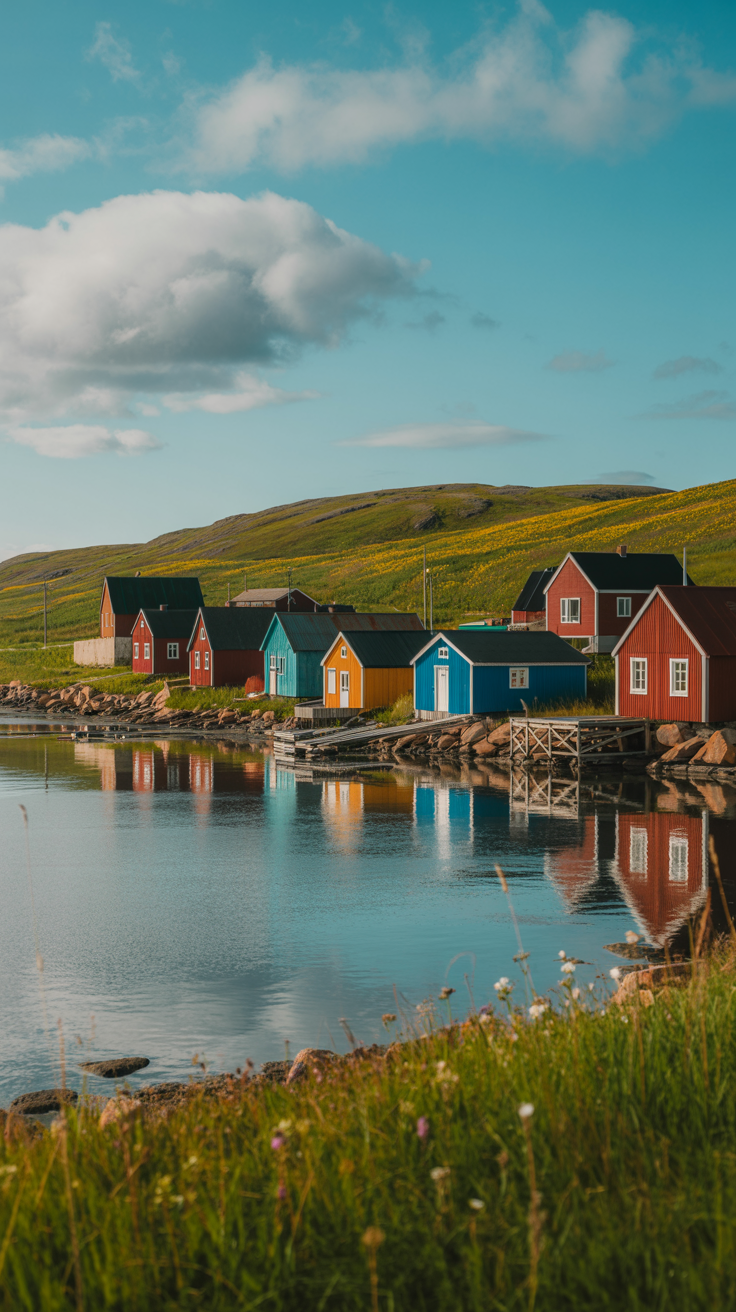
Cruise ships dock at the small cargo and fuel terminal in Tuktoyaktuk harbour. This is not a purpose-built cruise terminal – it’s primarily used for seasonal cargo operations and fuel supply for northern communities. The hamlet centre sits very close to the harbour area.
- Distance: The main community area is roughly 0.5-1 km from the dock, approximately 10-15 minutes on foot
- Terrain: Mostly flat gravel roads and packed earth. There are no pavements in the traditional sense, and accessibility can be challenging for wheelchairs or mobility aids due to uneven surfaces and lack of kerb cuts
- Weather: Arctic conditions mean cool temperatures even in summer, with strong winds common off the Beaufort Sea. The brief summer season brings intense mosquitoes when the tundra thaws. Be prepared for rapid weather changes
- Safety: The route is safe and straightforward during daylight hours. This is a small community where visitors are noticed and generally welcomed, though you should respect private property and residential areas
- Bottom line: Walking into town is entirely practical and actually the expected way to explore. Most cruise passengers will walk the short distance to see the community, though organized transport is typically arranged for the Pingo National Landmark site
How to Get Around from Tuktoyaktuk Port & Shore Transportation
Transport options in Tuktoyaktuk are extremely limited compared to conventional cruise ports. Most cruise lines arrange specific shore excursions with included transport for key sights outside walking distance.
Cruise Line Shore Excursions
- By far the most reliable option for reaching the Pingo National Landmark and other sites beyond the hamlet
- Typically includes a small bus or van transfer, local guide, and timed stops at viewing areas
- Essential for seeing the pingos, which are about 5 km from the dock
- Book early as capacity is limited on expedition vessels
Local Taxis and Private Hire
- Very limited availability – this isn’t a destination with taxi ranks or ride-sharing apps
- If you do find a local driver willing to take passengers, confirm the price before departure and expect cash payment
- Not recommended unless arranged through your cruise line or a verified local operator
Walking
- The best way to explore the hamlet itself, including the harbour area, community buildings, and local craft shops
- Wear sturdy walking shoes suitable for gravel roads and uneven terrain
- The famous “End of the Road” sign (marking the northern terminus of the Inuvik-Tuktoyaktuk Highway) is within reasonable walking distance from the harbour
What to See Within Walking Distance from the Port
The hamlet of Tuktoyaktuk itself is compact and walkable, though natural attractions like the pingos require organized transport.
- Tuktoyaktuk Harbourfront: The Arctic coastline right by the dock offers stunning views across the Beaufort Sea. In late summer you might spot beluga whales offshore or various seabirds. The harbour area itself gives you a real sense of how this community functions as a northern supply hub. Immediate access from ship.
- Local Craft Shops and Community Spaces: Several small shops and community halls in the hamlet centre sell authentic Inuvialuit crafts, including seal-skin items and traditional beadwork. These are genuine local products, not mass-produced tourist tat. About 10-15 minutes walk from dock.
- “End of the Road” Sign: The iconic marker showing that you’ve reached the end of the Inuvik-Tuktoyaktuk Highway, the first all-weather road to the Arctic Ocean in this region. Everyone wants a photo here. Roughly 1-1.5 km from the harbour, about 20 minutes walk depending on conditions.
- Tundra Landscape: Simply walking through the hamlet gives you views of the classic Arctic tundra environment, with its low vegetation, permafrost-affected terrain, and unique light quality. The landscape itself is an attraction.
Must See Attractions in Tuktoyaktuk for a One Day Cruise Visit
With limited time in port and the Arctic setting, prioritise these genuinely unique experiences that you can’t find elsewhere.
Ibyuk Pingo (Pingo National Landmark)
- What it is: Canada’s highest pingo – a massive ice-cored hill rising about 49 metres above the tundra. Pingos form when groundwater freezes and expands under permafrost conditions, creating these remarkable dome-shaped landmarks
- Why it matters: This is one of the most accessible and impressive examples of Arctic periglacial landforms anywhere in the world. The viewing boardwalk provides context and stunning photo opportunities
- Time needed: Plan for 1.5-2 hours including the 5 km drive each way from the harbour, time at the boardwalk (about 400 metres), and stops for photos. The boardwalk itself is a short walk, but you’ll want time to take in the landscape
- Practical tips: Access is typically via organized shore excursion or pre-arranged local guide. The site is managed by Parks Canada. Bring wind protection and layers even in summer. The mosquitoes can be fierce during tundra thaw – DEET-based insect repellent is essential
Day Use Area Beach and Coastal Views
- What it is: A beach area near the Pingo National Landmark where you can get down to the Arctic Ocean shoreline. Some local operators offer kayak or canoe experiences here through groups like the Tuktoyaktuk Canoe Club
- Why it matters: It’s a chance to actually touch the Arctic Ocean and see the pingos from a water perspective. The beach setting offers a different angle on the landscape
- Time needed: If combined with the pingo visit, add 30-45 minutes. If you’re doing a paddle experience, plan for at least an additional hour
- Practical tips: Water activities need to be arranged in advance through your cruise line or a vetted local operator. Arctic water is extremely cold year-round – dress accordingly if you’re getting near it
Inuvialuit Cultural Experiences
- What it is: Opportunities to learn about Inuvialuit culture, traditional practices, and contemporary life in the Arctic. This might include demonstrations of traditional crafts, storytelling, or discussions about how climate change affects the community
- Why it matters: This is a living community, not a museum. Engaging respectfully with local residents and their culture is arguably the most valuable part of visiting Tuktoyaktuk
- Time needed: Cultural presentations typically run 45 minutes to 1.5 hours depending on the format
- Practical tips: These experiences are usually arranged through cruise shore excursions. Listen respectfully and ask questions appropriately. Photography of individuals should always be done with permission
Community Exploration and “End of the Road”
- What it is: Walking through the hamlet to see how a small Arctic community functions, including views of houses built on pilings (to avoid melting permafrost), the harbour operations, and the famous highway terminus sign
- Why it matters: You’re seeing a real place where people live in conditions most visitors can barely imagine. The “End of the Road” sign has become iconic as the terminus of the first all-weather road connecting an Arctic Ocean community to the Canadian highway network
- Time needed: Allow 1-1.5 hours for a casual walk around the hamlet
- Practical tips: Respect private property and residential areas. Many homes have traditional food caches or equipment outside – these aren’t tourist displays, they’re functional. The sign makes for a great photo opportunity but can be busy when groups arrive
Port Day Itinerary: Things to Do in 6-7 Hours
Here’s a realistic schedule that fits a typical Arctic expedition port day, usually 8am-3pm or similar depending on your vessel’s specific itinerary and ice conditions.
- 8:00am-8:30am | Disembarkation and Orientation: Get off the ship and take in your first views of the Arctic coast. Your expedition leader will brief you on the day’s plan. Layer up – it’s colder than you think with the wind off the Beaufort Sea.
- 8:30am-10:30am | Pingo National Landmark Visit: Take the organized transfer (about 15-20 minutes) to the pingo viewing area. Walk the 400-metre boardwalk with your guide explaining how these ice-cored hills form and the significance of permafrost landscapes. Plenty of photo opportunities. Don’t forget your insect repellent.
- 10:30am-11:00am | Day Use Area Beach: Stop at the nearby beach area for a different perspective on the pingos and a chance to stand at the edge of the Arctic Ocean. Some groups may have a brief paddle experience if pre-arranged.
- 11:00am-12:00pm | Return to Hamlet and Cultural Presentation: Head back to the community for a cultural presentation or demonstration by local Inuvialuit residents. This might include traditional crafts, stories about life in the Arctic, or discussions about contemporary challenges and opportunities.
- 12:00pm-1:00pm | Lunch: Options are limited but authentic. Try Arctic char if available at one of the small local eateries, or grab something simple from one of the two grocery stores. Some cruise excursions include a lunch component. Don’t expect fancy – expect real.
- 1:00pm-2:15pm | Hamlet Exploration and Shopping: Walk through the community to see the houses on pilings, visit local craft shops for genuine Inuvialuit handicrafts, and get your obligatory photo at the “End of the Road” sign. This is your chance to see how a real Arctic community operates.
- 2:15pm-2:45pm | Return to Ship with Buffer: Head back to the harbour with time to spare. Arctic weather can change quickly and you don’t want to cut it close. Use any remaining time to chat with crew or fellow passengers about what you’ve seen.
This timing allows for the main highlights without rushing, while building in realistic transfer times and a proper buffer for getting back to your vessel safely.
Where to Eat Near the Port
Let’s be completely honest – Tuktoyaktuk is not a foodie destination in the conventional sense. This is a small Arctic community with limited dining infrastructure, not a resort town. That said, you can find authentic local food if you know what to expect.
- Local Eateries and Takeaway: A handful of very small restaurants and takeaway spots operate in the hamlet. Expect simple menus with local favourites. Arctic char is the standout if available – it’s delicious and genuinely local. Prices are high by southern standards (everything has to be shipped or flown in), so expect to pay £12-20 for a basic meal. Cash is often preferred or required.
- Grocery Stores: Two grocery stores in the hamlet sell snacks, drinks, and basic prepared foods. This is where locals shop, so prices reflect northern supply-chain realities. A good option if you just want something simple or a snack. Again, bring cash as card readers can be unreliable.
- Cruise Ship Dining: Many passengers choose to return to the ship for lunch, especially if time ashore is tight. This is a perfectly reasonable option given the limited alternatives.
- Food Safety: Tap water in Tuktoyaktuk comes from the hamlet’s water treatment system and is safe to drink. If you’re buying prepared food locally, standards are fine but options are extremely limited compared to what most visitors are used to.
The reality is that you’re here for the Arctic experience and the culture, not the restaurants. Adjust your expectations accordingly and appreciate the authenticity of what is available.
Shopping: What to Buy & Where to Go
Shopping in Tuktoyaktuk is about authentic Indigenous crafts, not high-street stores or duty-free electronics. If you’re expecting boutiques and shopping districts, you’ll be disappointed. If you appreciate genuine handmade items with cultural significance, you’ll find real treasures.
- Inuvialuit Handicrafts: Local artisans produce beautiful seal-skin items (mitts, bags, slippers), traditional beadwork, and carvings. These are genuine pieces made by community members, not factory imports. Expect to pay fairly for skilled handwork – prices typically range from £30-200 depending on the item. Available in small shops and community spaces in the hamlet centre.
- Arctic Souvenirs: T-shirts, caps, and other items featuring Tuktoyaktuk, the Arctic Ocean, or the “End of the Road” highway. These make for good gifts and conversation starters back home. Prices are £15-40 for most items.
- Local Art: Occasionally you’ll find prints or small artworks by local artists. Quality and availability vary but these can be special finds.
- Where to Shop: Look for craft shops and community buildings in the hamlet centre, within walking distance of the harbour. Your cruise guide or local escort can point you to the current active shops.
- Opening Hours: Don’t expect fixed retail hours. Small community shops may open when cruise ships are in or by arrangement. There are no formal shopping centres or malls.
- Payment: Bring cash. While some vendors may accept cards, connections can be spotty and you don’t want to miss out on something you love because the card reader isn’t working.
Haggling is not part of the culture here and would be considered disrespectful. Prices reflect the cost of materials, skilled labour, and the reality of living and working in one of Canada’s most remote communities.
Safety Tips & Avoiding Scams
Tuktoyaktuk is a small, generally safe community, but the Arctic environment itself presents challenges that visitors need to take seriously. The main risks aren’t crime but rather weather, isolation, and being unprepared for conditions.
- Weather Preparedness: Arctic weather changes rapidly. Even in summer, temperatures can drop quickly and wind chill is significant. Dress in layers, bring windproof and waterproof outer layers, and don’t underestimate how cold you can get standing still during photo stops.
- Insect Protection: When the tundra thaws in summer, mosquitoes emerge in staggering numbers. Bring strong insect repellent (DEET-based is most effective). This isn’t optional if you’re visiting between late June and August.
- Stay with Groups or Approved Operators: Don’t wander far from the hamlet or attempt to reach sites like the pingos independently unless you’re with a knowledgeable local guide. The tundra can be disorienting, permafrost creates unstable ground in places, and mobile coverage is unreliable or non-existent outside the settlement.
- Unofficial Tour Operators: While outright scams are rare in a community this small, you should still book excursions through your cruise line or clearly identified, licensed local operators. Don’t accept offers from random individuals to take you places, especially for money. If you’ve pre-arranged a local guide, confirm their identity before departure.
- Transport Overcharging: If you do arrange a local taxi or driver (which is uncommon), agree on the price before you get in. There are no meters and no standard fares. Get the amount in writing if possible.
- Respect Private Property: What looks like an interesting abandoned structure might actually be someone’s hunting cabin, food cache, or seasonal equipment store. Don’t enter buildings or fenced areas without permission. Photography of individuals or private property should always be done respectfully and with consent.
- Wildlife Awareness: While rare in the immediate hamlet area, polar bears do occasionally come near the community. Follow all guidance from your expedition staff and local authorities. Never approach wildlife.
Emergency Contacts
- Emergency Services (Police, Fire, Ambulance): Dial 9-1-1
- RCMP Tuktoyaktuk Detachment: 867-977-1111 (located at 364 Oceanview Road, Tuktoyaktuk, NT X0E 1C0)
- Crime Stoppers: 1-800-222-8477 (for non-emergency tips)
- NWT Victim Services: 1-867-767-9261 or 1-867-873-0199
- Health Centre (Rosie Ovayuak Health Centre): 867-977-2321 (primary care; nurse on call after hours; visiting doctor approximately monthly)
- Fire Department: 867-977-2222 (volunteer service; use 9-1-1 for emergencies)
Save your cruise ship’s emergency contact number before going ashore. In a remote Arctic port, your vessel is your primary safety resource and medical facility.
Essential Items for Your Day in Tuktoyaktuk
The Arctic environment requires specific gear to stay comfortable and safe during your port visit. Here are the practical essentials you’ll want to have with you:
- Thermal base layers: Even in summer, Arctic temperatures can be surprisingly cold, especially with wind chill off the Beaufort Sea. Quality merino wool base layers for women or merino wool base layers for men provide warmth without bulk and help regulate body temperature during active walking
- Waterproof outerwear: Weather can change rapidly in the Arctic. A packable rain jacket is essential for sudden showers or wind protection, and it won’t take up much space in your daypack
- Insect protection: The summer mosquito swarms are legendary. Bring DEET-based insect repellent – this isn’t negotiable if you’re visiting during peak season from late June through August
- Sturdy footwear: Gravel roads and tundra terrain require proper walking shoes or hiking boots with good grip and ankle support. The ground can be uneven and sometimes muddy
- Sun protection: UV reflection off water and ice is intense. Pack quality sunglasses and apply sunscreen regularly, even on overcast days
- Small daypack: A lightweight foldable backpack is perfect for carrying your layers, water bottle, camera, and any crafts you purchase without being cumbersome
- Binoculars: Compact binoculars enhance wildlife viewing opportunities and let you appreciate the vast Arctic landscape in detail
- Money security: Since you’ll need to carry Canadian cash for purchases, a money belt or RFID-blocking travel wallet keeps your funds secure during walking tours
- Camera protection: If you’re bringing electronics to capture the pingos and Arctic landscapes, consider a waterproof phone pouch to protect against moisture and the elements
Currency, ATMs & Money Matters
Money logistics in Tuktoyaktuk require more planning than a typical cruise port. This isn’t a place where you can easily pop to a cashpoint or expect card payments everywhere.
- Currency: Canadian Dollar (CAD). All prices will be in Canadian dollars. As of current exchange rates, £1 ≈ $1.70-1.75 CAD, though this fluctuates.
- ATMs: ATM access in Tuktoyaktuk is extremely limited or non-existent. Do not rely on finding a working cash machine when you arrive. Get Canadian cash before your cruise or in a larger port if your itinerary includes one.
- Card Acceptance: While some shops and eateries may have card readers, connections can be unreliable and many small vendors prefer cash. Mobile payment apps are not widely used.
- How Much Cash to Bring: If you plan to buy meals, crafts, or souvenirs, bring at least $100-200 CAD in cash. Better to have more than you need than to miss out on purchases because you can’t pay.
- Exchange: There are no currency exchange facilities in Tuktoyaktuk. Exchange money before your cruise or at a larger port of call.
- Bank Notification: If you do plan to use cards, notify your bank that you’ll be in the Northwest Territories. Arctic locations can trigger fraud alerts.
- Tipping: If you use a local guide or service provider independently, a tip of 10-15% is appreciated but not always expected. For craft purchases, the price is the price – no tipping involved.
- Prices: Everything is expensive in Arctic communities because everything must be shipped or flown in. A bottle of water might cost $3-5, a simple sandwich $12-15, and restaurant meals $20-40. This is normal for northern Canada, not a rip-off.
Weather by Month
Tuktoyaktuk is only accessible to cruise ships during the brief Arctic summer when ice conditions permit. The cruise season is short and weather-dependent.
| Period | Temperature Range | Conditions | What to Expect |
|---|---|---|---|
| Late July – August | 8-15°C (46-59°F) | Brief Arctic summer, long daylight hours, thawed tundra | This is the main cruise season. Expect cool temperatures, wind off the Beaufort Sea, and intense mosquitoes. Pack layers including windproof and waterproof outer garments. Daylight lasts nearly 24 hours in late July, gradually shortening through August. Rain is possible at any time. This is the warmest you’ll see Tuktoyaktuk, and “warm” is relative. |
| Early September | 2-10°C (36-50°F) | Late season, shortening days, beginning of freeze-up | A few expedition cruises may visit in early September depending on ice. Temperatures drop quickly, mosquitoes decrease, and autumn colours briefly appear on the tundra. Bring warm layers and expect possible snow. Ice begins forming and navigation becomes challenging, effectively ending the cruise season. |
| October – June | -35 to 0°C (-31 to 32°F) | Arctic winter, sea ice, extreme cold, polar night | No cruise access. The Arctic Ocean is frozen, temperatures are extreme, and winter darkness (polar night) occurs from late November through mid-January. The community experiences full Arctic winter conditions. |
Always check specific weather forecasts before your cruise date. Arctic conditions can be unpredictable and itineraries may change due to ice or severe weather even during the “season.”
Common Questions & FAQ
Do I need a visa to visit Tuktoyaktuk?
Visa requirements depend on your nationality and how you’re visiting. If you’re on a cruise ship that doesn’t disembark permanently in Canada, you typically won’t need a visa for shore excursions. However, UK citizens and many other nationalities need an Electronic Travel Authorization (eTA) if flying into Canada or if your cruise begins/ends in a Canadian port. Check with your cruise line and the Canadian government’s official immigration website well before departure to confirm your specific requirements.
Can I see polar bears in Tuktoyaktuk?
Polar bears do occasionally come near Tuktoyaktuk, particularly during certain times of year when sea ice patterns bring them closer to shore. However, sightings from the hamlet itself are not guaranteed and you should never approach bears if you do see one. Your cruise expedition team will brief you on wildlife protocols. The main polar bear season in the region is typically autumn and winter when ice conditions change, outside the cruise season. Other Arctic wildlife like Arctic foxes, various seabirds, and occasionally beluga whales offshore are more commonly observed during summer visits.
Is there mobile phone coverage in Tuktoyaktuk?
Mobile coverage in Tuktoyaktuk is limited and operated by NorthwesTel. You may get a signal in the hamlet itself, but coverage is spotty and data speeds are slow by southern standards. Roaming charges can be extremely high – check with your UK mobile provider before using your phone. Many visitors find it more practical to rely on their cruise ship’s internet (though that’s also limited and expensive on expedition vessels) or simply plan to be offline during the port visit. Don’t count on being able to call, text, or use apps reliably while ashore.
What should I wear for a Tuktoyaktuk port day?
Layering is essential. Start with thermal base layers, add a warm mid-layer (fleece or wool), and top with a windproof and waterproof jacket. Even in summer, temperatures range from 8-15°C with significant wind chill. Bring a warm hat and gloves – you’ll likely want them during photo stops or boat excursions. Wear sturdy waterproof walking boots with good grip for gravel roads and tundra terrain. Don’t forget sunglasses and sunscreen (UV reflection off water and ice is intense), and absolutely bring strong insect repellent for mosquitoes. If you’re on an expedition cruise, your pre-departure information will include detailed packing lists tailored to Arctic conditions.
How long do cruise ships typically stay in Tuktoyaktuk?
Most expedition cruise visits to Tuktoyaktuk last 4-8 hours, typically arriving in the morning and departing by mid-afternoon. The exact duration depends on your vessel’s itinerary, ice conditions, weather, and what other Arctic Canada expedition cruise stops are planned. Some ships may spend less time if conditions are challenging or if it’s part of a longer polar expedition cruise with multiple Arctic ports. Always confirm the specific port hours for your sailing with your cruise line, and remember that Arctic itineraries can change with little notice due to ice and weather.
Can I reach Tuktoyaktuk by road?
Yes, since the completion of the Inuvik-Tuktoyaktuk Highway. This all-weather road opened in late 2017, making Tuktoyaktuk the first Canadian Arctic Ocean community accessible year-round by road from the highway network. The 137 km highway runs from Inuvik to Tuktoyaktuk, and many visitors now reach “Tuk” via a long road trip up the Dempster Highway through Yukon to Inuvik, then north to the coast. However, cruise passengers obviously arrive by sea as part of Northwest Passage or Arctic expedition itineraries. The highway has made the community more accessible but hasn’t changed the remote, authentic character of the place.
What’s the difference between Tuktoyaktuk and other Northwest Passage ports like Ulukhaktok?
Tuktoyaktuk sits on the mainland Arctic coast and is now road-accessible via the Inuvik-Tuktoyaktuk Highway, while Ulukhaktok is located on Victoria Island and remains fly-in or ship-access only. Tuktoyaktuk is slightly larger and has more frequent visitor traffic (both cruise and road travellers), whereas Ulukhaktok is even more remote with less tourism infrastructure. Both offer authentic Inuvialuit culture and Arctic experiences, but Tuktoyaktuk’s pingos are a unique geological feature you won’t find at Ulukhaktok. Many Northwest Passage cruises visit both communities, along with other stops like Herschel Island in Yukon or the dramatic Smoking Hills near Cape Bathurst, giving you a range of Arctic coastal and island experiences.
Are there any health facilities if something goes wrong?
The Rosie Ovayuak Health Centre provides primary care with nursing staff and an on-call nurse for after hours. A doctor visits approximately once a month, so specialist medical care is very limited. For serious medical emergencies, evacuation to Inuvik or Yellowknife would be required, which can be complicated by weather and distance. This is one reason why expedition cruise ships carry medical staff and facilities on board – your vessel is your primary medical resource in the Arctic. Make sure you have comprehensive travel insurance that specifically covers Arctic and expedition cruising, including medical evacuation. If you have any existing health conditions, discuss them with your doctor before booking an Arctic cruise and bring all necessary medications with you.
Personal Experience
When our cruise ship arrived in Tuktoyaktuk, I wasn’t quite prepared for just how different this Arctic community would feel from anywhere else I’d visited. The moment we stepped off the ship, the crisp northern air hit differently, and the landscape stretched out in this beautifully stark way that’s hard to describe. Our local guide took us to see the pingos – those massive ice-cored hills that look like something from another planet – and explained how the permafrost shapes everything here, from how houses are built to where people can walk safely. The community itself is small and welcoming, with locals genuinely interested in sharing their Inuvialuit culture and stories about life above the Arctic Circle.
What really struck me was how practical you need to be up here. The weather can shift quickly, so layering clothes is essential even in summer, and those mosquitoes are no joke when the tundra thaws. We grabbed some local Arctic char at one of the small eateries, and it was absolutely worth it. There’s also a famous “End of the Road” sign since Tuktoyaktuk sits at the terminus of the Inuvik-Tuktoyaktuk Highway – everyone wants a photo with it. The whole experience feels raw and authentic because tourism infrastructure is minimal, which is actually part of the charm. Just remember to bring cash, as card payments aren’t always reliable, and respect that you’re visiting a real community where people live and work in conditions most of us can barely imagine.
Last Updated: 23 December 2025