
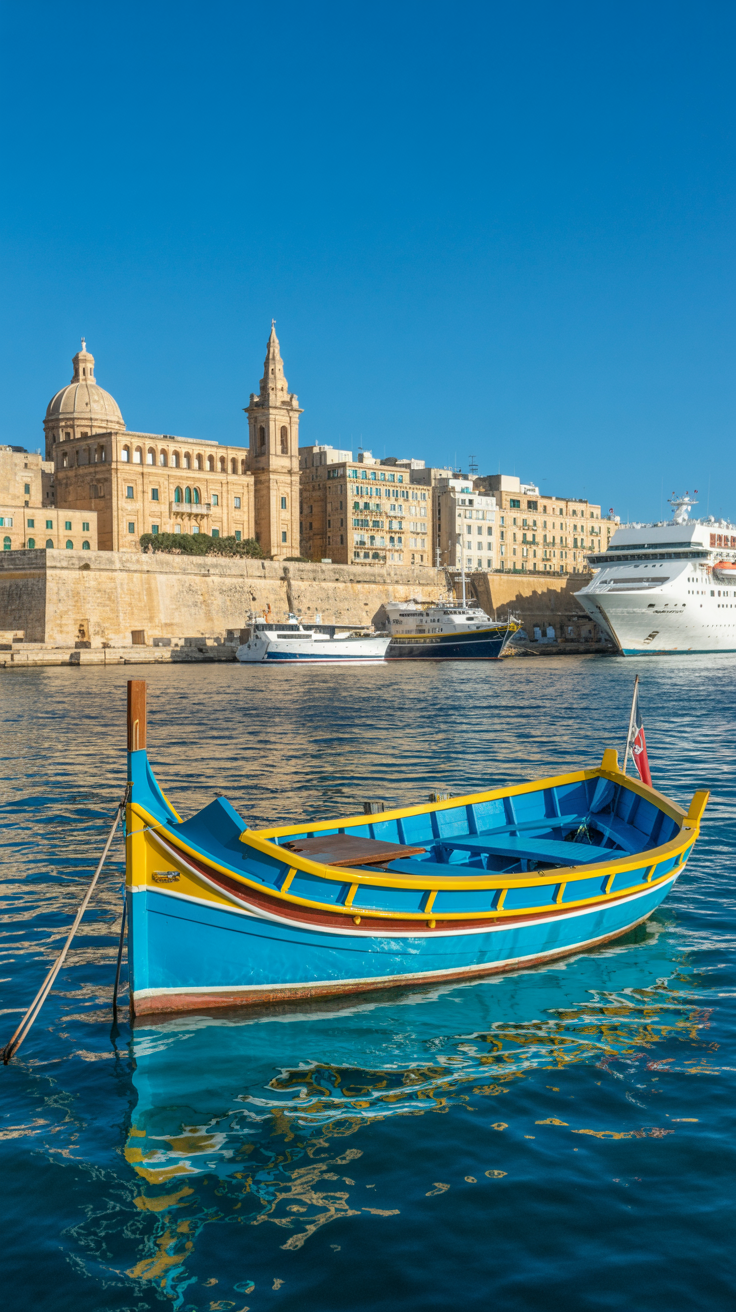
Your ship glides into the Grand Harbour past honey-coloured fortifications that have guarded Malta’s capital for five centuries. The cruise terminal sits beneath the Upper Barrakka Gardens, close enough that you’ll hear the noon gun salute from the Upper Saluting Battery. Malta compresses Roman catacombs, Knights of St John palaces, Second World War siege tunnels and Neolithic temples into less than 320 square kilometres, which makes it brilliantly efficient for a port day but also means you’ll need to make some choices.
Malta offers direct access to Valletta’s baroque streets, day trips to medieval Mdina, ferry connections to rural Gozo, and boat excursions to Comino’s Blue Lagoon. You won’t manage all of them in one call, and the island’s summer heat and cobbled streets will slow you down more than you expect.
This guide covers where cruise ships dock in Malta’s Grand Harbour and Marsamxett Harbour, transport links from the terminal, what you can realistically see in half-day and full-day visits to Valletta, Mdina, Gozo, Comino and Marsaxlokk, honest comparisons between shore excursions and independent travel, and the practical warnings about timing, terrain and weather that make the difference between a smooth port day and a stressful one.
Quick Facts: Malta Cruise Port
| Detail | Information |
|---|---|
| Port name | Valletta Grand Harbour (Pinto Wharf, Boiler Wharf, Laboratory Wharf) |
| Country | Malta |
| Nearest city | Valletta (capital) |
| Distance to city centre | Walking distance, 10–15 minutes uphill from terminal to Upper Barrakka Gardens |
| Currency | Euro (€) |
| Language | Maltese and English (both official) |
| Visa requirements | Schengen zone, check requirements for your nationality before sailing |
Port and Terminal Practicalities
Most Mediterranean cruise itineraries dock at Valletta’s Grand Harbour, which offers three main berths: Pinto Wharf, Boiler Wharf and Laboratory Wharf. Larger vessels occasionally use Marsamxett Harbour on the opposite side of the Valletta peninsula, or tender to specific piers. Check your ship’s daily programme the night before and morning of arrival for exact berthing details, because the walk from Marsamxett to central Valletta involves a longer uphill route than Grand Harbour berths.
Terminal Facilities
Valletta’s cruise terminal includes basic facilities but don’t expect extensive shopping or dining options. You’ll find:
- Free WiFi in the terminal building, though signal strength varies by berth
- Small information desk with maps and brochures
- ATM for euro withdrawals
- Taxi rank immediately outside the terminal
- Tour operator desks if you’ve pre-booked excursions
- Public toilets
The terminal is functional rather than comfortable. Once you’ve collected a map, head into Valletta itself where cafés and facilities are plentiful.
Getting Into Town
Valletta’s Old City sits directly above the cruise berths, making it one of the most convenient ports in the Mediterranean for independent exploration. The catch is the climb.
- Walk: 10–15 minutes uphill from the terminal gates to Upper Barrakka Gardens. The route involves steps and steep inclines. Perfectly manageable if you’re reasonably mobile, but challenging in summer heat or if you have mobility limitations
- Free shuttle: Some cruise lines run shuttles from berth to City Gate, Valletta’s main entrance. Check your daily programme
- Barrakka Lift: A glass lift connects the waterfront near the terminal with Upper Barrakka Gardens. Costs a small fee but saves the climb. Opens around 07:00 and runs until late evening
- Taxi: Available at the terminal rank. Useful for trips to Mdina, Marsaxlokk or other destinations beyond Valletta. Fares run higher than public transport but offer time efficiency. Agree the fare before setting off or ensure the meter is running
- Public buses: Malta’s bus network runs frequent services from Valletta. Route 41, 42 and 44 reach Marsaxlokk; Route 81 and 82 serve Sliema. The main terminus sits just outside City Gate. Services are inexpensive but can be slow and crowded during summer
Walking Distance Realities
Valletta is compact. Once you’ve made the initial climb from port to Upper Barrakka Gardens, most of the capital’s highlights sit within a 15-minute walk. St John’s Co-Cathedral, Republic Street, the Grandmaster’s Palace and Fort St Elmo all lie within easy reach on foot.
Destinations beyond Valletta require transport. Mdina sits about 30 minutes away by bus or taxi. Gozo demands a ferry crossing from Ċirkewwa in the north, roughly 90 minutes of travel each way before you even reach the island. Comino boat trips leave from various departure points and typically require advance booking. Don’t attempt to reach Gozo or Comino independently unless you have at least eight hours in port and a solid plan.
What to Do in Malta: Half Day in Valletta
If your ship docks for six hours or less, or if you prefer a relaxed pace without transport connections, focus on Valletta itself. The city rewards slow exploration.
Valletta Core Route (3–4 Hours)
- St John’s Co-Cathedral: Arrive when it opens to avoid coach tour crowds. The interior contradicts the plain exterior with lavish baroque decoration, marble tombstones covering the floor, and two Caravaggio paintings in the Oratory. Modest dress required, shoulders and knees covered. Allow 45 minutes
- Upper Barrakka Gardens: Public gardens with panoramic views across Grand Harbour to the Three Cities. The noon gun fires daily at 12:00 from the saluting battery below. Free entry to the gardens, small fee to access the battery itself
- Republic Street: Valletta’s main shopping thoroughfare lined with cafés, souvenir shops and traditional Maltese balconies. Stop at a local café for pastizzi, ricotta or pea-filled pastries sold warm from bakery counters
- Grandmaster’s Palace: Part of the building functions as the Office of the President, but sections open to visitors including the State Rooms and the Palace Armoury with its collection of armour and weapons from the Knights’ period
Alternatives and Additions
- National Museum of Archaeology: Houses Malta’s prehistoric finds including sculptures from the Neolithic temples. Useful context if you plan to visit Ġgantija on Gozo or other temple sites
- Fort St Elmo and National War Museum: The star-shaped fort at Valletta’s tip holds exhibits covering Malta’s military history, especially the 1565 Great Siege and Second World War. The walk along the peninsula offers harbour views. Budget 90 minutes
- Lower Barrakka Gardens: Quieter than the Upper Gardens, with views towards Fort St Angelo across the water. A pleasant spot to sit rather than a must-see attraction
- Strait Street: Once the red-light district frequented by sailors, now a narrow lane with wine bars and cafés. Goes by its Maltese name, Strada Stretta. Worth a wander for atmosphere rather than specific sights
What to Do in Malta: Full Day Options
Eight to twelve hours in port opens up destinations beyond Valletta. You’ll need to choose between Mdina, Gozo, or a combination that involves tighter timing.
Valletta Plus Three Cities (4–6 Hours)
The Three Cities, Cospicua, Senglea and Vittoriosa (also called Birgu), sit directly across Grand Harbour from Valletta. Ferry services connect Valletta’s waterfront with Vittoriosa, or you can take a taxi.
- Vittoriosa: The most interesting of the three with narrow streets, the Inquisitor’s Palace, and Fort St Angelo. Less polished than Valletta, which means fewer crowds and a more residential feel
- Senglea: Visit the Gardjola Gardens at the peninsula’s tip for views back across to Valletta
- Cospicua: The largest of the three but with fewer specific tourist attractions. Primarily residential
Combine a morning in Valletta with an afternoon ferry to Vittoriosa, or reverse the order depending on your ship’s arrival time. The ferry journey itself offers excellent harbour views and takes around 15 minutes.
Mdina and Rabat (Half Day)
Mdina sits in the centre of Malta, a perfectly preserved medieval walled city with limited car access and sweeping views across the island. It’s known as the Silent City, though coaches disgorge enough tourists during peak hours to disrupt the peace.
- Getting there: Bus routes 51, 52, 53 from Valletta take 30–40 minutes. Taxis are faster but cost significantly more
- What to see: Walk the narrow lanes, visit St Paul’s Cathedral (separate from Valletta’s Co-Cathedral), and climb to the bastions for views. Mdina is atmospheric rather than packed with specific attractions. Allow two hours to wander comfortably
- Rabat: The town immediately outside Mdina’s walls holds St Paul’s Catacombs, early Christian burial chambers worth a visit if you have extra time
You can combine Mdina with a morning in Valletta if you leave the capital by early afternoon, but factor in travel time and don’t cut it close to your ship’s departure.
Gozo Day Trip (Full Day, Early Start Essential)
Gozo is Malta’s rural sister island, greener, quieter and less developed. Getting there involves a ferry from Ċirkewwa at Malta’s northern tip to Mġarr Harbour on Gozo.
- Travel time: Budget 90 minutes from Valletta to Gozo, including the bus to Ċirkewwa and the 25-minute ferry crossing. The ferry runs frequently and doesn’t require advance booking, but services can be busy during summer
- The Citadel in Victoria: Gozo’s fortified capital with a restored cathedral and rampart views across the island. Free to enter the Citadel area, separate tickets for specific museums
- Dwejra Bay and the Inland Sea: Dramatic coastal cliffs and rock formations. The Azure Window, once Gozo’s most famous natural arch, collapsed in 2017 but the area remains scenic
- Ramla Bay: Red-sand beach on Gozo’s north coast, good for a swim if weather permits
- Ġgantija Temples: UNESCO-listed Neolithic temples older than Stonehenge. Small site but significant if you’re interested in Malta’s prehistoric heritage
Independent travel to Gozo demands confidence, good timing and at least nine hours in port. Most cruise passengers book organized excursions which handle transport and pack the main sites into a guided day trip. Unless you enjoy working out bus connections and managing tight schedules, an excursion makes more sense for Gozo.
Comino and Blue Lagoon (Half Day)
Comino is a tiny island between Malta and Gozo, famous for the Blue Lagoon’s shallow turquoise waters. Boat trips depart from various points around Malta, most commonly from Sliema, Buġibba or Ċirkewwa. You can’t easily arrange this independently on a port day; boat operators require advance booking and departure times may not align with cruise schedules.
- Book through your cruise line’s shore excursions or pre-arrange a private tour operator before arrival
- Best for swimming and snorkeling rather than sightseeing
- Gets crowded during summer with day-trippers from hotels as well as cruise passengers
- Weather-dependent. Rough seas cancel trips
What to Do in Malta: If You’ve Been Before
Returning to Malta on another cruise? Skip Valletta’s main attractions and try these instead.
Marsaxlokk Fishing Village
Traditional fishing village on the southeast coast with colourful luzzu boats painted in bright blues, yellows and reds. The Sunday morning fish market is the main draw, but the waterfront restaurants serve excellent fresh seafood any day of the week.
- Bus routes 41, 42, 44 from Valletta take 30–40 minutes
- The village is small. Two hours covers the harbour walk, market browsing and a leisurely lunch
- Fewer tourists than Valletta but still busy on Sundays
Dingli Cliffs
Malta’s highest point with dramatic sea cliffs dropping to the Mediterranean. The area remains relatively undeveloped with walking paths, rural views and a small chapel perched near the edge.
- Reaching Dingli without a car is awkward. Buses run infrequently. Consider a taxi or include it as part of a hired car day
- Good for photos and a break from crowds
- Combine with a visit to the nearby Buskett Gardens, Malta’s largest woodland area
Mdina After Hours
If your ship stays late or overnights, return to Mdina in the evening when day-trippers have left. The floodlit bastions and empty lanes create a completely different atmosphere. A few restaurants offer rooftop terraces with sunset views across the island.
Ħaġar Qim and Mnajdra Temples
Two Neolithic temple complexes on Malta’s south coast with sea views. Less visited than Valletta or Mdina. The visitor centre provides context about Malta’s prehistoric period.
- Bus route 74 from Valletta, but services are infrequent
- Combine with a visit to the Blue Grotto sea caves nearby if you have transport
Shore Excursions vs Going Independent
Malta divides neatly into excursion-friendly destinations and genuinely walkable independent options. Valletta suits independent visitors perfectly. Gozo demands more organization.
When to Book a Shore Excursion
- Gozo day trips: Unless you relish complicated bus connections and ferry schedules, an organized excursion removes the stress. Coach tours pack the Citadel, Dwejra, and sometimes a third stop into six or seven hours with guaranteed return to your ship
- Comino and Blue Lagoon: Requires boat transfers that need advance arrangement. Cruise excursions handle the logistics
- Mdina with extras: Some excursions combine Mdina with craft villages, the Ta’ Qali artisan centre, or other stops. Worthwhile if you want breadth rather than depth
- Limited mobility: Excursions provide door-to-door transport and remove the challenge of Valletta’s steep streets
- Short port calls: If you have six hours or less, an excursion maximizes sightseeing time by cutting out transport research
When to Go Independent
- Valletta-focused visit: The city is compact and walkable. You don’t need a guide to find St John’s Co-Cathedral or Upper Barrakka Gardens
- Marsaxlokk: Easy bus connection from Valletta. No complicated logistics
- Three Cities: Short ferry ride from Valletta. Simple to arrange yourself
- Flexible pace: Shore excursions run to fixed schedules with group stops. Independent travel lets you linger where you like and skip what doesn’t interest you
| Destination | Shore Excursion Advantage | Independent Advantage |
|---|---|---|
| Valletta | Guided commentary, no navigation needed | Walk from ship, explore at your own pace, no coach queues |
| Mdina | Direct transport, often includes additional stops | Cheaper via bus, flexibility to stay longer or leave sooner |
| Gozo | Removes ferry and bus coordination, guaranteed timing | Very limited unless you’re confident with schedules and tight timing |
| Three Cities | Guided historical context, door-to-door transport | Easy independent ferry, quiet streets to explore alone |
| Comino/Blue Lagoon | Only practical option for cruise passengers | Not realistic to arrange independently on a port day |
| Marsaxlokk | Combined with other south coast stops | Simple bus journey, freedom to choose lunch spot and timing |
Malta falls into a middle category among Mediterranean cruise ports. It’s easier than complex cities like Naples but demands more planning than fully walkable ports like Kotor. If your main interest is Valletta, skip the excursion. If Gozo features in your plans, book one.
Practical Warnings About Malta Port Days
Cruise brochures present Malta as effortlessly charming. It is, but with caveats.
The Heat is Serious
Malta in July and August is punishingly hot. Valletta’s narrow streets offer some shade, but exposed sites like Upper Barrakka Gardens and anywhere outside the city walls provide little relief. Carry water, wear a hat, and apply sunscreen that protects against intense Mediterranean sun generously. Heat exhaustion sneaks up on visitors who underestimate Mediterranean summer temperatures.
Cobbles and Hills
Valletta’s streets are steep, uneven and cobbled. Comfortable walking shoes with good support and grip are essential. Heels or thin-soled sandals make for a miserable day. If you have mobility issues or use a wheelchair, the city presents genuine challenges despite its compact size. The Barrakka Lift helps but doesn’t solve the problem entirely.
Churches Enforce Dress Codes
St John’s Co-Cathedral and other churches require covered shoulders and knees. They refuse entry to visitors in shorts, sleeveless tops or short skirts. Carry a light scarf or shawl if your outfit doesn’t meet the standard. Some churches provide wraps at the entrance, but don’t rely on it.
Sunday Changes Everything
Most shops close on Sunday in Valletta. Restaurants and cafés remain open, but retail therapy isn’t an option. Marsaxlokk’s fish market operates Sunday morning, which makes it the best day to visit, but this isn’t true for the rest of Malta.
Gozo Timing is Tight
Ferry schedules and bus connections to Ċirkewwa don’t always align neatly with cruise ship arrivals. If you attempt Gozo independently, work backwards from your ship’s departure time and add buffer for delays. Miss the last convenient ferry back and you’ll face an expensive private transfer or worse.
Traffic Around Sliema
Malta’s roads get congested, especially around Sliema, St Julian’s and the approach to Valletta. If you’re taking a taxi to Mdina or elsewhere, factor in extra time during morning and late-afternoon rush periods.
Tender Confusion
Some ships tender rather than dock. Tender operations add time and logistical complexity. Check your ship’s daily programme carefully and don’t plan a tight independent itinerary if tendering is involved.
Where to Stay Before Your Cruise
If you’re joining a cruise in Malta and need a pre-cruise hotel, base yourself in Valletta or Sliema. Both offer proximity to the cruise terminal and easy access to transport.
Valletta
Staying in Valletta itself puts you within walking distance of the port and the capital’s main sights. Hotels here tend to be boutique properties in converted townhouses. Rooms are often small but characterful. The city quiets down after dark, which suits early sleepers but disappoints anyone seeking nightlife.
Sliema
Sliema sits across Marsamxett Harbour from Valletta, connected by regular ferries and buses. The waterfront promenade offers more dining and shopping options than Valletta, with a livelier evening atmosphere. Hotel choice is broader, including larger chain properties. The ferry to Valletta takes about 15 minutes, or you can reach the cruise terminal by taxi.
St Julian’s
Immediately north of Sliema, St Julian’s is Malta’s main nightlife hub with bars, restaurants and clubs. Convenient for the cruise port but noisier than Valletta or Sliema. Better suited to pre-cruise nights if you want evening entertainment rather than quiet preparation.
All three areas connect to the airport via bus or taxi. The airport lies in the south, about 30–40 minutes from Valletta depending on traffic.
Where to Eat Close to the Port
Valletta’s dining scene ranges from tourist-trap cafés on Republic Street to genuinely good neighbourhood restaurants on side streets.
Quick and Cheap
- Pastizzi shops: Look for small bakeries selling pastizzi, savoury pastries filled with ricotta or peas. Cheap, filling and authentically Maltese. You’ll find them throughout Valletta
- Café Cordina: On Republic Street near St John’s Co-Cathedral. Tourist-oriented but reliable for coffee, pastries and light lunches. Outdoor seating for people-watching
- Caffe Corinthia: Attached to the Palace hotel, offering a slightly more upscale café experience with good coffee and cakes
Sit-Down Meals
- Nenu the Artisan Baker: Traditional Maltese dishes including ftira (stuffed flatbread) and rabbit stew. Small and popular, often with queues. Not fancy but authentic
- Legligin: Wine bar and restaurant on a side street near the Palace. Good Maltese and Mediterranean dishes, quieter than Republic Street options
- Trabuxu: Another wine bar, this time in a converted merchant’s house. Atmospheric stone-walled interior, decent wine list, Maltese-influenced menu
Marsaxlokk Seafood
If you visit Marsaxlokk, lunch there rather than returning to Valletta. The harbour is lined with seafood restaurants. Most offer similar menus with fresh fish, calamari and prawns. Quality is generally good; choose based on the view and available seating rather than expecting major differences between venues.
What to Avoid
Republic Street restaurants with touts outside and laminated multilingual menus are uniformly mediocre. Walk one or two streets over and you’ll find better food at similar prices without the hard sell.
Weather in Malta for Cruise Passengers
Malta enjoys a Mediterranean climate with hot, dry summers and mild, occasionally wet winters. Most cruise calls occur between April and October.
- April to June: Warm and pleasant, with temperatures in the low to mid-twenties Celsius. Occasional rain early in the season. Comfortable walking weather
- July and August: Hot, often exceeding 30°C. Intense sun, little shade outside Valletta’s narrow streets. Bring serious sun protection and drink more water than you think necessary
- September and October: Still warm but less punishing than midsummer. September averages around 25–28°C. Excellent weather for sightseeing without the peak summer heat
- November to March: Fewer cruise calls during this period. Temperatures remain mild by northern European standards but rain is more common. Valletta remains walkable but pack a lightweight rain jacket that folds into your bag
Sea conditions matter if you’re planning a Comino boat trip. Rough seas are rare in summer but increase in spring and autumn. Operators cancel trips if conditions are unsuitable.
Malta’s position in the central Mediterranean means it sits on western Mediterranean cruise itineraries and eastern Mediterranean routes, often appearing alongside ports like Sicily, Sardinia, or Italian coastal cities.
Common Questions About Malta Cruise Port
Can you walk from the cruise port to Valletta city centre?
Yes, but the route involves a steep uphill climb from the terminal to Upper Barrakka Gardens and takes 10–15 minutes. The Barrakka Lift offers a faster, less strenuous option for a small fee. Most of Valletta’s main attractions sit within easy walking distance once you’ve made the initial ascent.
Is Malta cruise port tender or dock?
Most ships dock at one of three berths in Grand Harbour: Pinto Wharf, Boiler Wharf or Laboratory Wharf. Larger vessels occasionally use Marsamxett Harbour or tender to specific piers. Check your ship’s daily programme for exact details the night before arrival.
How long do you need in Valletta from a cruise ship?
Half a day covers St John’s Co-Cathedral, Upper Barrakka Gardens and a walk along Republic Street comfortably. A full day allows time for the Three Cities, Fort St Elmo, or a more leisurely pace with lunch in a proper restaurant rather than a quick café stop.
Can you visit Gozo independently from Malta cruise port?
Technically yes, but it demands tight timing, confidence with bus and ferry schedules, and at least nine hours in port. The journey from Valletta to Gozo takes 90 minutes each way including the bus to Ċirkewwa and the ferry crossing. Most cruise passengers book organized excursions instead.
What currency does Malta use?
Malta uses the euro. Cards are widely accepted in Valletta and main tourist areas, but carry some cash for smaller vendors, buses, and rural areas. ATMs are available at the cruise terminal and throughout Valletta.
Do you need to book Blue Lagoon excursions in advance?
Yes. Boat trips to Comino and the Blue Lagoon require advance booking through your cruise line or a private tour operator. You can’t easily arrange this on arrival because departure times and locations don’t align with impromptu travel on a port day.
Is Mdina worth visiting on a Malta cruise stop?
If you’ve already seen Valletta on a previous visit or prefer medieval architecture to baroque, yes. Mdina offers a completely different atmosphere with its narrow lanes and fortified walls. The 30–40 minute bus journey from Valletta is straightforward, but factor in travel time when planning your day.
What should I wear to visit churches in Malta?
Covered shoulders and knees are required at St John’s Co-Cathedral and other churches. Shorts, sleeveless tops and short skirts will result in refused entry. Carry a light scarf or wrap if your outfit doesn’t meet the standard, especially during hot summer months.
Can you swim during a Malta port day?
Yes, but it requires planning. The Blue Lagoon on Comino is the most famous swimming spot but needs a boat trip. Alternatively, beaches exist around Malta including at Sliema and St George’s Bay, though reaching them from Valletta adds travel time and they’re less dramatic than Comino’s turquoise waters.
Why Trust About2Cruise
- I’m Patricia. I’ve sailed into Malta’s Grand Harbour on four separate cruise itineraries, testing both shore excursions to Gozo and independent walks through Valletta’s fortifications to work out what genuinely fits into a port day.
- This guide gets reviewed whenever Malta port facilities change, new transport links open, or reader questions reveal gaps in practical advice. It’s current because cruise ports don’t stand still.
- We don’t take payment from cruise lines or tour operators. Our recommendations come from direct experience and honest assessment, not marketing budgets. Read more about our editorial approach.