
Getting off a cruise ship in Civitavecchia with your camera and a head full of ambition is one thing. Actually nailing the shots you want and making it back to the port before the ship leaves is another entirely. Rome sits about an hour away by train, and while that sounds manageable, the city has a nasty habit of swallowing your time whole if you don’t plan properly.
The good news? You don’t need to hit every fountain and ruin to come away with a memory card full of brilliant photos. Some spots deliver far better results than others, especially when you’re working against the clock. After testing eleven different locations with limited time, here’s what actually works for cruise passengers who want great shots without missing their sailing.
Getting From Civitavecchia to Rome (The Reality)
The train from Civitavecchia station to Roma Termini takes about an hour to an hour and twelve minutes, with trains running roughly every 30 minutes. Early morning services start around 4:30-5:00 AM, and late trains run until about 10:45 PM. Tickets typically cost €6-€15 depending on the service.
If you’re arriving by cruise ship, the port runs free internal shuttle buses between terminals and the train station from 5:30 AM to 11:00 PM at roughly 15-minute intervals. Alternatively, dedicated shuttle services can take you directly from the port to central Rome, though these cost more and take about the same time once you factor in traffic.
The earliest train makes sense if you want the best light and emptier streets. The Colosseum at 8:30 AM opening time beats the Colosseum at noon by a mile, both for crowds and for photography. Want to know more about navigating Rome from your cruise port, including backup transport options if trains get delayed.
The Eleven Spots That Actually Deliver
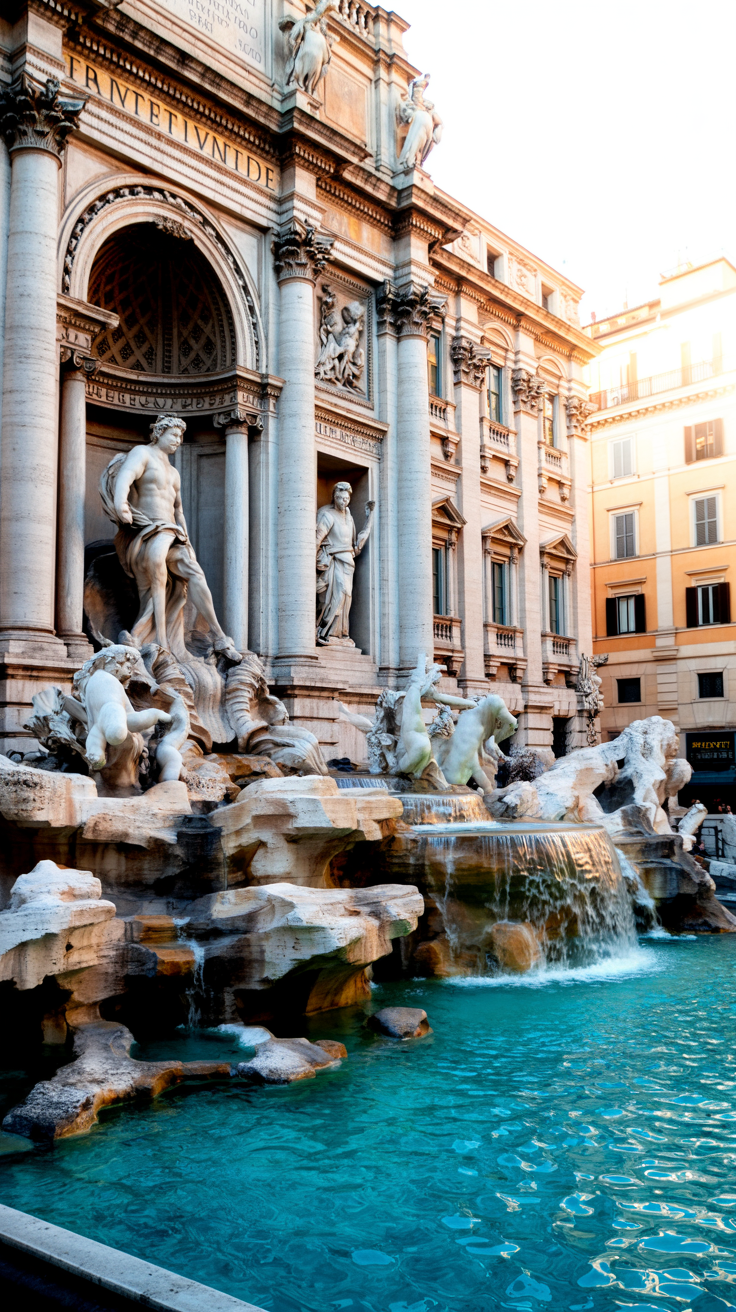
1. Trevi Fountain (Early Morning Only)
Arrive before 7:00 AM or don’t bother. The fountain looks dramatic in soft morning light, and you’ll actually be able to compose a shot without elbows in your frame. By 9:00 AM it’s packed solid. The wet surfaces after rain create brilliant reflections, so if it’s drizzled overnight, even better. If weather looks uncertain, a lightweight rain jacket for women or rain jacket for men stows easily in your bag without adding bulk.
- Best time: 6:30-7:30 AM
- Light direction: Morning sun lights the facade beautifully
- Time needed: 20-30 minutes
- Lens: 24-70mm covers most compositions
The catch: It’s genuinely difficult to get here this early from the port, but if you catch that first train and walk briskly from Termini, it’s doable. Worth it? Absolutely.
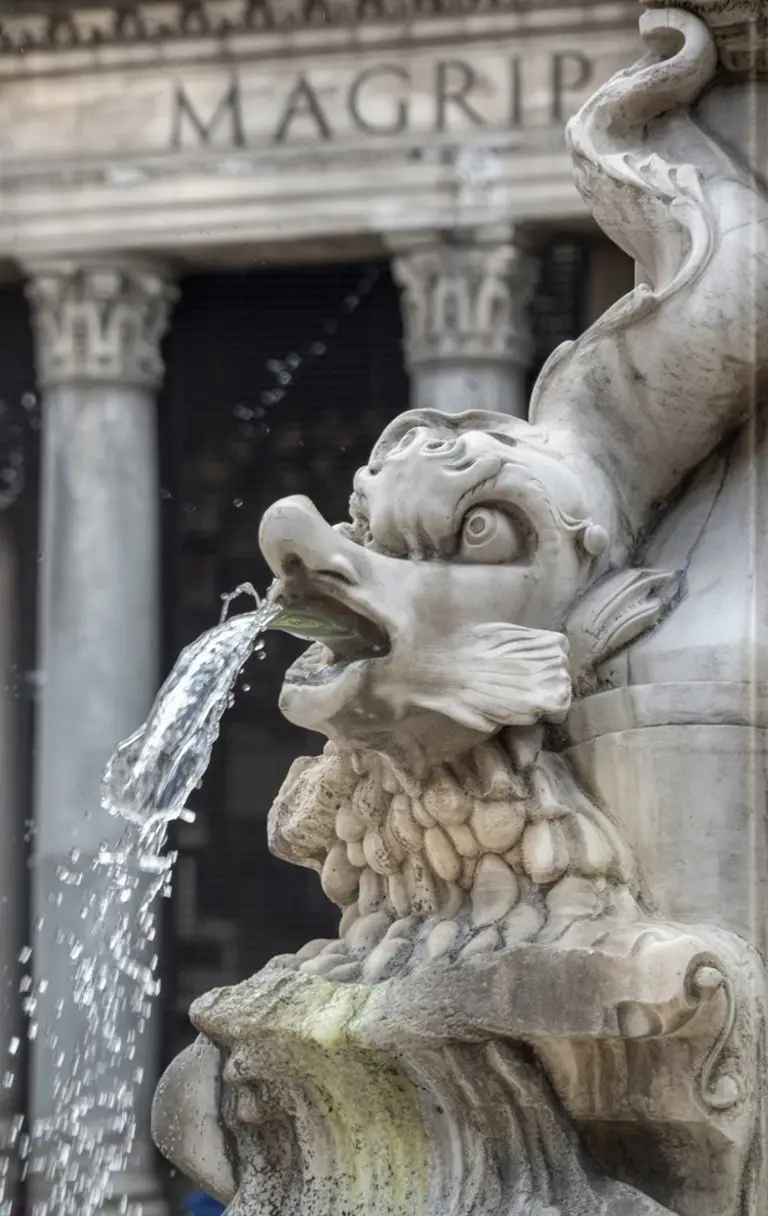
2. Pantheon and Piazza della Rotonda
The Pantheon works brilliantly in morning light when shadows define the columns. The interior oculus creates dramatic shafts of light, though you’ll need to time it right and respect photography restrictions inside. The square outside offers multiple angles, and the surrounding cafes provide foreground interest.
- Best time: 8:00-10:00 AM
- Light direction: Morning light from the east side; oculus light varies by season
- Time needed: 30-45 minutes
- Lens: Wide angle (16-24mm) for interior, 24-70mm for exterior
Practical tip: The Pantheon sits a short walk from Trevi, so cluster these two together. The square gets busy but never impossibly so.
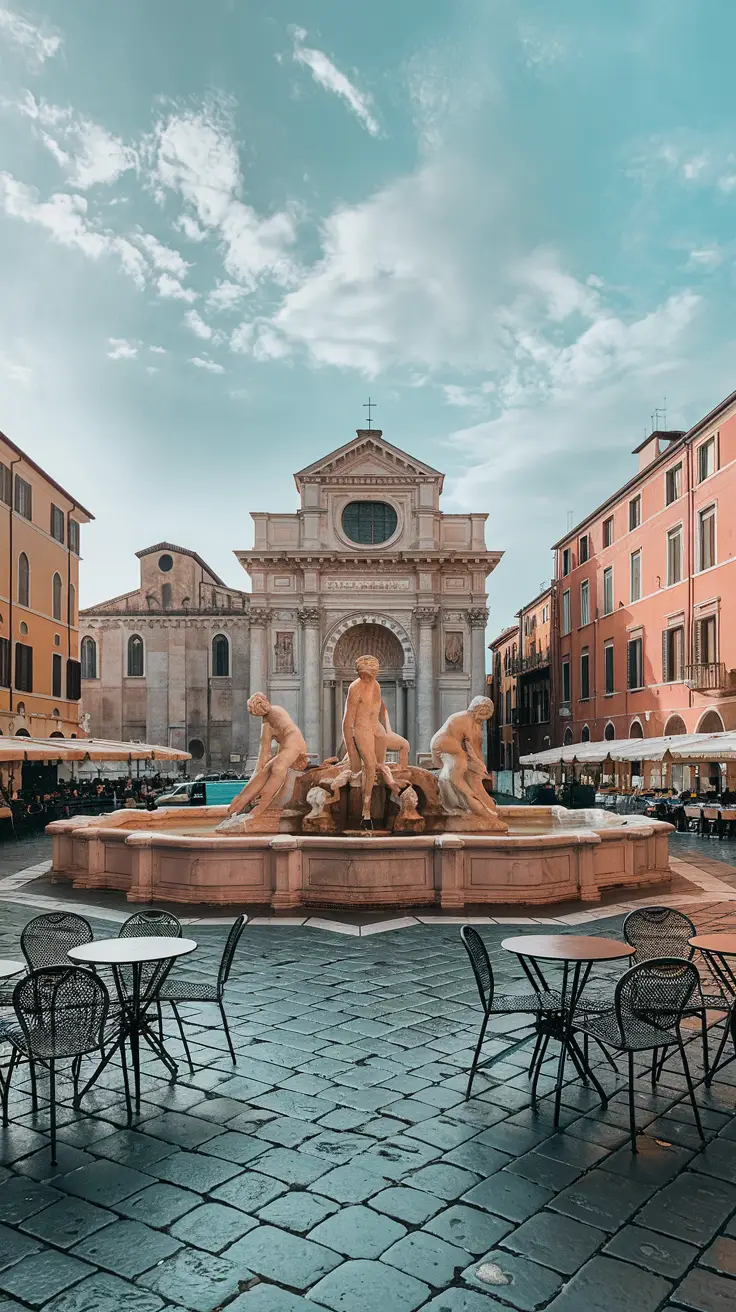
3. Piazza Navona
Three fountains, Baroque architecture, and enough compositional variety to keep you busy. The Fountain of the Four Rivers makes a strong focal point, and the surrounding buildings photograph well with a longer lens to compress perspective. Late afternoon light warms up the ochre facades nicely, but morning works too if you’re routing efficiently.
- Best time: 8:00-9:30 AM or 4:00-6:00 PM
- Light direction: Afternoon sun hits the western buildings
- Time needed: 30-40 minutes
- Lens: 24-70mm for general work, 50-85mm for street portraits
This spot connects easily with the Pantheon and Trevi in a morning circuit. For more ideas on efficient walking routes through central Rome, that guide breaks down the logistics properly.
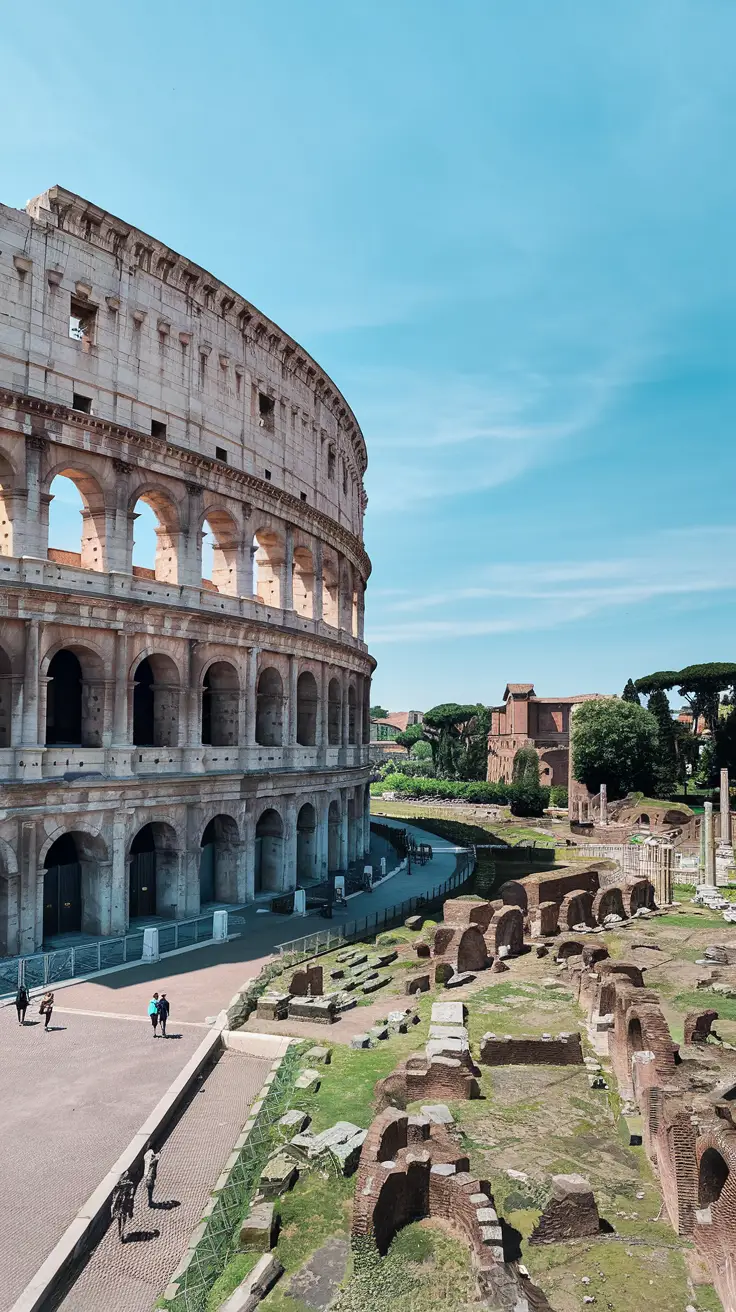
4. Colosseum (External Views)
The Colosseum opens around 8:30 AM, with last entry 30-60 minutes before closing. Hours shift seasonally, so verify before you go. Early morning delivers the best light and thinnest crowds. Shoot from the Arch of Constantine side for clean compositions, or head to the upper level of Via Nicola Salvi around 9:00 AM when the sun warms the stones.
- Best time: 8:30-9:30 AM
- Light direction: Morning light from the east; late afternoon works too
- Time needed: 45 minutes to an hour
- Lens: 16-24mm wide angle for scale
Ticket reality: Interior access requires advance booking through official channels only. Scalpers and third-party sites have faced enforcement action and fines. If you want interior or underground shots, book directly and early. Otherwise, external shots work brilliantly and save massive time.
5. Roman Forum and Palatine Hill
Sweeping ruins, columns, and sightlines toward the Circus Maximus make this a photographer’s playground. The challenge? It’s huge, and you can easily burn two hours wandering around. If you’re time-limited, stick to the viewpoints from Capitoline Hill or the upper terrace overlooks rather than walking the entire Forum floor.
- Best time: Early morning or late afternoon
- Light direction: Golden hour adds drama to the valley
- Time needed: 30 minutes for viewpoints, 2+ hours to explore fully
- Lens: 24-70mm for flexibility, 70-200mm for detail shots
For cruise passengers, the viewpoints deliver better return on time invested than a full walkthrough. Save the deep exploration for a longer visit.
6. Janiculum Hill (Gianicolo)
The panoramic view over Rome’s rooftops, domes, and the Tiber snaking below is absolutely brilliant at sunset. Arrive 30-45 minutes early to claim a spot and set up your tripod. The light transitions from golden hour through blue hour create multiple shooting opportunities without moving.
- Best time: Sunset and blue hour
- Light direction: West-facing, so sunset lights up the city
- Time needed: 60-90 minutes for full sunset sequence
- Lens: 24-70mm or 70-200mm for skyline compression
The catch: It’s a bit of a trek from the centre, and you’ll need to factor in return time to Termini. Worth it if you’ve got flexibility in your schedule, but risky if your train back to Civitavecchia is tight.
7. Orange Garden (Giardino degli Aranci) and Aventine Hill Keyhole
The Knights of Malta keyhole offers that famous framed view of St. Peter’s Basilica, and it takes literally two minutes. The Orange Garden sits right next door with elevated views over the city and red-tiled roofs below. Sunset light here is gorgeous, warming up the stone and creating silhouettes of the dome.
- Best time: Late afternoon to sunset
- Light direction: West-facing views, great for skyline shots
- Time needed: 30-40 minutes combined
- Lens: 24-70mm for garden views, 50mm for keyhole shot
Far quieter than central tourist spots, and the photos look professional with minimal effort. If you’re exploring lesser-known viewpoints around Rome’s famous icons, this area delivers brilliantly.
8. Trastevere Lanes
Narrow cobblestone streets, ivy-covered walls, colorful doors, and washing lines strung between buildings create that quintessentially Roman aesthetic. Late afternoon light bounces off the ochre and terracotta facades beautifully. It’s also far less frantic than the centre, so you can actually take your time composing shots.
- Best time: 3:00-6:00 PM
- Light direction: Afternoon sun warms the western-facing walls
- Time needed: 60-90 minutes to wander properly
- Lens: 35-85mm for street details and environmental portraits
Trastevere works brilliantly if you’ve finished your morning circuit and want something more relaxed. The neighbourhood has excellent lunch spots too, so you can combine eating with shooting. For more on quieter Rome neighbourhoods worth your time, that guide covers similar areas.
9. Castel Sant’Angelo and Bridge
The castle silhouette against sunset sky looks dramatic, and the bridge offers clean sightlines toward St. Peter’s Basilica. River reflections work well with longer exposures at blue hour. The terrace (if open) provides elevated city views, though access varies.
- Best time: Sunset and blue hour
- Light direction: West-facing for sunset shots
- Time needed: 30-45 minutes for bridge and exterior shots
- Lens: 24-70mm or 70-200mm for compression
Time-saver: The view from the bridge gives you St. Peter’s shots without the long walk to Vatican City. If you’re tight on time, this substitution works perfectly well.
10. Spanish Steps (Lower Priority)
The Spanish Steps photograph fine, but they’re almost always crowded and the light rarely cooperates. The terrace at the top offers decent city views, but nothing you can’t get elsewhere with less hassle. If you’re nearby, sure, grab a few shots. But don’t build your itinerary around them.
- Best time: Early morning before crowds arrive
- Light direction: Variable depending on position
- Time needed: 15-20 minutes
- Lens: 24-70mm
Honestly? Skip this if you’re time-limited. The effort-to-reward ratio doesn’t compete with the other spots on this list.
11. Via dei Coronari and Monti Lanes
These quieter neighbourhoods offer texture, aged shopfronts, shuttered windows, and intimate details that feel authentically Roman rather than tourist-Rome. Monti’s cobblestones and vintage storefronts photograph particularly well, and you’ll encounter far fewer people than at major landmarks.
- Best time: Mid-morning or late afternoon
- Light direction: Varies by specific street
- Time needed: 30-45 minutes
- Lens: 35-85mm for details and street scenes
These areas work well as buffers between major spots or if you want a break from the crowds. The photography here is more about mood and texture than iconic landmarks.
Practical Camera Kit and Settings
You don’t need to pack your entire camera bag. A versatile zoom (24-70mm) covers most situations. Add a wide angle (16-24mm) if you’re serious about architecture, and a 70-200mm if you want to compress cityscapes or shoot street details from a distance. Keep your gear organized and accessible with a quality theft-resistant camera backpack that distributes weight comfortably during long walking days.
Settings that work:
- Shoot in RAW for maximum editing flexibility later
- Use f/8-f/11 for architecture to keep everything sharp front-to-back
- Bump ISO rather than dropping shutter speed below 1/125 if people are moving
- Bring a compact tripod for blue hour shots, but check if specific locations prohibit them
- Polariser helps manage sky contrast, especially midday
A small camera backpack beats a shoulder bag when you’re walking for hours. Keep your passport, tickets, and phone somewhere secure and easily accessible. A European power adapter keeps your camera batteries and phone charged, while a high-capacity portable charger means you won’t run out of power mid-shoot. For organizing all your cables and memory cards, a compact cable organizer prevents the bottom-of-bag tangle.
Route Planning That Actually Works
Clustering locations geographically saves enormous amounts of time. Here’s a practical sequence for an eight-hour port day:
Morning Circuit (7:00 AM – 11:00 AM):
- Trevi Fountain (6:30-7:30 AM)
- Pantheon (8:00-9:00 AM)
- Piazza Navona (9:00-10:00 AM)
- Walk through Campo de’ Fiori area toward Colosseum
Late Morning (11:00 AM – 1:00 PM):
- Colosseum external shots (11:00 AM-12:00 PM)
- Quick Roman Forum viewpoint from Capitoline Hill
- Lunch near Monti or Trastevere (1:00 PM)
Afternoon (2:00 PM – 5:00 PM):
- Trastevere lanes and Santa Maria in Trastevere church (2:00-4:00 PM)
- Orange Garden and Aventine keyhole (4:00-5:00 PM)
Return (5:00 PM – 7:00 PM):
- Back to Termini by 5:30 PM
- Train to Civitavecchia by 6:00 PM
- Arrive port 7:00 PM with buffer time
This routing keeps you moving efficiently without feeling frantic. You’ll skip some spots (St. Peter’s interior, Spanish Steps, extensive Forum exploration) but you’ll capture the shots that matter most. If you’re walking for hours in Rome’s cobblestoned streets, proper comfortable walking shoes for men or supportive walking shoes for women make the difference between enjoying the day and limping back to the ship. Add some blister prevention to your kit if you’re breaking in new footwear.
What Usually Goes Wrong
The biggest mistake is underestimating walking distances and crowd delays. Rome’s streets don’t run in grids, and what looks like a short hop on a map often involves navigating a maze of alleys. Google Maps time estimates are optimistic when you’re carrying camera gear and stopping for shots.
Weather throws curveballs too. Summer heat is brutal by midday, and afternoon thunderstorms roll through without much warning. A packable rain jacket takes minimal space but saves the day when clouds open up. Winter light is gorgeous but hours are shorter, and some viewpoints close earlier than you’d expect. Layer with a compact puffer jacket for women or lightweight puffer for men that compresses into your daypack.
Pickpockets target tourists with obvious camera gear around major landmarks. Keep your bag in front of you in crowded areas, and don’t leave gear visible on restaurant tables or park benches. An anti-theft messenger bag with hidden zippers and slash-proof materials adds peace of mind.
Train delays back to Civitavecchia happen. Build in at least an hour of buffer before your ship’s all-aboard time. Missing your sailing because you wanted one more sunset shot is an expensive mistake.
Extend Your Stay in Rome
If you’re serious about photography, eight hours barely scratches the surface. Hotels in Rome near Termini station offer convenient access to early trains, but areas like Monti or Trastevere put you in more photogenic neighbourhoods. Accommodation in the historic centre costs more but saves enormous amounts of walking time.
An overnight stay means you can shoot at golden hour and blue hour without worrying about missing the ship. Sunrise at the Colosseum, evening light in Trastevere, and night photography along the Tiber suddenly become realistic options. Morning light through the Pantheon’s oculus varies by season and time of day, so multiple visits reveal different moods. Pack smart with compression packing cubes that maximize luggage space, and keep your valuables organized with a travel jewelry organizer. A hanging toiletry bag works brilliantly in small European hotel bathrooms.
Many of the viewpoints and elevated terraces that time-limited cruise passengers skip become accessible when you’ve got a full day or two. The Appian Way’s ancient roads and dramatic textures, Villa Borghese’s gardens and lake reflections, and proper exploration of the Roman Forum all benefit from time you simply don’t have on a port day. If Rome keeps pulling you back, an extra night or two changes the photography game completely. For more ideas on other Italian ports worth exploring, that guide covers the broader region.
Personal Experience
We had exactly eight hours in Civitavecchia before the ship left, and honestly, the pressure was real. After testing eleven different photo spots around Rome, I can tell you that the Trevi Fountain at 7 AM was absolutely worth the early alarm – the light hits perfectly, and you’ll actually get shots without someone’s selfie stick in your face. The Colosseum looks incredible from the upper level of Via Nicola Salvi around 9 AM when the sun warms up those ancient stones. What surprised me most was how much time we wasted at the Spanish Steps (too crowded, meh lighting) when we could’ve been at the Orange Garden on Aventine Hill. That keyhole view through the Knights of Malta gate? Takes literally two minutes, and the photos look like something from a travel magazine.
The biggest lesson was clustering locations geographically. We hit Trevi, Pantheon, and Piazza Navona in one sweep during the morning golden hour, then grabbed lunch near Campo de’ Fiori before heading to Trastevere for those Instagram-worthy cobblestone streets around 3 PM. The afternoon light there is ridiculously good, bouncing off those ochre buildings. Skip the long walk up to St. Peter’s dome unless you’re staying overnight – the view from Castel Sant’Angelo’s bridge gives you great shots in a fraction of the time. We made it back to the port with an hour to spare, memory cards full, and legs absolutely destroyed. Totally worth it.
Common Questions & FAQ
Can I realistically photograph the Colosseum interior and make it back to my ship?
Interior access requires advance booking and security queues that can eat 90 minutes or more. External shots from the arch and surrounding viewpoints give you brilliant photos in 30-45 minutes. Unless you’re staying overnight in Rome, the interior isn’t worth the time risk for cruise passengers.
Which train should I take back to Civitavecchia to be safe?
Trains run roughly every 30 minutes until about 10:45 PM, taking just over an hour. If your ship’s all-aboard time is 7:00 PM, catch a train no later than 5:00-5:30 PM to build in delay buffer. Missing the ship costs far more than cutting your photography day an hour short. Keep your tickets and passport easily accessible in an organized messenger bag for quick boarding.
Do I need to buy tickets in advance for photography spots?
The Colosseum, Roman Forum, and Vatican require advance tickets if you want interior access. Everything else on this list – Trevi, Pantheon exterior, Piazza Navona, viewpoints, and neighbourhoods – is free and accessible without booking. Book official tickets only through venue websites to avoid scalpers.
What’s the absolute minimum time needed to get decent Rome photos?
Six hours gives you Trevi, Pantheon, Piazza Navona, Colosseum exterior, and one neighbourhood or viewpoint. You’ll be moving briskly and won’t have time for sit-down meals, but it’s doable. Eight hours adds breathing room and a second neighbourhood or sunset viewpoint. Stay hydrated throughout your shooting day with a collapsible water bottle that packs flat when empty.
Is Rome safe for photographers carrying expensive camera gear?
Generally yes, but pickpockets target tourists around major landmarks. Keep your camera bag in front of you in crowds, don’t leave gear visible in cars or on tables, and stay alert in crowded metro stations and tourist areas. Most photographers have no problems, but basic awareness prevents hassles. Consider an anti-theft backpack with lockable zippers for extra security.
Can I photograph inside churches and the Pantheon?
Photography rules vary by church. The Pantheon generally allows respectful interior photography, though flash and tripods are typically prohibited. Many churches restrict photography entirely or require permission. When in doubt, ask before shooting, and dress appropriately (covered shoulders and knees).
What if it rains during my port day?
Rain creates brilliant reflections at Trevi Fountain and on cobblestones throughout the city. Bring a rain cover for your camera and embrace the moody light. A packable waterproof jacket protects you without taking up much bag space. Covered arcades around Piazza Navona and the Pantheon portico offer shelter while you wait out heavy showers. Honestly, some of the best Rome photos happen in light rain.
Is sunset photography realistic if my ship leaves in the evening?
Only if you have a late all-aboard time (8:00 PM or later) and you’re willing to cut it very close. Most cruise passengers should wrap photography by mid-afternoon to ensure safe return to the port. Save sunset shots for when you can stay overnight.