
Most cruise passengers heading into Rome from Civitavecchia make a beeline for the Colosseum, Trevi Fountain, and Vatican. You’ll spend half your port day in queues and the other half dodging selfie sticks. But Rome’s real character lives in its residential neighborhoods – places where nonnas still hang washing from wrought-iron balconies and the best cacio e pepe comes from trattorias with no English menu.
The trick is knowing which neighborhoods you can actually reach and enjoy within a cruise port day. From Civitavecchia, you’ve got roughly six to eight hours if you’re sensible about timing. That’s enough for one neighborhood properly explored, or two if you’re efficient. Here are six Rome districts that give you authentic local life without the tour-bus chaos, all reachable by train and metro within 90 minutes of the port.
Want to know more about getting from Civitavecchia port to Rome’s neighborhoods? The port shuttle takes about 15 minutes to Civitavecchia station, then regional trains run every 30 minutes to Roma Termini for around €11–€19.
Testaccio: The Working-Class Food Quarter
This is Rome’s traditional meatpacking district turned foodie neighborhood, sitting just south of the city centre near the Piramide metro stop. Testaccio keeps its working-class roots – you’ll see actual Romans doing their shopping at the covered market rather than tourists hunting for photo ops.
Why it works for cruise passengers:
- Direct metro connection from Termini (Line B to Piramide, about 10 minutes)
- Compact and walkable – you can cover the whole neighborhood in 2-3 hours
- Testaccio Market opens early (Monday-Saturday, roughly 7 AM until 2 PM), perfect for morning arrivals
- Fewer crowds than Trastevere but equally authentic
What to eat and where:
- Da Cesare al Casaletto serves proper Roman classics – carbonara, amatriciana, coda alla vaccinara – in a no-frills dining room where locals book days ahead
- Trapizzino Testaccio invented the trapizzino (pizza pocket stuffed with Roman stews like pollo alla cacciatora or trippa)
- Gelateria La Romana does excellent gelato, though go off-peak to avoid the queue
The neighborhood sits in the shadow of Monte Testaccio, an artificial hill made entirely from broken ancient Roman amphorae. If you’re into lesser-known Rome spots with genuine history, the Protestant Cemetery nearby is hauntingly beautiful and almost tourist-free.
Transport timing: From Civitavecchia port, budget 90 minutes door-to-door (shuttle to station, train to Termini, metro to Piramide). Last useful train back to Civitavecchia leaves around 8 PM, so plan to leave Testaccio by 6:30 PM to be safe.
Pigneto: Street Art and the Hip Crowd
If Testaccio is traditional Roman, Pigneto is Rome’s creative edge. This multicultural neighborhood east of Termini station has street art on every corner, independent restaurants, and a young crowd that actually lives here rather than just Instagramming it.
Why it works for cruise passengers:
- Tram 5 or 14 from Termini gets you there in 15 minutes
- Completely off the tourist radar – you might be the only foreigner on the street
- Great value eating compared to central Rome
- Lively any time of day, but especially buzzing in early evening
What to eat and where:
- Millevoglie does Venetian-style cicchetti (small plates) with creative twists
- Trattoria A Tazza ‘E Cacio serves Roman comfort food in a casual setting
- Gelateria Pigneto is the local’s choice for gelato, small batches and seasonal flavors
Pigneto’s main drag, Via del Pigneto, runs through the neighborhood lined with bars and eateries. For unusual photo opportunities that aren’t the usual Rome clichés, the street art here changes regularly and you won’t see it in anyone else’s cruise photos.
The honest drawback: Pigneto is further from Termini than other options and feels more residential. If you want obvious “Rome” architecture and ancient ruins, this isn’t it. But if you want to see where young Romans actually hang out, it’s perfect.
Monti: Bohemian Lanes Behind the Forum
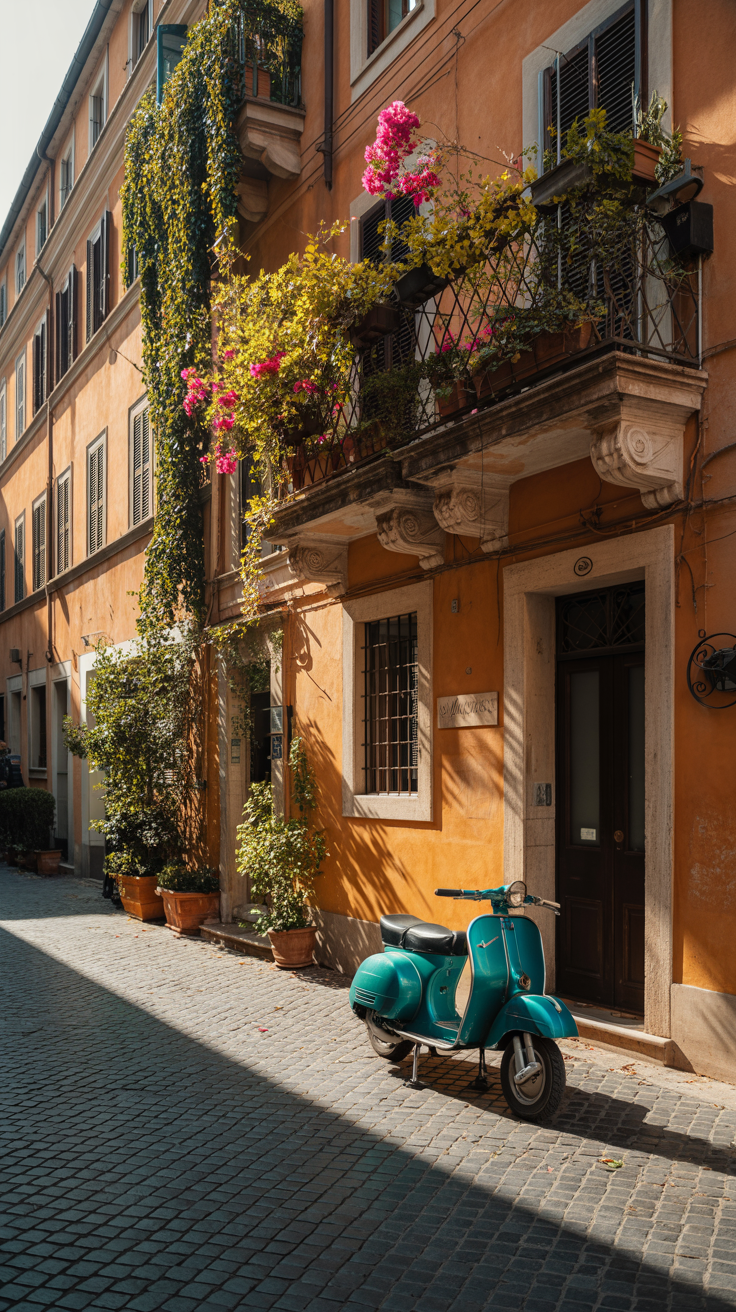
Monti sits in the shadow of the Colosseum but feels like a medieval village dropped into central Rome. Narrow cobbled streets, independent boutiques, wine bars in converted workshops, and a neighborhood square (Piazza della Madonna dei Monti) where locals actually sit and chat.
Why it works for cruise passengers:
- Walking distance from both Termini station and the Colosseum (about 15 minutes from either)
- You can combine it with a quick Colosseum visit if you book a timed entry
- Small enough to explore in 90 minutes, or spend half a day pottering
- Proper neighborhood feel despite being central
What to eat and where:
- La Gatta Mangiona does excellent pizza al taglio (by the slice) plus sit-down meals
- Osteria del Velabro is tucked away and serves solid Roman dishes without fuss
- Gelateria La Bottega del Gelato makes small-batch artisan flavors
Monti’s vintage shops and artisan boutiques make it worth a wander even if you’re not buying. The neighborhood has a weekend flea market (Via Leonina, Sundays) that’s genuinely local rather than tourist tat. If you’re looking for authentic Roman restaurants beyond the guidebook standards, Monti has several that don’t even bother with English menus.
Transport timing: From Termini, it’s a 15-minute walk or one metro stop to Cavour station. Factor in 75 minutes from Civitavecchia port to Termini, so you’re looking at about 90 minutes total to reach Monti.
Garbatella: The Garden City Quarter
This is Rome’s architectural surprise – a planned garden-city neighborhood from the 1920s with Art Nouveau touches, tree-lined streets, and a village atmosphere that feels nothing like the rest of Rome. It’s south of the centre, reachable by metro, and almost no tourists know it exists.
Why it works for cruise passengers:
- Metro Line B from Termini to Garbatella station (about 15 minutes)
- Unique architecture and layout you won’t see anywhere else in Rome
- Relaxed pace – perfect if you want to escape the intensity of central Rome
- Locals-only dining scene
What to eat and where:
- Bistrot 19/21 does casual creative Italian dishes with a neighborhood crowd
- Al Runcoletto is a homey trattoria with seasonal Roman plates
- Gelateria dei Gracchi (locals swear by it for quality ingredients)
Garbatella’s real appeal is just wandering the residential blocks and courtyards. The Albergo Rosso (a distinctive red apartment complex) and the Piazza Benedetto Brin are the architectural highlights. If you’ve done Rome multiple times and want something completely different, Garbatella delivers that.
Accommodation note: Casa Garbatella is a stylish B&B here if you’re thinking of staying overnight before or after your cruise. The neighborhood is quiet in the evenings, which might suit you if you’re exhausted from sailing.
San Lorenzo: The University Quarter
San Lorenzo clusters around Rome’s main university campus, so it has that young, energetic vibe with affordable restaurants, murals, and a scruffier edge than polished central Rome. It’s east of Termini station and easy to reach.
Why it works for cruise passengers:
- Tram 3 or 19 from Termini, or a 20-minute walk
- Cheap eats compared to tourist areas
- Lively any day of the week thanks to students and locals
- Real neighborhood bars rather than tourist traps
What to eat and where:
- La Casetta a Torre Spaccata serves unpretentious, solid Roman dishes
- 7.7 is a modern trattoria with comfortable, lived-in feel
- Il Gelato di San Lorenzo is the local go-to for gelato
San Lorenzo has a rougher reputation than other neighborhoods here (it was heavily bombed in WWII and rebuilt scrappily), but it’s perfectly safe during the day. The street art is excellent and constantly changing. If you’re after gelato spots that locals actually use rather than tourist-focused gelaterie, San Lorenzo has several small-batch makers.
The honest drawback: It’s not the prettiest Rome neighborhood – you’re here for the atmosphere and food value, not Renaissance palaces. And it empties out in August when students leave.
Esquilino: Markets and Multicultural Rome
Esquilino spreads out from the east side of Termini station and has a reputation as Rome’s most multicultural neighborhood. It’s a bit rough around the edges but packed with authentic markets, budget eateries, and none of the polish or pretense of central Rome.
Why it works for cruise passengers:
- Right next to Termini – you can walk there in 5 minutes from the station
- Piazza Vittorio’s covered market (open mornings) is the real deal for produce, cheese, and local shopping
- Via Mamiani has excellent international food shops and restaurants
- Dirt cheap compared to anywhere touristy
What to eat and where:
- Trattoria da Aroldo serves simple traditional Roman dishes in a homey setting
- Ristorante Ai Balestrari is family-run with classic Roman favorites
- Carapina makes gelato with clear, honest flavors and a local crowd
Esquilino isn’t going to win beauty contests – it’s functional, working-class Rome with immigrant communities adding their own flavors. But if you want to see how the city actually operates day-to-day rather than how it looks in guidebook photos, this is it. The Basilica di Santa Maria Maggiore sits on the edge of the neighborhood and is worth a quick look (free entry, stunning mosaics).
Transport timing: Esquilino is the easiest neighborhood to reach – you’re there as soon as you walk out of Termini station. That makes it perfect for cruise passengers on tight timings who want maximum neighborhood time, minimum transport hassle.
Practical Transport Planning From Civitavecchia
Here’s how the timing actually works when you’re planning a neighborhood visit:
| Segment | Time | Cost | Notes |
|---|---|---|---|
| Port to Civitavecchia station | 15 min | €6 | Port Mobility shuttle runs during cruise season |
| Civitavecchia to Roma Termini | 60 min | €11-19 | Direct regional trains every 30 min, first train around 4:30 AM, last useful return around 8 PM |
| Termini to neighborhood | 10-20 min | €1.50 | Metro/tram single ticket, valid 100 minutes |
| Total one-way | 90 min | €18-26 | Budget 2 hours to be safe |
Timing strategy for cruise passengers:
- If your ship docks at 7 AM, you can realistically be in a Rome neighborhood by 9:30 AM
- If you need to be back on board by 5 PM, leave Rome by 2:30 PM at the latest (gives you buffer for delays)
- That’s roughly 5 hours in the neighborhood – enough for a proper wander, a meal, and a gelato
- The Port Mobility shuttle meets cruise ships but double-check the schedule when you arrive
What can go wrong:
- Train delays (Italian regional trains aren’t always punctual – build in 30-minute buffer)
- Missing the shuttle from port to station (taxis exist but cost more)
- Getting lost in Rome and missing your return train (keep your phone charged with a high-capacity portable charger, download Google Maps offline)
- Underestimating how long lunch takes in Rome (service is slow, especially in authentic trattorias)
If you’re nervous about timing, Esquilino is your safety option – it’s right at Termini so you save 20-40 minutes compared to other neighborhoods.
Which Neighborhood for Your Port Day?
Here’s the honest breakdown:
Choose Testaccio if: You want food markets, traditional Roman cooking, and a neighborhood that feels completely authentic without being too far from the centre. It’s the sweet spot for most cruise passengers.
Choose Pigneto if: You want to see where young Romans actually live and don’t care about ticking off ancient ruins. It’s rough around the edges but genuine.
Choose Monti if: You want a pretty neighborhood close to major sights, and you like boutique shopping mixed with trattorias. It’s slightly more polished but still local.
Choose Garbatella if: You’ve done Rome before and want something architecturally unique and peaceful. It’s out of the way but worth it for the difference.
Choose San Lorenzo if: You want cheap, cheerful, student-y Rome with good food value and don’t mind a bit of graffiti and grit.
Choose Esquilino if: You’re worried about timing and want maximum neighborhood exposure with minimum transport stress. It’s the practical choice.
You could theoretically combine two neighborhoods if they’re close (Monti and Esquilino, for example), but honestly you’ll enjoy one properly explored more than two rushed. Rome isn’t going anywhere – save the other for next time.
Where to Eat Your Main Meal
The best trattorias and restaurants in Rome fill up fast, especially at lunch (1-3 PM is standard). In these neighborhoods, most places don’t take reservations – you just turn up. But that means arriving early (12:30 PM) or late (2:30 PM) to avoid the queue.
Lunch vs dinner timing: If you’re on a cruise port day, lunch is your realistic meal option. Dinner service doesn’t start until 7:30 PM at the earliest, and by then you need to be heading back to Civitavecchia. That said, many trattorias serve all day or have late-lunch slots around 3 PM when locals are finishing up.
Budget: In these neighborhoods, expect €12-20 for a pasta main, €3-5 for a small gelato, €3-4 for espresso. A proper sit-down lunch with wine will run €25-35 per person. That’s half what you’d pay in tourist areas near the Pantheon or Trevi.
Menu survival: Most traditional places have menus in Italian only. Key phrases: “Cosa mi consiglia?” (What do you recommend?), “Il conto, per favore” (The bill, please). If you see “alla romana” after a dish, it’s cooked Rome-style. Don’t ask for cappuccino after 11 AM – locals will judge you.
Extend Your Stay in Rome
If you’re thinking of arriving a day early or staying after your cruise, these neighborhoods have accommodation that’s cheaper and more characterful than hotels near Termini or the Colosseum. Testaccio has Hotel Re Testa (good value, quiet), Monti has The Fifteen Keys Hotel (boutique, well-located), and Garbatella has Casa Garbatella (stylish B&B vibe). Hotels in Rome get pricey fast in peak season, but neighborhood stays tend to be 30-40% cheaper than central tourist zones. The trade-off is a 15-minute metro ride to major sights, but if you’re planning several days, that’s worth it for authentic atmosphere and better value. Most of these neighborhoods also have short-term apartment rentals if you want a kitchenette and more space – useful if you’re exploring multiple Italian cruise ports and need a base between sailing.
Personal Experience
Last summer, my husband and I had just eight hours between our cruise ship docking at Civitavecchia and our evening departure, and instead of fighting crowds at the Colosseum, we took a train to Testaccio. Honestly, it was one of the best decisions we made in Rome. This working-class neighborhood sits just beyond the ancient city walls and feels refreshingly real – locals shopping at the morning market, old men playing cards outside trattorias, and the most incredible supplì we’ve ever tasted from a tiny shop near the old slaughterhouse. The train from Civitavecchia gets you to Roma Termini in about an hour, then it’s a quick metro ride to Piramide station. We also wandered through Trastevere on the way back, which everyone raves about, but I actually preferred Testaccio’s grittier, less polished vibe.
If you’ve got time for a second trip, Monti is equally worth it – it’s this bohemian quarter tucked behind the Forum with vintage boutiques and wine bars squeezed into medieval alleyways. My friend who’s done the cruise twice swears by Pigneto for an even more local feel, though it’s a bit further out on the metro. The key thing with cruise port time limits is being strategic: stick to neighborhoods connected by the Metro A or B lines from Termini station, keep your phone charged with a portable power bank for maps, and remember the last convenient train back to Civitavecchia usually leaves around 8 PM. You’ll see a side of Rome that most cruise passengers miss entirely.
What to Pack for Your Rome Neighborhood Day
Since you’ll be spending several hours walking cobblestone streets and hopping on and off public transport, pack smart. Bring comfortable walking shoes for men or supportive walking shoes for women – Rome’s uneven pavements will destroy your feet in fashion sneakers. Throw some blister prevention in your bag just in case.
You’ll also want a secure messenger bag with anti-theft features or an anti-theft backpack for keeping your valuables safe on crowded metro trains. Inside, pack a European power adapter if you need to charge devices at a café, and definitely bring a compact 10000mah portable charger to keep your phone alive for maps and photos all day.
If you’re visiting in spring or fall, the weather can be unpredictable. Women should consider packing a lightweight waterproof rain jacket and men might want a packable rain jacket that won’t take up much room in your day bag. A collapsible water bottle is also handy for staying hydrated without buying plastic bottles constantly – you can refill at Rome’s many public fountains.
Common Questions & FAQ
Can I really reach these neighborhoods and get back to the ship in time?
Yes, but you need to be disciplined about timing. From ship to neighborhood takes about 90 minutes (port shuttle, train to Termini, metro/tram to neighborhood). If your ship’s all-aboard is 5 PM, leave Rome by 2:30 PM to build in buffer time for delays. That gives you roughly 5 hours in the neighborhood if you leave the ship around 8 AM. Esquilino is the safest option for tight timings since it’s right at Termini.
Which neighborhood has the best food value?
San Lorenzo and Esquilino are the cheapest because they’re student and working-class areas. A full lunch with wine will run you €20-25 per person compared to €35-45 in Monti or Testaccio. But Testaccio’s food quality is arguably better if you don’t mind paying a bit more for traditional Roman cooking.
Do I need to book restaurants in advance?
Most neighborhood trattorias don’t take bookings – you just turn up. The exception is Da Cesare al Casaletto in Testaccio, which locals book days ahead. For everywhere else, arrive at 12:30 PM or after 2 PM to avoid the lunch rush. If a place is full, there’s always another trattoria within a block or two.
Are these neighborhoods safe for tourists?
Yes, during daylight hours. Esquilino and San Lorenzo have rougher reputations but are perfectly fine during the day when markets and shops are open. The usual city precautions apply: watch your bag on public transport, don’t flash expensive cameras, and stick to busy streets. Pigneto, Testaccio, Monti, and Garbatella are all very safe. Consider using a portable door lock if you’re staying overnight in budget accommodation for extra peace of mind.
Can I do two neighborhoods in one port day?
Technically yes if they’re close (like Monti and Esquilino, or Testaccio and Garbatella), but you’ll enjoy one neighborhood properly more than two rushed. Rome’s trattorias don’t do quick service – lunch easily takes 90 minutes once you factor in ordering, eating, and paying. If you’ve only got 5-6 hours total, stick to one neighborhood and actually experience it.
What if the train back to Civitavecchia is delayed?
This is the main risk with DIY neighborhood visits. Regional trains can run 15-30 minutes late. Build a 30-minute buffer into your return timing – so if you absolutely must be back by 5 PM, catch the 2:30 PM train from Termini rather than the 3 PM. If you’re really nervous, private transfers from Rome to the port cost around €49-80 per person and take 45-60 minutes, but you lose flexibility.
Do these neighborhoods have toilets and cafés for breaks?
Yes – all have plenty of cafés and bars where you can use the toilet (usually free if you buy an espresso for €1.50). Testaccio Market has public facilities. Train stations have paid toilets (€1). Parks and piazzas generally don’t have public loos, so plan your café stops accordingly.
Is it worth hiring a guide for neighborhood tours?
Not really, unless you’re particularly interested in food history or architecture. The whole point of these neighborhoods is wandering freely and stumbling across things. A guide adds structure but removes spontaneity. Save the guided tours for the Colosseum or Vatican if you’re doing those. For neighborhoods, a good map app and a sense of adventure is all you need.
What should I do with my luggage if I’m visiting Rome between cruises?
Termini station has left-luggage facilities (€6-8 per bag for 5 hours), which works if you’re just spending the day between ships. If you’re staying overnight, most neighborhood hotels will store bags before check-in or after checkout. Pack smart with compression packing cubes to maximize space in your hardside carry-on luggage so you’re not lugging checked bags around Rome’s cobblestone streets.