
The grand cruise ships glide into Venice, and within minutes thousands of passengers flood towards the same handful of landmarks. They photograph the Bridge of Sighs, queue for St. Mark’s Basilica, and browse the identical mask shops lining every major thoroughfare. But tucked away in the quiet campi and narrow sotoportegi, genuine artisans are keeping Venice’s craft traditions alive in workshops that have operated for generations. Most cruise passengers walk straight past these places without a second glance, missing some of the most authentic experiences the city has to offer.
These aren’t museum displays or staged demonstrations. They’re working studios where glassblowers, bookbinders, printmakers, and other craftspeople practice techniques that haven’t changed in centuries. The workshops are easy to miss if you’re rushing between photo spots, but they offer something the tourist shops never can – a glimpse into the living culture that makes Venice more than just a backdrop for holiday snaps.
Map of Workshops in Venice
Why Most Cruise Passengers Miss the Real Workshops
The typical Venice port call gives you between six and ten hours ashore. Most people follow the crowd from the cruise terminal towards San Marco, stopping at the same shops that cater specifically to day-trippers. The problem isn’t just time pressure – it’s that the genuine workshops don’t advertise themselves the way tourist traps do. You won’t find sandwich boards or touts trying to pull you inside. Many don’t even have proper signage beyond a discreet nameplate by the door.
The workshops that matter are in residential neighbourhoods like Cannaregio, Dorsoduro, and Santa Croce – areas where many cruise passengers never venture. They’re in the parts of Venice where locals actually live and work, not the carefully curated tourist corridors. Walking these neighborhoods requires comfortable footwear – investing in proper walking shoes for women or walking shoes for men makes a significant difference when you’re covering miles of cobblestones and bridge steps. If you want to see authentic mask-making studios or watch a gondola forcola being carved, you need to walk away from the Grand Canal and into the quieter sestieri.
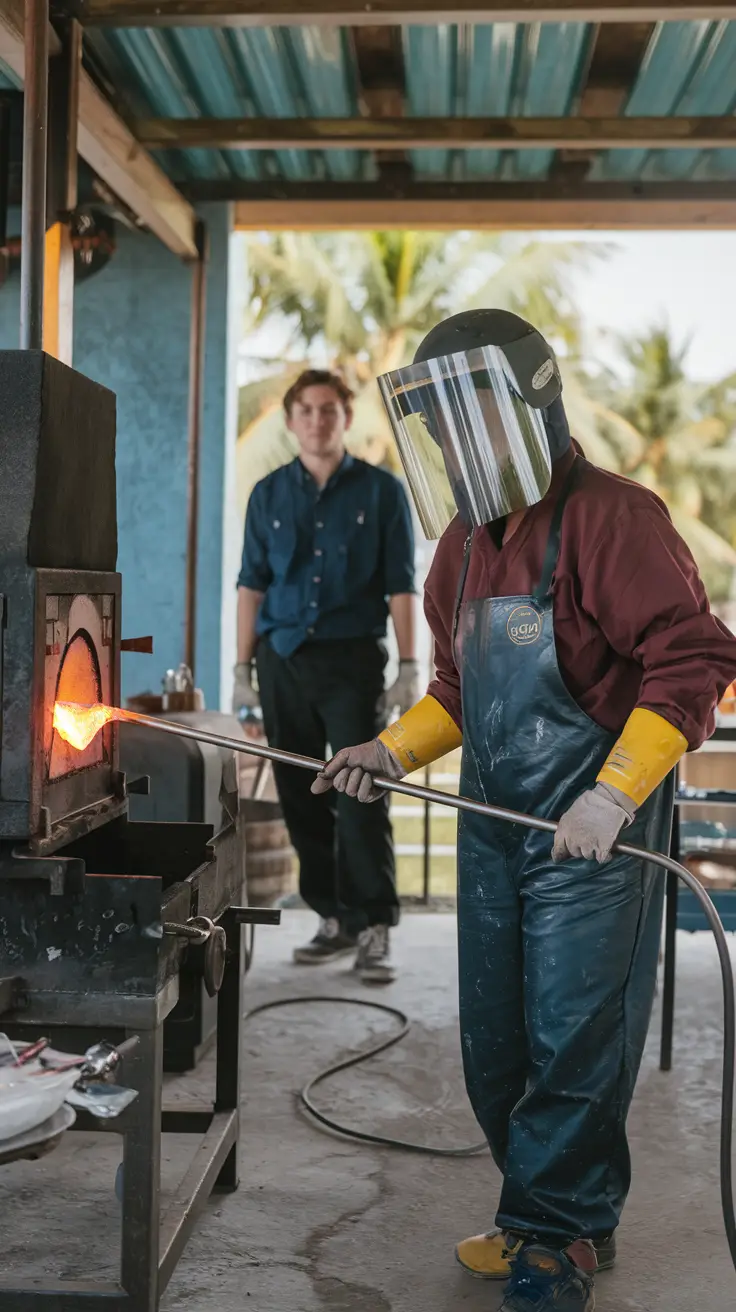
The Glassblowing Workshops Hidden from View
Everyone knows about Murano, but the glass factories there have largely become tourist attractions with gift shops attached. The small furnaces operating in Venice proper are a different story entirely. These workshops produce pieces for collectors and museums, not cruise passengers looking for souvenirs. You’ll find them in unexpected locations – ground floor spaces in otherwise residential buildings, identifiable only by the blast of heat when you walk past an open door.
- Look for the glow: If you see an orange light coming from a ground-floor window and feel a wave of heat, there’s probably a furnace running inside. Glassblowing requires temperatures above 1000°C, so these workshops are impossible to miss once you know what to look for.
- Timing matters: Most glassblowers work early in the day before the heat becomes unbearable. If you arrive in port early, head straight to Cannaregio or Castello rather than joining the mid-morning crowds at San Marco.
- Watch, don’t touch: These aren’t interactive tourist experiences. You can usually stand in the doorway and observe, but don’t expect a guided tour or sales pitch. The artisans are working to deadlines and commissions, not performing for visitors.
- Quality vs price: A genuine piece from a working furnace costs significantly more than the tourist versions, but the weight, clarity, and craftsmanship are incomparable. If you’re serious about buying, ask about shipping rather than trying to carry fragile glass onto a cruise ship.
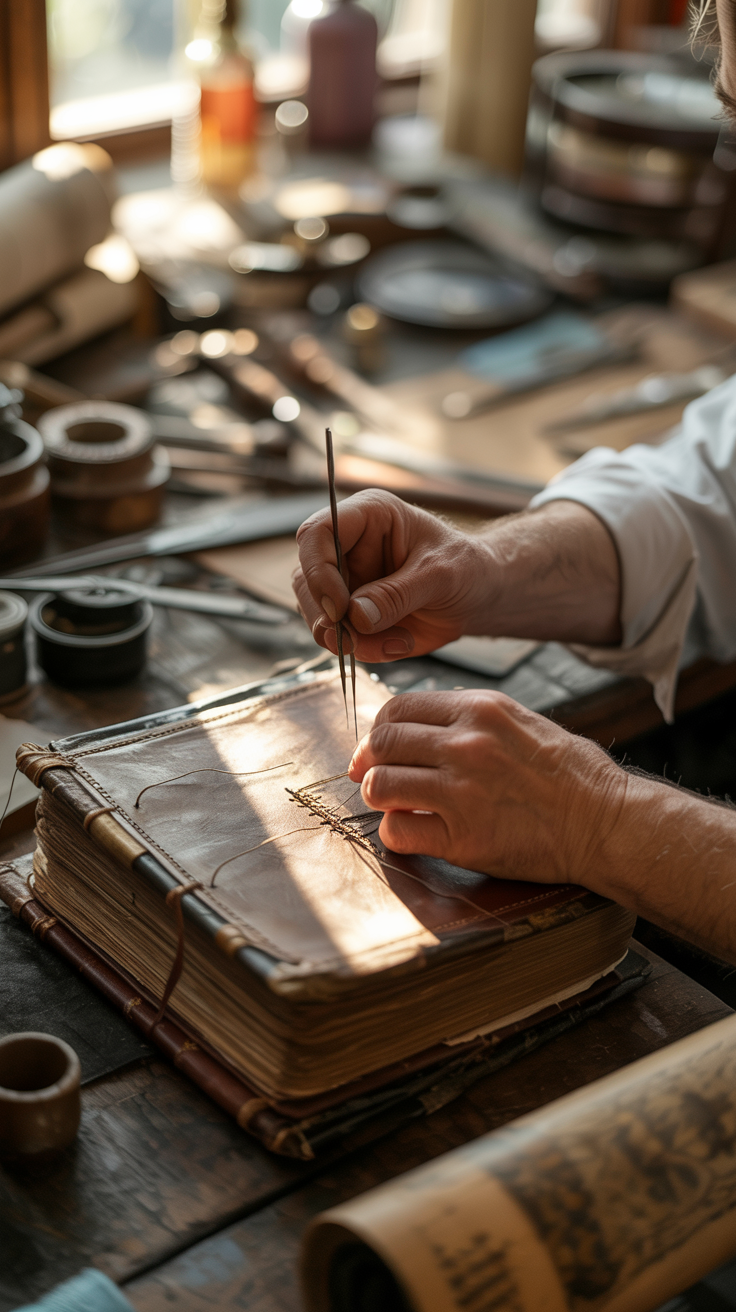
Bookbinders and Paper Marblers Still Working by Hand
Venice has a centuries-old tradition of bookbinding and decorative paper-making, but you’d never know it from the generic notebooks sold near the Rialto Bridge. The real binderies are scattered throughout the city, often in first-floor workshops above street level. You’ll spot them by the smell of leather and glue, and sometimes by the sheets of marbled paper hanging in windows to dry.
These craftspeople still sew signatures by hand and create marbled endpapers using techniques developed in the 1600s. The good ones have waiting lists for custom work and supply restoration projects for libraries and museums throughout Europe. They’re not interested in churning out mass-market journals, which is exactly why their work matters.
- Check Dorsoduro and San Polo: These sestieri have higher concentrations of working binderies, particularly in the streets between Campo Santa Margherita and the Frari church.
- Paper marbling demonstrations: Some workshops allow visitors to watch the marbling process, where pigments are floated on a gel base and transferred to paper. It’s mesmerizing to watch and completely different from any printing technique.
- Custom commissions: If you have several weeks before your cruise ends in another port, some binders will accept custom orders and ship the finished work. Email ahead if you’re interested in something specific.
- Price reality: A hand-bound book with marbled papers starts around €100 and goes up from there. These are heirloom pieces, not impulse purchases.
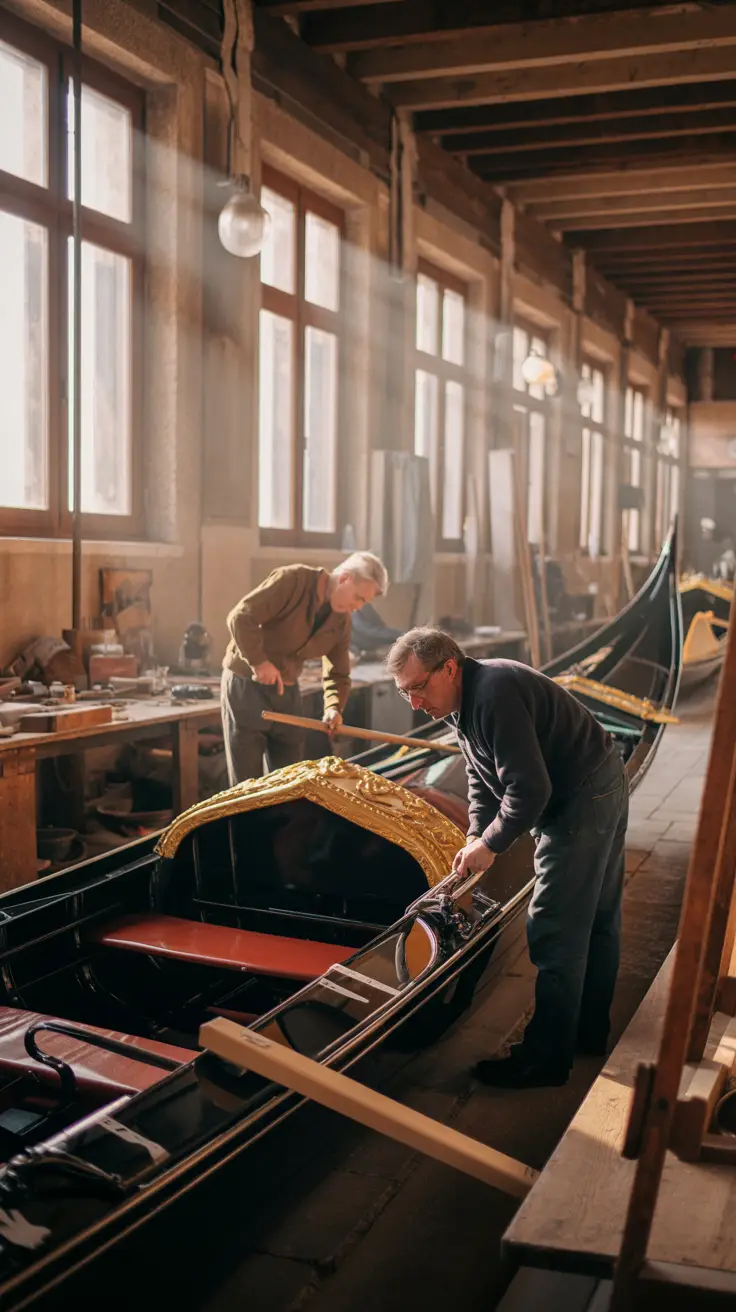
The Gondola Workshops Tourists Walk Past
Everyone photographs gondolas, but almost no one sees where they’re made and repaired. These boatyards (squeri) are working industrial spaces, often open-sided structures right on the water. The most famous, Squero San Trovaso, sits directly across the canal from a popular gelato spot in Dorsoduro, yet most people focus on their ice cream and miss the gondolas being built in plain sight.
Gondola construction takes over a year per boat and involves eight different types of wood. The asymmetric hull design, which compensates for the single oar, requires skills passed down through generations of boatbuilders. These aren’t decorative objects – they’re precision watercraft that cost upwards of €40,000 each.
- Squero San Trovaso: Visible from the fondamenta in Dorsoduro, this working boatyard lets you observe from across the canal. Go in the morning when craftsmen are actively working on hulls.
- Forcola carvers: The oarlock (forcola) is carved from a single piece of walnut and shaped to allow nine different rowing positions. A handful of carvers still practice this specialized craft in workshops near the squeri. Look for workshops in Santa Croce and Cannaregio.
- Remer workshops: The oars themselves are handmade by specialist carvers called remeri. These workshops are even rarer than the forcola makers and worth seeking out if you’re interested in traditional craftsmanship.
- Respect working spaces: These are industrial workshops, not museums. Watch from public walkways and don’t interrupt craftsmen at work.
Traditional Textile and Velvet Weavers
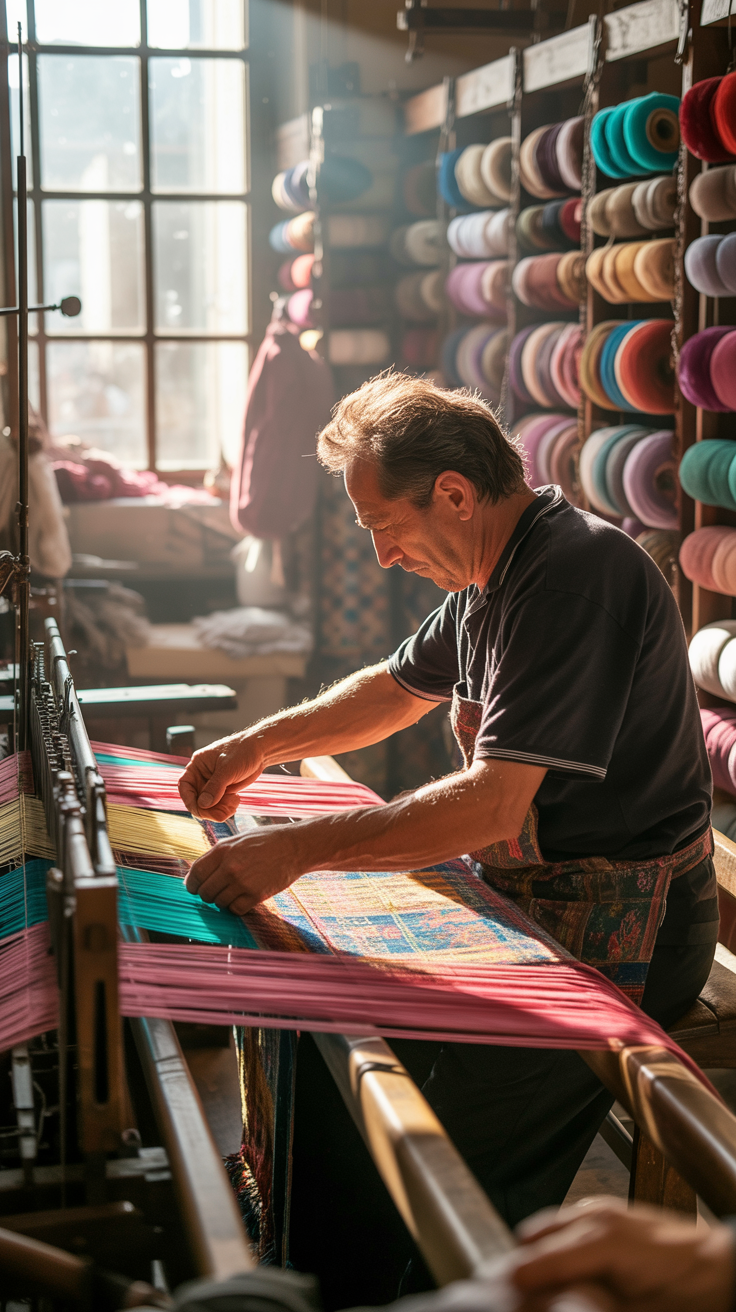
Venice was once Europe’s textile capital, producing velvets and brocades for royalty across the continent. That industry largely disappeared, but a few workshops still operate hand looms producing fabric for restoration projects and high-end interior designers. The Tessitura Luigi Bevilacqua in Santa Croce runs 18th-century looms that can take months to complete a single length of fabric.
These workshops don’t rely on tourist business – their clients are museums, theatres, and wealthy collectors restoring historic properties. But some allow visitors to watch the weaving process and see the massive wooden looms in action. The sound of the looms alone is worth the visit – a rhythmic clacking that’s been echoing through Venetian workshops for centuries.
- Advance booking usually required: Working textile studios rarely accept walk-ins. Email ahead to arrange a viewing time that doesn’t interrupt production schedules.
- Photography restrictions: Many workshops restrict photography to protect proprietary techniques and client privacy. Ask before pulling out your phone.
- Understanding the scale: These aren’t quick demonstrations. Watching a velvet pattern take shape on a hand loom gives you perspective on why authentic Venetian textiles command such high prices.
- Connection to Mediterranean cruise itineraries: Several other ports on typical Mediterranean routes have similar artisan traditions worth exploring if you develop an interest in traditional crafts.
Printmaking and Engraving Studios
Venice has a rich printmaking tradition dating back to the Renaissance, and a handful of studios still produce etchings and engravings using historical techniques. These workshops combine the roles of artist studio and print shop, with craftspeople who can both create original designs and reproduce historical images using period-appropriate methods.
The best studios work on museum-quality reproductions and limited edition prints for collectors. They’re usually small operations – one or two artisans working in cramped spaces filled with copper plates, printing presses, and drying racks. The smell of ink and acid gives them away before you see the actual workshop.
- Look in San Marco and Castello: The areas away from the main tourist flow have higher concentrations of working print studios.
- Original vs reproduction: Some studios create original works while others specialize in reproducing historical Venetian prints. Both require the same technical skills, but the pricing and availability differ considerably.
- Print-on-demand services: A few studios offer same-day printing from their stock of copper and wood blocks. You can select an image and have it printed on quality paper while you wait.
- Understanding the process: If you’ve only seen digital printing, watching an etching come off a hand-cranked press gives you appreciation for how prints were made before industrial processes took over.
Finding Workshops in Venice’s Hidden Canals
The workshops that matter aren’t concentrated in one area. They’re scattered throughout the residential neighborhoods, often in the parts of Venice that require multiple bridges and dead-end alleys to reach. This geographic dispersal is actually the point – these are working studios in living neighborhoods, not attractions clustered for tourist convenience.
Your best strategy is to pick a quiet sestiere and spend several hours wandering without a specific destination. Cannaregio north of the main tourist route offers excellent workshop-spotting opportunities. Dorsoduro away from the Accademia has good concentration of bookbinders and small studios in Venice’s hidden canals.
Santa Croce and western Castello are genuinely residential and home to workshops that rarely see foreign visitors. Keep your phone charged with a portable charger since you’ll be using maps extensively, and consider a secure backpack for carrying purchases and keeping your belongings safe while exploring off-the-beaten-path neighborhoods.
| Neighborhood | Typical Workshop Types | Walking Time from Cruise Terminal | Tourist Density |
|---|---|---|---|
| Cannaregio (north) | Glass furnaces, bookbinders, printmakers | 35-45 minutes | Low |
| Dorsoduro (west) | Bookbinders, paper marblers, textile studios | 40-50 minutes | Medium |
| Santa Croce | Gondola workshops, woodcarvers, textile weavers | 25-35 minutes | Low |
| Castello (east) | Printmakers, small furnaces, metalworkers | 30-40 minutes | Low to Medium |
What You Need to Know Before Visiting
These aren’t tourist attractions with admission fees and gift shops. They’re working businesses, and your visit is an interruption to their day. Most artisans tolerate observers because they understand that interest in traditional crafts helps keep these trades alive, but there’s an etiquette to observing working craftspeople.
Venice’s weather can be unpredictable, particularly in shoulder seasons when many Mediterranean cruises operate. A packable rain jacket for women or rain jacket for men takes up minimal space in your daypack but protects you during sudden showers while workshop-hunting. Walking all day requires preparation – apply blister prevention before you start exploring to avoid painful hotspots that cut your day short.
- Open doors mean you can look: If the door is open and you can see inside, it’s generally acceptable to watch from the doorway. If the door is closed, the workshop is either empty or the artisan doesn’t want visitors.
- Don’t expect tours: These craftspeople are working to deadlines and commissions, not providing entertainment for cruise passengers. A nod of acknowledgment is usually all the interaction you’ll get.
- Photography is often unwelcome: Many workshops restrict photos to protect proprietary techniques or client privacy. Always ask before taking pictures, and accept a no without argument.
- Speaking Italian helps: Basic Italian phrases go a long way. Even a simple “Posso guardare?” (May I watch?) shows more respect than just standing there with your camera out.
- Buy if you’re serious: If you spend time watching someone work and genuinely appreciate their craft, consider buying something. These businesses operate on slim margins, and tourist observation doesn’t pay the rent.
- Time management: Finding these workshops takes time that you might not have on a standard port call. If you only have six hours ashore, you need to choose between hitting the major landmarks and seeking out hidden workshops. You can’t do both properly.
The Economics of Traditional Craftsmanship
Most of these workshops barely break even. The artisans continue working because they’ve spent decades learning their trades and feel responsible for keeping the techniques alive. They’re not getting rich making hand-bound books or custom gondola oarlocks. Many supplement their income with teaching or restoration work for museums.
This economic reality shapes how they interact with visitors. They don’t have time to provide free demonstrations for tourists who won’t buy anything. If you’re genuinely interested in traditional crafts, buying a piece directly from a working artisan – even something small – makes a real difference. It’s also the only way to own something that isn’t mass-produced in a factory somewhere outside Venice.
The price difference between tourist souvenirs and genuine handmade work is substantial. A real marbled paper notebook costs ten times what you’d pay for a factory version. A hand-blown glass piece costs hundreds rather than dozens of euros. But if you want something authentic that will last decades, that’s what quality craftsmanship costs. If you’re purchasing delicate items, protect them with travel shoe bags which work perfectly for wrapping fragile purchases, or use packing cubes to keep handmade items secure in your luggage.
Extend Your Stay in Venice
Finding these workshops properly requires more time than a typical cruise port call allows. If you’re serious about seeing working artisans and exploring the residential neighborhoods, consider adding a night or two in Venice either before or after your cruise. The accommodation in quiet sestieri like Cannaregio and Dorsoduro gives you early morning and evening access to the city when the day-trippers have gone.
Hotels in Venice range from converted palazzos to simple guesthouses above workshops. Staying in the residential areas rather than near San Marco puts you closer to the authentic workshops and away from the cruise crowds. You’ll spend more time watching craftspeople work and less time queuing for tourist attractions. Pack efficiently with compression packing cubes to maximize space in your carry-on luggage, and bring a hanging toiletry bag for the often-compact hotel bathrooms. A compact steamer helps keep clothing presentable if you’re extending your stay, and a travel jewelry organizer protects any artisan pieces you purchase. Several small hotels in Dorsoduro and Cannaregio occupy historic buildings where artisans still work on the ground floor – you can literally stay above a working bookbindery or print studio. For more details on planning your arrival and departure, check out the Venice cruise port guide for practical information about transfers and timing.
Personal Experience
Last time I was in Venice, I ditched the crowds heading to St. Mark’s Square and wandered into Cannaregio instead. That’s when I spotted this tiny workshop through a half-open door – an elderly man was blowing glass over a roaring furnace, sweating buckets in the summer heat. His grandson was watching from a stool in the corner, probably learning the same techniques his family has used for generations. I stood there for maybe twenty minutes, completely mesmerized, and the old man eventually waved me in to see the pieces cooling on the rack. Nothing in the tourist shops comes close to the weight and clarity of what he makes right there in that cramped space.
The best part? There are dozens of these workshops scattered throughout the quieter neighborhoods, but most people walk right past them chasing after the next gondola photo. I found a bookbinder in Dorsoduro who still marbles paper by hand – the whole studio smelled like leather and old glue. She showed me how she sews the signatures together without looking, just pure muscle memory. These artisans aren’t putting on shows or charging admission. They’re just working, same as their ancestors did, in workshops that feel more like time capsules than tourist attractions. You just have to slow down enough to notice the open doors and the sound of tools at work.
Common Questions & FAQ
Can I visit these workshops on a short cruise port call?
It’s tight but possible if you prioritize workshops over major landmarks. You need at least four to five hours to reach the residential neighborhoods, find working studios, and get back to your ship with buffer time. Most cruise passengers don’t have enough time to do both the tourist highlights and the hidden workshops properly, so you’ll need to choose your focus before you disembark.
Do the workshops charge admission to watch?
No, genuine working workshops don’t charge entrance fees. They’re businesses, not museums. However, the expectation is that serious observers will eventually purchase something if they spend considerable time watching someone work. Standing in a doorway for five minutes is fine; hanging around for an hour without buying anything is inconsiderate.
How do I find workshops that aren’t listed in guidebooks?
Walk slowly through residential neighborhoods with your eyes and ears open. Look for open doors with workbenches visible inside, listen for the sound of tools and machinery, and follow your nose toward the smell of hot glass, leather, or ink. The workshops that matter don’t advertise themselves, so you need to actively look rather than following maps to marked locations.
Is it rude to take photos inside the workshops?
Yes, unless you ask first and receive clear permission. Many artisans restrict photography to protect their techniques or client privacy. Don’t assume that an open door means you can photograph everything inside. Ask in Italian if possible, accept a refusal gracefully, and never photograph without asking first.
Are these workshops open on cruise ship days when Venice is crowded?
Working hours don’t change based on cruise ship schedules. Most artisans work morning to early afternoon, particularly glassblowers who need to avoid the peak heat of the day. The workshops are open for business, not for tourists, so they keep regular working hours regardless of how many ships are in port.
Can I commission a custom piece during a port call?
Potentially, but you’ll need to arrange shipping since most custom work takes weeks or months to complete. Some workshops accept commissions from foreign clients and ship internationally, while others only work locally. If you’re serious about commissioning something, email workshops before your cruise to discuss timing and logistics.
What’s the best neighborhood for finding multiple workshops in one area?
Cannaregio north of the main tourist route has the highest concentration of diverse workshops within walking distance of each other. You’ll find glassblowers, bookbinders, and printmakers all within a twenty-minute walk. Dorsoduro west of the Accademia is the second-best option, particularly for bookbinders and textile workshops.
How much should I expect to pay for genuine handmade pieces?
Small items like marbled paper sheets start around €10-20, hand-bound notebooks begin at €100, quality glass pieces start at €150-200, and larger commissioned works run into thousands. If something seems cheap for handmade work, it’s probably factory-made. The price reflects the hours of skilled labour involved in creating each piece.