
The Grand Canal gets all the attention, and frankly, that’s exactly what makes Venice’s quieter waterways so brilliant. While everyone else is crammed onto vaporettos snapping the same photos, you can slip into the smaller canals where actual Venetians live, work, and go about their day without a cruise ship passenger in sight. These aren’t hidden in the sense that locals are guarding some secret – they’re just not on the Instagram circuit, which means you’ll actually have room to breathe and see how this city functions when it’s not performing for tourists.
Here are twelve canals and waterways where you’ll trade crowds for authenticity, plus the practical details that’ll help you actually find them without wandering aimlessly for hours.
Map of Venice Canals
1. Rio de San Boldo (Cannaregio)
This narrow waterway near the Campo dei Mori winds through residential Cannaregio and delivers exactly the kind of scene you hoped Venice would be. Washing lines crisscross overhead, small boats bob outside kitchen windows, and you’ll likely spot neighbors chatting across the water in Venetian dialect.
- How to find it: From the Fondamenta della Misericordia, head northeast toward the Campo dei Mori. The canal runs parallel to some of the area’s busier streets but feels worlds away
- Best time: Early morning when locals are collecting deliveries and the light hits the water just right
- What you’ll see: Actual Venetian life – delivery boats, residents going about their routines, small workshops with doors open to the canal
- Practical note: The fondamenta (walkway) is narrow in spots, so this works best for solo exploration or pairs rather than large groups
2. Rio de la Sensa (Cannaregio)
This longer canal cuts through the northern part of Cannaregio and rarely sees anyone who isn’t local. It’s proper residential Venice with none of the polish you’ll find near San Marco.
- Route: Runs roughly parallel to the Fondamenta de la Sensa from near the Madonna dell’Orto church eastward
- Why it works: Too far from major sights for most tourists to bother, but close enough to Venice’s hidden courtyards if you fancy exploring further
- Watch for: Small bridges with excellent views down the canal in both directions – perfect for photos without elbows in your ribs
- Getting there: Vaporetto to Madonna dell’Orto or Orto, then a five-minute walk
3. Rio de Sant’Andrea (Castello)
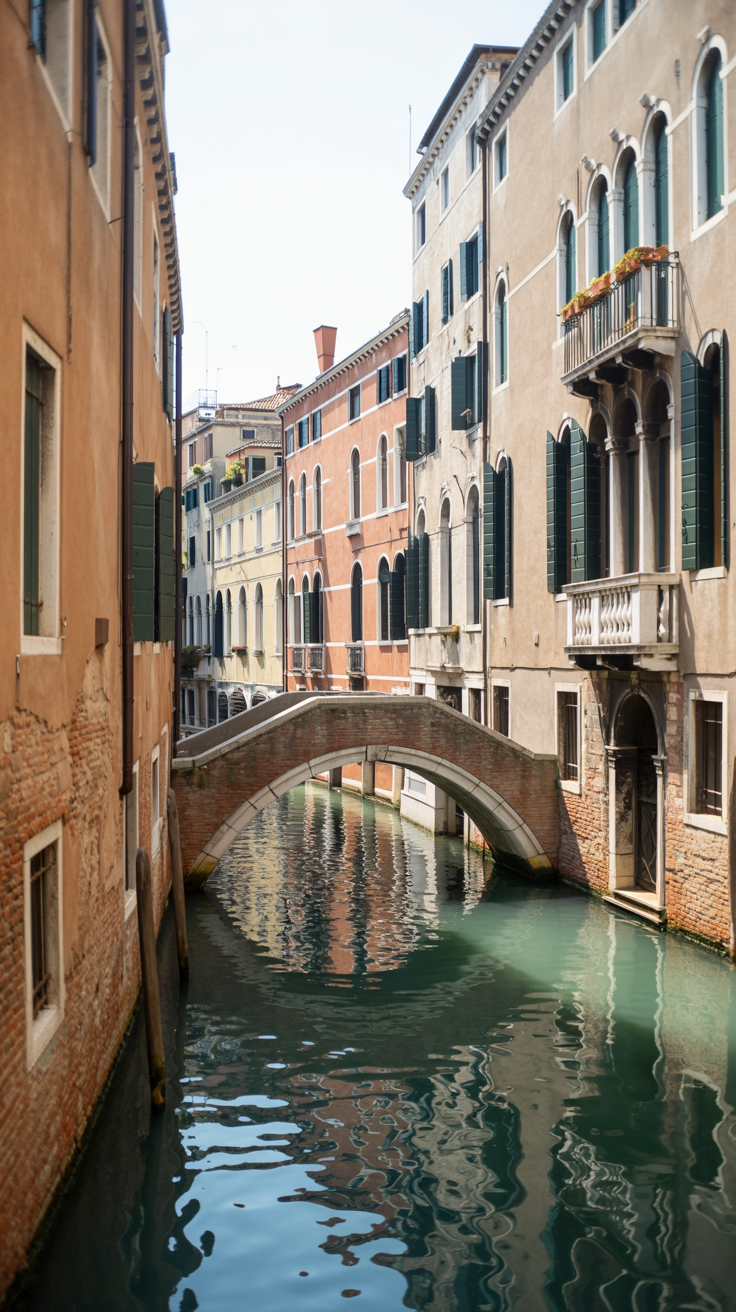
Castello is already quieter than the main tourist zones, and this little canal takes it further. You’re in proper neighborhood territory here where local shops outnumber souvenir stands by a healthy margin.
- Location context: Between Via Garibaldi and the Giardini della Biennale area
- What makes it different: Working boats, local trattorie with handwritten menus, kids actually playing outside
- Bonus: The nearby Via Garibaldi is one of Venice’s few proper streets (no canal running down the middle) and has brilliant local bakeries and cafés
- Timing tip: Midday works fine here since it’s residential – you’re not competing with tour groups on any schedule
4. Rio de le Torreselle (Dorsoduro)
Dorsoduro has the Accademia and the Peggy Guggenheim Collection, which means certain bits get absolutely rammed. This canal isn’t one of them.
- Where: South of Campo Santa Margherita, running toward the Zattere waterfront
- Character: Quiet residential with the occasional small gallery or artisan workshop
- Clever shortcut: Connects the busier Campo Santa Margherita area to the Zattere without using the main drags
- Best approach: Start from Campo Santa Margherita after grabbing coffee and wander south – you’ll find it naturally as you explore the quieter streets
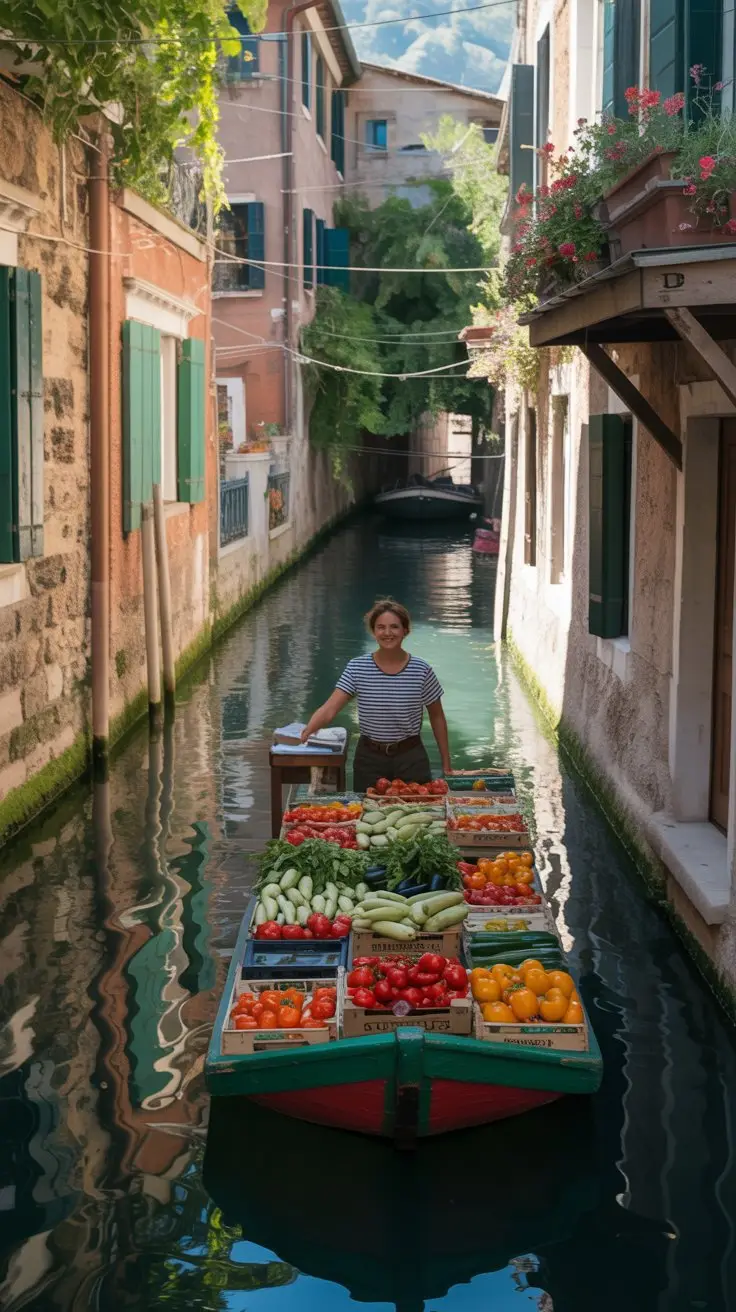
5. Rio de San Barnaba (Dorsoduro)
The floating vegetable barge here is charming in a completely unpretentious way – it’s an actual working boat selling produce to locals, not a photo prop (though it photographs beautifully anyway).
- Landmark: Look for the green barge that’s been operating for decades
- Why visit: Combines a working canal scene with access to the Campo San Barnaba, which has authentic local bars and shops
- Practical angle: The bridge crossing the canal offers a lovely elevated view without the crowds you’d get at Rialto or Accademia
- When: Late afternoon when the light turns golden and locals are picking up ingredients for dinner
Want to know more about making the most of your time in Venice? Check out our complete Venice cruise port guide for transport tips and timing advice.
6. Rio de San Felice (Cannaregio)
Near the Ca’ d’Oro vaporetto stop but far enough removed from the Grand Canal chaos to feel genuinely peaceful. This canal shows how Venice transitions from tourist central to residential within about fifty meters.
- Access: From Ca’ d’Oro, head inland (northeast) rather than following the crowds along the Grand Canal
- What you’ll notice: The architecture stays grand but the atmosphere shifts completely – suddenly you’re passing under washing lines instead of tour group umbrellas
- Bridge views: Several small bridges cross this canal with sight lines that make for brilliant photos
- Local flavor: Small neighborhood shops and the occasional osteria with no English menu in sight
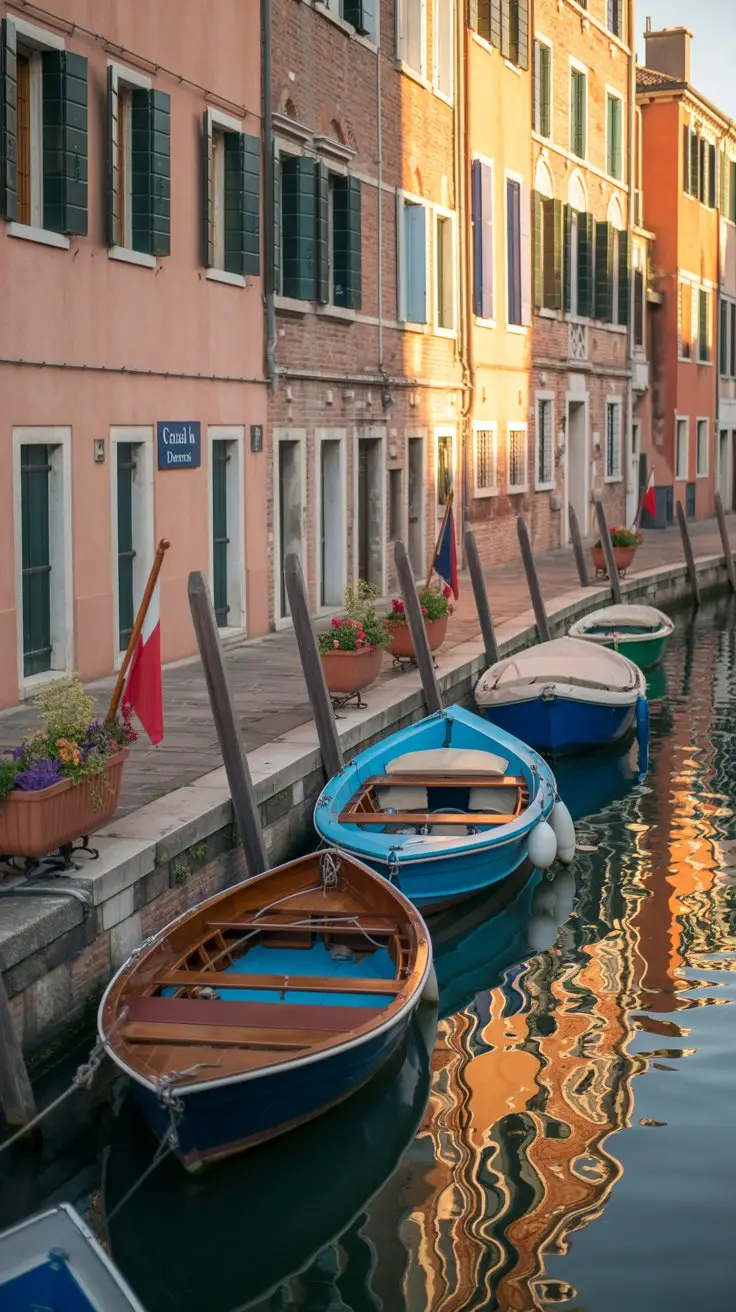
7. Rio de San Giovanni Laterano (Castello)
Deep in eastern Castello where even dedicated tourists often don’t reach. This area feels more like a regular Italian neighborhood that happens to have canals instead of roads.
- Getting there: Vaporetto to Giardini or Sant’Elena, then walk west into the residential blocks
- Scene: Proper local life with minimal polish – peeling paint, boats that are work vehicles rather than gondolas, neighbors shouting conversations between buildings
- Why bother: If you want to see Venice without any performance aspect whatsoever, this is your spot
- Combine with: A walk through Sant’Elena’s parks and waterfront, which tourists skip entirely
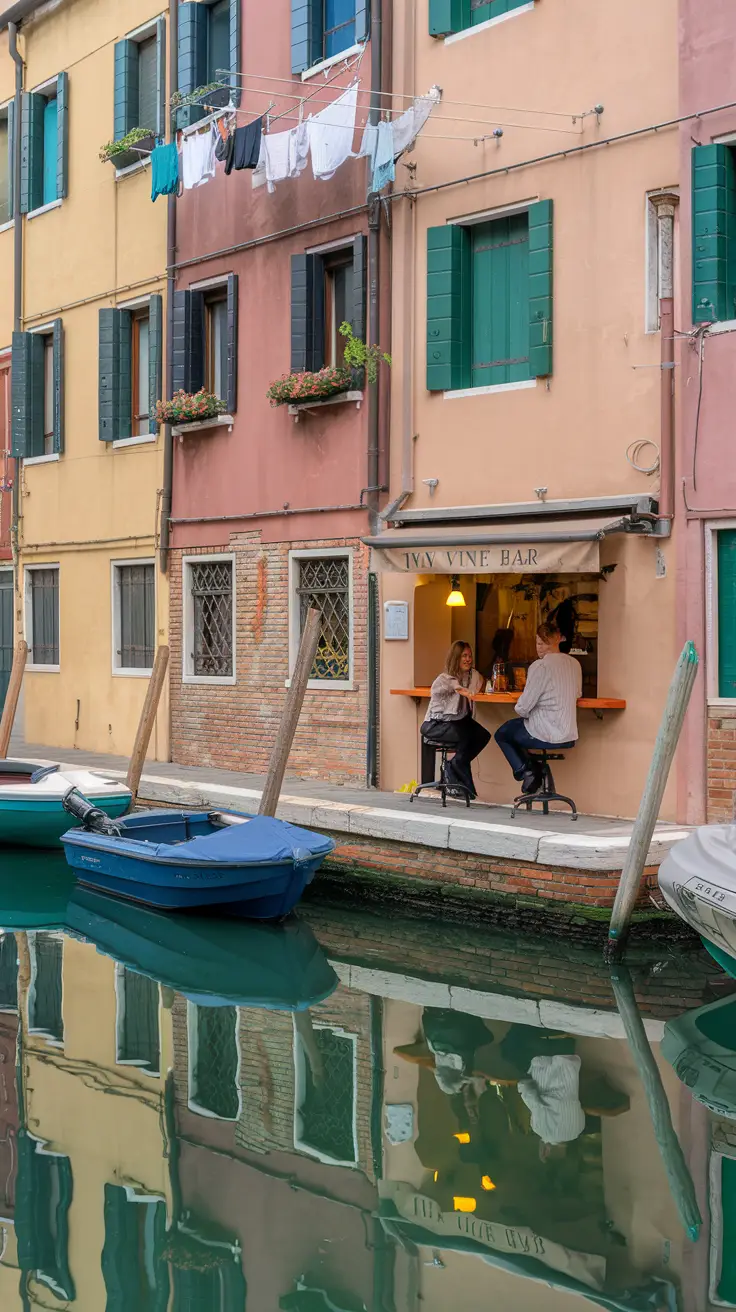
8. Rio de la Panada (San Polo)
San Polo gets tourist traffic around the Rialto and Frari church, but this little canal sits in a quieter pocket between those landmarks.
- Position: Between Campo San Polo and the Frari church area
- Characteristics: Narrow, residential, with several workshops where you might spot craftspeople through open doorways
- Navigation: Easy to combine with early morning Venice exploration when the light is best and crowds haven’t materialized
- Nearby: Campo San Polo itself is worth a pause – it’s one of Venice’s largest squares but far quieter than San Marco
9. Rio de Sant’Anna (Castello)
The far eastern edge of Castello near the Arsenale area. This waterway runs through one of Venice’s most authentically residential neighborhoods.
- Vibe: Working-class Venice with none of the gloss – laundry everywhere, small grocery shops, elderly residents sitting outside their doors
- Access: From Arsenale vaporetto stop, walk east toward the Via Garibaldi area
- What makes it special: This is Venice as a living city rather than an open-air museum
- Fair warning: Nothing “pretty” or polished here in the postcard sense, but that’s entirely the point
10. Rio de San Zulian (San Marco)
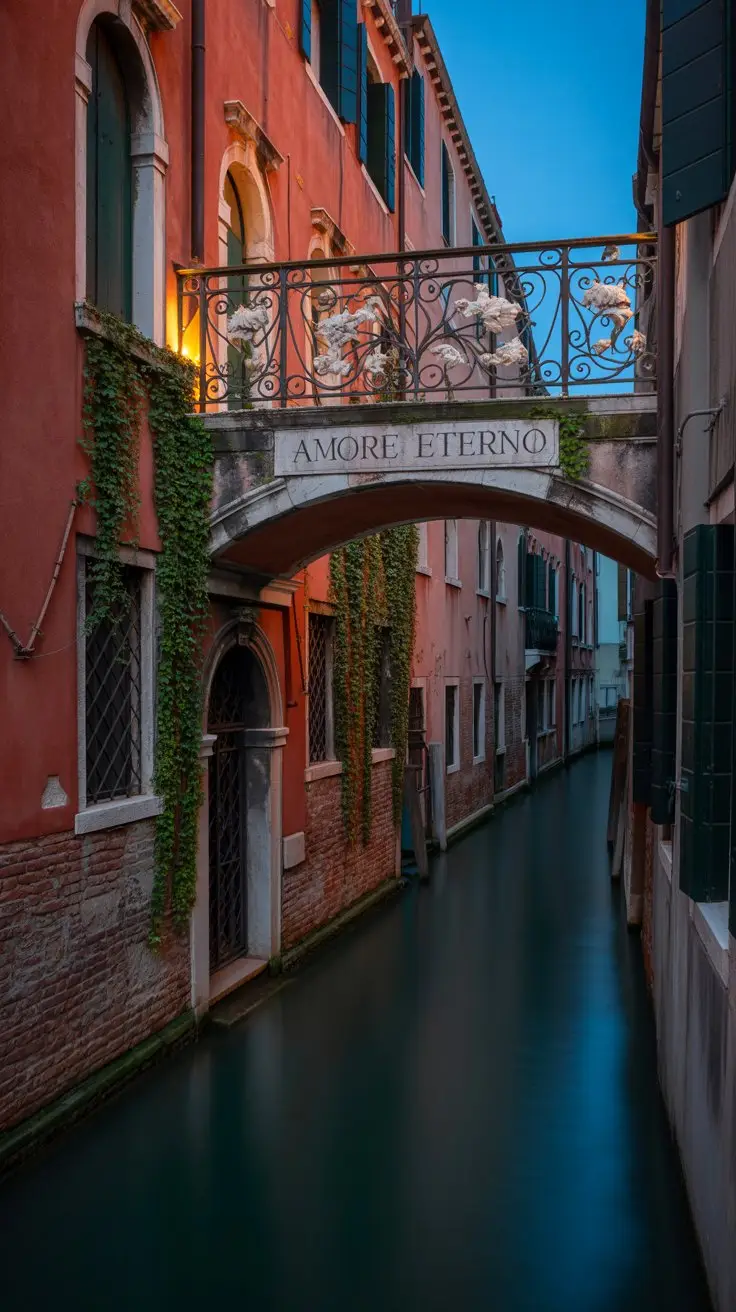
Surprisingly quiet given its central location near San Marco. This proves you don’t have to trek to the edges of Venice to escape crowds – you just need to step off the main tourist conveyor belt.
- Location: Runs from near Campo San Zulian toward Rialto
- Trick: Most tourists follow the main shopping streets; this canal runs parallel but one block removed
- Character: Mix of residential and small shops, with considerably less foot traffic than surrounding areas
- Strategic use: Functions as a genuine shortcut between San Marco and Rialto if you’re willing to navigate by feel rather than following signs
11. Rio de le Eremite (Dorsoduro)
The Dorsoduro side of the Accademia Bridge area, tucked behind the main waterfront. Quiet, residential, and often completely overlooked.
- Where: South of the Accademia Gallery, running toward the quieter residential blocks
- Scene: Local bars with Spritz prices for locals (not tourists), small grocery shops, residents who’ll nod hello because they assume you’re lost
- Best feature: Peaceful walking along the fondamenta with views of boats moored outside homes
- Connect to: The Zattere waterfront promenade, which itself is far quieter than the Grand Canal side
12. Rio de San Severo (Castello)
Another Castello gem in the area between San Marco and the Arsenale. This canal winds through neighborhoods where tourism hasn’t fundamentally changed how the area functions.
- Route: Between Campo San Zaccaria and the Arsenale district
- Why visit: Authentic local atmosphere within walking distance of major sights
- Practical advantage: Works as a walking route that lets you cut through residential areas instead of following the packed pedestrian highways
- Atmosphere: Quiet enough that you’ll hear conversations through open windows and the splash of water against stone
Practical Tips for Exploring Venice’s Quiet Canals
Wandering off the main tourist routes in Venice isn’t difficult, but a few practical considerations will make the experience considerably better.
Navigation and Getting Lost (Productively)
- Paper maps work better than phone GPS in Venice’s narrow streets where satellite signals bounce around. Grab one from your hotel or a newsstand
- Learn the sestieri (districts): Venice has six main areas, and knowing which one you’re in helps you orient yourself without constant phone checking
- Yellow signs point to major landmarks (San Marco, Rialto, etc.) but following them keeps you on tourist routes. Ignore them when exploring quiet canals
- Getting lost is fine – Venice is small enough that you’ll hit a major canal or landmark within 10-15 minutes of walking in any direction
- Keep your phone charged: A high-capacity portable charger ensures you can check maps or take photos without battery anxiety, especially useful when exploring for hours
Timing Your Canal Walks
- Early morning (7-9 AM) shows you Venice at its most authentic – locals heading to work, deliveries arriving by boat, shop owners hosing down their stoops
- Late afternoon (4-6 PM) brings excellent light for photos and locals returning home from work
- Midday works fine for residential canals since they don’t follow tour group schedules anyway
- Avoid exploring after dark in the quietest areas – Venice is safe but poorly lit streets with canal edges and no barriers require decent visibility
What to Bring
- Comfortable shoes with good grip – stone walkways near water get slippery, and Venice involves constant walking on uneven surfaces. Proper supportive walking shoes for men or cushioned walking shoes for women make hours of exploration manageable
- Water and snacks from a local shop rather than expecting to find amenities in residential areas. A foldable water bottle saves space when empty and keeps you hydrated without constant café stops
- Lightweight bag rather than backpack if possible – narrow passages and bridges mean less bulk is better. An anti-theft crossbody bag keeps essentials secure while leaving your hands free for photos and navigation
- Sun protection – water reflects light and Venice in summer can be brutal without shade
- Rain protection: Venice weather changes quickly. A packable rain jacket for women or lightweight rain jacket for men stuffs into your bag and saves the day when clouds roll in
- Blister prevention: Hours of walking on stone streets demands preparation. Anti-blister products applied before you head out prevent the misery that ruins many Venice visits
- Phone protection: Near water constantly means risk. A waterproof phone pouch protects against accidental drops and splashes while keeping your device accessible for photos and maps
Etiquette in Residential Areas
- Keep noise down – these are people’s homes, not attractions
- Don’t peer into ground-floor windows even if they’re open and right at eye level
- Step aside on narrow fondamenta to let locals pass – they’re not sightseeing, they’re going somewhere
- Ask before photographing people or boats with identifiable owners nearby
- Support local shops and cafés in residential areas rather than just walking through as observers
Combining Quiet Canals with Your Cruise Schedule
If you’re visiting Venice as part of a Mediterranean cruise, your time is obviously limited. Here’s how to fit quiet canal exploration into a realistic timeline.
Half-Day Approach (4-5 hours ashore)
- Pick one district: Focus on Cannaregio or Castello rather than trying to cover multiple areas
- Start early: Get off the ship as soon as possible to beat both cruise crowds and general tourist masses
- Plan a loop: Choose 2-3 quiet canals in one area and walk a circuit that brings you back toward transport to the cruise terminal
- Buffer time: Leave at least 90 minutes before your ship’s all-aboard time to account for vaporetto waits and unexpected route changes
- Keep essentials organized: Compression packing cubes help you carry just what you need for your shore day without lugging unnecessary items through narrow streets
Full-Day Approach (8+ hours ashore)
- Do major sights first or last: Hit San Marco or Doge’s Palace when they open or close, spend midday exploring residential canals when big attractions are most crowded
- Lunch in residential areas: Campo Santa Margherita, Via Garibaldi, or the area around Campo San Polo offer authentic local eateries without tourist markups
- Multiple district sampling: With a full day you can explore quiet canals in both Cannaregio morning and Castello afternoon, with Dorsoduro as a third option
- Built-in rest: The quiet canals offer natural breaking points where you can sit on a bridge or small campo and decompress from the sensory overload of peak-season Venice
- Stay comfortable: Long days on your feet benefit from travel compression socks that reduce fatigue and swelling, especially important when you’re walking miles on uneven surfaces
Transport Connections
- From cruise terminal: Most ships dock at Marittima or San Basilio. Vaporetto Line 2 connects to both Cannaregio and Castello areas
- Return timing: Evening vaporettos get packed with tourists heading back to ships. Leave the quiet neighborhoods by mid-afternoon if you want guaranteed space on boats
- Walking vs. vaporetto: If your ship docks at Marittima, you can walk to Dorsoduro’s quiet canals in about 20 minutes, saving time on vaporetto waits
- Water taxi option: If you’re in a small group and time-pressed, a shared water taxi to/from residential areas can make sense despite the cost
- Power for the day: A full day exploring demands backup power. A portable charger with built-in cables eliminates the need to carry separate charging cords
Extend Your Stay in Venice
Venice rewards longer visits precisely because the quiet canals and authentic neighborhoods reveal themselves slowly. If your cruise itinerary allows, consider spending an extra night or two either before or after your voyage. Hotels in Venice range from simple guesthouses in residential Cannaregio to converted palazzos along quieter stretches of the Grand Canal, and staying overnight means you’ll experience the city in the evening after day-trippers leave and in the early morning before they return.
That accommodation investment pays off when you can explore these residential canals at optimal times without rushing back to a ship. The areas around Castello and Dorsoduro offer particularly good value for overnight stays, placing you within walking distance of both major sights and the peaceful waterways where Venice still feels like a real city rather than a theme park.
Early morning coffee in a local café, evening walks along empty fondamenta, and the luxury of getting properly lost without watching the clock – that’s when Venice shifts from impressive to genuinely magical. If you’re staying overnight, proper luggage matters: a hardside carry-on protects your belongings while navigating bridges and cobblestones, and packing cubes keep everything organized when moving between ship and hotel.
Personal Experience
Last spring, I ducked into a narrow canal near Cannaregio just to escape the Rialto madness, and honestly stumbled into a completely different Venice. An elderly woman was lowering a basket from her window to collect bread from a delivery boat below, chatting away in Venetian dialect like they’d done this a thousand times before. No selfie sticks, no gelato vendors – just the gentle lap of water against stone and laundry strung between buildings like colorful flags. I followed that little waterway as it twisted past hidden gardens and workshops where I could actually hear craftsmen at work inside.
The best part? These quieter canals work as actual shortcuts if you’re willing to get a bit lost. I found myself popping out near Santa Maria Formosa after weaving through passages I’d never have found on Google Maps, passing maybe three other people the entire way. There’s something deeply satisfying about watching locals go about their real lives – kids kicking a ball against a weathered wall, neighbors calling to each other across the water, someone’s cat sunbathing on a bridge only wide enough for one person. It’s the Venice you hope exists when you book the trip, and it’s still there if you just turn down the canals that don’t look like they’re going anywhere special.
Common Questions & FAQ
Are these quiet canals safe to explore alone?
Yes, Venice is generally very safe and these residential areas are no exception. The main safety consideration is physical rather than crime-related – narrow fondamenta with canal edges and no railings require attention to your footing, especially after rain. Stick to daylight hours when visibility is good and the narrow passages aren’t as disorienting. Solo exploration is perfectly fine, though pairs or small groups make navigation easier since you can consult on directions without pulling out your phone constantly.
How much time should I budget for exploring quiet canals?
A focused walk along 2-3 connected quiet canals in one district takes about 90 minutes to two hours if you’re stopping for photos and observations. If you’re combining canal walks with pauses at small campos, local cafés, or neighborhood shops, budget 3-4 hours for a proper residential area exploration. The beauty of these areas is they don’t require long visits – even 30 minutes wandering a quiet canal provides a reset from the crowded tourist zones and costs you nothing but time.
Do I need a gondola or boat to see these canals properly?
Not at all. These canals are best explored on foot along the fondamenta (walkways) and from the small bridges crossing them. Gondola routes typically stick to wider canals and Grand Canal sections where the boats can maneuver and turn around easily. Walking gives you the flexibility to explore at your own pace, duck into side passages, and stop where something catches your interest without paying €80-100 for a gondola ride through areas you can see perfectly well from the walkways.
Will I find toilets or cafés in these residential areas?
Residential areas have small neighborhood cafés and bars where you can use facilities if you buy a coffee or drink, but they’re considerably less frequent than in tourist zones. The local etiquette is to make a small purchase rather than just asking for the toilet. Public conveniences exist at major campos and near vaporetto stops but aren’t scattered throughout quiet residential streets. Plan ahead by using facilities at museums, larger cafés near main sights, or vaporetto stations before heading into the quietest residential canals.
Can I access these canals with mobility limitations or pushchairs?
Venice’s quieter canals present significant accessibility challenges. Bridges over these small waterways almost always involve steps (often steep and worn), and the fondamenta themselves can be narrow and uneven. Wheelchairs and pushchairs face constant barriers in residential areas that haven’t been adapted for mobility access. If you have mobility limitations, stick to the wider fondamenta along major canals and campos where the pathways are broader and some bridges have ramp access. Venice is genuinely difficult for wheeled access in its residential heart.
What’s the best way to find these canals without getting hopelessly lost?
Start by identifying one or two specific canals from this list in a single district, note the nearest vaporetto stop or major landmark, then allow yourself to wander within that general area. A paper map showing the sestiere (district) boundaries helps you stay oriented without constant GPS checking. The yellow signs pointing to San Marco, Rialto, Ferrovia (train station), and Piazzale Roma appear throughout the city – when you’re ready to return to familiar territory, follow them. Venice is small enough that you can’t actually get “hopelessly” lost; you’ll hit a major canal or landmark within 10-15 minutes of walking in any direction. Keep your phone charged with a compact portable charger for emergency navigation if you do need GPS assistance.
Are these areas less crowded year-round or just in low season?
Residential canals stay relatively quiet even in peak summer season because they’re not on standard tourist routes or walking directions between major sights. You’ll encounter more people in autumn and spring when Venice sees high visitor numbers, but nothing approaching the density of crowds at Rialto or San Marco. Winter and early spring bring the quietest conditions with occasional periods when you’ll have entire canals to yourself. The key factor isn’t season but location – these areas remain primarily residential regardless of when you visit, so they maintain their authentic character throughout the year. Spring weather can be unpredictable, so having a quality rain jacket means you can explore comfortably regardless of conditions.
Should I hire a guide to explore these quiet canals?
It depends on what you want from the experience. A local guide can provide historical context, point out architectural details you’d otherwise miss, and share stories about the neighborhoods that bring them alive. However, part of the appeal of these quiet canals is the freedom to wander without agenda or schedule, stopping when something interests you and moving on when you’re ready. If you prefer structured exploration with expert knowledge, a guide adds significant value. If you’d rather have an unscripted, personal experience discovering things at your own pace, skip the guide and just go explore. Both approaches work; it’s entirely about your travel style.