
The souvenir shops clustered around Piazza San Marco and the Rialto Bridge are selling you a lie. Those glossy masks with their garish colours and “Made in Venice” stickers? Most of them were produced in Chinese factories and shipped in bulk. You’re paying €50-100 for something that costs about €3 to make, and it’ll probably fall apart before you get it home.
Real Venetian mask-making is a centuries-old craft that’s still very much alive, but you need to know where to look. The genuine workshops are tucked away in residential neighborhoods where rent is cheaper and artisans can actually afford studio space. These are the places where locals go when they need a proper mask for Carnevale or collectors come hunting for museum-quality pieces.
Map of Venice Mask Shops
What Makes an Authentic Venetian Mask
Before you start shopping, you need to know what you’re looking for. Authentic masks share certain characteristics that immediately set them apart from tourist tat:
- Materials: Traditional masks use papier-mâché, plaster, or leather as a base. The paper is layered by hand over clay or plaster molds, then left to dry properly. Cheap imitations use injection-molded plastic or resin.
- Weight: A genuine papier-mâché mask feels surprisingly light but sturdy. If it’s heavy and rigid, it’s probably plastic trying to pass itself off as something better.
- Paint and decoration: Hand-painting means slight variations and visible brushstrokes. Factory masks have perfectly uniform colours applied by spray or transfer. Gold and silver leaf should be actual metal leaf, not metallic paint.
- Lace and ribbons: Real workshops use quality fabrics and attach them properly. Tourist versions glue on cheap synthetic lace that starts peeling off immediately.
- Price reality: A simple, well-made traditional mask starts around €30-40. Elaborate pieces with extensive decoration can run €100-300+. If someone’s selling “handmade Venetian masks” for €15, they’re lying about at least one of those things.
Look for workshops that let you see the creation process. Legitimate artisans are usually happy to show you their workspace and explain techniques. If the shop gets defensive when you ask where masks are made, walk out.
The 9 Secret Workshops Locals Actually Use
1. Susy Masks (Piazza San Marco Area)
Despite being relatively close to the tourist epicenter, Susy Masks maintains a proper workshop atmosphere. The family-run operation specializes in hand-painted original designs, and they’re happy to demonstrate mask-making techniques if you visit at the right time. The quality is excellent, and you’ll find pieces inspired by Commedia dell’arte characters alongside more contemporary interpretations. Prices reflect the handwork but aren’t inflated just because of the location.
2. Atelier Marega (Cannaregio)
This is where Venetians who care about tradition go. The Marega family has been making masks for generations, and their attention to detail is exceptional. The Cannaregio location means lower rent and a quieter atmosphere than the central tourist zones. Their Commedia dell’arte masks are particularly refined, with careful character-appropriate details that show real knowledge of the theatrical tradition. Expect to pay a bit more here, but you’re getting pieces that could legitimately be displayed in a museum.
3. La Bottega dei Mascareri (Dorsoduro)
This small workshop in Dorsoduro gives you the full artisan experience. The mask makers work right there in the shop, and you can watch the entire process from bare mold to finished piece. They’re open to commissions if you want something bespoke, and the staff actually know the history behind different mask styles. The intimate setting means you won’t be fighting through crowds of cruise passengers taking selfies.
4. La Maschereria (Near Rialto Bridge)
Located slightly off the main tourist drag near Rialto, this workshop manages a nice balance between traditional and contemporary mask styles. The staff are helpful without being pushy, which is refreshing after dealing with aggressive souvenir-shop vendors. They stock both classic designs and more modern interpretations, so you’ll find something whether you want pure tradition or something that fits contemporary tastes. The selection is thoughtfully curated rather than overwhelming.
5. Ca’ del Sol Studio (Santa Croce)
This artist-run space takes traditional mask-making in interesting directions. You’ll still find classic forms, but with modern twists that make them feel fresh. The Santa Croce location is properly off the tourist path, which means the artists can focus on their work rather than dealing with endless browsers who have no intention of buying. If you appreciate craftsmanship but want something a bit different from the standard Carnevale designs, this is your spot.
6. Maschere di Testa (Castello)
The Castello district workshop focuses on high-quality papier-mâché construction and lightweight designs that are actually comfortable to wear. Collectors particularly appreciate their work because the masks are built to last rather than just look pretty on a wall. If you’re planning to actually use your mask rather than just display it, the attention to wearability makes this workshop worth seeking out. The neighborhood is residential and quiet, giving you a sense of real Venice beyond the tourist circuit.
7. Antica Fonderia Maschere (Giudecca)
Getting to Giudecca requires a short vaporetto ride, which immediately filters out most casual tourists. The workshop has a properly historic atmosphere and the artisans take mask history seriously. If you want to understand the techniques and traditions behind Venetian masks, this is where you’ll get the deep version rather than a two-minute tourist spiel. The masks themselves are heritage-quality pieces, and the workshop atmosphere feels like stepping back a few centuries.
8. Maschere Vianello (Near Murano)
This workshop is worth mentioning for its unique incorporation of Murano glass elements into certain mask designs. You’re still getting traditional mask construction, but with exquisite glass accents that add another layer of Venetian craft tradition. The location near Murano (accessible by vaporetto) means you can combine mask shopping with glass workshop visits if you want a full artisan experience. The craftsmanship on the glass-accented pieces is genuinely spectacular.
9. Atelier Giulietta Maschere (San Polo)
The San Polo location offers charming, personal service and the chance to watch painters at work. They’re particularly accommodating if you want custom colours to match a specific costume or home décor. The atmosphere is relaxed and welcoming, without the pressure tactics you’ll encounter in tourist-trap shops. Staff members are knowledgeable about different mask styles and their historical contexts, so you’ll actually learn something beyond just making a purchase.
If you’re spending time exploring artisan workshops and craft traditions in Venice, these mask shops fit perfectly into a day of authentic cultural experiences rather than generic souvenir hunting.
How to Shop Like a Venetian Local
Venetians who need proper masks for Carnevale or other occasions have a completely different approach than tourists grabbing last-minute souvenirs. Here’s what they do:
- Look for “artigiano” or “fatto a mano” signs: These indicate genuine handmade production. Shops that don’t display these clearly are usually selling factory goods.
- Visit workshops where you can watch production: Legitimate artisans are proud of their craft and happy to show it. This transparency adds value and ensures you’re getting the real thing.
- Ask about materials: Don’t be shy about asking whether a mask is papier-mâché, plaster, or resin. Ask about the weight and construction method. Real craftspeople will answer enthusiastically; frauds will dodge the question.
- Check for construction quality: Look at the inside of the mask. Hand-layered papier-mâché has a distinctive texture. You should see evidence of actual craftsmanship, not smooth injection-molded surfaces.
- Understand the price structure: Simple traditional designs (like a basic Bauta or Moretta) run €30-60 when genuinely handmade. Complex pieces with extensive hand-painting, gold leaf, or elaborate decorations cost €100-300+. Extremely ornate collector pieces can go higher.
- Bargaining is gentle: Unlike some Italian markets, aggressive haggling isn’t the norm in artisan workshops. You can politely ask if there’s any flexibility on price, especially if buying multiple pieces, but respect that you’re dealing with artists, not street vendors.
- Request care instructions: Real masks require proper care to last. Artisans will explain how to clean, store, and display your mask. If shop staff can’t or won’t provide this information, they probably don’t actually make what they’re selling.
- Commission custom work: Many workshops accept commissions for specific colours, sizes, or designs. This option simply isn’t available with mass-produced imports.
The genuine workshops are concentrated in residential areas like Dorsoduro, Cannaregio, Castello, and San Polo. You won’t find many authentic makers around San Marco or immediately near the Rialto Bridge because the rent is too high and those areas are too overrun with tourists looking for cheap souvenirs rather than quality craft.
Traditional Mask Styles Worth Knowing
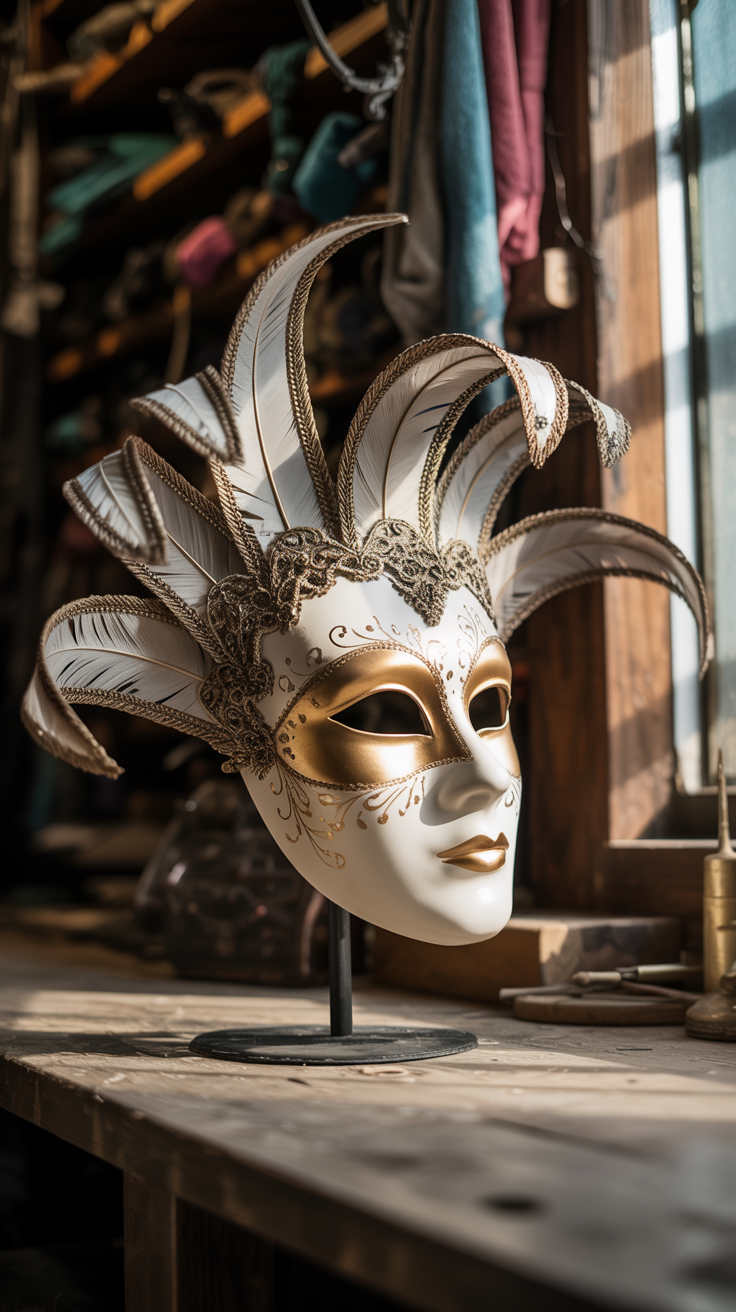
Understanding the classic Venetian mask types helps you make better choices and appreciate what you’re buying:
| Mask Style | Description | Traditional Use |
|---|---|---|
| Bauta | Full-face mask with prominent chin and no mouth, worn with black cape and tricorn hat | Most common mask for Carnevale; allowed wearer to eat and drink while maintaining anonymity |
| Moretta | Oval black velvet mask held in place by button clenched in teeth | Traditional women’s mask; called “muta” (mute) because wearer couldn’t speak |
| Volto (Larva) | Simple full-face white mask with minimal features | Basic anonymity mask; often decorated with paint or gold leaf |
| Medico della Peste | Plague doctor mask with long beak | Not actually worn during Carnevale historically; based on protective gear worn by plague doctors in 1600s |
| Colombina | Half-mask covering eyes and nose, often elaborately decorated | Named after Commedia dell’arte character; practical for eating and drinking at balls |
| Pantalone | Character mask with hooked nose and bushy eyebrows | Specific Commedia dell’arte character (wealthy Venetian merchant) |
The plague doctor mask is everywhere in tourist shops because it looks dramatic in photos, but it’s actually the least historically authentic Carnevale mask. Real Venetians rarely wore these for celebrations. If you want something genuinely traditional, go for a Bauta, Volto, or Colombina instead.
Commedia dell’arte character masks (Arlecchino, Pantalone, Il Dottore, etc.) require real knowledge to make properly because each character has specific features that identify them. Factory-made versions often get these details wrong. If you’re buying a character mask, make sure the artisan actually knows the theatrical tradition.
Spotting Fakes and Avoiding Tourist Traps
The mask shops in Venice’s tourist zones have refined their deception techniques. Here’s what to watch for:
- Multiple locations with identical stock: If you see the exact same masks in shops across different parts of the city, they’re imported wholesale. Real artisan workshops produce unique or limited-run pieces.
- “Venetian style” language: Legitimate shops say “fatto a Venezia” (made in Venice) or “artigianale veneziano” (Venetian artisan-made). Weasel words like “Venetian style” or “traditional design” usually mean made elsewhere.
- Aggressive sales tactics: Real artisans don’t need to drag you into their workshops or pressure you constantly. If staff are blocking the doorway or giving hard-sell pitches, you’re in a tourist trap.
- Perfect uniformity: Hand-painted masks have slight variations. If every “handmade” mask looks identical, they came from the same factory mold.
- Suspiciously cheap prices: You cannot produce a genuine hand-layered papier-mâché mask with quality painting for €15. The materials and labor time make it impossible. Rock-bottom prices mean rock-bottom quality and probably foreign manufacture.
- No workspace visible: Authentic workshops usually have at least part of their production area visible or will show you the back room if you express genuine interest. Shops that are just retail space filled with inventory are resellers, not makers.
- Staff can’t explain techniques: Ask how a mask is made. Real artisans love talking about their craft and can explain the process in detail. Retail staff selling imports will give vague answers or change the subject.
The sad reality is that probably 80% of “Venetian masks” sold in Venice aren’t made there at all. The shops aren’t technically lying when they sell you a Chinese-made mask in Venice, but they’re certainly not volunteering that information. The only way to avoid this is seeking out the actual workshops where production happens.

When to Visit and What to Expect
Timing your mask-shopping expedition properly makes a significant difference in your experience:
- Avoid peak Carnevale season: In the weeks before and during Carnevale (usually February), authentic workshops are slammed with orders from Venetians who need masks for the celebrations. You’ll wait longer for service and commissioned work may not be possible on your timeframe.
- Weekday mornings are ideal: Most workshops open around 9:30 or 10:00. Arriving mid-morning on a weekday means you’ll get unhurried attention and possibly see artisans at work.
- Cruise ship timing matters: If you’re visiting from a Mediterranean cruise, try to arrive at workshops before 11:00 when organized shore excursions start dumping groups into the tourist areas. Early arrival gives you a more authentic experience.
- Some workshops close for lunch: Traditional Italian business hours mean some places shut from roughly 13:00-15:00. Check before planning your route.
- Don’t rush the experience: Real workshops aren’t fast-food retail. If you’re genuinely interested, expect to spend 20-30 minutes in a good workshop learning about the craft and choosing your piece. This is part of the value.
- Photography policies vary: Some artisans welcome photos of their work process; others don’t want their techniques documented. Always ask before taking pictures in workshops.
If you’re planning your visit as part of a broader Venice itinerary, the Venice cruise port guide can help you coordinate timing with ship departure schedules and transportation logistics.
Caring for Your Authentic Mask
Once you’ve invested in a genuine piece, you want it to last. Here’s what the artisans recommend:
- Transport carefully: Ask the workshop to pack your mask properly for travel. They’ll usually provide a box with tissue paper or bubble wrap. Don’t just toss it in your luggage. If you’re traveling with multiple delicate souvenirs, investing in compression packing cubes helps protect fragile items while keeping everything organized in your suitcase.
- Display away from direct sunlight: UV exposure fades paint and damages gold leaf over time. Keep masks away from windows or use UV-filtering glass if framing.
- Dust gently: Use a soft brush or can of compressed air. Don’t use water or cleaning products on painted surfaces.
- Handle by the edges: Oil and dirt from your hands can damage finishes. Hold masks by their structural edges rather than painted surfaces.
- Store in a cool, dry place: Humidity damages papier-mâché. Don’t store masks in damp basements or hot attics.
- If mounting on a wall, use proper support: The ribbon ties aren’t meant to bear the mask’s weight long-term. Use a proper display mount that supports from behind.
- Keep away from heat sources: Don’t display near radiators, fireplaces, or heating vents. Heat can warp papier-mâché and crack paint.
A well-cared-for mask can last generations. Many Venetian families have masks that are 50+ years old and still in excellent condition because they’ve been properly maintained.
What to Pack for Your Venice Mask Shopping Trip
Planning a dedicated artisan workshop tour through Venice’s quieter neighborhoods requires some practical preparation. February can be surprisingly cold and damp during Carnevale season, so bring a lightweight packable jacket that won’t take up much space when you’re browsing in heated workshops. Venice’s weather is notoriously unpredictable, and a sudden rainstorm can hit even in shoulder seasons – a compact rain jacket folds small enough to keep in your daypack without adding bulk.
You’ll be doing serious walking to reach these hidden workshops in Dorsoduro, Cannaregio, and Castello, so invest in proper comfortable walking shoes before your trip. Venice’s cobblestone streets and endless bridges destroy inadequate footwear, and blisters will cut your artisan exploration short. If you’re prone to foot problems, throw some blister prevention products in your bag as insurance.
Bring an anti-theft backpack or secure messenger bag for carrying your purchases safely as you move between workshops. Tourist-heavy areas still have pickpockets, and you don’t want your new authentic mask stolen while you’re distracted. A portable power bank with cables keeps your phone charged for navigation between workshops and taking photos of pieces you’re considering. Venice’s narrow streets make GPS essential for finding these tucked-away locations.
If you’re staying overnight rather than just visiting on a cruise day trip, pack packing cubes to keep your luggage organized and a hanging toiletry organizer for smaller hotels with limited bathroom counter space. Many authentic Venetian guesthouses in residential neighborhoods have charming historic character but compact rooms. A European power adapter is obviously essential for charging devices – don’t assume your hotel will have extras.
Extend Your Stay in Venice
If you’re visiting Venice on a cruise and find yourself captivated by the artisan culture beyond just masks, consider extending your trip with a few extra nights in the city. The hotels in Venice range from converted palazzos with Grand Canal views to smaller family-run places in quieter neighborhoods like Cannaregio or Castello. Staying in locally-owned accommodation rather than international chains puts more money into the Venetian economy and often gives you better insider knowledge about where to find authentic experiences.
An extra day or two lets you properly explore the artisan workshops at a relaxed pace, take a glass-making class in Murano, visit the smaller islands, and eat at neighborhood bacari (wine bars) where actual Venetians go rather than tourist-trap restaurants. Pack a hardside carry-on bag for your extended stay – the wheels handle Venice’s bridges better than soft luggage, and the rigid structure protects any fragile masks or glass pieces you purchase.
The city reveals completely different layers when you’re not rushing back to a ship departure time, and you’ll find the authentic Venice that most cruise visitors miss entirely. You’ll have time to wander residential areas in the evening when the day-trippers have left, discover tiny neighborhood squares where locals gather, and really understand why these artisan traditions matter so much to Venetian identity.
Personal Experience
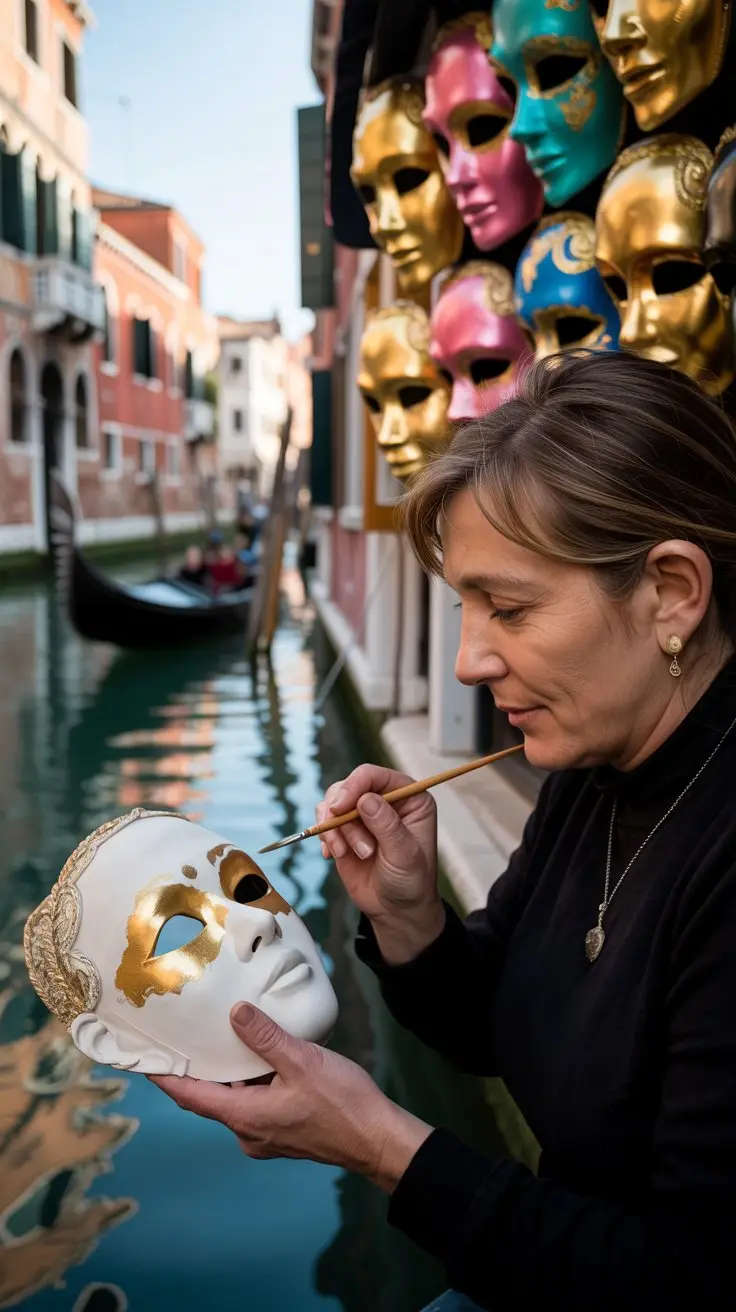
Last time I was in Venice, I got so tired of seeing the same mass-produced masks in every shop around San Marco that I almost gave up on finding something authentic. Then a friend who’d lived there told me the real workshops are tucked away in quieter neighborhoods like Dorsoduro and Cannaregio, where actual artisans still shape papier-mâché over antique molds and hand-paint every detail. I found this tiny bottega near Campo Santa Margherita where the owner was literally applying gold leaf to a Bauta mask when I walked in. The difference was stunning – you could see the texture of the layers, the quality of the materials, and the masks had this weight and character that the flimsy tourist versions just don’t have.
What surprised me most was that the authentic pieces weren’t always more expensive than the junk sold near the Rialto. Sure, elaborate Commedia dell’arte masks with intricate decorations cost a bit more, but a beautifully crafted simple design was actually cheaper than those gaudy “Venetian” masks made in China that every souvenir shop tries to push. The artisan spent twenty minutes explaining the traditional techniques to me, showed me his workspace in the back, and didn’t pressure me to buy anything. When I finally chose a half-mask with hand-applied lace, he wrapped it carefully and gave me tips on how to display it properly.
That mask sits on my shelf now, and every time someone asks about it, I send them the names of those hidden workshops because supporting real craftspeople matters. I packed it carefully in my compression packing cubes for the flight home, wrapped in the tissue paper the artisan provided, and it arrived in perfect condition. It’s become one of my favorite travel souvenirs precisely because it represents actual Venetian craft tradition rather than generic tourist merchandise.
Common Questions & FAQ
How can I tell if a Venetian mask is genuinely handmade or factory-produced?
Check the inside of the mask for texture that shows hand-layered papier-mâché rather than smooth molded plastic. Look for slight variations in painting rather than perfectly uniform colours. Ask where it’s made – legitimate artisans will tell you proudly, while resellers dodge the question. Real handmade masks feel light but sturdy and have visible brushstrokes or texture in the paint. If the shop has dozens of identical masks or won’t show you a workspace, they’re selling imports.
What’s a reasonable price to pay for an authentic handmade Venetian mask?
A simple traditional design made with proper papier-mâché construction and hand-painting starts around €30-40. More elaborate pieces with extensive decoration, gold leaf, or intricate designs range from €100-300. Very ornate collector pieces can go higher. If someone’s selling “handmade Venetian masks” for under €20, they’re not being honest about the origin or construction method. The materials and labor time alone make rock-bottom prices impossible for genuine articles.
Which Venice neighborhoods have the most authentic mask workshops?
The best authentic workshops are concentrated in Dorsoduro, Cannaregio, Castello, and San Polo – residential areas where rent is lower and artisans can afford proper studio space. Avoid the shops clustered immediately around Piazza San Marco and along the main Rialto tourist drag. Those locations pay premium rent and cater to cruise passengers looking for quick souvenirs rather than quality craft. Taking a 10-minute walk from the tourist epicenter leads you to the real thing. Wear proper walking shoes because you’ll be covering serious ground on cobblestones.
Can I commission a custom mask if I’m only in Venice for a day from a cruise ship?
Custom commissions typically take several weeks because of the drying time required for papier-mâché layers and careful painting work. If you’re only in port for a day, you’ll need to choose from existing inventory. However, many workshops can do minor customizations like specific ribbon colours or simple paint modifications while you wait or within a few hours. Contact workshops ahead of your visit if you have something specific in mind and see what’s possible within your timeframe.
Are plague doctor masks actually traditional Venetian Carnevale masks?
No, the plague doctor mask is actually the least historically authentic Carnevale design, despite being everywhere in tourist shops. The beaked design was protective equipment worn by physicians during plague outbreaks in the 1600s, not festive attire. It became popular in tourist markets because it looks dramatic and photographs well, but actual Venetians rarely wore these for celebrations. Traditional Carnevale masks are the Bauta, Volto, Moretta, and Colombina styles. If you want historical authenticity, skip the plague doctor.
Do authentic mask workshops accept credit cards or is cash better?
Most established artisan workshops accept credit cards now, though some smaller operations prefer cash for purchases under €50 to avoid transaction fees. It’s worth carrying some cash as a backup, especially if you’re visiting multiple workshops in a day. The very small neighborhood botteghe sometimes operate cash-only, particularly if they’re one-person operations. When in doubt, ask before you start browsing seriously.
What’s the difference between papier-mâché, plaster, and ceramic Venetian masks?
Papier-mâché is the most traditional material – it’s light, comfortable to wear, and produces the characteristic texture of authentic Venetian masks. Plaster creates a heavier, more rigid mask that’s better for display than wearing. Ceramic masks are essentially decorative wall art rather than wearable pieces. For genuine Venetian tradition, choose papier-mâché. The other materials have their place but aren’t part of the historical mask-making craft that Venice is famous for.
Is it worth visiting mask workshops on the smaller islands like Murano or Burano?
Murano has some workshops that combine traditional mask-making with glass elements, which creates unique pieces that incorporate two Venetian craft traditions. These are worth visiting if you’re already planning a Murano glass workshop tour. Burano has fewer mask workshops and is better known for lace-making. The very best mask artisans are still concentrated in the main Venice neighborhoods of Dorsoduro, Cannaregio, and Castello, where the historical mask-making tradition has stronger roots. Don’t make a special trip to the islands solely for masks unless you’re also interested in their other crafts.