
Creek Street is Ketchikan’s historic boardwalk built on stilts over Ketchikan Creek, formerly a red-light district now featuring shops, galleries, and museums. Located near the cruise ship docks, it’s easily walkable and showcases colorful historic buildings, salmon viewing opportunities, and attractions like Dolly’s House Museum, offering insight into Alaska’s frontier past.
Quick Facts
| Detail | Information |
|---|---|
| Distance from cruise docks | 0.3 miles (5-7 minute walk) |
| Time needed | 30 minutes to 2 hours |
| Cost | Free to walk; museum entry around $5-10 |
| Best viewing time | Early morning or late afternoon |
| Accessibility | Boardwalk accessible but some stairs throughout |
| Salmon viewing season | Mid-summer through early fall |
Want to know more about Alaska cruise ports and what to expect at each destination?
Getting to Creek Street from Your Ship
The walk from the cruise ship berths to Creek Street is pleasantly straightforward. Exit your ship and follow the main waterfront path southeast past the Visitors Bureau building. You’ll spot the wooden boardwalk entrance with its distinctive sign marking Creek Street on your left after about five minutes of walking.
Most cruise passengers make exploring Ketchikan a priority, and Creek Street typically sits at the top of that list. The route is well-marked and flat, making it manageable even if you’re not particularly adventurous.
Here’s the insider tip nobody mentions: if you turn right instead of left when you reach Creek Street, you’ll find the funicular (Cape Fox Hill-Creek Street Funicular) that whisks you up to the Westmark Cape Fox Lodge. The view from up there is spectacular and the ride itself costs just a few dollars.
What Made Creek Street Infamous
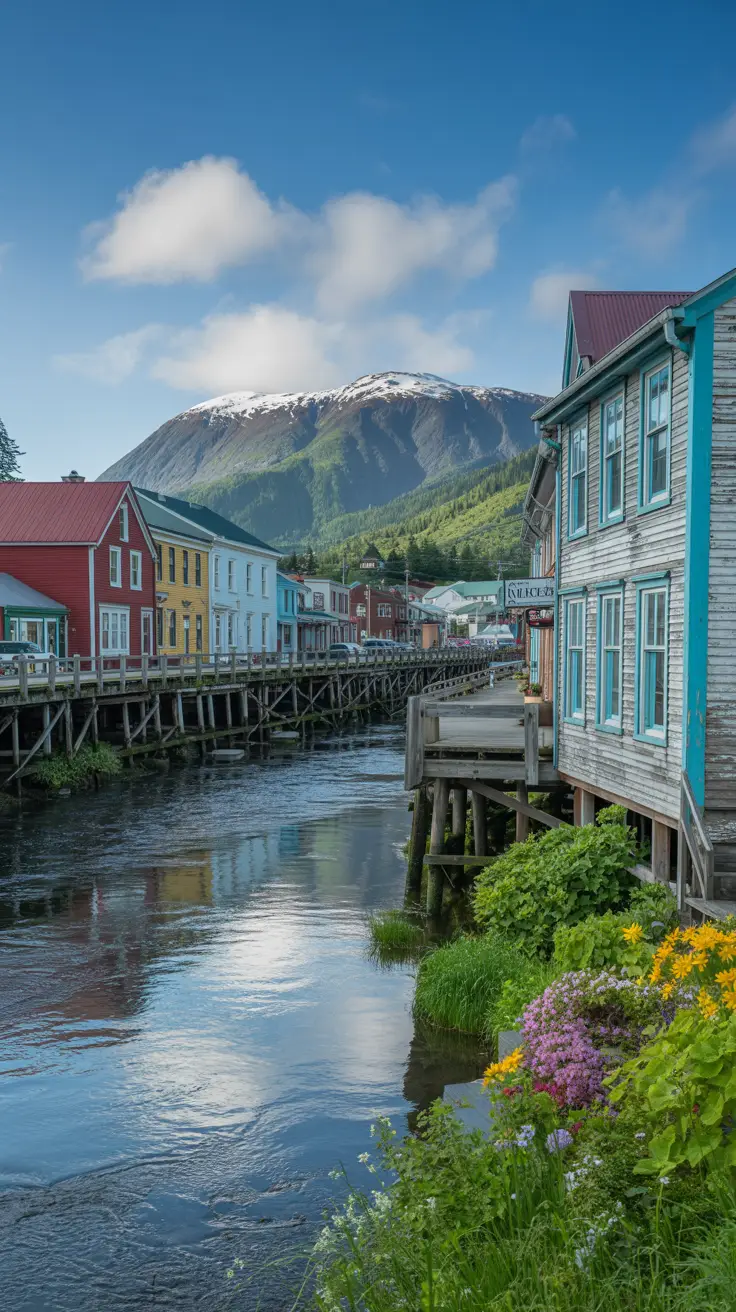
Let’s address the elephant in the room—Creek Street was Ketchikan’s red-light district from the early 1900s until prostitution was outlawed in the 1950s. The location wasn’t random. City fathers wanted the brothels outside city limits, so the enterprising madams built on stilts over the creek, which technically qualified as federal land.
The old saying goes that Creek Street was “where both men and salmon came upstream to spawn.” Yes, that’s the actual historical tagline, and locals still chuckle about it.
Dolly’s House Museum preserves one of these historic brothels exactly as it operated. Dolly Arthur ran her establishment here for decades and became something of a local institution. The museum offers a fascinating glimpse into frontier life without being salacious—it’s genuinely educational and appropriate for families.
What You’ll Find Inside Dolly’s House
- Original furnishings and décor from the 1920s through 1950s
- Personal items belonging to Dolly Arthur herself
- Prohibition-era liquor bottles hidden in creative spots
- A working Victrola and period music
- Stories about the women who worked and lived here
The Architecture and Why It Matters
Those colorful buildings perched on stilts aren’t just photogenic—they represent ingenious frontier engineering. Building over water solved multiple problems: it avoided property taxes on city land, provided natural sewage disposal (not ideal by modern standards but practical then), and created housing in a town squeezed between mountains and ocean.
The buildings survived multiple fires and floods over the decades. Walking along the boardwalk you’ll notice the different architectural styles reflecting various rebuilding eras. Some structures date back over a century while others are careful reconstructions.
If you’re interested in historic architecture, you should also check out Skagway’s historic buildings for comparison—they tell a different chapter of Alaska’s frontier story.
Salmon Viewing Without the Tour Bus
Between mid-summer and early fall, Creek Street becomes an unexpected wildlife viewing platform. Thousands of salmon fight their way up Ketchikan Creek to spawn, and you can watch this incredible spectacle from multiple vantage points along the boardwalk.
The fish are so close you can see every detail—their hooked jaws, their battle scars, their determined upstream push. Eagles often perch in nearby trees waiting for an easy meal. It’s nature documentary stuff happening right beneath your feet while you’re holding a coffee and browsing gift shops.
Best Salmon Viewing Spots
- The viewing platform at the entrance to Creek Street
- Midway along the boardwalk near the old wooden bridge
- The area around Married Man’s Trail (yes, that’s the actual name—it was the “discrete” route from downtown to the brothels)
Shopping and Galleries Worth Your Time
Creek Street shops range from tourist traps selling mass-produced souvenirs to genuine Alaska Native art galleries. The trick is knowing which is which.
Look for items marked “Alaska Native Made” or “Silver Hand”—these tags guarantee authenticity. Several galleries feature local artists who actually create their work in small studios behind the shop. Don’t be shy about asking where items come from or who made them. Legitimate dealers are proud to share this information.
The jewelry shops often carry genuine Alaska jade, gold nuggets, and Native designs. Prices reflect quality but you can find budget-friendly activities and souvenirs in Ketchikan if you know where to look.
Making the Most of Your Visit
Creek Street works as either a quick photo stop or a leisurely exploration depending on your ship’s schedule and your interests. Here’s how to optimize your time based on what you’re after.
The Quick Visit (30-45 minutes)
- Walk the entire boardwalk length and back
- Stop at the main viewing platforms for photos and salmon watching
- Pop into one or two shops that catch your eye
- Snap photos of the iconic colorful buildings
The Thorough Exploration (1.5-2 hours)
- Tour Dolly’s House Museum with the guided commentary
- Browse the better galleries and chat with artists
- Take the funicular up to Cape Fox Lodge for views
- Walk Married Man’s Trail up the hillside
- Grab coffee or a snack at a Creek Street café
- Visit during less crowded times for better photos and peaceful exploration
You can incorporate Creek Street into a larger Ketchikan walking tour that includes other downtown highlights.
The Totem Connection
While Creek Street itself doesn’t feature totem poles, it’s often combined with totem viewing as part of a Ketchikan day. The town holds the world’s largest collection of standing totem poles, and several significant sites are within walking distance of Creek Street.
After exploring the boardwalk, many visitors head to Totem Heritage Center or Creek Street’s nearby Totem Bight State Park. If you’re interested in understanding these incredible art pieces, read about Ketchikan’s totem poles and their cultural significance.
Weather and Practical Considerations
Ketchikan is one of the rainiest places in Alaska—locals joke that they don’t tan, they rust. The boardwalk can get slippery when wet, which is frequently. Here’s what actually helps:
- Wear shoes with good traction, not flip-flops or smooth-soled sneakers
- Bring a rain jacket even if it looks sunny (it won’t stay that way)
- The boardwalk has some uneven sections and stairs, so watch your footing
- Umbrellas work but can be awkward in the narrow boardwalk sections
- Railings along the creek side are sturdy—use them in wet conditions
The covered sections of boardwalk provide shelter during downpours. Duck into a shop or museum when the rain intensifies, which it does suddenly and without much warning.
Connecting to Alaska’s Larger Story
Creek Street represents one chapter in Alaska’s colorful frontier history. The town grew from fishing and logging industries, with a healthy dose of gold rush overflow providing additional economic boost.
Understanding Alaska’s gold rush history adds context to places like Creek Street. The rough-and-tumble atmosphere that spawned red-light districts in many Alaska towns came directly from the fortune-seekers flooding north.
Each Alaska port tells a different piece of this story. While Creek Street shows Ketchikan’s frontier character, walking through Juneau reveals the territorial capital’s more refined development.
Bonus Tips
- The public restrooms near Creek Street’s entrance are cleaner and less crowded than those at the cruise dock
- Creek Street businesses accept credit cards, but a few small vendors are cash-only
- The best photos happen when cruise ships first arrive (fewer crowds) or late afternoon when the light is golden
- Free WiFi is available at several Creek Street cafés if you need to check in
- The wooden boardwalk makes a distinctive sound—locals can identify tourists by their hesitant footsteps versus the confident stride of people who walk it daily
- If you see eagles hanging around, look down—they’re probably waiting for spawning salmon
- Several buildings have historical plaques with fascinating details that most people walk right past
- The small park area at Creek Street’s entrance has benches perfect for people-watching
- Some shops offer shipping services if you buy something too large or fragile for your luggage
- Creek Street is lovely at night if your ship stays late—lights reflect beautifully on the water and crowds disappear
Common Questions and FAQ
Is Creek Street open when cruise ships aren’t in port?
Yes, Creek Street operates as a regular part of Ketchikan. Shops and museums keep standard business hours regardless of cruise schedules, though some may have reduced hours during winter months when cruise season ends.
Can I see salmon any time during cruise season?
Salmon runs peak in mid to late summer. Early and late season cruises might not coincide with major runs, though Ketchikan Creek sees some salmon activity throughout the season. Ask locals when you arrive for current viewing conditions.
Are the Creek Street buildings original or reconstructions?
It’s a mix. Some buildings are original structures over a century old, while others are careful reconstructions after fires or floods. Dolly’s House is largely original with authentic period furnishings.
How much time should I budget if I want to see Creek Street and totem poles?
Plan about three to four hours total—roughly an hour for Creek Street, thirty minutes for transit, and two hours for totem viewing at either Totem Bight or Saxman Village. Both totem sites require transportation beyond walking distance.
Is Creek Street appropriate for children?
Absolutely. While the history includes prostitution, it’s presented educationally and tastefully. Kids usually love watching salmon and exploring the boardwalk. Dolly’s House Museum handles the history in a family-appropriate way.
Can I access Creek Street without climbing stairs?
The main boardwalk is accessible, but a few shops and viewpoints require stairs. Mobility-limited visitors can still enjoy most of Creek Street from the primary boardwalk level.
Personal Experience
Walking along Creek Street feels like stepping onto a movie set, except everything here is wonderfully real. The bright red, green, and yellow buildings perched on wooden stilts over Ketchikan Creek create this almost whimsical scene that somehow perfectly captures Alaska’s quirky character. I spent a good twenty minutes just leaning over the railing, watching salmon push upstream right beneath my feet while tourists and locals alike wandered past the old brothel-turned-museum and the cozy little galleries tucked into every corner. The lady at the jewelry shop told me to come back around 3 PM when the afternoon light hits just right for photos—she wasn’t wrong. That golden glow bouncing off the water and the colorful facades made for some of my favorite shots from the entire cruise.
The best part about Creek Street is that it rewards slow exploration. Sure, you can speed through in fifteen minutes, but if you duck into Dolly’s House or grab a coffee at one of the tiny cafés, you really get a feel for why this place mattered to Ketchikan’s history. The boardwalk creaks under your feet in that satisfying old-wood way, and there’s always something to discover—a hidden staircase leading up the hillside, a vintage sign, or another perfect angle to photograph those houses on stilts. Try to visit either early morning before the cruise ship crowds or late afternoon when things mellow out. That’s when Creek Street shows you its best side.