
Alaska glacier calving occurs when ice chunks break off glacier faces into the ocean, creating dramatic splashes and waves. Many Alaska cruises visit tidewater glaciers in Glacier Bay, Tracy Arm Fjord, and Hubbard Glacier, where passengers can witness this natural phenomenon from their ship’s deck. The experience includes thunderous sounds and spectacular ice formations in pristine wilderness settings.
Quick Facts About Glacier Calving
| Fact | Details |
|---|---|
| What Causes Calving | Glacier movement, tidal forces, melting, and natural ice stress |
| Best Viewing Locations | Glacier Bay National Park, Hubbard Glacier, Tracy Arm Fjord |
| Average Wait Time | 15 minutes to several hours (highly variable) |
| Sound Range | Can be heard up to a mile away |
| Best Viewing Season | Late spring through early fall |
| Cruise Ship Distance | Typically 0.25 to 0.5 miles from glacier face |
Want to know more about Alaska wildlife and natural wonders you’ll encounter on your cruise?
Which Glaciers Offer the Best Calving Shows
Not all glaciers are created equal when it comes to dramatic ice shows. Active tidewater glaciers that meet the ocean provide the most spectacular calving events, and your cruise itinerary makes all the difference.
Glacier Bay National Park features Margerie Glacier and Grand Pacific Glacier, both known for frequent calving activity. Ships park directly in front of these ice giants for 30 minutes to an hour, giving you prime viewing time. The National Park Service limits daily vessel entries, which means fewer crowds and a more serene experience.
Hubbard Glacier is North America’s largest tidewater glacier and one of the most active. This behemoth stretches 76 miles long and towers up to 400 feet above the water. Ships can approach closer here than at many other glaciers, and the calving frequency is impressively high. The downside? More cruise ships visit Hubbard, so you might share the view with other vessels.
Tracy Arm Fjord leads to Sawyer Glacier, offering a different experience with dramatic fjord walls and icebergs floating everywhere. The narrower passage means you’re surrounded by scenery, though the glacier face itself is smaller than Hubbard or Margerie.
Strategic Positioning for the Best View
Here’s what experienced cruisers know about selecting the best glacier viewing positions on your ship:
- Outside decks beat inside viewing every time—you need to hear the cracks and feel the temperature drop
- Higher decks provide better overall views and photographic angles, but lower decks put you closer to the action and wave effects
- The ship typically positions itself directly facing the glacier, making both port and starboard sides equally good
- Forward-facing balconies and the bow area offer unobstructed views without crowds leaning over railings
- Arrive at least 30 minutes before the scheduled glacier viewing to claim your spot
Most ships announce which side will face the glacier beforehand, but they often rotate during the viewing period so both sides get prime time. Don’t panic if you’re on the “wrong” side initially.
Understanding What You’re Actually Seeing
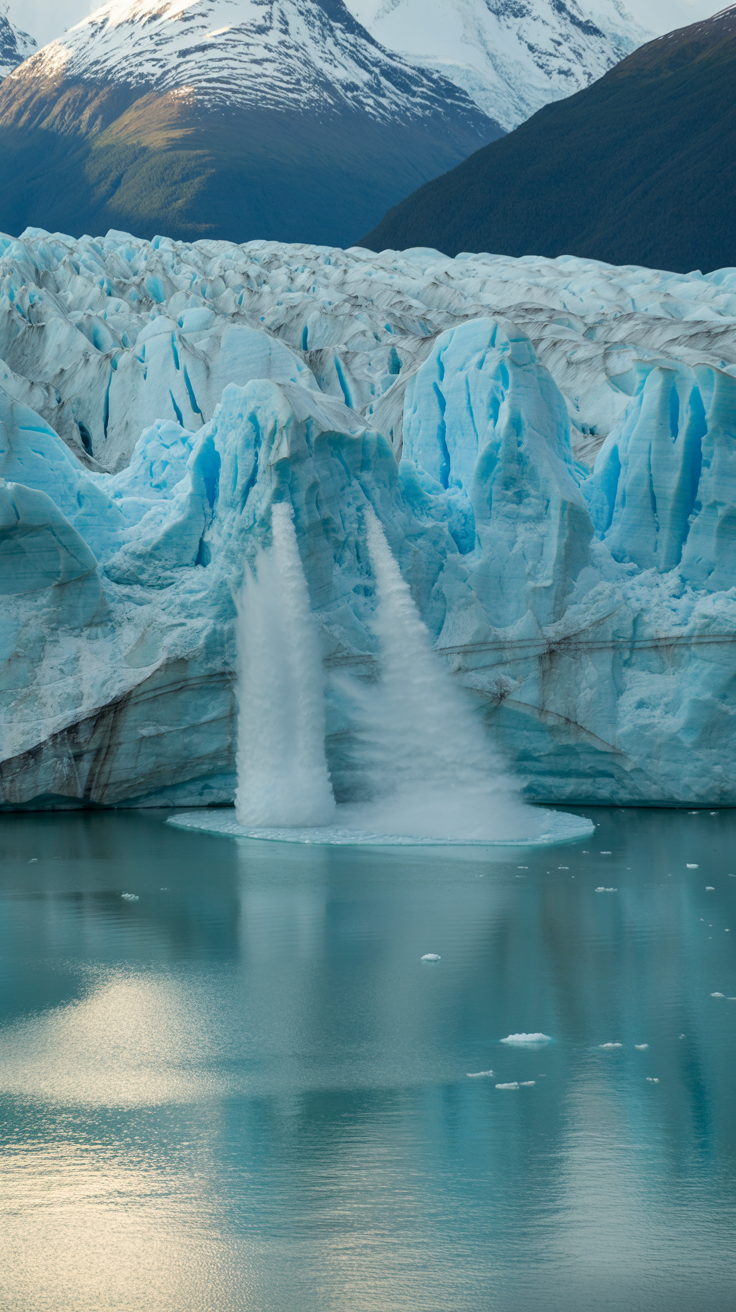
When you witness authentic glacier experiences, you’re watching a process that’s been happening for thousands of years. Glaciers flow like very slow rivers, constantly moving downhill under their own weight. When they reach the ocean, tidal action, warmer water, and the glacier’s own momentum cause chunks to break free.
The ice you see calving might be centuries old. That brilliant blue color comes from dense ice that has had all air bubbles compressed out over hundreds of years. The white ice is younger and contains more air.
Calving events range from small chunks the size of refrigerators to massive collapses involving thousands of tons of ice. The really big events are rare but unforgettable. More commonly, you’ll see smaller calvings every 10-30 minutes from active glaciers.
One insider secret: watch for “shooters” where ice breaks off below the waterline and rockets up to the surface like a cork. These create dramatic splashes and are easier to photograph than the massive calvings that happen too quickly to capture well.
Timing Your Alaska Cruise for Glacier Action
Glacier calving happens year-round, but cruise season runs from late April through September. The best month to cruise Alaska for glacier viewing depends on what tradeoffs you’re willing to make.
Early season (May and early June) offers:
- More active calving due to spring warmth hitting winter ice
- Fewer crowds and lower prices
- Snow-covered mountains providing dramatic backdrops
- Colder temperatures requiring serious layering
Peak season (late June through July) delivers:
- Warmest weather and longest daylight hours
- Highest calving activity from summer temperatures
- More crowded ships and viewing areas
- Premium pricing on everything
Late season (August and September) brings:
- Reduced crowds as families return to school
- Lower prices but still active glaciers
- Possible early snow adding drama to landscapes
- Shorter days with earlier sunsets
Photography Tips That Actually Work
Getting great shots of glacier photography opportunities requires preparation and luck in equal measure. Here’s what works:
- Use continuous shooting mode—calving happens in seconds
- Set your shutter speed to at least 1/500 to freeze the action
- Keep your camera on and ready; you can’t predict when calving will occur
- Shoot wider than you think you need; you can crop later but can’t add back missing elements
- Include foreground elements like ship railings or fellow passengers for scale
- Video often works better than photos since you can extract frames later
- Bring extra batteries; cold temperatures drain them quickly
- Use a lens hood to prevent spray from hitting your lens
For those serious about maximizing Alaska wildlife photo opportunities, a telephoto lens in the 70-300mm range works beautifully for both glaciers and wildlife. Wider lenses (24-70mm) capture the entire scene but miss the dramatic detail of ice breaking.
The lighting is tricky. Glaciers are bright white while everything else is darker, confusing your camera’s meter. Expose for the glacier and let the rest fall where it may, or shoot in RAW format so you can adjust exposure in editing.
What to Wear and Bring
Even in summer, standing on deck watching glaciers is cold. The temperature near glacier faces drops 10-20 degrees compared to open water due to cold air flowing off the ice. Smart cruisers layer up:
- Base layer (thermal underwear or moisture-wicking shirt)
- Insulating layer (fleece or down jacket)
- Waterproof outer layer (rain jacket and pants)
- Warm hat that won’t blow off
- Gloves for handling camera gear
- Neck gaiter or scarf
Other essentials:
- Binoculars for watching distant calving and spotting wildlife
- Lens cloth for wiping spray off glasses and camera
- Hand warmers tucked in pockets
- Small backpack to carry layers you’ll shed (the ship interior remains warm)
Don’t bother with an umbrella—they’re useless in the wind and will obstruct others’ views.
What Your Cruise Line Won’t Tell You
Ships have naturalists and park rangers who provide excellent commentary during glacier viewing experiences, but here are some insider details they rarely mention:
- The ship’s stabilizers work overtime near glaciers to counteract waves from calving, which is why you might feel different motion than in open water
- Captains sometimes get radio tips from other ships about which glaciers are most active that day
- The ship’s position is carefully calculated based on the size of potential waves; they’re never close enough to be in danger but far enough that small calvings might seem distant
- Some glaciers are “surging” and exceptionally active during certain periods while others are in quiet phases
- The chunks of floating ice (bergy bits and growlers) around the ship are often more photogenic than the glacier face itself
Bonus Tips That Surprise First-Time Glacier Watchers
- The sound reaches you several seconds after you see the calving due to the distance—don’t assume you missed it if you hear cracking but see nothing
- Waterfalls on glacier faces indicate active melting and often precede calving events in those areas
- If you see the glacier face “sweating” with water streaming down, calving is more likely
- The zodiac and kayak tours offered at some ports get you closer than the ship, but you sacrifice the stable platform and higher vantage point
- Seabirds often congregate near active calving zones because the ice brings up nutrients and fish
- Your cabin steward can tell you which side of the ship will face the glacier, allowing you to strategize balcony time
- The ship’s officers often gather on the bridge wings to watch too—if you see them with cameras, something good is happening
Dealing with Disappointment
Let’s be honest: sometimes you wait for hours and see nothing dramatic. Glaciers operate on geological time, not cruise schedules. You might witness the calving event of the century, or you might see a few refrigerator-sized chunks plop into the water.
Either way, you’re floating in front of rivers of ice that are tens of thousands of years old in one of the planet’s most pristine wilderness areas. The silence broken only by creaking ice and distant bird calls is profound. The sheer scale of these ice formations defies photography—they’re so massive your brain struggles to process the size.
Even without dramatic calving, experiencing tidewater glaciers in person changes your perspective on nature’s power and time’s passage. The trip is worth it for the overall experience, not just for that perfect calving moment.
Plus, you can always console yourself with the excellent salmon dinner waiting back inside the warm ship.
What Happens If Your Glacier Viewing Gets Cancelled
Weather and ice conditions occasionally prevent ships from reaching glaciers. Heavy fog, dangerous ice flows, or high winds can force itinerary changes. This is rare but happens a few times each season.
Cruise lines typically substitute alternative scenic cruising or add extra port time. You won’t get the glacier experience, but Alaska offers enough backup beauty that the cruise still delivers. Check your cruise contract—most explicitly state that itineraries aren’t guaranteed and weather-related changes don’t qualify for compensation.
Travel insurance rarely covers disappointment over missed scenic cruising, but it’s worth reviewing your policy. Some cruise lines offer future cruise credits if major advertised features like Glacier Bay get cancelled, though this is at their discretion.
Common Questions and FAQ
How long does the ship stay at each glacier?
Most cruise ships spend 30 minutes to one hour at each glacier face. Glacier Bay visits typically last several hours total as you cruise past multiple glaciers. Hubbard Glacier visits usually involve 60-90 minutes of face time. The captain’s decision depends on calving activity, weather, schedule, and how many passengers remain on deck.
Can you hear glacier calving from inside your cabin?
Possibly, if you have a balcony and the calving is large and close. However, you’ll miss the visual spectacle and the full sound experience. Inside cabins won’t hear anything. The ship’s announcement system sometimes alerts passengers to major calving events, but by the time you get outside, it’s usually over.
Is glacier calving dangerous for the ship?
No. Captains maintain safe distances calculated based on glacier height and potential wave size. The waves that reach the ship are gentle swells, not dangerous surges. Ships have sophisticated ice radar and follow strict National Park Service guidelines in places like Glacier Bay. The glacier chunks floating nearby are the bigger navigation concern, which is why ships move slowly and carefully in glacier areas.
Do glaciers calve more at certain times of day?
Calving happens throughout the day and night without a predictable pattern. Some theories suggest tidal changes influence calving frequency, and afternoon warmth might increase activity, but glaciers don’t follow schedules. The time your ship arrives is based on tides, traffic control (in Glacier Bay), and itinerary logistics, not calving optimization.
What’s the difference between calving and an avalanche on a glacier?
Calving specifically refers to ice breaking off where the glacier meets water. Avalanches involve snow and ice sliding down the glacier’s surface or sides, usually from steep terrain above the glacier face. Both can occur during your visit, and both are dramatic. Avalanches often trigger calving events when debris hits the glacier front.
Will I see this on every Alaska cruise?
Not every Alaska cruise visits tidewater glaciers where calving occurs. Some itineraries focus on ports and only include views of valley glaciers from a distance. Check your specific itinerary for Glacier Bay, Hubbard Glacier, or Tracy Arm Fjord. These are the guaranteed calving opportunities. The complete Alaska wildlife and nature photography guide can help you understand what different itineraries offer.
Personal Experience
Standing on the deck of our cruise ship in Glacier Bay, I gripped the railing as our naturalist guide pointed toward Margerie Glacier. The air felt crisp and electric with anticipation. Then it happened – a crack like thunder echoed across the water, and a massive chunk of ice the size of a building broke free and crashed into the sea with a roar that I felt in my chest. The splash sent waves rippling toward our ship while everyone around me gasped and cheered. I fumbled for my camera, but honestly, I was too mesmerized to care if I got the perfect shot. The naturalist explained that warmer temperatures and the glacier’s natural movement cause these calvings, but witnessing the raw power of it happening right in front of you is something completely different than reading about it.
If you’re hoping to catch this incredible moment on your own Alaska cruise, patience is your best friend. The crew and guides know which glaciers are most active, so listen to their announcements and head to the outer decks early to claim a good spot. Bring binoculars because sometimes the action happens far across the bay, and keep your camera ready with a fast shutter speed – these events are sudden and spectacular. The sound usually comes first, so if you hear that distinctive crack or rumble, start recording. Some people spent hours waiting and saw nothing, while we got lucky within twenty minutes. Either way, floating in front of these ancient ice giants surrounded by mountains and silence makes the whole experience worth every second.