
Cambridge Bay is a remote Arctic cruise port on Victoria Island in Nunavut, Canada. This small hamlet offers visitors access to authentic Inuit culture, Arctic wildlife viewing, and historical sites including remnants from the failed Franklin Expedition. The port serves as a gateway to the Northwest Passage, featuring tundra landscapes, traditional arts and crafts, and opportunities to experience Canada’s Arctic heritage.
Quick Port Facts
| Fact | Detail |
|---|---|
| Port Type | Tender port (no cruise ship dock) |
| Location | Southeast coast of Victoria Island, Nunavut |
| Population | Approximately 1,800 residents |
| Currency | Canadian Dollar (CAD) |
| Language | English, Inuinnaqtun, Inuktitut |
| Time Zone | Mountain Time (MT) |
| Nearest Airport | Cambridge Bay Airport (regular service to Yellowknife) |
| Port Website | www.cambridgebay.ca |
Want to know more about cruise ports in Canada and what to expect at each destination?
Cambridge Bay Map
Map shows town and main attractions within walking distance of the tender landing point.
Can You Walk to Town from the Port?
Cambridge Bay has no dedicated cruise ship dock. Ships anchor offshore in Dease Strait and passengers transfer to shore via tender boats or Zodiacs, landing at a small-boat facility or beach area near the hamlet centre. The compact size of Cambridge Bay means most attractions are within easy walking distance once you’re ashore.
- Distance: From the typical tender landing point, the town centre is roughly 200-500 metres depending on where exactly your tender lands. Walking time is about 5-10 minutes to reach the Arctic Coast Visitor Centre and main community buildings.
- Terrain: Expect gravel paths, dirt tracks, and some paved roads near the centre. The ground is generally flat but uneven in places with loose stones and rocky patches. Wheelchair accessibility is limited due to the informal paths and lack of proper pavements. Proper walking boots are essential.
- Weather: Even in summer (the only cruise season), temperatures range from 5-15°C with strong, cold winds off the water. Rain and fog are common. There’s virtually no tree cover for shade, but sun protection is still important due to Arctic sun intensity. Wind chill makes it feel significantly colder than the actual temperature.
- Safety: The walk is safe during daylight hours. Cambridge Bay has very low crime rates and locals are welcoming to visitors. The main concerns are weather-related – sudden wind gusts, cold, and uneven terrain. Wildlife including muskoxen occasionally wander through town, so maintain a respectful distance if you encounter any animals.
- Bottom line: Walking is not only practical but necessary, as this is how you’ll explore Cambridge Bay. The town is small enough to cover on foot in a couple of hours. Just dress properly in layers with windproof outerwear and sturdy footwear, and you’ll be fine.
How to Get Around from Cambridge Bay & Shore Transportation
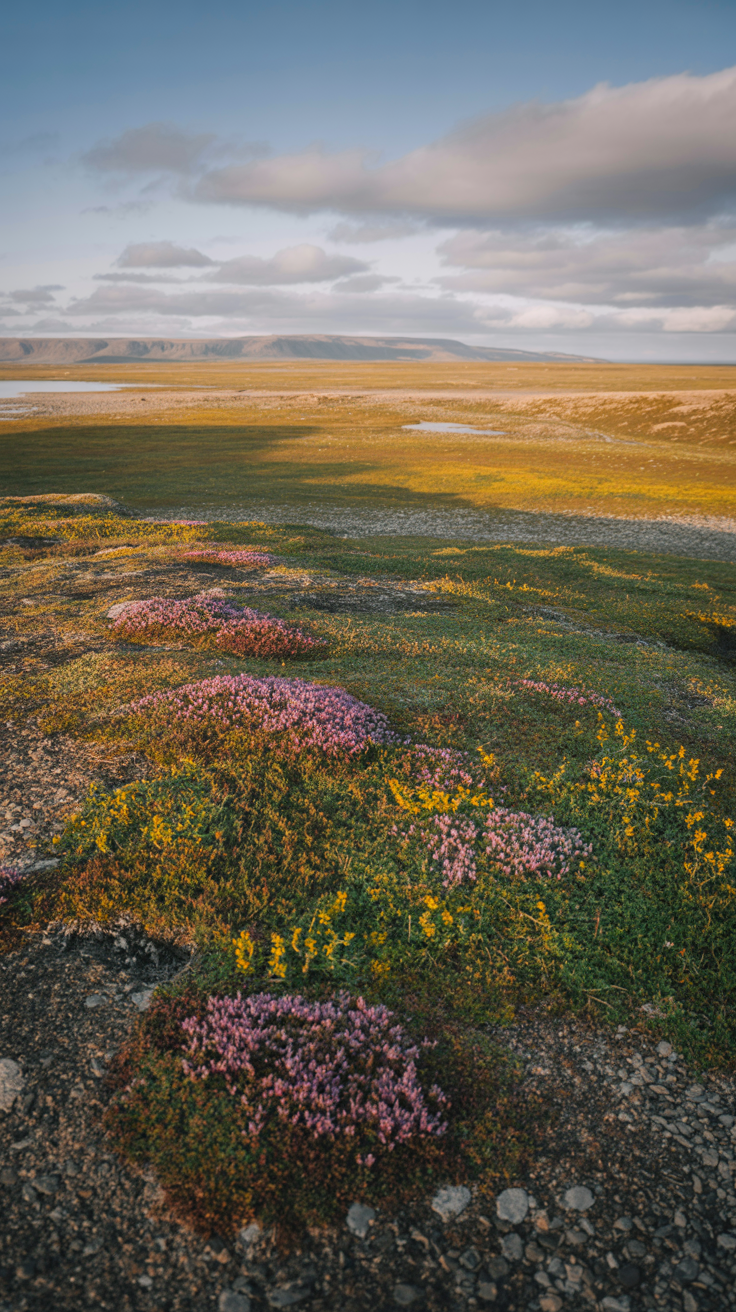
Transport options in Cambridge Bay are extremely limited compared to typical cruise ports. Most cruise passengers explore on foot or through organized shore excursions arranged by their ship. The hamlet is compact enough that walking covers most visitor attractions.
Walking
- The primary way to get around once ashore
- Town centre to furthest residential areas is under 2 km
- Main visitor sites (Arctic Coast Visitor Centre, Old Stone Church, local shops) are all within 10-15 minutes’ walk of each other
- Bring proper footwear for gravel and rocky paths
Organized Excursions
- Most cruise lines arrange walking tours with local Inuit guides who provide cultural context
- These typically include visits to the visitor centre, cultural demonstrations (throat singing, drum dancing), and local artist studios
- Longer excursions to Ovayok Territorial Park (about 30 minutes’ drive from town) require vehicle transport arranged through your ship
- Prices and availability vary by cruise line; book early as group sizes are kept small to respect the community
Taxis
- A handful of local taxis exist but aren’t typically waiting at the tender landing
- Can be arranged through local contacts or your ship’s shore excursion desk
- Useful for getting to Ovayok Park if you’re not on a ship excursion
- Agree on price before departure; expect to pay premium rates due to the remote location
Rental Vehicles
- Not practical for cruise passengers on a short port call
- Limited availability and requires advance booking
- Roads outside town are primarily gravel and require 4WD vehicles
What to See Within Walking Distance from the Port
The beauty of Cambridge Bay’s small size means everything in town is walkable from the tender landing. Here’s what you can realistically cover on foot during a typical port call.
- Arctic Coast Visitor Centre: The central hub for visitor orientation with exhibits on local culture, Arctic wildlife, and the region’s history including Franklin Expedition artifacts. Staff provide maps and answer questions. About 5-10 minutes’ walk from most tender landing points. This should be your first stop to get your bearings.
- Old Stone Church: A restored mid-20th century stone church offering good photo opportunities with ocean views. The building represents early contact period history in the region. Roughly 10 minutes’ walk from the visitor centre along the waterfront. The exterior is more impressive than the interior, but it’s worth the short stroll.
- Local Art Studios and Carving Markets: Several artists work from home studios or small community spaces near the town centre. You can watch carvers working with soapstone, bone, and antler, and purchase directly from makers. Locations vary but your guide or the visitor centre can point you to open studios on your visit day. Prices reflect the quality and authenticity – expect to pay more than souvenir shop prices but you’re supporting local artists directly.
- Harbour Area and Waterfront: The working harbour and beach areas where you’ll see fishing boats, local activity, and often wildlife. Muskoxen and Arctic foxes sometimes wander through. The stark beauty of the tundra landscape meeting the Arctic Ocean makes for excellent photographs. This area is immediately accessible from your tender landing.
- Itqaumavik Park: A small heritage park near the visitor centre featuring outdoor sculptures and cultural information panels. Quick to visit (15-20 minutes) and provides context for the region’s Inuit heritage. The park is used for community cultural demonstrations when cruise ships visit.
Must See Attractions in Cambridge Bay for a One Day Cruise Visit
With limited time ashore, focus on experiences that give you genuine insight into Arctic life and Inuit culture. Cambridge Bay’s appeal lies in cultural authenticity rather than traditional tourist attractions.
Arctic Coast Visitor Centre and Cultural Demonstrations
- What it is: The community’s main visitor facility housing exhibits on local wildlife, traditional Inuit culture, and Arctic exploration history. When cruise ships visit, cultural demonstrations including throat singing and drum dancing are often scheduled here or nearby.
- Why it matters: This is your best introduction to understanding where you are and the people who call this harsh environment home. The cultural performances are authentic, not staged tourist shows, and provide rare access to traditional practices still alive in the community.
- Time needed: Allow 45 minutes to an hour for the visitor centre and any scheduled cultural demonstrations. Performances typically last 20-30 minutes.
- Practical tips: The centre operates on seasonal hours. Entry is usually free or by donation. Photography of cultural performances is generally allowed but always ask permission first. Arrive early if demonstrations are scheduled as space is limited. Dress warmly as you may be outside for parts of the programme.
Meeting Local Artists and Artisans
- What it is: Cambridge Bay has a strong tradition of carving, sewing, and textile arts. Several artists open their studios or set up displays when cruise ships visit, allowing you to watch them work and purchase authentic pieces.
- Why it matters: This is your opportunity to acquire genuine Inuit art directly from makers – carvings in soapstone, bone, and antler, plus traditional clothing items and wall hangings. The prices support artists in a community with limited economic opportunities, and you’ll go home with something truly special rather than mass-produced souvenirs.
- Time needed: Budget 30-45 minutes to visit one or two studios, watch artists work, and browse pieces. Longer if you’re seriously shopping for investment-quality art.
- Practical tips: Bring Canadian cash as not all artists accept cards. Prices range from $50 for small pieces to several thousand for significant artworks. Don’t haggle – prices are fair for the skill and time involved. Ask about shipping if purchasing larger pieces. Photography of artwork requires permission.
Ovayok Territorial Park
- What it is: A large park about 30 minutes’ drive east of town featuring tundra hiking trails, interpretive signage, and reliable muskox viewing. The park protects culturally significant land and offers the best accessible wilderness experience near Cambridge Bay.
- Why it matters: If you want to experience true Arctic tundra landscape and see muskoxen in their natural habitat, this is your best opportunity. The roughly 20 km of trails range from short walks to longer hikes (4-6 hours for full loops), but even a brief visit gives you a taste of the vast emptiness that defines the Arctic.
- Time needed: Minimum 2 hours including driving time; 3-4 hours if you want to do any proper hiking. Most cruise ship excursions here are half-day affairs.
- Practical tips: You’ll need vehicle transport arranged through your ship or a local taxi. Bring layers, waterproofs, and proper hiking boots. Trails are unmarked in places so don’t wander off alone. Muskoxen look docile but are dangerous if approached – maintain at least 50 metres distance. Bring a collapsible water bottle and snacks as there are no facilities. The park is free to enter.
Old Stone Church and Waterfront Walk
- What it is: A short coastal walk taking in the historic stone church, harbour views, and the beach areas where locals still fish and hunt. The route offers photography opportunities and a sense of how the community relates to the water.
- Why it matters: This easy walk provides context for how isolated and weather-dependent life is here. The church represents the contact period between Inuit and European cultures. The working harbour shows the continuation of traditional subsistence activities alongside modern life.
- Time needed: 30-45 minutes for a leisurely walk with photo stops.
- Practical tips: Wear windproof layers as the coastal exposure can be brutal. Watch for wildlife including foxes and occasionally polar bears in the broader area (though unlikely right in town). Respect private property and fishing equipment. The church exterior is accessible anytime but interior access may be limited.
Port Day Itinerary: Things to Do in 4-5 Hours
Here’s a realistic schedule that fits a typical morning or afternoon port call in Cambridge Bay. Most ships anchor for 4-6 hours, giving you enough time to experience the community without overwhelming this small hamlet.
- Hour 1 (9:00-10:00) | Tender Ashore and Arctic Coast Visitor Centre: After tendering to shore, head directly to the Arctic Coast Visitor Centre to orient yourself. Browse the exhibits on local wildlife and culture, pick up a basic town map, and get information on which artists might be open that day. If your ship has coordinated a welcome ceremony or cultural demonstration, it will likely happen around this time near the visitor centre or Itqaumavik Park.
- Hour 2 (10:00-11:00) | Cultural Performance and Local Artist Visit: Watch scheduled throat singing and drum dancing demonstrations, then visit a nearby artist studio to see carving or sewing work in progress. This is your best chance to purchase authentic Inuit art and understand the techniques behind these traditional crafts. The visitor centre staff can direct you to open studios.
- Hour 3 (11:00-12:00) | Waterfront Walk and Old Stone Church: Take a leisurely walk along the harbour area to the Old Stone Church. The coastal route provides excellent photo opportunities of the tundra landscape meeting the Arctic Ocean. Keep your eyes open for muskoxen, which genuinely do wander through town. The wind can be fierce along this stretch, so zip up your jacket.
- Hour 4 (12:00-13:00) | Light Refreshments and Shopping: Stop at Kuugaq Café for coffee and a light bite if it’s open, or return to the visitor centre area where food vendors sometimes set up when cruise ships are in port. Do any final shopping for local crafts or Arctic char products. Cambridge Bay isn’t a major food destination, so manage expectations – this is more about a warm drink than a gourmet lunch.
- Hour 5 (13:00-14:00) | Final Exploration and Return Buffer: Use this hour for any sites you want to revisit, additional photos, or simply soaking in the unique atmosphere of this remote Arctic community. Start heading back to the tender point by 13:30 to ensure you’re not rushed. Weather can affect tender operations, so don’t cut it too close.
This timing allows for a comfortable pace with buffers built in. If your ship offers a longer stay or a formal excursion to Ovayok Territorial Park, you’d substitute hours 2-4 for that half-day trip instead.
Where to Eat Near the Port
Let’s be honest – Cambridge Bay is not a culinary destination. This is a small Arctic hamlet where food supplies arrive by plane or ship, and dining options for visitors are extremely limited. Most cruise passengers don’t eat substantial meals ashore, but here’s what exists if you want to try local offerings.
- Kuugaq Café: A casual café near the harbour area offering coffee, tea, and light snacks. When it’s open (hours can be unpredictable), it’s a good spot for warming up with a hot drink. Don’t expect fancy coffee drinks – this is functional, friendly service. Prices are higher than southern Canada due to transport costs. A coffee runs about $4-5.
- Arctic Islands Lodge Restaurant and Saxifrage: These are the main sit-down options but are primarily oriented toward overnight guests and locals rather than cruise passengers on tight schedules. If you have an extended stay, they serve standard Canadian fare. Expect to pay $20-30 for a basic meal. Book ahead if you’re seriously planning to eat here as space is limited.
- Local Vendors: When cruise ships visit, some locals set up informal food stands near the visitor centre or tender area selling bannock (fried bread), smoked Arctic char, and other regional specialties. This is your most authentic option and directly supports community members. Bring cash. Prices are reasonable at $5-10 for samples.
- Arctic Char Products: Kitikmeot Foods Ltd. sometimes offers tastings or sales of their smoked and dried Arctic char products. This is more about take-home items than eating on the spot, but if you’re interested in regional foods, it’s worth a quick stop. Packages run $15-30.
- Practical Reality: Most cruise passengers eat breakfast before going ashore and plan to return to the ship for lunch. The limited port time and sparse dining infrastructure make this the sensible approach. If you do eat ashore, manage expectations – you’re here for cultural experience, not haute cuisine.
Food safety note: Tap water in Cambridge Bay is potable but heavily chlorinated. Bottled water is available but expensive. Any traditional foods offered by locals are safe to eat.
Shopping: What to Buy & Where to Go
Cambridge Bay offers some of the most authentic Indigenous art shopping in Arctic Canada, but this isn’t a browsing-through-shops experience. Most purchases happen directly from artists or at small community sales areas.
What’s Worth Buying: Soapstone carvings are the signature items – everything from small animal figures to substantial sculptures of Arctic wildlife and human forms. Prices start around $50 for tiny pieces and climb into thousands for museum-quality work. Bone and antler carvings are also popular and often more affordable. Traditional textile items including wall hangings, mittens, and kamiks (boots) showcase intricate beadwork and fur work. These are functional art pieces ranging from $100-500 depending on complexity. Prints and drawings by local artists are easier to transport and typically cost $200-600 for quality pieces.
Where to Buy: The Arctic Coast Visitor Centre often has a small sales area with vetted local work. Prices are fair and clearly marked. Individual artist studios are your best bet for selection and the chance to meet makers. The visitor centre can direct you to open studios on your visit day. Informal market areas sometimes pop up near the tender landing when ships are in – these feature multiple artists and are convenient but can be crowded.
Authenticity: In Cambridge Bay you’re buying directly from Inuit artists or their immediate families, so authenticity isn’t a concern. Look for the igloo trademark that indicates genuine Inuit art, though not all pieces carry it. Ask about the artist’s name and story – legitimate sellers are proud to share this information.
Practical Tips: Bring plenty of Canadian cash as card facilities are limited. US dollars might be accepted but at poor exchange rates. For expensive pieces, ask about authenticity certificates and shipping options. Quality art is fragile and awkwardly shaped for luggage. Many artists can arrange shipping, though it adds significant cost. Bargaining is not customary and frankly insulting when buying directly from artists who’ve spent days or weeks on a piece. Prices reflect materials, skill, and time in a community with few economic opportunities.
Shop Hours: There are no formal shop opening hours. Artist studios open when cruise ships are scheduled to visit, typically during the day. The visitor centre follows posted hours but these can be flexible. Nothing is open on Sundays, and if a community event is happening, locals prioritize that over tourist sales.
Safety Tips & Avoiding Scams
Cambridge Bay is one of the safest cruise ports you’ll visit. The community has very low crime rates and genuine hospitality toward visitors. That said, the Arctic environment itself presents hazards that need respect.
Environmental Hazards: The weather is your main safety concern. Sudden wind gusts, temperature drops, fog, and rain can occur even in summer. Hypothermia is a real risk if you’re underdressed and get wet or lost. Always layer clothing and carry windproof, waterproof outerwear even if conditions look calm when you go ashore. Uneven terrain with loose rocks can cause twisted ankles – proper hiking boots are essential, not optional. If you’re on an excursion to Ovayok Park or other tundra areas, stay with your group. The landscape is featureless and disorienting; people have gotten lost mere metres from trails.
Wildlife Safety: Muskoxen look cuddly but are dangerous if approached. Maintain at least 50 metres distance and never get between a mother and calf. If a muskox lowers its head and paws the ground, back away slowly. Arctic foxes are common in town and generally ignore humans but don’t attempt to feed or touch them. Polar bears are rare in town itself but possible in the broader region. If you’re on wilderness excursions, your guide will carry deterrents and know protocols.
Health Considerations: The nearest substantial medical facility is in Yellowknife, hours away by air. If you have serious medical conditions, don’t wander far from your ship or established tour areas. Bring any prescription medications you might need plus a basic first aid kit. Cell phone coverage is limited and unreliable outside the town centre. If you’re on a wilderness excursion, ensure your guide has satellite communication.
Cultural Respect: This isn’t a safety issue but it matters. You’re visiting a small, close-knit community with its own rhythms and protocols. Don’t photograph people without permission. Respect private property – just because there are no fences doesn’t mean you can wander through residential areas. If invited into a home or workspace, remove your shoes unless told otherwise. Don’t touch artworks or cultural items without permission.
Emergency Contacts
- Emergency (Police, Fire, Ambulance): 911
- Cambridge Bay RCMP (non-emergency): 867-983-0123
- Cambridge Bay RCMP (emergency): 867-983-1111
- Cambridge Bay Health Centre: Contact through RCMP or ship’s medical team for current number
- Crime Stoppers (anonymous tips): 1-800-222-8477
- Nunavut Health Services: Available through local health centre; expect telehealth options for specialist consultation
Save your cruise ship’s emergency contact number before going ashore. In most emergencies, your ship’s crew and medical team are your first line of support.
Essential Items for Your Day in Cambridge Bay
The Arctic environment demands proper preparation, and having the right gear can make the difference between an enjoyable visit and a miserable one. Here are the essential items you’ll want to bring for your Cambridge Bay port day:
- Layered Clothing: Start with merino wool base layers for women or merino wool base layers for men as your foundation. Merino regulates temperature, wicks moisture, and doesn’t retain odors even after extended wear. Add a fleece mid-layer and top with a packable rain jacket that’s both windproof and waterproof.
- Proper Footwear: Waterproof walking shoes with good ankle support and grip are non-negotiable. The terrain is uneven, rocky, and often wet. Your regular sneakers won’t cut it here.
- Sun and Wind Protection: Despite the cold, Arctic sun is intense. Bring quality sunglasses and apply reef safe sunscreen to exposed skin. A packable sun hat helps too, though make sure it has a chin strap as wind can be fierce.
- Insect Protection: If visiting Ovayok Park in late July or early August, mosquitoes can be intense on the tundra. Pack DEET insect repellent for any wilderness excursions.
- Photography Gear: The landscapes and cultural experiences are incredible. Bring your camera and keep batteries warm in inside pockets as cold drains them quickly. Compact binoculars are excellent for wildlife viewing, especially for spotting muskoxen at safe distances.
- Day Pack: A lightweight packable backpack or anti-theft backpack lets you carry layers as you warm up, plus water, snacks, and any purchases from local artists. Weather changes quickly, so you’ll appreciate being able to adjust your clothing.
- Cash and Valuables: Since you’ll need Canadian cash for artist purchases, a hidden money belt keeps bills secure. For your passport and documents, an RFID-blocking passport holder provides protection.
- Water and Hydration: A collapsible water bottle saves space in your pack and keeps you hydrated without the bulk of rigid bottles.
- Hand Warmth: Even in summer, your hands can get cold, especially when wind picks up. Lightweight gloves that fit in your pocket are smart insurance.
Currency, ATMs & Money Matters
Cambridge Bay operates on Canadian dollars, and the remote location means banking services are basic. Plan your cash needs carefully before going ashore.
- Local Currency: Canadian Dollar (CAD). Credit cards are accepted at the few established businesses but many artists and small vendors are cash-only. US dollars might be accepted at poor exchange rates or refused entirely. Don’t count on using foreign currency.
- ATMs: There is at least one ATM in Cambridge Bay, typically at the Northern Store or associated with the local bank branch. However, ATMs in remote Arctic communities frequently run out of cash or malfunction, especially when cruise ships are in port. Don’t rely on finding working ATM access ashore.
- Best Strategy: Bring Canadian cash from home or withdraw from your ship’s ATM before going ashore (check your ship’s exchange rates first as they may be unfavorable). Budget $200-300 in cash if you’re planning to purchase art or crafts. Small bills ($20s and $50s) are more useful than $100 notes which some vendors struggle to change. An RFID blocking travel wallet keeps your cash and cards organized and secure.
- Credit Cards: The Arctic Coast Visitor Centre and any established restaurants accept Visa and Mastercard. Individual artists selling from studios or market areas typically don’t have card readers. American Express is rarely accepted. Always ask before assuming cards are accepted.
- Exchange Options: There is no currency exchange service in Cambridge Bay. Handle all currency exchange before arriving in Nunavut, ideally in a major Canadian city before joining your cruise.
- Pricing: Everything is more expensive than southern Canada due to transport costs. Coffee that costs $2.50 in Vancouver costs $4-5 here. Prepared food can be double southern prices. Art prices are fair for the quality but expect to pay more than you might guess for authentic pieces.
- Taxes: Nunavut has no territorial sales tax, only the 5% federal Goods and Services Tax (GST). Many small informal sales don’t charge tax at all.
- Tipping: Not expected at informal food vendors or when purchasing art directly from artists. If you eat at one of the established restaurants, 10-15% is appreciated but tipping culture is less entrenched than in southern Canada. For tour guides, $10-20 per person is a thoughtful gesture if you’ve had good service.
- Bank Notification: Notify your bank and credit card companies that you’ll be in Nunavut. Remote Arctic locations sometimes trigger fraud alerts that can lock your cards.
Weather by Month
Cambridge Bay is only accessible to cruise ships during the brief Arctic summer when sea ice clears enough for navigation. The cruise season typically runs from late July through early September, though this can vary year to year based on ice conditions.
| Period | Temperature Range | Conditions | What to Expect |
|---|---|---|---|
| Late July – Early August | 8-15°C (46-59°F) | Peak summer with 24-hour daylight. Relatively “warm” by Arctic standards but wind chill makes it feel colder. | Pack layers, windproof jacket, waterproof trousers, warm hat and gloves. Rain is frequent. This is prime time for midnight sun photography but also peak mosquito season on the tundra. Bring insect repellent if going to Ovayok Park. Ice is mostly clear from the passage making ship access reliable. |
| Mid to Late August | 5-12°C (41-54°F) | Temperatures dropping, daylight diminishing (though still very long days). Weather becomes more variable with increased chance of storms. | Warmer layers essential including fleece and insulated jacket. Waterproofs non-negotiable. Mosquitoes declining. This is when tundra begins autumn colour changes – subtle but beautiful. Ice conditions still generally good for ships but weather can affect tender operations more frequently. |
| Early September | 0-8°C (32-46°F) | Approaching freeze-up. Risk of snow, significant wind chill, rapidly decreasing daylight. | Full winter clothing needed including insulated parka, winter boots, heavy gloves, and face protection. Ice beginning to form makes this the edge of the navigation season. Ships visit less frequently. The stark early winter landscape has its own beauty but conditions are harsh. Only consider shore excursions if you’re comfortable with near-winter conditions. |
The bottom line: even in peak summer, Cambridge Bay weather is more like a cold autumn day in the UK with added wind chill. The phrase “there’s no such thing as bad weather, only bad clothing” was invented for places like this. Layer merino or synthetic base layers, fleece mid-layers, and windproof/waterproof outer layers. Bring proper hiking boots, warm hat, and gloves for every shore visit regardless of the forecast.
Common Questions & FAQ
Will my mobile phone work in Cambridge Bay?
Mobile coverage exists but is limited and unreliable. Canadian carriers (Bell, Rogers, Telus) have some coverage in the town centre, but data is slow and service can be patchy. International roaming charges to Nunavut are typically astronomical. Your phone may work for emergency calls near town but don’t count on staying connected. There is no coverage outside the hamlet, including at Ovayok Park. Your ship’s communication systems are your reliable connection. If you need to make calls or use data, do it from the ship before and after your port visit.
Are there polar bears near Cambridge Bay?
Polar bears are present in the broader region and occasionally come near or through town, particularly in autumn when sea ice is forming. During the summer cruise season, sightings near the hamlet are rare but possible. Local authorities monitor for bears and will warn residents and visitors if one is nearby. Don’t wander into remote areas alone and always follow your guide’s instructions on wildlife safety. The muskoxen you’re far more likely to encounter in and near town can be dangerous if approached, so maintain distance from all wildlife. If you spot a polar bear, report it to your guide or local authorities immediately and keep well away.
Can I use US dollars or credit cards for shopping?
US dollars might be accepted at established businesses but expect poor exchange rates or outright refusal. Individual artists and market vendors selling crafts typically want Canadian cash only. Credit cards work at the visitor centre and any proper shops or cafés, but many transactions in Cambridge Bay happen in cash. Bring Canadian dollars in small denominations ($20s and $50s) if you’re planning to shop for art or sample local foods. There’s an ATM in town but it’s unreliable, especially when cruise ships are visiting. Get cash before going ashore, ideally from your ship or before starting your cruise.
How much time do I need to see Cambridge Bay?
The hamlet itself can be covered in 2-3 hours at a relaxed pace, including the visitor centre, cultural demonstrations, artist studios, and the waterfront walk. If you want to visit Ovayok Territorial Park for tundra hiking and muskox viewing, add another 2-3 hours minimum (including drive time). Most cruise port calls run 4-6 hours, which is enough to experience the community highlights without overstaying your welcome in this small hamlet. If you’re offered a longer stay, the extra time is best spent at Ovayok Park or simply soaking in the atmosphere rather than rushing through a checklist.
Is Cambridge Bay suitable for passengers with mobility issues?
Cambridge Bay presents challenges for passengers with limited mobility. The tender transfer from ship to shore requires negotiating small boats, which can be difficult or impossible for wheelchair users or those with balance issues. Once ashore, paths are gravel, dirt, and rocky with no proper pavements. The visitor centre and some buildings are accessible, but getting to them involves uneven terrain. There are no accessible taxis or adapted transport options. If you use a wheelchair or have significant mobility limitations, discuss options carefully with your shore excursion desk. Some passengers with moderate mobility issues manage fine with trekking poles and assistance, but this is not an accessible port by conventional standards.
What’s the best thing to buy as a souvenir from Cambridge Bay?
Without question, authentic Inuit art purchased directly from local artists. Even a small soapstone carving (starting around $50-75) is a genuine piece of Indigenous art with far more meaning than typical cruise souvenirs. If your budget allows, a quality carving of Arctic wildlife or a traditional textile piece is an investment that appreciates in value and carries real cultural significance. The chance to meet the artist and hear about their work makes the purchase even more special. For lower budgets, look for small bone or antler carvings, prints, or locally produced Arctic char products from Kitikmeot Foods. Whatever you buy, you’re supporting artists and food producers in a community with limited economic opportunities, which makes your purchase meaningful beyond just having a souvenir.
What should I wear for a Cambridge Bay port visit?
Dress for cold, windy, potentially wet conditions regardless of the summer forecast. Start with a moisture-wicking base layer (merino wool or synthetic, not cotton), add a warm fleece or insulated mid-layer, and top with a windproof, waterproof jacket. Waterproof trousers are smart as rain is frequent. Proper hiking boots with ankle support and good grip are essential – the terrain is uneven and rocky. Bring a warm hat, gloves, and a buff or scarf for wind protection even in August. Layers are key because you might be warm walking then suddenly cold when wind picks up or you stop moving. Sunglasses and sun cream are needed as Arctic sun reflects intensely off water and light-coloured tundra. If visiting in early September, pack as for winter with insulated parka and winter boots.
Can I visit Cambridge Bay independently without a ship tour?
Yes, and many passengers do. The hamlet is small enough to explore on foot without organized tours. Visit the Arctic Coast Visitor Centre first to orient yourself and find out which artist studios are open. The main sites (visitor centre, Old Stone Church, harbour area, local artists) are all walkable and accessible without a guide. However, if you want to visit Ovayok Territorial Park or go further afield, you’ll need organized transport. The park is 30 minutes’ drive from town and you’d need to arrange a taxi or join a ship excursion. For tundra or wildlife viewing, having a guide is both safer and more informative. The exception to independent exploration: if there are scheduled cultural demonstrations or community events tied to your ship’s visit, these may require coordination through your cruise line to manage group sizes respectfully.
If you’re planning an Arctic expedition cruise, Cambridge Bay offers an authentic glimpse of life in Canada’s far north. The Arctic Canada expedition cruise route often includes several remote communities, and Cambridge Bay stands out for its active arts community and accessible cultural experiences. If your cruise continues east, you might visit Gjoa Haven on King William Island, which offers similar but distinct Inuit cultural experiences and historical significance. Some Arctic Canada itineraries also call at Ulukhaktok in the Northwest Territories, another small Arctic community with its own artistic traditions and coastal beauty.
Personal Experience
When our cruise ship pulled into Cambridge Bay, I wasn’t quite prepared for how remote and starkly beautiful this place would be. The tiny hamlet sits right on the Northwest Passage, and stepping off the ship felt like entering a different world entirely. Our local Inuit guide met us at the dock and immediately pointed out a couple of muskoxen grazing on the tundra just beyond the settlement – apparently they wander through town pretty regularly. The air had this crisp, clean quality I’d never experienced before, and even in summer, I was glad I’d layered up with proper base layers and my windproof jacket. We visited the community’s cultural center where elders were demonstrating traditional throat singing and showing off intricate carvings made from local stone and bone.
What struck me most was how genuinely welcoming everyone was, despite Cambridge Bay only having about 1,800 residents and cruise ships being relatively rare visitors. Walking around town doesn’t take long since everything’s compact, but there’s something special about seeing the colorful buildings against the endless Arctic landscape. The gift shop near the port had authentic local artwork that puts any souvenir shop to shame, though prices reflect the reality of getting supplies up here. A word of advice: bring Canadian cash since not everywhere takes cards, and dress in layers even if it seems mild – the wind off the water can cut right through you. The few hours we spent there gave us just enough time to appreciate this incredible corner of the Arctic without overstaying our welcome in such a small community.
Last Updated: 9 August 2026