
Naples street markets are where the city’s real character lives. Forget the touristy souvenir stalls near the port – these are the places where Neapolitan families have been shopping for generations, where fishmongers shout prices in thick dialect, and where the produce is so fresh it was probably picked that morning. If you want to see how locals actually live, you need to get away from the cruise terminal and into the controlled chaos of Porta Nolana and La Pignasecca.
These markets aren’t designed for tourists, which is exactly why they’re worth visiting. You’ll find octopus being tossed across stalls, mountains of blood oranges going for pocket change, and vendors who couldn’t care less about Instagram-worthy displays. It’s messy, it’s loud, and it’s completely authentic. Just remember – nobody here is going to hold your hand through the experience.
Want to know more about getting around Naples from your cruise ship? That guide covers everything you need to know about leaving the port and exploring the city.
Porta Nolana Fish Market
This is Naples’ main fish market, and it’s not for the faint-hearted. The stalls line the streets near Porta Nolana train station, and the action starts early – by 7am the place is already buzzing. You’ll see everything from tiny anchovies to massive swordfish, plus octopus, squid, clams, and whatever else came in on the boats that morning.
What makes it authentic:
- Local housewives doing their daily shopping, not tour groups
- Prices shouted in Neapolitan dialect, often negotiable
- Fish displayed on ice with heads still on – no sanitised supermarket packaging
- Vendors who’ve been running the same stall for decades
- The smell hits you from a block away (fair warning)
Practical details:
- Best time to visit: Weekday mornings between 8am and 11am. Saturday is busiest. Sunday it’s closed or very limited.
- How to get there: From the cruise port, it’s about a 15-minute walk or a quick taxi ride. You can also take the metro to Garibaldi station and walk from there. Check the transport options from Naples port to the city centre for detailed directions.
- What to expect: Wet floors, tight spaces, and vendors who might ignore you if you’re clearly just browsing. That’s normal.
- Can you buy anything?: Yes, but unless you have access to a kitchen, you’re probably just here to look. Some stalls sell prepared items like marinated anchovies that travel better.
Insider tips:
- Watch where you step – the ground gets slippery from melted ice and fish water
- Don’t touch the merchandise unless you’re seriously considering buying
- If you want photos, be discreet. Some vendors don’t appreciate cameras in their faces while they’re working
- The quality is exceptional because locals won’t accept anything less. These aren’t tourist prices – they’re real market prices
- Try the fried seafood from the small stalls around the edges. It’s cheap and incredibly fresh
La Pignasecca Market
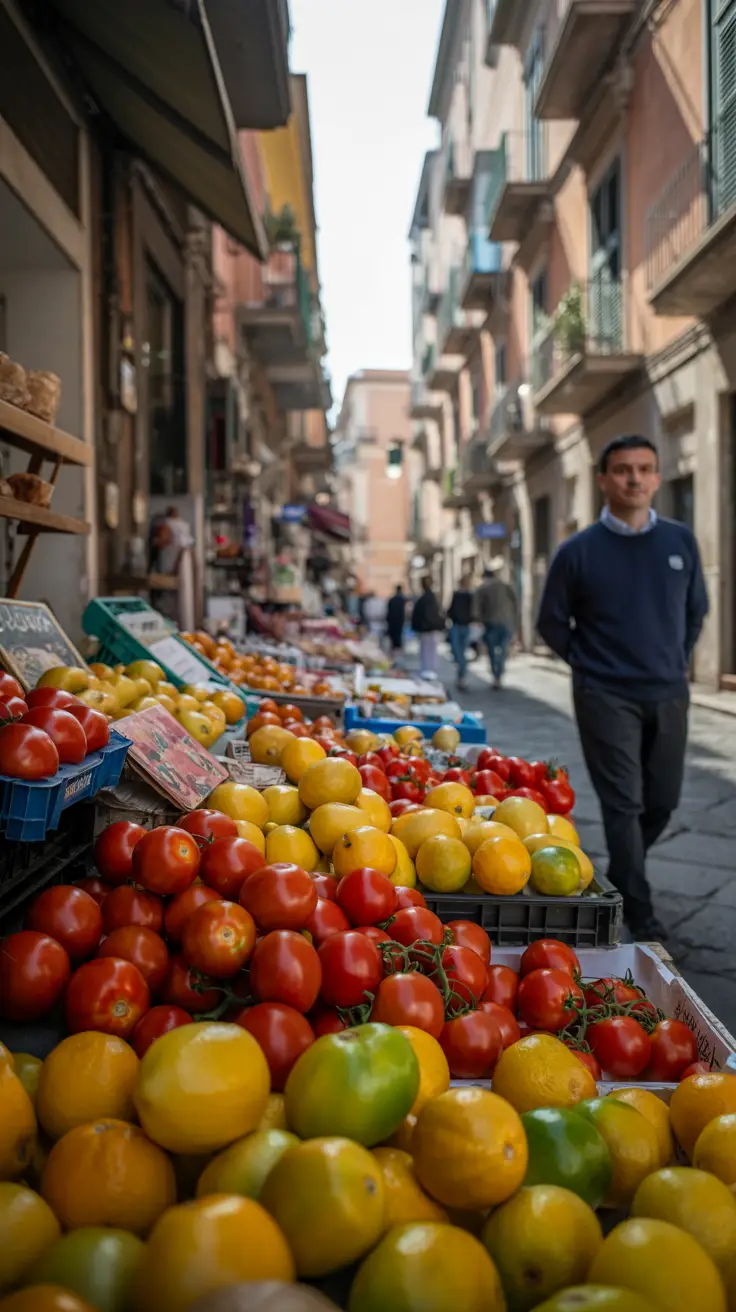
La Pignasecca is Naples’ oldest market, tucked into the Spanish Quarter, and it’s where locals go for fruit, vegetables, cheese, cured meats, and all the other staples. The main stretch runs along Via Pignasecca, but the stalls spill into the surrounding alleys. It’s colourful, chaotic, and packed with character.
What you’ll find:
- Seasonal produce at prices that make UK supermarkets look ridiculous
- Huge wheels of provolone and other regional cheeses
- Fresh pasta, olives, sun-dried tomatoes, and capers in bulk
- Butchers selling everything from rabbit to whole chickens
- Small bakeries with fresh bread and Neapolitan pastries
- Household goods, clothing, and random items mixed in with the food
Practical details:
- Best time to visit: Mid-morning on weekdays (9am-12pm). Avoid late afternoon when stalls start packing up. Closed Sunday.
- How to get there: From the port, you can walk (about 25 minutes) or take a taxi straight there. It’s in the heart of the Spanish Quarter, which is worth exploring anyway.
- What to buy: Blood oranges, buffalo mozzarella, dried pasta, limoncello, and anything else that catches your eye. Prices are usually per kilo, and vendors will weigh and bag for you.
- Language barrier: Limited English, so pointing and basic Italian numbers help. Most vendors are used to tourists by now, but don’t expect translation services.
Insider tips:
- Bring cash. Card payments are rare, and ATMs nearby can have queues
- Taste before you buy – many cheese and olive vendors offer samples if you show genuine interest
- The vendors at the back of the market (away from the main street) often have better prices than those at the entrance
- La Pignasecca literally means “the dry pine cone,” a reference to the area’s history. Locals still call it that
- Combine your visit with a stop at one of the authentic pizzerias near the cruise port – the Spanish Quarter has some of the best
- Watch your bag. Pickpockets know tourists come here, and the crowded aisles make it easy for them. Consider using an anti-theft backpack to keep your valuables secure while you shop
Market Etiquette and Survival Tips
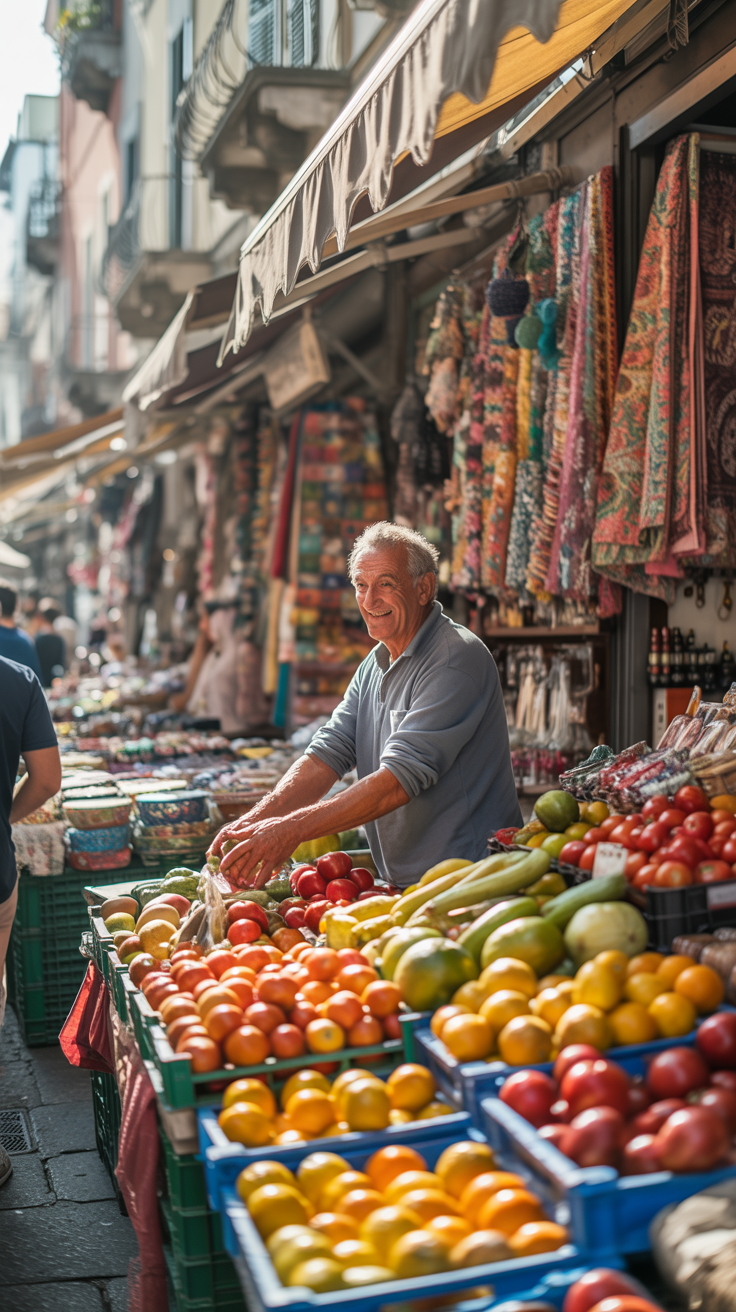
Shopping at these markets isn’t like browsing a farmers’ market back home. There are unspoken rules, and breaking them will either get you ignored or overcharged.
Do:
- Greet vendors with “Buongiorno” before asking about anything
- Let locals go ahead of you if they’re clearly in a rush – these are their grocery shops, not your tourist attraction
- Ask prices before committing to a purchase (even if it feels awkward)
- Bring your own bag or be prepared to pay for one
- Try to speak a bit of Italian, even if it’s terrible. The effort matters
- Queue properly at busy stalls and wait your turn
Don’t:
- Touch produce unless you’re about to buy it. The vendor will hand it to you
- Expect prices to be displayed clearly. You often have to ask
- Haggle aggressively – this isn’t a souk. A polite “è possibile un piccolo sconto?” (is a small discount possible?) might work if you’re buying a lot, but don’t push it
- Stand in the middle of narrow aisles taking photos. You’ll block the flow and annoy everyone
- Assume everything is a bargain. Some stalls near entrances do inflate prices for tourists
- Rush. These markets move at a Neapolitan pace, which means organised chaos with frequent interruptions for conversations
What to bring:
- Cash in small denominations (€5, €10, €20 notes)
- A tote bag or backpack with room for purchases
- Comfortable shoes that can handle wet or uneven surfaces – proper walking shoes for men or supportive walking shoes for women will make navigating the slippery market floors much easier
- A sense of humour when things don’t go to plan
- A European power adapter and portable charger to keep your phone powered for photos and translation apps
- A waterproof phone pouch to protect your device from the wet floors and occasional splashes at the fish market
What to Buy (and What to Skip)
If you’re on a cruise, luggage space and customs restrictions limit what you can realistically take home. Focus on items that travel well and won’t spoil.
| Worth Buying | Why | Typical Price |
|---|---|---|
| Dried pasta (especially regional shapes) | Lightweight, lasts forever, makes great gifts | €2-4 per kg |
| Limoncello or local liqueurs | Authentic versions are much cheaper here than in shops | €8-15 per bottle |
| Dried tomatoes, capers, olives | Packed with flavour, easy to transport | €5-10 per container |
| Hard cheeses (pecorino, aged provolone) | Travel well if vacuum-packed; ask vendors to seal properly | €12-20 per kg |
| Taralli or biscotti | Crunchy snacks that survive suitcases | €3-6 per bag |
| Sfogliatella pastries (if eating immediately) | Naples’ signature pastry, best fresh | €1-2 each |
A good set of compression packing cubes will help you fit all your market purchases into your luggage without exceeding weight limits. If you’re buying liquids like limoncello or olive oil, wrap them in your clothes or use travel shoe bags to prevent leaks from ruining everything else in your suitcase.
Skip:
- Fresh fish (unless you have a way to cook it in the next few hours)
- Soft cheeses like buffalo mozzarella (they won’t survive the cruise)
- Anything that needs refrigeration and won’t fit in your cabin fridge
- Meat products if you’re returning to countries with strict import rules (check customs regulations)
How These Markets Fit Into a Port Day
If your ship docks in Naples for the day, you can realistically visit one or both markets and still have time for other activities. Here’s how to plan it:
Half-day market itinerary (4-5 hours):
- Start with Porta Nolana fish market around 8:30am
- Walk to La Pignasecca (about 20 minutes) or grab a quick taxi
- Spend an hour at La Pignasecca, then explore the Spanish Quarter
- Grab pizza at a nearby spot before heading back to the port
- You’ll be back on the ship by early afternoon
Quick market visit (2-3 hours):
- Pick one market based on your interests (fish or produce)
- Go mid-morning when it’s busy but not overwhelming
- Allow time for a coffee or snack nearby
- Head back to the port or continue to other Naples attractions
For more ideas on what to do near the port, check out the full Naples port shopping guide which covers everything from high-street shops to local boutiques. Don’t forget to pack a collapsible water bottle to stay hydrated while exploring – Naples can get hot even in spring and autumn.
The Reality of Shopping Here
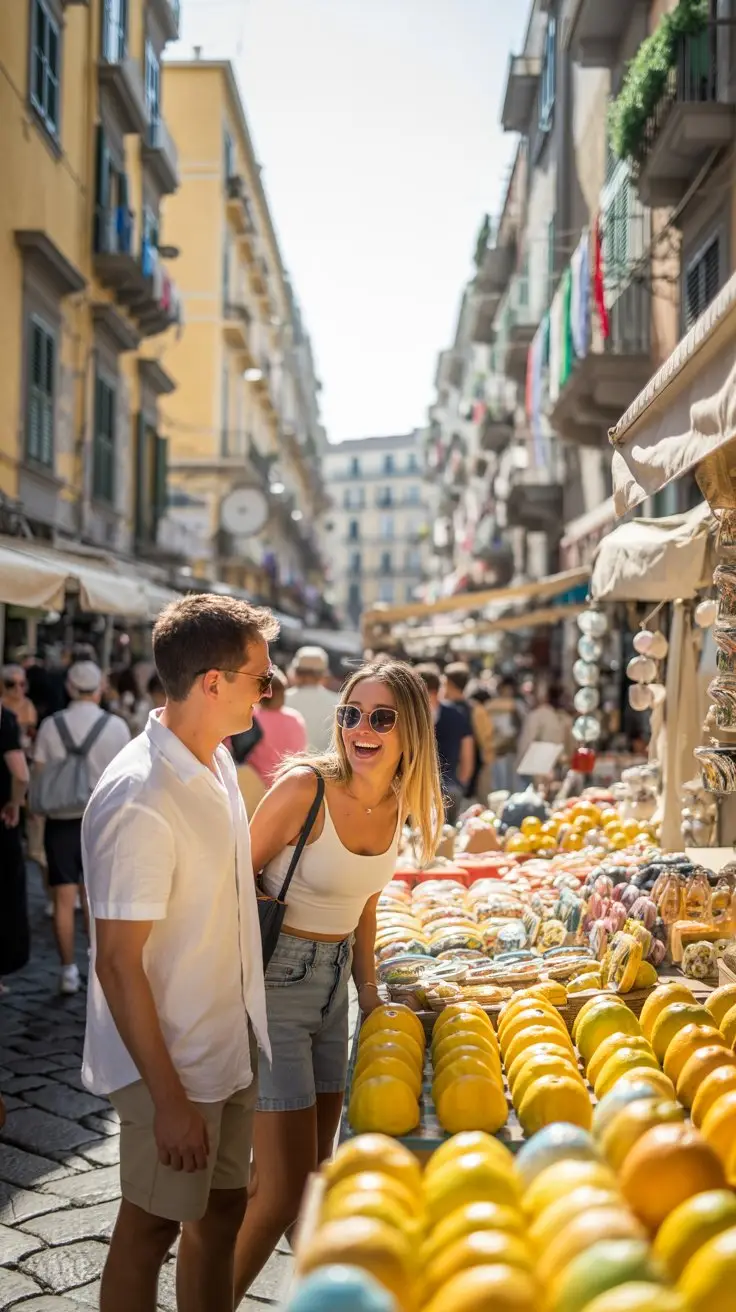
Let’s be clear – these markets aren’t polished tourist experiences. The fish market smells like fish. The produce market is crowded and occasionally claustrophobic. Vendors might be short with you if you’re dithering or asking too many questions. That’s all part of it.
You’re not going to get the Instagram-perfect shots of artfully arranged vegetables with perfect lighting. You’re going to get real life – nonnas elbowing their way to the front of a cheese stall, vendors arguing about football, and prices that fluctuate based on who’s buying and what mood everyone’s in.
If you want sanitised, air-conditioned shopping with English signage and contactless payment, head to the shops near the port. If you want to see how Naples actually works, with all the mess and noise and authenticity that entails, these markets are exactly where you need to be.
Just don’t expect anyone to make it easy for you. That’s not how Naples operates.
Extend Your Stay in Naples
If one port day isn’t enough to soak up the city’s chaotic energy, staying overnight gives you a completely different perspective. The markets are at their best early in the morning before cruise passengers flood the streets, and you’ll have time to explore the Spanish Quarter properly without rushing back to the ship. Accommodation in Naples ranges from budget hostels in the historic centre to boutique hotels with views over the bay. The neighbourhoods around Spaccanapoli and near Piazza Bellini are packed with restaurants and bars that don’t see many tourists, and you’ll get a much better sense of how the city comes alive after dark. Hotels in Naples fill up quickly during peak season, so booking ahead is essential if you’re planning to stay longer. Plus, having a full day means you can fit in a trip to Pompeii or the Amalfi Coast without feeling rushed.
If you’re planning to stay overnight, bring a hardside carry-on with essentials so you don’t have to lug your main luggage around. A hanging toiletry bag is also useful for small hotel bathrooms, and a compact travel steamer will keep your clothes looking fresh if you’re packing light.
Personal Experience
I stumbled into Porta Nolana fish market on a Tuesday morning, and honestly, I wasn’t prepared for the energy of the place. The vendors were practically yelling over each other, tossing octopus around like it was nothing, and the smell of fresh seafood mixed with sea salt hit me the moment I turned the corner. Nobody was speaking English, nobody cared about posing for photos – just locals haggling over the day’s catch and fishmongers who clearly took pride in what they were selling. I watched an old nonna inspect every single clam before nodding her approval, and that’s when I knew I was in the right spot.
La Pignasecca was a different vibe but just as real. The narrow street was packed with fruit stands, vegetables I couldn’t even name, and wheels of cheese that probably weighed more than my suitcase. I grabbed some blood oranges for maybe a euro, and the guy threw in a couple extra because I butchered my Italian so badly trying to ask for six. You won’t find price tags in English or anyone trying to sell you a “traditional Neapolitan experience” – just people buying groceries for Sunday dinner. It’s chaotic and a little overwhelming, but that’s exactly why it feels so authentic.
Common Questions & FAQ
Are the markets safe for tourists?
Yes, but stay aware of your surroundings. Pickpockets do operate in crowded areas, so keep your bag zipped and in front of you. The markets themselves aren’t dangerous – thousands of locals shop there daily – but the narrow lanes and busy stalls create opportunities for opportunistic theft. Don’t flash expensive cameras or jewellery, and you’ll be fine. An anti-theft messenger bag with slash-proof material and locking zippers provides extra peace of mind in crowded spaces.
Do vendors speak English at Porta Nolana and La Pignasecca?
Very little. Some vendors near the entrances might know basic phrases, but most communicate in Neapolitan dialect. Pointing works, and having Google Translate ready helps. Learning numbers in Italian (uno, due, tre) and basic phrases like “quanto costa?” (how much?) will get you surprisingly far. Most vendors appreciate the effort even if your pronunciation is terrible.
Can I use a credit card at the markets?
Almost never. These are cash-only operations. Bring euros in small notes because vendors often claim they don’t have change for €50 or €100 bills (whether that’s true or convenient is another question). ATMs are nearby but can have queues, so sort your cash before you arrive.
What time do the markets close?
Both markets wind down by early afternoon. Porta Nolana is busiest from 7am to noon, and most fish stalls pack up by 1pm or 2pm once the stock is sold. La Pignasecca runs a bit later, until around 2pm or 3pm, but the best selection is in the morning. If you show up at 4pm expecting a full market experience, you’ll find empty stalls and closed shutters.
Is it rude to take photos at the markets?
It depends on how you do it. Snapping wide shots of the market scene is generally fine, but shoving a camera in a vendor’s face while they’re working is going to get you a dirty look or worse. If you want to photograph a specific stall, ask first – “posso fare una foto?” – and respect a “no.” Some vendors are used to it and don’t mind; others find it intrusive.
Can I bring food from the markets back to the cruise ship?
Technically yes, but cruise lines have rules about bringing fresh food onboard, especially fish and meat. Hard cheeses, dried goods, and packaged items are usually fine. Fresh produce might be inspected or confiscated depending on your ship’s policies and where you’re sailing next. Check with guest services before you load up on perishables. Pack anything you do buy in a waterproof dry bag to prevent leaks or smells from spreading through your day bag.
Are there toilets at the markets?
No public facilities at the markets themselves. Your best bet is to use the toilets at a nearby café or bar – order an espresso and you’re entitled to use their facilities. This is standard practice in Italy, and trying to find a free public toilet in Naples is a waste of time.
Which market is better if I only have time for one?
If you like seafood and want the full sensory experience, go to Porta Nolana. If you’re more interested in produce, cheese, and taking home edible souvenirs, La Pignasecca is your pick. Porta Nolana is more intense and chaotic; La Pignasecca is slightly more tourist-friendly but still very much a local market. Both are worth visiting if you can manage it, but if you’re choosing, go with whichever aligns more with your interests.
Last Updated: 19 January 2026