
Let’s be realistic about Livorno port accessibility. The terminal itself is fairly modern and wheelchair-friendly, but getting from ship to shore excursion destinations requires some proper planning. Florence and Pisa – the two main reasons anyone stops at Livorno – present very different mobility challenges that your cruise line’s glossy brochures probably won’t mention.
The good news is that with advance preparation and honest expectations, both cities are manageable for wheelchair users and passengers with limited mobility. The less good news is that you’ll face cobblestones, crowds, and some tricky logistics. Here’s what you actually need to know.
Accessibility at Livorno Cruise Terminal
The Livorno terminal building scores reasonably well for wheelchair access. The facility is relatively modern with:
- Level entry points from the ship with ramps where needed
- Accessible restrooms in the main terminal building
- Lifts to different terminal levels
- Wide corridors that accommodate wheelchairs and mobility scooters
- Staff assistance available if you’ve notified your cruise line in advance
The port authority takes accessibility seriously and can arrange assistance for passengers with reduced mobility, but you need to request this through your cruise line at least 48 hours before arrival. Don’t assume help will just appear – the paperwork needs to go through proper channels.
One insider tip: the terminal can get absolutely rammed when multiple ships dock simultaneously. If you’re disembarking with a wheelchair or mobility aid, consider waiting 20-30 minutes after the initial rush. The staff will have more time to help you properly rather than rushing through a crowd.
The Shuttle Bus Reality Check
Here’s where things get tricky. The shuttle buses that run between the cruise terminal and Livorno train station are standard coaches – not the low-floor accessible buses you might hope for. They have steep steps and narrow aisles, which makes them genuinely difficult or impossible for many wheelchair users.
If you use a manual wheelchair and can transfer to a seat with assistance, the drivers will usually help fold and store your chair. But if you use a power wheelchair, mobility scooter, or cannot manage those steps, the standard shuttle simply won’t work.
Your alternatives:
- Private accessible transfer: The port can arrange wheelchair-accessible vehicles if you book in advance through your cruise line or directly with the port authority. Expect to pay significantly more than the shuttle (usually €80-150 depending on your destination).
- Accessible taxi: A few accessible taxis operate in Livorno, but they must be pre-booked. Your cruise line’s shore excursion desk can help arrange this.
- Cruise line accessible tours: If your ship offers wheelchair-accessible shore excursions to Florence or Pisa, these will have proper lift-equipped vehicles. They’re expensive but remove the logistics headache entirely.
The standard cruise line shuttles to town are cheap and convenient for ambulatory passengers, but don’t assume they’ll work for your mobility needs without checking first. Read more about Livorno port transportation options to help plan your day ashore.
Florence: The Accessibility Reality
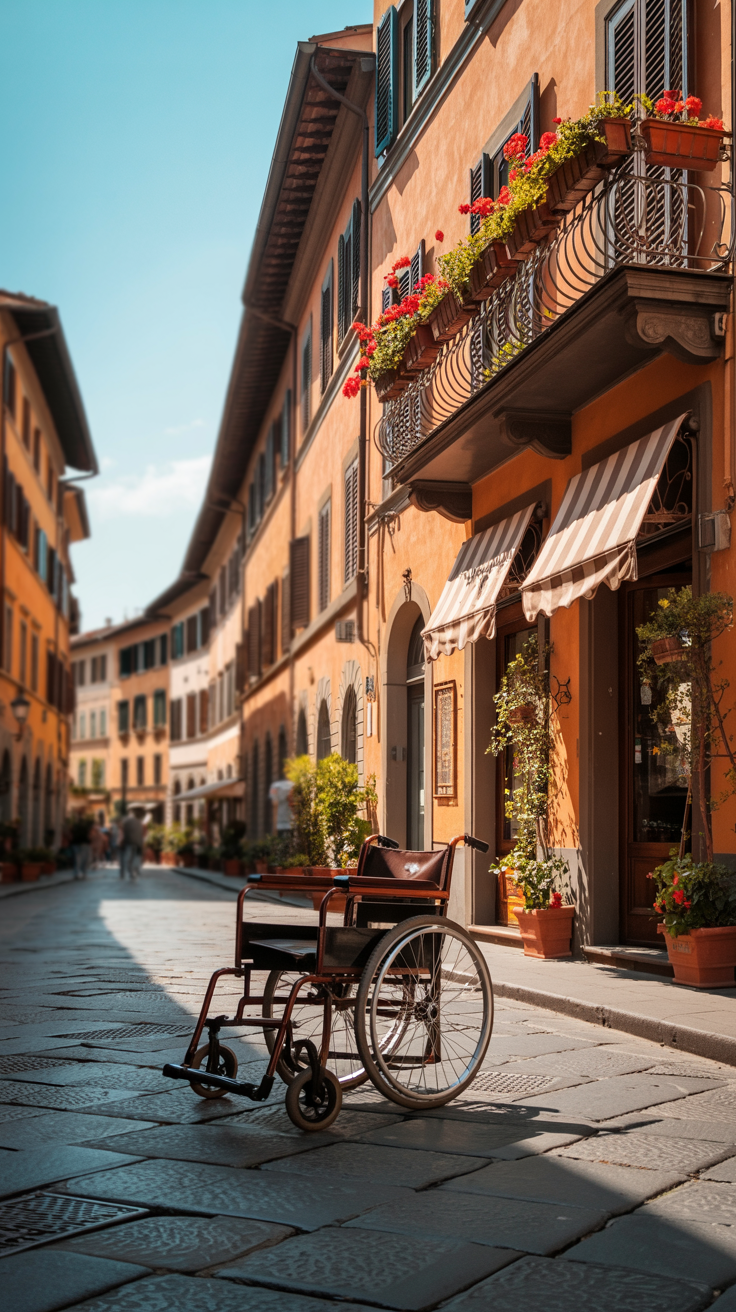
Florence is stunning. It’s also genuinely challenging for wheelchair users and anyone with limited mobility. The historic centre – where all the famous attractions are – dates back centuries and wasn’t designed with wheelchairs in mind.
The Cobblestone Problem
Those charming medieval streets are paved with sampietrini (small cobblestones) that create a bumpy, uneven surface. If you’re pushing a manual wheelchair, expect a proper arm workout. Power wheelchairs handle it better but the constant vibration gets tiring. Some streets have smoother modern paving, but you can’t avoid the cobbles entirely.
What’s Actually Accessible in Florence
Don’t write Florence off completely though. Several major attractions have made genuine efforts toward accessibility:
- Uffizi Gallery: Has lifts and accessible routes through most galleries. Book a timed entry ticket in advance and notify them of accessibility needs when booking.
- Accademia Gallery (Michelangelo’s David): Wheelchair accessible with advance notice. The entrance has a ramp and there’s a lift inside.
- Duomo exterior and Baptistry: You can view the cathedral exterior and enter the Baptistry at ground level. The dome climb is obviously not accessible, and the cathedral interior has steps at the entrance.
- Ponte Vecchio: The famous bridge itself is flat and accessible, though getting through the crowds requires patience.
- Piazza della Signoria: The main square is flat and accessible, good for sitting and people-watching.
What’s Difficult or Impossible
- Climbing the Duomo or Campanile: Hundreds of narrow stairs with no lift option
- Many churches: Have steps at entrances with no ramp
- Smaller museums: Often in historic buildings without lifts
- Side streets and alleys: Narrow, cobbled, sometimes steep
- Most restaurant restrooms: Down steep stairs in basements
An honest assessment: Florence requires realistic expectations. You’ll see beautiful architecture and major artworks, but you’ll also face physical challenges and might need to skip some experiences. Taking frequent breaks is essential – the combination of cobblestones, crowds and summer heat can be exhausting. Consider packing blister prevention products and wearing comfortable walking shoes if you have any ambulatory ability, as the uneven surfaces can cause serious discomfort.
Pisa: The Easier Option
Pisa is significantly more manageable than Florence for wheelchair users. The area around the Leaning Tower is relatively modern and designed for tourist access.
Getting to the Tower
The walking route from where coaches and accessible vehicles drop off to the Piazza dei Miracoli (where the tower stands) is mostly flat, paved, and about 400-500 metres. There’s a proper pedestrian path that’s smooth enough for wheelchairs.
The grass areas immediately around the tower can be off-limits when wet (the ground gets soft and wheels sink in), but the main paved viewing areas give you excellent photo opportunities of the tower, cathedral and baptistry.
What You Can Access
- Piazza dei Miracoli: The square itself is flat with paved sections suitable for wheelchairs
- Cathedral exterior: Viewable from all angles; the interior has some steps but ramps are available at certain entrances
- Baptistry exterior: Easy viewing access
- Tower viewing: You can’t climb the tower in a wheelchair (it’s a spiral staircase), but you get the classic photo from ground level
- Accessible restrooms: Available near the ticket office area
Practical Pisa Tips
- The site gets incredibly crowded between 11am-3pm. Earlier or later visits are calmer and easier to navigate.
- The souvenir stalls create narrow passages – patience is required when it’s busy.
- Several cafés near the square have accessible seating, though restrooms vary.
- The walk back to your vehicle is slightly uphill but very gradual.
If you’re choosing between Florence and Pisa based purely on accessibility, Pisa wins comfortably. You’ll have fewer logistical headaches and more time actually enjoying the sights rather than wrestling with cobblestones.
Booking Accessible Shore Excursions
Your cruise line’s accessible shore excursions are the simplest option, though they’re rarely cheap. These tours use vehicles with wheelchair lifts or ramps and stick to accessible routes. The guides understand mobility limitations and pace the tour accordingly.
The downside is that you’re locked into a group schedule and you’ll pay a significant premium – often double what an independent visit would cost. But you’re paying for stress-free logistics and guaranteed accessible transport.
Independent Travel Considerations
Going independently offers more flexibility and lower costs, but requires more planning:
- Book accessible transport in advance: Don’t assume you’ll find an accessible taxi on the day
- Research specific attraction accessibility: Check official websites for current accessibility information and book timed entries where required
- Allow extra time: Everything takes longer when navigating accessibility challenges
- Have a backup plan: If a site turns out to be less accessible than advertised, know what else you can do nearby
- Download offline maps: Essential for finding accessible routes and facilities
Some passengers arrange private accessible tours through specialist operators. These cost more than going fully independent but less than cruise line tours, and offer more flexibility than group excursions.
Essential Advance Planning
None of this happens smoothly without advance preparation. Here’s your checklist:
| Task | When | Why |
|---|---|---|
| Notify cruise line of mobility needs | At booking, confirm 30 days before | Ensures terminal assistance and accessible cabin if needed |
| Book accessible transport or tours | At least 2-4 weeks ahead | Limited accessible vehicles available |
| Reserve museum/gallery entry | 1-2 weeks ahead | Timed entries required and wheelchair spaces limited |
| Research accessible restaurants | Before sailing | Many have steps or basement restrooms |
| Check weather forecast | Week before | Rain makes cobblestones slippery and grass areas unusable |
| Confirm port-to-destination transfer | 48 hours before | Final confirmation of accessible vehicle |
The port authority publishes detailed information about passenger rights and assistance for people with reduced mobility. This covers your legal entitlements to help at the terminal and when boarding/disembarking.
What to Pack for Accessible Shore Days
A few items make mobility-challenged days ashore much easier:
- Cushioned seat pad: Those cobblestones transmit every bump through wheelchair seats
- Spare wheelchair batteries: If using a power chair, a full day out can drain batteries faster than expected
- Portable phone charger: Essential for maps, translation apps and emergency contacts. A high-capacity portable charger will keep your devices running all day.
- Lightweight rain cover: For you and your mobility device. Pack a compact rain jacket that won’t take up much space.
- Comfortable gloves: If pushing a manual chair over cobblestones
- Paracetamol or ibuprofen: For the inevitable aches from navigating rough surfaces
- Collapsible walking stick: If you can walk short distances, useful for steadying yourself on uneven ground
- Emergency contact card: With your ship’s name, phone number and return time in Italian and English
- European power adapter: Keep all your devices charged with a reliable power adapter for your hotel or ship cabin.
- Organized cables: A cable organizer keeps all your charging cables tidy and accessible.
- Anti-theft bag: Keep your valuables secure in crowded tourist areas with a crossbody security bag.
Extend Your Stay in Livorno or Tuscany
Some cruise passengers choose to spend extra time in Tuscany before or after their sailing. Hotels in Livorno itself are limited but functional, while Florence and Pisa offer much wider accommodation choices with varying accessibility standards. The advantage of staying longer is that you can pace yourself – those exhausting cobblestoned streets become far more manageable when you’re not racing back to the ship. Tuscany rewards slower exploration, and if you have mobility challenges, splitting Florence across two easier days makes more sense than trying to cram everything into a single exhausting port call. Just be certain to verify detailed accessibility information directly with any hotel or accommodation before booking, as Italian accessibility standards and enforcement can be inconsistent. If you’re extending your trip, consider packing compression packing cubes to maximize your luggage space and keep everything organized.
Personal Experience
We docked at Livorno last spring, and I have to say the cruise terminal itself handled wheelchair access pretty well. The building is modern with ramps and accessible restrooms, and the staff actually seemed to know what they were doing when helping passengers with mobility devices. The shuttle buses to the train station were another story though – they’re regular coaches, not the low-floor accessible kind. We ended up booking a private accessible van through the port, which cost more but saved us the hassle of trying to navigate those steep bus steps with my mom’s walker.
For our day trips, Florence was honestly challenging. The historic centre has those beautiful cobblestones that look amazing in photos but are absolutely brutal on wheels – we’re talking serious bumps and uneven surfaces everywhere. The Uffizi and Duomo area involved a lot of careful manoeuvring. We brought a memory foam travel pillow for mom’s wheelchair which helped cushion some of the vibration. Pisa was surprisingly easier to manage. The path from the parking area to the Leaning Tower is mostly flat and paved, though it gets crowded. The grass around the tower is off-limits for wheelchairs when wet, but the main viewing areas are accessible. We kept our expectations realistic and took plenty of breaks, which made both cities doable even if they weren’t exactly smooth sailing. Having a collapsible water bottle was brilliant for staying hydrated without carrying bulky bottles all day.
Common Questions & FAQ
Can I rent a wheelchair at Livorno cruise port?
The cruise terminal itself doesn’t rent wheelchairs, but your cruise line can usually arrange this if you notify them well in advance. Some accessible tour operators also provide wheelchairs as part of their service. If you need a wheelchair for your day ashore, it’s far better to bring your own or arrange rental through your cruise line before sailing rather than hoping to find one at the port.
Are the shuttle buses from Livorno port wheelchair accessible?
No, the standard shuttle buses are regular coaches with steps and are not wheelchair accessible. If you need accessible transport, you must arrange this separately through the port authority, your cruise line, or a private accessible taxi service. Book this at least a few weeks in advance as accessible vehicles are limited.
How far is the walk from accessible parking to the Leaning Tower in Pisa?
It’s roughly 400-500 metres from the accessible drop-off point to the Piazza dei Miracoli where the tower stands. The path is mostly flat and paved, making it manageable for wheelchairs and mobility scooters. The route does get crowded during peak times, so allow extra time to navigate through the tourist groups and souvenir stalls.
Can I climb the Leaning Tower of Pisa in a wheelchair?
No, the tower climb involves a narrow spiral staircase with nearly 300 steps and no lift. Wheelchair users can get excellent views and photos of the tower from the ground level of the square. The famous “pushing the tower” photos work just as well from a seated position.
Is Florence’s historic centre manageable for power wheelchairs?
It’s challenging but possible. The cobblestones create a bumpy ride and drain batteries faster than smooth surfaces. Power wheelchairs handle the terrain better than manual chairs, but you’ll still face narrow streets, crowds and some genuinely rough patches. Plan shorter outings with frequent breaks, and make certain you start with fully charged batteries. Many wheelchair users find Florence exhausting even with a power chair.
Do I need to book accessible museum entry in advance for Florence?
Yes, absolutely. The Uffizi and Accademia both require timed entry tickets which sell out quickly, and wheelchair spaces are limited. Book at least 1-2 weeks ahead and indicate your accessibility needs when reserving. This ensures they can provide appropriate assistance and that you won’t face long queues which are particularly difficult for wheelchair users to navigate.
Are Florence restaurants wheelchair accessible?
It varies dramatically. Many restaurants in the historic centre have steps at the entrance, narrow doorways, or restrooms down steep basement stairs. Some newer or renovated places have made proper accessibility improvements. Always phone ahead to ask specific questions about entrance steps, table spacing and restroom access. Don’t rely on online information which is often outdated or overly optimistic.
What happens if I can’t make it back to the ship in time due to mobility issues?
This is why you need to allow generous extra time when travelling independently with mobility challenges. If you’ve booked a cruise line shore excursion and the tour runs late due to accessibility delays, the ship will wait. If you’re independent and miss the ship, you’re responsible for getting to the next port at your own expense. Build in at least an hour extra buffer beyond what an ambulatory passenger would need, and always carry emergency contact information for your ship.