
College Fjord is a scenic inlet in Prince William Sound, Alaska, featuring 20 tidewater and alpine glaciers named after prestigious colleges. Accessible primarily by cruise ship, the fjord offers spectacular views of ice formations, calving glaciers, and wildlife. Harvard Glacier, the fjord’s largest tidewater glacier, serves as the main highlight for visitors cruising through this pristine wilderness area.
Quick Facts About College Fjord
| Detail | Information |
|---|---|
| Location | Prince William Sound, Alaska |
| Number of Glaciers | 20 (5 tidewater, 15 alpine) |
| Largest Glacier | Harvard Glacier (1.5 miles wide) |
| Cruise Duration | 4-6 hours typically |
| Best Viewing Side | Port side entering, starboard exiting |
| Access | Cruise ships only (no road access) |
| Wildlife | Seals, sea otters, whales, eagles |
Want to know more about Alaska cruise ports and what to expect at each destination? We’ve got comprehensive guides to help you plan.
Why the Glaciers Have College Names
The naming convention isn’t just quirky branding. In the late 1800s, the Harriman Alaska Expedition included scientists from various prestigious universities who were studying and mapping the region. They named the glaciers after their alma maters, with some interesting distinctions:
- Women’s colleges (Vassar, Smith, Bryn Mawr, Wellesley, Barnard) are on the west side
- Men’s colleges and co-ed institutions (Harvard, Yale, Dartmouth, Amherst) are on the east side
- Harvard Glacier, being the largest, got prime real estate at the head of the fjord
This gendered geography makes for a handy memory device when you’re trying to spot specific glaciers.
What Makes College Fjord Special
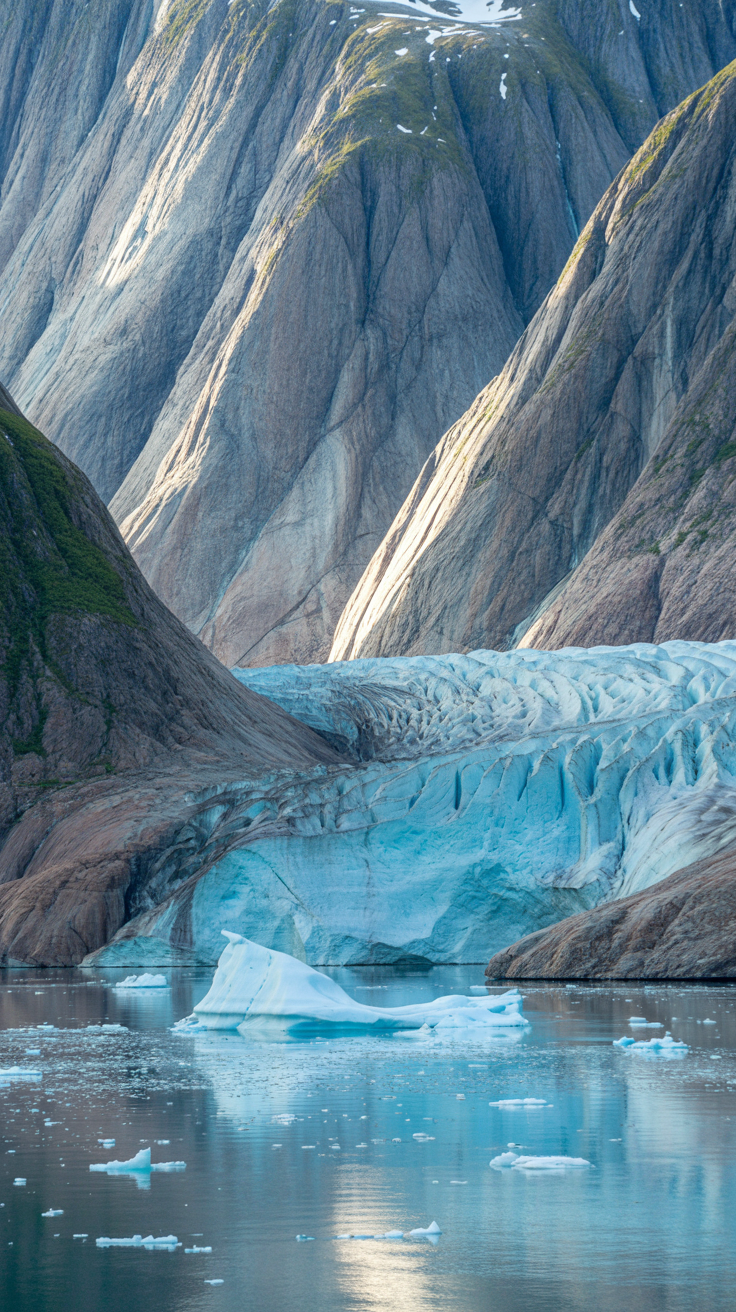
While destinations like Glacier Bay National Park and Hubbard Glacier get more publicity, College Fjord offers something unique: glacier density. You’ll see more glaciers in a shorter stretch than almost anywhere else in Alaska. It’s like the greatest hits album of ice formations.
The fjord also tends to have calmer waters than other glacier-viewing locations, which means less seasickness and better photo opportunities. The protected nature of Prince William Sound creates a natural amphitheater effect where you can often hear the thunderous cracks and booms of tidewater glaciers calving into the sea.
Best Viewing Locations on the Ship
Here’s where cruise veterans position themselves, and trust me, real estate gets competitive:
- Early morning approach: Port side (left when facing forward) offers the best views of the main glaciers as you enter
- Forward decks: Get here early for unobstructed panoramic views, but dress warmly because the wind chill is real
- Mid-ship outdoor decks: Less crowded than forward areas and you can easily switch sides
- Balcony cabins: Worth it if you have mobility issues or want a private viewing experience, though you’ll sacrifice the social atmosphere
Pro tip: Most ships turn around at Harvard Glacier so both sides get photo opportunities. Don’t panic if you’re on the “wrong” side initially.
When Ships Visit College Fjord
College Fjord appears on northbound and southbound Alaska cruise itineraries, but not every cruise includes it. Princess Cruises and Holland America visit most frequently, with Royal Caribbean and Celebrity making occasional appearances.
The timing matters more than you might think:
- Early morning arrivals (5-7 AM): Best light for photography, fewer weather issues, but requires commitment to wake up
- Midday visits: Warmer but potentially foggier, and the harsh overhead light washes out photos
- Late afternoon: Rare but spectacular when it happens, with golden hour lighting
Check your daily cruise planner the night before for exact timing and wake-up calls.
Photography Tips That Actually Work
Everyone returns from Alaska with a thousand glacier photos that somehow look less impressive than the real thing. Here’s how to beat the odds:
- Include something for scale (the ship’s bow, a fellow passenger, a piece of ice in the water)
- Shoot in bursts when glaciers are calving because the action happens fast
- Bring a polarizing filter to cut glare off the water and make the blue ice pop
- Don’t use full zoom; wider shots that show the glacier’s relationship to the fjord tell a better story
- Keep your phone or camera battery warm in an inside pocket between shots because cold drains batteries shockingly fast
For truly memorable glacier viewing experiences, put the camera down for a few minutes and just listen. The sounds of College Fjord are as impressive as the sights.
Weather and What to Wear
Alaska weather is notoriously unpredictable, and College Fjord adds its own microclimate complications. The temperature can be 20 degrees colder on deck than inside the ship, and that’s before factoring in wind chill.
Layer like your comfort depends on it (because it does):
- Base layer: moisture-wicking material, not cotton
- Middle layer: fleece or down vest
- Outer layer: waterproof jacket with a hood
- Don’t forget: hat, gloves, and warm socks
- Sunglasses: the glare off ice and water is intense even on cloudy days
You’ll see people in shorts and t-shirts who regret their choices within 10 minutes. Don’t be that person.
Wildlife Watching in College Fjord
While the glaciers steal the show, the waters around College Fjord support impressive wildlife populations. Harbor seals often haul out on ice floes near the glacier faces, and sea otters float on their backs munching on shellfish like they’re at an all-you-can-eat buffet.
Keep your eyes peeled for:
- Harbor seals with pups (especially in early summer)
- Orcas and humpback whales feeding near glacier outflows where nutrients are concentrated
- Bald eagles perched on ice chunks or soaring overhead
- Sea otters in groups called rafts
- Occasionally, brown or black bears on the distant shoreline
The naturalist on board (if your ship has one) usually provides commentary over the PA system. Actually listen instead of tuning it out because they’ll point out things you’d otherwise miss.
Understanding Glacier Colors and Ice
That electric blue color in glacier ice isn’t Photoshop or your imagination. The blue comes from compressed ice that’s so dense it absorbs all light wavelengths except blue, which gets reflected back to your eyes. The older and more compressed the ice, the deeper the blue.
White or lighter blue sections indicate younger ice or ice with more air bubbles. Dark streaks running through glaciers are medial moraines, basically rock and sediment the glacier picked up during its journey down the mountain.
When you see ice floating in the water:
- Small chunks are called “bergy bits”
- Tiny pieces are “growlers” (yes, really)
- Large floating pieces are proper icebergs, with 90% of their mass underwater
The Reality of Glacier Recession
College Fjord’s glaciers are retreating at measurable rates, which is both sobering and a reason to visit sooner rather than later. Harvard Glacier has pulled back significantly from its historical position, though it remains massive and impressive.
Some cruise lines now include information about glacial retreat in their programming. It’s not preachy or political, just factual observations about changes documented over decades. The “trim lines” you’ll see on the rock faces show where glaciers once reached.
This environmental shift means the College Fjord you see today will look different from the one future visitors encounter, adding a time-sensitive element to the experience.
Cruise Line Differences
Not all College Fjord experiences are created equal. Here’s what varies by cruise line:
- Time spent: Ranges from 2 hours to 6+ hours depending on itinerary and schedule
- Narration: Some lines provide detailed commentary from naturalists or park rangers, others offer minimal information
- Ship positioning: Better captains will turn the ship multiple times for optimal viewing from both sides
- Deck access: Smaller ships often have better outdoor viewing space per passenger
- Special programming: Some lines arrange early breakfast service on deck or hot beverage stations
Read recent cruise reviews specific to College Fjord to see how your particular sailing handled the experience.
Comparing College Fjord to Other Glacier Destinations
Alaska cruise itineraries often include multiple glacier encounters, each with distinct characteristics. College Fjord offers the highest concentration of named glaciers but lacks the dramatic scale of other locations. Hubbard Glacier presents a single massive ice face, while Glacier Bay provides more diverse scenery with mountains and forests alongside ice formations.
The advantage of College Fjord is variety. If you’re keeping a mental checklist of glacier types and formations, you’ll tick more boxes here than anywhere else in a single morning.
Food and Beverage Strategy
Here’s something nobody tells you: standing on a cold deck for 3-4 hours makes you hungry, but you don’t want to miss prime viewing time waiting in buffet lines.
Smart moves:
- Grab breakfast before prime viewing time starts
- Bring a water bottle (you’ll get dehydrated even in cold weather)
- Many ships offer hot chocolate or coffee service on outdoor decks during glacier viewing
- Pack snacks in your pockets (granola bars, crackers) for sustained energy
- Avoid alcohol early in the viewing period because it impairs your cold tolerance
Bonus Tips That Make a Difference
- Bring a small towel to wipe salt spray and condensation off your camera lens
- Hand warmers in your pockets let you keep shooting photos even when your fingers go numb
- Download a glacier identification app or bring a printed map to track which glaciers you’re seeing
- If you wear glasses, treat them with anti-fog solution before heading outside
- Charge all devices fully the night before because you’ll use them more than expected
- Bring a small pair of binoculars for wildlife spotting and examining distant glacier details
- Check if your ship offers a “wake-up call” service the night before so you don’t oversleep
- The observation lounges inside offer heated viewing with floor-to-ceiling windows if you need a warm-up break
- Motion sickness rarely affects people in College Fjord due to calm waters, but keep medication handy just in case
- Some glaciers are more active in warmer afternoon temperatures when meltwater increases
Common Questions and FAQ
Can you get off the ship at College Fjord?
No. College Fjord is a scenic cruising experience only with no ports or landing sites. The entire experience happens from the ship’s decks. There’s no road access to this remote area and no facilities for passenger disembarkation.
How close does the ship get to the glaciers?
Ships typically approach within a quarter to half mile of the glacier faces, particularly at Harvard Glacier. The exact distance varies based on ice conditions, water depth, and Coast Guard regulations. Captains maintain safe distances while maximizing viewing opportunities.
Will I hear glaciers calving?
Possibly, but it’s not guaranteed. Calving events are unpredictable and depend on temperature, time of day, and glacier activity. When it does happen, you’ll hear a sound like thunder followed by a massive splash. The sound travels across the water so even distant calvings are audible.
Do all Alaska cruises visit College Fjord?
No. College Fjord appears primarily on Gulf of Alaska itineraries that spend time in Prince William Sound. Round-trip cruises from Seattle or Vancouver are more likely to include it than Inside Passage routes. Check your specific itinerary details because it’s not a standard inclusion on every sailing.
Is College Fjord worth waking up early for?
Absolutely. Early morning offers the best weather conditions, clearest skies, and optimal lighting for photography. Weather can deteriorate quickly in Alaska, and afternoon fog frequently obscures views. The few hours of lost sleep are a minor trade-off for experiencing one of the best glacier experiences Alaska offers.
What’s the difference between tidewater and alpine glaciers?
Tidewater glaciers actively flow into the ocean and produce icebergs through calving. Alpine glaciers terminate on land at higher elevations. College Fjord contains both types, with the tidewater glaciers at sea level providing the most dramatic viewing. The tidewater glaciers are the ones that produce those spectacular calving events everyone hopes to witness.
Can you see College Fjord if you’re not on a cruise?
It’s extremely difficult and expensive. A handful of tour operators offer helicopter or small plane excursions from Whiting or Valdez, but costs run into the thousands of dollars. There are no roads, no regular ferry service, and limited charter boat options. Cruising remains the most practical and affordable way to experience College Fjord.
Personal Experience
We took an Alaska cruise last summer, and College Fjord ended up being one of those experiences that catches you completely off guard. The ship arrived early morning around 6 AM, and even though dragging myself out of bed felt brutal at the time, the light at that hour was absolutely perfect. Everything had this soft, ethereal glow, and the water was so calm it looked like glass. We grabbed coffee and staked out a spot on the port side deck, which our cabin steward had tipped us off about the night before. He was right – that’s the side where you get the best views of the main glaciers as you cruise in.
What really surprised me was just how many glaciers there are packed into this one fjord. We saw Harvard Glacier first, this massive blue-white wall at the head of the fjord, and then kept spotting others named after different colleges – Yale, Vassar, Smith. The crew actually slowed the ship way down and even turned it around so both sides could get good photos. By mid-morning, some fog started rolling in, which made me extra grateful we’d gotten up early. One couple we met said they’d slept in on their Alaska cruise years ago and missed the whole thing because of weather. Now I always tell people: set that alarm, dress in layers, and get outside. The glaciers don’t wait for anyone.