
Ketchikan is Alaska’s premier destination for viewing authentic totem poles, featuring the world’s largest collection. Key sites include Totem Bight State Historical Park, Saxman Native Village, and Totem Heritage Center, which houses original 19th-century poles. These carved monuments represent Tlingit, Haida, and Tsimshian cultural traditions and storytelling through intricate animal and human figures.
| Quick Facts | Details |
|---|---|
| Best Time to Visit | Morning hours for fewer crowds and better light |
| Typical Shore Excursion Length | 2-4 hours depending on location |
| Distance from Cruise Dock | Totem Heritage Center: Walking distance; Saxman: 2.5 miles south; Totem Bight: 10 miles north |
| Photography Allowed | Yes, but be respectful during cultural demonstrations |
| Admission Costs | Totem Heritage Center: Small fee; Saxman: Varies by tour; Totem Bight: Free |
| Weather Considerations | Rain gear essential (Ketchikan averages 150+ inches annually) |
Want to know more about Alaska cruise ports and what to expect?
The Three Must-See Totem Pole Sites
Totem Bight State Historical Park
Located 10 miles north of downtown Ketchikan, this peaceful park sits on a scenic shoreline and features 14 restored totem poles plus a replica clan house. The poles here were part of a Depression-era restoration project that saved deteriorating totems from abandoned villages throughout Southeast Alaska.
The setting is spectacular with poles positioned among towering spruce and hemlock trees overlooking Tongass Narrows. The wooden boardwalk makes for easy viewing even when it’s raining, which is pretty much always a possibility in Ketchikan. The clan house interior is open for exploration and features painted house posts and a central fire pit that gives you a real sense of traditional Tlingit architecture.
- Free admission makes this an excellent budget-friendly option
- Less crowded than Saxman, especially if you visit before 10 AM or after 3 PM
- Allow at least 45 minutes to an hour for a proper visit
- No tour guides on site, so consider downloading information beforehand or booking a guided excursion
Saxman Native Village
Just 2.5 miles south of the cruise docks, Saxman boasts the world’s largest collection of standing totem poles with nearly 30 poles in the totem park. This is a living Tlingit village where descendants of the original Saxman residents still live and work.
The real draw here is the Beaver Clan House where you can watch traditional dance performances and the carving center where master carvers create new totems using hand tools. You can smell the fresh cedar shavings before you even walk through the door. These aren’t demonstrations for tourists either – this is where legitimate apprentice carvers learn their craft from established masters.
- Photography is welcome in the totem park but ask before photographing performers or carvers
- The cultural center gift shop sells authentic Native art directly from local artists (expect genuine prices, not souvenir shop markups)
- Most cruise passengers visit Saxman, so it gets crowded between 11 AM and 2 PM
- Book through your cruise line or an independent tour operator as the village doesn’t allow unescorted individual visits to cultural performances
Totem Heritage Center
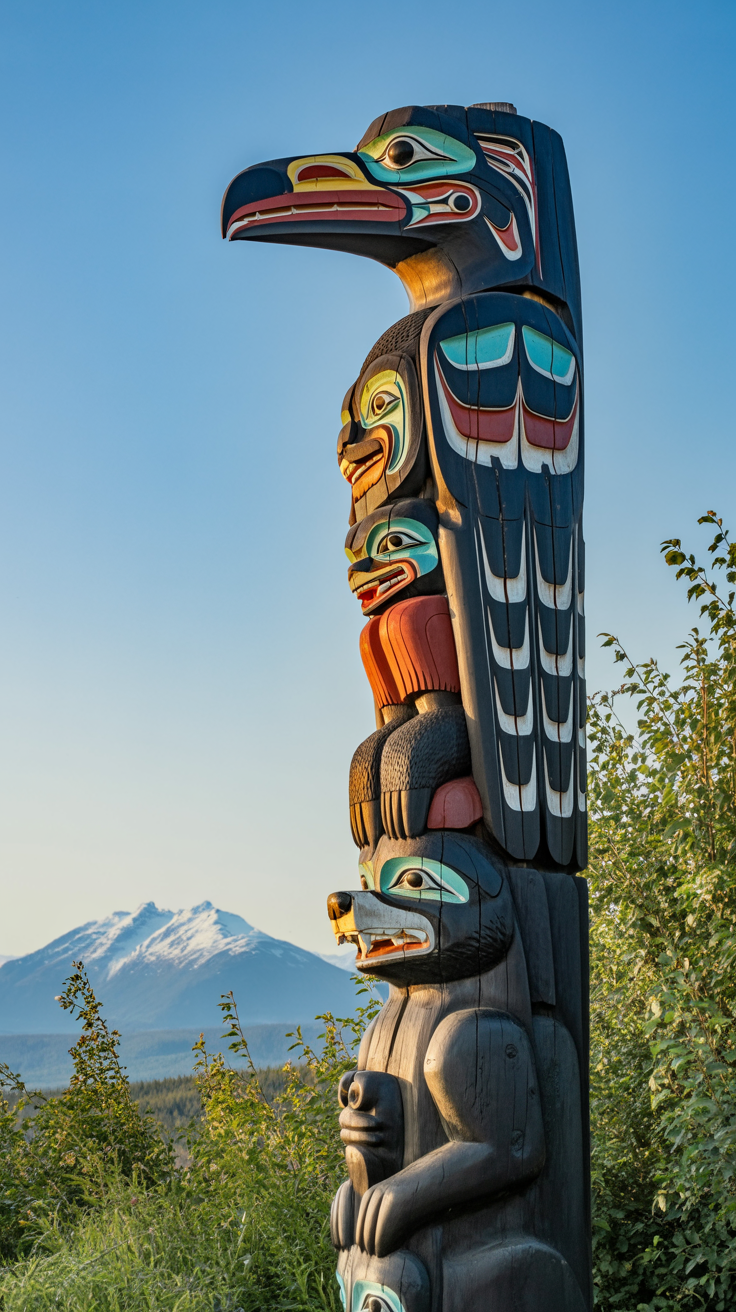
This museum-quality facility downtown houses 33 original 19th-century totem poles and fragments retrieved from abandoned Tlingit and Haida village sites. Unlike the restored and repainted poles at outdoor sites, these show their age with weathered surfaces and faded paint that actually makes them more powerful to view.
The climate-controlled environment preserves these fragile artifacts while interpretive displays explain the symbolism, carving techniques, and cultural significance. The center also maintains an active apprentice program where you might catch carvers working on new pieces.
- Walking distance from the cruise dock makes this perfect for independent exploration
- Smaller space means it never feels as crowded as outdoor sites
- Knowledgeable staff members can answer questions about specific poles
- Combined with a self-guided walking tour of Ketchikan, this makes for an excellent morning
Understanding What You’re Looking At
Here’s what cruise guidebooks don’t tell you: totem poles are not religious objects and they’re definitely not idols. That’s a massive misconception that stems from early missionaries who didn’t understand what they were seeing. Totem poles are historical records, family crests, and storytelling devices carved from Western Red Cedar.
Each pole tells a specific story. Common figures you’ll see include:
- Raven: The trickster and creator figure in Tlingit culture, identifiable by its straight beak
- Eagle: Represents one of the two main clan divisions (moieties), shown with a curved beak
- Bear: Symbols of strength, often shown with prominent teeth and paws
- Killer Whale: Marine mammals with tall dorsal fins and visible blowholes
- Frog: Associated with wealth and copper, usually positioned near the bottom
- Thunderbird: Powerful supernatural bird with curved back-swept horns or ears
The figures aren’t random. They represent clan crests, tell stories of historical events, commemorate important people, or document family lineages. The pole’s “owner” (the family or clan who commissioned it) would know every detail, and that knowledge would be passed down through generations.
Practical Tips for Your Visit
Getting to the totem pole sites depends on which location you choose. The Totem Heritage Center is an easy 5-10 minute walk from where most ships dock. You can combine it with a stroll down historic Creek Street for a perfect morning excursion.
For Saxman and Totem Bight, you’ll need transportation. Options include:
- Cruise line shore excursions (most expensive but guaranteed to get you back on time)
- Independent tour operators (often cheaper with smaller groups)
- Taxi services (reasonable if you’re splitting the cost with 3-4 people)
- Rental car (really only makes sense if you’re planning a full day of independent exploration)
The weather in Ketchikan is famously wet. The locals joke that they don’t tan, they rust. Bring proper rain gear that keeps your camera dry too. Those disposable ponchos from the cruise gift shop will leave you soaked and miserable within 20 minutes.
Photography Considerations
The totem poles are tall – sometimes over 40 feet – which creates some challenges for photography. A wide-angle lens helps capture entire poles, but you’ll also want something with zoom capability for the intricate details carved into upper sections.
Overcast days actually work in your favor here. The soft diffused light prevents harsh shadows that can obscure carved details. If the sun does make a rare appearance, early morning or late afternoon provides the best lighting angles.
When photographing at Saxman or during cultural performances, always ask permission first. Some ceremonies or demonstrations may have restrictions, and it’s simply respectful to check before you start snapping away.
Beyond Ketchikan: Other Southeast Alaska Totem Sites
If your cruise itinerary includes other ports, you’ll find impressive totem collections at Sitka National Historical Park and the totem parks in Wrangell. Each location offers different perspectives on Alaska Native culture and carving traditions.
Sitka’s totems stand along a beautiful forest trail where they’ve been slowly weathering since the 1930s and 1940s. The park also has an active carving program. Wrangell maintains several totem sites including Chief Shakes Island, a small islet connected by a footbridge that feels genuinely off the beaten path.
The Truth About “Authentic” Totems
You’ll see souvenir shops throughout Ketchikan selling small totem poles. Most are mass-produced imports with no connection to Alaska Native artists. Genuine Native-carved totems, even small ones, are expensive because they represent skilled craftsmanship and cultural knowledge.
Look for the “Silver Hand” sticker or tag that identifies authentic Alaska Native art. These pieces are made by enrolled tribal members and represent genuine cultural artwork. Yes, they cost significantly more than the import shop versions, but you’re purchasing actual Native art rather than a generic souvenir.
Bonus Tips
- The totem poles you see at outdoor sites are actually replicas or restored versions – original poles that remain outdoors eventually deteriorate from weather exposure
- There’s no such thing as a “low man on the totem pole” being less important – the bottom position is actually the most prominent and often reserved for the most important figure
- Traditional totem poles were never meant to last forever – they were allowed to naturally decay and return to the earth, with the stories being what truly mattered
- If you’re tall, watch your head in the clan houses – traditional structures weren’t built with modern heights in mind
- The best photos at Saxman come from the hillside viewing area above the main totem park where you can capture multiple poles in one frame
- Download the National Park Service app before you visit Totem Bight – it includes audio descriptions of specific poles even though there’s no cell service at the park
- Carving demonstrations at Saxman typically happen in the morning hours, so afternoon visitors often miss this highlight
- The Totem Heritage Center has a surprisingly excellent collection of historic photographs showing the original village sites before the poles were relocated
What This Isn’t
Let’s be honest about expectations. This isn’t Disneyland with performers in costume waiting to pose for selfies. The cultural demonstrations at Saxman are genuine expressions of living traditions, not theme park entertainment. Treat them with appropriate respect.
You also won’t become an expert on totem pole symbolism after a 2-hour shore excursion. These artistic traditions represent generations of cultural knowledge. What you will get is an appreciation for the complexity and a basic understanding of what you’re looking at, which is plenty for most cruise passengers.
The outdoor sites require walking on sometimes uneven terrain. Totem Bight has boardwalks but Saxman’s totem park includes gravel paths and slight inclines. Neither is particularly difficult, but if mobility is a concern, factor that into your planning.
Making the Most of Limited Time
Most Alaska cruises dock in Ketchikan for 6-8 hours. That’s enough time to see one major totem site properly or squeeze in two if you’re efficient and skip lunch. Here’s what works:
If you have 6 hours or less: Choose either Saxman (for the cultural performance and carving center) or Totem Bight (for the peaceful setting and free admission). Add the Totem Heritage Center as it’s right downtown.
If you have 8+ hours: Visit Totem Bight in the morning when it’s less crowded, return to town for lunch and the Totem Heritage Center, then head to Saxman for an afternoon cultural program.
If you’re on a budget: Skip the expensive cruise excursions and visit Totem Bight independently via taxi (split the cost with other passengers you meet on the ship). The Heritage Center is walking distance and has a minimal admission fee.
Common Questions and FAQ
Can I touch the totem poles?
No, you shouldn’t touch the poles at any of the sites. The oils from your hands damage the wood and accelerate deterioration. Look with your eyes, photograph with your camera, but keep your hands to yourself.
Why do some poles look newer than others?
Because they are newer. Traditional poles were never meant to last forever – they naturally decayed and returned to the earth. Modern poles are either recent carvings maintaining the tradition or careful reproductions of historical poles. The Totem Heritage Center preserves original weathered poles in climate-controlled conditions.
Is it okay to visit these sites without a guide?
Totem Bight is designed for independent visits and has no guided tours. The Totem Heritage Center welcomes walk-in visitors who can explore at their own pace. Saxman requires tour bookings for access to cultural performances and the carving center, though you might arrange a village tour through local operators. Honestly, you’ll understand and appreciate much more with a knowledgeable guide explaining the symbolism and stories.
What’s the difference between Tlingit, Haida, and Tsimshian poles?
Each culture has distinct carving styles, though casual observers might not notice the differences. Haida poles tend to be taller and more columnar with shallower carving. Tlingit poles feature deeper carving with more dimensional figures. Tsimshian traditions incorporate different mythological creatures. The stories and clan systems also differ between cultures. Your guide can point out these distinctions if you’re interested.
Are the cultural performances at Saxman authentic or just for tourists?
They’re authentic traditional dances performed by community members, but yes, they’re presented in a format designed for tourist audiences. The dances themselves, regalia, and songs represent genuine Tlingit traditions passed down through generations. Think of it like attending a concert – the music is real even though it’s being performed for an audience.
Do I need to book totem pole tours in advance?
For cruise line excursions to Saxman, advance booking is smart as popular tours sell out. Independent visits to Totem Bight don’t require reservations. The Totem Heritage Center accepts walk-ins during operating hours. If you want to ensure specific timing or smaller groups, booking ahead always helps.
Personal Experience
I didn’t realize how much I was missing until I actually stood in front of those towering totem poles at Totem Bight State Historical Park. The photos online don’t do them justice – these carvings are massive, and each one tells such a specific story. Our guide explained that the eagle at the top of one pole represented a clan’s connection to a specific ancestor, and suddenly these weren’t just beautiful wooden sculptures anymore. They were family histories carved in cedar. The best part was learning that you can’t really understand a totem pole just by looking at it. You need to know the stories, which is why I’m so glad we did the guided tour instead of just wandering around on our own.
Saxman Village was my favorite stop, hands down. They have the largest collection of standing totem poles in the world, and the carving center there lets you watch artists working on new poles using traditional techniques. I caught some amazing photos in the soft morning light, especially near the community house with its painted front. One tip I wish someone had told me: bring a zoom lens if you have one, because some of the most intricate details are way up high. The carvers explained that every color means something, every figure has a purpose, and nothing is random. It completely changed how I see Native art now.