
Sitka offers stunning photography locations including the iconic Russian Orthodox St. Michael’s Cathedral, Sitka National Historical Park’s totem-lined rainforest trails, and Castle Hill for panoramic harbor views. Wildlife photographers can capture sea otters at Sitka Sound, bears at nearby streams, and eagles throughout town. The charming downtown waterfront provides excellent shots of fishing boats against mountain backdrops.
Quick Facts for Photography in Sitka
| Detail | Information |
|---|---|
| Best Time for Photos | Early morning or late afternoon for soft lighting |
| Distance from Dock | Most spots within 1 mile walking distance |
| Weather Consideration | Rain likely; bring lens cloth and protective gear |
| Wildlife Probability | Eagles: Very High | Sea Otters: High | Bears: Medium (requires excursion) |
| Typical Port Time | 4-8 hours depending on cruise line |
Want to know more about Alaska cruise ports and what to expect at each destination?
Top Photography Locations Within Walking Distance
When you arrive in Sitka, you’re stepping into one of Southeast Alaska’s most photogenic ports. Unlike Juneau or Ketchikan where you might need transportation to reach the best spots, Sitka’s compact downtown puts several prime locations right at your fingertips.
Castle Hill: The Must-Visit Viewpoint
Located just a five-minute walk from the tender dock, Castle Hill provides the single best panoramic view in town. The elevation isn’t dramatic but it’s enough to capture sweeping harbor scenes with cruise ships, fishing boats, and those dramatic mountain backdrops that scream Alaska. The climb involves about 100 steps on a wooden staircase, which sounds more intimidating than it actually is.
Pro tip: Most cruise passengers head here around midday when the lighting is harsh and creates unflattering shadows. Arrive right after disembarking or save it for your last stop before heading back to the ship. The golden hour shots from here are absolutely ridiculous in the best possible way.
St. Michael’s Cathedral: Architectural Beauty
This blue-domed Russian Orthodox Cathedral sits in the heart of downtown and makes for striking photos. The exterior works best from across the street where you can capture the entire structure including its distinctive onion dome. Inside photography is permitted but requires a small admission fee. The interior features ornate religious icons and chandeliers that photograph beautifully, though low light conditions mean you’ll need to bump up your ISO or use a wider aperture.
Sitka National Historical Park
The Sitka National Historical Park totem pole trail combines cultural significance with incredible photo opportunities. This isn’t your typical tourist trap with a few poles lined up – you’re walking through temperate rainforest with towering totems positioned naturally throughout the landscape. The moss-covered trees, ferns, and weathered totems create an otherworldly atmosphere.
The park sits about a mile from downtown but the walk follows a scenic waterfront route. If you’re time-crunched, taxis charge around $10-15 each way. The totem trail itself is a two-mile loop that most people complete in 45 minutes to an hour, though photographers will want longer. Rain makes the colors pop and adds atmosphere to forest shots, so don’t let drizzle deter you.
Wildlife Photography Opportunities
Sitka delivers exceptional wildlife viewing and photography opportunities without requiring expensive excursions. The town itself hosts a healthy population of bald eagles, and spotting them perched in trees along the waterfront is practically guaranteed.
Where to Find Sea Otters
Sea otters frequent the kelp beds throughout Sitka Sound. The best viewing spots include:
- Crescent Harbor near the Sitka Sound Science Center
- Eliason Harbor along the breakwater
- Any kelp bed visible from the waterfront walking path
A zoom lens (200mm or longer) helps capture detailed shots of otters floating and eating. They’re remarkably tolerant of observers but maintaining distance ensures natural behavior. Watch for them wrapping themselves in kelp or cracking open shellfish on their bellies – these moments make for compelling shots.
Bear Photography
Bears require more effort since they don’t typically wander through downtown. Local bear viewing excursions head to nearby streams where salmon runs attract both brown and black bears. These tours understand photography needs and position groups for optimal shots while maintaining safe distances. Book these in advance as they fill quickly and require transportation outside town.
For more comprehensive guidance, check out this detailed Alaska wildlife photography guide covering equipment, techniques, and ethical practices.
Downtown Waterfront Scenes
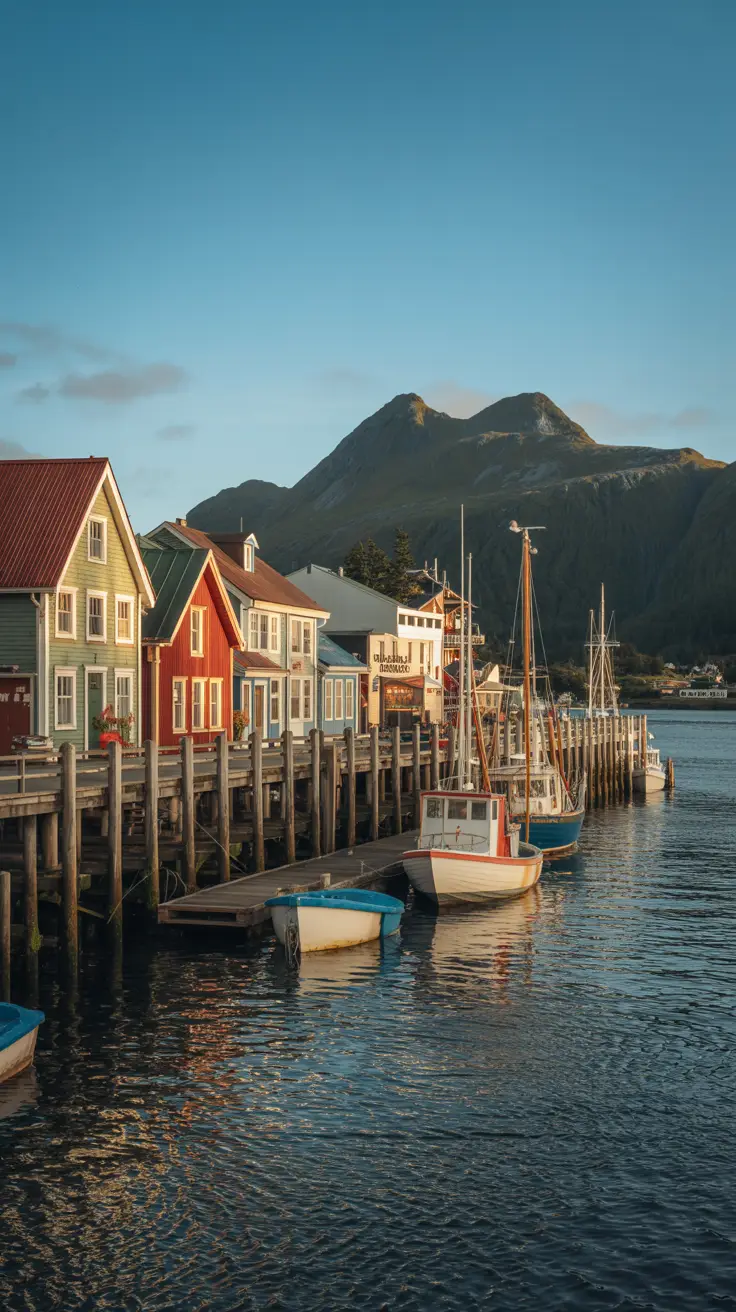
The working waterfront along Lincoln Street and Harbor Drive provides authentic Alaska scenes. Fishing boats tied to docks, seine nets being mended, and commercial vessels against mountain backdrops capture Sitka’s identity as a fishing community. Early morning before most passengers disembark offers the best light and fewer tourists in your shots.
The breakwater extending into Crescent Harbor makes an excellent foreground element. Walk to the end for reverse angle shots looking back toward town with mountains rising behind. This spot also increases your chances of photographing eagles and otters.
Technical Considerations
Weather and Gear Protection
Sitka receives substantial rainfall and even “nice” days often include drizzle. A rain sleeve for your camera and a microfiber cloth for wiping lenses are essential. Many photographers skip shots because they’re worried about their gear getting wet, then regret it later. A $15 rain cover prevents this problem entirely.
Lighting Challenges
Southeast Alaska’s overcast conditions actually benefit photographers by providing soft, even lighting that reduces harsh shadows. This diffused light works beautifully for totem poles, forest scenes, and wildlife. Don’t assume cloudy weather ruins photo opportunities – it often enhances them.
Camera Settings for Alaska
- ISO: 400-800 for forest and overcast conditions
- Aperture: f/5.6-f/8 for landscapes; f/4-f/5.6 for wildlife
- Shutter Speed: Minimum 1/250 for handheld wildlife shots; 1/125 for stationary subjects
- White Balance: Cloudy or Auto (RAW files allow adjustment later)
Time Management Strategies
Most cruise passengers get between four and eight hours in Sitka depending on their ship’s schedule. Planning your photography route maximizes what you can accomplish.
Four-Hour Port Call
- First hour: Sitka National Historical Park totems and rainforest trail
- Second hour: Return to downtown via waterfront, stopping for sea otter photos
- Third hour: St. Michael’s Cathedral and downtown architecture
- Fourth hour: Castle Hill panoramas and final waterfront shots
Eight-Hour Port Call
With more time, add a bear viewing excursion or spend longer at each location waiting for optimal lighting and wildlife activity. The extra hours let you revisit spots if weather clears or clouds roll in for dramatic effect.
Comparing Sitka to Other Ports
If you’re also stopping in Juneau, compare these best photo spots in Juneau to see how the ports differ. Sitka offers more Russian heritage architecture while Juneau provides glacier access. Similarly, Ketchikan’s top photography locations emphasize Creek Street’s historic boardwalks and massive totem collections.
Each port has distinct characteristics. Sitka’s advantage lies in its walkability and concentration of diverse subjects within a compact area. You can capture totems, wildlife, Russian architecture, and mountain landscapes without extensive transportation.
Bonus Tips
- Download offline maps before leaving the ship since cellular service can be spotty
- The Raptor Center rehabilitates injured eagles and allows close-up photography for a small admission fee
- Public restrooms are located at the Harrigan Centennial Hall near the tender dock
- Local coffee shops near St. Michael’s Cathedral offer free WiFi for backing up photos to cloud storage
- Ship departure times are firm – be back at the tender dock 30 minutes early to avoid stress
- Battery life drains faster in cool, damp conditions so carry a spare
- The Sitka walking tour route connects most major photo spots efficiently
- Polarizing filters reduce glare from wet surfaces and deepen sky colors even on cloudy days
- Ask locals about recent wildlife sightings – they’re usually happy to share current hot spots
Common Questions and FAQ
Can I photograph inside St. Michael’s Cathedral?
Yes, interior photography is permitted after paying the admission fee. Flash photography is not allowed as it can damage the historic icons. The low light inside requires either a fast lens, higher ISO settings, or both. A tripod would be ideal but isn’t practical for cruise passengers with limited time.
Do I need a telephoto lens for wildlife photography in Sitka?
A telephoto zoom in the 70-200mm or 100-400mm range significantly improves wildlife shots but isn’t mandatory. Sea otters often come close enough to shore that even shorter lenses work. Eagles perched on pilings or trees can be photographed with mid-range zooms. That said, serious wildlife photographers will appreciate the reach of longer glass.
Is drone photography allowed in Sitka?
Drone regulations are strict in Sitka. The National Historical Park prohibits drones entirely. Downtown areas near the harbor may have restrictions due to seaplane traffic. The cruise ship presence adds another complication since flying near vessels raises security concerns. Unless you’ve researched specific permissions and locations beforehand, leave the drone on the ship.
What’s the best single location if I only have one hour?
Castle Hill provides the most bang for your buck in terms of classic Alaska scenery that clearly says “I was in Sitka.” The quick walk from the tender dock, panoramic views, and relatively quick photo session make it perfect for time-crunched passengers. You’ll get harbor scenes, mountains, and the town layout in one location.
Are there any photography restrictions at cultural sites?
The totem poles at Sitka National Historical Park can be photographed freely. These are replicas of historic poles specifically displayed for public viewing and education. General etiquette applies – be respectful, don’t touch the carvings, and stay on designated trails. If you encounter any Native ceremonies or private gatherings, ask permission before photographing.
Should I bring a tripod?
Tripods are helpful for the cathedral interior and low-light forest scenes but add bulk that most cruise passengers find impractical. A small tabletop tripod or GorillaPod weighs almost nothing and can stabilize your camera on railings or rocks. Image stabilization in modern cameras and lenses often eliminates the need for traditional tripods during typical port calls.
Personal Experience
Last summer during our Alaska cruise, I had exactly four hours in Sitka to capture as many photos as possible. I started at Sitka National Historical Park, which turned out to be an incredible decision. The totem poles there are absolutely magnificent – tall, weathered, and surrounded by lush rainforest. The lighting is best in the morning, so getting there right when we docked meant I had soft, diffused light filtering through the trees. I spent about an hour there before heading to Castle Hill, just a quick walk from the cruise dock. The view from the top is breathtaking – you get this sweeping panorama of the harbor with mountains rising dramatically in the background.
For wildlife shots, I grabbed a quick taxi to Whale Park near the Sitka Sound Science Center. It cost about $15 each way, but totally worth it. I spotted several eagles perched in nearby trees and even caught some sea otters floating in the kelp beds. The driver mentioned that early morning and late afternoon are prime times for wildlife activity, which matched what I experienced. If you’re short on time, honestly just walking along the waterfront near Lincoln Street gives you decent mountain backdrops and chances to spot eagles. The key is keeping your camera ready at all times – I almost missed a bald eagle swooping down for fish because I’d packed my camera away while walking between spots. Don’t make that mistake!