
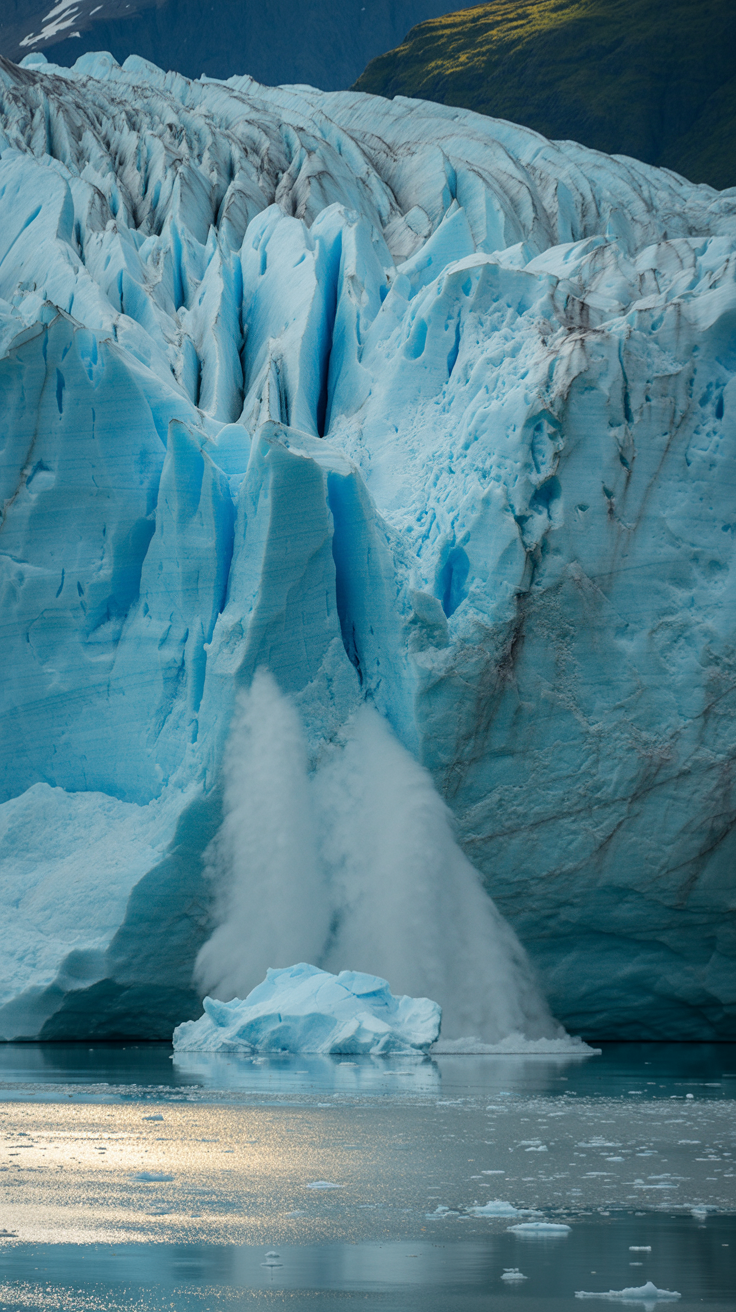
Alaska’s tidewater glaciers are dynamic ice formations that flow directly into the ocean, creating dramatic calving events where massive ice chunks break off into the water. Popular cruise destinations include Glacier Bay, Tracy Arm Fjord, and Hubbard Glacier, offering passengers spectacular views of blue ice walls towering hundreds of feet above sea level.
Quick Facts About Alaska Tidewater Glaciers
| Feature | Details |
|---|---|
| Average Height Above Water | 200-300 feet (equivalent to a 20-30 story building) |
| Ice Color | Electric blue due to compressed ice absorbing all colors except blue |
| Water Temperature | 34-38°F (just above freezing) |
| Best Viewing Months | May through September |
| Calving Frequency | Unpredictable – could be minutes or hours between events |
| Sound Travel | Glacier sounds can echo through fjords for miles |
Want to know more about Alaska wildlife and natural wonders you’ll encounter on your cruise?
Which Glaciers You’ll Actually See
Not all Inside Passage cruises visit the same glaciers, so check your itinerary carefully. Here’s what separates the big three:
- Glacier Bay National Park – Home to multiple tidewater glaciers including Margerie and Grand Pacific. Park rangers board your ship here to provide narration, which honestly beats any cruise director’s spiel. The bay is protected and calm, making it ideal for skittish sea legs.
- Hubbard Glacier – The largest tidewater glacier in North America at six miles wide. Ships get remarkably close here, sometimes within a quarter mile. It’s also one of the few advancing glaciers, meaning it’s actually growing rather than retreating.
- Tracy Arm Fjord – Features Sawyer Glacier at its terminus. The fjord itself is a stunner with 3,000-foot rock walls and floating icebergs you can practically touch. Ships navigate slowly through iceberg fields, which feels like threading a needle.
The Best Times and Deck Positions for Viewing
Here’s something most cruise literature won’t tell you: the side of the ship matters enormously. Most cruise lines try to rotate port and starboard approaches so everyone gets a turn, but savvy cruisers know to check with guest services about which side will face the glacier.
For optimal glacier viewing positions on your ship, consider these insider angles:
- Upper decks (10-14) – Panoramic views perfect for understanding the glacier’s full scale and getting that postcard shot
- Mid decks (6-8) – Close enough to hear the ice cracking and feel the vibrations when large sections calve
- Forward-facing decks – Best for approaching glaciers in fjords where you’re sailing straight toward them
- Balcony cabins – Worth the splurge only if you don’t mind missing the communal excitement and ranger narration
The ship typically stops or slows to a crawl for 30 minutes to two hours depending on the glacier. During this time, your glacier viewing experience becomes a waiting game punctuated by moments of pure adrenaline.
Understanding Glacier Calving
The main event everyone’s waiting for is glacier calving, when ice breaks off and crashes into the ocean. But here’s what they don’t tell you in the brochures: most calving events are small. Like, really small. You might see house-sized chunks rather than the skyscraper-sized collapses featured in promotional videos.
That said, when a major calving happens, it’s genuinely thrilling. The sequence goes like this:
- You hear a crack that sounds like distant thunder
- A vertical section of the glacier face separates
- It falls in slow motion (though it’s actually quite fast)
- An enormous splash erupts
- Waves ripple outward toward your ship
- Everyone on deck simultaneously gasps and their cameras click like a swarm of mechanical crickets
The blue color of the ice is absolutely real and unfiltered. The compression of ice over centuries squeezes out air bubbles, causing the ice to absorb red and yellow wavelengths while reflecting blue.
Photography Tips That Actually Work
If you’re serious about capturing stunning glacier photographs, forget what you’ve read about needing professional equipment. Modern smartphones do remarkably well in these conditions, but you’ll need to know a few tricks.
- Keep your camera out and ready – Calving happens without warning. That perfect shot won’t wait while you dig your camera from your bag.
- Shoot video instead of photos – You can pull high-quality stills from 4K video later, and you won’t miss the action while trying to snap pictures
- Avoid zoom during calving – You’ll capture the drama better with a wider shot that shows scale
- Bring a lens cloth – Sea spray and glacier mist will fog your lens constantly
- Brace against ship movement – Even calm waters have subtle motion that blurs photos at slower shutter speeds
The best photo opportunities around Alaska wildlife and glaciers often happen during the approach when icebergs float in the foreground and the glacier looms behind them. This layered composition adds depth that a straight-on glacier face shot lacks.
What They Don’t Tell You About Glacier Days
Cruise lines market glacier days as the highlight of your trip, and they’re not wrong. But there are some practical realities worth knowing:
- It’s genuinely cold – Even if it’s 70°F at your departure port, expect temperatures in the 40s near glaciers with wind chill in the 30s
- Indoor viewing gets crowded – If weather drives you inside, the observation lounges pack quickly with everyone thinking the same thing
- Deck space is competitive – Popular railings fill up an hour or more before arrival. Plant your flag early.
- Restaurants empty out – This is actually perfect timing to grab a quiet meal while everyone else freezes outside
- The ship goes silent – Many cruise lines cut engine noise and announcements during glacier viewing, creating an eerie quiet broken only by ice cracks
Different Types of Glacier Experiences
Beyond shipboard viewing, some itineraries offer closer hands-on glacier experiences through excursions:
- Helicopter and dog sled tours – Land on a glacier and meet sled dogs training on ice. Expensive but unforgettable.
- Kayaking near glaciers – Paddle among icebergs in stable two-person kayaks. Requires moderate fitness and tolerance for cold water.
- Ice trekking – Walk on glacier surfaces with crampons and guides. Available at Mendenhall Glacier near Juneau.
- Flightseeing – Small plane tours over glacier fields showing scale impossible to grasp from sea level.
These excursions book quickly and cost extra, but they provide perspectives and access you simply cannot get from the ship.
Bonus Tips Most Passengers Miss
- Bring binoculars – Spot seals resting on icebergs and observe glacier details invisible to the naked eye
- Layer with wind-blocking outer shell – Fleece alone won’t cut it when wind whips across open decks
- Hand warmers are clutch – Tuck them in gloves so you can operate your camera without numb fingers
- Download the Seek app – Identify wildlife and plants using your phone’s camera when rangers mention species
- Ask about glacier cam feeds – Some ships broadcast bow camera views to cabin TVs so you can watch in warmth
- Motion sickness is rare but possible – Fjords are typically calm, but if you’re prone to seasickness, take medication before entering narrow passages
- Bring a portable phone charger – Hours of photos and videos will drain your battery faster than you expect
- Check the ship’s daily program for ranger talk times – Park rangers in Glacier Bay give presentations you won’t want to miss
- Wear sunglasses – Ice and water create intense glare even on overcast days
- Set up a photo folder before you go – You’ll take hundreds of photos and want them organized by location
What About Wildlife?
Tidewater glacier areas attract surprising amounts of wildlife. The nutrient-rich waters near glacier faces draw fish, which in turn attract:
- Harbor seals hauled out on icebergs (they use the ice as safe resting platforms away from predators)
- Sea otters floating on their backs in kelp beds
- Humpback whales feeding in glacier bays
- Bald eagles perched on ice chunks or soaring above
- Mountain goats on nearby cliffs (bring those binoculars)
- Black and brown bears on shorelines (rare but possible)
Keep scanning the water and shorelines even when glacier calving is quiet. Some passengers get so fixated on the ice that they miss a whale breach happening 200 yards away.
Weather Realities
Alaska weather is famously unpredictable, and glacier days amplify this. Fog can roll in and obscure glaciers completely, turning your anticipated highlight into a white void. Rain is common and adds a moody atmosphere to photos, though it makes deck time less pleasant.
Some practical weather advice:
- Waterproof jacket beats umbrella every time on open decks
- Fog often lifts by late morning, so patience pays off
- Overcast days actually improve glacier photos by eliminating harsh shadows
- Pack gloves even in summer months
- Waterproof your phone or camera
Common Questions and FAQ
Can ships get stuck in ice near glaciers?
Extremely rare with modern cruise ships. Captains maintain safe distances and have ice radar. Smaller icebergs are pushed aside by the ship’s bow. If ice conditions become dangerous, the ship will abort the approach, which occasionally happens at Tracy Arm when ice pack is especially thick.
Why does my ship turn around at the glacier instead of getting closer?
Federal regulations and safety protocols require minimum distances. At Hubbard Glacier, ships can approach closer because it’s outside national park boundaries. In Glacier Bay, park service rules are stricter. The captain also considers underwater ice (much larger than what’s visible) and potential wave displacement from major calving events.
Do I need to tip the park rangers who board at Glacier Bay?
No. These are National Park Service employees, not cruise staff. They’re doing their job as part of the park’s educational mission. Tipping would actually be inappropriate.
What if I have a shore excursion on glacier day?
Check your timing carefully. Most glacier viewing happens on sea days with no port stops, but some itineraries conflict. You generally cannot skip a booked excursion to stay onboard for glacier viewing without forfeiting the excursion cost.
Are there glaciers visible from ports?
Mendenhall Glacier near Juneau is accessible by bus or taxi from the cruise terminal. It’s not a tidewater glacier (doesn’t reach the ocean) but offers close-up views and hiking trails. This is your only real option for glacier viewing from a port rather than the ship.
Should I book a cabin on a specific side of the ship?
It doesn’t matter as much as you’d think. Ships typically approach glaciers, then turn to give both sides viewing time. Northbound versus southbound itineraries can affect which side sees certain scenery, but for glaciers specifically, both sides get good views eventually.
Will my young kids enjoy glacier viewing?
Depends on the kid. The waiting can bore children who expect constant action. The actual calving events are exciting but brief. Many families compromise by having one parent stay with kids in the indoor observation lounge where they can move around, while the other stakes out a deck spot.
Personal Experience
I was absolutely unprepared for the raw power of watching a glacier calve for the first time. Our cruise director announced we’d be approaching Hubbard Glacier around 2 PM, and I made sure to grab a spot on the starboard deck about thirty minutes early with my coffee and warmest jacket. The best tip I got was from a crew member who told me the upper decks give you that sweeping view, but deck seven puts you closer to the action where you can actually hear the ice cracking and feel the rumble. Sure enough, when that massive chunk of blue ice broke off and crashed into the water with a sound like thunder, everyone on deck gasped at once. The splash must have been five stories high.
What surprised me most was how patient you need to be. Glaciers don’t perform on command, so people were camped out with their cameras for hours at some of the popular spots like Glacier Bay and Tracy Arm Fjord. My advice? Head out about an hour before the scheduled arrival time to snag a good spot, especially if you’re visiting Sawyer Glacier where the fjord walls create natural amphitheater seating. Bring layers because even in July, standing still on deck near all that ice gets cold fast. And keep your camera ready the whole time – those calving moments happen in seconds, and you definitely don’t want to miss capturing that electric blue ice against the gray water.