
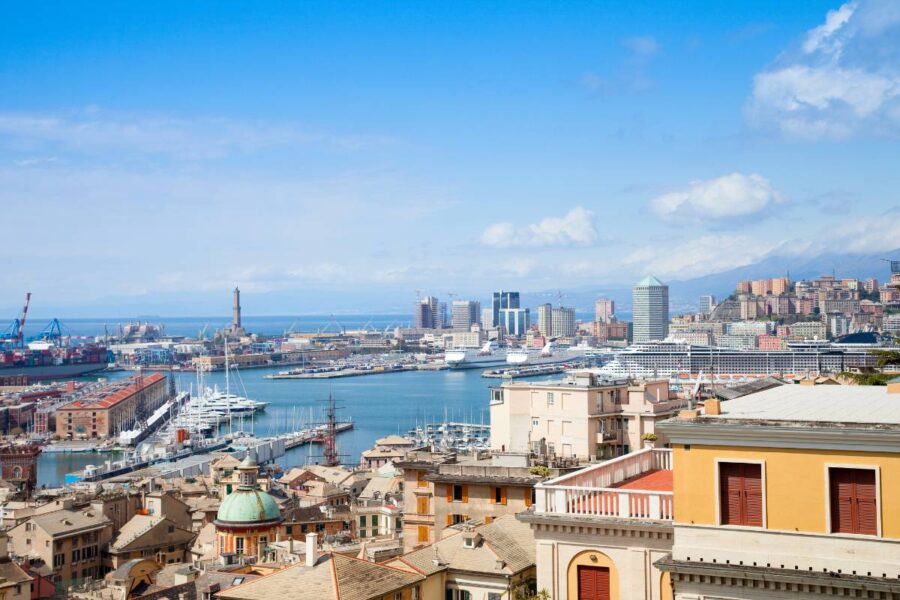
Genoa’s cruise port, located near the historic city center, is one of the Mediterranean’s busiest terminals. The port offers modern facilities with multiple terminals handling various cruise lines. Visitors can easily access Genoa’s old town, aquarium, and attractions on foot or by public transport. The port provides passenger services, shops, and excellent connections to Italian destinations.
Genoa doesn’t make it easy. Unlike Barcelona or Rome’s sanitised cruise ports with their obvious shuttles and tourist infrastructure, Genoa drops you into a working industrial harbour and expects you to figure it out.
The terminals are scattered across two kilometres of waterfront, signage ranges from adequate to non-existent, and the official port maps bear only passing resemblance to reality.
Genoa works both as a day-stop port of call and as a turnaround port for lines such as MSC.
This is both Genoa’s greatest challenge and its biggest advantage. The city centre starts exactly where the port ends—no buffer zone, no tourist trap gauntlet, just immediate immersion into a proper Italian city that happens to host cruise ships rather than existing for them.
Genoa Cruise Terminals: Walking Times to City Centre
| Terminal | Walking Time | Route | Recommendation |
|---|---|---|---|
| Ponte dei Mille | 12 minutes | Exit right along Via Milano to Piazza Caricamento | Walk – beats taxis and shuttles |
| Terminal Crociere | 15-18 minutes | Less direct route | Take the free shuttle unless confident with navigation |
| Ponte Andrea Doria | 25 minutes | Through port traffic and construction zones | Use the shuttle – walking wastes energy |
➜ Read our complete guide to Genoa Cruise Port Terminals
Genoa Cruise Port Map
The map shows terminal locations and the walking route to the old town. Ponte dei Mille sits closest to Piazza Caricamento, while Ponte Andrea Doria requires the shuttle.
What to See in Genoa: Caruggi Alleyways and Street Food
Genoa’s appeal comes down to three distinct experiences:
- The caruggi – Medieval alleyways designed to confuse invaders now bamboozle cruise passengers with Google Maps. You will get lost. Accept it. The shadow and sunlight makes better photographs than any monument.
- Ligurian food culture – Genoa street food centres on focaccia and farinata. Genuinely excellent carbohydrates that locals queue for daily. Quality here isn’t tourist theatre.
- Maritime heritage – Saturates everything without museum-ification. The Galata Maritime Museum contextualises what you see in the streets, but walking those streets contextualises the museum right back.
➜ Our complete guide to attractions and realistic time breakdowns
Day Trips from Genoa: Cinque Terre and Portofino Timing
Most cruise itineraries allocate 8-10 hours in Genoa. That’s deceptive—between disembarkation queues and security re-entry, you have less time than you think.
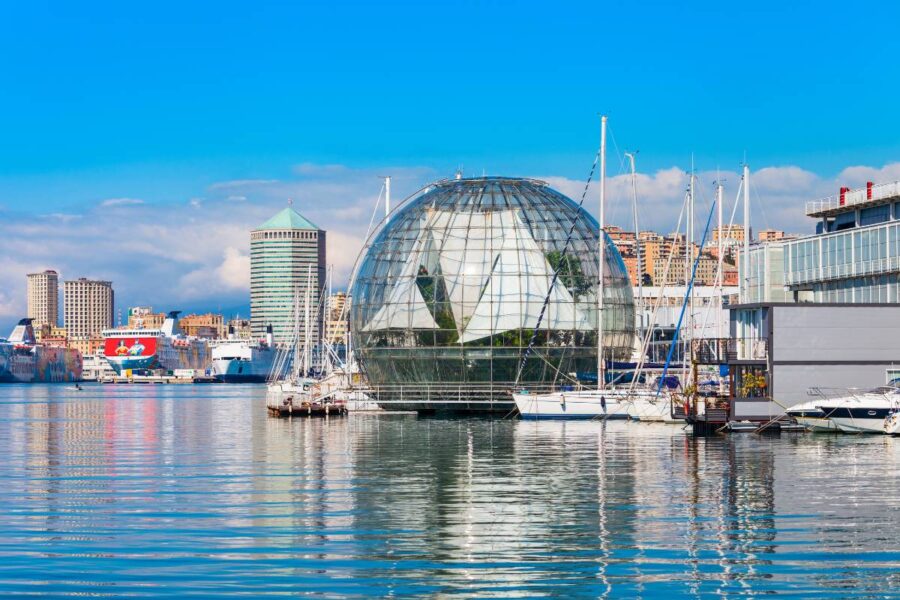
- The aquarium – Europe’s largest aquarium takes 2-3 hours and dominates most port days. Genuinely excellent if you care about marine life. But choosing the aquarium means choosing a structured, less exploratory port day.
- Cinque Terre – 90 minutes each way by train, realistically capping you at two villages maximum. Doable if it’s your priority and you’re comfortable with rushed travel. Otherwise book the ship’s excursion or skip it.
- Portofino – Train to Santa Margherita Ligure, then bus or boat. Multiple connection points where delays accumulate. Photographs beautifully but borders on masochistic as a port day trip.
➜ Our hour-by-hour port day itinerary with timing tips
Rainy Day in Genoa: Indoor Activities Near Port
Rainy days in Genoa arrive heavy and committed—umbrellas become decorative. September and October see the highest rainfall.
Indoor options near the port:
- Palazzo Reale and Via Garibaldi museums – Hours of Baroque excess and gilded interiors
- Mercato Orientale – Covered hall for browsing local produce while staying dry
- Via XX Settembre arcades – Proper shopping, not cruise souvenirs
- The aquarium – Everyone’s default refuge, expect queues even in storms
➜ Our complete bad weather backup plan with indoor activities
Navigating Genoa Old Town Without GPS
GPS fails regularly in the caruggi. Buildings block signals, medieval streets confuse mapping software, and you’ll think you’re on Via di Porta Soprana when you’re three streets over on Via di Ravecca.
Navigation essentials:
- Download offline maps before leaving the ship
- Mark your terminal location
- Screenshot key routes
- Accept you’ll get lost—the old town is small enough that walking in any direction hits a landmark eventually
- The vintage lift to Castelletto (€0.90) provides orientation when thoroughly confused
➜ Genoa Cruise Port: Insider Tips
Where to Eat in Genoa Port: Focaccia and Farinata Prices
Forget the restaurants within sight of the cruise terminals. They know you have eight hours and will never return.
Walk ten minutes into the old town and the entire price structure shifts:
- Focaccia – €3-4 for enough to count as lunch
- Farinata (chickpea-flour pancake) – €5-6 for a substantial portion
- Pesto – Grassier and more delicate than supermarket versions
Genoa street food concentrates near Piazza Banchi, along Via San Lorenzo, and in the streets radiating from Piazza delle Erbe. If you see locals queuing for focaccia, join them. The 15-minute wait beats any sit-down restaurant for authenticity and budget.
➜ Our guide to where to find authentic street food within 10 minutes of the port
Genoa Shore Excursions: Ship Tours vs Independent Travel
Ship excursions from Genoa break into three categories:
- City tours – Hit the obvious markers (cathedral, Piazza de Ferrari, maybe a palace) then deposit you at shopping time. You’ll learn what ten minutes of research would reveal. Only worth it if you’re genuinely uncomfortable navigating independently.
- Florence from Genoa – 90 minutes each way, rushed cathedral and Uffizi visits, regulated lunch stop. You’ll see 15% of what Florence offers. If Florence is your priority, book a cruise docking at Livorno cruise port instead.
- Cinque Terre excursions – Work better than independent attempts for most passengers. The ship handles timing stress and logistics. You’ll pay more but skip the “will we make it back” anxiety.
➜ Our guide to booking excursions: when to go independent vs ship tours
Genoa Port Expectations: Industrial Not Picture-Perfect
Genoa won’t deliver picture-perfect Mediterranean charm:
- Gritty and industrial – The port area is industrial, sections of the old town still feel rough. If your cruise vision centres on pristine hilltop villages and azure waters, this is the wrong stop.
- No tourist circuit – The city refuses to simplify itself for visitors. No obvious “do these five things” formula. This rewards curiosity and punishes passive tourism.
- Summer heat – August days hit 30°C-plus with humidity in narrow medieval streets. Spring and autumn deliver comfortable temperatures and fewer crowds, though September brings rainfall risk.
➜ Our Mediterranean cruise tips for first-timers
Genoa as Turnaround Port: Train and Airport Connections
Adding days before or after transforms Genoa from a challenging 8-hour stop to proper exploration. The Florence to Genoa train takes under two hours, Milan sits 90 minutes away. Airport 20 minutes from terminals. Hotels cost considerably less than Venice or Rome.
If you’re starting or ending your cruise in Genoa:
- Airport transfers – Cristoforo Colombo Airport sits 20 minutes from cruise terminals by taxi (€25-30). Volabus shuttle runs every 30 minutes to Piazza Principe station (€6).
- Train stations – Piazza Principe is closest to the port (10-minute walk or short taxi). Brignole station serves eastern connections but requires taxi to terminals.
- Pre/post-cruise hotels – Stay near Piazza Principe for easiest port access. The old town offers more character but cobblestones challenge wheeled luggage.
- Luggage storage – Terminals provide storage on turnaround days. Piazza Principe station has left luggage if you’re exploring before embarkation.
➜ Our guide to train times, costs and booking the Florence connection
Planning Your Genoa Port Day: What You Can’t Do in 8 Hours
Accept these limitations:
- You cannot see everything in eight hours
- You cannot do Cinque Terre and the city properly
- You cannot rush the food culture or navigate efficiently
Passengers who succeed:
- Arrive with realistic expectations and comfortable shoes
- Download offline maps and prepare for getting lost
- Skip the aquarium or commit to it fully—no half measures
- Eat focaccia standing up rather than wasting 90 minutes in restaurants
- Accept Genoa won’t feel like the Mediterranean fantasy
Compare Genoa with La Spezia cruise port, Livorno cruise port, and Civitavecchia cruise port.
Read Mediterranean cruise tips for first-timers for broader context, and use the cruise budget calculator for shore excursion planning.
➜ Genoa Cruise Port: Insider Tips
Common Questions
Which Genoa cruise terminal is closest to the city centre?
Ponte dei Mille places you 12 minutes on foot from Piazza Caricamento and the old town entrance. Despite the port offering free shuttles, walking this particular route beats waiting for the bus, dealing with shuttle schedules, and navigating the drop-off points. The route follows wide pavements along Via Milano with clear sightlines to the city—none of the industrial maze-walking that makes other terminal approaches miserable. Ponte Andrea Doria sits furthest out and genuinely requires the shuttle unless you enjoy 25-minute walks through active port zones.
Is eight hours in Genoa enough time to visit Cinque Terre independently?
Technically yes, realistically no. Trains from Genoa to La Spezia run every 30-60 minutes and take 80-90 minutes. The Cinque Terre card covers local trains between villages. The mathematics work for visiting two villages with rushed timing, but you’re spending four hours on trains and platforms for perhaps three hours in the villages themselves. This turns Cinque Terre into a transportation challenge rather than an experience. If it’s your only chance to see Cinque Terre and you’re comfortable with travel stress, go. If this is about enjoying the villages, dock at La Spezia cruise port instead or book your cruise line’s excursion which handles the logistics professionally.
Can I walk to Genoa’s old town from the cruise port or do I need a shuttle?
Depends entirely on your terminal assignment. Ponte dei Mille makes walking obvious—exit the terminal, turn right, walk 12 minutes along Via Milano to Piazza Caricamento. The route is direct, safe, and straightforward. Terminal Crociere sits 15-18 minutes away through a less intuitive route, making the free shuttle the smarter choice unless you’re confident with navigation. Ponte Andrea Doria requires the shuttle—the 25-minute walk through port traffic and construction zones delivers zero pleasure and wastes energy better spent exploring. Check your specific berth location in the port guide sent with your cruise documents, then decide based on that reality rather than generic “Genoa port” advice.
What happens if it rains during my Genoa port day?
Genoa’s covered arcades, museums, and indoor markets handle rain better than most Mediterranean ports. The Palazzo Reale and Via Garibaldi palace museums provide hours of indoor exploration with excessive Baroque interiors and enough gilded surfaces to satisfy anyone’s quota of royal apartment voyeurism. The Mercato Orientale’s covered central hall lets you experience local food culture while staying dry. Via XX Settembre’s 19th-century galleries offer proper shopping arcades with independent shops rather than cruise souvenirs. The aquarium becomes the default refuge and consequently sees queues even in heavy rain. The city’s medieval layout means many caruggi provide natural shelter—those narrow streets that make navigation difficult also block rain effectively.
Should I exchange currency at the cruise terminal or in the city?
Neither. Use ATMs in the city for the best exchange rates, or simply use contactless payment which most Genoa establishments accept. The terminal currency exchange services charge rates designed for passengers who didn’t plan ahead—you’ll pay 10-15% above normal rates for convenience. Small bakeries and street food vendors prefer cash, but anything over €10-15 takes cards reliably. One ATM withdrawal of €50-100 covers focaccia, farinata, museum entries, and the vintage lift to Castelletto. The exception: if you need cash immediately upon disembarking and can’t reach a city ATM before needing it, accept the terminal’s rates rather than navigating Genoa without funds.
How does Genoa compare to other Mediterranean cruise ports for independent exploration?
Genoa requires more navigational confidence than Barcelona or Rome but rewards it with authenticity those cities struggle to deliver in their tourist zones. The proximity to the old town beats most Mediterranean ports—you’re walking into proper city streets within 15 minutes rather than traversing sanitised waterfront developments. Unlike Venice where cruise passenger density overwhelms the experience, Genoa absorbs cruise traffic into a functioning city where tourists represent background noise rather than the main event. The trade-off: less obvious infrastructure, fewer English speakers, more getting lost. First-time Mediterranean cruisers often find it challenging. Experienced cruise passengers with solid navigation skills rate it among the Mediterranean’s best port stops precisely because it hasn’t optimised itself for cruise tourism.
Last Updated: 9 August 2026