
“`html
Walking from Livorno’s cruise port into the city center is entirely doable, and it gives you a proper taste of this working port town without the hassle of shuttles or taxis. The walk takes roughly 20-25 minutes at a comfortable pace, though you’ll pass through some less-than-picturesque industrial zones before reaching the actual interesting bits. It’s flat, well-signposted once you’re out of the port gates, and honestly quite liberating compared to queuing for transport or paying for something you don’t really need.
The big question most cruise passengers ask is whether Livorno itself is worth your time, or if you should just head straight to Florence or Pisa. The answer depends entirely on what sort of day you’re after. If you want Renaissance art and iconic landmarks, then yes, hop on a train to Florence. But if you fancy a slower-paced, authentically Italian experience with excellent seafood, local markets, and far fewer tourists, Livorno’s got plenty to offer. Plus, there’s zero risk of missing your ship because of train delays or traffic.
The Walking Route from Port to Center
Once you disembark and clear the port security, you’ll exit through the main gates onto Viale Caprera. From there, the route is fairly simple:
- Head northeast along Viale Caprera towards the main road junction – you’ll see signs pointing towards “Centro” or “Stazione” (train station)
- Cross over onto Scali D’Azeglio, which runs along the waterfront canal system. This is where things start looking more Italian and less industrial
- Follow the canal-side paths through Venezia Nuova (New Venice), Livorno’s most attractive quarter with its network of canals, bridges, and colorful buildings
- Continue to Piazza della Repubblica or head slightly inland to the covered market (Mercato Centrale) on Via Buontalenti – both are considered the heart of the city center
The entire walk is about 2 kilometers and takes 20-25 minutes without stops. Add another 10-15 minutes if you’re traveling with mobility issues or stopping for photos. The route is pushchair and wheelchair accessible, though some pavements are a bit uneven in the older areas.
For more details on getting around the port area itself, check out our guide on what to do in the Livorno port area.
What You’ll Find in Livorno’s City Center
Livorno isn’t going to wow you with grand palaces or world-famous museums, but it has a genuine, unpretentious charm that’s quite refreshing after some of the more touristy Italian ports. Here’s what’s actually worth your time:
- Mercato Centrale – The covered market hall is brilliant for food lovers. Ground floor has fresh fish, meat, fruit, and veg (the displays are quite something), whilst the upstairs has cheap and cheerful trattorias serving proper local food. Grab some cecina (chickpea flatbread) or a focaccia sandwich
- Venezia Nuova – The canal district with its bridges and waterside restaurants. It’s photogenic in a shabby-chic sort of way, and the seafood restaurants here are outstanding. Cacciucco (Livorno’s spicy fish stew) is the local specialty
- Terrazza Mascagni – A huge checkerboard-paved seafront promenade about 15 minutes’ walk south of the center. Lovely for a stroll with sea views, though it’s a bit out of the way if you’re time-limited
- Fortezza Vecchia – The old fortress by the port entrance. You can walk around the outside for free, and sometimes there are exhibitions inside
- Cathedral of Livorno – Reconstructed after World War II bombing, so not ancient, but the interior is surprisingly grand
- Via Grande – The main shopping street, decent for browsing and people-watching
The city’s not massive, so you can easily see the highlights in 2-3 hours, leaving plenty of time for a long lunch. That’s really what Livorno does best – relaxed eating and drinking in places where locals actually go.
Livorno vs Florence: Making the Choice
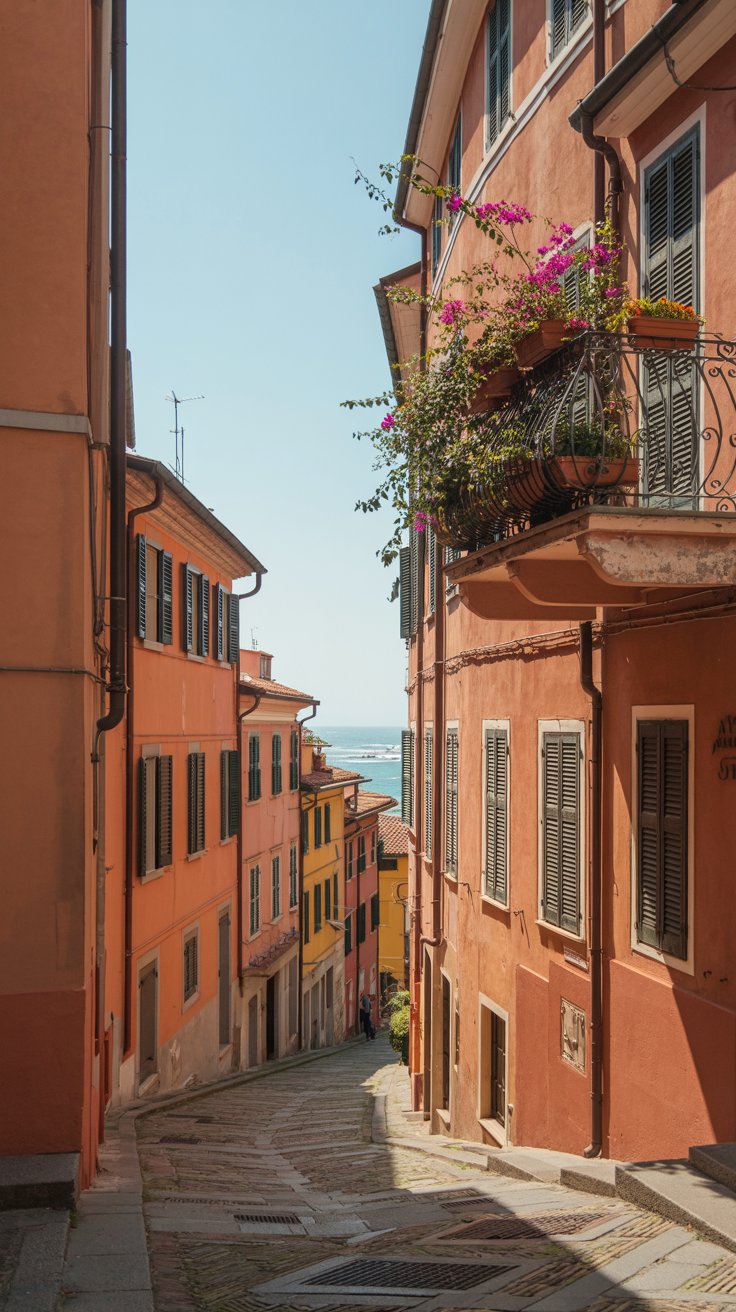
This is the eternal Livorno port debate. Florence is about 90-100 kilometers away, roughly 1 hour 10 minutes to 1 hour 30 minutes by train from Livorno’s train station (which is a 20-minute walk from the port or a short taxi ride). Let’s be honest about the pros and cons:
Why You Might Choose Florence
- First-time Italy visitors – If you’ve never been to Florence and desperately want to see the Duomo, Uffizi, and Ponte Vecchio, then go. These are bucket-list sights for good reason
- Art and architecture lovers – Florence is one of the world’s great Renaissance cities. Livorno simply can’t compete on that front
- Organized shore excursions – If you book through your cruise line, transport and timing are handled, reducing the stress (though you’ll pay a premium)
Why You Might Skip Florence
- Time pressure – With train time, walking to/from stations, and queues at major sights, you’re looking at 6-7 hours minimum. That’s tight for a port day, especially if your ship has an earlyish departure
- Crowds – Florence is absolutely rammed with tourists. Queue times for the Uffizi or Accademia can eat up hours of your day unless you’ve pre-booked
- Missing the ship risk – Train delays, traffic jams on coaches, or simply misjudging timing could mean you miss your ship. Cruise lines won’t wait, and catching up with your ship at the next port is phenomenally expensive and stressful
- Cost – Train tickets, entrance fees, meals in tourist-heavy Florence – it all adds up quickly compared to a day in Livorno
- Authentic experience – You’ll see more of real Italian life in a morning wandering Livorno’s markets and canals than you will fighting through tour groups in Florence
If you’re genuinely torn, consider Pisa instead – it’s only 20 minutes by train, you can see the Leaning Tower and baptistery in a couple of hours, and still have time to pop back to Livorno for lunch. Much more manageable for a port day.
Practical Tips for Walking in Livorno
- Timing – Give yourself at least 3 hours ashore if you’re just doing Livorno center (more if you want a proper lunch). The walk itself is quick, but you’ll want time to actually see things
- Water and sun protection – There’s not much shade on the initial port-to-center walk, and in summer it can be roasting. Bring a reusable water bottle and sun protection
- Market timing – Mercato Centrale is liveliest in the morning (roughly 7:30 AM to 1:00 PM for the market stalls). The upstairs food hall stays open longer, but the ground floor market is the real attraction
- Cash – Some smaller market vendors and trattorias are cash-only. There are ATMs in the center, but bring some euros with you
- Restaurant lunch timing – Proper Italian lunch service is roughly 12:30-2:30 PM. Many places close between lunch and dinner, so don’t expect to find a full menu at 4:00 PM
- Ship departure buffer – Always be back at the ship at least 30-45 minutes before all-aboard time. The walk back takes the same 20-25 minutes, but you might get lost or delayed
- Keep your cruise ship ID – You’ll need it to get back through port security. Consider keeping it in a secure crossbody bag to avoid losing it
What to Pack for Your Livorno Walk
Since you’ll be walking for at least 20-25 minutes each way plus exploring the city, comfort is key. A pair of comfortable walking shoes for women or supportive walking shoes for men will make all the difference – cobblestones and uneven pavements are common in the older parts of town. If you’re prone to blisters, pack some blister prevention strips just in case.
Weather in Livorno can be unpredictable, especially in spring and autumn. A lightweight rain jacket for women or packable rain jacket for men takes up minimal space in your daypack but could save the day if there’s a sudden shower. These coastal Italian ports can get quite breezy too, so layering is smart.
Don’t forget to bring a portable phone charger – you’ll be using your phone for photos, maps, and possibly translation apps. Having your phone die mid-exploration is frustrating, especially when you’re trying to navigate back to the port. A waterproof phone case is also handy if you’re walking along the canals or if weather looks iffy.
Food and Drink Recommendations
Livorno’s food scene is genuinely excellent, particularly for seafood. The local cuisine has a distinct character – less cream and butter than you’d find further north, more tomato and spice, with North African influences from the city’s historically diverse population.
What to Eat
- Cacciucco – Livorno’s signature dish. It’s a rich, spicy fish stew made with at least five types of seafood, tomatoes, and served over toasted bread. Every restaurant has their own version, and locals take it very seriously
- Cecina (or Torta di Ceci) – Thin, crispy chickpea flatbread cooked in huge copper pans. Sold at the market and various takeaway spots. Cheap, filling, and properly traditional
- Triglie alla Livornese – Red mullet cooked in tomato sauce with garlic and parsley
- Ponce – Not food, but Livorno’s traditional coffee-and-rum drink. Strong stuff – usually an after-lunch or evening tipple
- Fresh seafood – The market and waterfront restaurants serve incredibly fresh fish, prawns, clams, and octopus. Point at what looks good
Where to Eat
The restaurants around Venezia Nuova and near the market are your best bets. Look for places with handwritten menus (usually means daily specials based on the morning’s catch) and locals eating there. Avoid anywhere with picture menus or multilingual touts outside – those are tourist traps.
The upstairs food hall at Mercato Centrale has several casual eateries serving proper local dishes at very reasonable prices. It’s not fancy, but the food is authentic and you’ll eat alongside Livorno residents on their lunch breaks.
Is Livorno Worth Staying in Longer?
Most cruise passengers treat Livorno purely as a jumping-off point for Florence or Pisa, but there’s a decent case for spending a night or two if you’re doing a pre- or post-cruise extension. Hotels in Livorno are significantly cheaper than Florence, and you’re still perfectly positioned to take day trips to Tuscan highlights without the accommodation costs and tourist crowds of staying in the main cities.
The surrounding area has some lovely options – the Etruscan Coast south of Livorno has beautiful beaches and medieval hilltop towns like Bolgheri (famous for wine) and Castagneto Carducci. North of the city, you can reach Viareggio and the Cinque Terre. Having accommodation in Livorno as a base gives you flexibility to see Tuscany at a more relaxed pace, eat better food for less money, and actually experience a bit of Italian life rather than just ticking off tourist sights.
The city has a good range of hotels from budget to mid-range, mostly concentrated near the port and along the seafront. Nothing ultra-luxury, but perfectly comfortable and convenient for exploring the region by train or car. If you’re staying overnight, packing cubes help keep your belongings organized, and a hanging toiletry bag is brilliant for smaller hotel bathrooms.
Personal Experience
When our cruise ship docked in Livorno, I decided to skip the crowded shuttle buses and walk into the city center instead. The route from the port is pretty straightforward – you basically head out through the port gates and follow the waterfront for about twenty minutes. It’s not the most scenic walk, honestly, with some industrial bits and main roads to cross, but once you get past the initial port area, you start seeing the old canals and actual Italian neighborhoods. The city center itself has some lovely areas, especially around the Venezia Nuova district with its canals and seafood restaurants. There’s also a big covered market, Mercato Centrale, which is brilliant for grabbing fresh focaccia and people-watching.
Now, about Florence – look, Florence is absolutely stunning, but you need to weigh up whether a two-hour round trip on a train or tour bus is worth it when you’ve only got a day. If it’s your first time in Italy and you’re desperate to see the Duomo and David, then go for it. But if you want a more relaxed day actually experiencing an authentic Tuscan port town without the tourist crush, Livorno’s pretty charming. You can wander the town, have an amazing seafood lunch for half what you’d pay in Florence, and still make it back to the ship without that panicked rush. Plus, if something goes wrong with transport to Florence, missing your ship is a real risk that’ll definitely ruin your holiday.
Want to know more about the facilities and options at the port itself? Our comprehensive Livorno cruise ship port guide covers everything you need to know.
Common Questions & FAQ
Can I walk from Livorno port to the Leaning Tower of Pisa?
No, Pisa is about 20 kilometers away, far too far to walk. You’ll need to take a train from Livorno Centrale station (about 20 minutes from the port) to Pisa Centrale, then it’s a 20-minute walk or short bus ride to the Leaning Tower. The train takes about 15-20 minutes and costs roughly €2-3. It’s very doable as a port day trip, much more manageable than Florence.
Is the walk from Livorno port safe?
Yes, it’s perfectly safe during daylight hours. Livorno is a working port city, not a tourist resort, so it looks a bit rough around the edges in places, but there’s no real safety concern. The route to the city center is well-used by locals and cruise passengers. Just use normal city common sense – keep valuables secure in an anti-theft bag, stay aware of your surroundings, and avoid dodgy-looking side streets.
Are there luggage storage facilities in Livorno if I want to walk around?
Yes, there’s luggage storage at Livorno Centrale train station, which is useful if you’re doing a pre- or post-cruise stay. Some shops near the port also offer luggage storage for a fee. If you’re just coming off the ship for the day, you won’t have luggage with you anyway – leave everything on the ship except essentials.
What’s the best time to walk into Livorno to avoid heat?
In summer, start your walk as early as your ship allows disembarkation, ideally before 9:00 AM. The initial stretch has limited shade, and by midday in July or August it can be uncomfortably hot. Early morning also means you’ll catch the market at its liveliest and have more time to see things before heading back to the ship.
Can I use euros from an ATM at Livorno port?
There are ATMs in the port terminal complex, though they sometimes run out of cash when multiple large ships are in port. You’re better off withdrawing money in the city center where there are more machines, or bringing some euros with you from home. Exchange rates at port ATMs are standard Eurozone rates, so no worse than anywhere else in Italy.
Do restaurants in Livorno accept credit cards?
Most proper restaurants do, but smaller trattorias, market stalls, and some cafés are cash-only. It’s very common in Italy for smaller establishments to prefer cash, particularly at lunch. Bring at least €30-40 in cash per person to cover meals, drinks, and any small purchases at the market.
How long should I allow to walk back to the ship?
Give yourself a full 45 minutes before all-aboard time. The walk itself is 20-25 minutes, but you might take a wrong turn, stop to buy something, or face queues at port security. Ships absolutely will not wait, and the consequences of missing your ship are severe – you’ll need to arrange your own transport to the next port at your own expense, which can run into thousands of pounds.
Is Livorno worth visiting if I’ve been to other Italian ports?
If you’ve already done the big-hitter Italian ports like Venice, Rome, and the Amalfi Coast, Livorno offers something different – it’s grittier, less polished, and far less touristy. The food is excellent, the market is fascinating, and it feels like a real working Italian city rather than an open-air museum. If you’re after authentic local life rather than postcard-perfect sights, it’s definitely worth a few hours.
“`