
Norwegian Cruise Line is the mainstream line behind Freestyle Cruising: no fixed dining times, no compulsory formal nights and a resort-casual atmosphere. It is not all-inclusive by default. The optional Free at Sea package can add open bar, speciality dining, Wi-Fi and shore excursion credit, but daily service charges, package gratuities and upcharges still apply. Newer Prima Plus and Breakaway Plus ships have the biggest features.
What is Norwegian Cruise Line? A Short History of Freestyle Cruising
Norwegian Cruise Line started as Norwegian Caribbean Lines when Knut Kloster moved the 550-passenger Sunward to Miami. The first cruise to Nassau sailed in December 1966. It later created the industry’s first cruise line private island, Great Stirrup Cay, and launched the first Caribbean megaship by rebuilding the former SS France as SS Norway. The line renamed itself Norwegian Cruise Line in 1987 as its route map grew beyond the Caribbean.
Freestyle Cruising is the brand’s defining idea. It launched on Norwegian Sky and removed fixed dining times, formal attire requirements, set table companions and rigid disembarkation. In their place came open-seating restaurants, more bars and restaurants than older ships, and a relaxed onboard culture. That philosophy still runs through everything NCL does today, including its newer ships, stateroom mix and dining choices.
NCL is one brand of Norwegian Cruise Line Holdings, alongside Oceania Cruises and Regent Seven Seas. Across the three brands the group runs about 28 ships and roughly 59,150 berths. NCL’s colourful hull art is another signature: Norwegian Luna’s exterior was designed by artist ELLE, for example.
Norwegian Cruise Line Ships: Classes, Newest and Biggest
NCL’s current fleet splits into clear generations. Knowing the class helps you predict what the ship feels like.
- Prima Plus class: Norwegian Aqua, Norwegian Luna, and the upcoming Norwegian Aura. These are the newest ships, with ocean-facing design, the Aqua Slidecoaster, Infinity Beach, Ocean Boulevard, Indulge Food Hall and the largest Haven complexes.
- Prima class: Norwegian Prima and Norwegian Viva. Smaller than Prima Plus but still modern, with three-level go-kart tracks, Vibe Beach Club and Ocean Boulevard.
- Breakaway Plus class: Norwegian Escape, Norwegian Joy, Norwegian Bliss and Norwegian Encore. These are some of the fleet’s biggest ships, with two-level go-kart tracks on Joy, Bliss and Encore, plus large forward Observation Lounges.
- Breakaway class: Norwegian Breakaway and Norwegian Getaway. Original big-ship Breakaway generation with the Waterfront promenade and aqua parks.
- Epic class: Norwegian Epic. The odd one out, with curved cabin design and a significant number of Studio cabins for solo guests.
- Jewel class: Norwegian Jewel, Jade, Pearl and Gem. Mid-sized ships, fewer big-ticket attractions, often used for longer or destination-heavy sailings.
- Dawn class: Norwegian Dawn and Norwegian Star. Older, simpler ships with smaller cabins and fewer venues.
- Sun/Leo class: Norwegian Sky and Norwegian Sun. The oldest and smallest ships in the fleet, used for unusual itineraries. Norwegian Sky and Norwegian Sun are reported by third-party trackers to be leaving the fleet, so check current sailing dates before booking either.
- Pride of America: the only large US-flagged cruise ship, allowing seven-night four-island Hawaii round trips without a foreign port call.
Norwegian Luna is the newest ship in service. It is a Prima Plus class ship of about 156,300 gross tons, 1,056 ft long, carrying 3,571 guests and 1,597 crew. Luna is a sister to Norwegian Aqua and adds three shows: ELTON: A Celebration of Elton John, HIKO and LunaTique: Pop Circus. It also has the Luna Midway and the Moon Climber.
Norwegian Aura is next. It is about 170,000 gross tons, roughly 344 metres long, with about 1,976 cabins and roughly 3,880 guests, about 10% larger than Aqua and Luna. NCL says Aura will have the most waterslides of any NCL ship, a ropes course, a climbing wall and 22 places to eat and drink, including a new Indian speciality restaurant called Tamara and a two-deck Mandara Spa.
The largest NCL ship currently in service is Norwegian Encore, at about 169,116 gross tons and 3,958 guests. The Breakaway Plus class generally runs from about 164,998 to 169,116 gross tons. Prima and Prima Plus run roughly 142,500 to 156,300 gross tons. Jewel class is around 93,500 gross tons, and the Dawn class around 92,000 gross tons. The older Dawn and Sun class ships are clearly smaller, with fewer venues and simpler pool decks.
Which NCL Ship is Best? A Guide by Traveller Type
The best NCL ship depends on who is travelling.
- Best for families and first-timers: Norwegian Aqua, Norwegian Luna, Norwegian Encore, Norwegian Joy or Norwegian Bliss. They have the strongest mix of waterslides, family attractions, go-karts or Slidecoaster, and plenty of dining choice.
- Best for scenery lovers: Breakaway Plus ships, especially for Alaska. The forward Observation Lounge with near-180-degree glass is used for glacier and ranger talks, and seats fill well before a big scenic approach.
- Best for adults: ships with a Vibe Beach Club and a strong Haven complex, such as Norwegian Encore, Norwegian Escape, Norwegian Prima or Norwegian Aqua. NCL is not adults-only, but these ships have the best adult spaces.
- Best for solo travellers: any ship with Studio cabins and a Studio Lounge, especially Norwegian Epic, Breakaway, Getaway, Escape, Joy, Bliss, Encore, Prima, Viva, Aqua and Luna. Norwegian Epic has the longest track record and a huge block of Studios.
If you want the biggest, flashiest NCL ships, avoid the oldest and smallest unless the itinerary matters more than the ship. Norwegian Spirit is the oldest, built in 1998 and acquired by NCL in 2004. Norwegian Sun is from 2001. Norwegian Dawn and Star have more limited cabins and venues. Norwegian Dawn also posted the only failing CDC sanitation score of the year at 84, where 86 is a pass, although NCL submitted a corrective action report.
Norwegian Aqua earns a strong overall traveller rating, but recurring passenger complaints include a buffet some say is too small for the ship, public spaces that get crowded at peak times and thin cabin sound insulation. That does not make it a bad ship, but it helps to know before booking an inside cabin or peak summer sailing.
The Haven on Norwegian Cruise Line: What’s Included
The Haven is the luxury element inside NCL’s mainstream ships. It is a keycard-access complex with its own private restaurant, bar, lounge, courtyard pool and sundeck. Guests get a 24-hour butler, concierge service, priority embarkation and tendering, priority restaurant and entertainment reservations, nightly treats and a pillow menu.
The Haven is not a separate cruise line. It is a suite enclave on NCL ships. You are still on the same ship as everyone else, but you return to a quieter, more exclusive area. The Haven restaurant is complimentary for Haven guests and does not use a speciality dining credit.
Norwegian Aqua has the largest Haven complex in the fleet, with 123 suites, an infinity pool over the stern, an outdoor sauna and cold room, two hot tubs and an exclusive bar. The largest Haven suites are the three-bedroom Garden Villas sleeping up to eight. Aqua and Luna also add two-storey three-bedroom Duplex Haven Suites. Access to the Haven sundeck is 16+.
If you are comparing ship-within-a-ship products, The Haven is one of the leading options because the entire complex is in one keycard-controlled zone with its own pool, courtyard, restaurant and lounge. It is not the same as a luxury line, but it can feel close when you are inside the enclave.
NCL Solo Cabins: Studio Staterooms and No Single Supplement
NCL is one of the most solo-friendly mainstream cruise lines. Studio staterooms are inside cabins of about 97–99 sq ft with a full-size bed, separate bathroom and a one-way window, priced for one guest with no single supplement. They also come with keycard access to the Studio Lounge, a shared lounge with coffee, snacks and somewhere to meet other solo travellers.
Studio, Solo Inside, Solo Oceanview and Solo Balcony categories now exist fleet-wide, but only Studio cabins include Studio Lounge access. Solo Inside, Solo Oceanview and Solo Balcony are simply single-occupancy categories in the normal cabin types, without lounge access.
Studios are available on Norwegian Epic, Breakaway, Getaway, Escape, Joy, Bliss, Encore, Prima, Viva, Aqua and Luna, and they sell out early. If you book a standard inside cabin as a solo traveller outside the dedicated solo categories, expect to pay roughly 1.6 times the per-person double fare, about 1.68 times for a balcony and about 1.83 times for a mini-suite.
Free at Sea applies to solo bookings, with one package charge covering the full voyage benefit. For more on what solo cruising is like, read our first solo cruise guide.
Great Stirrup Cay Private Island and Great Tides Waterpark
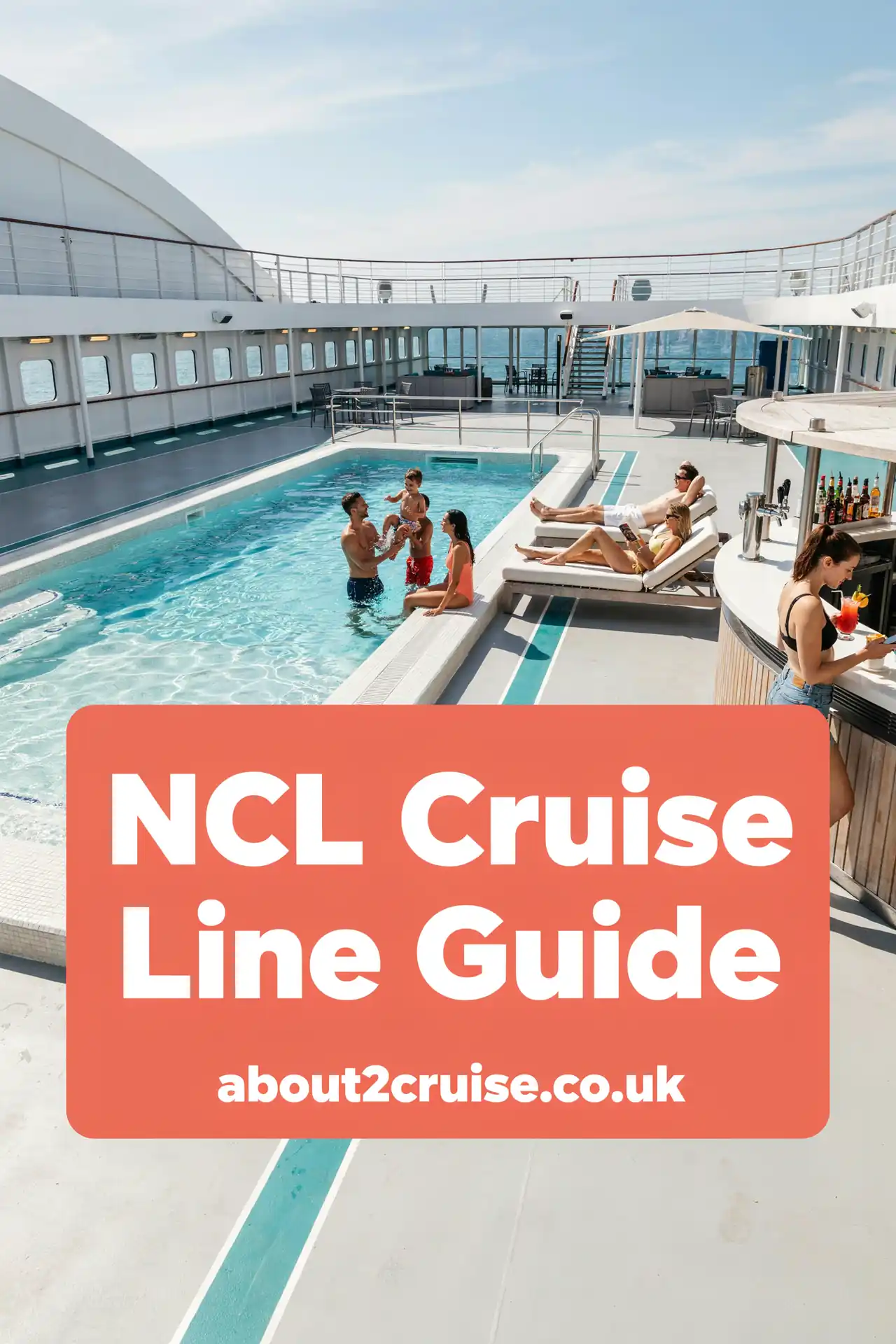
Great Stirrup Cay is NCL’s 270-acre private island in the Bahamas. It has a new multi-ship pier, tram service, a large heated pool called Great Life Lagoon, an adults-only Vibe Shore Club with cabanas and a family Horizon Park.
The headline attraction is Great Tides Waterpark, a paid add-on booked through your myNCL account after booking. It is a six-acre, 19-slide park with four zones: Tidal Tower with eight slides and a 170-foot tower, Cliffside Cove with cliff jumps, a family slide and a four-person raft ride, Wandering River with an 800-foot lazy river and swim-up Floataway Bar, and Splash Cay, a family area with a 300-gallon tipping bucket.
Inside the waterpark, towels, lockers, life jackets, tram service and basic dining are complimentary. Upgraded food and drink cost extra, but the drinks package can cover drinks at Great Stirrup Cay. The beverage package does not work at Harvest Caye, whose venues are locally owned.
Great Life Lagoon is about 28,000 sq ft, which is much bigger than Harvest Caye’s pool at about 15,000 sq ft. Compare how NCL’s private island stacks up against other lines in our cruise line private islands guide and our dedicated Great Stirrup Cay private island guide. If you know Royal Caribbean’s version, see our Perfect Day at CocoCay guide.
NCL Entertainment: Go-Karts, Waterslides and Shows
NCL packs its newer ships with attractions. Two-level go-kart tracks are on Norwegian Joy, Bliss and Encore, while Prima and Viva have three-level tracks. On Encore the track runs partly over the side of the ship. A single go-kart session is around $15 per person, and an unlimited seven-day Speedway package is about $199.
Norwegian Aqua and Luna replace the go-kart tracks with the Aqua Slidecoaster, a two-person hybrid rollercoaster-waterslide that launches riders uphill. It is included in the fare and has helped put Aqua on best-cruise-ship-pools lists for its Infinity Beach infinity pools and Slidecoaster.
Shows vary by ship and change frequently. Aqua has Revolution: A Celebration of Prince, plus tribute shows to Fleetwood Mac and the Eagles. Luna adds ELTON: A Celebration of Elton John, HIKO and LunaTique: Pop Circus. Prima and Prima Plus class ships have a three-storey transforming theatre that turns into a nightclub after the show.
Ocean Boulevard is a quarter-mile, 360-degree promenade with restaurants, bars and the Oceanwalk glass bridge on Prima and Prima Plus ships. The Waterfront is the older ships’ outdoor promenade of waterfront dining, bars and lounges. Both are good public spaces, but Ocean Boulevard is the more ambitious evolution.
For more on which ships have the best wet-and-wild features, see our top cruise ship waterslides guide.
Norwegian Cruise Line Dining: Free Restaurants and Speciality Dining
Your NCL fare includes main dining rooms, the buffet, a 24-hour venue on select ships, and all complimentary restaurants. On Norwegian Aqua and Luna, Indulge Food Hall has 10 complimentary food stations, including the plant-based Planterie. Norwegian Aura will add an Indian speciality restaurant called Tamara.
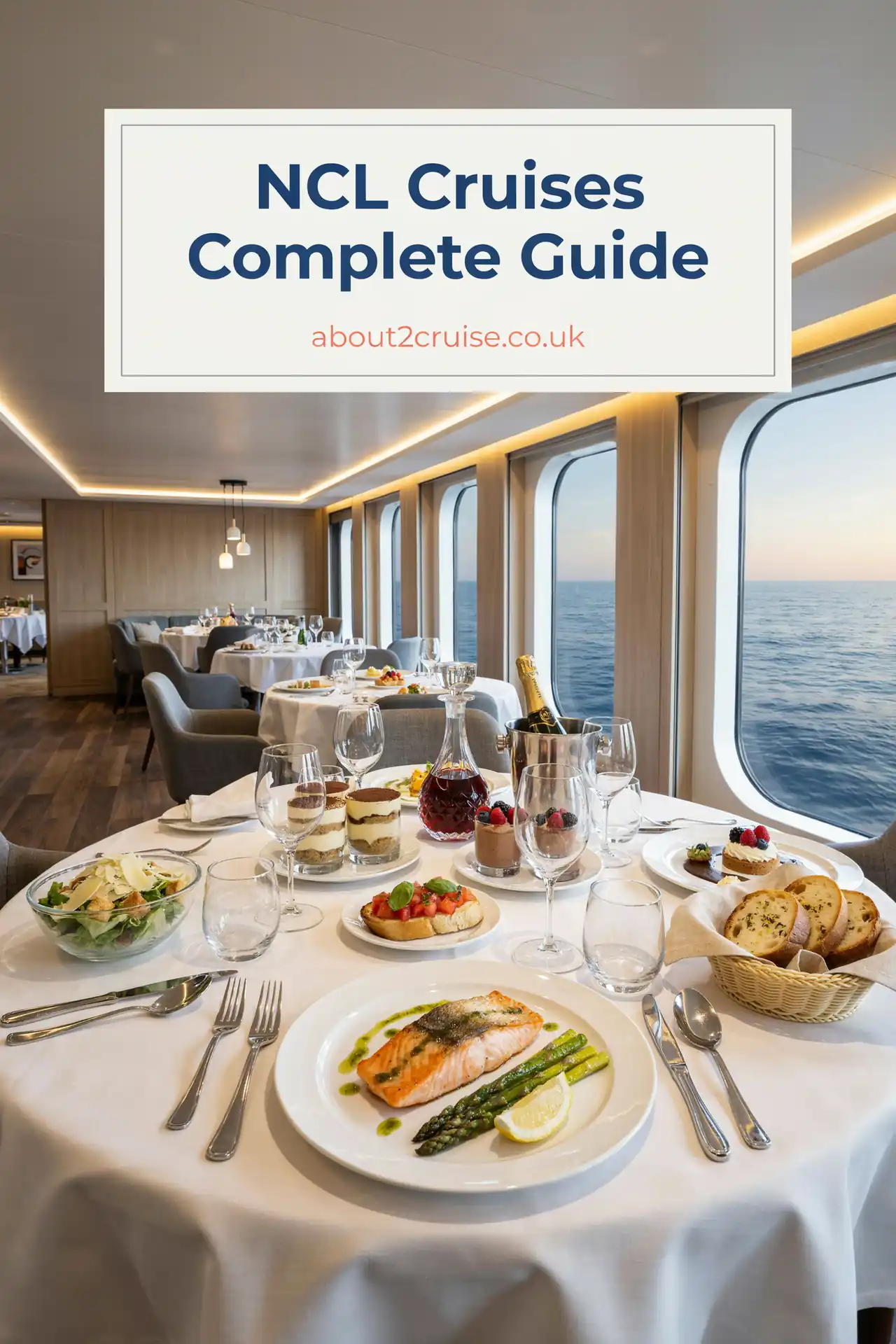
Speciality restaurants carry cover charges roughly from $40 to $60 per person, plus a 20% gratuity. Cagney’s, Le Bistro, Teppanyaki and Ocean Blue sit at the higher $60 tier. Alcohol is not included in the cover charge.
Children aged 12 and under eat free from the kids’ menu in speciality restaurants. Teens aged 13–18 pay a $20 gratuity per meal when the dining package is added. Regular coffee and pastries at the coffee bar are included in the fare, but speciality coffees carry a charge.
NCL Drink Packages: Open Bar, Starbucks and What You Actually Pay
NCL’s open bar covers drinks up to about $15 each. There is no daily drink limit, but only one drink at a time per person. If you order something from the Connoisseur’s Collection, you get a $15 discount rather than full coverage.
If you buy the open bar separately on board, it costs about $45 per person per day plus a 20% service charge in the first two days. Through Free at Sea, you instead pay prepaid gratuities of $28.50 per person per day on sailings of six nights or longer, and $32 per person per day on shorter sailings of two to five nights where the package is available.
Starbucks is not in the standard drinks package. It comes with Free at Sea Plus or with a standalone Unlimited Starbucks package at about $16.50 per day. Regular coffee and pastries in the coffee bar are included in the fare.
The beverage package works at Great Stirrup Cay but not at Harvest Caye. That is an easy one to forget on a western Caribbean sailing.
What’s Included on an NCL Cruise? And What Isn’t
No, NCL is not all-inclusive by default. The standard fare includes meals in complimentary venues, a 24-hour venue on select ships, all onboard entertainment except meal-time theatre shows, pools and hot tubs, fitness centre access, and kids’ and teen programming. It excludes service charges, speciality restaurants, alcohol, soft drinks, spa treatments, exercise classes, casino play, Wi-Fi, shore excursions, transfers and gratuities.
The package that makes an NCL holiday close to all-inclusive is Free at Sea. It includes unlimited open bar, speciality dining credits, 150 minutes of Starlink Wi-Fi per guest and a $50 shore excursion credit per port for the first guest. The number of speciality dining meals depends on voyage length: one meal on two-to-four-night sailings, two on five-to-six nights, three on seven-to-eight nights, and four on nine nights or more.
Only the Wi-Fi minutes and excursion credit cost nothing extra. The open bar and dining elements are “free” only in the sense that you prepay gratuities on them. Free at Sea Plus costs about $49.99 per person per day and adds top-shelf spirits, premium wines, unlimited Starbucks, bottled water, energy drinks, unlimited streaming Wi-Fi, 50% off extra speciality dining and prepaid daily service charges.
There is also a real muddle in NCL’s published terms: some official pages say Free at Sea is not available on sailings under five days, while other pages describe the bar and dining gratuities applying to two-to-five-night sailings at the higher $32 rate. The safe approach is to read the fare terms for your exact sailing date and ask whether Free at Sea is included before you commit.
A realistic all-inclusive-style week for a couple is not just the cabin fare. For a seven-night NCL sailing, budget roughly $20 per person per day for daily service charges, plus $28.50 per person per day for open-bar gratuities if you take Free at Sea, plus $20 per person per speciality dining credit. That can easily add several hundred pounds to the headline fare before you buy an excursion, Vibe Beach Club pass or go-kart session.
NCL Gratuities and Service Charges Explained
NCL’s onboard service charge is $20 per person per day for Club Balcony Suite and below, and $25 per person per day for The Haven and Suites. It applies to all guests aged three and over. You can prepay up to 24 hours before sailing, and NCL says the charge is refundable if you cancel. You can also adjust it on board if you have a legitimate service issue.
Many third-party guides still quote older gratuity bands such as $16, $17.50 and $20. The official NCL FAQ figure of $20/$25 per person per day is the one to use for bookings made from 1 January 2023.
Speciality restaurants add a 20% gratuity on top of the cover charge. Free at Sea dining gratuities are $20 per person per meal, and the package applies to the first two guests on the booking. If you add extra speciality dining, you will pay for it.
Other costs to plan for: go-kart sessions, Vibe Beach Club passes, spa access, exercise classes, room service on some ships, laundry, casino spend and any drinks above the $15 open-bar threshold.
NCL vs Royal Caribbean: Price, Value and What’s Included
On average, NCL and Royal Caribbean are close on value. One balcony-rate comparison put NCL at $481.46 per person per night and Royal Caribbean at $468.21, with NCL’s cheapest published sailing at $71 and Royal Caribbean’s at $122.64. On a like-for-like Caribbean week, NCL Luna interiors were advertised from $799 and balconies from $1,149, against Royal Caribbean Icon of the Seas interiors from $1,019 and balconies from $2,065. Promotional winter fares have also been lower at NCL in some like-for-like comparisons.
Editorial scoring tends to give Royal Caribbean the edge on overall value, but NCL often wins on dining and flexible Freestyle dining. NCL’s bundled Free at Sea rate includes open bar, speciality dining, Wi-Fi and excursion credit, but you need to account for the prepaid gratuities on the bar and dining elements before deciding who is cheaper.
NCL is not a luxury cruise line. It is a mainstream line with premium-style enclaves inside its ships. If you want a true luxury all-inclusive baseline, Norwegian Cruise Line Holdings’ own Oceania and Regent Seven Seas brands sit above NCL, and outside the group there are lines such as Viking, Crystal and Silversea.
NCL Discounts and Deals: How to Save Money and the Free Cruise Myth
NCL regularly runs promotions. Common offers include third and fourth guests sailing free on selected sailings, free airfare for the second guest, free two-category upgrades, a 10% military discount and a CruiseFirst certificate where you pay $250 for $500 of cruise credit.
A genuinely free cruise is rare. The Latitudes Rewards Ambassador tier, which requires 700 points, includes a one-time complimentary seven-day cruise in a balcony cabin, but you still pay taxes, fees, service charges and any third or fourth guest fares. Promotions claiming NCL is giving away free cruises state by state are not a real NCL programme. Resident discounts, port-city promotions and occasional Latitudes contests exist, but NCL can change or withdraw any offer at any time.
Where Do NCL Ships Go? Destinations and Itineraries
NCL’s 2027 spring/summer programme covers more than 500 voyages on 20 ships from nearly 30 homeports, calling at over 150 ports in 59 countries with more than 170 overnight stays.
Caribbean and Bahamas: eight ships run Caribbean and Bahamas itineraries, and almost all include Great Stirrup Cay and/or Harvest Caye. Some Caribbean sailings also call at Grand Turk. For port-by-port planning, see our Caribbean cruise port guide.
Bermuda: sailings run from April to October, with an overnight at Royal Naval Dockyard on every sailing. Departures leave from New York, Boston and Philadelphia.
Alaska: Alaska runs from late April to September on Norwegian Encore, Bliss, Joy and Jade, from Seattle, Vancouver and Whittier, mostly seven to ten nights. The forward Observation Lounge on Breakaway Plus ships is the spot for glacier viewing. See our Alaska cruise guide.
Europe: eight ships sail from ten embarkation ports, mostly seven-night itineraries beginning and ending at weekends, spending more than 90% of time in port with an average of nearly 11 hours per call. Our Mediterranean cruise guide covers many of these ports.
Hawaii: Pride of America runs seven-night four-island round trips from Honolulu without a foreign port call. See our Hawaii cruise port guide.
Longer sailings: NCL also offers longer voyages such as 18-day Panama Canal crossings. Norwegian Encore sails San Francisco to Miami, and Norwegian Joy sails Miami to Seattle, calling at Mexico, Guatemala, Costa Rica, Panama, Colombia and Curaçao. These longer itineraries are good if you want more sea days and less frenetic port-hopping.
NCL Cruises from Southampton: UK No-Fly Sailings
Southampton is one of NCL’s named homeports in the 2027 programme, alongside Miami, Seattle, New York and Rome. UK no-fly sailings from Southampton include British Isles, Ireland, Scotland, Iceland, Norway, France, Spain, Portugal and transatlantic crossings on Norwegian Sky, Star, Sun and Prima.
Published Southampton fares have included interiors from about £599 per person on an 11-night British Isles sailing and from about £1,199 per person on a seven-night Northern Europe sailing. These are guide prices, and they can move substantially by season.
The honestly confusing part is the terminal. NCL’s own port page lists City Cruise Terminal at berth 101, Solent Road, Dock Gate 8/10. Some Southampton terminal guides also list NCL at Horizon Cruise Terminal, berth 102. The port allocates terminals per sailing, not per cruise line, and no single source can confirm every NCL sailing. The only reliable answer is to check your e-docs and any pre-cruise communications once they are issued. Plan for either terminal but do not drive to a specific gate until your documents confirm it.
NCL Fly-Cruises: Free Airfare and 2027 Planning
NCL’s free airfare offer gives the second guest a free ticket on cruises of four days or more when the first guest pays, or 50% off for a solo traveller. Airport-to-pier transfers are an extra cost. The air programme covers more than 57 gateways, can arrange flights arriving one or two days before the cruise, and runs a 24-hour flight emergency team. Guests booking air with NCL are generally scheduled to arrive at least one day before embarkation to reduce same-day stress.
UK agents sell NCL fly-cruises with flights from Heathrow and regional airports bundled. A ten-night Italy, France and Greece sailing from Barcelona with flights has been priced from about £2,379 per person inside. If you are looking at 2027, the programme is broad, but fly-cruise pricing depends heavily on departure airport and how early you commit.
Do You Need a Passport for NCL? Travel Documents Explained
NCL states that a valid passport is required for most of its cruises. The actual validity rules come from the countries you visit, not from NCL, so the strictest port on the itinerary sets the requirement. It is always safer to have at least six months remaining on your passport and to check the specific itinerary rules with NCL or your travel agent.
The US closed-loop exception, where US citizens can use a birth certificate plus photo ID instead of a passport, does not apply to British passport holders. For UK cruises, some lines such as P&O, Cunard and MSC may accept a driving licence plus birth certificate on UK-only itineraries, but third-party tables generally say NCL requires a passport even on UK-only or closed-loop sailings. NCL’s own travel-documents page is written around US and Caribbean itineraries, so it does not make the UK closed-loop picture clear. The practical advice for a British passenger is simple: take your passport unless NCL confirms in writing that photo ID is sufficient for your exact sailing.
NCL for Families: Kids Clubs and Teen Spaces
Splash Academy is NCL’s complimentary drop-off programme for ages 3–12 who are fully potty trained. Entourage is the complimentary teen space for ages 13–17. Guppies Open Play for six months to three years is a parent-accompanied play space, not a drop-off. Late Night Fun Zone runs from 10pm to midnight for ages 3–12 for an hourly fee.
Splash Academy is not offered on Norwegian Spirit, so if you are sailing that ship with young children you will not have the full programme. NCL does not provide one-to-one care or babysitting on any ship, and staff cannot help children in the washroom.
Children aged 3–12 sailing in the first two berths can get unlimited streaming Wi-Fi and prepaid service charges with Free at Sea Plus. Children 12 and under eat free from the kids’ menu in speciality restaurants, while teens pay the $20 per meal gratuity when the dining package is added.
NCL Adults-Only Areas: Vibe Beach Club and Spice H2O
NCL is not an adults-only cruise line. It has family programming throughout. But it does have adult-only spaces that matter if you want quiet time.
Spice H2O is a complimentary 18+ outdoor venue on nine NCL ships. Vibe Beach Club is a paid 18+ sun deck on many ships, sold for the whole cruise, not by the day. It usually costs about $149 to $329 per person, with around 60 to 200 passes per sailing, and it often sells out in advance. Vibe Beach Club has hot tubs but no pool. The Haven sundeck is 16+.
Prima-class ships have no free Spice H2O, so if you want an adult-only outdoor space without paying, you may prefer a Breakaway Plus or Breakaway ship that has it. Norwegian Encore, Escape, Joy, Bliss and Prima all have Vibe Beach Club, but availability varies.
If you want a truly adults-only cruise, look outside NCL to lines such as Viking Ocean, Virgin Voyages, Oceania, Saga, or selected P&O and Marella ships.
NCL Cabins and Staterooms: Which Category to Book
NCL’s cabin categories include Inside, Oceanview, Balcony, Club Balcony Suite, Suite and The Haven. Your choice should follow the ship and itinerary, not just price. On older ships, cabins are smaller and storage is tighter. On newer Prima-class ships, standard rooms are more contemporary, but some passengers still find storage awkward.
Upgrade Advantage is NCL’s invitation-only bidding system. If you are invited, you can bid to move up. Inside and Studio bookings can bid up to three levels higher, but only up to Club Balcony Suite. All other bookings can bid up to two levels. Bids are per person for the first two guests, and if accepted the full amount applies to everyone on the reservation. The card is charged immediately and the upgrade is non-refundable.
Because bids are not binding until accepted, compare the live fare for the cabin you want before bidding. Sometimes the difference to upgrade outright is small, and a confirmed booking is better than waiting on a bid.
NCL Online Check-In and Embarkation Day Tips
Online check-in opens 21 days before sailing and is strongly recommended at least four days out. Your e-docs are available from 21 days out once payment and check-in are complete. During check-in you choose an arrival time, and NCL asks you not to arrive more than one hour before that time.
If you have checked in online, arrive no later than one hour before the embarkation time on your documents. If you have not checked in online, arrive two hours before. All guests must be checked in and on board no later than one hour before departure, and you must be back on board one hour before departure at every port of call.
For UK enquiries, NCL’s contact number is 0333 2412319 or use the contact page at ncl.com/uk/en/contact-us. NCL has also warned of scam emails containing genuine-looking booking details. If you receive one, contact your travel advisor or call the UK number directly rather than clicking links in the email.
Latitudes Rewards: NCL’s Loyalty Programme Explained
Latitudes Rewards has seven tiers: Bronze at 1 point, Silver at 20, Gold at 45, Platinum at 75, Sapphire at 150, Diamond at 350 and Ambassador at 700. You earn one point per night sailed, plus an extra point per night in a suite or The Haven or on a Latitudes Insider offer.
Benefits build gradually. All members get priority check-in. Silver adds shore excursion discounts. Gold adds bottled water and priority tenders. Platinum adds a free bag of laundry and dinner for two. Sapphire adds priority restaurant and entertainment seating. Diamond includes a one-time free cabin upgrade, and Ambassador includes the one-time complimentary seven-day balcony cruise.
Most tier benefits apply on sailings of five nights or longer, but onboard discounts apply on all sailings. Status can be honoured across NCL, Oceania and Regent, with a request needed about 10 days before each sailing.
NCL Accessibility and Dietary Requirements
NCL’s Access Desk handles mobility, medical, dietary and other requirements. Contact them at least 90 days ahead for interpreters and 45 days ahead for most other needs. Special dietary requests must be submitted at least 45 days before sailing, and they cannot be guaranteed inside that window. No-sugar and low-sodium meals can be arranged, and fridges are available for insulin.
You request help through the Accessibility and Medical Questionnaire, and the Access Desk typically replies within 30 days of submission. If you have any mobility, dietary or medical need, do not wait until you are on board to ask.
NCL Dress Code: No Formal Nights, But Some Rules
NCL does not hold formal nights. Freestyle Cruising means no fixed dining times, no set dining companions and no pre-assigned seating. The official dress guidance is “relaxed resort”: shirts and footwear required, respectful graphics, swimwear kept to the pool, and extremely short shorts discouraged.
NCL has tightened enforcement at some elevated speciality restaurants. Reports say tank tops, hoodies, robes, ripped jeans and caps can be refused, and shorts and flip-flops are barred at Palomar, Ocean Blue, Onda, Cagney’s, Le Bistro and Haven restaurants. Children 12 and under are exempt from the stricter dress rules. There is an optional “Dress-Up or Not Night”, but it is exactly that: optional, usually a photo opportunity rather than a requirement.
Packing for an NCL Cruise, Wi-Fi and the Cruise Daily Pass
Your NCL fare excludes Wi-Fi, speciality dining, drinks, spa, casino, shore excursions, transfers and gratuities. Free at Sea includes 150 minutes of Starlink Wi-Fi per guest on one device at a time. Free at Sea Plus adds unlimited streaming Wi-Fi.
The “Cruise Daily Pass” that people ask about is not a ship pass. It is a mobile phone roaming product. Verizon’s version is about $20 per line per day for 0.5GB of high-speed data, unlimited calls to the US and unlimited texts on 200-plus ships across multiple lines. AT&T’s equivalent cruise day pass is about $15 per 24 hours per line. It is useful if you want phone data on a port day or sea day without buying the ship’s full Wi-Fi, but it is not an NCL product.
Packing for NCL is standard cruise packing: keep documents and medication in hand luggage, bring a day bag with swimwear and sunscreen for embarkation, one smart outfit for speciality dining or photos, magnetic hooks for cabin walls, a universal adapter, a power bank, seasickness remedies, a reusable water bottle and modest cover-ups for religious sites. If you are planning a wedding or renewal at sea, see our getting married on a cruise ship guide.
NCL Reviews, Complaints and Recent Cancellations
NCL’s Cruise Critic member score is about 3.6 out of 5 from more than 43,000 reviews. Recurring passenger complaints include crowding on larger ships, slow dining-room service and constant upcharges once you are on board. Consumer Reports and Which? have placed NCL near the bottom of their overall satisfaction surveys, mainly on value for money and extra charges, with Costa and MSC also appearing near the bottom. There is no official “crappiest cruise line” ranking, and widely shared worst-ship lists are dominated by Costa and MSC rather than NCL.
NCL has also cut some licensed Broadway productions in favour of in-house shows, and that is a recurring trade and passenger complaint. The show line-up per ship can change quickly, so do not book a cruise solely for a named production without checking the current schedule for your specific sailing.
NCL cancelled more than 55 sailings across Norwegian Gem, Dawn, Joy and Getaway as part of a 2026–27 redeployment, plus another 41 sailings on Norwegian Prima and Norwegian Breakaway. Some Encore, Bliss and Breakaway departures were also cancelled. The stated reason is aligning itineraries with demand and offering longer, more immersive Caribbean and Bahamas routes. Guests were generally offered a full refund plus a 10% future cruise credit. This is why you should never book non-refundable land arrangements until your cruise is confirmed and fairly close to departure.
How NCL Compares to Luxury Lines, Crystal and Celebrity Edge
NCL is mainstream, not luxury. The luxury feel is inside The Haven, not across the whole ship. If you are benchmarking against true luxury lines, the gap is mostly about inclusions and service ratios. For example, Crystal Cruises scores around 4.2 out of 5 on Cruise Critic, with two rebuilt ships, a butler for every room, drinks, tips and Wi-Fi included, and one included reservation each at Umi Uma and Osteria d’Ovidio on sailings up to 11 nights. Crystal’s new ship Crystal Grace is not due until 2028, and shore excursions are not included in Crystal’s fares.
Celebrity Edge’s Eden restaurant is often used as a point of comparison for speciality dining costs. It is reported at about $75 per person, with real-world totals of roughly $77–$102 once the 20% service charge is added. That is higher than most NCL speciality cover charges, but it is also a more theatrically designed venue.
The Haven remains one of the leading ship-within-a-ship products because the entire complex is one keycard-access zone with its own pool, courtyard, restaurant and lounge, plus priority reservations. It is not the cheapest way to cruise, but it is often the best middle ground between mainstream NCL and a full luxury line.
NCL FAQs: Quick Answers to Common Questions
Are all NCL cruises all-inclusive?
No. The standard fare includes complimentary dining, entertainment, pools and kids’ clubs. You pay extra for drinks, speciality dining, Wi-Fi, spa, excursions, transfers, service charges and gratuities. Free at Sea can make it feel close to all-inclusive, but it is an optional package with prepaid gratuities on the bar and dining elements.
Does NCL have formal nights?
No. NCL has Freestyle Cruising with no formal nights and no fixed dining times. There is an optional “Dress-Up or Not Night”, and some speciality restaurants enforce a stricter smart-casual dress code, but you can wear resort-casual clothing most of the time.
Do I need a passport for an NCL cruise from Southampton?
Assume yes unless NCL confirms otherwise in writing for your exact sailing. NCL generally requires a passport on most cruises, and passenger guidance suggests NCL is stricter than some UK-focused lines on closed-loop UK itineraries. Check your e-docs and the country entry requirements for every port.
How can I get a free NCL cruise?
The realistic path is the Latitudes Rewards Ambassador tier at 700 points, which includes a one-time complimentary seven-day balcony cabin cruise, though you still pay taxes, fees and service charges. NCL also runs promotions such as third and fourth guests sailing free and free second-guest airfare, but a genuinely free fare for everyone is not a normal offer.
Which NCL ship should I avoid?
Avoid the oldest and smallest ships if you want big attractions and modern cabins. Norwegian Spirit and Norwegian Sun are the most limited for families and have fewer venues. Norwegian Dawn has had a recent CDC sanitation failure. Norwegian Aqua gets strong reviews but has complaints about buffet space and sound insulation. The right ship depends on whether the ship or the itinerary matters more.
What is the Cruise Daily Pass?
It is a mobile phone roaming product offered by providers like Verizon and AT&T, not an NCL ship pass. It gives you a small amount of high-speed data, calls and texts while on many cruise ships. It does not replace the ship’s Wi-Fi or unlock any onboard experiences.
Can I get married on an NCL ship?
NCL offers onboard wedding packages on many ships, but you need to arrange it in advance. For a full breakdown of what to expect, see our getting married at sea guide.
Why is NCL cancelling so many cruises?
NCL cancelled dozens of sailings in the 2026–27 period as part of fleet redeployment and itinerary adjustments, mainly to move ships between homeports and offer longer Caribbean and Bahamas routes. Affected guests were generally offered a full refund plus a 10% future cruise credit.
Researched by Jo from the About2Cruise team.
Last Updated: 19 November 2026