
Northern Lights cruises work, but only when the ship gets under the auroral oval, and Norway’s coast between Tromsø (69.65°N) and Hammerfest (70.66°N) is where the odds live. The sailings that reach it are the long winter ones, not the seven-night fjords loops sold with aurora photography.
Cruise or land: which gives you the better chance?
A Northern Lights cruise gives you a better chance than a fixed land stay, but only by degrees. A ship can move out of a local cloud bank in a way a hotel in Tromsø can’t, and that’s the strongest argument for booking one.
What a ship can’t do is outrun a weather system the size of northern Norway. Two or three cloudy nights in a row happen in any winter month, which is why no operator guarantees the lights themselves.
Land operators tackle the same problem by driving an hour or two inland to find clear sky, and four nights on the ground is the usual benchmark for roughly a 90% chance of at least one sighting.
Photography is the second trade-off. Pitching and rolling on a moving deck turns any long exposure into star streaks, and there’s no foreground to compose with. If the photograph matters more than the trip, shoot from land.
Money is the third, and the headline comparison misleads both ways. A cruise fare carries your transport, cabin and food; a land trip’s cost sits in flights, hotel and a nightly chase. What most fares don’t carry is the shore excursions that put you in a dark place on purpose, so price those before you compare anything.
Route and latitude: the Arctic Circle line that decides everything
The Arctic Circle sits at about 66°33′N, and it’s the only line on a Northern Lights itinerary that matters. Tromsø is at 69.65°N, Alta at 69.97°N, Kirkenes at 69.72°N and Hammerfest at 70.66°N, all inside the band between roughly 65°N and 72°N where the auroral oval usually sits. Stavanger at 58.97°N and Ålesund at 62.47°N are not.
That’s why the widely sold seven-night fjords loop out of Southampton, calling at Stavanger, Olden, Ålesund and Haugesund, can be marketed with a line about trying to spot the lights at night without ever crossing into the Arctic. You can see aurora from lower latitudes during a strong solar event, but you’re relying on one.
P&O Cruises puts its Northern Lights product on Aurora, its smallest ship and an adults-only one, on a 12 to 14 night round trip from Southampton, and names Alta among the ports with a dedicated ‘In Search of the Northern Lights’ shore experience. Its seven-night fjords sailings on the larger ships are a different product with a different ceiling.
Which region: Norway, Iceland, Greenland, Svalbard or Alaska
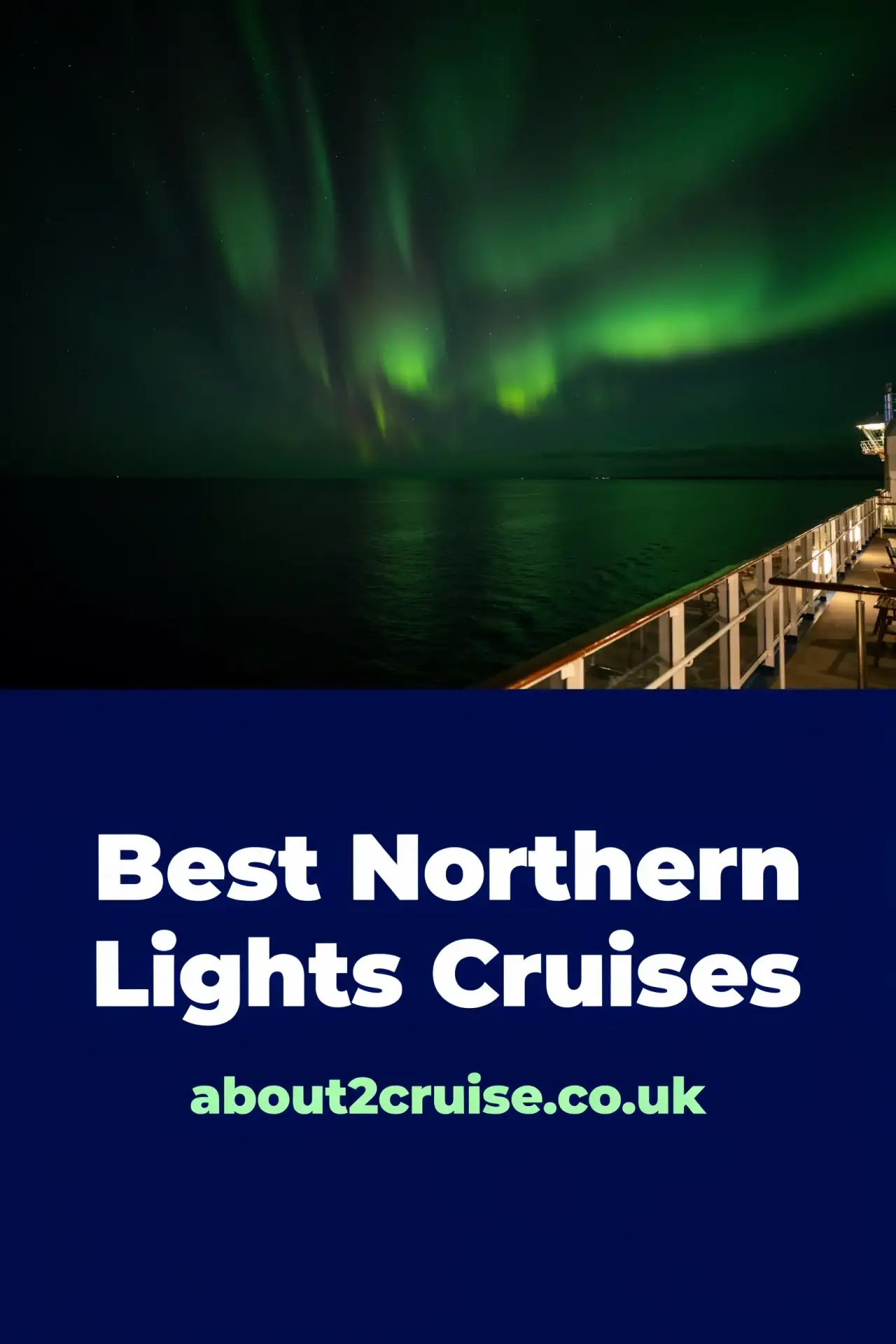
Norway’s northern coast is the heartland of this kind of cruising: above the Arctic Circle, directly under the oval, and kept ice-free year round by the Gulf Stream, which is why ships can sail to Kirkenes in the middle of winter at all.
- Norway. Tromsø, Alta, Hammerfest, Kirkenes, Narvik, Harstad, Honningsvåg and the Lofoten Islands all appear on the longer winter sailings. Aurora can be visible from anywhere in Northern Norway on any dark night in season.
- Iceland. Reykjavík sits at 64.13°N, under the southern edge of the oval, and needs Kp 2 or 3 where Tromsø needs Kp 1. It’s a viable but less reliable aurora destination, and it sells on scenery.
- Svalbard. Longyearbyen at 78°N is north of the oval, so displays often form toward the southern horizon. Polar night runs from late October to mid-February, and the sailings are expedition-priced.
- Greenland. Darker and quieter, reached on small expedition ships from Iceland or Canada.
- Alaska. The aurora season runs from late August to mid-April, but mainstream Alaska cruises sail May to September, when June and July barely get dark. The second half of August is the earliest realistic window and September is the best chance, so planning an Alaska cruise around the aurora usually means adding a land stay in Fairbanks, which sits under the oval.
If you want more on what the lights do above the Circle and how the crossing works, see seeing the Northern Lights in the Arctic on a cruise.
When to sail, month by month
The season runs from late September to early April, and no month comes with a guarantee. Clear sky and solar activity matter more than which week you pick.
- Late September and October. Dark nights without the deep polar night, with enough daylight left for the scenery and equinox activity on your side.
- November to February. Polar night: Tromsø from 27 November to 15 January, Alta from 26 November to 16 January, Hammerfest from 21 November to 21 January, Nordkapp from 18 November to 24 January. Maximum dark hours, and above the Arctic Circle the sun may not rise at all.
- March. The spring equinox brings a geomagnetic peak while daylight returns, which is why several lines run March departures as a second season.
Two things to weigh. January is the darkest month and one to dodge for exactly that reason, because you lose the daylight scenery as well. And the week before a full moon is worth avoiding, because moonlight washes out the fainter displays.
How long it takes, and where it leaves from
Getting to Arctic latitude from a UK port costs four or more sea days. That’s why the no-fly options are all long: P&O’s Aurora round trip runs 12 to 14 nights from Southampton, Fred. Olsen sails 15 nights from Southampton and 10 nights from Portsmouth, and Ambassador’s Norway’s Land of the Northern Lights runs 16 nights from London Tilbury.
Southampton, Portsmouth, London Tilbury and Newcastle are the UK departure ports that appear across current winter programmes, so there’s usually a no-fly cruise from a UK port within reach.
Ambassador’s version shows what a long no-fly sailing buys. Ambience leaves Tilbury and calls at Stavanger, Kristiansund, Trondheim, Tromsø, Alta, Hammerfest, Harstad and Narvik over 16 nights, with an October departure framed around eight Arctic ports and March departures framed around ‘light winter’, when the days are longer. Departure logistics for that end of the Thames are covered in the guide to cruises from London Tilbury.
The alternative is to fly to the Arctic and join there. HX Expeditions runs an eight-day round trip from Tromsø on MS Spitsbergen with no long sea crossings and seven nights entirely above the Arctic Circle, covering the Lyngen Alps, Senja, Lofoten and Vesterålen. Havila’s 12-day Round Voyage starts in Bergen and crosses the Arctic Circle twice, and Hurtigruten’s 15-day North Cape Line runs Oslo round trip to Honningsvåg.
Which answers the short-cruise question: a four-night sailing from a UK port can’t reach the oval. The shortest realistic route to the aurora by sea is the Tromsø round trip, and that needs a flight.
What a Northern Lights cruise really costs
There’s no single fare band, because these aren’t the same product. The value end of the market is the long no-fly sailings on Ambassador and Fred. Olsen, where the fare buys a lot of nights, including the sea days.
Havila’s Round Voyage sits in the middle. Viking and Hurtigruten’s signature voyages cost more, and expedition sailings are a category above again.
What sits on top of the fare is where comparisons go wrong.
- Shore excursions. In the Arctic these are the main event and they’re priced separately on most lines. Several operators supply thermal outerwear on chases but expect you to bring your own footwear.
- Drinks and gratuities. Ambassador includes full board, all onboard gratuities and UK port taxes in the fare, but drinks and shore excursions are extra. Other lines vary widely.
- Flights and transfers. A fly-cruise’s headline price doesn’t always include the winter flight to Tromsø or the transfer from the airport.
Read the guarantee small print the same way. Hurtigruten’s free replacement voyage excludes flights, transfers, excursions, onboard expenses and luggage handling, so the payout is a voyage, not a holiday.
Which line and ship, compared on what decides a sighting
The route sets the ceiling, not the badge on the funnel. What a line can add is deck time in the dark, an aurora watch that wakes you, an astronomer or aurora specialist on board, and some control over deck lighting. No line on this list publishes a deck-lighting policy, so treat a floodlit deck as the default.
| Line | Route and length | What it adds for the aurora |
|---|---|---|
| Hurtigruten | Coastal Express, 12 days Bergen to Kirkenes and back, 34 ports, six nights above the Arctic Circle; North Cape Line, 15 days from Oslo to Honningsvåg | Aurora alert in every cabin and suite, crew announcements at any hour, a Chief Aurora Chaser on astronomy sailings, the Coastal Express promise |
| Havila Voyages | 12-day Round Voyage, four ships, 34 ports, Arctic Circle crossed twice | Northern Lights Alert system that must be activated for the guarantee to stand, panoramic lounges for indoor viewing |
| HX Expeditions | Eight-day round trip from Tromsø on MS Spitsbergen, seven nights above the Arctic Circle | Alert in every cabin, named shore experiences included, a Future Cruise Credit promise |
| Fred. Olsen Cruise Lines | Borealis, 15 nights from Southampton with an overnight in Tromsø; also a 10-night round trip from Portsmouth | Go Stargazing specialists, aurora and photography talks, an onboard photographer |
| P&O Cruises | Aurora, 12 to 14 nights from Southampton, adults only | Alta, with a dedicated ‘In Search of the Northern Lights’ shore experience |
| Cunard | Annual Norway itineraries reaching the Arctic Circle and the Lofoten Islands | No aurora-specific onboard programme published |
| Viking | In Search of the Northern Lights, London Tilbury to Tromsø or the reverse, calling at Narvik, Harstad and Alta | A resident historian rather than an astronomer |
| Ambassador Cruise Line | Ambience and Ambition, 16 nights from London Tilbury | Eight Arctic ports on the October sailing, October and March departures |
Hurtigruten and Havila both run the coastal route with 34 ports and multiple nights above the Circle, and both write their own guarantees. HX packs seven Arctic nights into eight days, which is the densest aurora itinerary here.
Fred. Olsen runs two shapes of the same product, a 15-night Borealis sailing from Southampton with an overnight in Tromsø and a 10-night round trip from Portsmouth; Fred. Olsen’s Northern Lights sailings carry Go Stargazing specialists and an onboard photographer.
Cunard’s Norway itineraries reach the Circle and the Lofoten Islands but publish no aurora-specific onboard programme. Viking’s route runs between London Tilbury and Tromsø and names a resident historian rather than an astronomer. Ambassador’s 16-night Tilbury sailings are the cheapest way to spend that many nights at Arctic latitude, and the trade-off is a long itinerary rather than a dense, short hunt.
Hurtigruten’s route and its night-by-night shape are set out in the Hurtigruten cruises guide.
Aurora guarantees: what they pay out
Three lines publish an aurora promise, and all three pay in travel rather than cash. They’re credits against another voyage on the long, qualifying sailings, and they turn on the crew recording an official sighting.
- Hurtigruten. Voyages of 11 nights or more along the Norwegian coast departing between 20 September and 31 March. If no aurora occurs, you get a free 6-day southbound or 7-day northbound Coastal Express voyage. An occurrence means a sighting from the ship recorded by the deck officers and announced to passengers, and the ship’s decision is final.
- Havila Voyages. The 12-day Round Voyage departing between 1 October and 31 March, paying a free 6- or 7-day voyage in an inside cabin.
- HX Expeditions. Pays a Future Cruise Credit rather than a voyage if there’s no recorded sighting from the ship during your expedition cruise.
The conditions are where people come unstuck. Havila’s promise is void unless you’ve activated the onboard Northern Lights warning system, so switch it on the day you board rather than the first night you think of it. The ship decides whether an event occurred regardless of weather conditions and actual visibility, which means a cloudy night still counts if the crew recorded a sighting.
Hurtigruten’s claim has to be made within 28 days of your return. The promise can’t be combined with compensation claims, refunds or price reductions, and it doesn’t apply to interrupted or cancelled cruises. None of the three insures a single short cruise: if the guarantee is the reason you’re booking, it only works on the long qualifying sailings.
On board at night: alerts, dark decks and the hours that matter
Sightings reach you by an aurora watch, a bridge announcement or a call to the cabin, at any hour. Hurtigruten and HX fit an alert to every cabin and suite, and you can switch the announcements off if you’d rather sleep.
Havila relies on its Northern Lights Alert system plus panoramic lounges for indoor viewing. On Hurtigruten’s astronomy sailings, a Chief Aurora Chaser sends text alerts and makes onboard announcements when the sky opens.
The practical problem is light. Decks tend to be floodlit, and a bright pool deck wipes out a faint display. Find the darkest patch you can with no artificial light behind you, look north, because the aurora is viewed toward the northern horizon, and pick a spot sheltered from the wind.
Activity is usually strongest between about 20:00 and 02:00, with the best odds between 22:00 and 02:00. That’s the stretch to protect, which is why the cabin you sleep in matters more than the view from it.
Cabin choice: balconies, inside cabins and which side of the ship
Port or starboard makes almost no difference for the aurora. The display spans the northern sky, the ship changes heading through the night, and on the coastal route you’re often sailing a channel rather than a straight line. There’s no side of the ship to book for.
An inside cabin doesn’t cost you the sighting on Hurtigruten or HX, because the alert reaches every cabin. What a balcony buys is daytime scenery and a fast exit at one in the morning, not a guaranteed sightline, and if the deck lighting behind you is bright, the balcony is no darker than the corridor.
Choose on sleep instead. An alert at 1am is only useful if you can get up for it, so book the quiet cabin you can sleep in and treat the balcony as a bonus. The general rules for how to pick the best cabin location still apply; the aurora adds nothing to them beyond the alert.
Cold decks, rough stretches and what to pack
Deck watches happen in the middle of the night at sub-zero temperatures, and people under-pack for that watch rather than for the trip. Thermal base and mid layers, your own warm footwear and a windproof outer layer are the minimum; operators often supply thermal outerwear on organised chases but expect you to bring your own boots.
Cold also ends sessions early. Batteries flatten quickly at those temperatures, so carry a spare and keep it inside your jacket. Getting cold is the most common reason a watch stops before the lights do.
Sea state is the other variable. Much of the Norwegian coastal route runs through narrow fjords and sheltered channels, which moderates the motion, but exposed stretches off the Lofoten Islands and the North Sea crossings on a no-fly round trip can be rough. The ships on these routes carry stabilisation systems and heated outdoor viewing areas, which is some comfort on a long, cold watch.
Photographing the aurora from a moving deck
A moving ship is a poor camera platform, and you should know that before you board. Vibration travels up a tripod, pitching and rolling turns a long exposure into streaks, and there’s no foreground to compose with. The advice from aurora photographers is consistent: enjoy the view from the ship and leave the photography for a shore excursion.
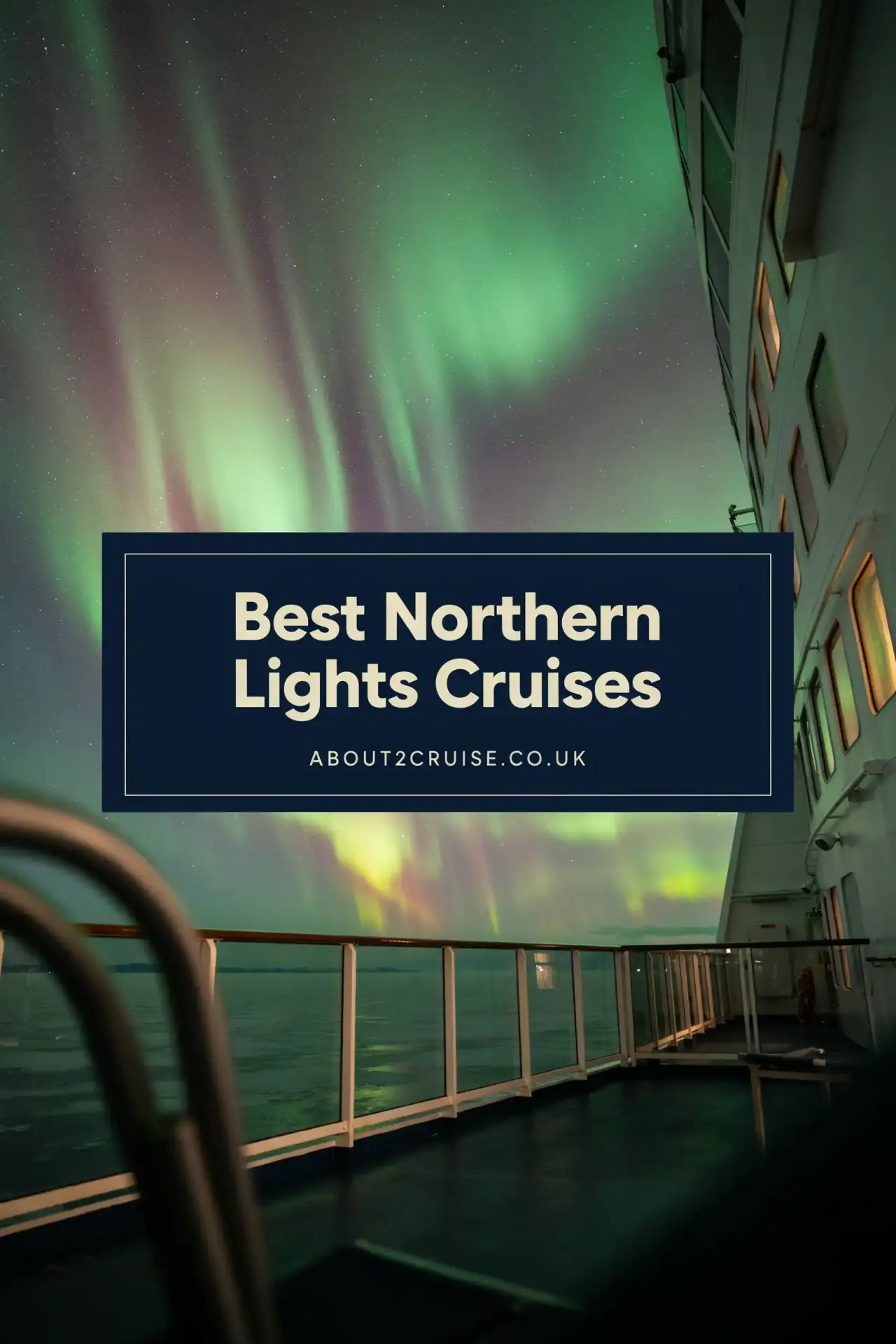
If you want to try anyway, work with short exposures and accept a high failure rate. On a phone, use the night mode, turn the flash off, brace the device on a rail, set ISO around 3200, start at a 15-second shutter and shorten it until the stars stop trailing, and focus manually on a distant star.
On a camera, ISO 3200 to 6400, white balance around 3500K, RAW files and manual focus at infinity are the starting points. Faint aurora takes 8 to 20 seconds and bright displays 3 to 8. Don’t bother stacking frames from a moving deck: the aurora changes faster than the stack and the stars shift between frames.
One thing to keep in mind before you go. The camera collects light for several seconds and shows colour and structure the eye can’t, so a screen full of green often sits above a faint grey smudge to the naked eye. Put the camera down for a few minutes.
What fills the days, and who these cruises suit
Aurora-season days are short, and above the Arctic Circle in midwinter they may not arrive at all. The daytime content is the winter activity list: dog sledding, snowmobile safaris, reindeer sleigh rides, Sámi community visits, ice hotels, whale watching while the herring are in, fjord kayaking, and the fish markets and museums in port.
HX builds experiences into the fare rather than selling them on top: a beachside bonfire with hot drinks and Norwegian food, a sauna and polar plunge in Svolvær, and a private dinner aboard the retired MS Finnmarken at the Hurtigruten Museum in Stokmarknes.
Some of it is strenuous in cold conditions, and that’s the mismatch to watch for. Travelling with someone who can’t do winter excursions, or expecting a scenery cruise with a light show attached, is how people end up disappointed by a trip that was never really about the aurora.
Northern Lights cruise FAQs
Does the Kp index matter on a Northern Lights cruise?
The Kp index doesn’t matter much on a Northern Lights cruise if you’re inside the auroral oval. Tromsø can see aurora at Kp 1, while Reykjavík at 64.13°N sits under the southern edge and needs Kp 2 to 3. Choose latitude over forecast strength.
How do you get to a fly-cruise that starts in Tromsø?
Tromsø airport is about 5 km from the city centre. SAS, Norwegian and Widerøe fly in from Oslo, and Icelandair adds a winter transatlantic service, so you can connect without routing through the UK.
Are gratuities and drinks included on a Northern Lights cruise?
On Ambassador, full board, all onboard gratuities and UK port taxes are in the fare, with drinks and shore excursions extra. HX builds named shore experiences into its expedition fare instead. Check what’s bundled before comparing.
Are Northern Lights cruises adults only?
P&O’s Northern Lights sailings run on Aurora, its smallest ship, which is adults only, so that particular choice carries no children. Check the ship rather than the itinerary if that matters to you.
Last Updated: 31 October 2026