
“`html
Venice at dawn is a completely different city. The hordes of day-trippers haven’t arrived yet, the cruise passengers are still working through their breakfast buffets, and you can actually hear the water and your own thoughts. If you’re willing to set your alarm early, you’ll see a side of Venice that most visitors miss entirely—and you’ll understand why locals haven’t completely abandoned the historic centre yet.
The trick is simple: get off your ship as soon as they’ll let you, skip the organized excursions that don’t start until 9 AM, and head straight into the city while it’s still quiet. You’ll have roughly two to three hours before the crowds make it unbearable, and that window is pure magic.
Why Early Morning Venice Is Worth Losing Sleep Over
Venice receives somewhere around 30 million visitors annually, and a huge chunk of them arrive between 10 AM and 4 PM. The result is that iconic spots like Piazza San Marco and Rialto Bridge become virtually impassable by mid-morning. But before 8 AM? You might have the entire square to yourself, save for a few café workers setting up tables and some very relaxed pigeons.
The light is also substantially better for photos in those early hours. The low sun creates long shadows and warm tones that make even the most photographed buildings look fresh. Plus, without thousands of people in your frame, your holiday snaps will actually look like Venice rather than a crowded theme park.
Getting Off the Ship: What Time and Which Terminal
Most cruise ships dock at either Marittima (the main cruise terminal) or occasionally at Fusina across the lagoon. If you’re at Marittima, you’re only about 30-40 minutes’ walk from the heart of Venice, though most people take the vaporetto (water bus) or the People Mover light rail to Piazzale Roma.
Your ship will typically allow passengers off once customs and port formalities are complete, usually around 6:30-7:00 AM for early-morning arrivals. Don’t wait for the organized shore excursions to start—they rarely leave before 8:30 or 9 AM, and by then your golden window is half gone.
Here’s your timing strategy:
- 6:30 AM: Be ready at the gangway with your ID and ship card
- 6:45 AM: Off the ship and heading toward the People Mover or vaporetto
- 7:15 AM: Arriving in central Venice (San Marco area)
- 7:15-10:00 AM: Your quiet Venice window before the chaos begins
You’ll need to be back on board typically 30 minutes before sailing (your ship will give you an “all aboard” time), so factor in travel time and don’t push it too close. Venice water transport can be delayed, and missing your ship is an expensive mistake.
For more detailed information about your arrival point and transport options, check out our Venice cruise port guide before you go.
Where to Go First: The Priority List
You’ve got limited time, so don’t waste it wandering aimlessly. Here’s where to focus your early-morning energy:
Piazza San Marco (St Mark’s Square)
Start here. It’s Venice’s most famous space and it’s genuinely stunning when empty. The arcades, the basilica, the campanile—everything looks better without 5,000 other people in the frame. The square faces east, so morning light is particularly good here.
St Mark’s Basilica typically opens around 9:30 AM for tourists, but you can admire the exterior and the square itself long before that. If you want to go inside, you’ll need to time your visit for later or come back, but honestly, the exterior in early light is the real prize.
Rialto Bridge and Market
The Rialto Market is one of the few places in Venice that’s actually busy early in the morning—but busy with locals buying fish and produce, not tourists. It’s a completely different energy and worth seeing. The market typically runs from around 7:00 AM until midday, with the best action in the first couple of hours.
The bridge itself is lovely at dawn, and you can walk across without being stuck in a human traffic jam. Photographers love this spot in early light when the canal reflects the surrounding buildings beautifully.
The Back Canals and Quiet Campos
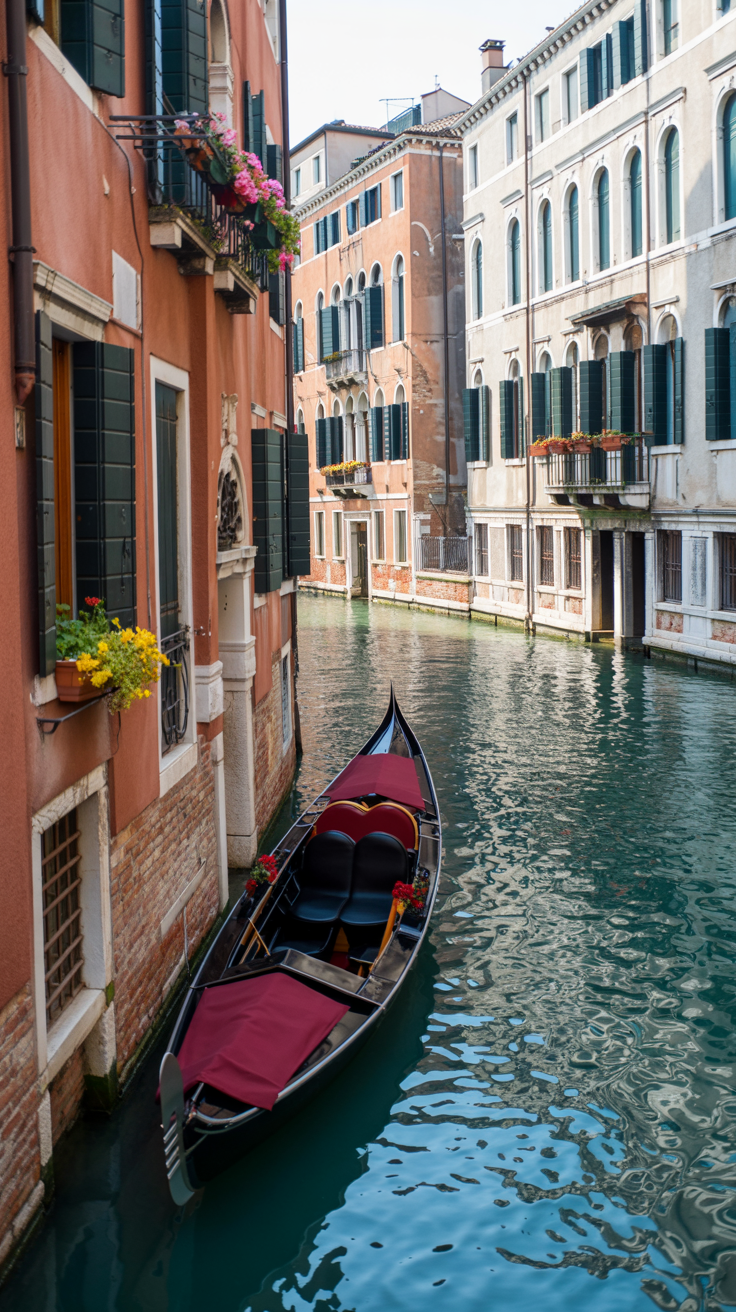
This is where Venice really shines early in the morning. Wander through the narrow streets (calli) and small squares (campos) behind the main tourist routes. You’ll find local Venetians walking their dogs, opening shutters, and going about normal life without the usual tourist chaos.
Areas like Cannaregio, Castello, and Dorsoduro are particularly good for early-morning wandering. You’ll stumble across tiny bridges, hidden courtyards, and canals that feel completely untouched by tourism. Our guide to 12 secret canals Venice hides from you will point you toward some of the quieter waterways that most visitors never see.
If you want to dig even deeper, the city’s secret courtyards are especially atmospheric in the early morning when they’re completely deserted.
Breakfast Strategy: Where Locals Actually Eat
Skip your ship’s breakfast buffet (or grab a quick coffee) and eat in Venice instead. You’ll save time and have a much more authentic experience.
Look for a bar or café where locals are standing at the counter having their morning espresso and cornetto (Italian croissant). These places open early—often by 6:00 or 6:30 AM—and the coffee is substantially better than what you’ll get on the ship. A caffè and cornetto at the bar typically costs €2-3 total, compared to €4-6 if you sit down.
Good areas for authentic morning cafés:
- Near Rialto Market: Several bars cater to market workers and open very early
- Strada Nova (Cannaregio): A main walking route with local-friendly spots
- Campo Santa Margherita (Dorsoduro): Student area with good value and less touristy cafés
Avoid anywhere directly on Piazza San Marco—you’ll pay €8-12 for a coffee and it won’t be any better than the €2 version around the corner.
What to Skip (Even Though Everyone Says You Shouldn’t)
You have limited time, so be ruthless about what you skip:
- Doge’s Palace: It’s impressive but doesn’t open until 9:00 AM at the earliest, and you’ll spend 90+ minutes inside minimum. That’s your entire quiet window gone. Save it for another visit or accept that you’ll be there during peak crowds.
- Gondola rides: Lovely but expensive (€80-100 for 30 minutes) and honestly not worth it during a brief port call. The real magic of Venice is just walking around on your own terms.
- Murano and Burano: Both islands are beautiful but each requires 40+ minutes of vaporetto travel each way. You don’t have time for this during an early-morning sprint. Save these for a longer visit.
- Any organized tour: They don’t start early enough and they move at the pace of the slowest participant. You can see more on your own.
Navigation: How Not to Get Hopelessly Lost
Venice is deliberately confusing. Streets dead-end at canals, signs point you in circles, and your phone’s GPS has a nervous breakdown trying to figure out which side of a canal you’re actually on.
Here’s what actually works:
- Follow the yellow signs: Venice has painted yellow signs throughout the city pointing toward major landmarks (San Marco, Rialto, etc.). They’re not always logical but they generally work.
- Accept that you’ll get lost: It’s inevitable and honestly part of the charm. Build buffer time into your plan.
- Landmarks over street names: Navigate by major landmarks and canals rather than trying to follow street names, which are often impossible to find or duplicate.
- Screenshot your maps: Google Maps works offline if you download the area beforehand, but screenshots of your route are backup insurance.
- The sun is your friend: Venice is oriented roughly east-west. San Marco is on the southern lagoon side, the train station and cruise port are northwest. Use the sun to maintain general direction.
A high-capacity portable charger is essential for keeping your phone alive all day—Venice exploration drains batteries fast with constant map checking and photo taking.
Transport Back to Your Ship: Don’t Cut It Too Fine
Give yourself at least 60-90 minutes to get back to your ship from central Venice. Yes, it can be done in 30 minutes if everything goes perfectly, but Venice transport is notoriously unreliable and your ship will not wait for you.
Your options:
- Vaporetto (water bus): Line 2 runs from San Marco toward the cruise terminal area. Buy tickets before boarding (€9.50 for 75 minutes) or use a day pass if you bought one. Services run every 10-20 minutes but can be packed or delayed.
- Water taxi: Fast and direct but expensive (€60-100 depending on distance and your bargaining skills). Good if you’re running late and desperate.
- People Mover from Piazzale Roma: If you walked or took the vaporetto to Piazzale Roma, the People Mover is a quick light rail connection to the Marittima cruise terminal (€1.50, runs every few minutes).
- Walking: From San Marco it’s about 45-60 minutes’ walk back to Marittima terminal if you know the route. Doable but don’t attempt it if you’re on a tight schedule or you’ve never done it before.
Set your alarm for your “start heading back” time and stick to it. The consequences of missing your ship are severe and expensive.
What to Wear and Bring
Venice in the morning can be cool even in summer, and you’ll be doing a lot of walking on uneven surfaces.
Essential items:
- Comfortable walking shoes with grip: The streets are cobbled, often wet, and sometimes covered in algae. Smooth-soled shoes are a recipe for slipping. A proper pair of supportive walking shoes for women or comfortable walking shoes for men makes all the difference. Skip the heels entirely.
- Layers: Even if it’s forecast to be warm later, early morning near the water is often chilly. A packable lightweight jacket for women or men’s compact puffer jacket works perfectly for cool mornings without taking up much space.
- Water bottle: Venice has public drinking fountains throughout the city with safe, cold water. A collapsible water bottle saves money and plastic while taking up minimal space in your bag.
- Small bag: Carry your ship card, ID, phone, and money in something secure and comfortable for walking. An anti-theft crossbody bag or secure travel backpack keeps valuables safe without being bulky. Avoid large backpacks which are awkward in crowds and narrow streets.
- Cash: Many smaller cafés and shops don’t accept cards, especially for small purchases. Bring €20-40 in small notes and coins.
What to leave on the ship:
- Valuables you don’t need (extra jewelry, expensive watches)
- Your passport (bring your ship card and a photo ID or driving licence instead—your passport is safer in your cabin)
- Anything you’d be devastated to lose if you got pickpocketed
If you’re concerned about pickpockets in busier areas later in the morning, blister prevention tape is also worth throwing in your bag—all that walking on cobblestones can create unexpected hot spots on your feet.
The Honest Drawbacks of the Early Start
Let’s be realistic: getting up at 5:30 AM on a cruise isn’t for everyone, and there are legitimate downsides:
- You’re exhausted by lunchtime: That early start catches up with you, especially if you were out late the night before. You might need a nap back on the ship.
- Not everything is open: Churches, museums, and major attractions don’t typically open until 9:00 AM or later. You’re trading crowds for access.
- Breakfast on the ship is quite good: Most cruise ships put on an excellent breakfast spread, and you’re paying for it anyway. Skipping it to eat a €2 cornetto means you miss out.
- Weather is unpredictable: Early morning can be foggy, rainy, or just grey. You might get up early and have terrible light for photos.
- Your travel companions might hate you: Not everyone appreciates being dragged out of bed at dawn on holiday. Make sure your group is actually on board with the plan.
That said, if you’ve ever seen photos of Venice without crowds and wondered where everyone went, this is how. Those photographers got up early or stayed late—and since cruise passengers can’t stay late, early is your only option.
Alternative: The Late Start Strategy
If you’re absolutely not a morning person, there’s another option: start late and stay until just before your ship leaves. Most day-trippers and tour groups clear out by 4-5 PM, heading back to buses or accommodations on the mainland.
The downside is you miss the morning light and you’re fighting crowds for the middle part of the day. But late afternoon and early evening in Venice can be lovely, and you’ll still get some quieter time before you need to head back to your ship.
This strategy works best if your ship doesn’t leave until evening (8 PM or later), giving you time to see Venice in three phases: arrive mid-morning with the crowds, push through the chaos, then enjoy the quieter late afternoon before heading back.
Combining Venice with Other Ports
If you’re doing a broader Mediterranean cruise, Venice is often one of several Italian stops. The early-morning strategy works brilliantly for other ports too—Rome, Florence/Pisa, Naples—anywhere that gets overwhelmed by tourists benefits from an early start.
The challenge is maintaining that early-start energy for multiple ports in a row. You’ll need to pick your battles and accept that you can’t do the 6 AM sprint at every single stop. Save it for the ports where crowds make the biggest difference to your experience, and Venice absolutely qualifies.
Keep your electronics organized and charged with a compact cable organizer and consider bringing a European power adapter if you’re staying in Italy before or after your cruise.
Extend Your Stay in Venice
One morning isn’t nearly enough to see Venice properly. If you can arrange to arrive a day or two before your cruise or stay after it ends, you’ll have a much richer experience of the city.
Hotels in Venice itself are expensive but staying on the mainland (Mestre or Marghera) is substantially cheaper and only a short train or bus ride away. You’ll find perfectly decent accommodation for a fraction of the price you’d pay for anything in the historic centre, and you can visit Venice during the day when it’s interesting then retreat to the mainland to sleep.
Staying overnight also means you can see Venice in the evening after the day-trippers leave, which is arguably even better than early morning. The city at sunset and into the evening has a romantic, peaceful atmosphere that’s completely different from the daytime chaos. Restaurants are better, locals actually come out, and you can wander without constantly dodging tour groups.
If you do stay longer, consider visiting in November through March (excluding Christmas and Carnival). The weather is cooler and there’s a risk of acqua alta (flooding), but you’ll have the city far more to yourself and prices drop significantly. Pack a waterproof rain jacket for women or packable rain jacket for men for those unpredictable weather days.
For extended stays, compression packing cubes help maximize limited luggage space, and a compact travel steamer keeps your clothes looking fresh without taking up much room in your carry-on luggage.
Personal Experience
We dock in Venice around 6 AM, and while most passengers were still asleep or leisurely having breakfast, my partner and I practically ran off that ship. By 6:45, we were standing in an almost empty Piazza San Marco, and honestly, it felt like we’d stumbled onto a movie set. The café workers were just setting up their chairs, a few pigeons had the place to themselves, and the early light made everything look golden and impossibly romantic. We took about a hundred photos without a single stranger’s elbow in the frame.
The best part? We wandered through those narrow alleyways near Rialto Bridge with maybe five other people around. You could actually hear your footsteps echoing off the old buildings and the water lapping against the canal walls. We grabbed cornetti from a tiny bakery where the owner seemed genuinely pleased to see customers who weren’t demanding gluten-free options or complaining about prices. By 9 AM, when the crowds started pouring in, we’d already seen the main sights and were settling into a quiet spot with our second coffee. Sure, setting an alarm on vacation feels wrong, but watching Venice wake up before the chaos? Absolutely worth the early wake-up call.
Common Questions & FAQ
What time should I aim to get off my cruise ship in Venice?
Aim to be off the ship by 6:30-6:45 AM if possible. Your ship will announce when disembarkation begins (usually around 6:00-6:30 AM for early-morning arrivals), and you want to be among the first passengers off. Bring your ship card and ID to the gangway and be ready to go as soon as they allow passengers to leave. The earlier you start, the more quiet time you’ll have before the crowds arrive around 9-10 AM.
Is Venice safe to walk around early in the morning?
Yes, Venice is very safe even at dawn. Crime rates are low and violent crime against tourists is extremely rare. The main risks are pickpockets in crowded areas, but at 7 AM there aren’t any crowds yet. Stick to well-lit main routes if you’re nervous, though honestly even the quiet back canals are perfectly safe. The bigger danger is getting lost or slipping on wet cobblestones, not personal safety.
Can I visit St Mark’s Basilica before my ship leaves?
The basilica typically opens to tourists around 9:30 AM, so if your ship is in port all day you can visit, but you’ll be there during busy hours. If your ship leaves early afternoon, factor in that you’ll need to queue (often 30+ minutes even in the morning) and spend time inside, then allow 60-90 minutes to get back to your ship. For a short port call, you’re better off admiring the exterior in the early quiet hours and skipping the interior.
How much does transport from Venice cruise terminal to San Marco cost?
A single vaporetto (water bus) ticket costs €9.50 and is valid for 75 minutes. A 24-hour pass costs €25 but probably isn’t worth it for a port day unless you’re planning multiple trips. The People Mover from Marittima terminal to Piazzale Roma is €1.50. A water taxi directly from the cruise terminal to San Marco costs €60-100 depending on your negotiating skills and how busy they are. For most people, the vaporetto is the best balance of cost and convenience.
What happens if I miss my cruise ship in Venice?
If you’re not back by the “all aboard” time, the ship will leave without you and you’re responsible for catching up with it at the next port at your own expense. This can cost hundreds or thousands of pounds depending on where the ship is headed. You’ll also need to collect your belongings (which the ship will hold), arrange emergency documents if your passport was in your cabin, and potentially book last-minute flights and hotels. Always build in a generous buffer time and never push the return timing too close.
Are there lockers or bag storage near Venice cruise terminal?
There are luggage storage facilities at Piazzale Roma and near the train station (Venezia Santa Lucia), but nothing at the cruise terminal itself. If you’re planning an early-morning walk, you won’t need storage—just bring a small bag with essentials and leave everything else in your cabin. If you’re staying in Venice before or after your cruise, the storage at Piazzale Roma is convenient and costs around €6-8 per bag per day.
Should I book a skip-the-line tour or just explore independently?
For an early-morning strategy, independent exploration is better. Organized tours don’t typically start before 8:30-9:00 AM, which means you lose your quiet window. Skip-the-line tickets are useful if you’re planning to visit major attractions like Doge’s Palace, but for early morning you’re better off wandering freely, taking photos, and soaking up the atmosphere before the crowds arrive. Save the organized activities for ports where timing is less critical.
What’s the best way to avoid getting lost in Venice’s maze of streets?
Follow the yellow signs pointing to major landmarks (San Marco, Rialto, Ferrovia for the train station). Accept that you’ll take wrong turns—it’s part of the Venice experience and the back streets are often more interesting than the main routes anyway. Take a screenshot of your route before you go, note major landmarks and canal crossings, and use the sun for general orientation (San Marco is south, the cruise terminal is northwest). Build extra time into your schedule because getting temporarily lost is almost guaranteed, especially on your first visit. Keep your phone charged with a portable charger with built-in cables so you always have access to maps when you need them.
“`