
Cruising is, without question, one of the most practical travel formats for passengers with disabilities. You unpack once. The ship moves around you. Your cabin, your routes, the layout of the buffet: all of it stays consistent for the entire trip. For anyone managing fatigue, chronic pain, a mobility aid, or a condition that makes constant logistical upheaval exhausting, that consistency is not a minor convenience. It is the entire point.
That said, cruise lines have been known to stretch the definition of “accessible” in ways that border on creative fiction. This guide is about the gap between the marketing and the reality, and how to make sure you end up on the right side of it.
Is Cruising a Good Option for Disabled Passengers?
Modern cruise ships are among the most accessible travel options available. Major lines offer wheelchair-accessible staterooms with roll-in showers, automatic doors, pool lifts, assistive listening systems, and dedicated accessibility coordinators. The key variables are ship age, which cruise line you choose, and whether your itinerary includes tender ports, where small boats replace gangway access and wheelchair use becomes significantly more complicated. Book an accessible cabin early: numbers are limited.
Know Your Rights Before You Book
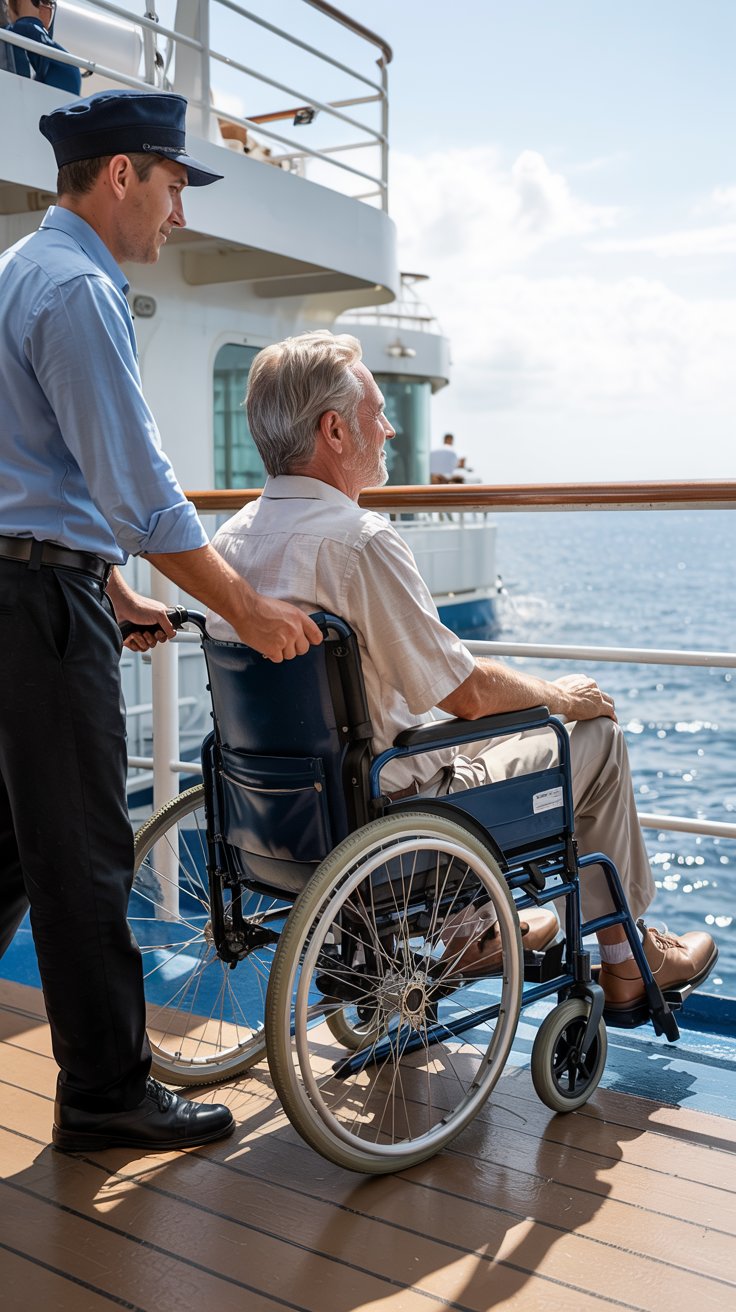
UK passengers sailing from a UK or EU port are covered by EU Regulation 1177/2010, which remains part of retained UK law. This gives you legally enforceable rights at every stage of your journey: before boarding, onboard, and at ports, including assistance with embarkation and disembarkation, accessible information in formats you can use, and the right not to be refused carriage on the grounds of disability alone.
The regulation defines reduced mobility broadly. It covers physical disabilities (permanent or temporary), sensory impairments, intellectual disabilities, and conditions related to age. You do not need to use a wheelchair to qualify for assistance under these rules.
For US itineraries, the Americans with Disabilities Act (ADA) applies to ships calling at US ports, requiring equal access to facilities and services.
One development worth knowing about: the Hidden Disabilities Sunflower scheme is now recognised at some UK departure ports and by certain cruise operators. Ask at check-in whether it applies to your sailing. The lanyard signals to crew that you may need extra time or support, without requiring you to explain your condition repeatedly.
The Honest Picture: What the Data Actually Says
Cruising performs well on accessibility relative to other travel formats, but not perfectly. According to a Department for Transport and Maritime and Coastguard Agency accessibility survey, 80% of passengers with a disability or access need reported being satisfied or very satisfied with their overall journey. That still leaves a significant minority who encountered avoidable barriers, most commonly around lift access (67% satisfaction), designated wheelchair spaces (63% satisfaction), and boarding and disembarkation (76% satisfaction).
The good news is that most of those barriers are predictable and avoidable with the right preparation. The sections below cover where the gaps tend to appear and how to navigate around them.
Choosing the Right Ship
The single most important variable in accessible cruising is ship age. The newer the ship, the more accessible it tends to be. Any time a new cruise ship comes out, accessibility tends to improve. The larger the ship, the more accessible it is. Small ships and river cruises are not ideal for wheelchair users, and many are completely inaccessible.
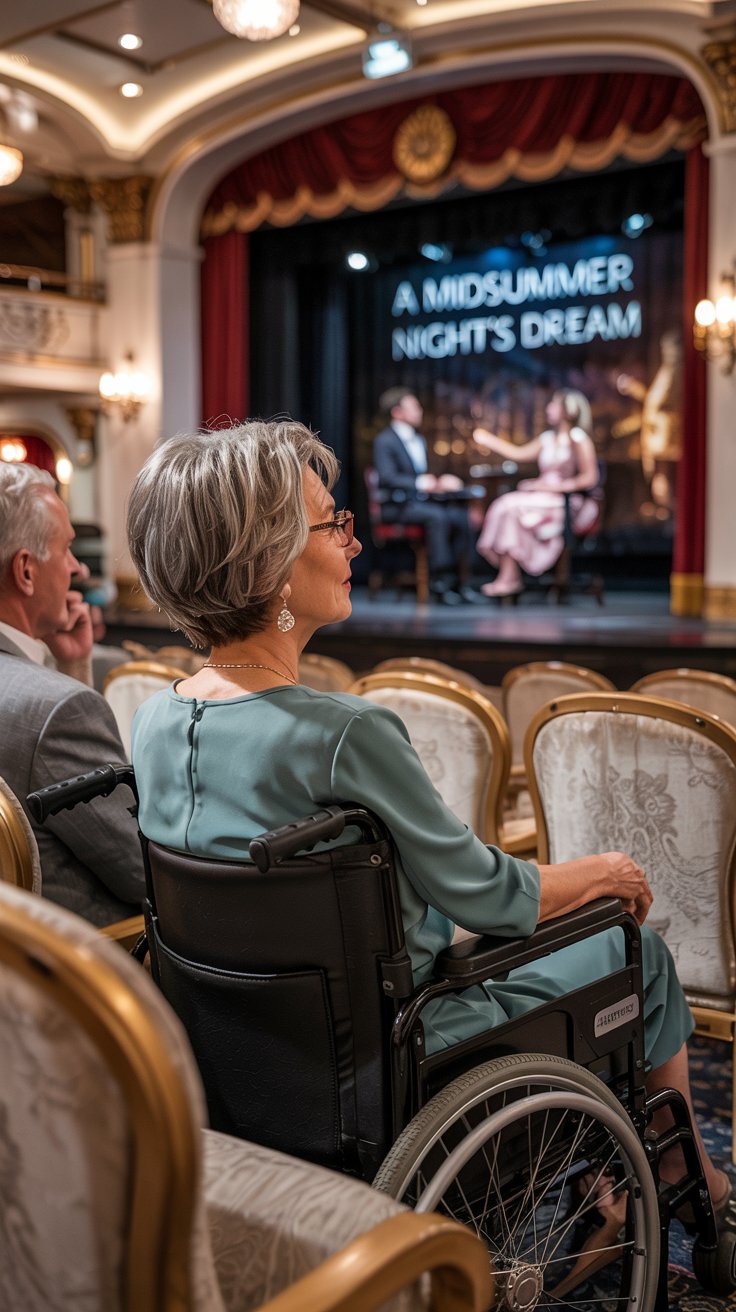
Most newer ships offer excellent wheelchair-accessible design, including wide hallways, elevator banks on both ends of the ship, ramps into lounges, theatre sections designated for mobility devices, and accessible pool lifts.
Here is a rundown of current ships that stand out:
| Ship | Accessible Features | Shore Support |
|---|---|---|
| Carnival Mardi Gras | 80 accessible cabins with wider doorways, wheelchair seating throughout, pool lifts | Beach wheelchairs provided at their private island |
| Royal Caribbean Wonder of the Seas | 44 accessible staterooms with roll-in showers, Magic Carpet platform for tender access | Docks at piers wherever possible to avoid tender transfers |
| Celebrity Beyond | Infinite Veranda accessible cabins, working hearing loops in theatres | Magic Carpet platform makes tendering less difficult than most ships |
| Disney Wish | 35 purpose-designed accessible cabins, specialist cabins for deaf travellers | Castaway Cay has paved paths and beach wheelchairs |
| P&O Arvia | 50+ accessible rooms, working pool hoists, orientation tours for blind guests | Growing selection of accessible shore excursions |
| Cunard Queen Anne | 33 fully accessible staterooms across inside, balcony and Grills suite categories; dedicated wheelchair spaces in entertainment venues; pool hoist with chair on all ships (book 24 hours in advance) | Excellent for UK departures from Southampton |
One to watch: Regent Seven Seas is planning additional accessibility features for the new Seven Seas Prestige, due in 2026
Finding the Right Cabin
Accessible staterooms vary enormously, not just between cruise lines, but between ships within the same fleet. The good ones include:
- Doorways wide enough for any wheelchair or scooter (get the exact measurement in writing)
- Roll-in showers with no lip, not a “low threshold” that still requires lifting
- Grab bars positioned where you actually need them, not where an architect thought you might
- Toilets at a comfortable transfer height with clear space on both sides
- Lowered closet rails and reachable controls
- Emergency call systems that have been tested recently
Accessible cabins vary considerably. Some are designed primarily for manual wheelchair users, others accommodate larger powered chairs. Ask for exact doorway widths, turning space measurements, and bathroom layout details before confirming.
Cabin location matters as much as the cabin itself. An accessible cabin located far from elevators, dining venues, or theatres can create daily challenges. Proximity to elevators and low-traffic pathways has a greater impact on comfort than overall cabin size.
One more thing worth knowing: ADA cabins may be reassigned close to sailing. If an accessible cabin is booked by a guest who does not require accessibility features, cruise lines may reassign that cabin to accommodate travellers with documented mobility needs. Book early, and confirm your booking specifically requires an accessible cabin in writing.
For a broader look at how cabin choice affects your entire cruise experience, our guide to best cabin location and cruise cabin types is worth reading before you commit.
What Life Onboard Actually Looks Like
Getting Around the Ship
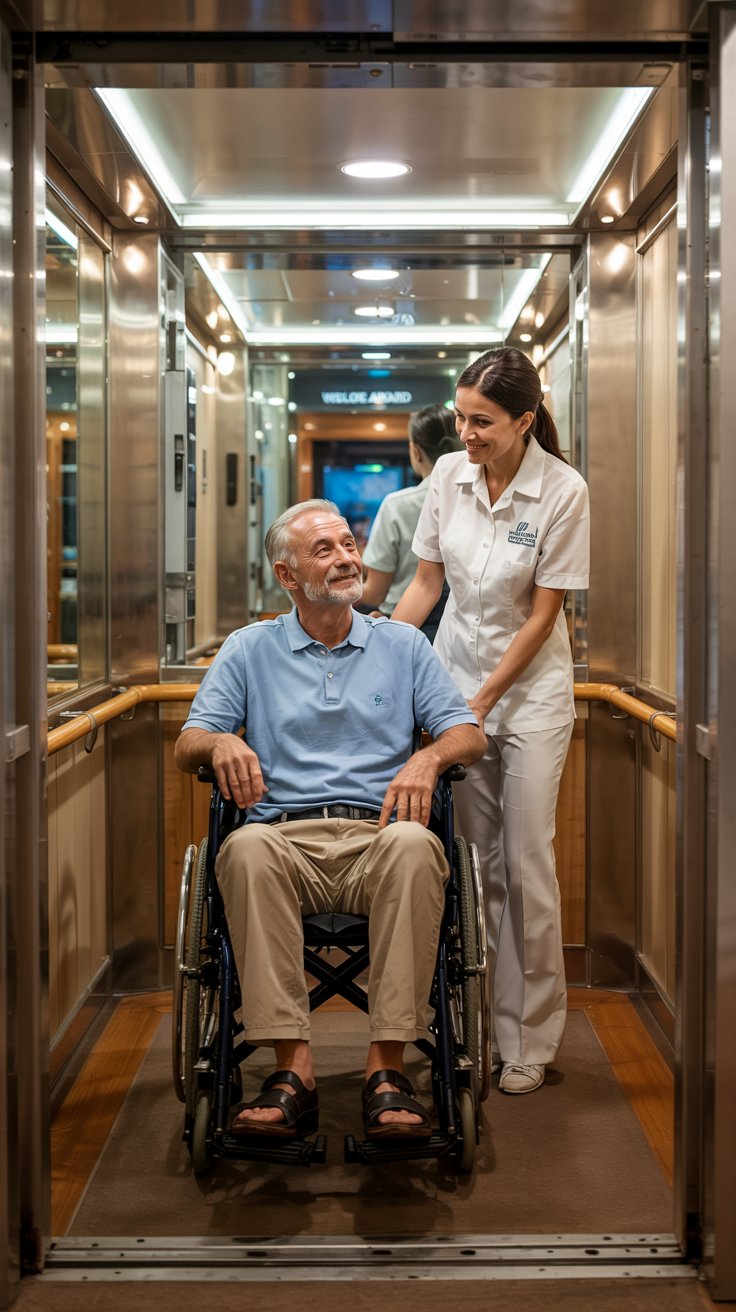
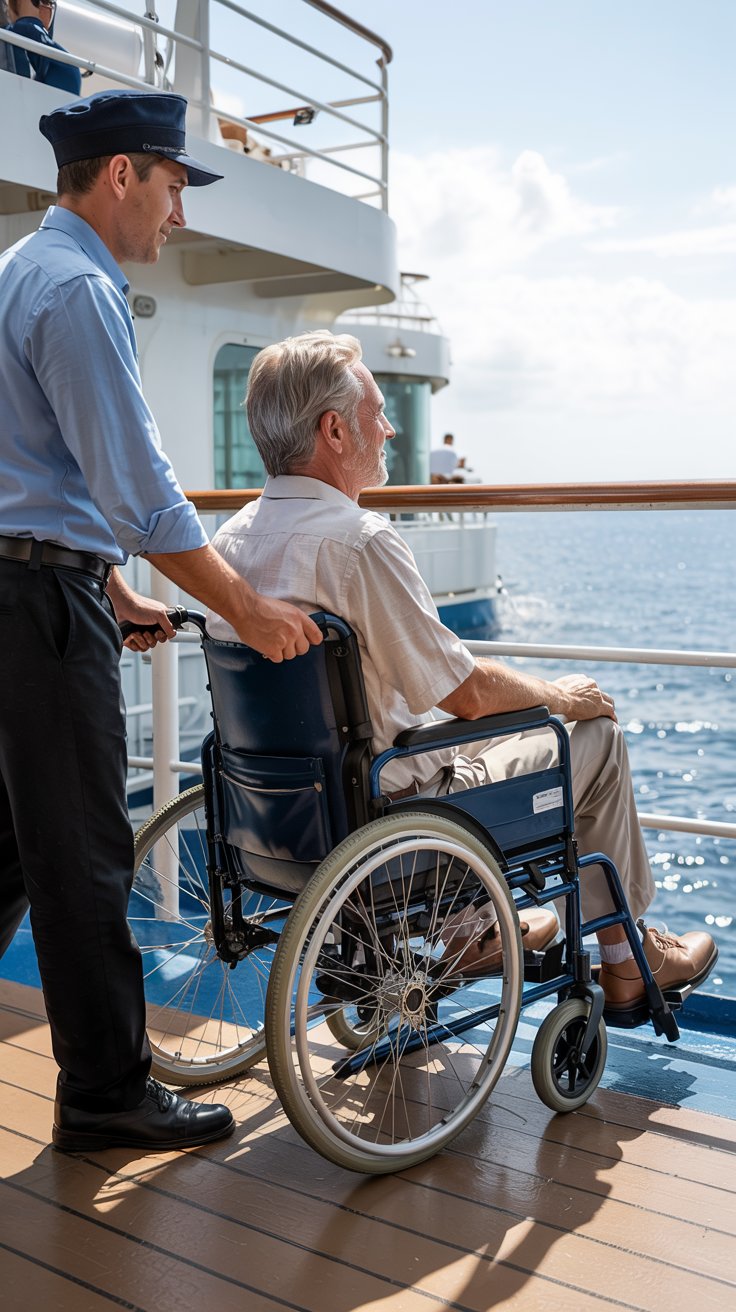
On newer ships, accessible routes cover all public areas. Automatic doors stay open long enough to be useful. Ramps are properly graded. Elevators exist at both ends of the ship, though they fill up fast at changeover times. Knowing your routes in advance reduces reliance on a single point of failure, particularly around lift access, which was the lowest-scoring accessibility element in passenger surveys. Do a recce on embarkation day, before the ship fills up.
Entertainment and Dining
Most theatres now include assistive listening systems compatible with hearing aids. Several lines provide captioning or BSL/ASL interpreters: request this at least 60 days before departure. Restaurant staff will generally help with plate carrying at the buffet and can find tables that accommodate mobility devices.
Tech that now comes as standard on newer ships:
- Braille signage (on the better ships, this is actually accurate)
- Visual alert systems in cabins for deaf or hard-of-hearing passengers
- Closed captioning on cabin televisions
- Digital deck plans showing accessible routes
Medical Needs Onboard
All major cruise ships carry medical facilities, but the level of care varies. Princess Cruises has built a strong reputation for managing passengers with chronic conditions and is particularly well set up for oxygen users and dialysis patients. If you rely on medical equipment, confirm arrangements directly with the cruise line’s medical team, not just the booking desk.
Neurodivergent and Sensory Access
Cruises can involve busy embarkation days, loud entertainment spaces, crowded dining rooms, and unpredictable sensory environments. Disney stands out here. Their attention to sensory processing needs is built into the design of their ships and private islands, not bolted on as an afterthought. If stimulation and noise are significant factors, look at smaller ships, quieter itineraries, or lines with an older demographic (Holland America’s passenger profile means lower noise levels and less crowding at peak times).
Tender Ports: The Part No One Wants to Talk About
Tender ports, where the ship anchors offshore and passengers are ferried ashore by small boat, remain the single biggest practical problem for passengers with mobility disabilities. This is not a niche issue. Popular ports including Santorini, Mykonos, Cannes, Monaco, Dubrovnik, and Kotor all operate via tender at least some of the time.
Where passengers travel ashore by smaller boat rather than walking directly off the ship, no ramp or lift access may exist. Guests with assistive devices who are unable to take a few steps will be unable to board tenders unless roll-on capability is available. Motorised wheelchairs and mobility scooters cannot be taken on tenders unless roll-on capability is confirmed. Weather and sea conditions can prevent tender access on the day regardless of what was planned.
What to do about it:
- Before booking, check every port in your itinerary and ask directly whether tendering is involved
- Ask specifically about roll-on capability for your equipment. Get this confirmed in writing
- Raise it with the ship’s accessibility team several days before each tender port, not on the morning
- Confirm arrangements four to six weeks before departure and again closer to sailing
- Plan what you will do with your time if you cannot get ashore. A quiet ship on your own terms is genuinely pleasant; an unexpected one is not
Holland America says all but two of its ships offer a safe transfer system for passengers who use wheelchairs at tender ports. That is worth factoring into itinerary planning if tender ports are a concern.
Shore Excursions: Trust But Verify
Cruise lines have improved at labelling accessible excursions, but their definition of “accessible” can be generous to the point of absurdity. An excursion marked accessible may involve cobblestones, steep gradients, or “short steps” that turn out to be a flight of stairs.
Your best options are either to book through the cruise line and speak directly to their shore excursions team (not the website form), or to use a specialist operator. Researching ports independently rather than relying solely on cruise line information is always advisable. Our port safety guide covers the kind of on-the-ground variables that accessible excursion listings tend to gloss over.
Private Islands: The Accessibility Bright Spot
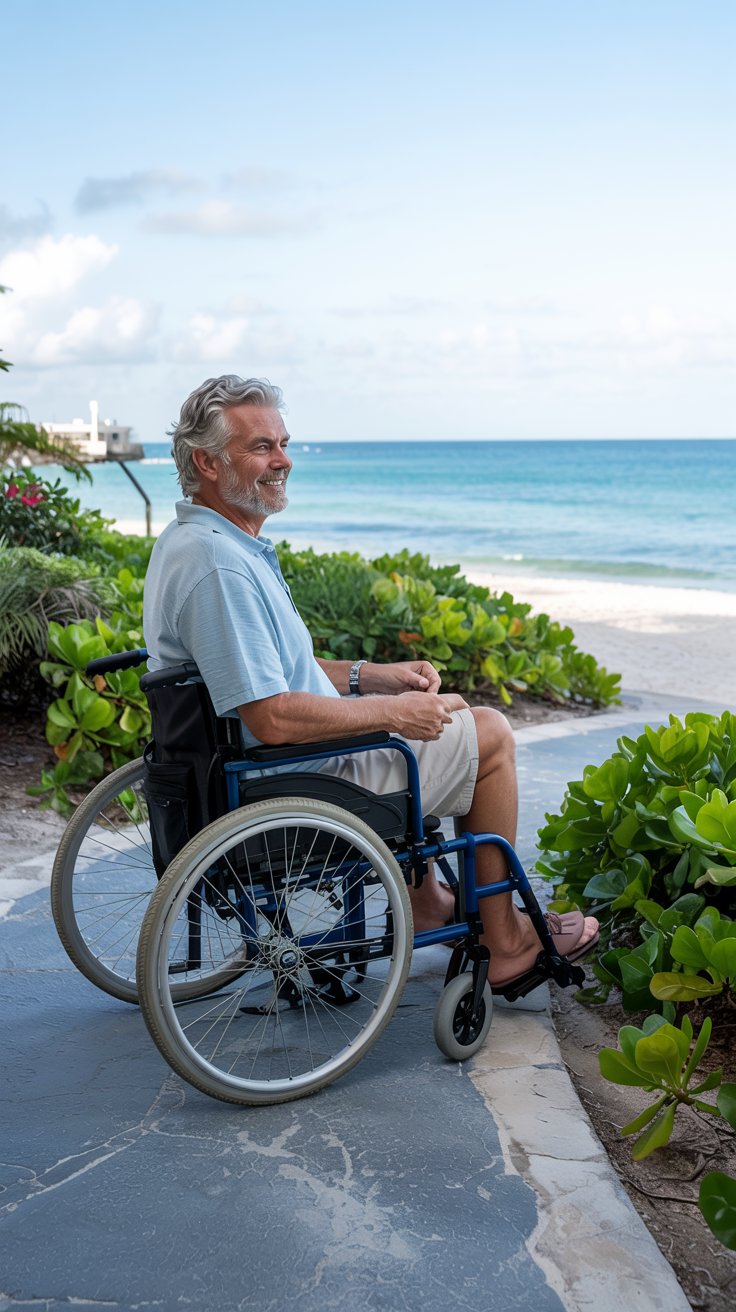
Cruise line private islands consistently outperform regular ports on accessibility. Royal Caribbean’s Perfect Day at CocoCay was designed to be accessible from the outset, with seamless ramps, pool lifts, and free beach wheelchairs. Disney’s Castaway Cay and Lookout Cay at Lighthouse Point offer paved pathways throughout shopping and dining areas, accessible trams for transport around the islands, and access mats that help get wheelchairs and scooters close to the water without navigating through sand.
If private island days are on your itinerary, these stops are often the most straightforward of the whole cruise.
Cruise Lines: An Honest Assessment
| Cruise Line | Strengths | Worth Knowing |
|---|---|---|
| Royal Caribbean / Celebrity | Consistently ahead on accessible design, Magic Carpet tendering platform, excellent private island access | Best for wheelchair users on newer ships |
| Princess | Strong support for chronic conditions, well set up for oxygen users and dialysis patients | Not the newest ships but genuinely understands medical needs |
| Disney | Unmatched attention to sensory access, private islands purpose-built for wheelchair use | More expensive; best for families including those with neurodivergent needs |
| Holland America | Quieter environment, older demographic means less crowding, good tender transfer system | Smaller ships mean fewer accessible rooms. Book very early |
| P&O Cruises | UK departures from Southampton, Arvia has 50+ accessible cabins, working pool hoists | Shore excursion accessibility is improving but still patchy |
| Cunard | Queen Anne’s accessible suite options including Grills suites, pool hoist on all ships | Book pool hoist 24 hours in advance at the purser’s desk |
| Norwegian | Dedicated accessibility coordinators, improving shore excursion options | Good mid-range option with decent accessible cabin stock |
| Carnival | Better than the branding suggests, Mardi Gras has 80 accessible cabins | Best value entry point for accessible cruising |
For a deeper look at individual lines, our cruise lines guide covers each fleet in detail.
Planning Checklist: What to Do and When
Most accessibility problems during cruises come from avoidable mistakes. The most common are: booking too late and finding accessible cabins already taken; relying solely on online forms without speaking to the accessibility team directly; failing to confirm arrangements four to six weeks before departure; and overlooking tender ports in the itinerary until it is too late to change plans.
At booking:
- Confirm the exact accessible cabin specification in writing: doorway width, shower type, turning radius
- Check every port for tender vs. gangway access and ask about wheelchair provision
- Complete the cruise line’s accessibility/medical questionnaire immediately, then follow up by phone
- Book travel insurance from a specialist provider. Standard policies often exclude pre-existing conditions or set mobility equipment cover at levels that would not replace a powered wheelchair. UK specialist providers include Staysure, AllClear, and Free Spirit. Compare policies carefully and confirm coverage by telephone before purchasing, then request written confirmation.
Four to six weeks before sailing:
- Re-confirm all accessibility arrangements directly with the cruise line’s accessibility team
- Request any equipment (shower chairs, raised toilet seats) and confirm availability
- Check each port day and flag tender ports in advance
Onboard:
- Do a full accessible route recce on embarkation day
- Locate the accessibility coordinator and introduce yourself
- Raise tender port concerns with the relevant team several days before each port, not on the morning
- Join disability-focused cruise groups online. Recent firsthand reports from other passengers are more reliable than any official information
For practical packing advice, our cruise packing checklist covers the essentials. A good quality case with spinner wheels makes a real difference when you are navigating embarkation terminals independently. Look for lightweight hardside options with four 360-degree wheels rather than two.
Common Questions
Can I bring my own mobility scooter on a cruise?
Yes, on most major cruise lines, but with conditions. The scooter must fit through your cabin doorway and be stored inside the cabin when not in use, not in corridors, which creates a safety issue. Measure your scooter and get the exact doorway dimensions of your specific cabin before booking. Motorised scooters cannot be taken on tenders at most lines unless roll-on capability is specifically confirmed.
What happens if I need medical equipment like oxygen or dialysis?
This needs to be arranged directly with the cruise line’s medical team at the time of booking, not through the general bookings process. Princess Cruises and Holland America have particularly well-developed protocols for oxygen users. Dialysis arrangements require advance coordination with onboard medical staff and, in some cases, shore-side facilities at each port.
Do cruise lines charge extra for accessible cabins?
No. Accessible cabins are priced identically to equivalent standard cabins in the same category. The limitation is availability: there may be as few as 30-40 accessible cabins on a ship carrying 5,000 passengers. Book as early as possible.
What if the accessibility arrangements I was promised are not in place when I board?
Report it immediately to the ship’s guest services and accessibility coordinator, not just the cabin steward. Document everything in writing. Under EU Regulation 1177/2010, you have a right to the assistance you were promised at booking. If the issue is not resolved onboard, you can pursue a complaint through the cruise line and, if necessary, the Maritime and Coastguard Agency.
Are cruises from the UK suitable for people who do not fly?
Cruises from UK ports are an excellent option for passengers who cannot or prefer not to fly. Southampton, Dover, Liverpool, and Tilbury all have direct cruise departures. Our cruises from the UK guide covers the full range of options including itineraries, departure ports, and which lines offer no-fly sailings.
Is the Hidden Disabilities Sunflower scheme recognised on cruise ships?
The Hidden Disabilities Sunflower scheme is now recognised at some UK ports and by certain cruise operators. Recognition is not universal. Ask at check-in whether it applies to your sailing and line. Where it is recognised, crew will understand that you may need extra time, clearer communication, or discreet support without requiring you to explain your condition.
Last Updated: 30 May 2026
2 responses
I need assessable cruise ship information for cruises from uk round trip in 2027. Is there a price difference. I will only need a manual wheelchair. Hope to hear from you soon.
Hi Dawn
Can you please give me more information about which cruise from the uk you are on?