
The Ross Sea is Antarctica’s least visited and most remote expedition cruise region, navigable only in January and February. Ships sail from New Zealand or Australia on voyages of 21 to 30 days to reach Scott and Shackleton’s huts, emperor and Adélie penguins, the Ross Ice Shelf and 24-hour daylight. It is rough, costly and bookings fill early.
Why the Ross Sea Feels Like a Different Antarctica
This is not the Antarctica of quick ten-night fly-cruise holidays. The Ross Sea is a deep bay of the Southern Ocean between Marie Byrd Land and Victoria Land, bounded to the south by the enormous Ross Ice Shelf and to the west by Ross Island and Victoria Land. It is the hardest major Antarctic region to reach by ship, the one with the strongest expedition history, and the only one where you can stand beside the huts used by Scott, Shackleton and Borchgrevink.
Around 1,066 tourists visit in a typical season, compared with more than 118,000 visitors across Antarctica as a whole. There are no hotels on the continent. Your ship is your hotel, restaurant, lecture theatre, safety net and observation platform.
The Ross Sea region also contains the world’s largest marine protected area, roughly 1.55 million square kilometres. That protection matters to the wildlife you see, from Adélie penguin mega-colonies to fish-eating Type-C killer whales. Expect big ice, vast tabular icebergs, serious Southern Ocean weather and long days of low golden light.
Ross Sea, Antarctic Peninsula or Antarctic Circle: Which One Should You Choose?
Most Antarctic cruise passengers head to the Peninsula because it is close to South America, relatively sheltered and easy to reach across the Drake Passage. A typical Peninsula trip lasts 10 to 14 days, with two days of Drake crossing each way, or a two-hour flight on a fly-cruise itinerary.
A Ross Sea voyage is completely different. You need 21 to 30 days, sail five or more days out of New Zealand or Australia before you even reach the Antarctic coast, and commit to long, often rough Southern Ocean transits across the roaring forties, ferocious fifties and screaming sixties.
The Peninsula is greener, busier and more densely packed with penguin rookeries and zodiac sites. The Ross Sea is dominated by ice shelves, historic huts, enormous glacial scenery and a much more spread-out, wilder wildlife experience. Crossing the Antarctic Circle on a Ross Sea voyage is realistic because the route runs far south. The Circle sits at roughly 66°33S and shifts slightly each year. Expect a shipboard ceremony, horn blast, toasts, a group photo and possibly entry into the Order of the Red Nose.
If you are still choosing between Antarctic regions, start with our Antarctic Cruise Destinations Guide. For other remote polar regions, you may also find our Falkland Islands Expedition Cruise and Weddell Sea Cruise Adventures guides useful.
Where Ross Sea Voyages Actually Leave From
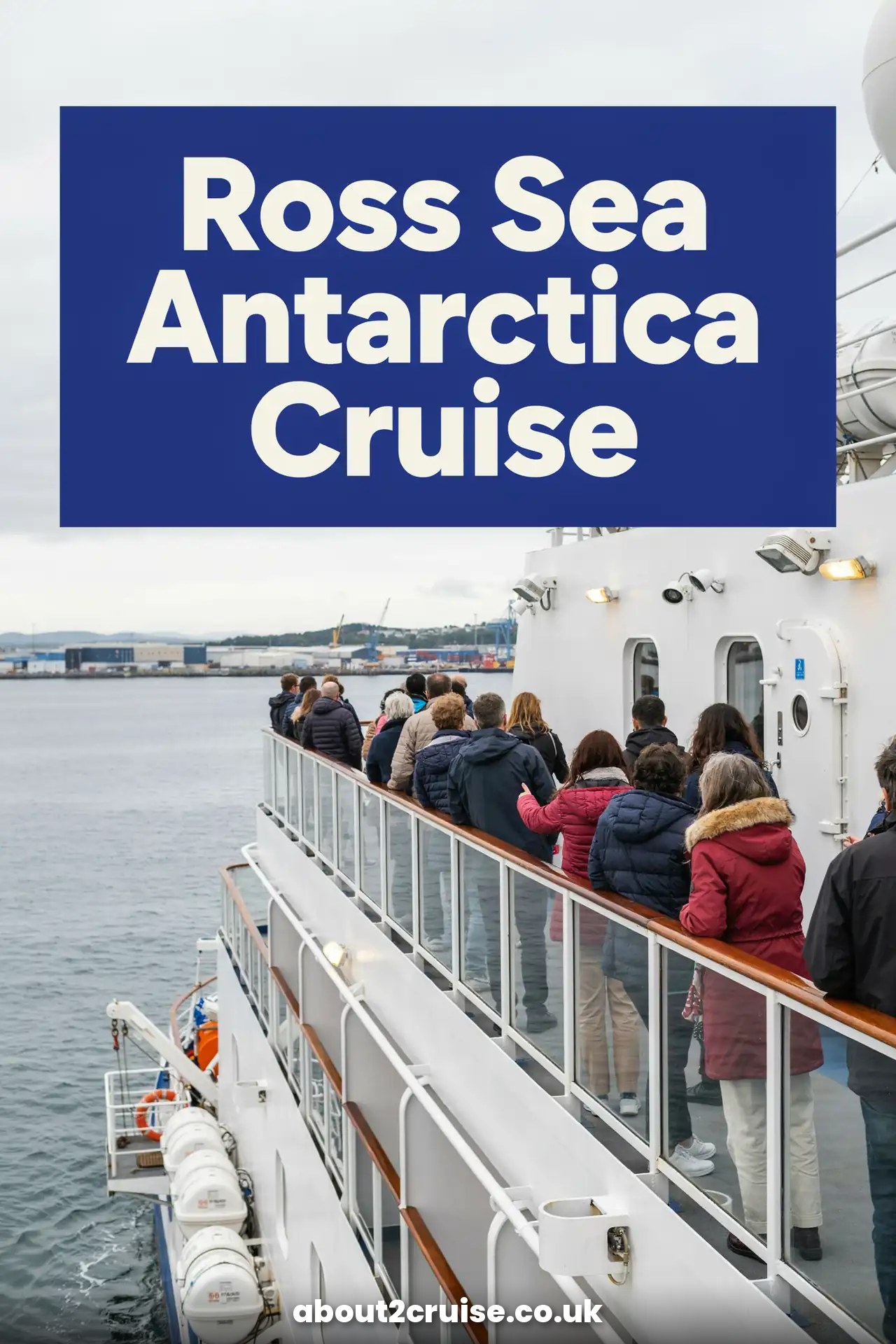
There is no Ross Sea gateway in Antarctica itself. Voyages start in New Zealand or Australia. The real departure ports are Bluff, Lyttelton or Port Chalmers in New Zealand, Timaru in New Zealand, and Hobart in Australia. Some operators market the gateway as Queenstown, Christchurch, Invercargill or Dunedin because they include a coach transfer from the city to the ship.
- Bluff: Used by Heritage Expeditions. This is a working industrial port at the bottom of the South Island. Passengers are shuttled from the ship to the port gate. The gate to Stirling Point is about 2.5 km. A taxi from the gate to Invercargill city centre runs roughly NZ$85 to NZ$100 each way.
- Port Chalmers: The cruise port for Dunedin, about 30 km and roughly 30 minutes by road from the city centre. Ponant’s shorter Ross Sea voyage uses Port Chalmers.
- Timaru: Used by Scenic, about 160 km south-west of Christchurch. There is no passenger terminal building. Passengers walk across the port apron or use a free shuttle. Scenic sells coach transfers from Christchurch on embarkation day.
- Hobart: Used by Aurora’s Ross Sea Odyssey, departing from Macquarie Wharf No. 2. Hobart is compact and easy, but the voyage ends in Dunedin.
If you are searching for Antarctic cruises from New Zealand, this is the answer: only a handful of expedition departures a year leave from Bluff, Port Chalmers or Timaru, and they go to the Ross Sea side of the continent, not the Peninsula.
A Realistic Ross Sea Itinerary and How Much Time You Actually Get in Antarctica
A standard Heritage Expeditions Ross Sea voyage runs 28 days. Day one is a hotel night in Queenstown or Invercargill with an evening briefing. Day two is a coach to Bluff to board. After that you spend several sea days heading south through the sub-Antarctic islands before reaching the Antarctic coast. In a 28-day trip you can expect around 12 days in Antarctic waters, with the rest spent at sea or in sub-Antarctic island landings.
A shorter Ponant voyage is 21 nights round-trip from Dunedin. Aurora’s Ross Sea Odyssey runs 26 days from Hobart to Dunedin. Scenic’s Ross Sea voyages are 23 or 24 nights from Timaru. Every route is different, but most include visits to some of the New Zealand sub-Antarctic islands, then Cape Adare, Ross Island, the Ross Ice Shelf, McMurdo Sound and the Balleny Islands, before the long return north.
Ross Sea Ships and Operators at a Glance
- Heritage Expeditions, Heritage Adventurer: 140 guests, ice class 1A Super, 14 Zodiacs, built 1991 and extensively refurbished. The 28-day voyage round-trip from Bluff is typically advertised from around £27,999 per person, excluding landing fees and optional extras. Heritage carries around 10 lecturers on Ross Sea voyages, including polar historians, conservation specialists and filmmakers. The ship has an open bridge policy, observation lounge, heated saltwater pool, gym and sauna.
- Aurora Expeditions, Greg Mortimer: Up to 148 passengers, but just 130 on expedition. 76 cabins, roughly 80% with private balconies. The 26-day Hobart to Dunedin voyage starts from about US$39,695 per person twin share, with the cheapest triple cabin from around US$35,495. Aurora rates the voyage moderate in activity level.
- Ponant, Le Soléal: A larger luxury expedition ship with 264 guests and 132 staterooms and suites. The 21-night round-trip from Dunedin is marketed from around £18,250 per person or US$34,800 double occupancy. It is shorter and more refined, but a larger passenger count means landing rotation and less time ashore at heavily restricted sites.
- Scenic Eclipse II: 228 guests, but limited to 200 in Antarctica. Polar Class 6, 168 metres, with two helicopters, one submersible, Zodiacs, kayaks and paddleboards. The Discovery Team can be up to 20 specialists. A 23-night Timaru departure starts from around £23,459 per person, while a 24-night version is advertised from about A$54,640.
No operator publishes landing success rates, so you cannot compare them statistically on how often they reach McMurdo Sound, the ice shelf or the huts. February departures are generally considered the more reliable of the two main sailings in terms of ice breakout. Ask your operator directly about recent seasons and contingency planning before you book. Use our polar expedition cruise enquiry form if you want us to match a ship and itinerary to your travel style.
Can You Visit Ross Island, McMurdo Station and the Historic Huts?
Yes to Ross Island and its historic huts, but only under strict permit control. Ross Island holds Hut Point, Cape Evans and Cape Royds, as well as McMurdo Station and Scott Base. The conserved expedition bases in the Ross Sea region include Borchgrevink’s hut at Cape Adare, Scott’s hut at Hut Point, Shackleton’s hut at Cape Royds, Scott’s hut at Cape Evans, and Hillary’s hut at Scott Base. More than 20,000 artefacts are held across those sites.
You can visit the huts only on an organised expedition where the operator holds the required permits. A nominated guide must supervise every visit. Inside Cape Evans, the maximum number is eight people at any one time, with an annual cap of 2,000 visitors. At Cape Adare, the whole area is capped at 40 people at a time, the hut itself at four, and helicopter landings are prohibited. Inside Discovery hut, selfie sticks are banned and tripods or monopods are only allowed with flat rubber bases.
McMurdo Station itself is a working US research station. No cruise operator sells an ordinary visit to the station. What is advertised as a McMurdo visit is usually a brief landing at historic hut sites such as Hut Point, conditional on ice, weather and permissions. Landings in McMurdo Sound are never guaranteed. The February departure is usually the more successful of the two. When you do land, the setting is extraordinary: Hut Point looking towards Mount Erebus, with volcanic rock, sea ice and a century of exploration history under your boots.
Wildlife You Might See: Emperor Penguins, Adélies, Orcas and More
Cape Adare holds the largest Adélie penguin colony in the world, with roughly 338,000 breeding pairs, mostly on Ridley Beach. Emperor penguin colonies breed at Coulman Island and near Cape Washington. Cape Washington ranges from around 13,000 to 25,000 pairs, making it one of the largest known emperor colonies. On Ross Sea voyages you are most likely to see emperor penguins on ice floes and around Coulman Island, with snow petrels overhead.
Wildlife is more spread out than on the Peninsula, but a good Ross Sea season can produce emperor, royal, king and Adélie penguins, plus minke whales, orca, southern right whales, snow petrels and southern fulmars. McMurdo Sound is where orcas are most often seen feeding among the ice. McMurdo Sound orcas are usually the fish-eating Type-C ecotype. Antarctic toothfish are a known prey species, and Ross Sea orcas are the smallest killer whale ecotype.
Seals include crabeater, Weddell, leopard, elephant and fur seals depending on location and timing. The sub-Antarctic islands add their own superabundance: Macquarie Island has about 3.5 million breeding seabirds and four penguin species, including endemic royal penguins. Campbell Island has more than 6,000 pairs of southern royal albatross, the largest wingspan of any bird. The Snares’ North East Island is claimed to hold more nesting seabirds than all the British Isles together, but landings are not permitted.
The Big Scenery: Ice Shelves, Ice Tongues, Volcanoes and the Balleny Islands
The Ross Ice Shelf is the largest floating slab of ice on Earth, about 480,000 square kilometres. Its seaward cliffs tower roughly 30 metres above the water. Sailing along that ice front is one of the great polar experiences: a wall of blue and white ice stretching far beyond the horizon, calving tabular bergs into the sea.
The Drygalski Ice Tongue extends about 70 km offshore from the David Glacier and is 24 km wide at its broadest point. It is at least 4,000 years old. The Balleny Islands are a heavily glaciated volcanic chain about 160 km long, straddling the Antarctic Circle roughly 270 km north of the mainland. They have Adélie and chinstrap colonies and are excellent for humpback, fin, minke, crabeater, Weddell, elephant and leopard seals in surrounding waters.
Mount Erebus rises 3,794 metres above Ross Island. It is an active volcano and one of the most photographed landmarks on these voyages, often smoking faintly behind the historic huts. The Ross Sea has 24-hour sunlight throughout the season, so landscape photography can happen at any hour.
When to Go: January vs February, Weather and Sea Conditions
The Ross Sea is navigable only in January and February because pack ice limits access. You cannot visit in November, December or March on a standard Ross Sea cruise from New Zealand or Australia. The best answer is straightforward: if you want the Ross Sea, you go in January or February. Early January offers the more pristine snow and ice conditions. February is generally better for ice breakout and access to McMurdo Sound, and Adélie chicks are close to fledging on the February departure.
Temperatures in the Ross Sea region are milder than many people expect in summer. Expect daytime maxima around 0 to 3°C and overnight minima around -2 to -6°C across the season, with roughly 10 or 11 rain days per period. At McMurdo the daily mean sits between about -9°C in December and -5°C in February. Wind chill can make it feel far colder, with travellers reporting -20°C at the height of summer. Daylight is 24 hours in November, December and January, and about 22 hours 35 minutes in February at McMurdo. UV levels can reach 6 to 8 in midsummer, so sunglasses and sunscreen are essential even when you are cold.
The transit south is the wild card. It crosses the roaring forties, ferocious fifties and screaming sixties, and research transits have logged several days of high winds and waves up to 6 metres. Five or so sea days before reaching the Antarctic coast is normal.
What a Ross Sea Cruise Really Costs
Ross Sea voyages are much more expensive than Peninsula trips. A 28-day Heritage voyage may be advertised from around £27,999 per person. Aurora’s 26-day Ross Sea Odyssey starts from about US$39,695, with the cheapest triple cabin around US$35,495. Ponant’s 21-night round-trip from Dunedin is usually the cheapest entry point, marketed from around £18,250 per person or US$34,800. Scenic’s 23-night Timaru trip starts from roughly £23,459 per person, while a 24-night version can be about A$54,640.
Those headline fares are rarely the final cost. Landing fees are often excluded and usually not quantified on the operator’s Ross Sea page. You must pay for UK to New Zealand or Australia flights, pre-cruise hotel nights, travel insurance, transport to the city, visas or electronic travel authorisations, meals ashore, laundry, drinks if not included, optional excursions, and any emergency evacuation gap cover. The real total is normally far higher than the advertised figure once flights and extras are added.
There are no hotels in Antarctica. The ship is the accommodation. Luxury fly-in camps in the interior are a separate, small and extremely expensive product starting from around A$71,500 including flights from Cape Town and five days in Antarctica. For the Ross Sea, the ship is the only practical hotel.
Insurance, Permits, Visas and Medical Evacuation
Travel insurance for a Ross Sea cruise must specify Antarctica. Basic cruise cover is not enough. One operator requires accident and repatriation or emergency evacuation cover of at least US$250,000, with proof emailed 60 days before departure. Search and rescue teams in Antarctic waters may be far away and can take several days to arrive, and they are unlikely to offer advanced life support. You should hold funds or cover for the full cost of emergency medical evacuation.
British nationals on a British expedition, or taking a British vessel into Antarctica, need a permit from the Polar Regions Department of the FCDO. Your operator normally arranges this on your behalf as part of the expedition paperwork. Travelling to Antarctica without permission can bring a fine or a prison sentence. IAATO and protected-area permits govern landings, not just the visit to the continent.
Visas and travel authorisations are separate. New Zealand requires a New Zealand Electronic Travel Authority for many passport holders, even if you are only transiting. Australia has its own entry requirements. Check both before booking flights. If your ship calls at sub-Antarctic islands, operators hold DOC concessions and quarantine procedures apply to every visitor.
Fitness, Mobility and Seasickness: Be Honest With Yourself
Expedition cruising means gangways, stairs, Zodiac embarkation and walking on uneven, slippery terrain. Operators such as Aurora rate the Ross Sea voyage as moderate, with daily shore excursions, guided hikes and outings. If you use a walking stick, have a recent injury, balance problems or major mobility limitations, contact the operator before booking. Romantic as it sounds, this is a physical trip in a remote environment, not a traditional cruise where you simply step onto a quay.
Seasickness is a serious planning point. The Southern Ocean crossing can produce high seas and the Ross Sea pack can change abruptly once you leave the shelter of Mount Erebus. The best cabin for motion is lower down and mid-ship, not necessarily the most expensive. Take medication you have tested, or discuss patches with a pharmacist. Keep a small seasickness kit in your hand luggage for embarkation day.
Cabin Choice: Is a Balcony Worth the Extra Money?
On an Antarctic Peninsula cruise, moving from a porthole to a balcony can add US$4,000 to US$6,000 per person. The Ross Sea is even more expensive. A balcony is lovely when the ship is at the ice edge, but Antarctica is often too cold, windy or wet to sit outside for long. There is near-constant summer daylight, so you do not need a balcony for light. Most expedition ships have open decks and observation lounges with far better all-round views.
On Aurora’s Greg Mortimer, about 80% of cabins have private balconies. Balcony grades run from roughly US$39,695 to US$44,895 per person twin share, against around US$36,595 for an Aurora twin cabin and US$35,495 for a triple. The practical advice is to choose a lower mid-ship cabin for comfort. If the budget allows, a balcony is nice for quick photographs and private fresh air, but it is not essential on a Ross Sea cruise.
Packing and Photography for Wet, Cold Landings
Operators typically include a polar parka to keep and loan waterproof boots. Even so, your own layering matters. Pack thermal base layers, fleece mid-layers, waterproof overtrousers, gloves, a warm hat, neck gaiter or buff, and thick socks. Bring polarised sunglasses, high-factor sunscreen and lip balm. UV can be intense even in cold air. A waterproof daypack or dry bag protects camera gear on Zodiac rides.
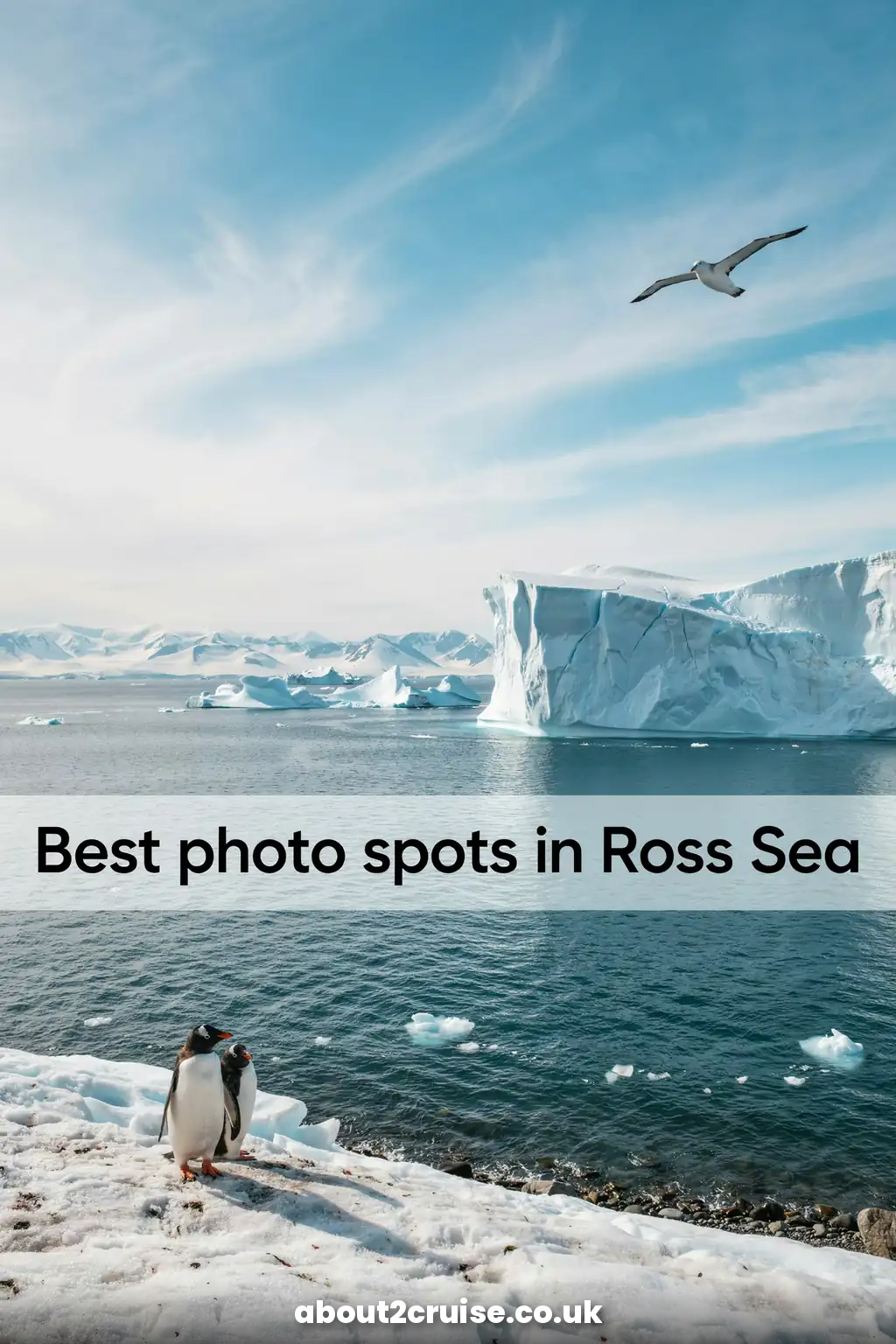
Photography in the Ross Sea is about 24-hour daylight, low golden light, ice textures and wildlife. There is no fixed golden hour slot because the sun may be low at any time. At Cape Evans you can photograph the hut with Mount Erebus behind. Along the Ross Ice Shelf, the 30-metre ice cliffs are the shot. Off Coulman Island, emperor penguins on ice floes with snow petrels overhead can keep photographers working for hours. Keep spare batteries warm and carry more memory cards than you think you need.
You will do wet and dry landings. Waterproof overtrousers and boots are essential. Operators will brief you on how to clean your gear before and after landings. Do not kneel, sit or lie down for photos. It is banned under IAATO visitor guidelines, and it also protects unknown nesting sites and fragile vegetation.
IAATO Rules, Landing Permits and Why You Can’t Kneel on Shore
Antarctica is open to visitors, but only through licensed, permitted operators working within the Antarctic Treaty system and IAATO. You cannot simply book a last-minute shore tour. The rules exist because the Ross Sea region is protected, heavily researched and historically sensitive.
Visitors are asked to refrain from sitting, kneeling or lying down, or placing equipment on the ground or snow, on shore excursions. The reason is practical and environmental: unknown nests, delicate lichens, and historical sites can be damaged by pressure, and a kneeling person is harder to move quickly if wildlife approaches. Keep a minimum distance of 5 metres from birds, 5 to 15 metres from leopard seals, 15 metres from fur seals and sea lions, and 25 metres from jousting bull elephant seals. Animals have right of way. Never surround an animal or cut off its route to the sea.
Biosecurity is strict. You will inspect and clean boots, clothing, pockets, tripod feet and bag straps before and after landings. New Zealand subantarctic island landings require entry permits, and tourists may only land at specific sites on Enderby Island, the main Auckland Island and Campbell Island. The Snares are only visited by Zodiac because landings are not permitted. Hats, gloves and velcro are common quarantine traps. Drones are generally not allowed unless explicitly authorised by the operator and permit conditions, which is rare.
Sub-Antarctic Islands You May Visit Along the Way
Before you reach the Ross Sea, many voyages call at the New Zealand sub-Antarctic islands. The Snares are a spectacle from the water but landing is prohibited. Enderby Island and the main Auckland Island are possible landing sites under DOC entry permit. Campbell Island, with its megaherb fields and southern royal albatrosses, is another prized stop. Macquarie Island, on some routes, may be the wildlife highlight of the entire trip, with royal penguins, king penguins and seabirds in overwhelming numbers.
These islands are not casual add-ons. Operators must hold a DOC concession, vessels must meet clean-hull rules and be inspected before coming within 1,000 metres, and no more than one cruise ship may be in any bay at any one time. Landings depend on swell, permit conditions and quarantine inspection. Pack your camera because the megaherb fields at peak flowering are extraordinary.
UK Flights and Departure Port Logistics
There are no nonstop flights from the UK to New Zealand. Every routing involves at least one connection via Asia, the Gulf or Australia. London to Christchurch with one stop takes roughly 23 hours 35 minutes to 25 hours 30 minutes depending on routing. Total UK to New Zealand itineraries usually run 25 to 28 hours with one or two stops. Fly into Christchurch for Timaru departures, Queenstown or Invercargill for Bluff departures, Dunedin for Port Chalmers, or Hobart for Aurora’s Hobart departure.
Scenic asks inbound Christchurch flights to arrive before around 10:30am for its 2pm coach to Timaru, and suggests booking outbound flights after 2pm on return. Heritage coaches passengers from Queenstown or Invercargill to Bluff on embarkation day, with a Queenstown departure around 3pm. Disembarkation at Bluff includes a complimentary coach to Invercargill or Queenstown airports, but onward travel should not be booked before midday from Invercargill or 3pm from Queenstown.
Hotels in Bluff itself are limited. Most passengers stay in Invercargill or Queenstown before the voyage. In Hobart, the cruise terminal is at Macquarie Wharf No. 2, with hotels within a few hundred metres including MACq 01, Henry Jones Art Hotel, The Tasman and Hotel Grand Chancellor. In Dunedin, city hotels are about 30 km from Port Chalmers, so allow 25 to 30 minutes by road. Timaru has no passenger terminal building. You walk across the port apron or use a free shuttle. Parking and left luggage at these ports are not well documented, so check directly with your operator or hotel.
Life On Board: Lectures, Zodiacs and Staying in Touch
Expect a serious expedition programme rather than a big-ship entertainment schedule. Heritage Adventurer carries around 10 lecturers on Ross Sea voyages. The team may include polar historians, a former programme manager of the Ross Sea Heritage Restoration Project, a former chair of the Antarctic Treaty’s Committee for Environmental Protection, and BBC Natural History Unit filmmakers. Zodiac operations happen daily when conditions allow. You will be briefed on landing plans, safety, wildlife behaviour and the history of each site.
Wi-Fi on board is by satellite and speeds vary with location and weather. Heritage Adventurer has Starlink Wi-Fi, but no ship can promise reliable coverage in the deep Southern Ocean. Mobile phone reception disappears quickly after leaving port. Use satellite Wi-Fi for messaging, weather checks and small emails. Avoid large uploads. You are genuinely off the grid for most of the voyage, so set up an emergency contact plan before you leave.
Booking Early, Cancellation Terms and Comparing What’s Included
Ross Sea voyages have only a few departures per season, and they sell out far ahead. Book early, especially if you want a specific cabin grade or one of the two main January/February sailing windows. Compare the full package, not just the headline fare. One operator includes a hotel night with dinner and breakfast before embarkation. Another may include a parka and loan boots, a coach to the port, or flights within Australia or New Zealand. Some fares exclude landing fees and optional extras.
Typical terms from one expedition operator require a 25% non-refundable deposit within seven working days, with the balance due 120 days before departure and a medical self-assessment form due 45 days before. Cancelling 121 days or more before departure may forfeit the deposit but return it as future cruise credit. You need to read each operator’s cancellation schedule carefully because some deposits are harder to recover than others.
If you are comparing ships and dates, use our polar expedition cruise enquiry form. Tell us your preferred month, cabin budget, mobility needs and whether you want the longest possible Antarctica time or a shorter, more affordable introduction. We will help you match the right Ross Sea operator.
Common Ross Sea Questions, Answered
Can I fly to Antarctica for a Ross Sea cruise?
No. Tourist fly-cruise operations fly to King George Island and focus on the Antarctic Peninsula. The Ross Sea is reached only by ship from New Zealand or Australia. There is no commercial fly-cruise shortcut to the Ross Sea for standard expedition tourism.
How do I get to Antarctica by cruise or flight?
For the Peninsula, you can take a traditional cruise from Ushuaia or Punta Arenas, or a fly-cruise that avoids the Drake Passage. For the Ross Sea, you must take a ship from New Zealand or Australia. The voyage itself is the only way in or out.
Are Antarctic cruises from New Zealand common?
No. There are only a handful of Ross Sea departures each season from Bluff, Port Chalmers or Timaru, and they operate only in January and February. They are specialist expedition voyages, not frequent round-the-world cruise ship calls.
Can you visit Ross Island and McMurdo Station?
You can land on Ross Island at historic hut sites such as Hut Point, Cape Evans or Cape Royds when permits, ice and weather allow. You cannot simply tour the working McMurdo Station. Visits marketed as McMurdo are usually landings at nearby historic sites.
What is the best month for the Ross Sea?
January for the most pristine ice and snow, February for better ice breakout and more reliable access to McMurdo Sound. February also gives Adélie chicks close to fledging. Both months have 24-hour daylight or near-constant daylight and similar summer temperatures.
Is a Ross Sea cruise worth it compared with the Peninsula?
If you want the historic huts, the Ross Ice Shelf, emperor and Adélie penguins, and the most remote accessible corner of Antarctica, yes. If this is your first Antarctic cruise or you want a shorter, cheaper, calmer trip, the Peninsula is the better starting point.
Is a balcony worth it on a Ross Sea cruise?
It is nice but not essential. A lower, mid-ship cabin is more important for motion comfort. Most ships have observation lounges and open decks. A balcony adds several thousand pounds or dollars and will be too cold and windy to use for much of the voyage.
Why can’t you kneel in Antarctica?
Sitting, kneeling or lying down on shore is prohibited under IAATO visitor guidelines. It can damage fragile vegetation, unknown nests and historic sites, and it slows your ability to move if wildlife approaches. The same applies to placing camera bags or equipment directly on the ground or snow.
Are humans allowed to explore Antarctica?
Yes, but only through permitted operators and under strict Antarctic Treaty and IAATO rules. You cannot travel independently without permission, and you must follow landing site, wildlife distance and biosecurity rules at all times.
How much does it cost to go to Antarctica by boat?
An Antarctic Peninsula cruise can cost much less than a Ross Sea voyage. Ross Sea cruises start at roughly £18,000 to £28,000 per person, but often cost far more once flights, insurance, landing fees and pre-cruise hotels are included. There are no hotels on the continent, so the ship is your accommodation.
Are there hotels in Antarctica?
No. The only accommodation is your expedition ship. There are a small number of seasonal private fly-in camps for luxury interior trips, but they are not hotels and are only reachable by specialist operator. A hotel-style waystation is being built at Puerto Williams in southern Chile, but that is on the way to Antarctica, not on the continent.
What is a Bering Sea cruise and is it related to the Ross Sea?
No. The Bering Sea is in the North Pacific between Alaska and Russia. Bering Sea cruises are a completely different polar and subpolar itinerary. If you searched for Bering Sea cruises, you want Alaska, Russia or the Aleutian Islands, not Antarctica.
What about Viking departure ports and South America/Antarctica 2025?
Viking’s Antarctic expedition ships mainly operate from Ushuaia or Punta Arenas, not the Ross Sea. South America and Antarctica 2025 itineraries are almost always Peninsula cruises. The Ross Sea requires a deep southern voyage from New Zealand or Australia and has a much shorter season.
Last Updated: 18 November 2026