
French Polynesia cruises revolve around nine main cruise ports: Papeete on Tahiti, Moorea, Bora Bora, Raiatea, Huahine, Rangiroa, Fakarava, Nuku Hiva and Hiva Oa. Papeete is the fly-in turnaround hub and the only regular dock; nearly every other call is by tender. Expect small ships, lagoons, overwater-bungalow scenery and very little sea time between islands.
French Polynesia cruise ports map
French Polynesia has 9 main cruise ports: Papeete, Moorea, Bora Bora, Raiatea and Huahine in the Society Islands; Rangiroa and Fakarava in the Tuamotus; and Nuku Hiva and Hiva Oa far to the north-east in the Marquesas. Tap a pin to open that port’s guide.
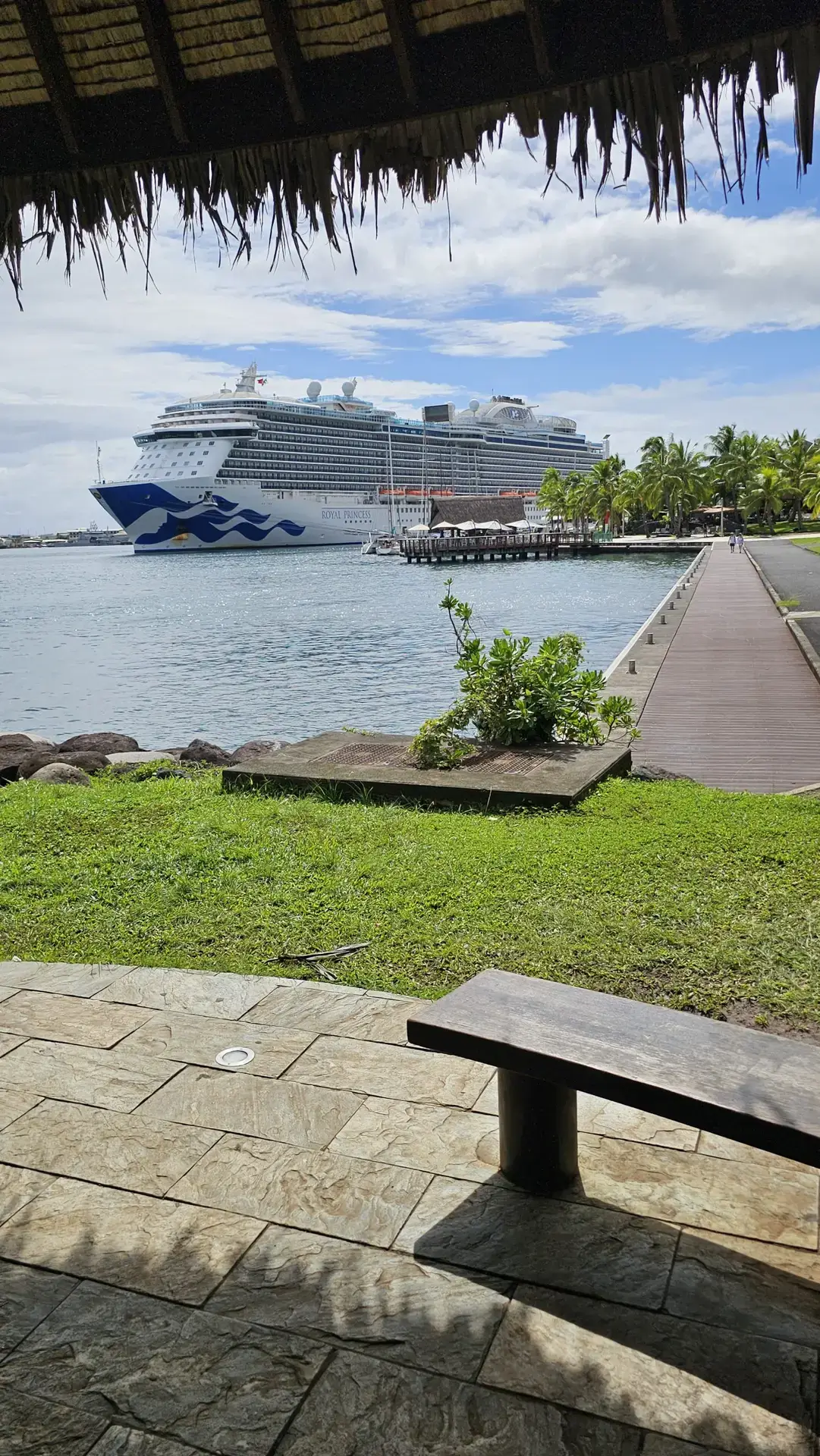
Papeete, Tahiti: The Main Cruise Gateway
Papeete is where almost every French Polynesia cruise begins or ends. Ships dock downtown at the Te Anuanua cruise terminal on Boulevard de la Reine Pomare IV, so you can walk straight into the city centre, the market and the Place Vai‘ete food trucks. Tahiti-Faa‘a airport (PPT) is only about 5 km west; taxis take 10–20 minutes and cost roughly 1,800 XPF by day or 2,300 XPF at night before luggage. Pre-booked private transfers usually run 3,000–5,000 XPF. If you want a buffer night, hotels like Kon Tiki Tahiti and Maitai Express are within walking distance. The terminal has a baggage hall on turnaround days, but day-use left luggage isn’t guaranteed: use a city left-luggage service instead. Papeete is practical, not the scenic highlight.
Moorea Cruise Port: What to Know Before You Tender Ashore
Moorea is a tender port. Ships anchor in Cook’s Bay or the deeper Opunohu Bay, and you’ll land at the Papetoai tender pier or sometimes near Hotel Kaveka in Cook’s Bay. The exact pier can change on the day and no line publishes it in advance, so keep independent plans flexible. At the landing you’ll find craft tables and maybe same-day boat tours, but there’s no town to walk to. The island itself is the most immediately dramatic: Belvédère Lookout, Mount Rotui between the twin bays, pineapple fields, a 60 km ring road and Temae Beach. For a beach day, hire a car or join a shared shuttle; a shared Temae shuttle costs about $25–$30 per person, while a 24-hour rental is around $90–$110. Humpback whales are around from July to November, with regulated swimming from late July to mid-November.

Bora Bora Cruise Port: No Dock, All Lagoon
Bora Bora has no dock and no cruise terminal. Ships anchor in the lagoon off Vaitape and tender you to the Vaitape quay in about five to ten minutes. The signature view is Mount Otemanu rising from the lagoon, and it’s best photographed from the water, not the shore. If you want independent beach time, Matira Beach is about 15 minutes from the quay by shuttle. The classic day out is a lagoon tour: rays, sharks and a coral garden, often with a motu lunch. Resort day passes include a lounger and lunch but cost roughly $135–$340 per person, must be booked ahead, and are tied to fixed resort boat timings. There’s no official public Bora Bora cruise ship schedule from a port authority, so use AIS trackers, Cruisemapper, Cruise Timetables or call your cruise line. Note that Bora Bora caps ships at around 1,200 passengers per call, so only small and mid-size ships visit.
Raiatea Cruise Port: A Real Town and a UNESCO Site
Raiatea usually docks at the Gare Maritime in Uturoa, the island’s main town. You can walk from the berth to shops, the market and cafés. A few cruise lines still list Raiatea as a tender port, so check your line’s list. Uturoa is compact and welcoming, but the rest of the island needs a car, taxi or excursion. The must-see is Marae Taputapuatea, a UNESCO World Heritage site and the most important ceremonial site in Polynesia. Excursions often combine the Faaroa River, Polynesia’s only navigable river, with pearl farms and drift snorkelling in Taha’a’s coral garden. When two ships share the berth, local operators say the port can feel crowded and tenders may be used, so allow extra time.
Huahine Cruise Port: The Slow, Garden Island
Huahine is a tender port with no cruise dock. Depending on your sailing, you may land at Fare village on the west side or at Maroe Bay on the east; sources conflict and no single authority publishes the landing. Fare is the one you want for independence: shops, a market, a supermarket, cafés and an ATM are within a short walk. Maroe Bay is remote and needs pre-arranged transport. Taxis on Huahine are scarce, so a ship excursion or pre-booked tour is usually the safe plan. The island feels like the slower, garden-like Society Island, with vanilla, sacred eels, marae and lagoon views. Most calls are same-day, roughly 07:00–17:00.
Rangiroa Cruise Port: Atoll Life and Drift Snorkelling
Rangiroa is a tender port. Ships anchor in the lagoon near Avatoru and tender to a small pier. This atoll is not a walking destination: the headline experiences are by boat: drift snorkelling or diving at Tiputa Pass, the Blue Lagoon and the island’s little winery. There are no taxis or public transport to speak of, so you’re either on an organised excursion or staying near the landing. Cash matters more here than on Tahiti or Bora Bora; ATMs and card acceptance are limited. Choose Rangiroa if you care about marine life, diving or a wilder atoll day rather than mountains and overwater bungalows.
Fakarava Cruise Port: A Diver’s Atoll
Fakarava is a tender port, landing at Rotoava village on a UNESCO Biosphere Reserve atoll. The northern Garuae Pass is the largest pass in French Polynesia; the southern Tetamanu Pass is about 48 km / 60–90 minutes by boat, with strong currents and serious diving. There are no taxis or public transport, and ATMs/card payment are extremely limited. Bicycles hired near the tender pier are the usual independent way to poke around Rotoava. This is the pick for experienced divers and snorkellers who want the atoll pass experience without the resort polish. Book a ship excursion if you want the south pass.
Nuku Hiva Cruise Port: Marquesas Culture by Tender
Nuku Hiva is a tender port in the Marquesas. Ships anchor in Taiohae Bay and tender 15–20 minutes to the pier in Taiohae village. The township, cathedral, tiki carvings, craft centre and market are a flat 5–10 minute walk. The Marquesas have no barrier-reef lagoon; the landscape is steep ridges, deep bays, stone tiki and Polynesian culture. The two main 4×4 routes are Taipivai Valley and Hatiheu Bay: Taipivai is the shorter option, Hatiheu needs a long call. There is no public transport and very few 4×4 operators, so book ahead or take a ship excursion. Some ships warn guests not to swim at the beach right by the tender pier because of sharks in the bay.
Hiva Oa Cruise Port: Art, History and Remote Marquesas
Hiva Oa is another Marquesas tender port, usually landing at Atuona. The big draws are the graves of Paul Gauguin and Jacques Brel, the village setting, and the powerful stone tiki sites near Puamau. It’s raw, green and remote; there’s little in the way of taxis or public transport, and most visitors rely on pre-arranged or ship excursions. If your cruise serves both Nuku Hiva and Hiva Oa, Nuku Hiva tends to carry the 4×4 culture day, while Hiva Oa is often the quieter, more emotional art-and-history stop.
How the French Polynesia Ports Compare
Papeete is the practical gateway; Raiatea gives you a real town and the region’s greatest cultural site; Moorea is the easiest spectacular landscape and self-drive island; Bora Bora is the lagoon-and-resort icon you’ve already seen in photos; Huahine is the slow, local Society Island; Rangiroa and Fakarava are marine-life atolls; and Nuku Hiva and Hiva Oa are remote Marquesas culture. For a first seven-night cruise, the core Society circuit, Papeete, Moorea, Raiatea/Taha’a, Bora Bora and Huahine, covers most of what “Tahiti” means. Add the Tuamotus if you dive; add the Marquesas only if you want remoteness more than beaches.
Which Cruise Lines Visit French Polynesia?
Small and luxury ships dominate because of strict passenger caps. Under current regulation, Tahiti, Moorea and Raiatea allow up to 3,500 passengers per call; other islands allow up to 2,500, and Bora Bora caps around 1,200 visitors a day. Ships you’ll see include Paul Gauguin, Aranui 5, Windstar’s Star Breeze, Ponant, Silversea, Seabourn, Regent, Oceania, Azamara and occasionally NCL, Princess, Holland America or Viking. A typical seven-night Papeete round trip calls Moorea, Raiatea (often overnight), Taha’a’s Motu Mahaea, Bora Bora (often overnight) and Huahine, with no sea days. Longer 14-night itineraries add the Tuamotus and Marquesas. Some transpacific or repositioning cruises may add Noumea or other South Pacific ports: Noumea is in New Caledonia, not French Polynesia.
Bora Bora Cruise Ship Schedule: How to Check
No official port authority publishes a public, day-by-day cruise calendar for Bora Bora, Moorea, Huahine, Fakarava or Nuku Hiva. The schedules you see online are third-party aggregators or AIS-derived ship tracking. That matters: use Cruisemapper, Cruise Timetables, Cruiseshiptracking or a live AIS app to see which ship is scheduled or anchored. For a specific sailing, your cruise line’s itinerary and final documents are the most reliable. Bora Bora sees roughly 1.5–1.7 calls per week, led by Windstar, Ponant, Paul Gauguin, Silversea and Norwegian, but it is always a port of call, not an embarkation point.
Best Time to Cruise French Polynesia
The dry season from May to October has sunnier days, lower humidity and light breezes; the wet season from November to April brings tropical showers, higher humidity and a cyclone risk. High season for flights and hotels is June to September, when prices peak. Sea temperatures sit around 27–29°C all year, and air maximums run 29–32°C. Heiva i Tahiti, the territory’s biggest cultural festival, fills Papeete with dance competitions and traditional sports in early-to-mid July. Humpback whales are in Polynesian waters from July to November, and regulated swimming with them runs from late July to late November. If you want good weather and manageable crowds, target May or October: shoulder season with decent conditions and lower prices.
Money and Extra Costs in French Polynesia
The currency is the CFP franc (XPF), pegged to the euro at 1 EUR = 119.33 XPF. Major credit cards work in most shops and restaurants on Tahiti, Moorea, Bora Bora and Raiatea, but cash is vital on atolls, at markets, food trucks and some family-run tours. ATMs cluster around Boulevard Pomare and the Vaima Centre in Papeete, at Cook’s Bay and Pao Pao on Moorea, and near the ferry dock at Vaitape; outer atolls may have a single machine, sometimes offline. Tipping is not customary and bargaining is not done. Budget for sticker-shock excursions: a Bora Bora resort day pass can run $135–$340 per person, a six-hour 4×4-and-snorkel day around $252, and a simple ship island tour from $69. US dollars are sometimes accepted but at a poor exchange rate.
Getting Around at French Polynesia Ports
Dock ports are simple: Papeete and, usually, Raiatea let you walk into a town. Every other port in this guide is a tender port. For tender days, the last tender time, not the advertised all-aboard, rules your day. Independent operators at Bora Bora and Moorea are generally reliable if you take an early departure and leave a one-hour buffer before the last tender. On Rangiroa, Fakarava, Nuku Hiva and Hiva Oa, don’t assume a taxi will be waiting; pre-book an excursion or use the ship tour. Huahine and the atolls are usually safest with a ship excursion because taxis and public transport are scarce. Mobility devices usually cannot be taken on tenders unless roll-on capability is available, so check with the line before booking a tender-heavy itinerary.
Safety, Reefs and Swimming Precautions
Beaches are not patrolled, and strong currents exist even inside lagoons. Ask locally before swimming, obey warning signs and wear reef shoes. There is no recent history of terrorism, but petty theft and bag-snatching happen in tourist areas, particularly Papeete; avoid walking alone after dark. Stray dogs are common and dog attacks do occur: do not approach or touch dogs. Demonstrations and strikes can disrupt transport. For diving, confirm credentials, check oxygen is on the boat, and ask about transfer to the only hyperbaric chamber in French Polynesia, in Papeete. On Nuku Hiva, some ships warn against swimming near the tender pier because of sharks in the bay. If in doubt, stick to supervised lagoon tours or locals’ swimming spots.
UK Flight Routing and Arrival Buffer
There are no non-stop flights from the UK. Journey times run about 21–26 hours including one stop, most commonly via Los Angeles or Paris. Typical routing is London–Los Angeles–Papeete, or via Paris with Air France/Air Tahiti Nui. Tahiti-Faa’a airport (PPT) is about 5 km from Papeete and the cruise terminal, so you can be at the ship quickly: but fly in at least one full day early. That buffer absorbs delays and helps with jet lag. Stay in a waterfront hotel near the terminal, such as Kon Tiki Tahiti or Maitai Express. If you have a late flight home, day-use rooms and left-luggage services exist in Papeete and at the airport, including Tahiti Luggage Services in the city centre.
Entry Rules, Visas, Insurance and Health for UK Passengers
UK passport holders can enter French Polynesia visa-free for up to 90 days for tourism. Your passport should be valid for at least three months after your planned departure, though maritime-arrival rules can require six months: check with your cruise line before booking. A yellow fever vaccination certificate is required if arriving from a transmission-risk country. Travel insurance must cover the itinerary, planned water activities and medical evacuation by air; hospitals are good in Papeete and Uturoa, but outer islands often have only a clinic or doctor. There is no malaria and no snakes or poisonous spiders, but dengue and chikungunya exist, so use insect repellent. Healthcare on remote atolls and Marquesas islands is basic.
Packing List for French Polynesia
Pack reef-safe sunscreen, French Polynesia bans selling or distributing sunscreen containing oxybenzone or octinoxate, plus insect repellent, sunglasses, a hat, reef shoes, light clothing and flat shoes for sand or decking. A light rain layer is useful even on bright mornings. On 4×4 excursions in Moorea, Nuku Hiva and Hiva Oa you sit in open vehicles with real sun and dust, so cover up. Bring enough cash for the atolls and markets, and a small amount of local currency for food trucks. If you plan to visit churches or marae, carry something to cover shoulders and knees, and note that you should remove shoes before entering homes or churches.
Food, Drink and Souvenirs
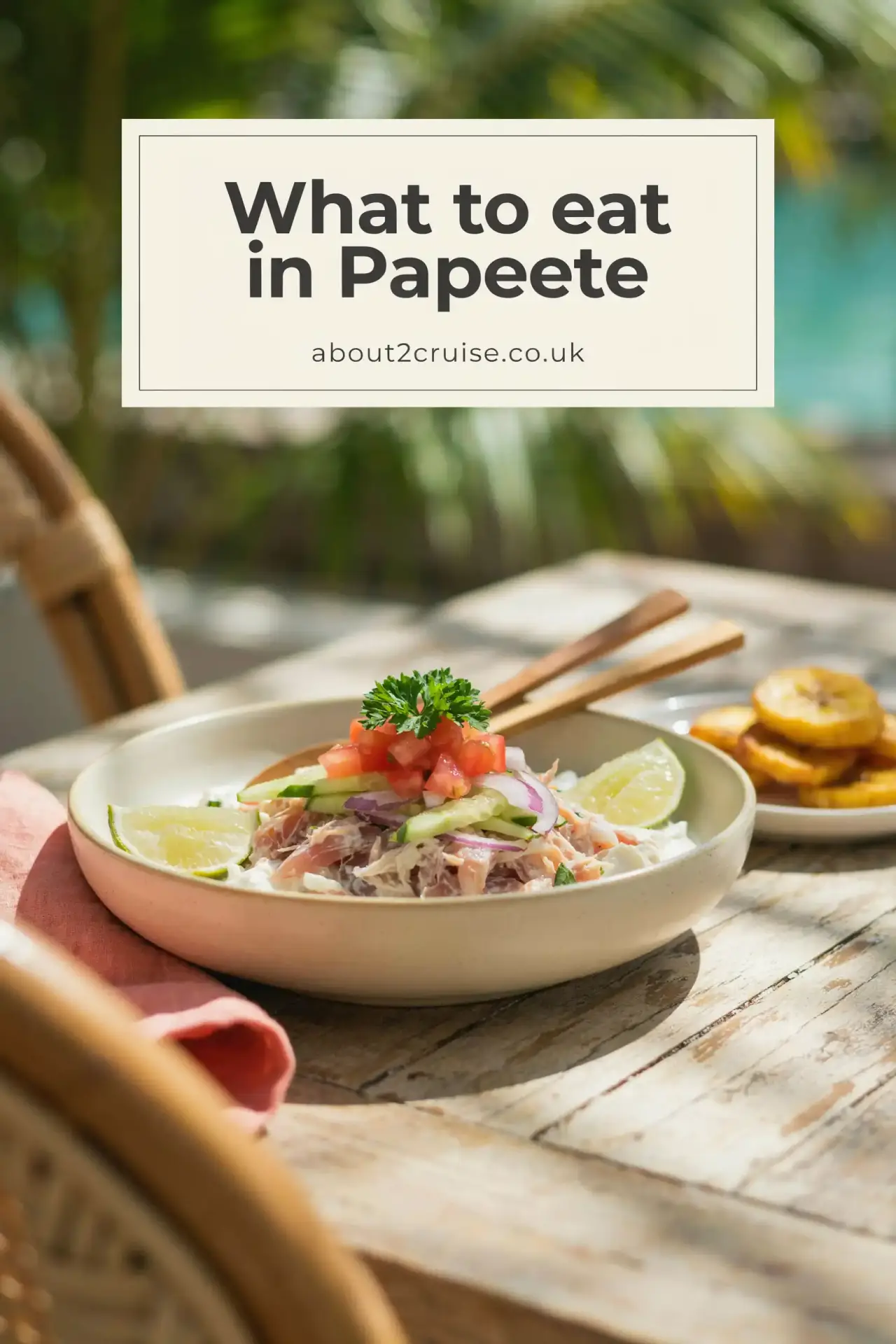
Try poisson cru, raw tuna cured in lime and dressed with coconut milk, plus ma’a Tahiti from the earth oven, po’e, and firi firi coconut doughnuts. In Papeete, the roulottes (evening food trucks) set up at Place Vai’ete from about 18:00 and are effectively cash-only; the Marché de Papeete is best in the early morning. Look for vanilla from Taha’a, black pearls, pareos, monoï oil, Marquesan wood carvings and carved bowls. Bloody Mary’s at Pofai Bay is Bora Bora’s famous bar-restaurant, and roadside roulottes serve fresh lagoon fish and coconut water. The Robert Wan Pearl Museum in Papeete is a free, quick introduction to Tahitian pearls.
Culture and Etiquette
Marae are sacred ceremonial spaces. At Taputapuatea and elsewhere, avoid stepping on carved stones, never touch wooden idols, and follow your guide’s instructions. Remove shoes before entering a home or church, cover shoulders and knees at places of worship, and do not photograph inside Papeete’s cathedral or Protestant church during services. French and Tahitian are the languages, but English is widely spoken on the main islands. The Heiva i Tahiti dance and chant competitions in July are the cultural pinnacle, with thousands of performers and multiple nights on the To’atā stage in Papeete.
Photo Spots
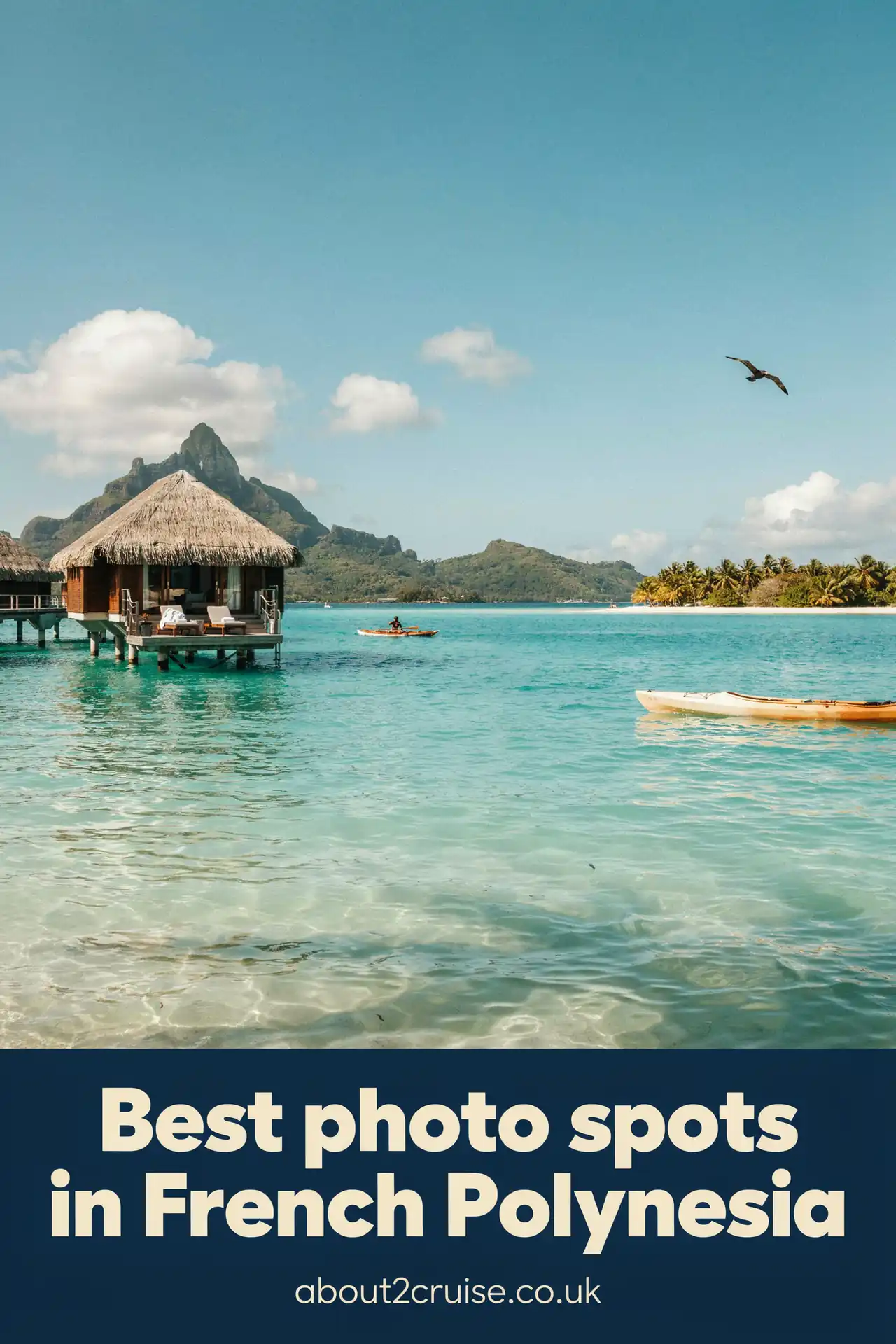
The best French Polynesia photos are usually from the water or early morning. Belvédère Lookout on Moorea frames Cook’s Bay, Opunohu Bay and Mount Rotui in one shot. Matira Beach and Matira Point on Bora Bora give the clearest lagoon sand. Mount Otemanu from a lagoon boat or resort jetty is the classic overwater-bungalow-and-mountain angle. The Papeete waterfront at Place Vai’ete lights up in the evening as the roulottes fire up, facing the sunset.
French Polynesia Cruise FAQ: Your Questions Answered
Is French Polynesia safe to swim? Generally yes in lagoons and near resorts, but there are no lifeguards and currents can be strong. Ask locals, obey signs and wear reef shoes. On Nuku Hiva, avoid swimming by the tender pier because of sharks.
What is the difference between Tahiti and Papeete? Tahiti is the largest island; Papeete is the capital city on its north-west coast. The cruise terminal and international airport are both in or near Papeete.
Can I take a ferry from Tahiti to Bora Bora? Not as a regular fast ferry. The Apetahi Express runs a few times a week via Huahine, Raiatea and Taha‘a, taking most of a day. Most cruise passengers fly or arrive by ship. Flying takes about 50 minutes, and the shuttle boat from Bora Bora airport to Vaitape is included in the Air Tahiti ticket.
Do cruises start and end in Bora Bora? No. Bora Bora is a port of call only. Embarkation and disembarkation are in Papeete.
How many cruise ports are in French Polynesia? The territory has 33 call points, but for cruise tourists the main ports are the nine covered here: Papeete, Moorea, Bora Bora, Raiatea, Huahine, Rangiroa, Fakarava, Nuku Hiva and Hiva Oa.
What is the difference between Bora Bora and Moorea? Moorea is greener, more affordable and easier to explore independently; Bora Bora is the high-end lagoon icon with Mount Otemanu and more expensive resorts. Both have overwater bungalows and tender landings, but Bora Bora feels more resort-centred and Moorea more road-trip friendly.
Which island is prettiest, Bora Bora or Tahiti? Bora Bora is the classic lagoon-and-mountain shot with a resort feel; Tahiti is bigger, greener and more French Polynesian in daily life. Most cruise passengers use Tahiti as the gateway and save the wow for Bora Bora and Moorea.
More South Pacific Cruise Planning Resources
Pacific Islands Cruise Ports Guide · Papua New Guinea · Fiji Cruise Ports · All cruise port guides
Last Updated: 19 November 2026
2 responses
I would like to know if I have to book an excursion or whether there is lots to do walking in the port area on Bora Bora, Moorea and huahine?
Great question! The walking opportunities vary quite a bit between these three beautiful islands, so let me break it down for each:
Bora Bora (Vaitape):
Walking options near the port are quite limited. Within walking distance from where the tender drops you off in Vaitape village, you’ll find:
A few souvenir shops and pearl boutiques
Small cafes and restaurants
The charming Saint Pierre-Célestin Catholic Church
A post office and basic amenities
Local food trucks (roulottes) that set up in the evening
However, the major attractions like Matira Beach, Mount Otemanu viewpoints, and the best snorkeling spots are NOT within walking distance. You’d definitely benefit from booking an excursion or renting transportation (bike, scooter, or car) to see the island’s highlights.
Moorea:
Similar to Bora Bora, there’s very limited walking from the tender dock areas (Cook’s Bay or Opunohu Bay). You’ll find:
Local souvenir markets right at the tender pier
Tour operator stalls
Basic facilities
The main village of Maharepa is 6-9 miles away depending on your tender location, and the island’s attractions like Belvedere Lookout, beaches, and cultural sites require transportation. Most visitors take the “Le Truck” shuttle service or book excursions.
Huahine (Fare):
This is your best bet for walking! Fare village is quite charming and walkable, with several things to see on foot:
Waterfront cafes and restaurants offering free WiFi
Local shops and a supermarket
Pearl and craft boutiques
A lovely public market
Fare Beach – just minutes from the port area for swimming and snorkeling
The town’s relaxed, authentic Polynesian atmosphere
My Recommendation:
If you enjoy exploring on foot and soaking up local culture, Huahine offers the most walkable experience. For Bora Bora and Moorea, I’d suggest booking at least a half-day excursion or renting bikes/scooters to make the most of your time and see the stunning natural beauty these islands are famous for.
Hope this helps with your planning!