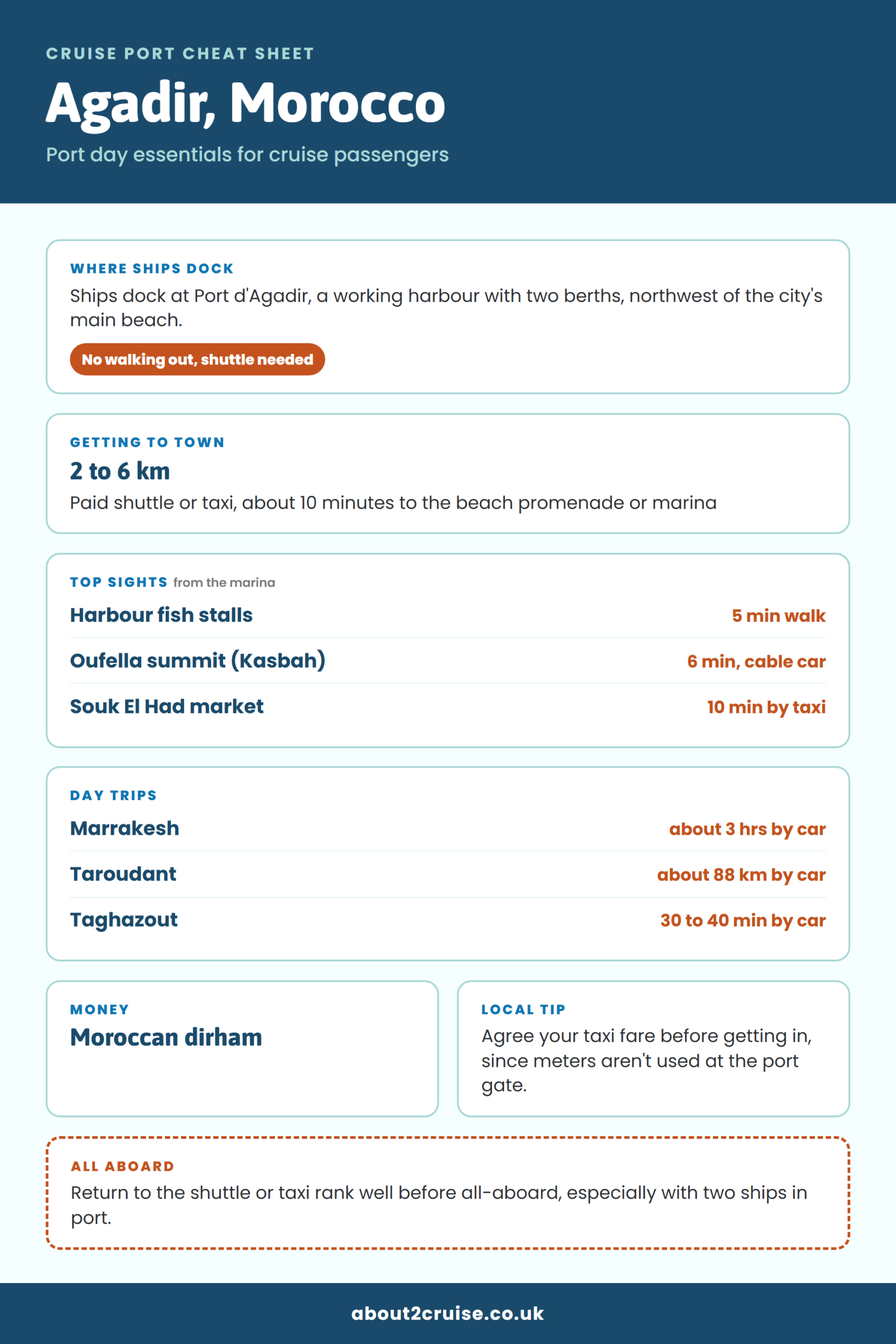
Agadir’s cruise port is located in the commercial harbor, approximately 3 kilometers north of the city center. The port facility offers basic amenities including a terminal building with tourist information. Taxis and shuttle buses provide transportation to downtown Agadir, where visitors can explore the beachfront promenade, souk, and kasbah ruins overlooking the Atlantic coast.
Quick Port Facts
| Detail | Information |
|---|---|
| Port Name | Port d’Agadir (commercial harbor) |
| Distance to City Centre | 3 km (10-minute drive) |
| Walking to Town | Not recommended (industrial zone, busy roads) |
| Port Facilities | Basic terminal, tourist info, toilets |
| Typical Docking Time | Morning to early afternoon (8-10 hours) |
| Future Development | Dedicated cruise terminal planned (300 million dirham investment) |
Where is The Port Located?
Cruise ships dock at Port d’Agadir, a working commercial harbor situated roughly 3 kilometers north of Agadir’s main tourist zone. This is a multi-purpose port that handles cargo, fishing vessels, and cruise ships, so don’t expect a gleaming dedicated cruise terminal just yet. The port authority has announced a major investment to create a purpose-built cruise facility managed over a 25-year period, but at present, you’ll be arriving at a functional industrial harbor with a terminal building that offers the basics: tourist information, toilets, and not much else.
The port sits about 3 kilometers (roughly a 10-minute drive) from the beach promenade and central Agadir, and around 4 kilometers from Souk El Had, the massive market that’s a highlight for many visitors. Walking from the port to town is possible but not recommended: you’ll be trudging along busy roads with minimal pedestrian infrastructure through an industrial zone. Save your energy for exploring the city itself.
Want to know more about exploring Morocco by cruise ship? Check out our comprehensive guide to cruise ship ports of call in Morocco.
Quick Facts
Getting Around From The Port
Once you step off the ship, you’ll find several transport options waiting at the port exit. Here’s what works and what doesn’t.
Port Shuttle
Many cruise lines offer a shuttle service from the port to central Agadir, typically dropping you near the beach promenade or marina area. Expect to pay around €6-8 per person for a round-trip ticket. The shuttle runs on a loop schedule throughout your port call, usually departing every 30-45 minutes, and takes about 10-15 minutes depending on traffic.
The drop-off point is usually near Hotel Al Moggar or the central beach area, which puts you within easy walking distance of the promenade, cafes, and beach access. Check with your cruise line’s guest services desk before disembarking to confirm availability, exact price, and pickup times for the return leg. Some premium cruise lines include this shuttle free of charge, so verify what’s covered in your fare.
Taxis
Official taxis (called petit taxis) wait just outside the port gate and are your most flexible option. These are small vehicles, usually painted in bright colors with official markings and a taxi sign on the roof. Look for the meter inside – that’s your clue you’re in a legitimate taxi.
Typical fares from the port:
- Port to beach promenade/marina: 30-50 MAD (roughly $3-5 USD or €3-5)
- Port to Souk El Had: 40-60 MAD
- Port to Kasbah viewpoint: 50-70 MAD
The catch? Not all drivers will use the meter without prompting. Before you get in, point to the meter and say clearly, “Meter, please” or “Compteur, s’il vous plaît.” If the driver refuses or quotes a flat rate that seems high, thank them and find another taxi. There are usually several waiting, so you have options.
For a full-day hire, many passengers negotiate a flat rate with a driver (around 400-600 MAD for 4-5 hours). Agree on the price, duration, and stops before you set off, and make sure the driver speaks enough English or French to communicate. Get their mobile number in case you need to call when you’re ready to return to the ship.
Red flag: If a driver insists the meter is broken or refuses to turn it on, walk away. Legitimate drivers will comply or you’ll find one who will.
Walking
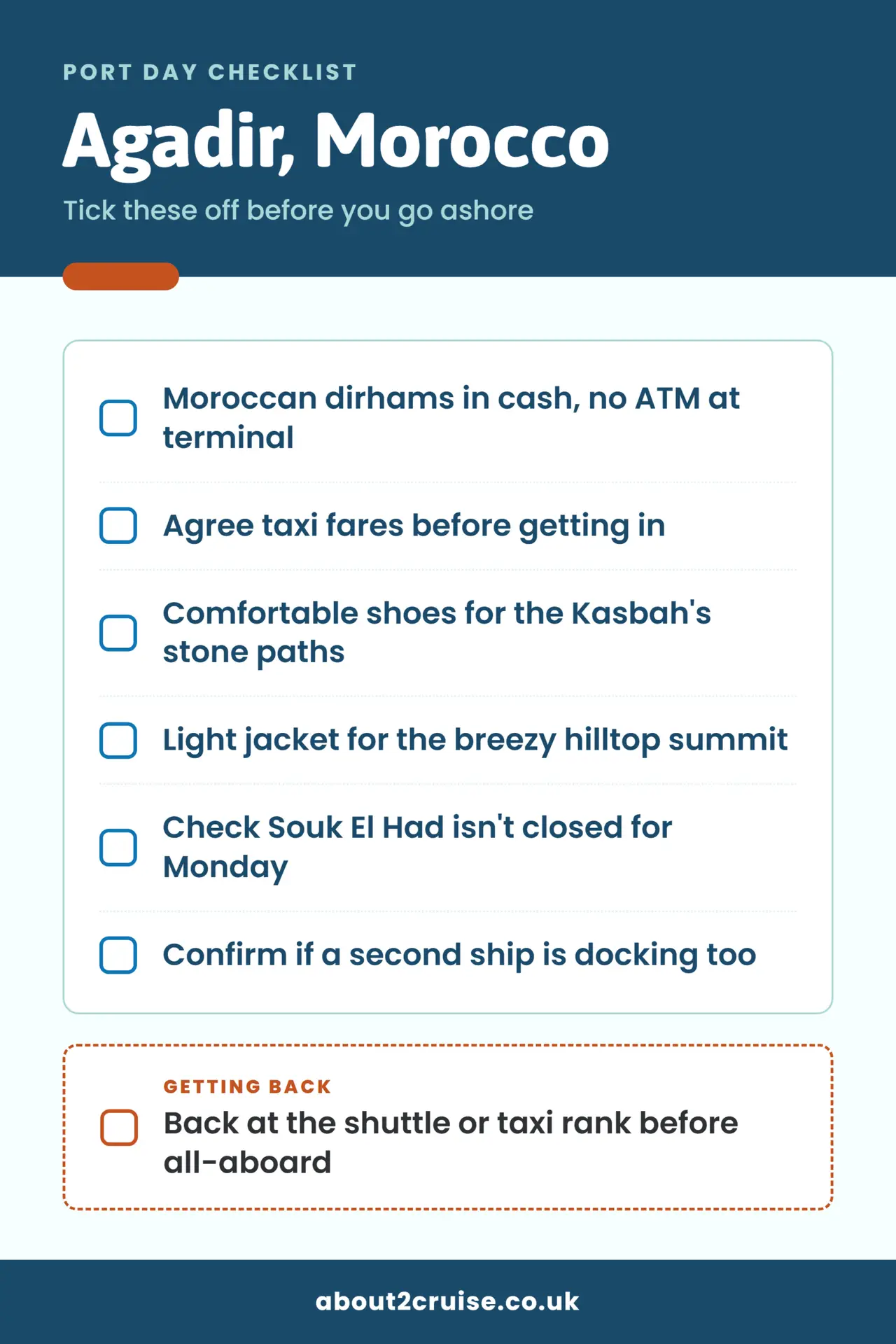
Technically you can walk from the port to the city center, but it’s not a pleasant stroll. The route takes you along industrial roads with heavy truck traffic, limited pavements, and no shade. Budget 35-45 minutes of walking through an area that’s not designed for tourists on foot. Unless you’re on a tight budget or enjoy urban hikes through working ports, spend the few dollars on a taxi and save your energy for the beach and souk. If you do plan on exploring the city on foot, comfortable walking shoes are absolutely essential – women’s walking shoes | men’s walking shoes will make a huge difference, especially if you’re navigating the souk’s uneven floors or climbing up to the Kasbah.
If you’re determined to walk, head south from the port exit, follow the main road towards the city, and aim for the marina area as your first landmark. Bring sunscreen, water, and realistic expectations.
Tours and Private Transfers
Organized shore excursions through your cruise line will pick you up right at the ship or just outside the terminal gate. These are the safest, most convenient option if you want a structured day with guaranteed timing to get back before all-aboard. Typical tours include city highlights (beach, Kasbah, souk), or longer excursions to nearby Taroudant or Tiznit for a taste of traditional Moroccan towns.
If you prefer to book independently, private transfer companies offer shared shuttles (around $10-15 per person) or private vehicles ($75-150 depending on group size and vehicle type). Book these in advance through reputable operators – ask for references or check reviews online. Make sure the driver knows your ship’s departure time and build in a buffer for traffic.
Stay Safe: Common Scams to Avoid
Agadir is generally safe for cruise passengers, especially in the main tourist zones like the beach promenade and around the port. That said, petty crime and opportunistic scams do happen, particularly around taxi queues, markets, and anywhere large groups of tourists gather. A little awareness goes a long way.
Fake Guides (Faux Guides)
As soon as you step out of the port or approach the entrance to Souk El Had, you might be approached by friendly locals offering to “help” you find your way or show you the best shops. These unofficial guides are usually after one thing: steering you to shops where they earn commission, then demanding an inflated fee for their “services.”
How to spot them: Legitimate guides carry official accreditation badges issued by the Moroccan tourism authority. If someone approaches you without a badge and insists they’re a guide, they’re not.
How to avoid: Book tours through your cruise line or a reputable operator before you arrive. If approached unsolicited, a firm “No, thank you” or “Non, merci” is usually enough. Don’t feel obliged to accept help you didn’t ask for.
Taxi Scams
Taxi scams are among the most commonly reported issues for visitors to Agadir. Here’s what to watch for:
- The “broken meter” scam: The driver claims the meter isn’t working and quotes a flat fare that’s wildly inflated. Solution: insist on the meter or find another taxi.
- Refusing to use the meter: Some drivers will simply ignore your request to turn on the meter, hoping you’ll agree to an overpriced flat rate. Don’t.
- Long detours: A driver takes a circuitous route to run up the fare. If you suspect this is happening, pull out your phone’s maps app and politely point out the direct route.
- Per-person vs. per-vehicle confusion: A driver quotes “30 dirhams” without clarifying if that’s total or per person. Always confirm “30 dirhams total for the car?” before departing.
One particularly aggressive scam involves drivers offering to take you on a “tour” of the city for a low price, then adding on charges for each stop or claiming you agreed to a much higher fare. To avoid this, write down the agreed fare on your phone or a piece of paper and show it to the driver before you start.
“Helpful Stranger” Scam
Someone offers to help with directions, carry your bag, or show you a shortcut, then demands payment once you’ve reached your destination. The demand can be surprisingly aggressive, and amounts of 100-200 MAD are common (far more than a legitimate tip).
Solution: Decline help you didn’t request. Use your phone’s maps app for directions, and carry your own bags. If someone persists, say “No, merci” and keep walking.
Vendor Pressure and Overpricing in Markets
Souk El Had is a fantastic experience, but vendors are experts at gauging tourists and inflating opening prices by 10-20 times the normal rate. If you’re carrying a designer handbag, wearing expensive sunglasses, or look uncertain, expect the hard sell.
Haggling tips:
- Start at 25-30% of the opening price and work up slowly.
- Walking away is a powerful negotiation tactic – you’ll often be called back with a better offer.
- If the vendor won’t budge and the price still seems high, it probably is. There are hundreds of stalls; move on.
- Keep small denomination notes handy (20, 50, 100 MAD) to avoid the “I don’t have change” excuse.
Pickpocketing
Pickpocketing is most common in crowded areas like Souk El Had, the market entrances, and busy bus stops. Thieves work in pairs or small groups: one distracts while another lifts your phone, wallet, or camera. Given how crowded the souk gets, investing in an anti-theft crossbody bag is one of the smartest moves you can make – wear it across your body and keep it in front of you at all times.
Prevention:
- Use a cross-body bag worn in front, or a money belt under your clothes.
- Keep phones and wallets in front pockets, never back pockets.
- Don’t display expensive jewelry, cameras, or large amounts of cash.
- Stay aware in crowds and avoid stopping suddenly in high-traffic areas.
Currency Exchange Traps
Exchange desks near the port or at tourist hotspots often offer terrible rates with hidden fees. You’re better off using a bank ATM in town or exchanging a small amount at a reputable bank branch.
Some vendors will accept euros or US dollars, but the exchange rate they offer will be far worse than official rates. Stick to Moroccan dirhams for the best value.
Emergency Contacts
- Police: 19
- Tourist Police: Available in central Agadir near the promenade
- Ambulance: 15
- Fire: 15
- Port Emergency: Contact your ship’s guest services for the port authority number
- Hospital: Hôpital Hassan II, Agadir (main public hospital)
Important: Save your cruise ship’s emergency contact number in your phone before you go ashore. If you run into trouble or are delayed, call the ship immediately.
Money Matters
The local currency is the Moroccan Dirham (MAD). As of now, rough exchange rates are around 10 MAD to 1 USD or 11 MAD to 1 EUR, but check current rates before you travel.
Can you buy dirhams before arriving? Not easily. Moroccan dirhams are not widely available outside Morocco, and it’s technically a closed currency (meaning you’re not supposed to import or export large amounts). Your best bet is to withdraw cash from an ATM once you arrive, or exchange a small amount at a bank or official exchange bureau in town.
Where to exchange money: Avoid exchange desks at the port or tourist areas – they offer poor rates. Instead, use ATMs at banks in central Agadir (there are several near the beach promenade). Look for machines affiliated with major banks like Attijariwafa Bank or BMCE Bank. Notify your bank before you travel so your card isn’t blocked for suspicious activity. When carrying cash and cards, an RFID blocking wallet offers peace of mind against electronic pickpocketing, especially in crowded market areas.
Card acceptance: Don’t rely on credit or debit cards outside major hotels and restaurants. Most market vendors, small cafes, and taxi drivers operate on a cash-only basis. Even some larger shops prefer cash. Bring enough dirhams for your planned spending, plus a buffer for tips and small purchases.
Small note strategy: When haggling in markets, having small notes (20, 50, 100 MAD) makes it easier to pay the agreed price without waiting for change or dealing with the “I don’t have change” excuse. Break larger notes at cafes or when buying bottled water early in your visit.
What to See and Do in Agadir
Agadir rebuilt itself after a devastating earthquake in the 1960s, so it lacks the ancient medina charm of cities like Tangier or the grand colonial architecture of Casablanca. What it does have is a beautiful beach, a lively modern souk, and a relaxed vibe that’s perfect for a short port call.
Agadir Beach and Promenade
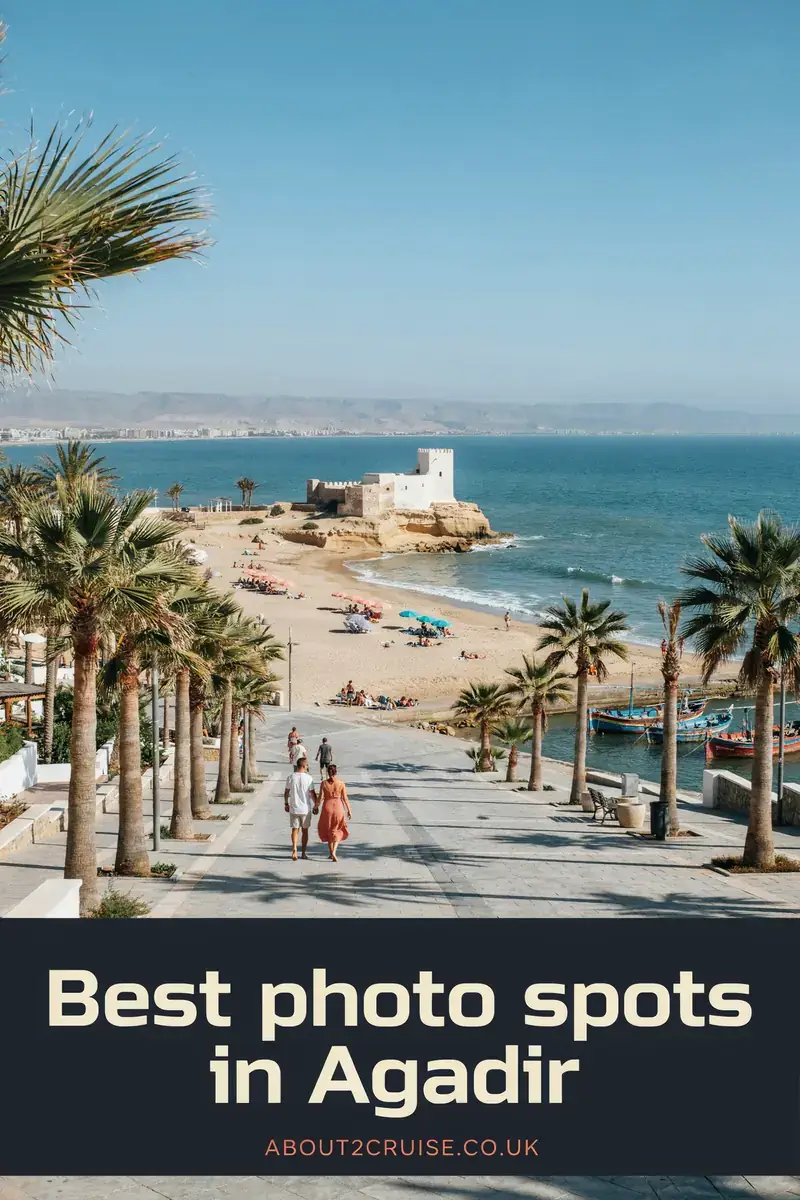
The wide, sandy beach stretches for kilometers and is backed by a palm-lined promenade dotted with cafes, restaurants, and hotels. The water is clean, the Atlantic waves are gentle, and the beach is well-maintained. If your ship docks in the morning, this is a great place to spend a few hours soaking up the sun or taking a leisurely walk.
Beach clubs rent loungers and umbrellas (around 50-100 MAD for the day), and there are public access points if you prefer to spread out your own towel. The promenade is flat, easy to walk, and offers plenty of spots to grab a coffee or fresh orange juice.
Souk El Had
This is one of the largest markets in Morocco, covering several hectares and selling everything from spices and olives to leather goods, carpets, and ceramics. It’s open daily except Mondays, so check your port day before planning a visit.
The souk is divided into sections: food, clothing, household goods, and touristy crafts. Haggling is expected and part of the experience. Start low, be patient, and don’t be afraid to walk away if the price isn’t right. The quality of goods varies widely – some stalls sell genuine handcrafted items, others stock mass-produced imports.
Allow at least 1.5-2 hours to wander and shop without feeling rushed. The market gets crowded, especially mid-morning, so keep your valuables secure and stay aware of your surroundings.
Kasbah Ruins and Viewpoint
Perched on a hill overlooking the city and Atlantic coast, the Kasbah ruins are all that remain of the old fortress destroyed in the earthquake. There’s not much left of the structure itself, but the panoramic views make the short trip worthwhile.
A taxi from the port or beach area will cost around 50-70 MAD. The climb to the viewpoint involves some steps and uneven paths, so wear comfortable shoes. Budget 30-45 minutes for the visit, including time to take photos and enjoy the view.
Agadir Marina
The marina is a pleasant area with restaurants, cafes, and boat moorings. It’s quieter than the beach promenade and a nice spot for a drink or light meal if you want to escape the crowds. Some operators offer short boat trips from here, though timings may not suit a port call schedule.
Day Trips: Taroudant or Paradise Valley
If you want to venture further afield, organized tours offer day trips to Taroudant (about 90 minutes inland), a walled town with a traditional medina and slower pace of life, or Paradise Valley, a lush oasis with natural pools and palm groves.
These excursions typically take 6-8 hours, so only consider them if your ship has a long port call and you’re confident about timing. Always book through a reputable operator and confirm they’ll get you back to the port with time to spare.
If you’re interested in exploring more Moroccan ports, take a look at our guides to Safi, Nador, Al Hoceima, Dakhla, and Laayoune.
Eating and Drinking
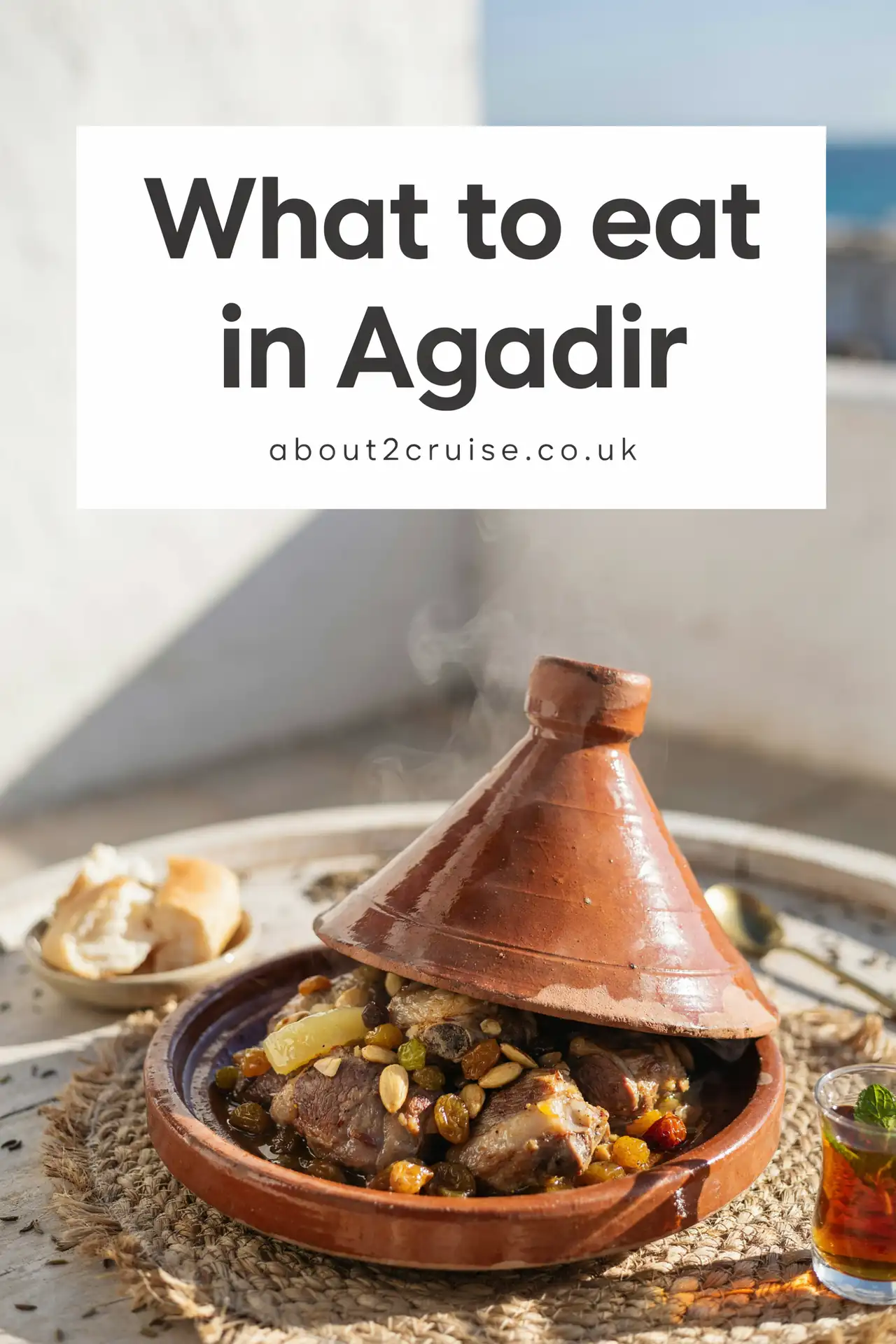
Agadir offers plenty of dining options, from casual beachside cafes to sit-down restaurants serving traditional Moroccan tagines and seafood. Prices are reasonable by European standards: expect to pay 50-100 MAD for a simple lunch, or 150-250 MAD for a more substantial meal with drinks.
What to try:
- Tagine: Slow-cooked stew with meat, vegetables, and spices, served with bread.
- Fresh seafood: Grilled fish, prawns, and calamari are excellent along the coast.
- Mint tea: Sweet, refreshing, and served throughout the day.
- Fresh orange juice: Sold at stalls and cafes, squeezed to order.
Most restaurants near the beach and marina have menus in French and English. Don’t expect to pay by card in smaller cafes or market food stalls – bring cash.
Practical Tips for Your Agadir Port Call
- Check Souk El Had opening days: The market is closed on Mondays. If your ship calls on a Monday, you’ll miss the main market experience.
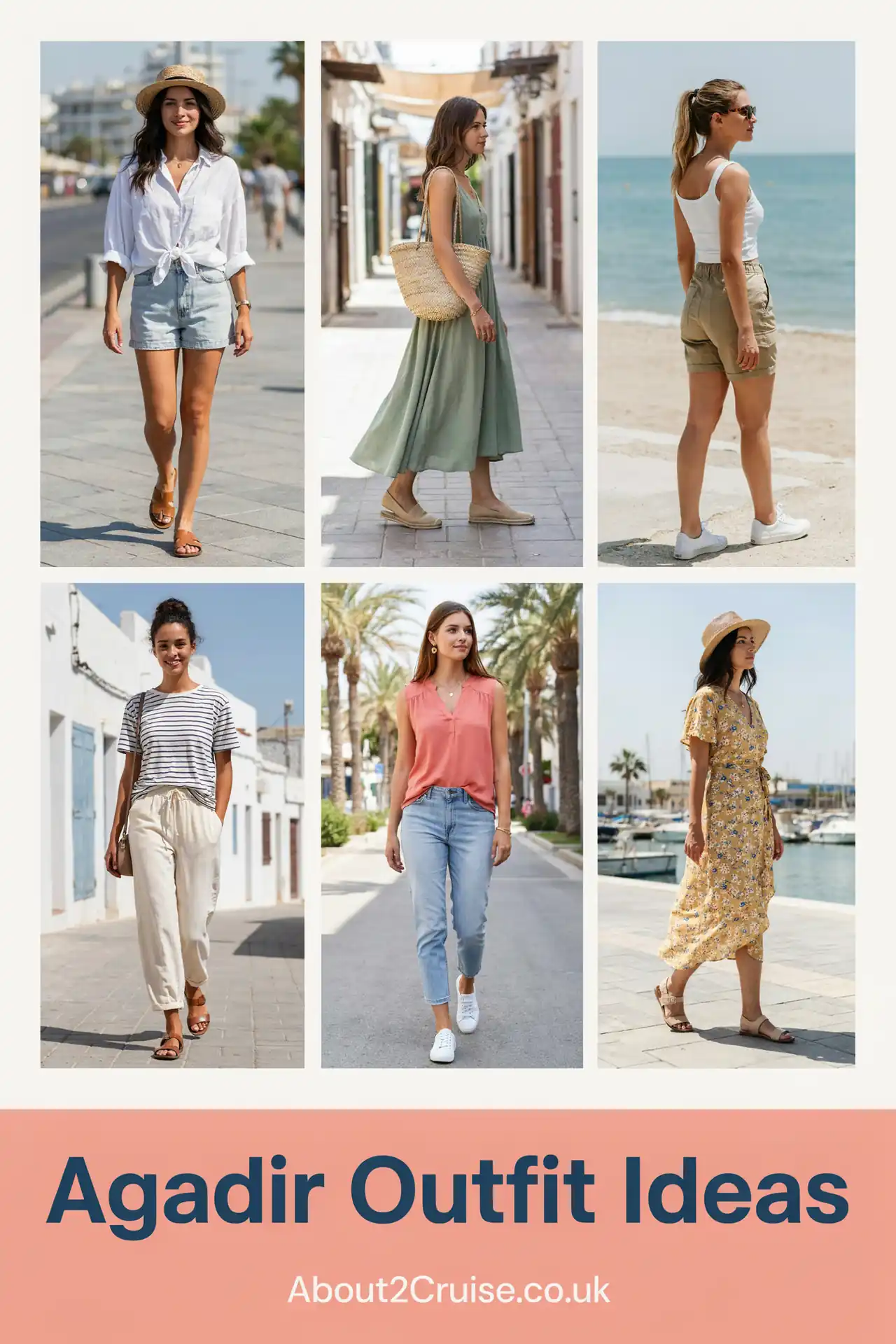
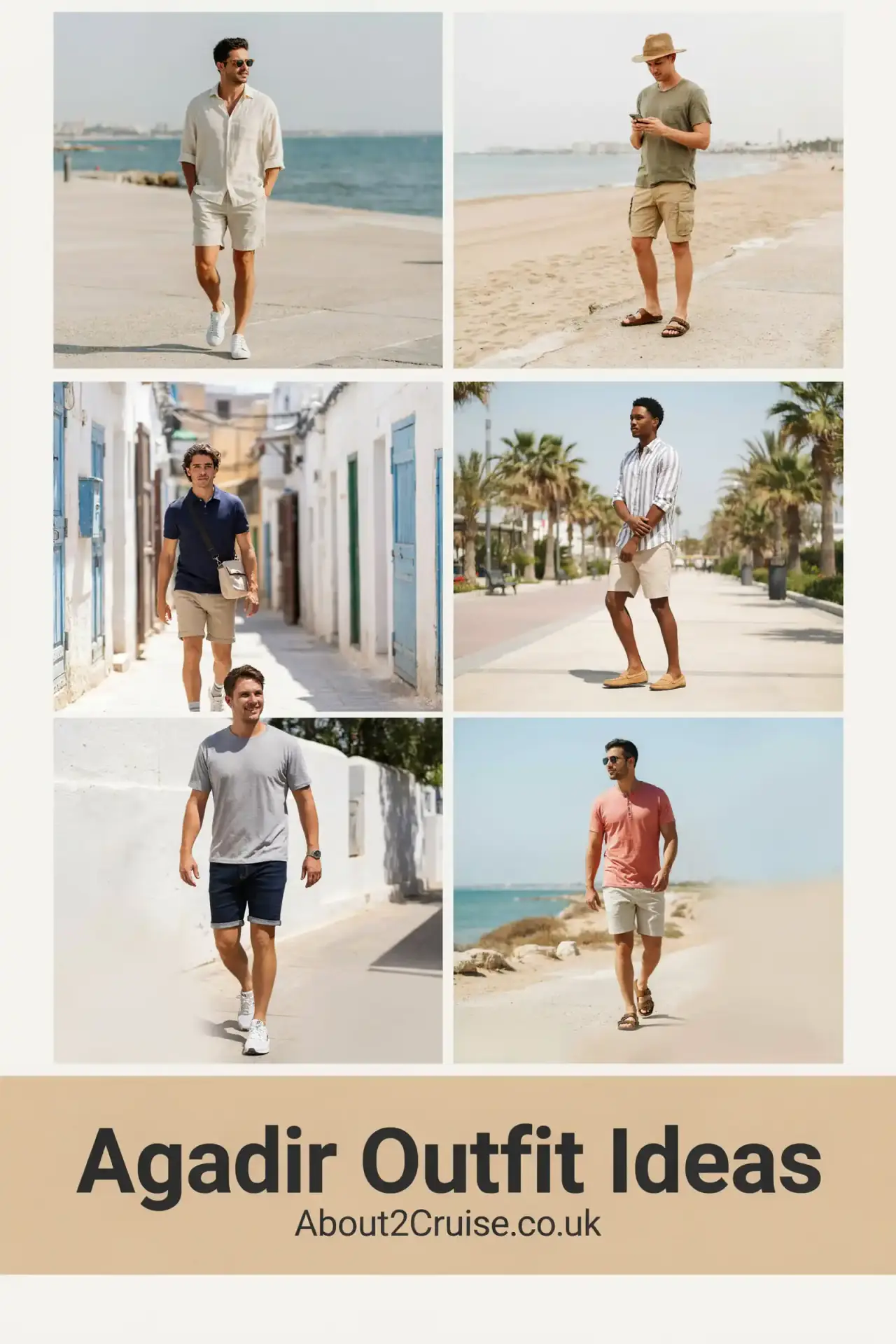
- Dress modestly for comfort and respect: While Agadir is more relaxed than other Moroccan cities, covering shoulders and knees is appreciated when visiting markets or residential areas. On the beach, standard swimwear is fine.
- Stay hydrated: The Atlantic coast is cooler than inland Morocco, but the sun is strong. Carry bottled water, especially if you’re walking or spending time at the beach.
- Language basics: French is widely spoken, along with Arabic and Berber. English is understood in tourist areas but less common elsewhere. Learn a few basic phrases: “Bonjour” (hello), “Merci” (thank you), “Combien?” (how much?).
- Timing for tours: If you’re booking an independent tour or taxi for the day, agree on a return time that gets you back to the port at least 60-90 minutes before all-aboard. Traffic and delays happen.
- Tipping: Small tips are appreciated but not mandatory. For taxi drivers, rounding up the fare is sufficient. In restaurants, 10% is generous.
- Phone and internet: Free Wi-Fi is available at many cafes and restaurants in the tourist areas. If you need data, check with your mobile provider about roaming rates, or pick up a local SIM card (requires your passport and registration at a phone shop).
For more tips on making the most of your Mediterranean cruise stops, check out our first-time Mediterranean cruise guide and packing advice on cruise outfits for women.
Bonus Tips
- The telepherique (cable car): Agadir has a cable car that runs up to the Kasbah viewpoint. It’s a fun way to reach the top if you’re not keen on the climb, though operating hours can be sporadic. Ask locally or check with your taxi driver if it’s running.
- Argan oil shopping: Morocco is famous for argan oil, and you’ll see it sold everywhere in Agadir. If you’re buying for cosmetic use, look for 100% pure, cold-pressed oil. Prices in the souk can be high for tourists – expect to haggle or visit a reputable shop outside the market for better value.
- Photography etiquette: Always ask permission before photographing people, especially in the souk. Some vendors and locals are happy to pose, others are not. Offering a small tip if someone agrees to be photographed is polite.
- Beach safety: The Atlantic can have strong currents. Stick to designated swimming areas and pay attention to any flags or warnings. Lifeguards are present in the main beach zones during peak season.
- Avoid the “free gift” trap: If someone in the souk or on the street offers you a “free gift” or sample, it’s often a setup to pressure you into buying something or giving a large tip. Politely decline unless you’re genuinely interested in purchasing.
- All-aboard buffer: Moroccan traffic can be unpredictable, especially during peak hours or market days. Build in extra time for your return journey to the port. Missing the ship is not worth the risk of squeezing in one more stop.
Common Questions and FAQ
Is Agadir safe for cruise passengers?
Yes, Agadir is generally safe for cruise passengers, especially in the main tourist areas like the beach promenade, marina, and around Souk El Had. The city is one of Morocco’s more relaxed and tourist-friendly destinations. That said, petty crime like pickpocketing and tourist-targeted scams (taxi overcharging, fake guides) do occur, particularly around the port exit and market areas. Stay aware, keep valuables secure, and use official taxis or pre-booked transport to minimize risk.
Which port do cruise ships use in Agadir?
Cruise ships dock at the Port d’Agadir, a commercial harbor about 3 kilometers north of the city center. This is a working port that handles cargo and fishing vessels alongside cruise ships. There’s no dedicated cruise terminal at present, though one is under development. Don’t confuse this with the marina, which is a separate leisure area closer to the beach.
How much are taxis from the port?
Official petit taxis from the port to central Agadir (beach promenade or marina area) typically cost 30-50 MAD (around $3-5 USD or €3-5). To Souk El Had, expect 40-60 MAD, and to the Kasbah viewpoint around 50-70 MAD. Always insist the driver uses the meter or agree on a fixed fare before getting in. For a full-day hire, negotiate a flat rate of around 400-600 MAD for 4-5 hours.
Can I walk to the city center from the port?
Technically yes, but it’s not recommended. The walk from the port to central Agadir takes 35-45 minutes along busy industrial roads with limited pavements and no shade. There’s nothing scenic or safe about the route. Save your energy and take a taxi or cruise shuttle – the short ride costs just a few dollars and sets you up for a much better start to your port day.
Do I need a tour or can I explore independently?
Agadir is easy to explore independently if you’re comfortable navigating a foreign city and using taxis. The main sights (beach, souk, Kasbah) are straightforward to reach and don’t require a guide. That said, booking a shore excursion through your cruise line guarantees you won’t have to worry about transport, timing, or language barriers, and you’ll be covered if anything goes wrong. If you’re short on time or prefer a structured day, a tour is a smart choice.
What scams should I watch out for?
The most common scams in Agadir involve taxis (refusing to use the meter, taking long detours, overcharging tourists), fake guides approaching you at the port or souk entrance, and aggressive vendors in the market who inflate prices for tourists. “Helpful strangers” offering unsolicited assistance may demand large payments afterward. To avoid trouble, use official taxis with meters, book tours through reputable operators, decline unsolicited help, and haggle firmly in markets. Keep valuables secure in crowded areas to prevent pickpocketing.
Is Souk El Had open every day?
No, Souk El Had is closed on Mondays. If your ship calls on a Monday, you’ll miss the market. Plan your visit around this if shopping and the market experience are priorities.
Can I use euros or US dollars in Agadir?
Some larger shops, hotels, and restaurants may accept euros or US dollars, but the exchange rate will be poor and you’ll lose money on the transaction. It’s far better to use Moroccan dirhams. Withdraw cash from a bank ATM when you arrive, or exchange a small amount at a reputable bank in town. Most market vendors, cafes, and taxis only accept dirhams.
How long does it take to visit the Kasbah?
Budget 30-45 minutes for the Kasbah viewpoint, including the taxi ride from the beach or port, time to walk around the ruins, and take photos. The site itself is small – the main attraction is the panoramic view over Agadir and the Atlantic coast. Combine it with a beach or souk visit for a well-rounded half-day itinerary.
What should I wear in Agadir?
Agadir is more relaxed than other Moroccan cities, but modest dress is still appreciated when visiting markets or residential areas. Cover shoulders and knees if you’re heading to the souk or Kasbah. On the beach, standard swimwear is fine. Bring comfortable walking shoes for uneven paths and market floors, and don’t forget sunscreen and a hat – the sun is strong even when the breeze feels cool.
Can I buy Moroccan dirhams before my cruise?
It’s difficult to obtain Moroccan dirhams outside Morocco, as it’s technically a closed currency. Your best option is to withdraw cash from an ATM at a bank in Agadir once you arrive. Notify your bank before you travel to avoid having your card blocked, and check the daily withdrawal limit on your account.
Agadir is also part of a growing Mediterranean cruise scene, with itineraries often including stops in the Western Mediterranean as well as the Eastern Mediterranean. If your cruise continues to Spain, explore our guide to Mediterranean cruise ports in Spain.
Essential Items for Your Day in Agadir
Before you head ashore, make sure you’re properly equipped for a day in Agadir. The city offers a mix of beach relaxation, market exploration, and hillside viewpoints, so you’ll want to pack strategically.
Comfortable footwear is non-negotiable. Whether you’re navigating the souk’s uneven floors, climbing to the Kasbah, or strolling the promenade, proper shoes make all the difference. Consider women’s walking shoes or men’s walking shoes designed for all-day comfort.
Security is a priority in crowded market areas. With pickpocketing reported around Souk El Had and busy tourist zones, an anti-theft backpack with slash-proof material and lockable zippers gives you peace of mind. Keep your RFID passport holder tucked safely inside, along with a money belt for extra cash and cards.
Sun protection is essential. The Moroccan sun is stronger than it feels, especially with the Atlantic breeze. Pack reef-safe sunscreen, a packable sun hat, and quality sunglasses to protect yourself during long walks or beach time.
Stay hydrated and powered up. A collapsible water bottle is easy to refill throughout the day, and a portable phone charger ensures you won’t lose navigation or photos mid-adventure.
Beach essentials if you’re planning seaside time: The beach is one of Agadir’s highlights, so bring a quick-dry travel towel, waterproof phone case, and water shoes if you’re planning to swim or explore rocky areas.
With these essentials sorted, you’ll be ready to enjoy everything Agadir has to offer without worrying about comfort, security, or practicality.
Personal Experience
When our cruise ship docked at Agadir, I wasn’t sure what to expect since the port sits about 3 kilometers from the city center. Turns out, getting around was pretty straightforward. The port has official taxis waiting right at the exit, and they use meters, which made me feel better about not getting overcharged. We negotiated a flat rate for the day with one driver who spoke decent English, and honestly, it was the best decision. He took us to the gorgeous beach promenade first, where we spent a couple of hours soaking up the sun and walking along the clean, wide beach. The water was perfect, and there were plenty of cafes if you need a break.
After the beach, we hit the Souk El Had, which only opens certain days, so check before you go. The market was massive and a bit overwhelming, but in the best way possible. You can find everything from spices to leather goods, and bargaining is expected. We also made a quick stop at the Kasbah ruins up on the hill – the view over the city and ocean made the short climb worth it. With limited time in port, I’d say focus on two or three things max. The beach and souk combo worked perfectly for us, and we were back at the ship with time to spare. Just remember to agree on taxi prices beforehand, and you’ll have a smooth, enjoyable visit.
2 responses
Thank you for this information. Is the shuttle out of the cruise port into town available for any cruisers or only specific cruise ships? Is the shuttle available to return to the cruise port?
In answer to your question Amanda, most shuttle services at Agadir cruise port are provided by specific cruise lines, not the port itself. This means:
Shuttle availability depends on your cruise line. Most lines offer a shuttle into town for 6–8 Euros, especially useful on hot days.
Some reports mention free shuttles or $15 return fares (from past traveller experiences).
Shuttles typically drop off near Hotel Al Maggor, close to the beach and central attractions.
✅ Yes, the shuttle is available for return trips to the cruise port — round-trip service is the norm, and walking through the port is not permitted due to its industrial nature.
🚖 Alternative Transport Options
If your cruise doesn’t offer a shuttle:
Taxis: Around 30 MAD (approx. $3) from just outside the port.
Public Bus Line 97: Around 5 MAD (approx. $0.50) to the city.
Private Transfers: Available via local transport companies.