
Ålesund is a picturesque Norwegian port city known for its Art Nouveau architecture, built after a 1904 fire. Cruise ships dock at Skansekaia, within walking distance of the town centre. Popular attractions include the Atlantic Sea Park aquarium, Mount Aksla viewpoint, and nearby Geirangerfjord. The compact city centre is easily explored on foot.
Quick Port Facts
| Fact | Detail |
|---|---|
| Cruise Terminal | Skansekaia (Stornespiren/Prestebrygga area) |
| Distance to Town Centre | 5-10 minute walk (200-700 metres) |
| Currency | Norwegian Krone (NOK) |
| Language | Norwegian (English widely spoken) |
| Main Attractions | Mount Aksla viewpoint, Art Nouveau Centre, Atlantic Sea Park |
| Best for | Architecture enthusiasts, photographers, walkers |
Want to know more about other cruise ports in Norway? Check out our comprehensive guides to help you plan your Norwegian cruise adventure.
Ålesund Map Port Location
Map shows cruise terminal and main attractions within walking distance from Skansekaia pier.
Can You Walk to Town from the Port?
Cruise ships dock at Skansekaia (also called Stornespiren/Prestebrygga), which sits right in the heart of Ålesund. There’s an alternative industrial dock called Flatholmen that some ships use, but it’s less common and requires a shuttle. If you’re wondering whether you can skip the taxi, the answer is a resounding yes for the main dock.
- Distance: The walk from Skansekaia to the town centre is roughly 200-700 metres depending on your destination. That’s about 5-10 minutes at a comfortable pace to reach Kongens Gate and the main shopping area.
- Terrain: Mostly flat and paved, with some cobblestone sections around the harbour. The streets are well-maintained and wheelchair accessible in the central areas. If you’re planning to climb Mount Aksla, that’s a different story entirely – 418 steps await you. Make sure you have proper women’s walking shoes or men’s walking shoes with good grip, especially if the weather turns wet.
- Weather: Norwegian weather is famously unpredictable. Even in summer, temperatures hover around 12-17°C, and rain can appear without warning. The harbour area offers limited shelter, so bring waterproof layers. Wind can be fierce near the water, especially in autumn and winter.
- Safety: Ålesund is exceptionally safe for pedestrians during daylight hours. The route from the dock to town follows well-lit, populated streets with clear signage. Night walking is equally safe, though most cruise passengers will be back onboard by evening.
- Bottom line: Walking is not just practical but recommended. You’ll save money on taxis and get immediate access to the Art Nouveau architecture that makes this port special. The only exception is if your ship docks at the Flatholmen industrial terminal, in which case you’ll need the shuttle.
How to Get Around from Ålesund Port & Shore Transportation
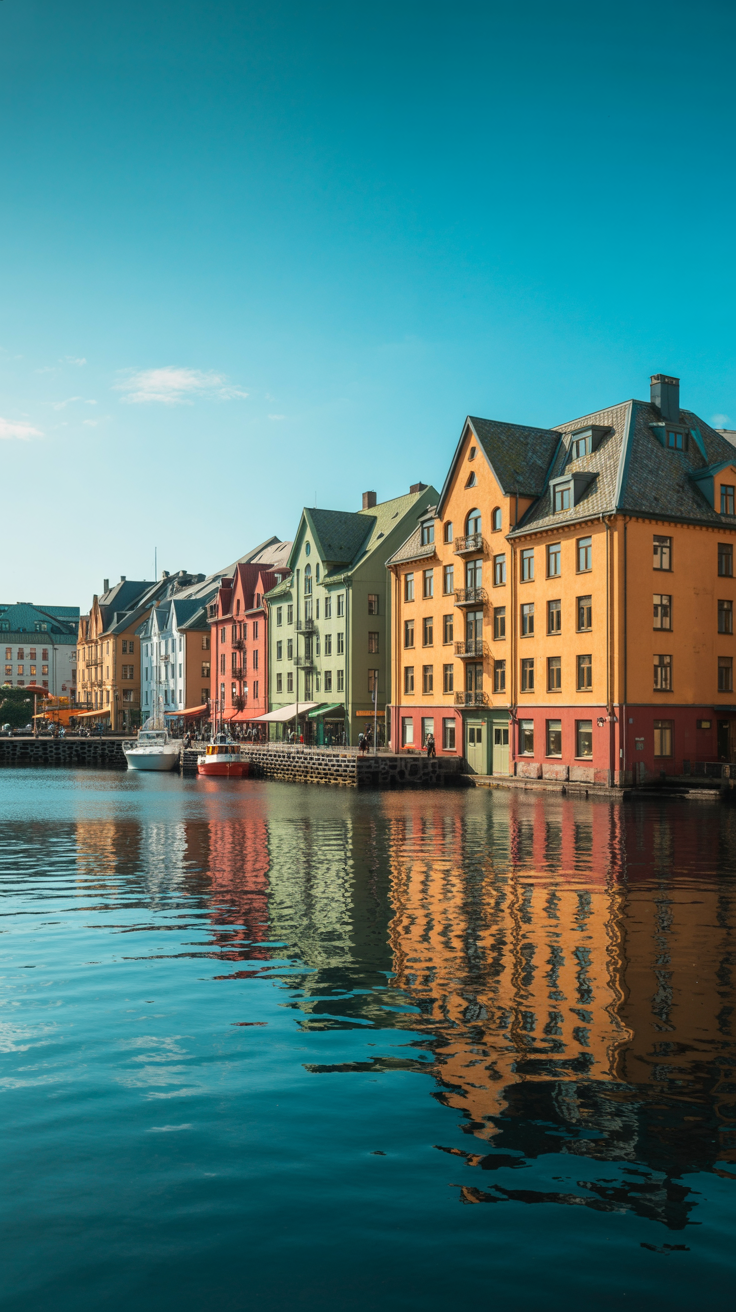
Most cruise passengers find they don’t need much transport in Ålesund beyond their own two feet. The compact town centre is walkable, though you’ll want wheels if you’re heading to the aquarium or open-air museum.
Cruise Line Shuttles
- Which cruise lines: Most major lines provide shuttles only if your ship docks at the Flatholmen industrial terminal, which is less walkable to town. When docked at the main Skansekaia pier, shuttles are rarely offered because they’re unnecessary.
- Cost: When provided, shuttles typically run around £5-10 per person return, though some lines include them free of charge.
- Drop-off point: Shuttles drop passengers near the harbour and Art Nouveau Centre, within easy walking distance of main attractions.
- Frequency: Runs roughly every 15-20 minutes during port hours when operating.
Taxis
- What they look like: Official taxis in Ålesund are clearly marked with “TAXI” signs on the roof and company names on the doors. Look for white or light-coloured vehicles at the designated taxi rank near the port exit.
- To town centre: This is genuinely unnecessary from Skansekaia since you can walk in under 10 minutes, but if you insist, expect around 100-120 NOK (roughly £7-9).
- To Atlantic Sea Park: About 120 NOK (£9) for the 3.5km journey to the aquarium.
- To Mount Aksla: Approximately 150 NOK (£11) to the viewpoint if you’d rather skip the stair climb.
- Metre policy: All official taxis use metres. If a driver suggests a fixed price or seems reluctant to use the metre, find another taxi.
- Watch out for: Unofficial drivers approaching passengers directly at the pier. Stick to the official taxi rank and confirm the metre is running before you depart.
Public Transport
- Bus details: The local FRAM bus system operates blue city buses with routes to key attractions. The main bus station sits right next to the cruise dock at Skansekaia.
- Current price: Single tickets cost around 40-50 NOK (£3-4) when purchased via the FRAM app. Buying onboard costs more, so download the app if you plan to use buses.
- Frequency: Buses run regularly throughout the day, typically every 15-30 minutes depending on the route.
- Where to catch it: The bus stop is immediately outside the cruise terminal area – you can’t miss it.
- Where it drops you: Buses serve the Atlantic Sea Park, Sunnmøre Museum, and other suburban attractions. For in-town sightseeing, walking makes more sense.
Walking
See ‘Can You Walk to Town’ section above for full walking details.
Shore Excursion Pickup
Independent tour operators collect passengers from a designated meeting area near the cruise terminal exit, usually marked with company signs. Hop-on hop-off buses park right at the pier, making them impossible to miss. If you’ve booked shore excursions in advance, check your confirmation for the exact meeting point, though most operators position themselves prominently near the ship.
Other Options
- Hop-on hop-off buses: Red double-decker buses operate from the terminal area with routes covering the Atlantic Sea Park, Sunnmøre Museum, and Aksla viewpoint. Tickets cost around 200-300 NOK (£15-22) for a day pass and can be purchased onboard or at the pier kiosk.
- CityTrain sightseeing train: A small tourist train departs from near the terminal and makes a loop including a stop at Fjellstua viewpoint on Mount Aksla. Adult tickets run about 350 NOK (£26), with children under 15 paying 170-180 NOK. It’s touristy but saves you the stair climb.
What to See Within Walking Distance from the Port
The beauty of Ålesund is that nearly everything worth seeing sits within a 15-minute walk from where your ship docks. Here’s what you can reach on foot without breaking a sweat.
- Kongens Gate (King’s Street): The main shopping street showcases the Art Nouveau architecture that defines Ålesund. Pastel-coloured buildings with turrets, spires, and decorative details line both sides of the pedestrianised street. It’s about 200 metres from the port and perfect for a morning stroll before crowds arrive.
- Art Nouveau Centre (Jugendstilsenteret): Located roughly 300 metres from the dock, this museum explains how the devastating 1904 fire led to Ålesund’s architectural rebirth. The exhibits are compact but fascinating, and you’ll understand why the town looks so distinctive. Allow 45 minutes to an hour for a proper visit.
- Ålesund Church (Ålesund Kirke): About 700 metres from the terminal, this church features stunning stained glass windows and a peaceful atmosphere. The exterior Art Nouveau styling continues the architectural theme you’ll see throughout town. Free to enter, though donations are appreciated.
- Brosundet Harbour Walk: The colourful waterfront area stretches along the harbour with historic warehouses, modern restaurants, and photo opportunities at every turn. It’s literally steps from the ship and requires no specific directions – just follow the water. Pack a collapsible water bottle to stay hydrated as you explore – the coastal air can be surprisingly dehydrating.
- Mount Aksla Viewpoint (Fjellstua): The base of the stairs sits about 1-1.5km from the port, so it’s walkable if you’re fit and prepared for a proper workout. The 418 steps take 15-25 minutes to climb, depending on your pace and how often you stop to catch your breath. The panoramic view from the top makes it the single best photo opportunity in Ålesund, overlooking the entire town, surrounding islands, and fjords.
Must See Attractions in Ålesund for a One Day Cruise Visit
With limited time in port, focus on what makes Ålesund unique rather than trying to tick every box. Here are the attractions worth prioritising.
Mount Aksla Viewpoint (Fjellstua)
This is the signature experience in Ålesund. The climb up 418 steps isn’t easy, but you’ll regret skipping it if you’re physically able. The viewpoint sits 160 metres above sea level and offers an unobstructed panorama of the entire town, the surrounding islands, and the fjords stretching into the distance. Go early morning or late afternoon for the best light and fewer crowds – mid-morning typically sees a rush when tour buses arrive. The climb takes 15-25 minutes depending on fitness level, with benches scattered along the way if you need breaks. There’s a café at the top, though prices reflect the captive audience. No entry fee, and it’s accessible from dawn to dusk. If you can’t manage stairs, the CityTrain or a taxi can get you there, though you’ll miss the satisfaction of earning that view.
Art Nouveau Centre (Jugendstilsenteret)
Understanding why Ålesund looks the way it does adds context to everything else you’ll see. The 1904 fire destroyed 850 buildings and left 10,000 people homeless, leading to a rapid rebuild in the fashionable Art Nouveau style with German architectural influence. The museum occupies a beautifully restored pharmacy building and presents the story through photographs, architectural details, and period furnishings. Entry costs around 100 NOK (£7.50) for adults. You’ll need 45-60 minutes for a thorough visit, though you could rush through in 30 if pressed for time. The gift shop sells books on Art Nouveau architecture if you’re keen to learn more. Best visited early in your port day before heading off to see the buildings themselves in context. Similar architectural heritage can be found in Bergen, though Ålesund’s is more cohesive.
Atlantic Sea Park (Atlanterhavsparken)
One of Northern Europe’s largest saltwater aquariums sits 3.5km west of the port, showcasing marine life from the Norwegian coastal waters. The outdoor seal pool hosts feeding shows several times daily, and the underwater tunnel puts you face-to-face with cod, halibut, and other North Atlantic species. It’s particularly good for families with children, though adults interested in marine biology will find plenty to appreciate. Entry costs approximately 220 NOK (£16.50) for adults, with reduced rates for children. You’ll need 1.5-2 hours for a proper visit including the feeding demonstrations. Getting there requires a bus, taxi, or hop-on hop-off service since it’s too far to walk comfortably. Check feeding times when you arrive so you can plan around them – they’re definitely the highlight.
Sunnmøre Museum
This open-air museum sits 5.5km east of the port and preserves traditional Norwegian coastal life. Historic buildings relocated from around the region create an authentic village atmosphere, with fishing boats, storehouses, and homes dating back centuries. The medieval boat collection includes reconstructed Viking-era vessels and demonstrates traditional boatbuilding techniques. Entry runs about 120 NOK (£9) for adults. You’ll want at least 1.5-2 hours to explore properly, and it’s worth timing your visit to coincide with any demonstrations or activities scheduled that day. Getting there requires a bus or taxi since it’s beyond comfortable walking distance. Skip this if you’ve visited similar folk museums elsewhere in Norway – it’s good but not dramatically different from other open-air museums in Scandinavian ports like Tromsø.
Ålesund Cathedral and Church Walk
If you’ve ticked off the viewpoint and Art Nouveau Centre but still have time, the various churches scattered around town offer quiet respites and architectural interest. Ålesund Church sits about 700 metres from the port and features beautiful stained glass, while the smaller chapels tucked into residential areas show how the Art Nouveau style influenced even religious buildings. Entry is free to most churches, though opening hours can be irregular outside service times. This works well as a between-attractions activity rather than a dedicated stop – you can weave it into your walking route without adding significant time.
Brosundet Canal Area
The picturesque canal area right near the harbour provides endless photo opportunities without requiring dedicated visiting time. Historic wooden buildings line the waterfront, now converted to hotels, restaurants, and galleries. It’s particularly atmospheric in the evening light, though cruise passengers rarely have that luxury. This area works perfectly for a post-lunch wander before heading back to the ship or as a route between other attractions. No entry fees, no opening hours, just pleasant walking with your camera at the ready.
Port Day Itinerary: Things to Do in 6 Hours
Here’s a realistic schedule that fits a typical 8am-5pm port day, accounting for proper walking times and a lunch break.
- 8:00-8:30am | Disembark and walk to Mount Aksla: Get off the ship early to beat the crowds at the viewpoint. Walk directly from the port to the base of the stairs – it’s about 1-1.5km and takes 15-20 minutes. This early start gives you the best light for photos and fewer people sharing the view.
- 8:30-9:30am | Climb to Fjellstua viewpoint: Tackle those 418 steps while you’re fresh. Take your time, use the benches if needed, and save energy for photography at the top. Spend 20-30 minutes at the summit enjoying the panorama and catching your breath. The descent is easier but still takes about 15 minutes.
- 9:45-10:30am | Art Nouveau Centre: Walk back through town towards the harbour and stop at the Jugendstilsenteret. You’ll appreciate the architectural details you’re about to see even more after understanding the 1904 fire story. Spend 45 minutes here, which is enough for the main exhibits without feeling rushed.
- 10:30-11:30am | Explore Kongens Gate and town centre: Wander the pedestrianised shopping street and harbour area, taking photos of the Art Nouveau buildings and popping into shops that catch your eye. This is your relaxed browsing time before lunch crowds arrive. Don’t miss the colourful Brosundet canal area for photos.
- 11:30am-12:45pm | Lunch at XL Diner or harbour restaurant: Head to XL Diner for excellent fish and chips at reasonable prices, or choose one of the harbour-side restaurants for fresh seafood. This gives you a proper sit-down break mid-day. Budget around 250-350 NOK (£19-26) per person for a decent meal with a drink.
- 1:00-2:30pm | Atlantic Sea Park or Sunnmøre Museum: Choose one based on your interests. Take a taxi or hop-on bus to either the aquarium (if you’re interested in marine life or travelling with kids) or the open-air museum (if you prefer cultural history). Allow 1.5 hours including travel time.
- 2:45-4:00pm | Final shopping and harbour stroll: Return to the town centre for last-minute shopping, coffee, or simply relaxing by the harbour. Pick up any souvenirs you spotted earlier and enjoy the atmosphere without rushing.
- 4:00-4:30pm | Return to ship: Walk back to the port with plenty of buffer time. Norwegian ports are relaxed, but you don’t want to be that passenger holding up departure.
This timing works comfortably and doesn’t require sprinting between locations. If your port day is shorter or longer, adjust by dropping the museum visit or adding Ålesund Church to your town centre exploration.
Where to Eat Near the Port
Ålesund’s food scene centres on fresh seafood, though you’ll find international options too. The harbour area offers numerous choices within walking distance of the ship.
- XL Diner (local favourite): Walk a few blocks from the tourist harbour to find this unpretentious spot serving the best fish and chips in town. Locals queue here for generous portions at prices that won’t make you wince – around 150-200 NOK (£11-15) for a substantial meal. The fish is fresh, the batter is crispy, and the atmosphere is casual. It’s on Kipervikgata street, about 500 metres from the port.
- Harbour-side restaurants: Multiple establishments line the waterfront serving traditional Norwegian fish soup, salmon dishes, and local specialties. Expect to pay 250-450 NOK (£19-34) for a main course at these more tourist-oriented spots. The food is generally good, and you’re paying partly for the view and convenience. Maki Restaurant gets consistently positive reviews for sushi if you need a break from Norwegian cuisine.
- Fisketorget (Fish Market area): Small eateries near the fish market offer quick bites including fish burgers, shrimp rolls, and other seafood snacks. Prices are moderate – around 100-150 NOK (£7.50-11) for a casual lunch. Perfect if you’re between attractions and don’t want a full sit-down meal.
- Bacalao (for a splurge): If you’re celebrating and have time for a longer lunch, this restaurant specialises in bacalao (salt cod) prepared numerous ways. Main courses run 350-500 NOK (£26-38), but the quality matches the price. Book ahead if possible, though walk-ins sometimes get lucky.
- Quick options: Café chains near Kongens Gate serve sandwiches, pastries, and coffee for 80-120 NOK (£6-9). Useful if you’re prioritising sightseeing over dining or need something fast between morning and afternoon activities.
- Local specialty – fish soup: Nearly every restaurant serves fiskesuppe, a creamy soup loaded with fresh seafood. It’s warming, filling, and quintessentially Norwegian. Prices range from 150-250 NOK (£11-19) depending on where you order it.
- Storfjord Ice Cream: This local ice cream parlour near the harbour serves distinctive flavours made from regional ingredients. Perfect for a post-lunch treat while strolling. A cone costs around 50-70 NOK (£4-5).
Food safety: Tap water is safe to drink throughout Norway. Restaurant hygiene standards are high, and food poisoning is rare. Seafood is exceptionally fresh given the coastal location. If you’re dining near the harbour, be aware that seagulls are bold – guard your food if you’re eating outdoors.
Shopping: What to Buy & Where to Go
Ålesund isn’t a major shopping destination, so manage expectations accordingly. What you will find are quality Norwegian products and Art Nouveau-related items specific to the town.
What to Buy
- Norwegian wool products: Sweaters, hats, and blankets made from local wool are warm, durable, and distinctly Scandinavian. Quality pieces start around 800-1,200 NOK (£60-90) for sweaters, with cheaper machine-made versions available for 400-600 NOK (£30-45). Check the label – look for “Made in Norway” rather than just “Norwegian design” if authenticity matters to you.
- Trolls and folk art: Wooden trolls and traditional Norwegian rosemaling (decorative folk painting) items are available in souvenir shops. Small trolls cost 50-150 NOK (£4-11), with larger handcrafted pieces reaching 500+ NOK (£38+). The quality varies dramatically, so inspect carefully before buying.
- Smoked salmon and seafood: Vacuum-packed Norwegian salmon makes an excellent gift if you have a way to keep it cool until you return home. Prices are actually reasonable compared to what you’d pay elsewhere – around 200-300 NOK (£15-22) for a substantial package. Buy from proper fish shops rather than tourist-oriented souvenir stores for better quality and prices.
- Art Nouveau prints and books: Posters, postcards, and photography books showcasing Ålesund’s distinctive architecture are unique to this port. Prices range from 50 NOK (£4) for postcards to 400+ NOK (£30+) for quality art books. The Art Nouveau Centre has a good selection.
- Norwegian chocolate: Freia is the national brand, and Kvikk Lunsj bars are Norway’s answer to Kit Kats. You’ll find these in any supermarket for 20-40 NOK (£1.50-3) per bar – far cheaper than in souvenir shops.
Where to Shop
- Kongens Gate: The main pedestrianised shopping street hosts a mix of Norwegian chains, boutiques, and souvenir shops. This is your one-stop area for browsing without trekking around town. Most shops open around 10am and close by 5-6pm, with shorter hours on Saturdays and limited Sunday opening. Bring a reusable shopping bag for your purchases – many Norwegian shops charge for plastic bags.
- Harbour-side souvenir shops: Multiple small shops near the cruise terminal sell the usual tourist fare – trolls, postcards, woolens, and Norwegian flags. Prices are higher than on Kongens Gate, but the convenience appeals if you’re short on time. These shops cater specifically to cruise passengers and open early to catch morning crowds.
- Moa Shopping Centre: The main mall sits outside the town centre and requires a short bus or taxi ride. Go here only if you’re looking for specific items or Norwegian chain stores – it’s a standard modern shopping centre rather than anything particularly interesting for tourists.
Haggling Strategy
Haggling is not part of Norwegian culture and will likely offend shopkeepers. Prices are fixed in stores, and attempting to negotiate makes you look foolish rather than savvy. The exception might be at occasional outdoor markets where vendors sell handmade items, but even there, prices are usually non-negotiable.
What to Avoid
Souvenir shops immediately adjacent to the cruise terminal charge premium prices for items you’ll find cheaper 200 metres away on Kongens Gate. Mass-produced “Norwegian” products made in China flood the tourist shops – always check labels if authenticity matters. The trolls in particular are rarely Norwegian-made despite the packaging suggesting otherwise. If you’re buying wool products, be aware that many “Norwegian sweaters” are machine-knitted elsewhere – genuine hand-knitted Norwegian wool commands higher prices for good reason.
Safety Tips & Avoiding Scams
Ålesund is remarkably safe, and most cruise passengers experience zero problems. That said, a few issues occur often enough to warrant awareness.
Taxi Scams
How it works: Unofficial drivers approach passengers at the port offering rides into town or to attractions. They quote what sounds like a reasonable price, then either take circuitous routes to run up the metre or claim the metre is broken and demand payment far exceeding normal fares. Some unofficial taxis aren’t properly licensed or insured, leaving you with no recourse if something goes wrong.
How to spot it: Legitimate taxis have clear company markings, official TAXI roof signs, and metres visible to passengers. Drivers wait at designated taxi ranks rather than approaching passengers directly. If someone approaches you before you reach the official taxi queue, they’re almost certainly operating outside regulations.
How to avoid it: Use only taxis from the official rank near the port exit. Confirm the metre is running before departing. For popular routes like to the Atlantic Sea Park or Mount Aksla, you can ask the approximate fare beforehand – drivers should be able to give you a ballpark figure of 120-150 NOK. If a fare seems excessive, ask for a printed receipt and take the taxi number to report it.
Pickpocketing
How it works: While rare in Ålesund compared to Mediterranean ports, opportunistic theft does occur in crowded areas. Kongens Gate during busy cruise days and the Mount Aksla viewpoint when multiple tour groups arrive simultaneously are the most likely spots. Thieves work in pairs, with one creating a distraction while the other rifles through bags or pockets.
How to spot it: Watch for people standing unusually close in areas that aren’t actually crowded, or anyone showing excessive interest in where you keep your phone or wallet. Someone “accidentally” bumping into you or dropping something near your feet might be creating a distraction.
How to avoid it: Keep valuables in inside pockets or bags worn in front of your body. Don’t leave bags unattended while taking photos. Be particularly vigilant when climbing Mount Aksla and stopping to rest – this is when passengers are tired and less alert. Leave unnecessary credit cards and large amounts of cash on the ship.
Overpriced Souvenirs
How it works: Shops immediately adjacent to the cruise terminal price items 30-50% higher than the same products available a few streets away. They bank on passengers not wanting to walk far or not realising better prices exist nearby.
How to spot it: If a shop is the first one you encounter when leaving the ship, prices are almost certainly inflated. Compare prices between shops before committing to purchases.
How to avoid it: Walk to Kongens Gate (less than 10 minutes) where shops compete for local custom as well as tourist trade. Check prices in multiple stores before buying. For everyday items like chocolate or snacks, use supermarkets rather than souvenir shops – you’ll pay half the price.
Weather-Related Issues
How it works: This isn’t a scam but causes problems for underprepared passengers. Norwegian weather changes rapidly, and what starts as a sunny morning can turn into cold rain within an hour. The Mount Aksla climb becomes slippery when wet, and inadequate clothing leads to miserable experiences or even hypothermia in extreme cases.
How to spot it: Check weather forecasts before disembarking, but don’t trust them completely. If locals are wearing jackets, follow their lead even if it looks sunny.
How to avoid it: Dress in layers and bring waterproof outer layers even if the sun is shining when you dock. Wear proper walking shoes with grip rather than fashion sandals if you’re climbing Aksla. Remember you’re in northern Norway – dress appropriately for the climate rather than Mediterranean cruise weather.
Emergency Contacts
- Police: 112 (general emergency number throughout Europe)
- Ambulance: 113
- Fire: 110
- Non-emergency police: 02800 (from within Norway) or +47 02800 (from abroad)
- Port Emergency: +47 70 16 34 00 (Ålesund port authority)
- Nearest hospital: Ålesund Hospital (Ålesund sjukehus), Åsehaugen 5, 6017 Ålesund, +47 70 10 50 00
Save your cruise ship’s emergency contact number before going ashore. Make sure someone knows your planned itinerary and expected return time. For more comprehensive travel safety tips in port, check our detailed guide.
Essential Items for Your Day in Ålesund
Before you head off to explore Ålesund, make sure you’re properly equipped for a day of walking, unpredictable weather, and photography opportunities. Here’s what you’ll actually need:
Comfortable walking shoes are non-negotiable. The cobblestones around the harbour and those 418 steps up Mount Aksla will test your footwear. Look for shoes with proper grip and ankle support – women’s walking shoes | men’s walking shoes. Your feet will thank you after a full day of exploring.
Weather protection is essential in Norway, even in summer. A packable rain jacket fits easily in your daypack and deploys instantly when those inevitable showers arrive. The lightweight design means you won’t overheat when the sun comes out, and it provides wind protection near the harbour.
Security matters in any port, even safe ones like Ålesund. An anti-theft backpack with lockable zippers and slash-proof material gives you peace of mind while navigating crowded areas like Kongens Gate or the Mount Aksla viewpoint. While pickpocketing is rare here, it does happen when multiple cruise ships are in port simultaneously. Consider adding an anti-theft crossbody bag for valuables, keeping an RFID passport holder for your documents, and using an RFID blocking wallet to protect your cards from electronic theft.
Stay powered and protected: A portable phone charger keeps your camera and maps running all day – Norwegian SIM cards aren’t cheap if you’re relying on data. The northern sun is deceptive; protect yourself with reef safe sunscreen and a packable sun hat that won’t blow away in the harbour winds. Keep hydrated with a collapsible water bottle – tap water is safe throughout Norway and this saves money on bottled water.
For photographers: Ålesund offers incredible photo opportunities, from the Art Nouveau buildings to the panoramic views from Fjellstua. Protect your phone with a waterproof phone case when the weather turns, and keep extra storage capacity with a high-speed SD card if you’re using a proper camera.
Currency, ATMs & Money Matters
Understanding how money works in Ålesund will save you both hassle and cash.
- Local currency: Norwegian Krone (NOK) is the official currency. As of current exchange rates, £1 equals approximately 13-14 NOK, and $1 equals approximately 11-12 NOK. These rates fluctuate, so check current rates before your trip.
- Card acceptance: Norway is famously cash-averse, and you can pay by card almost everywhere. Credit and debit cards are accepted at restaurants, shops, museums, and even small vendors. Contactless payment is standard, and many places actually prefer cards to cash. Visa and Mastercard work universally; American Express less reliably.
- ATM locations: Several ATMs sit within 200-300 metres of the cruise terminal in the town centre. Banks line Kongens Gate and the main shopping area. Withdrawal fees depend on your home bank rather than the Norwegian ATM – check your bank’s foreign transaction charges before travelling.
- Cash needs: You can genuinely survive an Ålesund port day with zero cash if you carry cards. That said, having 200-300 NOK (£15-22) in small notes covers the rare situation where a vendor’s card machine is broken or for tips where appropriate. Some public toilets require coins (around 10-20 NOK), though these are increasingly card-enabled too.
- Exchange options: Currency exchange offices exist in town but offer poor rates. If you must exchange cash, use ATMs instead – you’ll get better rates even with withdrawal fees factored in. Never exchange money with individuals on the street.
- Bank notification: Tell your bank you’re travelling to Norway before departure to prevent your card being blocked for suspected fraud. This is particularly important for US-issued cards, which often get flagged when used in Scandinavia.
- Foreign transaction fees: Many credit cards charge 2-3% fees on foreign currency transactions. If you travel regularly, consider getting a card with no foreign transaction fees – the savings add up quickly in expensive countries like Norway.
- Tipping culture: Service charges are included in restaurant bills, and tipping isn’t obligatory in Norway. Round up to the nearest 50-100 NOK for exceptional service if you wish, but 15-20% tips like in the US aren’t expected or necessary. Taxi drivers appreciate rounding up to the nearest 50 NOK but won’t be offended if you don’t.
- Tax refunds: Norway isn’t in the EU, so tax-free shopping is available for tourists. Shops displaying “Tax Free” signs can process VAT refunds for purchases over 315 NOK. You’ll need to present receipts and purchased goods at the port’s tax refund desk before departure, so don’t pack items in checked luggage. The refund process can be slow – factor in extra time if you plan to claim refunds.
Weather by Month
Ålesund’s coastal location means mild but highly changeable weather throughout the year.
| Season | Months | Temperature | Conditions | What to Pack |
|---|---|---|---|---|
| Summer | June-August | 12-17°C (54-63°F) | Longest daylight hours, most stable weather. Still expect rain and wind. July and August busiest with cruise ships. Sea fog can roll in unexpectedly. | Layers including light waterproof jacket, comfortable walking shoes, sunglasses. Temperatures feel cooler than the number suggests due to wind. |
| Autumn | September-November | 7-12°C (45-54°F) | Increasingly wet and windy. Beautiful autumn colours in surrounding hills. September still sees decent cruise traffic; October onwards much quieter. Daylight hours shortening rapidly. | Warm waterproof layers, proper walking boots if climbing Aksla, hat and gloves for October onwards. Days can be atmospheric but raw. |
| Winter | December-February | 2-6°C (36-43°F) | Very few cruise ships. Short daylight hours (around 6 hours in December). Snow possible but not guaranteed due to coastal location. Can be atmospheric with Christmas lights and quiet streets. | Full winter gear including insulated waterproof jacket, thermal layers, winter boots. Conditions can be genuinely cold despite mild temperatures due to wind chill. |
| Spring | March-May | 4-10°C (39-50°F) | Increasingly pleasant as spring progresses. May sees daylight extending rapidly and early cruise season beginning. Still changeable weather with cold snaps possible. | Layered approach with waterproofs always available. By May, similar packing to summer but with warmer backup layers. |
The reality with Norwegian weather is that all predictions are tentative. Always pack for conditions one level worse than forecast, and you’ll be comfortable when the weather inevitably changes mid-day.
Common Questions & FAQ
Do I need to book tours in advance for Ålesund?
No, Ålesund works brilliantly as a walk-off-the-ship port with minimal advance planning. The main attractions are walkable from the terminal, and you can easily fill 4-6 hours independently. If you want to visit Geirangerfjord or Trollstigen (when open), book in advance as these popular excursions fill up. For in-town sightseeing, arriving early beats booking tours. Similar to Narvik and Olden, Ålesund rewards independent exploration.
Is Mount Aksla worth the climb if I’m not very fit?
Yes, but pace yourself. The 418 steps are manageable if you take breaks using the benches scattered along the route. Most reasonably fit people complete it in 15-25 minutes. If stairs are genuinely problematic, the CityTrain or a taxi reaches the viewpoint without the climb. The view is spectacular enough to warrant the effort or the taxi fare – it’s the single best photo opportunity in Ålesund.
How much time do I need in Ålesund?
A typical 6-hour port call gives you enough time to climb Mount Aksla, visit the Art Nouveau Centre, explore the town centre, and have a proper lunch. If you’re visiting the Atlantic Sea Park or Sunnmøre Museum, you’ll need 7-8 hours to avoid rushing. The compact town means you won’t feel cheated if you only have 4-5 hours, though more time obviously allows a more relaxed pace.
Can I visit Geirangerfjord from Ålesund on a cruise day?
Yes, but it’s a long day requiring an early start. Geirangerfjord sits about 120km from Ålesund, meaning roughly 2.5 hours each way by bus. Tour operators offer full-day excursions that fit within typical cruise schedules, but you’ll spend most of your time on the coach rather than at the fjord. If Geirangerfjord is a priority, consider booking a cruise that actually stops there rather than trying to see it from Ålesund. Similarly, North Cape requires careful timing on cruise days.
Are there Northern Lights in Ålesund?
Theoretically yes, but Ålesund sits at 62°N, which is borderline for reliable aurora viewing. Winter months (November-February) offer the best chances, but you’d need an overnight stay and clear skies. Cruise passengers typically won’t see Northern Lights from Ålesund. For proper aurora hunting, consider Northern Lights cruises that visit ports further north like Alta, Hammerfest, or Longyearbyen.
What’s the best time of day to visit Mount Aksla?
Early morning (8-9am) offers the best combination of good light, fewer crowds, and cooler temperatures for the climb. Late afternoon also works for photography, but you’ll share the viewpoint with multiple tour groups. Avoid mid-morning (10-11am) when buses arrive with shore excursion passengers. If you visit at peak times, you might wait for photo opportunities at the summit.
Do I need euros in Ålesund?
No, Norway uses Norwegian Kroner and isn’t in the Eurozone. Some shops near the port might accept euros as a courtesy to tourists, but you’ll get poor exchange rates and change in kroner anyway. Use kroner or cards – trying to use euros just complicates things and costs you money in unfavourable exchange rates.
Is Ålesund suitable for mobility-impaired cruise passengers?
The town centre is relatively accessible with paved, mostly flat streets. The Art Nouveau Centre has lift access. Mount Aksla is obviously not wheelchair accessible via the stairs, though you could reach it by taxi if the vehicle can accommodate your mobility needs – check with taxi companies in advance. The Atlantic Sea Park has good accessibility. Overall, Ålesund is more accessible than many Norwegian ports, though not perfect. For those considering cruises from UK or cruises from Southampton visiting Norway, Ålesund ranks as one of the easier ports for mobility-impaired passengers compared to more challenging stops.
Personal Experience
When our cruise ship pulled into Ålesund, I was immediately struck by how different this port felt from the usual massive terminals. We docked right near the town centre, which meant we could literally walk off the ship and be exploring within minutes – no shuttle buses or long taxi rides needed. The harborfront was lined with those famous Art Nouveau buildings in pastel colours, and I spent a good twenty minutes just wandering the streets with my camera. If you’re up for it, climb the 418 steps to Aksla viewpoint. Yes, your legs will burn, but the panoramic view of the town, islands, and fjords is absolutely worth it. We went up around mid-morning and had the place mostly to ourselves.
For lunch, skip the obvious tourist spots right at the harbour and walk a few blocks to XL Diner for the best fish and chips you’ll find in Norway. The locals were right – it’s casual, affordable, and delicious. If you’re short on time, the Jugendstilsenteret (Art Nouveau Museum) gives you a quick but fascinating peek into why the town looks the way it does after the 1904 fire. We had about six hours in port total, which felt just right for seeing the main sights without rushing. One tip: the weather changes fast here, so bring layers even if it looks sunny when you dock. We learned that the hard way when fog rolled in during our viewpoint visit, though honestly, it made the photos even more dramatic.