
Norway’s cruise ports stretch from Oslo in the south to Svalbard in the Arctic, with most calls in the fjord region between Stavanger and Ålesund. They range from walk-off city quays to remote tender landings, some with no town at all. This guide compares each port’s dock or tender situation, what it’s best for, and how to plan shore days.
Norway cruise ports map
Norway’s 18 cruise ports run from Honningsvåg and Hammerfest in the far north to Kristiansand and Stavanger in the far south. Tap a pin to open that port’s guide.
Oslo: Easy City Break on the Waterfront
Most ships dock at Revierkaia, right beside the Opera House, and from there it’s a flat 10‑minute walk into the city centre. No tendering here: you’re simply alongside and free to go.
Oslo is best for museums, striking architecture, and a relaxed embarkation or disembarkation day. If you only have a few hours, the Viking Ship Museum and the National Museum are top picks. Akershus Fortress sits right by the quay, so you can tick off a historic site without going far.
Kristiansand: Family‑Friendly South Coast Stop
The cruise berth is modern, central, and puts you within a short walk of the old town, the fish market, and the beach at Bystranda. You berth alongside and walk off: no tender.
Kristiansand is a great choice for a relaxed shore day, especially if you’re travelling with kids. The Kristiansand Zoo is a big draw, and the nearby archipelago is lovely for a wander. It’s an easy, unhurried stop.
Stavanger: Gateway to Pulpit Rock and Old Town Charm
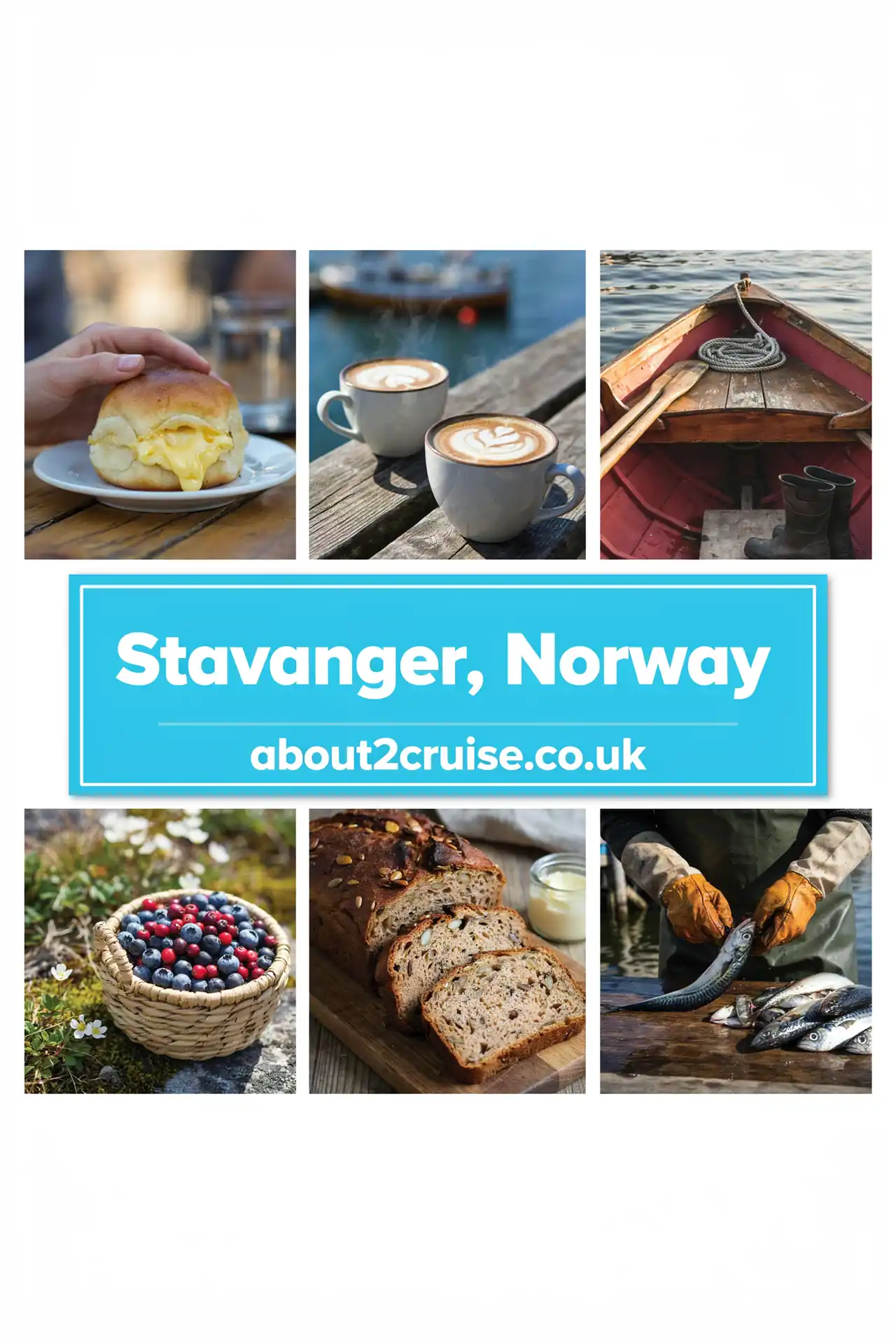
Four cruise quays all sit around the Vågen basin, so you’re in the old town within two minutes on foot. There’s no terminal building, but the tourist office is about five minutes away.
Stavanger is the launchpad for Preikestolen (Pulpit Rock) and Lysefjord boat trips. Both are extremely popular: book early or go DIY with the public ferry. The town itself is compact and walkable, and Gamle Stavanger’s white wooden houses are a highlight you shouldn’t miss.
Haugesund: Viking History and a Gentle Walk to Town
Haugesund berths alongside at Garpaskjærkaien on Risøy, about 1 km from the centre over a gentle bridge. A shuttle often runs, but most people can walk it without trouble.
This is the access point for the Avaldsnes Viking sites, which you can reach by local bus. The port has a small terminal with toilets and Wi‑Fi, and the quay is deep enough for most ships: tendering is very rare here.
Bergen: The Classic Fjord Gateway With a UNESCO Heart
There’s no single cruise terminal in Bergen. Ships are assigned one of several quays. The central quays, Skolten, Bontelabo, and Festningskaien, put you right by Bryggen and the fish market. The western quays, Jekteviken and Dokken, are further out and normally have a shuttle.
Bergen is Norway’s most popular cruise port, with the most ship calls and the most embarkations. It’s best for a walkable UNESCO wharf, the Fløibanen funicular, and as a start or end point for a fjord cruise. If you’re on a central quay, everything is easy on foot.
Flåm: Tiny Village, Big Scenery (and the Famous Railway)
Flåm is a tiny village at the end of Aurlandsfjord, but it punches far above its size. The port has one cruise quay; a second ship must anchor and tender from Gudvangen.
The Flåm Railway station is a flat 300 m from the pier, making the scenic train the single most popular excursion here. The village also offers fjord cruises, the Stegastein viewpoint, and the Ægir brewpub. It’s best for the railway and the dramatic sail‑in through the Nærøyfjord, a UNESCO World Heritage area.
Pre‑book the railway as early as possible: tickets release 120 days ahead and sell out.
Geiranger: Poster‑Perfect Fjord With a Tender Catch
Geiranger is the poster child of Norwegian fjords, sitting at the head of the UNESCO‑listed Geirangerfjord. Ships either use the 236‑metre SeaWalk or anchor and tender: on busy days one ship gets the SeaWalk and the rest tender.
The village is tiny but spectacular. The Waterfall Walk, Dalsnibba viewpoint, and the Eagle Road are the top excursions. This is a tender‑risk port, so check your itinerary. It’s best for sheer fjord scenery, waterfalls, and mountain viewpoints. Note that the fjord now has zero‑emission rules, but most cruise lines still call here.
Eidfjord: Quieter Fjord Alternative with Norway’s Most Popular Waterfall
Eidfjord sits at the head of the Hardangerfjord, a quieter alternative to Geiranger. The cruise quay is right in the centre of a small village, so you walk off into the main street.
The star attraction is Vøringsfossen, Norway’s most visited waterfall, about 30 minutes by bus. Eidfjord is best for less crowded fjord scenery, the nearby Hardangervidda plateau, and a relaxed day without tenders.
Olden: Glacier Hikes and a Sky‑High Viewpoint
Olden is the gateway to the Briksdal Glacier and the Loen Skylift. The port has one deep‑water quay about 1 km from the village: a flat, 15‑minute walk. On two‑ship days one ship docks and the other tenders.
The glacier shuttle and the skylift are both easy to book independently, but watch the glacier bus timetable; there’s only one public return in the afternoon. Olden is best for glacier hikes, the skylift viewpoint, and a peaceful fjord setting.
Ålesund: Art Nouveau Streets and 418 Steps to a Great View
Ålesund is a compact Art Nouveau town spread over several islands. The three cruise quays are all within a 20‑minute walk of the centre, and the town is fully walkable.
The highlight is the 418‑step climb to Aksla viewpoint: steep but worth it. Ålesund has no tendering unless the port is extremely busy. It’s best for the Art Nouveau architecture, the Atlantic Sea Park, and as a gateway to the Romsdal Alps.
Molde: Panoramic Peaks and a Quieter Vibe
Molde sits on the Romsdalsfjord and is known for its panoramic view of 222 peaks from the Varden viewpoint. The main cruise quay, Storkaia, is just 100 m from the town centre; a second quay is 1.2 km out. Ships dock, not tender, but the port can take two to four ships at once.
Molde is best for the Varden shuttle, the Atlantic Ocean Road, and as a quieter alternative to Ålesund. It also connects to Åndalsnes and the Rauma Railway by bus or tour.
Trondheim: History, Colour and a Cathedral to Remember
Trondheim was Norway’s first capital and is home to the Nidaros Cathedral, the country’s national shrine. The main cruise quay, Quay 68 at Brattøra, is about 800 m from the centre and a flat 15‑minute walk. An overflow quay at Ila is 2.5 km out and has a paid shuttle. Ships dock, not tender.
Trondheim is best for the cathedral, the colourful Bakklandet district, and the Rockheim pop museum. The tower climb has 172 narrow steps, so it’s not for everyone.
Alta: Northern Lights City and Ancient Rock Art
Alta is the “city of the Northern Lights” and home to the UNESCO‑listed rock carvings at Hjemmeluft. Most cruise ships dock at Terminalkaia near the airport, about 4 km from the town centre. A shuttle usually drops you at the AMFI shopping centre next to the Northern Lights Cathedral.
Alta is a major winter cruise port, with ships often staying two or three days for aurora viewing and whale safaris. It’s best for Northern Lights, rock art, and Arctic culture. No tender here, but the pier is remote: don’t plan to walk.
Hammerfest: The World’s Northernmost Town, Walkable and Proud
Hammerfest is the world’s northernmost town, a small Arctic community with a proud polar heritage. The cruise quay is central, so you walk into town easily.
Hammerfest is best for the Polar Bear Society, the Meridian Column (a UNESCO World Heritage site), and as a gateway to the Finnmark coast. It’s a regular call on Hurtigruten and expedition cruises, and docking is the norm.
Harstad: Arctic Stop with a Medieval Church and WWII Gun
Harstad sits on the island of Hinnøya and is a less‑visited but worthwhile Arctic stop. It has three piers: the central Larsneset is right in town, Seljestad is 400–500 m south, and Stangnes is 5 km out with a shuttle. Ships dock, not tender, and the town is walkable when you’re at the central piers.
Harstad is best for the Trondenes church (a medieval stone church) and the giant WWII Adolf gun, both reachable by local bus or taxi.
Narvik: Railways, War History and an Ice‑Free Fjord
Narvik is an ice‑free port deep inside the Ofotfjord, famous for its WWII history and the Ofoten Railway. The cruise berth at Fagernes is about 1.5 km from the town centre; shuttle buses run on call days.
The Arctic Train to Bjørnfjell is a scenic rail journey that you can book independently for about half the cruise‑line price. Narvik is best for the war museum, the cable car to Fagernesfjellet, and the railway. Docking is standard, but check whether you’re at the central pier or Fagernes.
Honningsvåg (North Cape): The Reason You Go This Far North
Honningsvåg is the gateway to the North Cape, a 307‑metre cliff at 71°10’N. The port is deep‑water and can take several ships; you dock or tender depending on berth availability.
The only reason most ships call here is the North Cape Hall, reached by a 45‑minute bus ride. The Nordkappekspressen bus connects with Hurtigruten arrivals and gives you about 1 hour 15 minutes at the Cape. This is the northernmost cruise port on the mainland, and it’s best for the midnight sun and the clifftop viewpoint. The weather can be wild: bring layers.
Tromsø: Arctic Capital with Two Very Different Cruise Piers
Tromsø is the Arctic capital and the largest city in northern Norway. It has two cruise areas: Prostneset in the centre is steps from the main street, but ships over 230 m must use Breivika, 4.5 km out through an industrial area. A shuttle or the Svipper bus 42 (card only) gets you into town in about 10 minutes.
Tromsø is a year‑round cruise port, famous for the Arctic Cathedral, the Fjellheisen cable car, and winter Northern Lights tours. It’s also a turnaround port for Hurtigruten and Havila, and you can fly in and out easily. If you’re docked at Prostneset, everything is walkable.
Longyearbyen (Svalbard): Expedition Country, Not a Typical Cruise Port
Longyearbyen is the main settlement on Svalbard, an Arctic archipelago halfway between Norway and the North Pole. It’s only visited by expedition ships carrying fewer than 200 passengers for landings, or by larger ships that call for a day without going ashore. The port is small; you may dock or tender.
The town is walkable, but you must not leave its boundaries without a guide because of polar bears. Longyearbyen is best for polar wildlife, glaciers, and real expedition experiences. Note that the European Health Insurance Card does not apply here, and a Svalbard environmental fee is charged per passenger. This is a bucket‑list port but not for the casual cruiser.
Port Comparison: Which Norwegian Port Fits Your Travel Style?
Norway has no official ranking of cruise ports, but arrival data gives a good picture. Bergen leads in ship calls, followed by Ålesund, Stavanger, and Geiranger/Hellesylt. In terms of day passengers, Ålesund actually edges out Bergen. If you want the classic fjord ports, those four plus Flåm and Olden are the core. For the Arctic, Tromsø is the busiest, followed by Honningsvåg, Alta, and Narvik. For expedition and polar, Svalbard is in a class of its own.
Which port you choose depends on what you want:
- For UNESCO fjord scenery: Geiranger, Flåm (Nærøyfjord), and Eidfjord.
- For scenic railways: Flåm, Åndalsnes (near Molde), and Narvik.
- For walkable cities: Bergen, Stavanger, Trondheim, Oslo, and Ålesund.
- For glaciers and mountains: Olden, Geiranger, Eidfjord, and Åndalsnes.
- For the Arctic and Northern Lights: Tromsø, Alta, Honningsvåg, Hammerfest, and Harstad.
- For expedition and wildlife: Longyearbyen (Svalbard).
If you’re worried about tender risk, stick to ports that almost always dock: Oslo, Kristiansand, Stavanger, Bergen (central quays), Ålesund, Molde, Trondheim, Hammerfest, Harstad (central piers), Narvik (Fagernes), Alta, Honningsvåg, and Longyearbyen sometimes dock. The main tender ports are Geiranger, Flåm (if a second ship is in port), Skjolden, and some smaller calls. Always check your ship’s berth plan before booking a non‑refundable tour.
Docking, Tendering and Shuttles: How It Actually Works
Norway’s ports are a mix of deep‑water quays and anchorages, but most mainstream cruise calls are docks. Tenders are most common at Geiranger (when the SeaWalk is full), Flåm (when a second ship is in the fjord), Skjolden (on two‑ship days), and some Lofoten calls. A tender ride can be 5–20 minutes depending on the anchorage, and at Geiranger tender traffic stops for 30–45 minutes while a ship moors to the SeaWalk.
Shuttles are usually provided by the cruise line when the berth is far from town. Bergen runs shuttles from Jekteviken and Dokken to Bryggen (often free, sometimes charged). Tromsø runs shuttles from Breivika, but the local Svipper bus 42 is a cheap alternative (kr50 or kr30 off‑peak, card only). Haugesund, Narvik, Trondheim’s Ila quay, and Alta also rely on shuttles; the price, if any, is set by the ship. At central quays, Oslo, Stavanger, Ålesund, Molde, Trondheim main, Hammerfest, Harstad central, you simply walk off.
Always bring a small amount of Norwegian kroner or a card that works abroad, because some buses do not take cash (Tromsø), and Wi‑Fi can drop. Screenshot tickets for the Flåm Railway and other e‑tickets.
Fjords, Glaciers and Waterfalls: The Scenic Draw
Norway’s fjords are the main reason most people cruise here. The West Norwegian Fjords, Geirangerfjord and Nærøyfjord, are UNESCO World Heritage, and the sail‑in is often as good as any shore excursion. Deep‑water ports like Flåm, Geiranger, Olden, and Eidfjord are set at the end of long, dramatic fjords where waterfalls plunge straight into the sea.
Glacier excursions are concentrated around Olden (Briksdal Glacier) and the Jostedalsbreen ice cap. The Briksdal Glacier walk is 2.5–3 km each way with about 180 m of climb, or you can take a troll car part of the way. From Geiranger, the Dalsnibba viewpoint at 1,500 m gives a panoramic view of the fjord, but the road can close at short notice for snow or ice. Eidfjord’s Vøringsfossen is Norway’s most visited waterfall and is now easily accessible via a new viewing platform.
Note that new zero‑emission rules apply inside the World Heritage fjords: ships under 10,000 gross tonnes must operate without direct CO₂ emissions from 2026, and larger ships from 2032. This doesn’t stop your cruise, but it may affect which ships can enter and how long they stay. Hellesylt, at the other end of Geirangerfjord, is sometimes used as a swap port if the fjord is restricted.
Scenic Railways and Viewpoints Worth Planning Around
Two train journeys dominate the cruise port wish‑list: the Flåm Railway and the Rauma Railway. The Flåm Railway climbs 866 m in about an hour from the pier, with a photo stop at Kjosfossen waterfall. It’s extremely popular: tickets go on sale 120 days ahead and sell out. There are no student or senior discounts, and Eurail holders get 30% off.
The Rauma Railway runs from Åndalsnes, a port often paired with Molde. It climbs through Romsdalen with 32 bridges and a spiral tunnel. Åndalsnes station is 100 m from the pier, making it an easy DIY excursion.
Viewpoints include Aksla in Ålesund (418 steps), Varden in Molde (407 m, shuttle available), Stegastein near Flåm (650 m above Aurlandsfjord), and Dalsnibba above Geiranger. All require a bus or a steep walk, and the weather can change fast.
Midnight Sun, Northern Lights and True Arctic Experiences
Norway’s latitude means the cruise season is split into two very different experiences. From late May to late July, the sun never sets north of the Arctic Circle: you can sit on deck at midnight in Tromsø or at North Cape. The midnight sun makes for long port days and unusual photo opportunities.
From September to March, the Northern Lights become the draw. Tromsø, Alta, Honningsvåg, and Hammerfest are the main aurora ports, with many cruise lines offering winter itineraries. Hurtigruten even offers a free voyage if you don’t see the lights on an 11‑day or longer trip. The polar night in Tromsø runs from late November to mid‑January, meaning it’s dark 24/7: ideal for aurora but not for sightseeing.
Arctic experiences include king crab safaris from Kirkenes, whale watching in Tromsø and Alta, dog sledding, snowmobiling, and the Snowhotel. In Svalbard, you can see polar bears: but from a safe distance, and only with a guide outside Longyearbyen.
Hurtigruten and Coastal Voyages: A Different Way to See Norway
If you want to see the whole coast, Hurtigruten and Havila Voyages run the scheduled Bergen–Kirkenes coastal route all year. These are working ships that carry mail, freight, locals, and passengers, calling at 34 ports, many of which are too small for mainstream cruise ships.
The full round trip is 12 days and about 2,500 nautical miles, with up to six port calls a day and stops ranging from 10 minutes to a few hours. This isn’t a traditional cruise, there are no formal nights or big shows, but it’s the best way to see Norway’s coastline and small communities. Excursions are extra and range from $117 to $352.
Best Time to Cruise Norway: Weather, Light and Crowds
The peak fjord cruising season is June to August, when temperatures in the fjords reach the mid‑teens to low 20s°C, daylight is long, and the open sea is calmest. May is also excellent: waterfalls are full from snowmelt, orchards are in bloom, and it’s statistically one of the driest months in the fjords. September brings golden light and fewer crowds, but more rain and a livelier swell; the first northern lights can appear late in the month.
Winter cruises (November–March) are increasingly popular for the aurora and Arctic experiences, but you sacrifice daylight and many tourist attractions close. Norway’s coast is milder than its latitude suggests thanks to the Gulf Stream, but no month is dry in Bergen: November is the wettest with about 322 mm, and May the driest with about 109 mm. Always pack a waterproof layer and layers, regardless of season.
If you want both midnight sun and good weather, July is the sweet spot for the fjords. For the Arctic and aurora, late September to late March is best, with the darkest months being November, December, and January.
Cruise Lines and Routes: Finding Your Fit
Many mainstream cruise lines sail to Norway from the UK and Europe. P&O Cruises runs seven‑night fjord round trips from Southampton calling at Stavanger, Olden, Flåm, Haugesund, Ålesund, and Skjolden. Cunard, Holland America, Princess, Celebrity, AIDA, Mein Schiff, Viking, and Fred. Olsen all have Norway itineraries. British passengers mostly start in Southampton; North Americans often fly to Copenhagen, Amsterdam, or London and join a ship there. Some lines also offer cruises from Bergen or Tromsø, which are Norway’s main turnaround ports.
For a more immersive experience, Hurtigruten and Havila Voyages are the coastal specialists, and expedition lines like Ponant, Hapag‑Lloyd, and Lindblad go to Svalbard. If you’re confused by the name “Norwegian Cruise Line”, that’s a Miami‑based line, not a Norwegian company: the Norwegian coastal service is Hurtigruten/Havila.
Shore Excursions: DIY vs Ship Tours
In most Norwegian ports you can easily go DIY, but some excursions are better pre‑booked. The Flåm Railway must be booked as early as possible because it sells out. Geiranger coach tours to Dalsnibba and the Panorama bus are popular and often booked through the ship, but local operators run the same trips. In Stavanger, the Lysefjord boat and Preikestolen hike are the two big DIY options, but you can’t do both in one day. In Tromsø, the Arctic Cathedral and cable car are easy by public bus from either pier.
When choosing between a ship excursion and DIY, consider the risk: if you’re tendering, ship excursions get priority on the first tenders. In remote ports like Honningsvåg, the ship’s North Cape transfer is reliable and timed to all‑aboard; taxis are scarce. In Bergen, Ålesund, Stavanger, and Trondheim, DIY is simple and saves money. Always bring a charged phone with offline maps and tickets, because Wi‑Fi and mobile signal can be patchy in the fjords.
Money, Cards and Language in Norway
Norway is almost cashless: cards and phone payments are accepted everywhere, and cash was used in only 3% of in‑store payments recently. Visa and Mastercard are the most widely accepted; Amex and Diners less so. Some buses (like Tromsø) are card only, and no cash is taken on board. Always choose to pay in NOK when a terminal offers dynamic currency conversion, to avoid a 3–8% markup.
Prices are high by UK standards. A main course in a casual restaurant may be NOK 200–300, a coffee NOK 40–50, a beer NOK 100–120. Tap water is free and safe. Tipping is not expected, though 5–15% in restaurants is appreciated if service was good.
English is widely spoken, but learning a few Norwegian words (“takk” for thanks) is appreciated. Public toilets are often free in museums and shopping centres, but some port terminals charge a small fee.
Food and Drink in Norwegian Ports
Seafood is the star. Bergen’s fish soup (fiskesuppe) and fish cakes (fiskekaker) are legendary: try Søstrene Hagelin near the fish market, open since 1929. The fish market itself is touristy but fun; ask the total price before they weigh and cook. Waffles with brunost (brown goat’s cheese) are a cheap snack at NOK 50–80. Reindeer hot dogs from Trekroneren have been a Bergen institution since 1946.
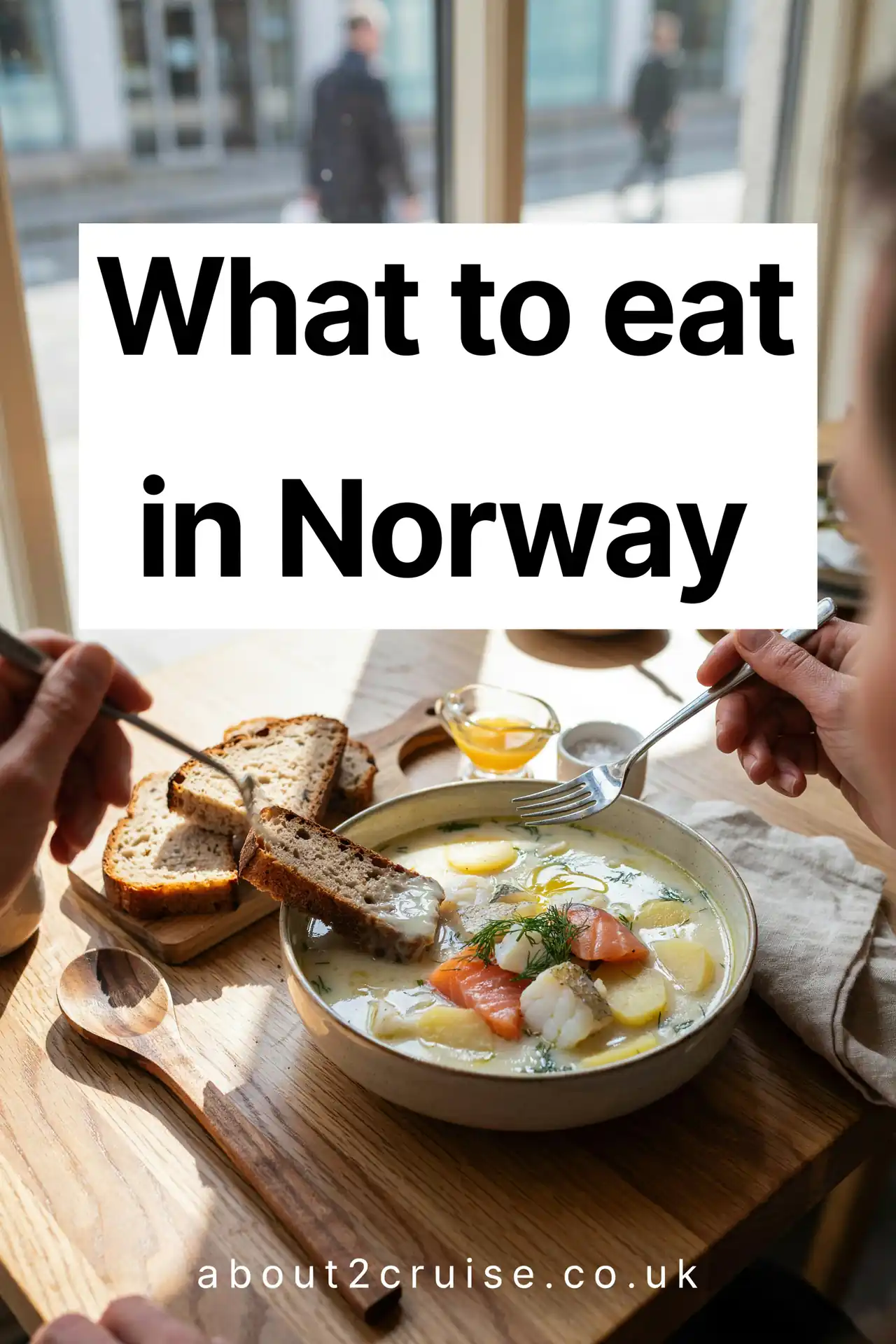
Each region has its own twist: Trondheim’s kanelbolle (cinnamon bun) and fish soup at the Ravnkloa market, Svolvær’s stockfish at Børsen Spiseri, and king crab in Kirkenes and Honningsvåg. Hurtigruten’s coastal kitchen showcases Arctic char, king crab, and local bread. In ports, supermarkets like Rema 1000 and Kiwi are handy for picnic supplies if you’re on a budget.
Accessibility in Norwegian Cruise Ports
Norway has strong anti‑discrimination laws requiring universal design, but older ports and small towns still have challenges. The best ports for wheelchairs and limited mobility are those where you dock centrally and the town is flat: Oslo, Stavanger, Bergen (central quays), Ålesund, Molde, Trondheim (main quay), Hammerfest, Harstad (central pier), and Tromsø (Prostneset).
Tender ports add steps and instability: Geiranger’s tender involves up to two steps, Skjolden has a steep gangway at low tide, and staff may need to lift wheelchairs. At Tromsø’s Breivika, don’t attempt the 4.5 km walk through an industrial area; take the bus or shuttle. Haugesund’s bridge has a gentle incline that some find difficult. Kirkenes has a 2 km unbenched walk if you’re at the outer pier, so book a shuttle.
If you need an accessible excursion, contact the cruise line at least 48 hours ahead: adapted vehicles sell out. Always ask if your Geiranger call uses the SeaWalk (which is accessible) or tenders.
Embarkation Ports: Hotels, Parking and Transfers
Bergen and Tromsø are the main embarkation ports in Norway. Bergen’s cruise terminals are near the centre, and the airport is 16 km away (Bybanen light rail takes 45 minutes, Flybussen 30 minutes). Hotels like Thon Hotel Orion are within 400 m of the quays. There’s no official cruise parking at the port; use city garages or park outside town. Bergen tourist information and the station offer luggage storage (NOK 199–699).
Tromsø’s Prostneset quay is central, with Scandic Ishavshotel and Clarion The Edge a stone’s throw away. The airport is 4 km, and the express bus runs frequently. Parking is limited; the Fjellet garage charges NOK 420–450 per day and long stays need advance booking.
Oslo’s Revierkaia is a 10‑minute walk from hotels near Oslo Central Station, and all piers are walkable. There’s no dedicated cruise parking at any Norwegian port, so flying in is usually best. If you’re driving from the UK, you’d need to take a ferry to Denmark or the Netherlands and drive north: possible but time‑consuming and costly.
Passports, Visas and Safety
UK citizens don’t need a visa for Norway (Schengen) for stays up to 90 days, but your passport must be valid for at least three months after your planned departure and issued within the last 10 years. You may be asked to show proof of accommodation, travel insurance, and a return ticket at border control. The EU Entry/Exit System may require fingerprints and a photo on first entry, so allow extra time.
Norway is very safe. Petty theft is rare, but be careful at Oslo Central Station and airports. To report a crime, call 112 for emergencies or 02800 for non‑emergencies. Weather can change quickly, so carry warm layers even in summer. In Svalbard, you must stay at least 300 m from polar bears and not leave Longyearbyen without a guide. Drones are restricted in protected areas.
Frequently Asked Questions
What is the rainiest month in Norway?
For the fjord region, November is the wettest month in Bergen with about 322 mm of rain. May is the driest with about 109 mm. No month is completely dry, but summer (June–August) has the most pleasant weather overall.
Can you walk into Bergen from a cruise port?
Yes, if you dock at Skolten, Bontelabo, or Festningskaien, you’re a 5–15‑minute walk from Bryggen and the centre. If you dock at Jekteviken or Dokken, it’s 30 minutes or more, so take the shuttle.
Is there a cruise that goes to Norway?
Yes, many. Mainstream lines like P&O, Cunard, Princess, Holland America, and Viking all sail to Norway. Hurtigruten and Havila run the coastal route from Bergen to Kirkenes year‑round. Expedition lines go to Svalbard. You can start from Southampton, Copenhagen, Amsterdam, or fly to Bergen/Tromsø and join there.
Which Norwegian port is best for first‑time cruisers?
Bergen is the classic introduction: walkable, historic, and with a good mix of sights. Flåm and Geiranger are must‑sees for the fjords. If you want a city, Oslo or Stavanger are easy. For the Arctic, Tromsø is the most accessible.
How much does a Norway cruise cost?
A seven‑night mainstream fjord cruise from the UK can cost from £700–£1,500 per person in an inside cabin, rising to £2,000+ for a balcony. Arctic and expedition cruises cost significantly more. Onshore costs are high: budget NOK 500–1,000 per day for food and transport, and NOK 500–1,500 for excursions. Hurtigruten’s coastal voyage starts around £1,500 per person for 12 days in an inside cabin, but excursions are extra.
What is the best month to see the Northern Lights on a cruise?
September to March, with the darkest months (November–January) giving the longest viewing windows. Tromsø, Alta, and Honningsvåg are the top ports. Some cruise lines offer a free voyage if you don’t see the lights on longer itineraries.
Do I need cash in Norway?
No, cards are accepted almost everywhere, and many buses are card‑only. However, it’s wise to have a small amount of NOK for public toilets or small purchases, though most places take contactless. Always choose to pay in NOK to avoid dynamic currency conversion fees.
Which Norway cruise ports have tenders?
The main tender ports are Geiranger (when the SeaWalk is full), Flåm (if a second ship is in port), Skjolden (two‑ship days), and some smaller Lofoten calls. Most other mainstream ports dock.
Can I see the fjords without a cruise?
Yes, you can drive, take trains and ferries, or use the Norway in a Nutshell tour. But a cruise is the most convenient way to see multiple fjord ports without repacking, and the sail‑ins are spectacular.
For a comparison of Norway and Alaska, see our Alaska versus Norway cruise comparison. For more port guides around the world, visit our cruise port guides.
Last Updated: 15 November 2026