
The Venice cruise terminal at Marittima sits on the western edge of the lagoon, about 12 kilometres from Marco Polo Airport. That’s not far as the crow flies, but when you’ve got luggage, a flight to catch, and possibly jet-lagged kids in tow, those 12 kilometres can feel like a logistical minefield. The good news is you’ve got several solid options ranging from €8 public buses to €220 private transfers, and the right choice depends entirely on your budget, group size, and stress tolerance.
Here’s the reality: there’s no single “best” option for everyone. A solo traveller with a backpack and three hours to spare has very different needs than a family of four with matching hardside carry-on luggage and a tight connection. Let’s break down what actually works.
Your Transfer Options at a Glance
| Option | Time | Cost | Best For |
|---|---|---|---|
| Official Taxi | 20-30 mins | €45-55 | Small groups, direct route |
| Private Transfer | 25-40 mins | €220 for up to 8 people | Families, groups splitting costs |
| Shared Shuttle | 25-40 mins | €40-60 per person | Solo travellers wanting door-to-door |
| Water Taxi | 30 mins | €150-200+ | Special occasions, speed over value |
| ACTV Bus | 45-60 mins | €8-15 | Budget travellers, light luggage |
Official Taxis: The Middle Ground
Venice’s official land taxis operate on fixed fares to Marco Polo Airport, which takes the guesswork out of pricing. You’re looking at around €45-55 for a standard taxi from the cruise terminal, though luggage surcharges and late-night fees can nudge that up a bit. The cars wait right at Piazzale Roma or can be arranged to meet you at the port exit.
The main advantage here is simplicity. You walk out, you get in, you arrive. No booking stress, no sharing space with strangers, and the journey takes about 20-30 minutes depending on traffic. For couples or small groups, this often works out cheaper per person than individual shuttle tickets while still being door-to-door.
Watch out for: Unofficial taxi touts who’ll quote you inflated prices. Stick with the official ranks or pre-book through your cruise line or a licensed operator. If someone approaches you inside the terminal offering a “special deal,” politely decline and walk to the official taxi area.
Private Transfers: Best Value for Groups
Private transfers typically run around €220 for a vehicle that holds up to 8 passengers. If you’re travelling with family or friends, the maths suddenly gets very attractive – that’s about €27.50 per person for a group of eight, which beats almost every other option for door-to-door service.
The driver meets you at the cruise terminal with a name board, helps with luggage, and delivers you directly to your airline’s terminal at Marco Polo. Travel time is 25-40 minutes depending on traffic, and you’ve got the entire vehicle to yourselves. No stops, no strangers, no stress.
Companies like Venice Guide & Boat and similar operators offer fixed-price bookings online. You pay upfront, get confirmation, and that’s it. The driver has your cruise ship details and adjusts for any delays in disembarkation.
Insider tip: If you’ve made friends with other passengers during your cruise, consider organizing a shared private transfer. Split that €220 four or five ways and you’re paying less than a taxi while still getting the same premium service. WhatsApp groups formed onboard are perfect for this.
Shared Shuttles: Solo Traveller Solution
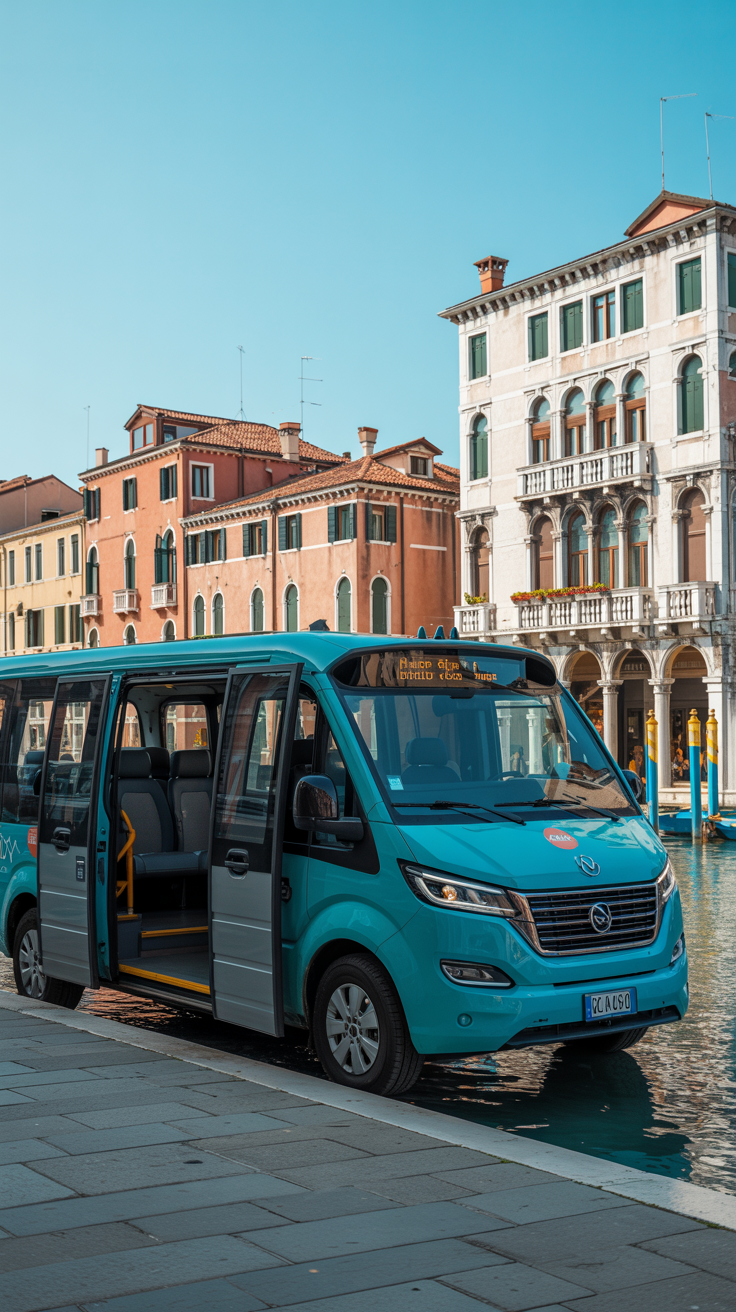
Shared shuttle services charge per person – usually €40-60 – and pick up multiple passengers heading to the airport. Think of it as a middle ground between a private transfer and public transport. You get door-to-door service without paying for an entire vehicle, though you might make a couple of stops for other passengers.
The timing can be less predictable than a private car since you’re coordinating with other people’s schedules, but reputable operators build in buffer time. For solo travellers or couples who don’t want to navigate public buses but can’t justify a full private transfer, this hits the sweet spot.
Book these in advance through platforms like Knopa Transfer or similar aggregators. Read the fine print about pickup times and whether they guarantee to get you there by a specific time or just pick you up at a specific time (there’s a difference).
Water Taxis: The Scenic Splurge
Let’s address the elephant in the lagoon: water taxis look incredible gliding across the water, and yes, they’re faster than road transport. But at €150-200+ for a private boat, they’re really more about the experience than practicality for airport transfers.
Here’s the thing though – if you’ve got 6-8 people, suddenly that €180 water taxi is only €22-30 per person, which actually becomes competitive with other options. You get a memorable end to your Venice trip, skip all road traffic entirely, and arrive in about 30 minutes.
The boats pull up right at the cruise terminal and drop you at the airport’s water entrance. It’s undeniably cool. Just make sure you’re not doing this solo or as a couple unless you’ve got money to burn or really want the Instagram moment. For comparing Venice’s water transport options, it’s worth understanding when splashing out makes sense. And if you’re bringing electronics like your phone or camera, keep them in a waterproof dry bag since lagoon spray can soak your belongings.
Public Buses: The Budget Option
The ACTV bus network connects the cruise port to Marco Polo Airport for around €8-15 per person. You’ll typically take a bus from the terminal area toward Piazzale Roma, then catch the airport bus from there. Total journey time runs 45-60 minutes, sometimes longer if you hit traffic or have to wait for connections.
This works fine if you’re travelling light, have flexible timing, and don’t mind navigating Venice’s public transport with your luggage. The buses themselves are clean and reliable, but they get crowded, especially during peak cruise season when multiple ships are turning over passengers.
Practical reality check: If you’ve got more than a carry-on each, this gets awkward fast. Venice buses fill up with tourists and locals alike, and finding space for full-sized suitcases while standing in a packed bus isn’t fun. Budget an extra 30 minutes beyond the stated journey time just in case. Consider using compression packing cubes to minimize your luggage size if you’re planning to use public transport.
Getting to St. Mark’s First?
Some cruise passengers want to squeeze in a final few hours exploring Venice proper before heading to the airport. If getting from the cruise port to St. Mark’s Square is on your agenda, factor in at least 3-4 hours total for a quick visit plus airport transfer time. The logistics get tight quickly, and missing your flight to save €30 on a taxi would be a very expensive mistake.
Want to know more about Venice cruise port facilities and services, including luggage storage options if you’re planning that last-minute city visit? The terminal itself has decent amenities, though it’s very much a functional departure point rather than a destination. If you do decide to explore before your flight, pack a secure messenger bag for your valuables and keep your main luggage stored safely.
Timing Your Transfer
Most cruise lines recommend being at the airport 3 hours before international flights and 2 hours for domestic. Add your transfer time (30-60 minutes depending on option chosen) plus at least 30 minutes buffer for disembarkation and getting from ship to transport. That means leaving the port area roughly 4 hours before an international flight.
Disembarkation from large cruise ships is rarely quick. Even with an early luggage tag colour, you’re looking at 30-60 minutes between walking off the gangway and actually clearing the terminal area. Don’t book a transfer for 8am if your ship doesn’t start letting people off until 7:30am.
Smart move: Book your transfer for 90 minutes after your designated disembarkation time, not 30 minutes after. Ships run late, customs can be slow, and you’ll spend those 90 minutes a lot less stressed than if you’d cut it fine. Keep your portable charger with built-in cables handy so you can stay in touch with your driver if needed.
Comparing With Other Port Transfers
If you’re planning Mediterranean cruises, understanding port-to-airport logistics helps you budget time and money across your entire trip. Rome’s Civitavecchia port sits much further from its main airport (about 75 minutes), while Barcelona’s cruise terminals are typically only 20-30 minutes from the airport. Venice falls nicely in the middle for convenience, though the multiple transport options can feel overwhelming.
The key difference with Venice is that water transport exists as a genuine option, not just a tourist gimmick. In most ports, you’re choosing between road transfers at various price points. Here, you’ve actually got a choice of elements – land or water – which sounds romantic but really just adds another variable to your decision-making.
Which Option Actually Makes Sense?
Let’s cut through the noise. Here’s what you should actually book based on common scenarios:
- Solo traveller, budget conscious, light luggage: ACTV public bus. Save your money for the actual holiday.
- Couple or pair travelling together: Official taxi. Split €50 two ways, get there stress-free, move on with your day.
- Family of 3-5 people: Private transfer. The per-person cost becomes competitive with shuttles and you’re not herding kids through bus stops.
- Group of 6-8 friends or extended family: Private transfer or water taxi if you want something memorable. Split costs make both very reasonable.
- Tight connection and nervous about timing: Private transfer. Pay for the peace of mind and direct route.
- Hours to kill and want to save money: Public bus. Just budget extra time and mental energy for the logistics.
Booking Tips That Actually Matter
Book your transfer at the same time you book your flights home, not the night before. Prices rise closer to the date, and availability drops during peak season when multiple cruise ships are in port simultaneously.
If booking a private transfer, give them your cruise ship details and they’ll track your arrival. But also grab the driver’s phone number from your confirmation email. If disembarkation runs way over schedule, a quick WhatsApp message keeps everyone coordinated.
For water taxis, confirm exactly which airport entrance they use. Some drop at a dock that requires a shuttle bus to the terminal, which defeats half the point of taking a boat.
Currency tip: Pay in euros, not pounds or dollars if given the choice. Dynamic currency conversion at the moment of payment always gives you a worse exchange rate than your credit card’s standard rate.
What About Luggage Limits?
Taxis and private transfers generally accommodate standard cruise luggage (2-3 bags per person) without fuss. If you’ve gone shopping-mad in Venice and now have 6 suitcases for two people, mention this when booking so they can send an appropriately sized vehicle. A digital luggage scale can help you avoid overweight baggage fees before you even leave for the airport.
Public buses have no special luggage allowance. You’re expected to fit your bags in the luggage racks or hold them, which is fine for a backpack or roller bag but awkward with full-sized checked luggage. Watch other passengers for cues on where to stow bags – blocking the aisle will not make you popular. Using organized packing cubes makes it easier to consolidate items and reduce your overall bag count.
Water taxis handle luggage easily since there’s plenty of open deck space. Just make sure your bags are closed properly because getting soaked with lagoon spray would be a rubbish end to your holiday.
Hidden Costs to Watch For
Taxi surcharges are the main gotcha. That €45 base fare can become €60 with luggage fees, night rates (10pm-6am), Sunday supplements, and public holiday charges. Ask before you get in or book a fixed-price transfer to avoid surprises.
Some private transfer companies charge extra for flight monitoring or waiting time if your disembarkation runs over. Read the terms and conditions – reputable operators include reasonable delays, dodgy ones nickel-and-dime you for everything.
Water taxis sometimes quote a price that doesn’t include the airport landing fee or luggage handling. Get the total price in writing before departing, not when you arrive at the airport dock with no alternative.
If Your Flight Gets Delayed or Cancelled
Most private transfer companies offer free cancellation up to 24-48 hours before. If you find out the night before that your flight’s been cancelled, you can usually get a refund or reschedule. Leave it until the morning of your transfer and you’ll probably lose the money.
Taxis are pay-on-the-day so you only spend money if you actually use them. This flexibility costs you a bit more in per-journey price but gives you options if plans change at the last minute.
If your flight’s delayed by several hours but not cancelled, you’re honestly better off heading to the airport anyway. There’s not much to do at Marittima cruise terminal, and Marco Polo Airport has decent restaurants and lounges where you can wait comfortably. Trying to time a late departure perfectly just adds stress. Make sure you’ve got a high-capacity portable charger to keep your devices powered during extended waits.
Extend Your Stay in Venice
If you’ve got an evening flight or want to spend an extra day, hotels near Venice cruise port offer convenient accommodation without the premium prices of staying in the historic centre. Many properties near Mestre or Marghera provide free or cheap shuttle services to Marco Polo Airport, making your final transfer even simpler. The area might not have the romantic canals and Renaissance architecture, but you’ll pay half the price for modern hotels with better amenities.
For cruise passengers who’ve already seen the tourist sights and just need a practical base for early flights, this part of Venice makes a lot of sense. Several hotels offer luggage storage if you want to take one last trip into the city centre before flying home, and the accommodation options range from budget chains to comfortable boutique properties. Don’t forget to pack a compact travel steamer to freshen up your clothes after days at sea before your flight home.
Personal Experience
Last summer, after disembarking from our Mediterranean cruise in Venice, we had about four hours to get to Marco Polo Airport for our flight home. The cruise terminal at Marittima isn’t exactly around the corner from the airport, so I’d done my homework beforehand. Water taxis looked amazing gliding across the lagoon, but at €110-130 for our family of three, it felt like overkill for a 30-minute ride. The ACTV public bus was only €8 per person, but dragging our luggage through multiple transfers and crowded stops with tight timing sounded like a recipe for missing our flight. We ended up booking a private transfer for about €50, and honestly, it was the sweet spot – our driver met us right at the terminal, helped with bags, and got us there in 20 minutes flat without any stress.
Looking back, the key thing is timing and luggage. If you’re travelling light with plenty of time to spare, the bus is totally doable and dirt cheap. If money’s no object or you’ve got a huge group to split costs, those water taxis are actually pretty reasonable per person and definitely memorable. But for most people with normal amounts of luggage and a flight to catch, a private ground transfer just makes sense. You’re already spending thousands on a cruise – the extra €30-40 over the bus fare is worth it to actually relax on your last day instead of playing beat-the-clock with public transportation.
Common Questions & FAQ
How long does it take to get from Venice cruise port to Marco Polo Airport?
Direct transfers by taxi or private car take 20-30 minutes in normal traffic conditions. Water taxis cover the distance in about 30 minutes. Public buses require 45-60 minutes including any connections, and you should budget extra time during peak hours when buses fill up quickly. Always add 30 minutes buffer time beyond the stated transfer duration to account for disembarkation delays and check-in queues at the airport.
Can I walk from the Venice cruise terminal to any transport options?
The Marittima cruise terminal is purposely built for vehicle access, not pedestrian connections to the city. You’ll find buses and taxis right at the terminal exit, but you can’t meaningfully walk anywhere useful with cruise luggage. The nearest vaporetto stop is at Piazzale Roma, which requires either a bus ride or a very long walk with your bags through an industrial port area – not recommended.
Do I need to book airport transfers in advance or can I just turn up?
Official taxis are always available at the cruise terminal, so you can turn up and queue. However, when multiple large cruise ships disembark simultaneously, taxi queues get long and you might wait 30-45 minutes. Private transfers and shuttles must be booked in advance, usually at least 48 hours ahead. Water taxis can sometimes be arranged on the spot but cost more than pre-booked rates and availability isn’t guaranteed during busy periods.
What happens if my cruise ship arrives late and I miss my booked transfer?
Reputable private transfer companies track cruise ship arrivals and adjust pickup times automatically within reason. Most include 60-90 minutes of free waiting time for cruise passengers. If you’ve booked directly with a driver, contact them as soon as you know about delays. Water taxi operators are less flexible since they operate on tight schedules. Official taxis don’t care when you arrive since you haven’t pre-booked, but you’ll join whatever queue exists when you disembark.
Are Venice airport transfers wheelchair accessible?
Standard taxis and most private transfers can accommodate folding wheelchairs if you notify them when booking. Dedicated wheelchair-accessible vehicles with ramps or lifts must be specifically requested and cost more. Public buses have low floors and space for wheelchairs, but getting on during crowded times with luggage can be challenging. Water taxis are not wheelchair-friendly due to the boarding process from floating docks. Contact your chosen transport provider directly about specific mobility requirements.
Can I stop in Venice city centre on the way to the airport?
Private transfer drivers will usually allow a brief stop if arranged in advance, though expect to pay extra for waiting time. An hour in Venice proper adds €30-50 to your transfer cost and you’ll need to be quick. Taxis work on meters so stopping racks up significant charges. If you want proper time exploring the city, you’re better off taking a cheap bus or vaporetto to St. Mark’s, spending a few hours, then booking a separate airport transfer for later rather than keeping a driver waiting. Store your main luggage and carry just a secure anti-theft backpack for your city exploration.
Is it safe to book transfers through third-party websites?
Established platforms like GetYourGuide, Viator, and specialist transfer aggregators are generally reliable and offer customer protection if something goes wrong. Check reviews carefully and verify the actual operator providing the service, not just the booking platform. Direct booking with established Venice transport companies often costs the same and gives you a direct line to the driver. Avoid suspiciously cheap offers or companies with no verifiable Venice address or phone number – you’ll have no recourse if they don’t show up.
What’s the best option if I have an early morning flight?
For flights before 9am, book a private transfer with guaranteed pickup time. Public buses run less frequently early morning and one missed connection could mean missing your flight. Official taxis are reliable but queues at the cruise terminal might be shorter very early since fewer cruise ships disembark at dawn. Build in extra buffer time for early flights since traffic is unpredictable and you can’t afford to miss your plane over saving £20 on transport. Pack a memory foam travel pillow so you can rest comfortably during your early morning transfer.