
From Venice cruise port to St Mark’s Square, the fastest public route is the People Mover to Piazzale Roma (€1.50) then vaporetto line 2 (€9.50, about 25 minutes) to San Zaccaria. From San Basilio, walk 30–45 minutes or take line 2 for about 20 minutes. A water taxi costs roughly €75–100 and takes 20–30 minutes.
What You’re Actually Heading To: St Mark’s Square
Piazza San Marco is the civic and religious heart of Venice. When you step into the square, you’re facing St Mark’s Basilica, the Campanile, the Doge’s Palace and the arcades of the Procuratie. Locals simply call it San Marco or Piazza San Marco, but nobody will be confused if you ask for St Mark’s Square.
This is the spot every first-time cruise passenger wants to reach. The basilica, palace, bell tower, clock tower and the best water views all sit within a few minutes of each other on foot.
Where Cruise Ships Dock in Venice Now
Large cruise ships no longer berth in the historic centre. Today the port has several different berth clusters, and your transfer depends heavily on which one your ship uses.
- Marittima: 7 berths, 5 terminals, ships up to 25,000 GT. This is the main walkable cruise basin, just west of Piazzale Roma.
- San Basilio: 2 berths, 1 terminal, ships up to 25,000 GT. It sits on the Zattere side of Dorsoduro, south-west of St Mark’s.
- Riva dei Sette Martiri: used mainly by river ships and maxi yachts, closer to the eastern end of the city.
- Porto Marghera, Liguria and Lombardia quays: mainland berths for larger vessels up to 300 m. Passengers usually check in at Marittima and are shuttled to the ship.
- Fusina: two mainland berths, with check-in and boarding on site.
- Chioggia Isola dei Saloni: one berth of 228 m, well outside Venice across the lagoon.
Only Marittima and San Basilio are genuinely walkable into Venice. If you’re at Marghera or Fusina, the ship or port usually provides shuttle connections to Marittima before you begin your own transfer. Always check the daily programme and port information sheet for your exact berth.
Cruise Port to St Mark’s Square: Your Transfer Options
The right choice depends on your berth, group size, luggage and budget. Here’s the quick version:
| Method | Typical time | Typical cost | Best for |
|---|---|---|---|
| People Mover + vaporetto line 2 | 30–40 minutes total | €11.00 per person | Most independent cruisers from Marittima |
| People Mover + vaporetto line 1 | 50–60 minutes total | €11.00 per person | A Grand Canal sightseeing ride |
| Vaporetto line 2 from San Basilio | About 20 minutes | €9.50 per person | Passengers berthed at San Basilio |
| Water taxi | 20–30 minutes | About €75–100 for up to 4 people | Groups, luggage, speed, door-to-door |
| Walking from Marittima | 30–45 minutes | Free | Fit travellers with no heavy bags |
| Walking from San Basilio | 30–45 minutes | Free | Fit travellers who want the Zattere stroll |
Marittima to St Mark’s Square: People Mover + Vaporetto
From Marittima, first get yourself to Piazzale Roma. The simplest route is the People Mover, an automated shuttle linking Tronchetto, Marittima and Piazzale Roma. A single journey costs €1.50 and takes about three minutes from Marittima to Piazzale Roma. On busy turnaround days there’s sometimes a free shuttle bus linking the cruise terminals with the People Mover stop.
At Piazzale Roma, follow signs to the vaporetto pontoons. From there, the express line 2 reaches San Marco–San Zaccaria in about 25 minutes. Line 1 takes about 45 minutes because it stops at every Grand Canal pontoon.
Get off at San Zaccaria for the shortest walk to St Mark’s Square, the basilica and the Doge’s Palace. San Marco Vallaresso also works and drops you near the western end of the square.
If you want a cheap sightseeing ride, stay on line 1 for the full Grand Canal run. It passes Ca’ d’Oro, Ca’ Pesaro, Palazzo Grassi, Ca’ Rezzonico and the Salute before reaching San Marco. The same €9.50 ticket covers that journey.
San Basilio to St Mark’s Square: Walking and Boat Options
San Basilio is about 2 km from Piazza San Marco. A realistic walking time from the San Basilio terminal to the square is 30–45 minutes for a fit adult with no heavy luggage and no long stops. From gangway to square, allow 45–60 minutes because you may need to cross a footbridge, get your bearings and deal with crowds.
The route starts directly from the terminal. You cross a small footbridge onto the Zattere promenade, the long quay facing the Giudecca Canal. The classic walking route then turns inland through Dorsoduro, passes near Campo Santa Margherita and follows signs for Accademia and San Marco. The Accademia Bridge crosses the Grand Canal and has steps, so there is no fully step-free walking route this way.
In July heat, with children or with even a small wheeled bag, double the time a fast walker would plan. The walk is pretty but it is not a luggage transfer. If you’re heading straight from the ship with overnight bags, use the vaporetto or a water taxi instead.
Vaporetto Lines, Stops and Ride Times
The public water bus is the workhorse of a Venice port day.
- Line 1 stops at every Grand Canal pontoon and takes about 45 minutes from Piazzale Roma to San Marco. It’s the scenic, slow option.
- Line 2 is the express route, about 25 minutes from Piazzale Roma to San Marco–San Zaccaria, with a boat roughly every 15 minutes.
- Night line N runs after the main daytime lines finish, including late returns from San Zaccaria.
From San Basilio, line 2 boards at the S. Basilio platform just across the small footbridge from the terminal and reaches San Marco–San Zaccaria in about 19–20 minutes.
You must validate an ACTV ticket before boarding. Contactless bank cards also work directly on the validators, and the system automatically applies the best available fare for your day’s travel.
Water Taxi from the Cruise Port: What It Really Costs
A private water taxi is the closest Venice gets to a cruise passenger’s door-to-door transfer. It can pick up near the cruise terminals and drop you close to St Mark’s Square, avoiding the People Mover and vaporetto queues.
Fares are set by the City of Venice and displayed at the taxi stations. A central city hop such as Piazzale Roma to San Marco is typically around €75 for up to four people. General central journeys run between about €60 and €100. A water taxi carries up to 10 passengers, but there’s usually a supplement above four passengers. Night hours between 22:00 and 06:00 attract a supplement, as do extra luggage and certain terminal pickups.
Confirm the price before boarding. Shared water taxis are less common than shared airport shuttles, so if you’re a couple, a private taxi is usually the realistic water-taxi choice. Wheelchair-accessible water taxis with a boarding platform exist and should be requested when booking.
Alilaguna Boats: When They Help and When They Don’t
Alilaguna is a separate boat operator from the ACTV vaporetto network. Its tickets are not covered by ACTV passes.
The Blu line in the published timetable calls at Marco Polo Airport, Murano Colonna, Fondamente Nove, Ospedale, Bacini, Lido S.M.E., Arsenale, San Zaccaria, Piazza San Marco, Zattere, Giudecca Hilton Molino Stucky and Stazione Marittima. The Orange line runs from the airport via Fondamente Nove, Madonna dell’Orto, Guglie, San Stae, Rialto, Sant’Angelo, Ca’ Rezzonico, Santa Maria del Giglio and Piazza San Marco.
That makes Alilaguna useful if your hotel sits on one of those stops or if you’re coming from the airport. It’s rarely the best port-to-square choice from Marittima, because the airport boat is slower and more expensive than the vaporetto. Single fares are about €18 airport–Venice and about €10 between stops inside Venice. One suitcase and one cabin bag are included, with extra bags charged at €4 each.
Because the Marittima stop has changed operationally in some seasons, verify the current Blu line stop list on the day before relying on it from the cruise basin.
Venice Public Transport Tickets: Singles, Passes and Contactless
ACTV tickets cover the vaporetti, Lido buses and the lagoon islands including Murano, Burano and Lido. They do not cover the People Mover, which is a separate €1.50 fare.
- Single: €9.50, valid 75 minutes in one direction, with transfers allowed.
- 24 hours: €25
- 48 hours: €35
- 72 hours: €45
- 7 days: €65
- Children under 6: free
- Wheelchair users and EU Disability Card holders: €1.50, companion free
An urban ticket includes three bags whose three dimensions add up to no more than 150 cm. Always validate your ticket before travel. If you’re caught without a validated ticket, there’s an on-the-spot fine.
Coming from the Train Station or Airport
If you’re arriving at Venice Santa Lucia by train, the station is nowhere near St Mark’s but it’s extremely well connected by boat. The Ferrovia vaporetto pontoon sits directly outside the station.
- Vaporetto line 2: about 25 minutes to San Marco.
- Vaporetto line 1: about 45 minutes because it stops everywhere.
- Walking: 35–40 minutes over roughly twenty bridges, doable only with light luggage.
- Water taxi: about €80 for up to four people, roughly 20–30 minutes.
From Santa Lucia, line 2 also serves San Basilio directly, which is very useful if your ship is berthed there. Line 5.1 serves Santa Marta near Marittima.
Marco Polo airport is about 13 km from the port area. The simplest airport-to-cruise-port pattern is usually Aerobus to Piazzale Roma, then People Mover to Marittima or vaporetto to San Basilio. The Aerobus line 5 costs €10 one way or €18 return. Alilaguna from the airport takes roughly 75–90 minutes to reach San Marco, with a single fare around €18. Water taxis from the airport are direct and private but significantly more expensive.
Timing the Return to the Ship
All-aboard is not the departure time. Cruise lines typically set all-aboard 30–60 minutes before the published sailing time, and the exact time is posted at the gangway and in the daily programme. If you’re travelling independently, the ship does not wait.
The last line 2 boats from San Zaccaria run until around 23:50, after which the night line N takes over. The People Mover closes at 23:00 on weekdays, 22:00 on summer holidays and 21:00 on winter holidays. If you plan a late evening in Venice and the People Mover has shut, you may need a taxi or a different route from Piazzale Roma back to Marittima. Water taxis run all night but add a supplement between 22:00 and 06:00.
Work backwards from all-aboard. Leave St Mark’s Square with at least 90 minutes of buffer if you’re using public transport, or 60 minutes if you have a pre-booked water taxi. In rain, high tide or peak crowds, add more.
Crowd and Queue Strategy at St Mark’s Square
The basilica’s busiest period is roughly 10:30–13:00. The free prayer-entrance queue can look much longer than the timed-ticket entrance. A booked timed ticket enters by a different gate from the free queue, so it saves both time and confusion.
The first basilica slot at 09:30 and the last slots from 16:30 are quieter than late morning. Late afternoon visits are usually far calmer than anything between 11:00 and 14:00. The square itself is quietest at dawn and becomes thick with visitors by mid-morning.
St Mark’s Basilica: Tickets, Opening Times and What to Know
St Mark’s Basilica is a Byzantine masterpiece. The present church is the third on the site. Construction began in 1063 and it was consecrated on 8 October 1094, when the body of St Mark was placed in the crypt under the high altar.
The golden interior is dominated by mosaic domes and the high altar. The Pala d’Oro behind the high altar is 3.34 m wide by 2.12 m high, with about 250 cloisonné enamels on gilded silver among 1,927 gems. The museum above the narthex holds the original bronze horses, while the ones on the facade are replicas.
Ticket prices for sightseeing entry are:
- Basilica only: €10
- Basilica with Pala d’Oro: €20
- Basilica with museum and Loggia dei Cavalli: €20
- Museum and Loggia alone on Sunday mornings: €14
- Full ticket: €30
- Bell tower Campanile: €15, separate from the basilica
Entry to the basilica for prayer is free through the Porta dei Fiori, off the Piazzetta dei Leoncini. The worshippers’ entrance is open daily from 07:30 to 19:30.
Booked sightseeing tickets are nominative and a valid identity document is required at the entrance. Access is only in the booked slot, with a tolerance of up to 15 minutes before or after. Monday to Saturday the basilica, Pala d’Oro, museum and Loggia open at 09:30, with last admission at 16:45 and closing at 17:15. On Sundays and holy days the basilica opens at 14:00, while the museum and Loggia open at 09:30.
Dress and behaviour must suit a place of worship. Shoulders and knees must be covered, and staff enforce it at the door. Rucksacks and bags larger than 40 × 30 × 20 cm are refused, and trolleys are never allowed inside. The free bag deposit for the basilica is not currently operating, so arrive with nothing larger than a small day bag.
Campanile vs Clock Tower: Which Tower to Visit
The Campanile is the tall bell tower in St Mark’s Square. It’s almost 99 m high and was rebuilt between 1903 and 1912 after collapsing on 14 July 1902. A dedicated lift reaches the belfry at about 60 m. It’s the only tower in the square that lets you simply go up and enjoy the view.
The official ticket is €15, with reductions for young people, students up to 26 and over-65s. The shortest queue is at 09:30, while the best light is usually in the last hour before closing.
The Clock Tower can only be visited on a booked accompanied tour with a maximum of 10 people per slot. It’s filled with small rooms on narrow, steep stairs, and it’s not accessible for visitors with walking difficulties. If you want the view, choose the Campanile. If you want a small-group historical visit, the Clock Tower is the specialist choice.
Doge’s Palace and the Bridge of Sighs
The Doge’s Palace dominates the Piazzetta side of St Mark’s Square. Entry comes through the St Mark’s Square Museums ticket at €35 full price, €15 reduced, or €30 if bought online at least 30 days in advance. That ticket covers the Doge’s Palace, Correr Museum, National Archaeological Museum and the Marciana Library rooms.
Hours are 09:00–19:00 with last admission at 18:00 from April to October, and 09:00–18:00 with last admission at 17:00 from November to March. Allow about two hours inside. The route passes through the magistrates’ rooms and into the new prisons, crossing the Bridge of Sighs inside the palace. The bridge cannot be visited separately.
Gondolas and the Classic Venice Arrival
The official gondola fare is €90 for a 30-minute tour between 09:00 and 19:00, and €110 for 35 minutes after 19:00 until 03:00, for up to five people per gondola. Gondoliers generally don’t accept cards, so confirm the price and duration before boarding and pay in cash.
If you want the cheap version, take a traghetto, the public gondola crossing of the Grand Canal. It costs €2 per person per crossing, paid in cash to the gondolier. Active crossings include Dogana, Santa Maria del Giglio, San Tomà, Carbon and Santa Sofia. They mostly run from about 09:00 to 18:00. A traghetto isn’t a tour, but it’s the most Venetian two euros you’ll spend.
Acqua Alta: High-Tide Disruption and What to Do
Acqua alta is a tidal peak that floods parts of Venice, especially in autumn and winter. The MOSE barriers are now raised to protect the city, but high water still happens. San Marco is one of the lowest points in the city. From about 80 cm, parts of the square are covered.
If your port day coincides with acqua alta, walking routes and vaporetto access can change. Check the official tide app before you head out. If the basilica narthex floods, the Procuratoria sets out signed, staffed alternative routes. Basilica bookings can be cancelled for force majeure including acqua alta, and the voucher stays valid for the rest of that day.
Accessibility and Mobility in Venice
Venice isn’t a step-free city, but the main tourist route offers more access than many people expect.
- Most vaporetti are wheelchair accessible with a portable ramp put out by staff. Big interchange stops including Piazzale Roma, Ferrovia, Rialto, San Marco and Accademia have step-free quay access.
- Of the four Grand Canal bridges, Calatrava and Rialto have ramped or accessible options, while Scalzi and Accademia have steps.
- The Basilica has a ramped entrance through the Porta dei Fiori and a lift and stair lift to the upper museum.
- The Doge’s Palace route is fully accessible with an accessible toilet on the ground floor, but the Bridge of Sighs is not accessible.
- The Campanile lift can take wheelchairs, but there are about three steps at the base.
- The San Basilio to San Marco walk is not a good mobility plan because the Accademia Bridge has steps and there is no fully step-free walking route from that berth.
The cruise port itself provides wheelchair loan for boarding and disembarking, a PRM-equipped shuttle bus on request through the cruise line, and free parking bays for disabled badge holders.
Luggage on Boats and Left-Luggage
If you’re dragging luggage between the ship and the city, the vaporetto isn’t the natural choice. ACTV urban tickets include three bags whose three dimensions add up to no more than 150 cm. On busy boats, large luggage makes moving through the vessel difficult. Water taxis carry luggage more easily but can add a luggage supplement.
VTP runs a luggage deposit on the ground floor of Terminals 103 and 110 at Marittima and at San Basilio, open on boarding and disembarkation days. At Santa Lucia station, the KiPoint left-luggage office is on the platform level and opens 06:00–23:00.
There’s no public left-luggage office at St Mark’s Square, so don’t plan to store bags there. Private lockers near Piazzale Roma charge around €5–6 per bag per 24 hours.
For a port day, carry one small day pack or crossbody bag. That’s enough for a jacket, water, phone charger and tickets.
Map and Orientation: Key Stops to Know
Marittima sits west of Piazzale Roma. San Basilio sits south-west of St Mark’s on the Dorsoduro side. St Mark’s Square sits at the eastern heart of the historic centre.
The main vaporetto stops for a cruise passenger are Piazzale Roma, Ferrovia, S. Basilio, Zattere, Accademia, San Marco Vallaresso and San Marco–San Zaccaria.
For the shortest walk to the basilica and Doge’s Palace, get off at San Zaccaria. For the western end of the square and the Correr Museum, San Marco Vallaresso works. For the Dorsoduro walk from San Basilio, S. Basilio or Zattere are your starting points.
Best Time of Year and Time of Day for St Mark’s Square
Venice is at its most pleasant in late April, May, September and early October. Daytime highs and night lows by month are roughly: January 8/0 °C, April 18/9 °C, July 29/20 °C, October 19/11 °C.
The square is calmest at dawn and in the late afternoon. If you can avoid 10:30–13:00, you’ll see the same monuments with far less friction.
What to Wear and Pack for a Venice Cruise Port Day
The most important item is footwear. Comfortable walking shoes make the difference between a good port day and a painful one. Pack blister prevention products before you need them, not after.

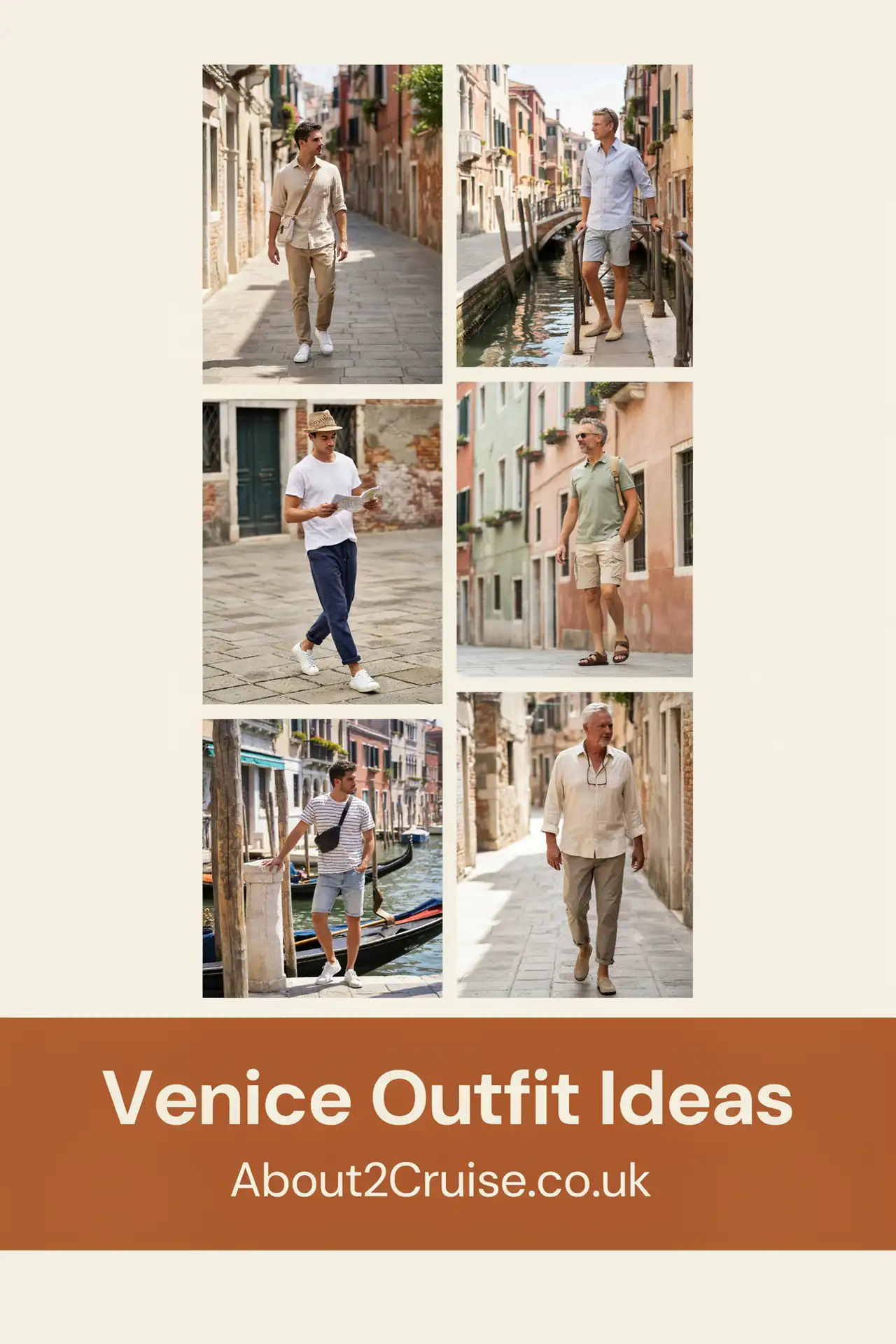
Dress for the basilica means covered shoulders and knees, for both men and women. In spring and autumn, a lightweight packable jacket gives you warmth without bulk. A water-resistant rain jacket is useful all year, especially in May and November.
A portable phone charger is essential if you’re using digital maps, vouchers and the tide app all day.
Safety, Pickpockets and Local Rules
Venice is a very safe city for visitors, but pickpocketing in crowded areas such as St Mark’s Square and the Rialto is the main practical risk. Keep your belongings in sight, watch for distraction techniques and don’t carry all valuables together.
Carry photo ID at all times because police can stop you for an identity check. Validate your transport ticket before travel or you can be fined. Swimming in Venice’s canals is an offence, and there are fines for sitting on monument steps, eating and drinking next to main churches and monuments, and dropping litter. Buying from unlicensed street traders can also lead to an on-the-spot fine.
The European emergency number is 112. The currency is the euro and the time zone is UTC+1.
Where to Stay Before or After a Cruise
Most cruise passengers stay around Piazzale Roma because that’s the only point where road transport reaches the historic centre and it’s one People Mover stop from Marittima, with no bridges to cross.
Hotels directly on Piazzale Roma with no bridges include Hotel Santa Chiara, AC Hotel Venezia, Ca’ Doge and Casanova FourRooms. Casa Sant’Andrea, Hotel Arlecchino, Hotel Olimpia and Papadopoli Venezia are each one low bridge at most from Piazzale Roma.
Near San Basilio, Palazzo Veneziano sits on the Zattere one tiny bridge from the terminal. Excess Venice is about five minutes over level ground with one small bridge. Also useful are Avogaria 5 Rooms, Avani Rio Novo, Ca’ Nobile Corner and Hotel Tiziano.
Parking at Venice Cruise Port and Piazzale Roma
VTP runs the only official car park inside the port at Marittima. It’s booked and prepaid online, with number-plate or QR access and free PRM bays on booking. Exact prices are only produced by the booking form for your ship and dates.
The Autorimessa Comunale at Piazzale Roma costs €35 per 24 hours for cars up to 2.20 m, with an evening rate of €15 from 17:00 to 05:00. Tronchetto parking costs €29 per 24 hours. The municipal garage at Piazzale Roma is one People Mover stop from Marittima, and Tronchetto is one stop in the other direction.
Local Food and Drink Around St Mark’s
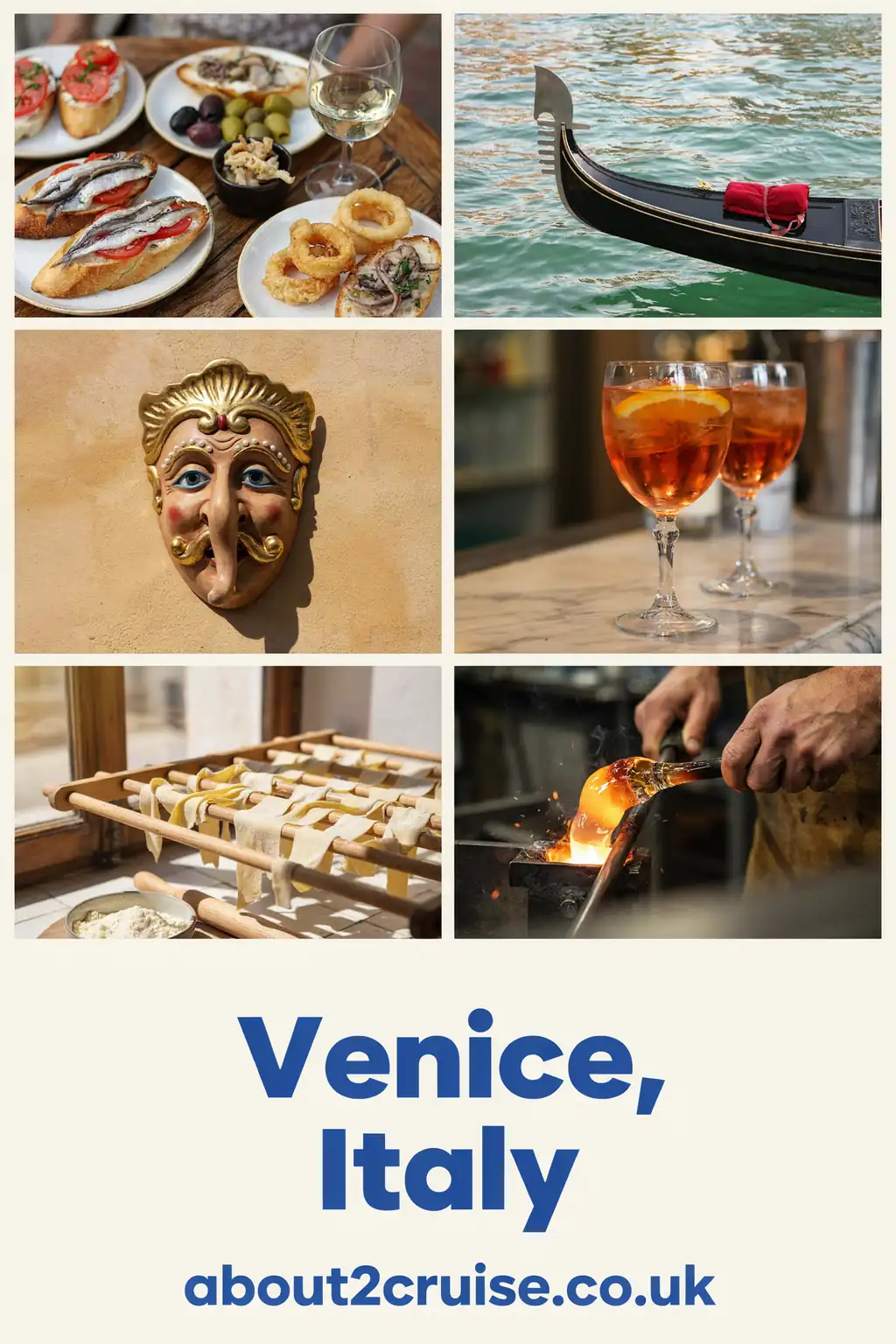
Venetian food is best eaten standing at a bacaro. The staples are cicchetti, small bar snacks, including baccalà mantecato, sarde in saor, bigoli in salsa and cuttlefish in black ink. Order a spritz with Select for the local version, or an ombra of house wine.
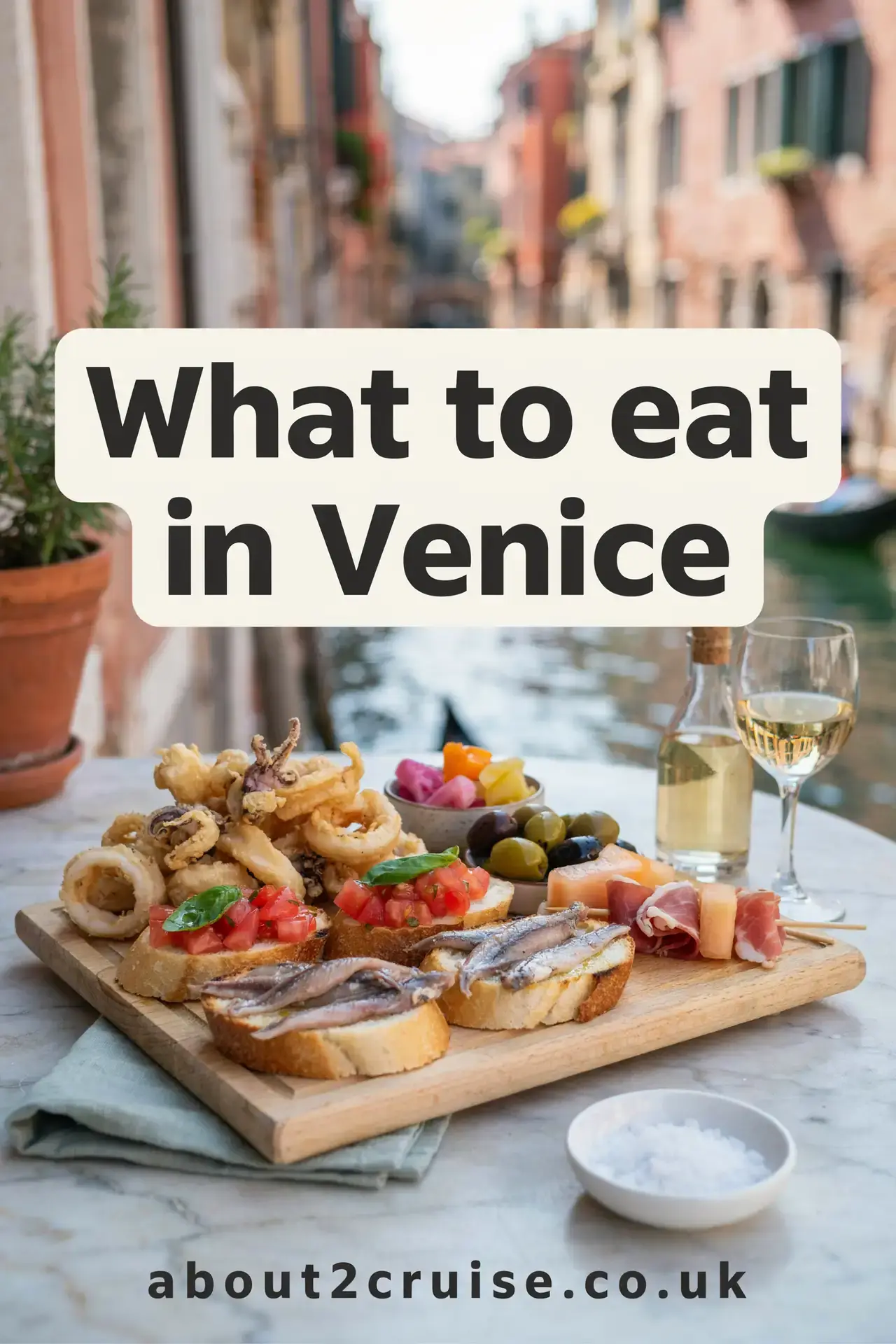
Typical prices are €1.50–3.50 per cicchetto, €2–3 for an ombra and €3–5 for a spritz. Bars immediately around St Mark’s and the Rialto tourist corridor charge significantly more. For better value and better food, head to the streets behind the Rialto market in San Polo, Campo Santa Margherita in Dorsoduro, or Fondamenta della Misericordia and Fondamenta degli Ormesini in Cannaregio. The Rialto fish market runs Tuesday to Saturday from early morning until around midday and is closed Sunday and Monday.
Photo Spots in and Around St Mark’s Square
The Accademia Bridge gives the classic Grand Canal view toward the Salute and is best at blue hour or sunrise. Piazza San Marco at dawn is quiet and the light is soft on the stone. The Molo and Riva degli Schiavoni are the spots to photograph San Giorgio Maggiore across the basin at sunrise.
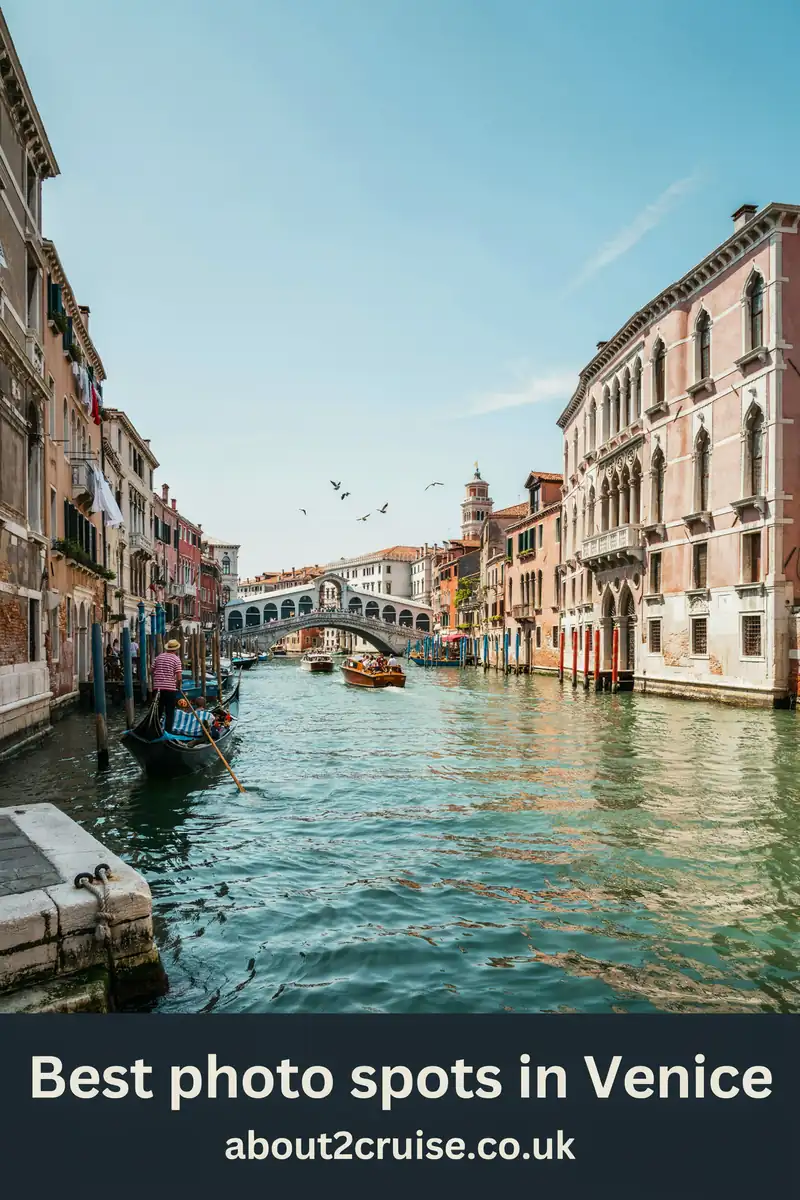
For the best view back at San Marco, take the vaporetto from San Zaccaria to San Giorgio Maggiore. It’s one of the shortest rides in Venice. Once there, the San Giorgio Maggiore campanile, reached by lift, looks straight back at San Marco and the Doge’s Palace. It costs €8 for adults and €5 for children and has far shorter queues than the St Mark’s Campanile.
FAQs
Is St Mark’s Basilica free to enter?
Yes for prayer through the Porta dei Fiori, open daily 07:30–19:30. Sightseeing entry requires a timed ticket, from €10 for the basilica only.
Can I walk from the Venice cruise port to St Mark’s Square with luggage?
It’s possible from Marittima or San Basilio but not sensible. Bridges, crowds and heat make it slow and exhausting. Use the vaporetto or a water taxi.
Does the ACTV ticket cover Alilaguna?
No. Alilaguna is a separate operator, and its boats are not part of the ACTV network.
Do water taxis run late at night?
Yes, water taxis run all night. A night supplement applies between 22:00 and 06:00.
Is there left luggage at St Mark’s Square?
No public left-luggage office exists at St Mark’s. Use the cruise terminal luggage deposit, Santa Lucia station, or private lockers near Piazzale Roma.
How far is San Basilio from St Mark’s Square?
About 2 km. Allow 30–45 minutes walking, or roughly 20 minutes on vaporetto line 2.
Do I need to pay the Venice access fee on a cruise port day?
If you enter the historic centre during a charging day, yes, unless you stay only in the Piazzale Roma and San Basilio station area. The fee is €5 if paid early or €10 after the deadline, charged between 08:30 and 16:00 on scheduled days.
What is the cheapest way from Marittima to St Mark’s Square?
People Mover to Piazzale Roma for €1.50, then vaporetto line 2 for €9.50. Total about €11 single.