
Both claim to be quintessentially British. Both sail from Southampton. Both serve afternoon tea. But step aboard Cunard and P&O Cruises back-to-back and you’ll wonder if you’ve accidentally crossed into parallel universes where the only shared language is the accent of the crew.
If you’re British and one cruise line feels like attending a garden party at your aunt’s country estate, the other feels like booking a holiday park that floats. Neither assessment is an insult, they’re just wildly different propositions sailing under the same flag.
Cunard trades on ocean liner heritage and formal nights that require actual black tie, not “smart trousers and a nice shirt”. P&O Cruises runs a bigger, broader fleet with flexible dining, family-friendly layouts, and a price point that won’t require remortgaging. The difference isn’t subtle.
This guide covers the honest distinctions between Cunard Cruise Line and P&O Cruises, what each line does well, where they fall short, and which passengers actually suit each brand. You’ll also find practical comparisons on ships, dining, cabins, itineraries, and the social atmosphere you’ll encounter aboard both lines.
Who Actually Sails Each Line
Cunard passengers skew older, dress for dinner without being reminded, and treat the voyage as the destination. You’ll meet retired professionals, couples celebrating anniversaries with a transatlantic crossing, and solo travellers who’ve read the QM2 is the last proper ocean liner and want to experience it before it’s gone.
P&O attracts a broader bunch. Families with teenagers on Iona, couples in their forties grabbing a week in the Med on Azura, retirees doing back-to-back cruises from UK ports because it’s easier than flying. The average age is lower, the vibe is louder, and nobody blinks if you turn up to dinner in chinos and a polo shirt.
- Cunard passengers value tradition, ritual, and the romance of crossing an ocean the old-fashioned way
- P&O passengers prioritise variety, convenience, and getting away without the formality or the premium price tag
- Cunard’s QM2 attracts a specific breed of traveller who views the ship itself as a living museum
- P&O’s newer ships like Iona and Arvia draw families and first-timers looking for modern amenities and choice
Fleet Character and Which Ships Matter
Cunard operates four ships. P&O runs seven. That size difference tells you everything about each line’s strategy.
- Cunard’s flagship is the Queen Mary 2, the only purpose-built ocean liner still sailing. She’s got a kennel for pets, a planetarium, and a ballroom that hosts proper black-tie balls. QM2 does regular transatlantic crossings between Southampton and New York, a route that takes seven nights and feels like stepping into a 1950s travel poster. Queen Elizabeth and Queen Victoria are smaller, more traditional cruise ships with tiered dining and Grill suites. Queen Anne, launched recently, adds contemporary design but keeps Cunard’s formal bones intact.
- P&O’s fleet is broader and more varied. Britannia is the line’s largest ship but has fewer sea-view cabins than you’d expect. Iona runs on LNG and features solo cabins with balconies, a wraparound promenade, and the Conservatory Mini Suites that offer something between a standard cabin and a full suite. Arcadia and Aurora are older, smaller, and adult-only. Azura, Ventura, and Arvia fill the middle ground with family-friendly layouts, multiple dining venues, and entertainment that skews towards West End-style productions and club nights.
| Aspect | Cunard | P&O Cruises |
|---|---|---|
| Fleet size | Four ships | Seven ships |
| Flagship experience | QM2 ocean liner crossings | Iona’s modern LNG-powered design |
| Ship atmosphere | Traditional, refined, ceremony-focused | Contemporary, social, flexible |
| Newest ship | Queen Anne | Arvia |
| Adult-only options | All ships suit adults | Arcadia and Aurora |
Dining: Tiered Formality vs Flexible Choice
Cunard’s dining is tied to your cabin grade. Book a Queens Grill suite and you dine in the Queens Grill restaurant with a dedicated menu, sommelier, and waiter who’ll remember your name. Princess Grill is a step down in exclusivity but still offers white-glove service. Britannia Restaurant is the main dining room, with two sittings and a dress code that means jacket and tie for men on formal nights.
The system works beautifully if you value structure and don’t mind being told where and when to eat. It’s less appealing if you prefer spontaneity or object to paying a premium for your cabin just to access a better restaurant.
P&O offers freedom dining across multiple venues. You’ll find a main dining room, speciality restaurants that charge a cover, buffet options, and casual eateries. Dress codes exist but they’re relaxed, smart-casual at most. You won’t be turned away for skipping a tie. The trade-off is less grandeur and more queue. Popular restaurants fill quickly and you’ll need to book ahead or risk eating at odd hours.
- Cunard’s Grill system delivers exceptional service but only if you’ve paid for the right cabin category
- P&O’s freedom dining suits families, groups, and anyone who finds allocated seating claustrophobic
- Cunard’s formal nights are mandatory if you want to dine in the main restaurant, no negotiating
- P&O’s smart-casual approach means you can pack lighter and skip the dry-cleaning bill
Cabins: Space, Style, and What You’re Actually Paying For
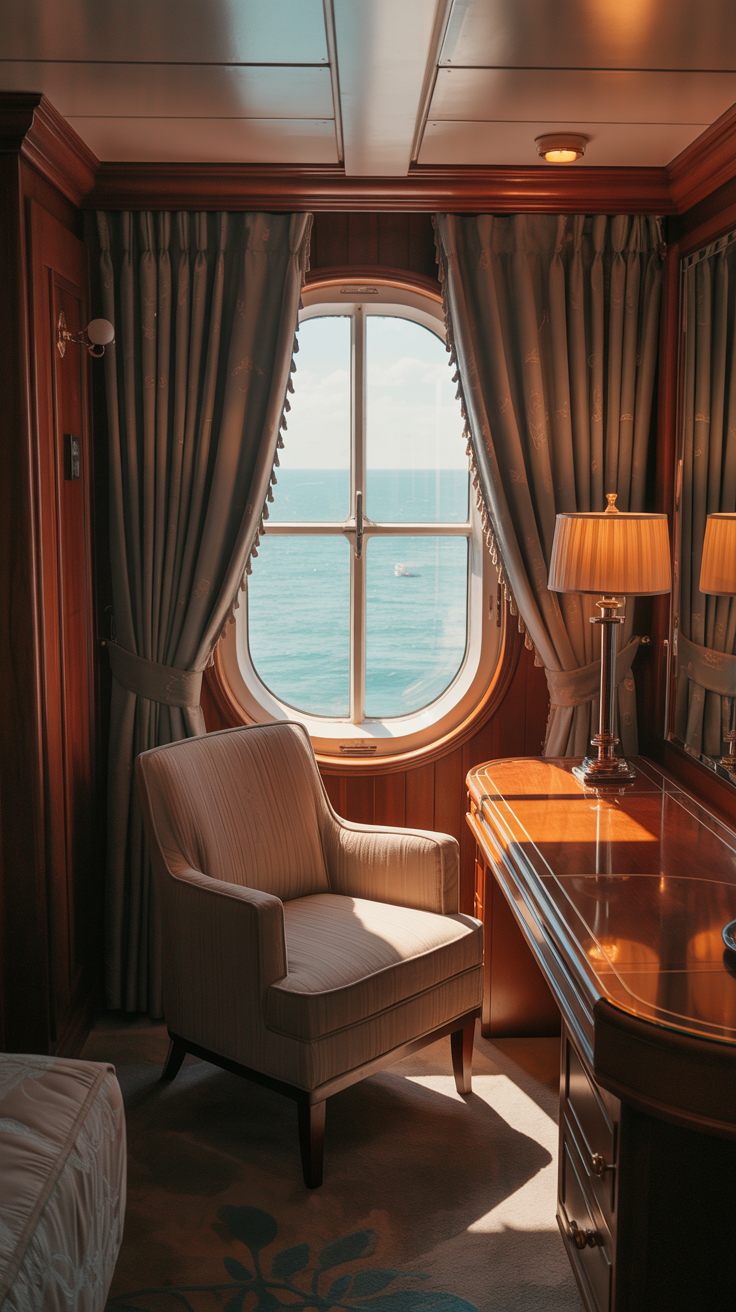
Cunard cabins are spacious, even in lower grades. The décor leans classic, think dark wood, heavy fabrics, and a layout that prioritises function over flair. Queens Grill and Princess Grill suites are genuinely luxurious, with separate living areas, priority embarkation, and access to exclusive deck space. Britannia cabins are comfortable but not flashy. Recent refurbishments have added single cabins on some ships, a rarity in the cruise industry.
P&O cabins vary wildly by ship. Iona’s Conservatory Mini Suites offer a greenhouse-style conservatory instead of a traditional balcony, clever if you’re cruising in cooler climates. Britannia has solo cabins with balconies, a godsend for single travellers tired of paying double. Older ships like Aurora have smaller, more dated cabins but they’re priced accordingly. The overall aesthetic is modern but not premium, you’re paying for function and location rather than wow factor.
| Feature | Cunard | P&O Cruises |
|---|---|---|
| Suite experience | Queens and Princess Grill suites with exclusive dining | Conservatory Mini Suites on Iona, standard suites elsewhere |
| Solo cabins | Available on newer ships | Solo cabins with balconies on Iona and Britannia |
| Cabin style | Classic, traditional, spacious | Modern, varied by ship, functional |
| Value cabins | Comfortable but priced higher than P&O equivalents | More affordable, especially on older ships |
What Makes Cunard Different From Other Lines
Cunard isn’t just another cruise brand with British staff and Union Jacks. The line’s entire identity is built around the idea that the ship is the destination, not just transport between ports. QM2’s transatlantic crossings are the flagship example. You’re not cruising to New York, you’re crossing an ocean the way people did before airlines existed. There’s a romanticism baked into the experience that no other line replicates.
The what makes Cunard different from other cruise lines comes down to ritual. Afternoon tea in the Queens Room with a string quartet. Formal nights that feel like black-tie balls, not cruise ship dinners with a stricter dress code. Guest speakers who’ve written books, not motivational speakers flogging seminars. The entertainment skews highbrow, think Royal Shakespeare Company actors doing dramatic readings, not comedians doing crowd work about seasickness.
The trade-off is rigidity. If you find formal dining exhausting or prefer your holidays relaxed, Cunard’s insistence on tradition will grate. But for passengers who mourn the death of glamorous travel, Cunard is the last line flying that flag without irony.
Itineraries: Ocean Crossings vs Flexible Departures
Cunard’s signature itinerary is the transatlantic crossing aboard QM2. Southampton to New York, seven nights, no port calls. You’re there for the journey. The ship also does longer voyages, world cruises, and traditional itineraries to the Mediterranean, Caribbean, and Norway. The focus is on destination-rich cruises that feel curated rather than flung together.
P&O offers everything. Weekend breaks to Bruges, two-week Mediterranean fly-cruises, month-long tours of the Canaries, Caribbean sailings from Barbados. The fleet’s size means more departure dates, more ports, and more flexibility. If you want to leave from Southampton on a Friday and be back by Monday, P&O can do it. Cunard can’t, and wouldn’t want to.
- Cunard’s transatlantic crossings are a bucket-list experience but they’re not cheap or quick
- P&O’s short breaks suit working passengers who can’t take two weeks off
- Cunard itineraries prioritise longer, slower voyages with fewer port-intensive days
- P&O’s fly-cruise options open up itineraries Cunard doesn’t touch, especially in the Caribbean
- QM2’s world voyages attract retirees with time and budget to spare
Entertainment and Atmosphere: Refined vs Relaxed
Cunard’s entertainment programme leans intellectual. You’ll find authors, historians, and astronomers giving talks during sea days. The theatre productions are polished but traditional. The bars are quiet enough for conversation. There’s a ballroom with lessons and afternoon tea dances. If you’re under forty and don’t enjoy a waltz, you’ll find the evening entertainment thin.
P&O’s entertainment is broader and louder. Headliners Theatre productions that ape West End shows, comedians, tribute acts, and club nights in venues like the 710 Club and Limelight Club. The bars are busier, the music is louder, and the crowd skews younger. Families with teenagers will find more to do. Couples looking for a quiet drink before bed will find it harder.
- Cunard’s guest lecture programme attracts passengers who view sea days as opportunities to learn something
- P&O’s Headliners productions are slick but you’ve seen the format before on other mainstream lines
- Cunard’s ballroom dancing and afternoon tea rituals aren’t ironic, they’re earnest
- P&O’s club nights and live music suit passengers who want a social, pub-like atmosphere at sea
How Cunard vs P&O Compares to Other British and Premium Lines
Cunard occupies a unique space in the British cruise market. It’s more formal than P&O but less contemporary than lines like Celebrity or Azamara. Cunard vs Celebrity Cruises comes down to whether you value tradition or modernity, Celebrity skews younger and more design-forward. Cunard vs Holland America is a closer match, both lines trade on heritage and attract older passengers, but Holland America has a more international passenger base and less rigid formality.
Cunard vs Princess Cruises highlights the difference between niche and mass-market. Princess offers more choice, more flexibility, and lower prices. Cunard offers exclusivity, ritual, and a smaller, more curated experience. If you’ve sailed Princess and found it too generic, Cunard is the antidote. If you’ve sailed Cunard and found it too stuffy, Princess will feel like a relief.
P&O sits in a different lane entirely. It’s Britain’s mainstream cruise line, competing with Royal Caribbean, MSC, and Norwegian for families and first-timers. It’s cheaper than Cunard, more accessible, and less intimidating for passengers who’ve never cruised before. The ships are bigger, the atmosphere is busier, and the experience is less about tradition and more about ticking off as many activities and ports as possible in a week.
Price and Value: What You’re Actually Paying For
Cunard is expensive. QM2 transatlantic crossings cost more than flying business class and staying in a decent New York hotel. The value proposition isn’t financial, it’s experiential. You’re paying for the last ocean liner, for formal balls, for a level of service that died elsewhere. If you need to justify the cost in pounds-per-port, you’ll struggle.
P&O offers better value in the traditional sense. You’ll pay less per night, get more dining options included, and have access to a wider range of itineraries and departure dates. The trade-off is volume. More passengers, more noise, more queues. If you’re comfortable with that, P&O delivers a solid, middle-of-the-road cruise experience at a middle-of-the-road price.
- Cunard’s pricing reflects its premium positioning but doesn’t always translate to premium hardware, especially on older ships
- P&O’s frequent promotions and flexible booking policies make it easier to grab a bargain
- Cunard’s Grill suites justify their cost if you value exclusive dining, but Britannia cabins feel overpriced compared to P&O equivalents
- P&O’s solo cabins and Mini Suites offer unusual value for single travellers and couples who don’t need a full suite
Loyalty Programmes: Cunard World Club vs P&O’s Peninsular Club
- Cunard World Club tiers unlock perks tied to the Grill system. Sail enough nights and you’ll get priority embarkation, onboard credit, and invitations to exclusive events. The benefits feel meaningful but you need to sail Cunard exclusively to make progress. If you split your cruising between lines, you’ll stay at the bottom tier forever.
- P&O’s Peninsular Club is part of the wider Carnival family ecosystem. Benefits include priority check-in, discounts on speciality dining, and access to members-only events. The programme is less exclusive than Cunard’s but easier to engage with if you’re a frequent cruiser who doesn’t stick to one line.
Which Line Suits You
Choose Cunard if you want a voyage, not a holiday. If you’re happy packing black tie and dressing for dinner every night. If you view cruising as a slower, more ceremonial form of travel and you’re willing to pay extra for that ritual. If the idea of crossing the Atlantic on the last ocean liner sounds romantic rather than dull. If you’re retired, well-travelled, and bored of mainstream cruise lines that feel interchangeable.
Choose P&O if you want choice, flexibility, and a lower price point. If you’re cruising with family or friends and need a ship that caters to different ages and interests. If you prefer freedom dining and casual dress codes. If you want to leave from Southampton on a regular basis without committing to long voyages or formal atmospheres. If you’re trying cruising for the first time and don’t want to risk hating it because you picked something too niche.
- Cunard suits passengers who want uniqueness Cunard’s Queen Victoria and Queen Elizabeth cruise ship deliver through tradition, not modernity
- P&O suits passengers who want a British cruise that doesn’t require learning ballroom dancing or packing formalwear
- Cunard’s smaller fleet means fewer departure dates, book early or you’ll miss the sailing you want
- P&O’s larger fleet offers more last-minute availability and spontaneous booking opportunities
Common Questions
Is Cunard more expensive than P&O?
Yes, across the board. Cunard’s entry-level Britannia cabins cost more than comparable P&O inside cabins, and the Grill suites command a significant premium. You’re paying for heritage, service, and exclusivity rather than hardware or itinerary length.
Can you wear jeans on Cunard formal nights?
No. Formal nights mean black tie or dark suit for men, evening gown or cocktail dress for women. Jeans, trainers, and casual trousers are banned in the main dining rooms on formal evenings. If you skip formal attire, you’ll eat in the buffet.
Does P&O include drinks in the fare?
No, drinks packages are available but not included. Soft drinks, tea, and coffee in the buffet are free. Alcohol, speciality coffee, and drinks in bars and restaurants cost extra unless you purchase a package upfront.
Which line is better for solo travellers?
P&O offers more dedicated solo cabins, especially on Iona and Britannia, where you’ll find single cabins with balconies. Cunard has solo cabins on newer ships but fewer of them. P&O’s social atmosphere also makes it easier to meet other solo passengers.
Do Cunard ships have kids’ clubs?
Yes, but they’re smaller and less prominent than on P&O. Cunard attracts fewer families so the children’s facilities are limited. If you’re cruising with teenagers, they’ll find Cunard dull. P&O’s larger ships have dedicated teen spaces and activities.
Can you do a transatlantic crossing on P&O?
Yes, P&O occasionally repositions ships across the Atlantic but these aren’t regular scheduled crossings like QM2. They’re one-off sailings with port calls, not the uninterrupted seven-night voyage Cunard offers.
Is Cunard adults-only?
No, but the atmosphere and formality mean families with young children rarely choose Cunard. You’ll see kids during school holidays but they’re in the minority. P&O’s Arcadia and Aurora are fully adults-only if you want to avoid children entirely.
Which line has better food?
Cunard’s Grill restaurants deliver exceptional food and service but only if you’ve booked a Grill suite. Britannia Restaurant food is fine but not remarkable. P&O’s main dining room food is competent but rarely exciting. Both lines charge for speciality dining and that’s where the best meals are.
Do both lines sail from Southampton year-round?
Yes, both lines base ships in Southampton and offer regular UK departures. Cunard’s QM2 is permanently based there for transatlantic crossings. P&O operates multiple ships from Southampton across the year, making it easier to find a convenient departure date without flying.
Why Trust About2Cruise
- I’m Jo. I’ve sailed both Cunard and P&O multiple times, including QM2 crossings and P&O family cruises, giving me direct experience of how each line operates in practice.
- This guide is updated whenever either line launches a new ship, changes dining policies, or restructures fleets, ensuring the comparisons reflect current offerings.
- We’re editorially independent and call out both strengths and weaknesses. No line pays us to soften criticism or exaggerate benefits. Read more about how we research and update our cruise guides.