
Disney Cruise Line offers Alaska cruises departing from Vancouver or Seattle, typically visiting ports like Juneau, Skagway, Ketchikan, and Icy Strait Point. Ships feature family-friendly amenities, character experiences, Broadway-style shows, and kids’ clubs. Most itineraries include glacier viewing and opportunities for shore excursions like whale watching, dog sledding, and exploring historic gold rush towns.
Quick Facts
| Feature | Details |
|---|---|
| Ships | Disney Wonder (most common for Alaska) |
| Departure Ports | Vancouver, British Columbia or Seattle, Washington |
| Cruise Length | 7 nights (standard itinerary) |
| Peak Season | Late May through early September |
| Main Ports | Juneau, Skagway, Ketchikan, Icy Strait Point, Tracy Arm Fjord |
| Best For | Families with young children, multi-generational trips |
Want to know more about different Alaska cruise lines and which one fits your travel style?
Why Disney Does Alaska Differently
Disney brings a level of polish to Alaska cruising that feels distinctly different from traditional cruise experiences. While lines like Princess Cruises and Holland America dominate the Alaska market with larger fleets and more sailing options, Disney delivers something unique: seamless integration of character magic with genuine wilderness adventure.
The rotational dining system means you eat at different themed restaurants each night while your serving team follows you. This sounds gimmicky until you realize your server already knows your kids prefer chicken nuggets and that you like extra lemon in your water. It’s this attention to detail that separates Disney from competitors like Celebrity Cruises or Royal Caribbean.
What Makes Disney Stand Out
- Included activities: Unlike many cruise lines, kids’ clubs are completely free and exceptionally staffed with Alaska-themed programming
- Character experiences with Alaska flair: Mickey might appear in flannel, and special “frozen” character appearances tie into the destination
- Broadway-caliber entertainment: Full-scale musicals that keep kids engaged without talking down to them
- Naturalist onboard: Disney brings aboard wilderness experts who give lectures and help spot wildlife from public decks
- No casino: This frees up ship space for family activities and means you won’t wade through slot machines to reach the dining room
The Honest Truth About Costs
Disney is expensive. There’s no dancing around it. You’ll pay a premium compared to Norwegian Cruise Line or Carnival Cruises, sometimes double for similar itineraries. But here’s what you’re actually paying for:
- Exceptional crew-to-guest ratios (about 1:2 compared to industry standard of 1:3)
- Soft drinks, coffee, tea, and ice cream included (other lines often charge)
- Kids’ clubs that operate longer hours with more structured programming
- Higher quality of food in main dining rooms
- Immaculate ship cleanliness
What isn’t included: alcoholic beverages, specialty dining (Palo and Remy require reservations and fees), spa services, and most shore excursions. Gratuities are additional but can be prepaid.
Choosing Your Cabin Wisely
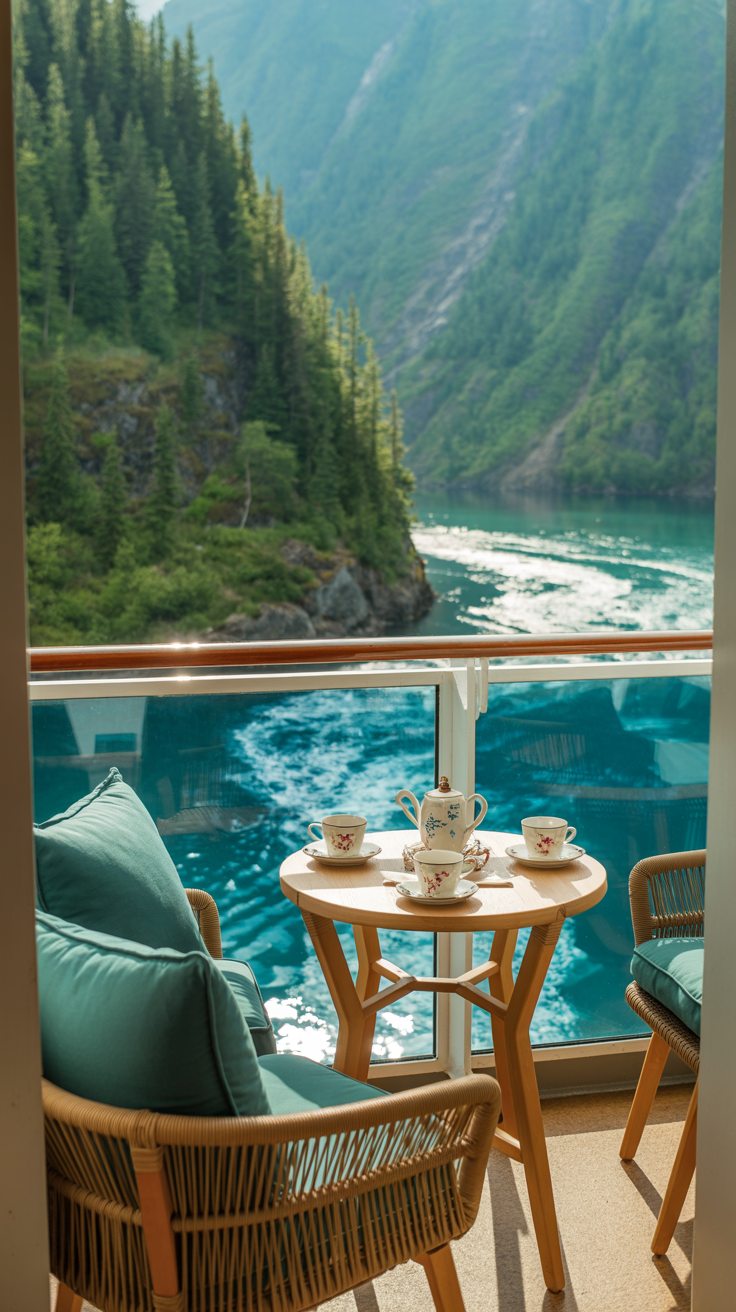
Inside cabins on Disney ships are slightly larger than industry standard, but Alaska begs for a verandah. You’re sailing through some of the world’s most spectacular scenery, and being able to step outside in your pajamas when you hear “whales off the port side” is priceless.
Cabin Selection Strategy
- Port side vs. starboard: Northbound sailings favor port side for glacier viewing; southbound favors starboard. Check your specific itinerary
- Mid-ship rooms: Less motion, important if anyone is prone to seasickness
- Connecting rooms: Book immediately when reservations open as they sell out fastest for family groups
- Avoid Deck 1 and Deck 2: Portholes, not verandahs, and you’re below the action
- Forward cabins: More affordable but you’ll feel the ship’s movement more in choppy waters
Shore Excursions and Port Days
Disney’s shore excursions are well-organized but expensive. You’re paying for the Disney quality control and guarantee that the ship won’t leave without you if your excursion runs late. That said, booking independently can save significant money, especially for family-friendly shore excursions where you’re comfortable managing timing yourself.
Port-by-Port Breakdown
Juneau: The Mendenhall Glacier is a must-see. Disney’s excursion includes transportation and a guided walk, but you can also take a taxi to the visitor center for a fraction of the cost. The whale watching tours here are spectacular, with humpback sightings nearly guaranteed during peak season.
Skagway: The White Pass Railway is the big draw. Book this through Disney or independently far in advance as it sells out. The gold rush history is fascinating, and the downtown area is walkable. Kids love panning for gold at various tourist spots.
Ketchikan: Known for totem poles and salmon. The lumberjack show is touristy but genuinely entertaining for kids. Creek Street’s boardwalk offers easy exploring. Misty Fjords flightseeing tours are breathtaking but weather-dependent and pricey.
Icy Strait Point: This private port offers the ZipRider (one of the world’s longest ziplines), whale watching, and bear watching at nearby Pack Creek. It’s less crowded than other ports and has a more authentic Alaskan feel.
Tracy Arm Fjord: This is a scenic cruising day, not a port stop. The ship sails slowly through the fjord toward Sawyer Glacier. Stake out a spot on the upper decks early, bring layers, and keep your camera ready. The naturalist provides commentary over the PA system.
Kids’ Programs and Teen Spaces
If you’re considering cruising to Alaska with children, Disney’s youth programs are genuinely impressive. The Oceaneer Club and Oceaneer Lab (ages 3-12) feature Alaska-specific activities like junior naturalist programs, glacier science experiments, and wildlife bingo.
Teens have their own spaces: Edge (11-14) and Vibe (14-17). These areas offer Alaska trivia, outdoor movie screenings with s’mores, and special teen-only excursions at ports. The counselors are trained to engage even reluctant teenagers.
The It’s a Small World Nursery (ages 6 months to 3 years) costs extra but provides parents with guilt-free adult time. Book spa appointments or specialty dining while little ones are supervised.
Comparing Disney to Other Alaska Options
When weighing Alaska cruises for families versus couples, Disney clearly targets families. If you’re a couple without kids, you might prefer the adult-focused atmosphere of luxury Alaska cruise lines or the expedition-style experience of UnCruise Adventures or Lindblad Expeditions with National Geographic.
The debate between small ships and large ships matters in Alaska. Disney Wonder carries about 2,400 passengers, which is mid-sized. Smaller vessels like Alaskan Dream Cruises access narrower waterways and offer more intimate experiences, but lack the amenities and entertainment that keep kids happy during sea days.
Weather and Packing Essentials
Alaska weather is notoriously unpredictable. You might experience 70-degree sunshine and 45-degree rain on the same day. The ship’s indoor temperature stays comfortable, but you’ll spend significant time outdoors during port stops and deck viewing.
What to Actually Pack
- Layering system: Base layers, fleece mid-layers, waterproof outer shell
- Waterproof hiking shoes: Not just water-resistant; Alaska is wet
- Rain jacket with hood: Umbrellas are useless in wind
- Warm hat and gloves: Even in summer, glacier viewing is cold
- Binoculars: Essential for wildlife spotting
- Waterproof phone case or dry bag: Protect electronics from constant moisture
- Seasickness remedies: Wrist bands, ginger candies, or prescription medication
- Formal night attire: Disney has optional formal nights; many families participate
- Backpack: For day excursions with water bottles and extra layers
Don’t pack: Hair dryers (provided in cabins), beach towels (provided for excursions), or excessive toiletries (limited cabin storage).
Dining and Food Options
Disney’s rotational dining means you’ll experience three main restaurants: Animator’s Palate (with animation technology that responds during dinner), Tiana’s Place (New Orleans-themed with live jazz), and Triton’s (elegant Art Nouveau design). The food quality is solid cruise fare, better than mainstream lines but not reaching specialty restaurant levels.
Room service is free except for late-night orders. Cabanas buffet serves breakfast and lunch. Quick service options include pizza, sandwiches, and soft-serve ice cream, all included.
Palo (adults-only Italian) and Remy (adults-only French fine dining) require reservations made immediately when your booking window opens. They’re worth the extra cost for a special night out while kids enjoy the clubs.
Bonus Tips
- Book your cruise when reservations open: Disney Alaska sailings are limited and popular cabins sell out quickly
- Download the Disney Cruise Line Navigator app before sailing: Check daily schedules, make dining reservations, and chat with travel companions
- Bring a power strip: Cabins have limited outlets, and you’ll want to charge multiple devices
- Pack magnetic hooks: Cabin walls are metal; hooks help organize the small space
- Request a Fish Extender: This is a Disney cruise tradition where cruisers exchange small gifts; join a Facebook group before sailing
- Attend the port talks: The crew provides insider tips about each destination that help you maximize your time
- Check the Personal Navigator each evening: This daily schedule lists all activities, character appearances, and dining times
- Make spa reservations on embarkation day: Popular treatment times book quickly
- Bring a highlighter: Mark activities on your Personal Navigator that different family members want to attend
- Pack snacks for port days: Shore excursions often run through mealtimes
- Set multiple alarms for early port arrivals: Some ports require tendering, which takes extra time
- Take advantage of the laundry rooms: Guest laundry facilities have washers, dryers, and detergent (bring quarters)
Common Questions and FAQ
Do I need a passport for Disney Alaska cruises?
Technically no if you’re sailing round-trip from Seattle, as it’s a closed-loop cruise. However, a passport is strongly recommended in case of medical emergencies requiring you to fly home from a Canadian port. If your cruise begins or ends in Vancouver, you absolutely need a passport.
Will my toddler remember this trip or should I wait until they’re older?
Kids as young as three often have vivid memories of seeing whales, touching glacier ice, and meeting characters in special Alaska outfits. The kids’ clubs accommodate all ages, so parents get breaks regardless. That said, excursion options expand significantly with older children who can handle longer hikes and more physical activities.
How formal are the dress codes?
Disney has “optional dress-up” nights rather than strict formal requirements. Many families go all-out with suits and dresses, while others wear nice casual attire. You won’t be denied entry to dining rooms for underdressing, but participating adds to the fun for many guests.
Can we see the Northern Lights on an Alaska cruise?
No. Alaska cruise season runs late spring through early fall when Alaska experiences nearly 24-hour daylight. Northern Lights are visible during dark winter months when cruise ships don’t operate in these waters.
Is Disney appropriate for multi-generational groups?
Absolutely. Disney excels at creating experiences that work for grandparents, parents, and kids simultaneously. Adult-only spaces exist (Quiet Cove Pool, Cove Café, adult dining), while kids stay entertained in age-appropriate programs. The accessibility services are excellent for guests with mobility challenges.
What’s the wifi situation?
Ship wifi is available but expensive and slower than shore-based internet. You purchase packages by megabyte or minute. For most of Alaska, you’ll have no cell service except when docked at ports. Consider this a digital detox opportunity.
Should I book excursions through Disney or independently?
Disney excursions guarantee the ship waits if your tour runs late, which provides peace of mind. Independent bookings offer cost savings and sometimes more authentic experiences. For families with young children or first-time cruisers, Disney’s coordination might be worth the premium. Experienced travelers comfortable with logistics can save significantly booking directly.
What wildlife will we actually see?
Humpback whales, orcas, sea otters, harbor seals, bald eagles, and various seabirds are commonly spotted. Brown bears and black bears are possibilities during certain shore excursions. Salmon runs happen throughout summer. Nothing is guaranteed in nature, but Alaska wildlife viewing odds are generally excellent during cruise season.
For more details about the complete Disney cruise experience and what to expect beyond Alaska, explore the full range of itineraries and ship features available.
Personal Experience
We booked our first Disney Cruise to Alaska last summer, and honestly, picking the right cabin made such a difference. After reading through tons of reviews, we splurged on a verandah room on the port side, and every morning the kids would race to the balcony to scan for wildlife. Our stateroom host suggested keeping binoculars right by the door, and we spotted three different whale pods without even leaving our room. The weather was absolutely unpredictable – we’re talking sunshine, rain, and chilly winds all in one afternoon – so layering became our best friend. I packed fleece jackets, rain shells, and even those hand warmers you can toss in pockets, which saved us during our Skagway excursion.
The shore excursions designed for families were fantastic, especially the Mendenhall Glacier trek where the kids got to touch actual glacier ice. Our naturalist guide was incredible at spotting eagles and explaining how to watch for whale blows on the horizon. One tip that really worked: bring waterproof bags for phones and cameras because the mist from waterfalls and ocean spray is constant. The kids still talk about the day we saw a humpback breach during our whale watching tour in Juneau. Disney’s youth programs also offered Alaska-specific activities, so while my husband and I enjoyed a quiet dinner, our daughter was learning about salmon life cycles with other kids her age. It really was the perfect blend of adventure and relaxation for everyone.