
Sousse sits on Tunisia’s central coast, and its cruise terminal is one of the country’s more straightforward port stops. You’ll dock at Port El Kantaoui, a purpose-built marina just north of the city, or occasionally at terminals within Tunisia’s cruise ports closer to Sousse proper. The Medina is compact, the souks are manageable, and you’re within striking distance of Roman ruins and fortress walls if you plan ahead. It’s not the polished convenience of Malta or the scale of Barcelona, but that’s part of the appeal.
Sousse handles Port El Kantaoui terminal operations for most major cruise lines, with terminals A through G used depending on your ship. Luxury lines sometimes get dedicated terminals. Your cruise documents will specify. The port is functional rather than fancy, with baggage handling, passenger lounges, and security screening where you’d expect them. Ships typically arrive between 7:00 and 9:00 AM and depart between 4:00 and 6:00 PM, giving you a solid six to eight hours ashore. That’s enough for the Medina, the Ribat, and a proper lunch, or a longer push to El Djem if you’re organised.
This guide covers terminal facilities and transport logistics, half-day and full-day shore options including the Medina of Sousse and El Djem amphitheatre, honest comparisons between ship excursions and independent tours, practical warnings about taxis and timing, where to eat near the port, and answers to the most common questions about docking, currency, and getting back to your ship on time.
- Port name: Port Sousse
- Country: Tunisia
- Nearest city: Sousse (Port El Kantaoui is about 10–13 km north of Sousse)
- Distance to Medina: From Port Sousse, the medina is close and often walkable; from Port El Kantaoui, allow about 15–20 minutes by taxi, depending on traffic
- Currency: Tunisian dinar (TND)
- Language: Arabic and French; English spoken in tourist areas
- Visa requirements: UK passport holders do not need a visa for stays under 90 days
Port and Terminal Practicalities
Most cruise ships that list Sousse as a port of call dock at the commercial Port Sousse close to the city center, while Port El Kantaoui functions as a nearby resort marina rather than a regular large‑ship cruise berth.
What’s at the terminal
- Baggage handling and porter services for embarkation and disembarkation days
- Passenger lounges with seating, though not elaborate
- Restrooms and basic refreshment kiosks
- Security screening on re-entry to the terminal
- Wi-Fi is patchy and usually not free
- Luxury lines may have a dedicated terminal with enhanced facilities, but this is the exception
Don’t expect the polished infrastructure of Barcelona or Civitavecchia. This is a working port with cruise facilities grafted on. It’s clean and functional, but if you’re looking for a place to kill two hours before embarkation with air conditioning and a café, you’ll be disappointed.
Getting into town
From Port El Kantaoui, you’re looking at a 15 to 20-minute drive to Sousse Medina. From terminals closer to Port Sousse, it’s shorter, the medina is very close and often a few minutes by taxi. The port gates are a short walk from the ship.
- Port shuttles: Pre-booked shuttles are the most reliable option. Book early, especially during the peak season from November through April. Confirm pickup times and have your booking reference and ship name ready. Tip the driver if service is good.
- Taxis: Available outside the terminal. Agree on a fare before you get in unless there’s a meter, which is rare. Expect to pay more than you would in Tunis, and don’t be surprised if the first quote is inflated. Haggling is expected.
- Private transfers: Arranged through your cruise line or a reputable local operator. More comfortable than a taxi scrum, and you’ll have a guaranteed return time to the ship.
- Walking: Not practical from Port El Kantaoui to Sousse Medina. The medina area itself is walkable from the commercial port, but road conditions outside the historic core can be hot, exposed, and not ideal with kids or in midday heat.
Avoid unlicensed taxis or drivers who approach you inside the terminal. They’re common, and the fare negotiation will start badly. Use pre-arranged transport or walk to the official taxi rank.
What to Do in Sousse
Sousse is manageable in a single port call if you’re selective. The Medina is the main draw, but it’s small compared to Tunis, so you won’t need all day. The Ribat and Archaeological Museum are both within the Medina walls. Port El Kantaoui is pleasant for a stroll but skippable if you’re short on time. El Djem is the standout full-day option, though it’s an hour each way and you’ll need to be organised.
Half-day options
- Medina of Sousse: A UNESCO World Heritage site, though the designation is more about historical significance than preservation quality. The souks sell the usual tourist tat alongside decent spices, ceramics, and textiles. The Great Mosque is impressive from the outside but closed to non-Muslims. Budget two to three hours including shopping time.
- Ribat of Sousse: A fortified monastery dating from the 8th century. The views from the top are worth the climb, and it’s less touristy than the Medina souks. The entrance fee is modest and worth it.
- Archaeological Museum: Small but well-curated, with Roman mosaics and artefacts from nearby sites. It’s near the Ribat, so combine the two in a single morning.
- Port El Kantaoui marina: Palm-lined promenades, cafés, and shops. It’s pleasant but feels manufactured, like a Tunisian version of Puerto Banús without the yachts. Fine for a coffee stop, not a destination in itself.
Full-day options
- El Djem amphitheatre: The third-largest Roman amphitheatre in the world, and the best-preserved. It’s about an hour south of Sousse, so you’ll need to leave the port by 9:00 AM to have time there and back. Book a guided excursion or a private driver with a clear return time. This is the one thing in the area that justifies a full day.
- Monastir: A coastal town 20 minutes south of Sousse, with a Ribat larger than Sousse’s and the Bourguiba Mausoleum, which is architecturally interesting even if the history means nothing to you. Combine with a beachside lunch and you’ve filled five hours comfortably.
- Kairouan: One of Islam’s holiest cities, about an hour inland. The Great Mosque is one of the oldest in North Africa. Non-Muslims can visit outside prayer times, but you’ll need to dress modestly. This is a half-day minimum and harder to reach independently than El Djem.
If you’ve been before
- Takrouna, a hilltop Berber village 40 minutes west of Sousse, is off the cruise excursion circuit and worth the detour if you’ve already done the Roman sites.
- The Sousse Museum in the Kasbah has a smaller collection than the main Archaeological Museum but fewer tourists.
- Kantaoui Golf Course is near the port if you’re desperate for a round, though you’ll need to book ahead and be back by mid-afternoon.
Shore Excursions vs Independent
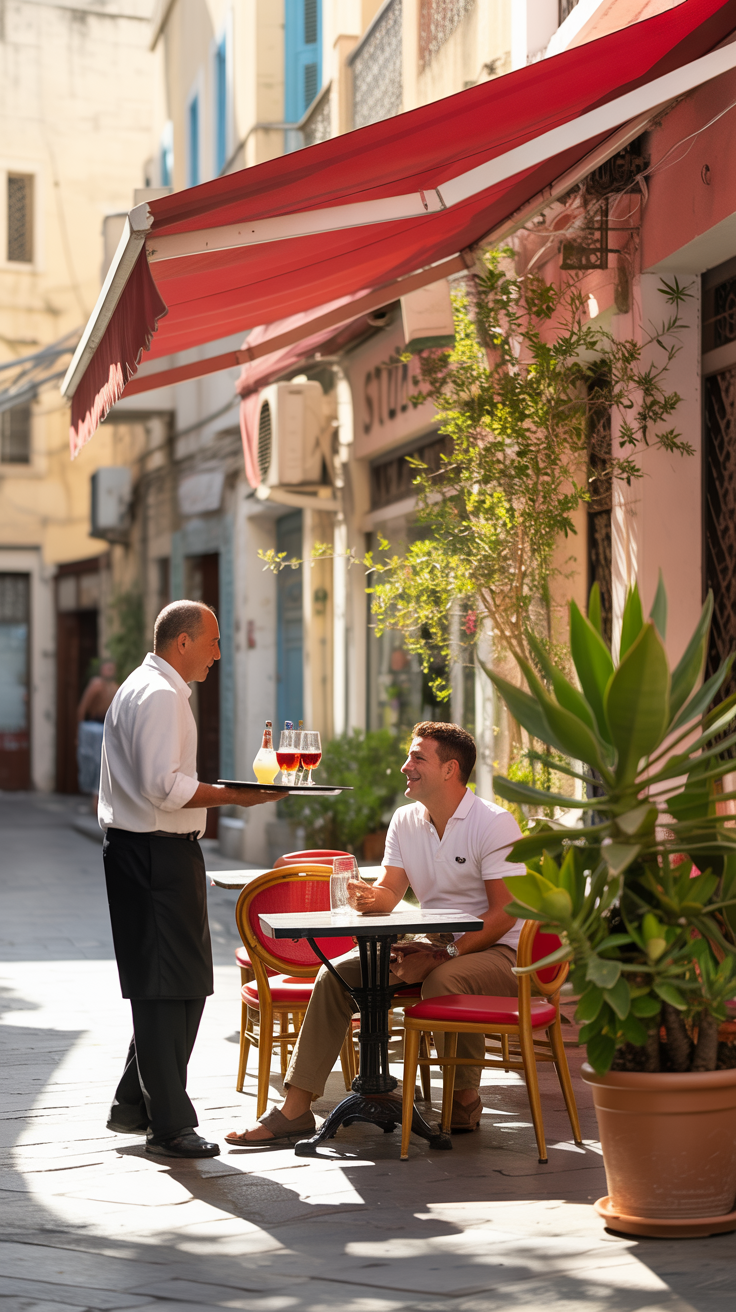
The ship-sponsored excursions to Sousse Medina and El Djem are reliable but unimaginative. You’ll spend an hour on the bus listening to a guide explain things you could read on Wikipedia, then another hour in a souvenir shop with “arranged” stops. The advantage is guaranteed return to the ship and skip-the-line access at busy sites. The disadvantage is pace. You’ll move at the speed of the slowest passenger, and there’s always one.
Going independent is straightforward in Sousse if you’re organised. Pre-book a private driver for El Djem or Monastir, or take a taxi to the Medina and walk from there. You’ll have more flexibility and fewer souvenir shop stops. The risk is traffic delays or a driver who doesn’t understand your ship’s departure time. Always leave a buffer of at least an hour before all-aboard time.
For first-timers or nervous travellers, the ship excursion is worth the premium for El Djem. For the Medina and Ribat, you don’t need a guide, and a taxi will get you there and back without the faff.
| Option | Best for | Pros | Cons |
|---|---|---|---|
| Ship excursion | El Djem, first-timers, risk-averse | Guaranteed return, skip-the-line, narration | Slow pace, souvenir stops, less flexibility |
| Private driver | El Djem, Monastir, groups of 3+ | Flexible timing, no souvenir stops, personalised | More planning, no guarantee if driver is late |
| Taxi + walking | Sousse Medina, Ribat | Cheap, flexible, easy | Fare negotiation, no narration, need to navigate yourself |
Practical Warnings
Sousse is safe for tourists, but it’s not without irritations. Here’s what the cruise line brochures won’t tell you.
- Taxi scams are common: Drivers quote in euros to confuse you, or claim the meter is broken. Agree on a fare in Tunisian dinars before you get in. If they won’t agree, walk away. There are always more taxis.
- Shop touts are persistent: In the Medina, shopkeepers will follow you, offer “just looking” tours, and guilt you into buying. A firm “no thank you” works better than engagement. Don’t accept tea unless you’re genuinely interested in buying.
- Currency confusion: Some vendors quote prices in dinars, some in euros, and some in whatever they think you’ll pay. Carry a calculator and check conversions before you agree. The exchange rate is printed on your ship’s currency desk.
- Fake guides: Men will approach you outside the Medina offering guide services. They’re not official, and you’ll spend the tour in shops where they get commission. If you want a guide, book through your ship or a reputable operator in advance.
- Return timing: Build in an hour’s buffer before all-aboard time. Traffic is unpredictable, and drivers don’t always understand urgency. If you miss the ship, you’re on your own dime to the next port.
- ATMs are limited near the port: Withdraw cash in the Medina or before you leave the ship. Card acceptance is patchy outside tourist restaurants, and you’ll need small bills for tips and taxis.
Where to Stay Before Your Cruise
If you’re flying into Tunis or Monastir the day before your cruise, staying near the port is more hassle than it’s worth. Port El Kantaoui has a few resort hotels aimed at package tourists, but they’re isolated and dull. Sousse city centre has better options with more dining choices, and it’s only 20 minutes from the port by taxi.
- Mövenpick Resort & Marine Spa Sousse: A beachfront resort five minutes from the Medina. Comfortable but anonymous, with a pool and spa. Fine for one night if you want to arrive relaxed.
- Sousse Palace Hotel & Spa: Right on the beach in the city centre. Older property but well-maintained, with a rooftop terrace and easy access to the Medina. Better value than the Mövenpick.
- Hotel Riu Bellevue Park: All-inclusive resort north of Sousse, closer to Port El Kantaoui. Only worth it if you’re bringing kids and want a pool day before embarkation.
Avoid staying in Tunis La Goulette the night before a Sousse cruise unless your flight schedule demands it. It’s a two-hour drive and you’ll spend the morning in a car.
Where to Eat Close to the Port
Port El Kantaoui has waterfront cafés that are fine for a coffee but overpriced for lunch. Sousse Medina and the surrounding streets have better food at better prices. Here’s what works.
- Restaurant Le Médina: Just outside the Medina walls, serving grilled fish, couscous, and Tunisian salads. Prices are reasonable, portions are generous, and service is quick. Go for the mixed grill if you’re hungry.
- Café Abou Kacem Chebbi: Inside the Medina, near the Great Mosque. Mint tea, coffee, and pastries. Good for a mid-morning break, not a full meal.
- Dar Nejma: A riad-style restaurant in the Medina, more upscale than the street cafés. Try the brik (fried pastry with egg and tuna) or lamb tagine. Book ahead if you’re coming at lunchtime on a ship day.
- Neptune: Seafood restaurant on the Corniche, 10 minutes by taxi from the Medina. Fresh fish sold by weight, grilled simply. Ignore the tourist menu and ask what came in that morning.
- Port El Kantaoui marina cafés: Fine for a drink with a view, but you’re paying for location. If you’re watching your budget, eat in Sousse instead.
Avoid restaurants with touts outside or laminated menus in six languages. They’re tourist traps. The best places are full of locals at lunchtime, and the menu is in Arabic and French only. Point at what someone else is eating if you’re stuck.
Weather in Sousse
Sousse has a Mediterranean climate with hot, dry summers and mild, occasionally wet winters. Most cruises call between April and October, when the weather is reliable. Here’s what to expect.
- April to June brings warm but not oppressive temperatures in the low to mid-20s Celsius. Ideal for walking around the Medina or climbing the Ribat without melting. Pack a light layer for early mornings on deck.
- July to August means hot and crowded conditions. Temperatures regularly hit 30°C and above, and the Medina is stuffy with no breeze. Bring a hat, sunglasses, and a reef-safe sunscreen if you’re planning any beach time between port visits. Stay hydrated or you’ll regret it by mid-afternoon.
- September to October is still warm but more comfortable than high summer, with crowds thinning out after the European school holidays. This is the best time to visit if you have a choice.
- November to March is mild but wetter, with occasional rain showers. Some cruise lines skip Tunisia in winter, but if you’re here, bring a lightweight waterproof jacket and check the weather before booking excursions to outdoor sites like El Djem.
- If you’re visiting mosques or religious sites, dress modestly regardless of the temperature. Shoulders and knees should be covered. Lightweight linen or cotton works better than synthetic fabrics in the heat.
Common Questions About Sousse Cruise Port
Can you walk from the cruise terminal to Sousse Medina?
Not realistically. Port El Kantaoui is 10 kilometres north of the Medina, and even if you dock closer to Port Sousse, the walk involves busy roads with no pavement. Take a taxi or pre-booked shuttle instead.
Do you need Tunisian dinars or will euros work?
You’ll need Tunisian dinars for taxis, small shops, and tips. Some tourist restaurants accept euros but give poor exchange rates. Withdraw cash from an ATM in the Medina or exchange before you leave the ship.
Is El Djem worth the travel time?
Yes, if you’ve seen the Medina and Ribat before or want something more substantial. It’s one of the best-preserved Roman amphitheatres in the world, and it’s quieter than the Colosseum. Book a tour or private driver to avoid timing stress.
Are Sousse taxis metered?
Rarely. Agree on a fare in Tunisian dinars before you get in. Expect to pay more near the cruise terminal than you would in the city centre. If the first driver won’t negotiate, try another.
Can you visit the Great Mosque in Sousse?
Non-Muslims cannot enter, but you can admire the exterior from the courtyard and surrounding streets. The Ribat is a better option for interior access and views.
What’s the best way to book excursions from Sousse?
For El Djem or Monastir, book through your cruise line or a reputable private operator with clear return times. For the Medina and Ribat, you don’t need a formal tour. Just take a taxi and explore independently.
How much time do you need in Sousse Medina?
Two to three hours covers the Medina, Ribat, and a coffee stop. Add an extra hour if you’re shopping for ceramics or textiles. It’s compact and easy to navigate once you’re inside the walls. Wear comfortable walking shoes because the cobblestones and uneven surfaces can be tiring after a few hours of exploring.
Is Sousse suitable for families with young children?
The Medina can be overwhelming for small children due to crowds and persistent shopkeepers. Port El Kantaoui is calmer and easier to manage. El Djem is fine if your kids are interested in history, but it’s a long drive for toddlers.
Why Trust About2Cruise for Sousse Port Information
- Patricia here. I researched this guide by cross-referencing cruise line port documents, terminal operator updates, and traveller reports from recent Sousse calls to confirm terminal assignments and transport logistics. Read more about how we research our guides.
- This guide is updated when cruise lines change terminal assignments, when new transport options become available, or when reader feedback flags outdated information. We don’t wait for annual reviews.
- We don’t accept payment from tour operators or cruise lines for recommendations. If it’s in this guide, it’s because we’d tell a friend about it, not because someone paid us to say it.
Sousse is one of the more straightforward ports on a Mediterranean cruise, especially compared to busier stops like Morocco’s Atlantic ports or the complexity of navigating Malta’s cruise terminals. The Medina is manageable, the ruins are impressive, and you’ll be back on the ship with time to spare if you plan sensibly. Just watch the taxi fares, bring cash, and don’t let the shop touts ruin your morning. It’s a solid port call if you keep your expectations realistic.