
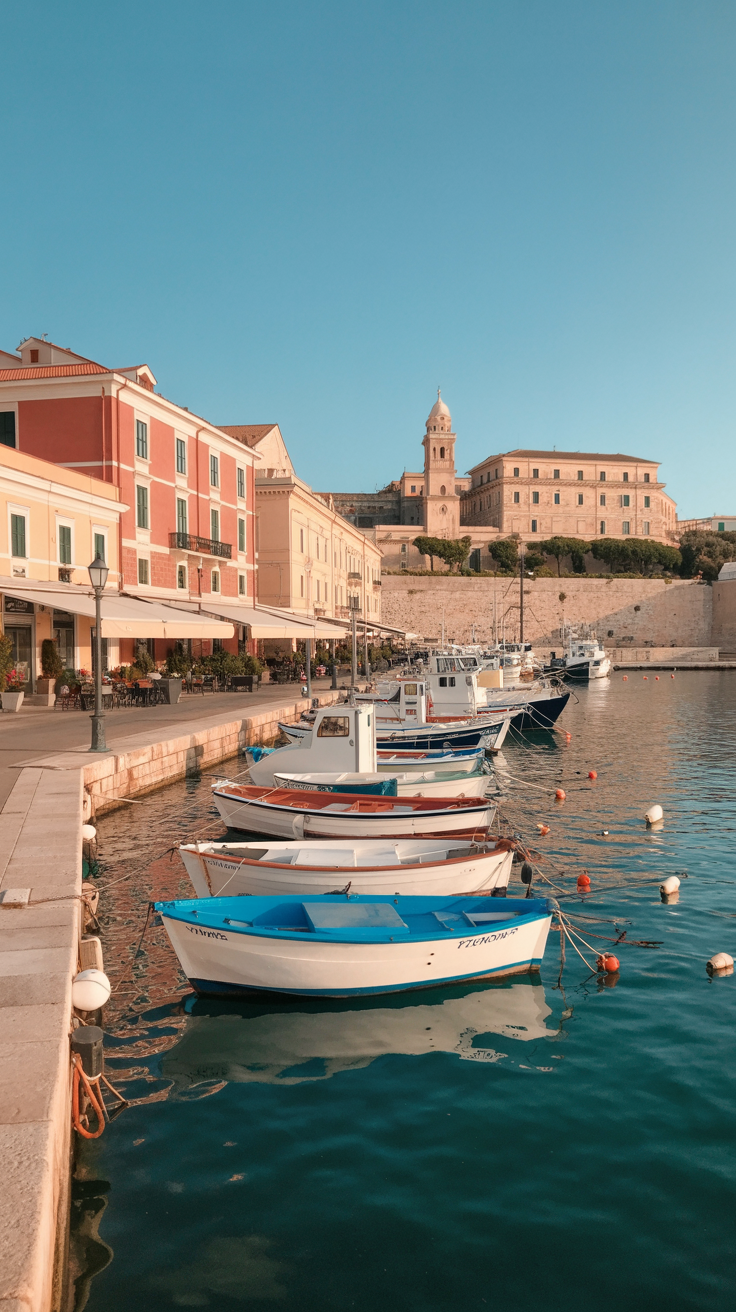
Syracuse cruise ships dock at Porto Grande, with most passengers tendering to Ortigia Island’s historic center. The compact old town is easily walkable from the tender pier. Top attractions include the Cathedral, Arethusa Fountain, and Greek archaeological sites. Shore excursions often visit nearby Noto’s Baroque architecture. English is limited; basic Italian phrases help.
Quick Port Facts
| Fact | Detail |
|---|---|
| Port Name | Porto Grande di Siracusa |
| Distance to Ortigia | 10-15 minute walk from main commercial berth |
| Time Zone | Central European Time (CET/CEST) |
| Language | Italian (English spoken in tourist areas) |
| Currency | Euro (€) |
| Typical Docking | Main commercial pier; occasional tendering to Ortigia waterfront |
Port Day Checklist
- Check your ship’s all-aboard time and set a phone alarm for at least 90 minutes before departure
- Wear comfortable walking shoes suitable for cobblestones and uneven surfaces
- Bring sun protection, water, and a hat during warmer months
- Carry small denominations of euros for markets, street vendors, and taxis
- Download offline maps of Ortigia and Syracuse before disembarking
- Have your ship’s emergency contact number saved in your phone
- Book any organized shore excursions in advance, especially during peak season
- Pack a light bag for purchases at the morning market
- Note the location of your ship’s berth for easy return navigation
Want to know more about other Mediterranean cruise ports in Sicily or exploring Mediterranean cruise ports in Italy? These guides can help you plan the rest of your itinerary.
Syracuse Port Map
Syracuse’s Porto Grande sits on Sicily’s southeastern coast, with cruise ships typically berthing at the commercial pier on the mainland side. From here, the historic island of Ortigia lies just across a short bridge to the north. The Neapolis Archaeological Park is located approximately 2 kilometers northwest of the port on the mainland, requiring a taxi or bus ride.
Can You Walk to Town from the Port?
Yes, and it’s one of the genuine pleasures of calling at Syracuse. Unlike some cruise ports where “walkable” means a sweaty 40-minute slog along an industrial road, Syracuse offers a straightforward and pleasant stroll.
- Most cruise ships dock at the main commercial pier, which puts you roughly 10-15 minutes on foot from Ortigia’s central Piazza del Duomo
- The walk takes you across a small bridge connecting the mainland to Ortigia island, with clear sightlines the entire way
- The route is flat, paved, and lined with the waterfront, making it far more enjoyable than many port-to-town walks
- If your ship is at the furthest berth, the walk might stretch to 20 minutes, but it’s still perfectly manageable
- Occasional tender operations drop passengers even closer to Ortigia’s heart, though this is less common for larger ships
- During the port’s ongoing modernization work, signage may be temporarily unclear, but the island is visible from the port so navigation isn’t tricky
- If mobility is an issue, taxis wait at the terminal and charge around €10-15 for the short hop into town
How to Get Around from Syracuse Port & Shore Transportation
Syracuse is refreshingly straightforward when it comes to transportation. The compact nature of Ortigia means most visitors stick to walking once they’re on the island, but you have options for reaching sites further afield.
Walking
- The default and best option for exploring Ortigia’s historic center
- Everything from the Duomo to Castello Maniace fits within a 1-2 kilometer radius
- Streets are narrow, cobbled in places, and occasionally uneven, so proper footwear matters
- The seafront promenades offer flat, easy walking with benches and shade
- Ortigia’s layout is intuitive enough that you can wander without constant map-checking
Taxis
- Readily available at the cruise terminal and around Piazza Pancali (Ortigia’s entry point)
- Expect to pay €10-15 for a ride from the port to central Ortigia
- Essential if you want to visit Neapolis Archaeological Park (about €10-12 each way from Ortigia)
- Confirm the fare with the driver before setting off, as meters aren’t always used for short tourist trips
- Useful for passengers with limited mobility or those running tight on time
Public Buses
- AST network buses connect the port area with various parts of Syracuse, including routes toward Neapolis
- Routes and timetables can be checked on boards at the terminal or at nearby stops
- Tickets are inexpensive (typically €1-2) and can be purchased at tabacchi shops or sometimes from the driver
- Not essential if you’re sticking to Ortigia, but handy for independent visits to archaeological sites
- Service frequency varies, so factor in potential wait times
Organized Shore Excursions
- Cruise lines offer packaged tours combining Ortigia with Neapolis or nearby Noto
- These handle all logistics, timing, and transport, which appeals if you prefer not to self-navigate
- Local operators at the port also offer similar tours, often at lower prices than ship-organized options
- Tours typically run 4-6 hours and return you to the ship with comfortable time to spare
What to See Within Walking Distance from the Port
One of Syracuse’s great advantages is that the majority of its headline attractions cluster in Ortigia, all comfortably reachable on foot from where your ship docks.
- Temple of Apollo: Sicily’s oldest Doric temple sits right at the entrance to Ortigia near Piazza Pancali. The ruins are fenced but clearly visible, and it’s free to view. From the port, this is about 10-12 minutes walking and makes a logical first stop. The remains are fragmentary but atmospheric, with information boards explaining the site’s history.
- Piazza del Duomo: The island’s showpiece square, lined with Baroque palaces and centered on the stunning Cathedral. Walking time from the port is roughly 15 minutes. The square itself is grand without feeling overblown, and the cathedral facade is genuinely impressive. Arrive early morning or late afternoon to avoid the worst crowds and the harsh midday light that washes out photos.
- Siracusa Cathedral: Built atop a 5th-century BC Greek temple to Athena, with Doric columns still visible inside. Entry costs a few euros, and it’s worth going inside to see how the ancient structure was incorporated into the Christian church. Allow 20-30 minutes for a visit. Modest dress is required (covered shoulders and knees).
- Fountain of Arethusa: A freshwater spring on Ortigia’s eastern waterfront, surrounded by papyrus plants and tied to Greek mythology. It’s a 5-minute walk from Piazza del Duomo and free to visit. The setting is picturesque, especially in the late afternoon light, though it can get busy with tour groups mid-morning.
- Castello Maniace: A 13th-century fortress at Ortigia’s southern tip, about 20 minutes walking from the port. Entry is usually around €4-5, and it’s worth visiting for the sea views from the ramparts and the sense of Syracuse’s strategic importance. The interior is somewhat sparse, but the location is dramatic. Check opening hours locally as they can vary.
- Ortigia Market: The daily food market near Via de Benedictis runs most mornings (typically until early afternoon). It’s about 12 minutes from the port and perfect for soaking up local life. You’ll find fresh seafood, produce, cheeses, and snacks. Great for photos and picking up provisions, though not particularly geared toward tourist souvenirs.
- Via Roma and Lungomare di Levante: The seafront promenades offer lovely walks with views across the harbor. Lined with cafes and gelaterias, these are ideal for a relaxed stroll between sights. Flat, easy terrain and plenty of spots to rest.
Must See Attractions in Syracuse for a One Day Cruise Visit
With limited time in port, you need to be selective. These are the attractions that genuinely justify your attention, listed in order of priority for a first-time visitor.
Piazza del Duomo and Syracuse Cathedral
- What it is: The heart of Ortigia, a UNESCO-listed square dominated by a Baroque cathedral that incorporates the columns of an ancient Greek temple to Athena
- Why it matters: This single site encapsulates 2,500 years of Sicilian history, from Greek colony to Norman kingdom to Baroque rebuilding after the 1693 earthquake. The juxtaposition of ancient Doric columns inside a Christian church is genuinely striking.
- Time needed: Allow 45-60 minutes total. That includes time to admire the square itself, go inside the cathedral, and perhaps grab a coffee at one of the surrounding cafes.
- Practical tips: Cathedral entry costs around €2-3. Opening hours can vary, but it’s typically open mornings and late afternoons (closed during siesta and during Mass). Dress modestly. The square is most photogenic in early morning or late afternoon when the light hits the facades. Mid-morning sees the biggest tour group influx.
Fountain of Arethusa
- What it is: A natural freshwater spring on Ortigia’s eastern shore, surrounded by papyrus and connected to the myth of the nymph Arethusa fleeing from the river god Alpheus
- Why it matters: It’s one of those rare ancient sites that still functions as originally intended. The spring has provided fresh water for thousands of years, and the papyrus growing here is among the few wild stands in Europe.
- Time needed: 15-20 minutes is plenty unless you want to linger on the adjacent waterfront promenade.
- Practical tips: Free to visit, always accessible. The setting is prettier than the fountain itself, which is essentially a stone-edged pool. The nearby benches and cafes make it a good spot for a break. Wheelchair accessible via the waterfront path.
Neapolis Archaeological Park
- What it is: A mainland site about 2km from Ortigia containing a massive Greek theater, a Roman amphitheater, and the Ear of Dionysius cave
- Why it matters: The Greek theater is one of the largest in the ancient world, and the site gives you a sense of Syracuse’s importance as a major Hellenic city. The Ear of Dionysius, a limestone cave with remarkable acoustics, has been a tourist draw since the 16th century.
- Time needed: Budget 90 minutes to 2 hours for a proper visit, plus 30-40 minutes round-trip taxi or bus time from Ortigia.
- Practical tips: Entry costs around €10-13. The site is open most days from morning until mid-afternoon (verify current hours locally). There’s limited shade, so bring water and sun protection. The theater is occasionally closed for summer performances. A taxi from Ortigia costs roughly €10-12 each way. If you’re short on time, prioritize either Neapolis or Ortigia’s sites, not both, as rushing between them eats up your port day.
Castello Maniace
- What it is: A Byzantine-era fortress later rebuilt by Frederick II in the 13th century, positioned at the tip of Ortigia
- Why it matters: The castle offers excellent views and a tangible sense of Syracuse’s strategic position controlling Mediterranean trade routes. The architecture is imposing, and the site is less crowded than the central Ortigia attractions.
- Time needed: 45-60 minutes including the walk from central Ortigia (about 15 minutes from Piazza del Duomo).
- Practical tips: Entry is typically €4-5. Opening hours can be irregular, so check locally. The interior is relatively bare, but the ramparts and sea views are the real draw. The walk out to the castle takes you along quieter streets, which is a nice contrast to the busier Duomo area. Partially accessible for wheelchairs, though some rampart areas involve steps.
Temple of Apollo
- What it is: The ruins of a 6th-century BC Doric temple, among the oldest in Sicily, located at Ortigia’s entrance near Piazza Pancali
- Why it matters: It’s a quick, free stop that adds historical context before you explore the rest of Ortigia. The remains are fragmentary but clearly Greek in character.
- Time needed: 10-15 minutes. You can’t enter the fenced site, but you can view it clearly from outside and read the information boards.
- Practical tips: Always accessible, no entry fee. Good for photos and orientation. It’s on the way from the port into Ortigia proper, so you’ll likely pass it anyway. Not worth a special detour if you’re pressed for time, but a logical starting point if you’re walking from the ship.
Ortigia Food Market
- What it is: A daily covered market selling fresh seafood, produce, meats, cheeses, and local specialties
- Why it matters: If you want a slice of authentic Sicilian life rather than just monument-hopping, the market delivers. It’s lively, colorful, and gives you a sense of the island’s food culture.
- Time needed: 30-45 minutes to wander, sample, and perhaps buy some snacks or picnic supplies.
- Practical tips: The market is busiest in the morning (typically operating until early afternoon). Bring small euro notes for purchases. It’s not a souvenir market – this is where locals shop – so don’t expect much in the way of tourist trinkets. The seafood displays are impressive but won’t keep for your return to the ship. Cheeses, olives, and dried goods travel better if you want edible souvenirs.
Port Day Itinerary: Things to Do in 8 Hours
Here’s a realistic schedule that fits a typical 8am-5pm port day, assuming your ship docks at the main commercial berth and you’re back aboard by 4:30pm for safety margin.
- 8:00-8:30am | Disembark and walk to Ortigia: Leave the ship as soon as permitted and make the 10-15 minute walk across to Ortigia island. The morning air is cooler and the streets are quieter before the tour groups arrive. This sets you up to see the top sites without the worst crowds.
- 8:30-9:00am | Temple of Apollo and Piazza Pancali: Start with a quick look at the Temple of Apollo ruins near the bridge entrance to Ortigia. Spend 10 minutes here reading the information boards and taking photos, then stroll through Piazza Pancali. If you’re keen on the food market, now is the perfect time to visit while it’s lively and fully stocked.
- 9:00-10:00am | Piazza del Duomo and Cathedral: Walk through Ortigia’s lanes toward the main square. The Duomo should be open by now, so go inside to see the Greek columns and Baroque interior. The square itself is magnificent in morning light, and you’ll have space to appreciate it before the mid-morning rush. Allow time for photos and simply sitting to absorb the atmosphere.
- 10:00-10:30am | Fountain of Arethusa and waterfront walk: From Piazza del Duomo, it’s a 5-minute stroll down to the Arethusa spring. Spend 15-20 minutes here, then walk along the Lungomare di Levante seafront promenade. The views are lovely, and there are benches if you need a rest.
- 10:30am-12:00pm | Castello Maniace: Continue south along the waterfront toward the fortress at Ortigia’s tip. The 15-minute walk takes you through quieter residential streets. Spend 45 minutes exploring the castle interior and ramparts. The sea views are excellent, and by now you’ll appreciate being away from the busier central areas.
- 12:00-1:30pm | Lunch in Ortigia: Head back toward the center and find lunch. Via Roma and the streets around Piazza del Duomo offer plenty of options. Try Caseificio Borderi for excellent sandwiches, Fratelli Burgio for charcuterie and local bites, or A Putia for sit-down Sicilian comfort food. Budget for a relaxed meal – you’ve earned it, and rushing defeats the purpose of being in Sicily.
- 1:30-2:00pm | Gelato and shopping: After lunch, grab gelato from one of the many gelaterias near the Duomo. Stroll through the lanes picking up any souvenirs or local products (ceramics, olive oil, wine). The market should still be operating if you want to make any last food purchases.
- 2:00-3:00pm | Optional: quick visit to Neapolis Park OR more Ortigia time: If you’re keen on archaeology and didn’t book a shore excursion, you could squeeze in a taxi to Neapolis Archaeological Park (factor in 40 minutes travel time plus 60-90 minutes on site, which cuts it tight). More realistically, use this hour for a coffee, more wandering, or revisiting a favorite spot in Ortigia.
- 3:00-4:00pm | Final stroll and cafe stop: Make your way gradually back toward the Ortigia exit. Stop for a final coffee or snack. Double-check you haven’t forgotten anything and that you’re oriented toward the port.
- 4:00-4:30pm | Return to ship: Walk back across the bridge to the port with plenty of buffer time. Even if all-aboard isn’t until 5pm, arriving earlier means no stress and time to relax on deck with your spoils from the day.
This timing works comfortably without rushing, covers the main highlights, and includes a proper lunch and downtime. If your ship offers less time in port, cut the Castello Maniace visit or shorten the lunch break, but don’t sacrifice the Duomo and Arethusa Fountain, which are Syracuse’s core experiences.
Where to Eat Near the Port
Ortigia’s food scene is strong, with everything from quick market snacks to sit-down seafood restaurants. You won’t go hungry, and the quality is generally good if you stick to places where locals also eat.
- Caseificio Borderi: Legendary among Syracuse regulars for fresh sandwiches made with excellent Sicilian cheeses and cured meats. The queues at lunchtime tell you everything you need to know. Expect to pay around €6-8 for a loaded panino. It’s near the market on Via de Benedictis, about 12 minutes from the port. Perfect for a quick, high-quality lunch on the move.
- Fratelli Burgio: A charcuterie and delicatessen where you can assemble a spread of local meats, cheeses, olives, and wines. Ideal for snacking or a casual meal. Prices are reasonable (€10-15 for a good selection to share). The staff are knowledgeable and happy to guide you through the options. Also functions as a shop if you want to take products home.
- A Putia: Offers home-style Sicilian dishes in a relaxed setting. Think pasta alla Norma (with aubergine and ricotta), fresh fish, and classic antipasti. Mains run around €12-18. It’s not fancy, but the food is honest and well-prepared. Book ahead if you’re visiting at peak lunch hour, or arrive early.
- Apollonion Osteria da Carlo: Known for seafood, located near the Temple of Apollo area. If you want a more substantial fish-focused meal, this delivers. Expect €15-25 for a main course. The setting is traditional, and the menu leans heavily on whatever’s fresh that day. Check reviews or ask locals for current recommendations, as quality at seafood restaurants can vary.
- Pizzerias around Piazza del Duomo: Several spots offer pizza by the slice or full pies, ideal if you want something quick and affordable. Quality is generally decent, and outdoor seating lets you people-watch while you eat. Budget €8-12 for a pizza and drink.
- Ortigia Market stalls: Various vendors sell arancini (stuffed rice balls, typically €2-3 each), panelle (chickpea fritters), and other Sicilian street food. Perfect for breakfast or a mid-morning snack. The arancini are excellent – try both the meat ragù and the spinach and cheese versions if you’re hungry.
- Gelaterias: Too many to list individually, but standards are high across Ortigia. Look for places displaying “produzione propria” (homemade) and avoid anywhere with unnaturally bright colors or sky-high heaps of gelato. Expect €2-4 for a cone or cup. Pistachio and cassata flavors are particularly Sicilian.
- Food safety and water: Tap water in Syracuse is safe to drink, though most visitors stick to bottled. Street food from the market is fine – vendors have been doing this for generations and hygiene standards are reasonable. The usual sensible precautions apply (avoid anything that looks like it’s been sitting in the sun too long).
Shopping: What to Buy & Where to Go
Syracuse isn’t a shopping mecca on the scale of Florence or Rome, but Ortigia offers enough to keep you browsing for an hour or so, particularly if you’re after food products or ceramics.
- Sicilian ceramics: Colorful hand-painted plates, bowls, and tiles are the classic Sicilian souvenir. Several shops in Ortigia’s central lanes stock them, with prices ranging from €10 for a small dish to €50+ for larger pieces. Quality varies, so check for chips and uneven glaze before buying. These are fragile, so ask about packing if you’re traveling with just hand luggage.
- Local food products: Olive oil, sun-dried tomatoes, capers, pistachios, honey, and Sicilian wines all make excellent edible souvenirs. Fratelli Burgio and similar delis offer well-packaged goods suitable for travel. Prices are fair (€8-20 for a decent bottle of wine or jar of quality preserved items). Check customs regulations for your home country regarding food imports.
- Papyrus crafts: Syracuse has a long tradition of papyrus cultivation (you’ll see it growing at the Arethusa Fountain), and you can buy papyrus paper, bookmarks, and artwork. Prices start around €5-10 for small items. The Museum of Papyrus is worth a quick visit if you’re interested in the history.
- Sicilian wines and limoncello: Several wine shops in Ortigia stock local Nero d’Avola, Grillo, and other Sicilian varieties, plus the ubiquitous limoncello. Expect €10-25 for a good bottle. Staff are usually happy to advise. Pack carefully in your luggage with plenty of padding.
- Jewelry and coral: Some shops sell coral jewelry, traditionally associated with southern Italy. Be aware that much of what’s on offer is not genuine Mediterranean coral, and prices can be high for tourists. Unless you know what you’re looking at, this is a riskier purchase.
- Ortigia Market: While primarily a food market, you’ll find some stalls selling kitchen items, linens, and household goods. These aren’t tourist trinkets but rather everyday items locals buy. Interesting if you want something more authentic, though not particularly convenient for travelers.
- Shop hours: Most shops open around 9-10am, close for siesta from roughly 1-4pm, then reopen until 7-8pm. On Sundays and public holidays, many shops are closed or operate shorter hours. Plan accordingly if you want to shop in the afternoon.
- Prices and haggling: Fixed prices are the norm in established shops. You might find some flexibility in market stalls or with street vendors, but aggressive haggling isn’t part of the culture here as it might be in North African or Middle Eastern ports. Be polite and if a price seems unfair, simply walk away.
Essential Gear for a Full Day Exploring Syracuse
You’ll likely walk 15,000+ steps exploring Ortigia’s cobblestone streets and historical sites. Here’s what made our day comfortable and what we wished we’d brought:
For Your Feet
The cobblestones and uneven ancient surfaces here are no joke. Comfortable walking shoes saved us from the blisters we got in Dubrovnik. The streets around Piazza del Duomo and the path out to Castello Maniace are particularly rough on feet in inadequate footwear. Bring blister prevention just in case, especially if your shoes aren’t fully broken in.
Your Daypack
You’ll need something for water, sunscreen, souvenirs from the market, and purchases from those tempting ceramic shops. An anti-theft backpack fits under airline seats on the way to Italy and kept our stuff secure in crowded areas around the Duomo during peak tour group hours. A collapsible water bottle clips on the outside and refills easily at fountains around Ortigia.
Staying Charged
Between photos of the Cathedral, Google Maps navigation through Ortigia’s winding lanes, and messaging your ship when plans change, your phone will die. A portable charger got us through 12-hour port days in Sicily without stressing about battery. The European power adapter charges it in your cabin overnight.
Sun Protection
The Sicilian sun reflects off those white Baroque buildings and ancient stone streets with intensity that catches people off guard. Reef safe sunscreen protects you without the greasy feel of cheap alternatives. The exposed walk along Lungomare di Levante and the hour you’ll spend at Castello Maniace with minimal shade makes sun protection non-negotiable in warmer months.
Staying Organized
With limited cabin space on cruise ships, packing cubes let us find what we needed without destroying our suitcase every port day. Game-changer for multi-port Mediterranean cruises. A hanging toiletry bag uses vertical space in those tiny ship bathrooms, and a cable organizer keeps all your chargers manageable when you’re plugging in cameras, phones, and power banks each night.
Smart Packing
If you’re doing a longer Mediterranean itinerary, carry-on hardside luggage protects those ceramic souvenirs from Syracuse and the bottles of Sicilian wine you’ll inevitably buy. The hard shell survived baggage handlers and protected our purchases through four more ports. A luggage scale saved us from overweight bag fees at the airport after accumulating Italian olive oil, wine, and ceramics across multiple ports.
Emergency Contacts
- Police: 112 (general emergency number, works across Italy)
- Carabinieri (Military Police): 112
- Ambulance: 118
- Port Authority Emergency: Contact via main port office at +39 0931 464111
- Hospital: Ospedale Umberto I, Via Testaferrata 1, Siracusa – +39 0931 724111 (main switchboard)
- Tourist Police: Available through main police number 112; ask for English-speaking assistance
Save your cruise ship’s emergency contact number before going ashore. Your cruise card should have this printed on it, or check with guest services before disembarking.
Currency, ATMs & Money Matters
Italy uses the euro, and Syracuse is well-equipped for handling tourist transactions, though cash remains more common than in northern Europe.
- Local currency: Euro (€). Notes come in denominations of 5, 10, 20, 50, 100, 200, and 500 (though 200 and 500 notes are rarely seen). Coins are 1 cent, 2 cent, 5 cent, 10 cent, 20 cent, 50 cent, €1, and €2.
- ATMs: Several ATMs are located near Piazza Pancali at the Ortigia entrance, with more machines scattered around the historic center near Piazza del Duomo. Withdrawal limits are typically €250-500 per transaction. Your home bank will likely charge a foreign transaction fee (often 2-3% plus a flat fee), so check rates before you travel. Withdraw larger amounts less frequently to minimize fees.
- Card acceptance: Credit and debit cards (Visa and Mastercard especially) are widely accepted in restaurants, shops, and larger establishments. American Express is less common. That said, many smaller cafes, market stalls, and some taxis prefer or require cash. Don’t assume you can go card-only for the day.
- Exchange options: Avoid currency exchange booths in tourist areas if possible – rates are poor and fees are high. If you need to exchange cash, use a bank ATM instead. Your ship may offer currency exchange, but rates are usually uncompetitive.
- How much cash to carry: For a day in Syracuse, €40-60 per person should cover a decent lunch, snacks, a taxi if needed, and small purchases, assuming you’re using cards for larger expenses. Bring small notes (€5, €10, €20) rather than €50s, which can be hard to break at market stalls.
- Tipping: Not obligatory in Italy as service charges are often included, but rounding up the bill or leaving 5-10% for good service is appreciated. In taxis, rounding up to the nearest euro is standard. Don’t feel pressured to leave large tips – it’s not expected.
- Taxes: VAT (IVA in Italian) is included in displayed prices. If you’re a non-EU resident and make purchases over €154.94 in a single transaction at participating stores, you can claim a VAT refund (roughly 12-22% depending on the item). Ask the retailer for a Tax Free form, then process it at the airport on your way home. Not worth the hassle for small purchases.
- Notify your bank: Before you sail, inform your bank and credit card issuers that you’ll be traveling in Italy (and any other countries on your itinerary). This prevents your cards being blocked for suspected fraud when foreign transactions appear. Most banks allow you to set travel notifications through their apps.
Weather by Month
| Season | Months | Temperature Range | Conditions & What to Pack |
|---|---|---|---|
| Spring | March – May | 15-23°C (59-73°F) | Mild and pleasant with occasional rain in March. April and May are ideal for walking and sightseeing without intense heat. Pack layers, a light waterproof jacket, and comfortable shoes. Spring flowers and generally clear skies make this an excellent time to visit. |
| Summer | June – August | 25-35°C (77-95°F) | Hot and dry with strong sun, especially July and August. Peak tourist season means crowds at popular sites. Essential to bring sun protection (hat, sunscreen, sunglasses), plenty of water, and loose, light clothing. Mornings and late afternoons are the most comfortable times for walking. |
| Autumn | September – November | 18-26°C (64-79°F) | September remains warm and sunny, gradually cooling through October and November. Less crowded than summer and very pleasant for touring. Pack layers as evenings can be cooler. Some rain possible in November. Generally considered one of the best times to cruise to Sicily. |
| Winter | December – February | 10-16°C (50-61°F) | Mild by northern European standards but can feel chilly with wind off the sea. Rain is more common, though you’ll still get many sunny days. Few cruise ships call in winter. Pack a warm jacket, layers, and waterproofs. Sites are quiet and atmospheric but some may have reduced opening hours. |
Common Questions & FAQ
Do I need to book a shore excursion or can I explore Syracuse independently?
Syracuse is one of the easiest Mediterranean ports to tackle independently. Ortigia is compact, walkable, and straightforward to navigate without a guide. If you want to visit Neapolis Archaeological Park or venture to nearby Noto, a shore excursion or at least a pre-arranged taxi makes logistics simpler, but the core Ortigia experience doesn’t require organized tours. Most cruise passengers manage perfectly well on their own.
Is Syracuse safe for cruise passengers walking around independently?
Yes, Syracuse is generally very safe for tourists. Petty theft (pickpocketing) can occur in crowded areas, as in any tourist destination, so keep valuables secure and stay aware of your surroundings. Violent crime targeting tourists is rare. The main risks are sunburn and dehydration in summer. Stick to well-trafficked areas, and you’ll have no problems.
How much time do I really need in Syracuse?
If your ship gives you 6-8 hours in port, that’s enough to see Ortigia’s highlights at a comfortable pace with time for lunch and some browsing. A full day would allow you to add Neapolis Archaeological Park or a trip to nearby Noto. If you only have 4-5 hours, stick to Ortigia’s core (Duomo, Arethusa Fountain, maybe Castello Maniace) and don’t try to do too much.
What if my ship tenders instead of docking?
Tendering at Syracuse is less common but occasionally happens when berths are full or for smaller ships. The tender typically drops you at a pier very close to Ortigia, often closer than the main commercial berth, which actually makes life easier. Tender operations add time getting on and off the ship, so adjust your itinerary accordingly and allow extra buffer time for your return.
Can I use US dollars or British pounds in Syracuse?
No. Italy uses the euro, and you won’t be able to pay with dollars or pounds in shops, restaurants, or for taxis. Exchange currency before you go, use ATMs on arrival, or rely on credit cards where accepted. Some cruise ships’ shore-side shops might accept dollars, but don’t count on it. Arrive with euros or a way to get them.
Are there accessible facilities and routes for passengers with mobility issues?
Ortigia’s historic center has narrow streets and cobblestones, which can challenge wheelchair users and those with limited mobility. The main routes (from the port to Piazza del Duomo, along the waterfront to Arethusa Fountain) are mostly paved and flat, though uneven in places. Castello Maniace has steps in some areas. Taxis can help with longer distances. The Syracuse Cathedral and several other sites have step-free access, but check locally. Neapolis Archaeological Park has some accessible paths but also uneven terrain.
What’s the best time of day to visit Piazza del Duomo to avoid crowds?
Early morning (before 9:30am) or late afternoon (after 4pm) are your best bets. Mid-morning through early afternoon sees the heaviest foot traffic from tour groups. If your ship docks early, get ashore promptly and head straight to the Duomo. You’ll have the square largely to yourself and much better light for photos.
Can I visit both Syracuse and Catania in one port call?
Not realistically. Catania is about 70km north of Syracuse, roughly an hour’s drive each way, which would eat up most of your port time. If your ship calls at both ports on separate days, great. Otherwise, pick one and do it properly rather than rushing between them. Syracuse’s Ortigia and Neapolis sites offer a full day’s worth of experiences without needing to travel elsewhere.
Personal Experience
When our ship docked in Syracuse, I was thrilled to discover we pulled right up to the mainland port, just a short walk from Ortigia’s old town. The proximity made everything so easy – no tedious shuttle buses or confusing taxi situations. We simply strolled across the small bridge connecting the mainland to the island, and within fifteen minutes, we were wandering the narrow, sun-drenched streets of the historic center. Having read up on the port beforehand really paid off, since some passengers wasted an hour trying to figure out transportation when they could have just walked.
The best decision we made was booking a morning tour to the Neapolis Archaeological Park before heading to Ortigia for lunch. The Greek theater and the Ear of Dionysius cave were absolutely worth it, and by getting there early, we beat the worst of the heat and crowds. After our tour, we had plenty of time to explore the Duomo, grab fresh arancini from a local spot, and even fit in some shopping at the market. The compact nature of Syracuse as a port stop is perfect – everything you want to see is manageable in a single day without feeling rushed. Just bring comfortable walking shoes and maybe a hat, because that Sicilian sun doesn’t mess around.
Planning more stops in Sicily? Check out our guide to Porto Empedocle cruise port for access to the Valley of the Temples, or read up on other Mediterranean cruise ports in Greece if your itinerary continues east. For a broader overview of your options, our Eastern Mediterranean cruise ports guide covers everything from Turkey to the Greek islands.
Last Updated: 9 February 2026