
Greece gets cruise ports right in a way most Mediterranean countries don’t. The big hitters, Piraeus for Athens, Heraklion for Crete, drop you within reach of genuinely world-class ancient sites, where even a short port day feels worthwhile. Further north on the mainland, the Thessaloniki cruise port puts you inside a working Greek city rather than a resort, with Roman ruins and a Byzantine waterfront a short walk from the berth. The island ports are a different proposition: Santorini delivers the drama, Mykonos delivers the glamour, and Rhodes delivers something rarer, a UNESCO World Heritage medieval city you can walk into straight off the ship.
What catches most people off guard is how differently beach access works between ports. Rhodes is the standout: Elli Beach is a 20-minute walk from where the ship docks, making it the easiest beach day in Greece. Heraklion requires a short taxi ride to Ammoudara or Karteros. Athens is the weakest beach option of the three — most passengers are far better off heading for the Acropolis and saving the swimming for another stop.
Each of the ports below has its own personality, its own logistics, and its own honest pros and cons. Here’s what you actually need to know.
Piraeus (Athens) Cruise Ship Port Guide
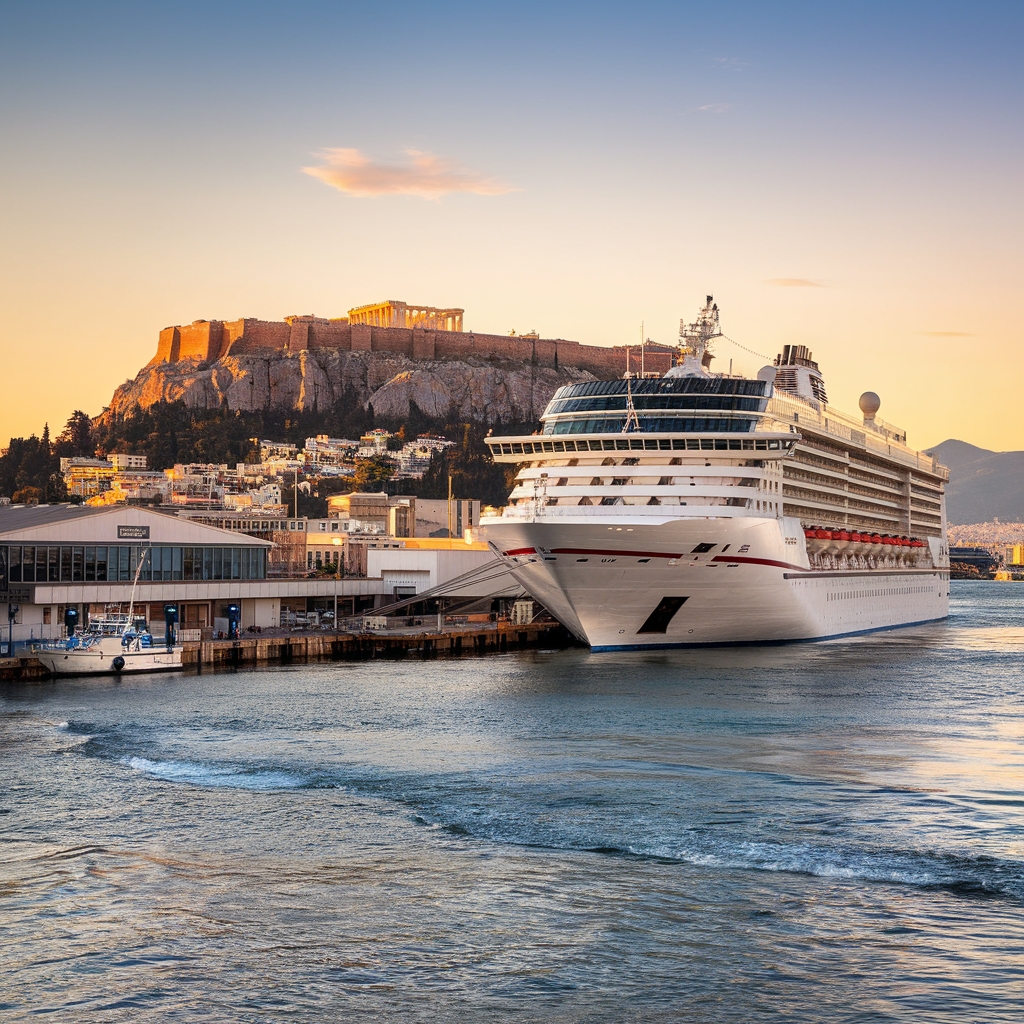
Piraeus cruise port is one of the Mediterranean’s busiest ports, and the logistics work in your favour. Your ship docks around 7 miles from central Athens — the X80 express bus runs directly from the cruise terminals to the Acropolis, the Metro Line 1 gets you into the city centre in under 25 minutes, and taxis are waiting at the port gates. None of this requires a shore excursion or pre-planning.
The terminal covers the basics: tourist information, ATMs, Wi-Fi. If you’re killing time before embarkation, Marina Zea is a short walk away and considerably more atmospheric than sitting inside the terminal. The Piraeus Archaeological Museum is also worth knowing about — most passengers walk straight past it, which means you probably won’t have to queue.
Mykonos Cruise Ship Port Guide
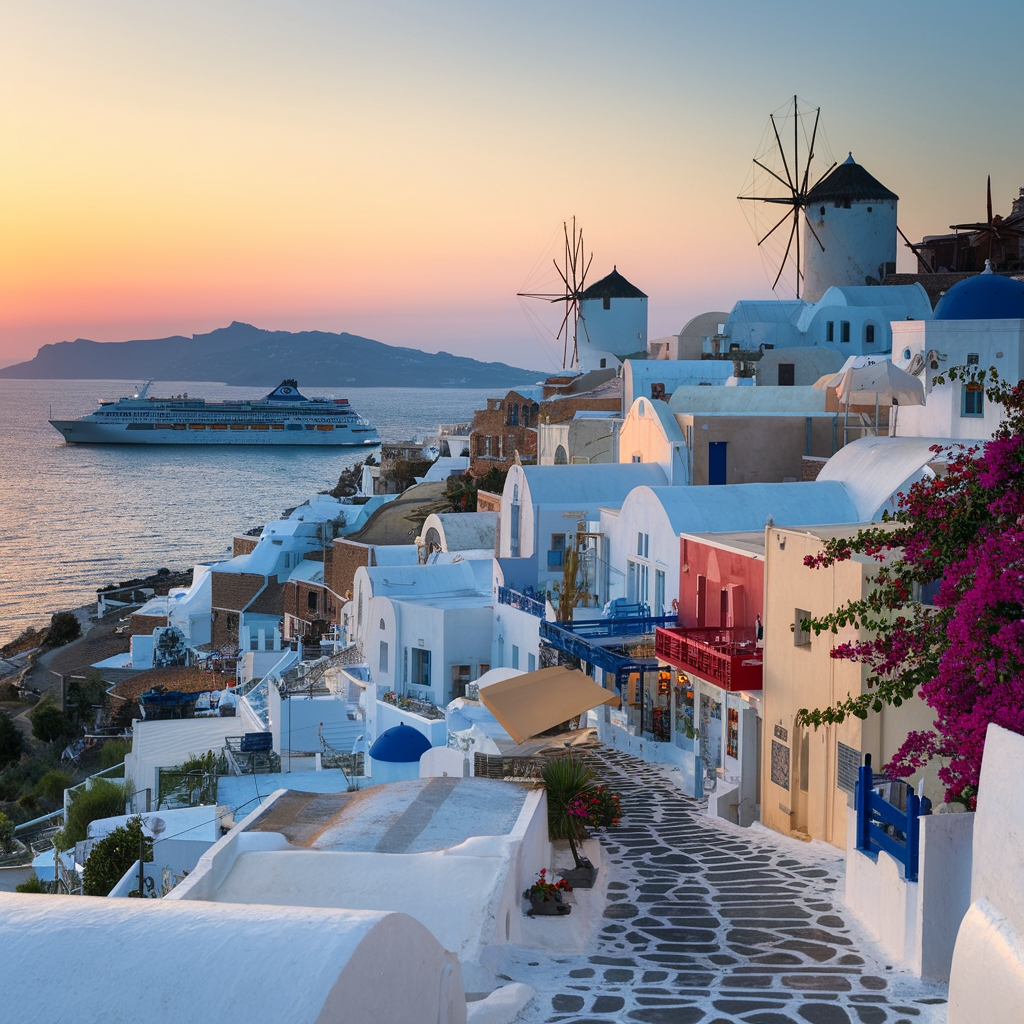
Mykonos cruise port splits between two locations and it matters which one your ship uses. Most cruise ships, including large ones, dock at the New Port in Tourlos, about 2km north of Mykonos Town. From there, shuttle buses run to the old port area, or you can take the SeaBus water taxi across the bay for around €2, a far more pleasant option than the walk, which has no pavement and isn’t worth attempting. When Tourlos is at capacity, ships anchor offshore and tender passengers directly into the heart of Mykonos Town at the Old Port, which is actually the better outcome, you step off the tender and you’re already there.
The windmills, Little Venice and the main town beaches are all walkable from the Old Port. From Tourlos, factor in transfer time before committing to how you’ll spend your day.
Santorini (Thira) Cruise Ship Port Guide
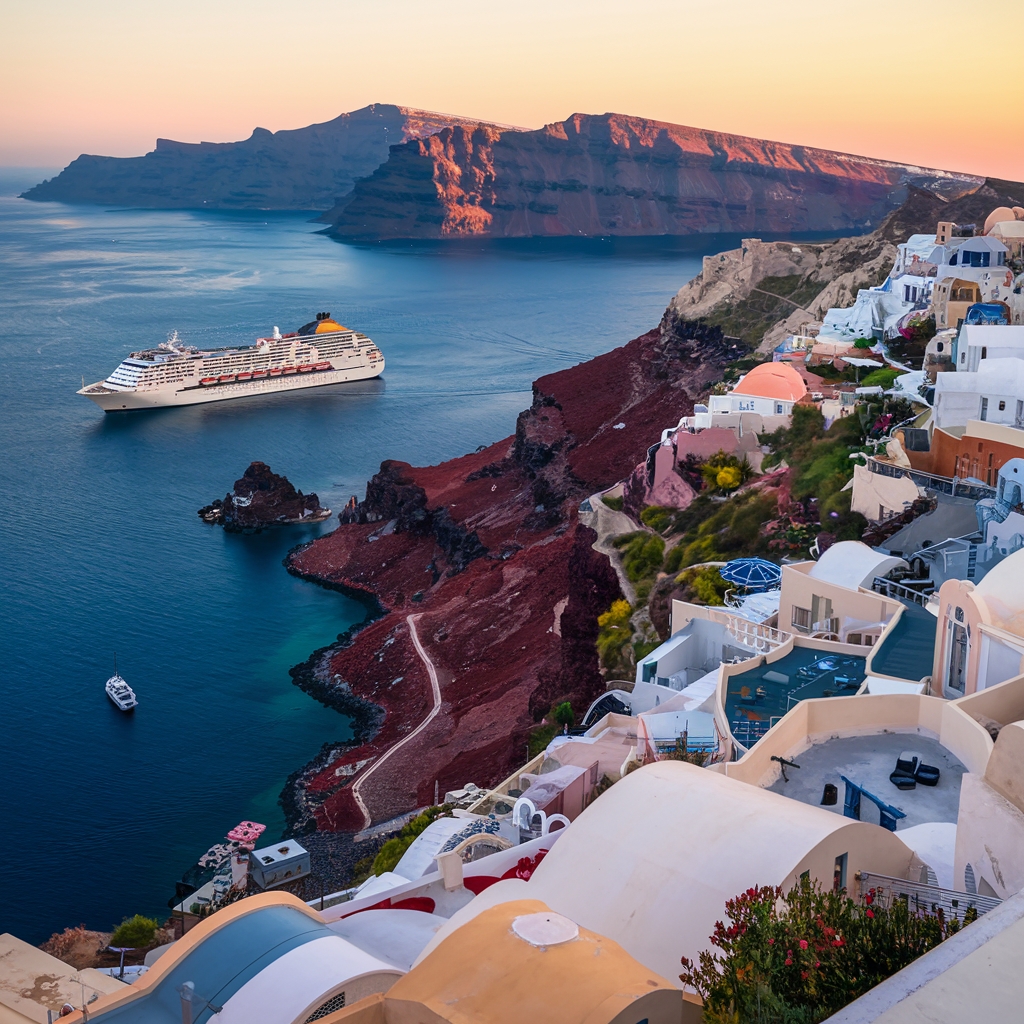
Santorini cruise port is one of the most spectacular arrivals in the Mediterranean, and one of the most logistically demanding. There is no pier. Ships anchor in the caldera and tender passengers ashore to the Old Port at Skala, directly below Fira. If you’ve booked a cruise line excursion, you may be tendered instead to Athinios, the island’s main ferry port, where coaches can meet you at road level, useful if you want to skip the bottleneck at the top of the cliff.
From Skala, the cable car takes about three minutes and costs €10 one way. The 587-step alternative has historically been walkable, but reports since late 2025 suggest the steps have been closed, so check current status before assuming that option is available. The donkey rides you may have read about are controversial on animal welfare grounds and best avoided.
The crowds are real. Up to five ships can anchor simultaneously, and the cable car can only move so many people per hour. Go early, build in a buffer before last tender, and don’t underestimate how quickly the return queues build in the afternoon.
Oia, Akrotiri’s ancient ruins and the black sand beaches at Perissa are all worth the effort, but Santorini punishes the underprepared more than any other Greek port.
Rhodes Cruise Ship Port Guide
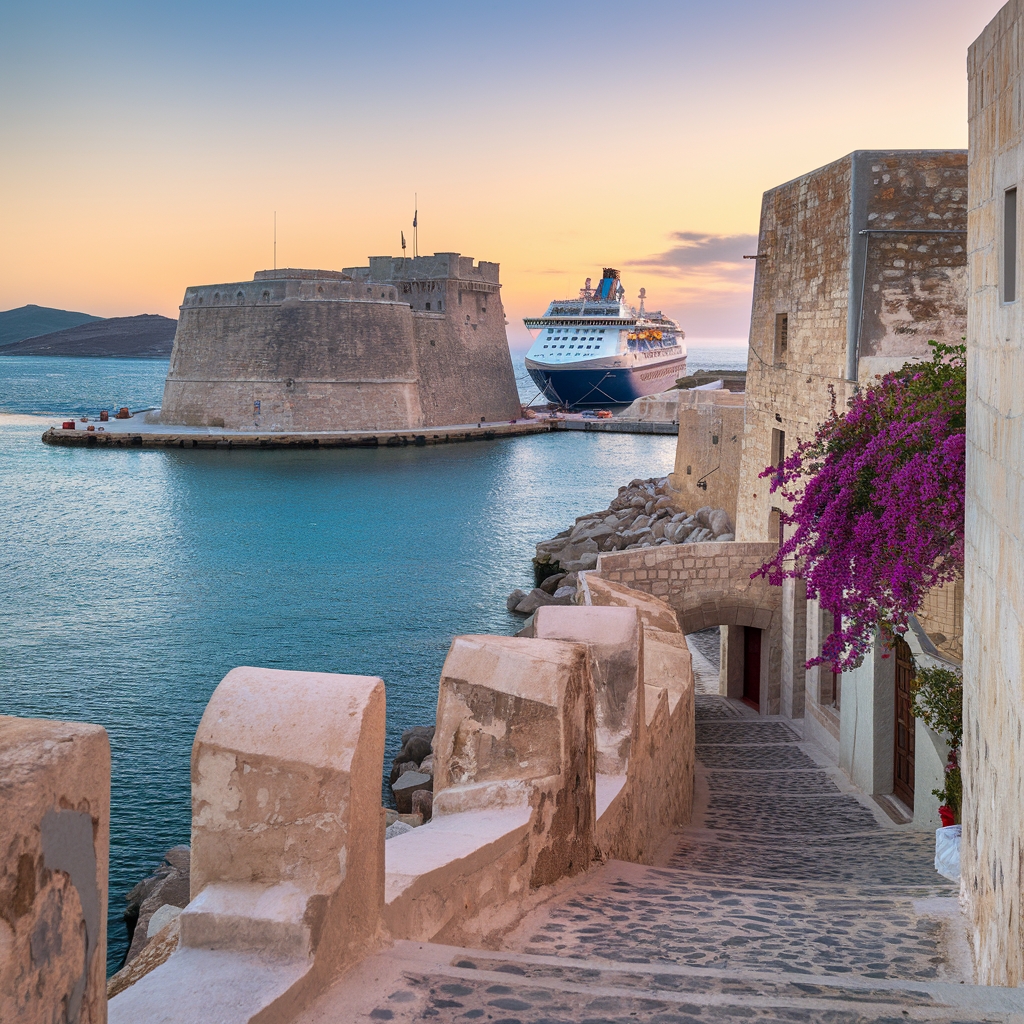
Rhodes cruise port sits at the northeastern tip of the island, directly alongside the medieval Old Town, a UNESCO World Heritage site. Walk off the ship and you’re at the walls of one of the best-preserved medieval cities in Europe within ten minutes, no shuttle, no transfer, no planning required. The Palace of the Grand Masters and the Street of the Knights are both inside those walls.
Several large ships can berth simultaneously, and the port handles the volume competently. Beyond the Old Town, the New Town has the usual mix of shops and restaurants if you need them. For a beach, Elli Beach is about a 20-minute walk from the port gates, with sunbeds, beach bars and clear water. If you want something quieter, Zephyros is a five-minute taxi ride.
Rhodes is as straightforward as Greek cruise ports get. The only mistake is spending the whole day in the port area when Lindos, 50km south, is worth the taxi or bus ride if your schedule allows.
Heraklion Cruise Ship Port Guide
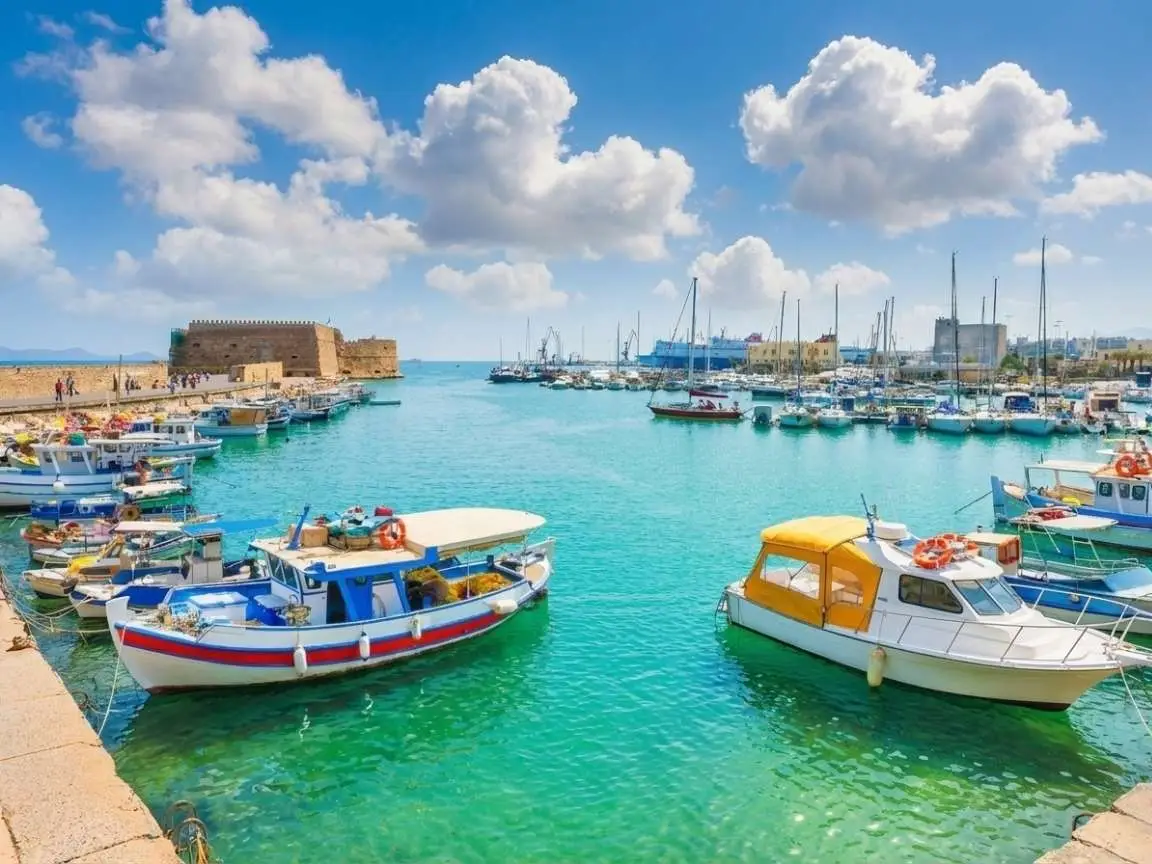
Heraklion cruise port is well set up for independent exploration. The passenger terminal is about a 15-minute walk from the city centre, with the Koules Fortress and the Venetian harbour visible almost immediately. The Archaeological Museum, one of the finest Minoan collections in the world, is within easy walking distance and worth prioritising if history is your reason for being here.
Knossos, the largest Minoan palace complex in Europe, is 5km from the port and reachable by bus or taxi in under 20 minutes. Most passengers who skip it regret it. For a beach, Ammoudara is a short taxi ride west of the port, Karteros to the east is another option, and both are manageable within a port day if Knossos isn’t the priority.
The waterfront tavernas are the right call for lunch. Fresh Cretan food, reasonable prices compared to the tourist-facing spots further into town, and you won’t lose time getting back to the ship.
Chania Cruise Ship Port Guide
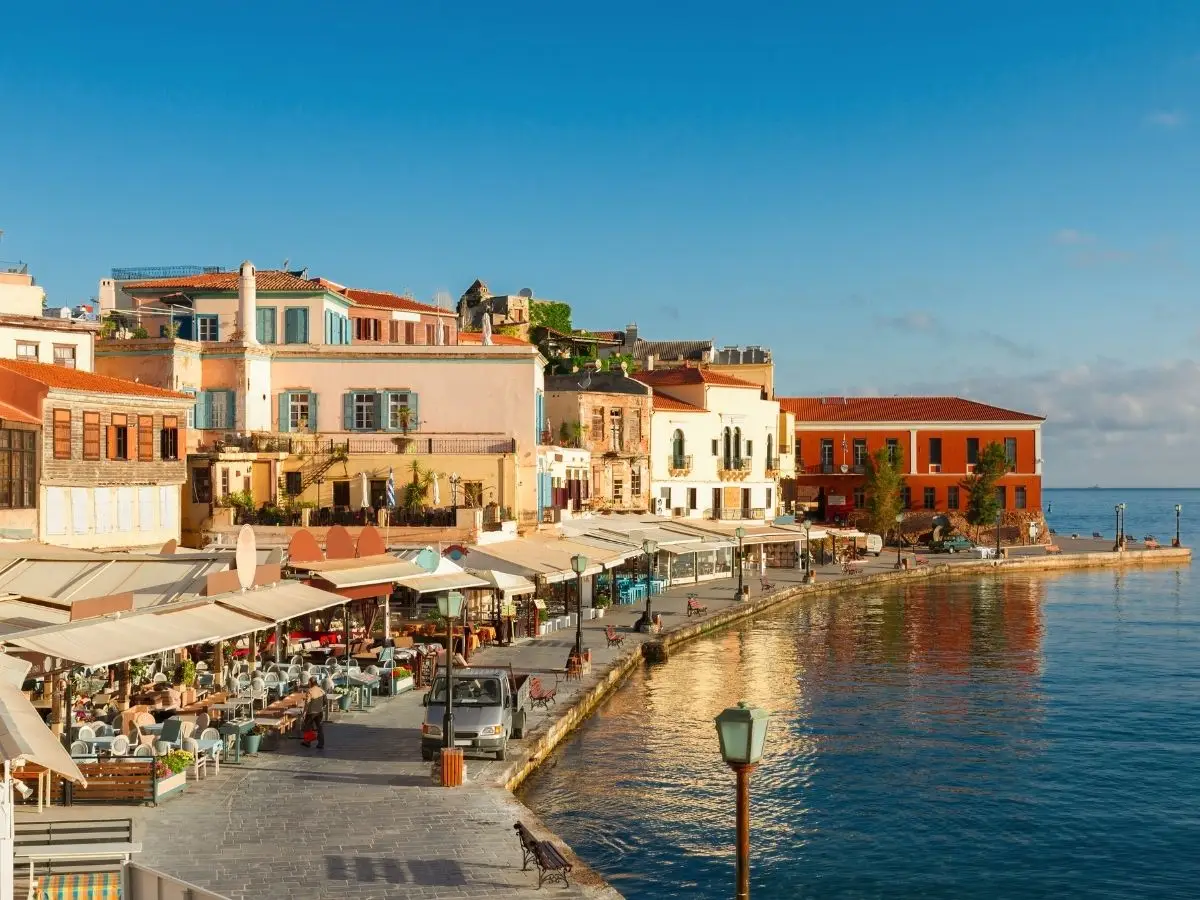
Chania cruise port at Souda Bay sits 7km from the Old Town, so you’re not walking. Shuttle buses and taxis wait outside the terminal, and the transfer takes around 20 minutes each way. Factor that into your day before committing to how much you want to see.
The Old Town is worth the journey. The Venetian harbour is one of the most atmospheric in Crete, the 16th-century lighthouse is the most photographed landmark on the island, and the mix of Venetian and Ottoman architecture along the narrow streets holds up well against anything else in Greece. The Municipal Market is a good stop if you want to pick up local produce without paying tourist prices.
Nea Chora beach is a short walk from the Old Town and delivers a reasonable beach stop without eating into transfer time. The waterfront restaurants are the practical lunch choice, close to where you’ll need to be for the return journey.
Don’t cut it fine. With 20 minutes back to Souda Bay, missing the ship here is a genuine risk if you lose track of time in the Old Town.
Patmos Cruise Ship Port Guide
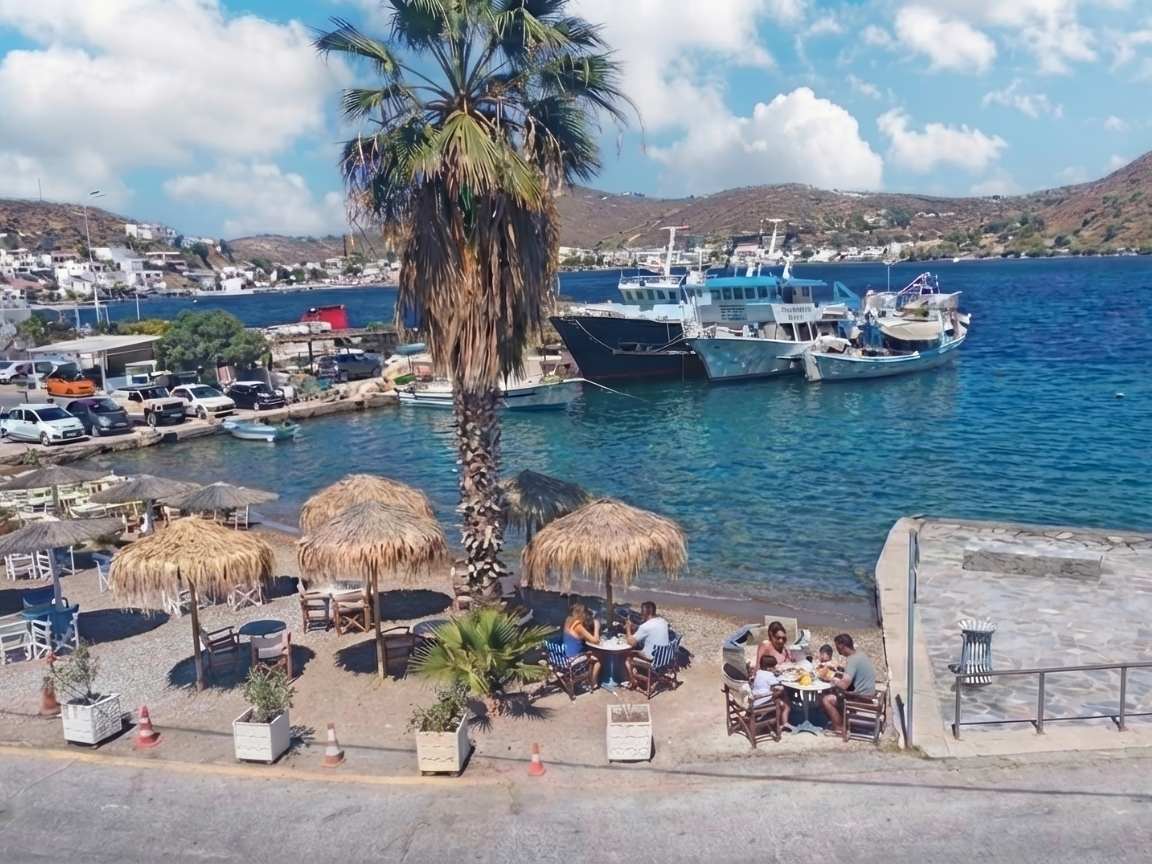
Patmos cruise port at Skala is a tender operation, larger ships anchor offshore and small boats bring passengers in. It adds time, so plan accordingly.
Patmos draws cruise passengers for one reason above all others: religious and historical significance. The Monastery of Saint John the Theologian and the Cave of the Apocalypse, where John is believed to have written the Book of Revelation, are both UNESCO World Heritage sites and within reach of Skala by foot or taxi. Neither requires a shore excursion to visit independently.
Skala itself has cafes, tavernas and the usual souvenir shops. The real reward is Chora, the hilltop village above the port, with its white cubic houses and views across the Aegean. It’s a short taxi ride up or a steep walk, and most passengers who skip it in favour of staying near the port miss the best part of the island.
Katakolon Cruise Ship Port Guide
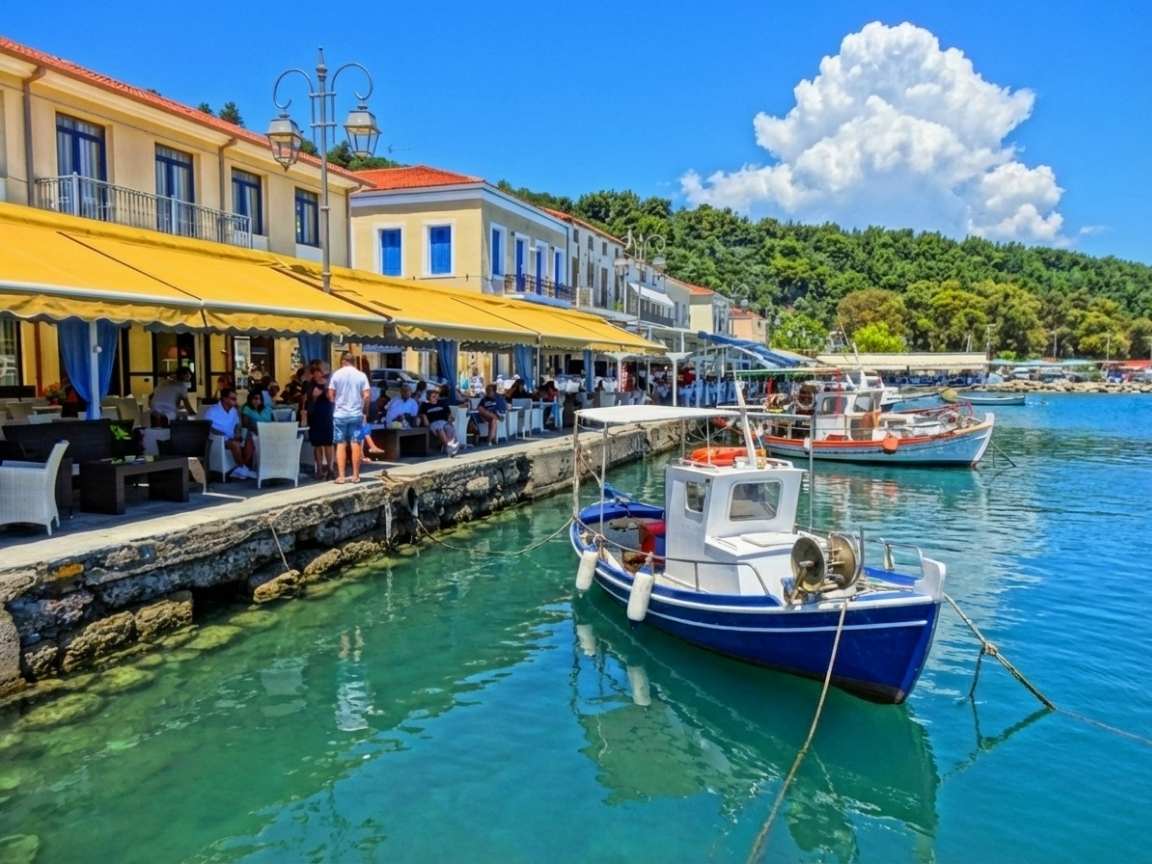
Katakolon cruise port exists almost entirely as a gateway to ancient Olympia, birthplace of the Olympic Games, 30 minutes away. That’s not a criticism — it’s simply what this port is for, and it does the job well.
Katakolon village is small and genuinely pleasant, with a waterfront, tavernas and local shops. Most passengers walk straight through it en route to Olympia, which is the right call if you only have one chance to see the archaeological site, the museum and the remains of the Temple of Zeus. The museum alone justifies the journey.
Getting to Olympia independently is straightforward. A small train runs from the village station, taxis are available at the port, and local operators offer transfers if you want a guide without the cruise line markup. The train is the most characterful option if the timing works with your port day.
Kavala Cruise Ship Port Guide
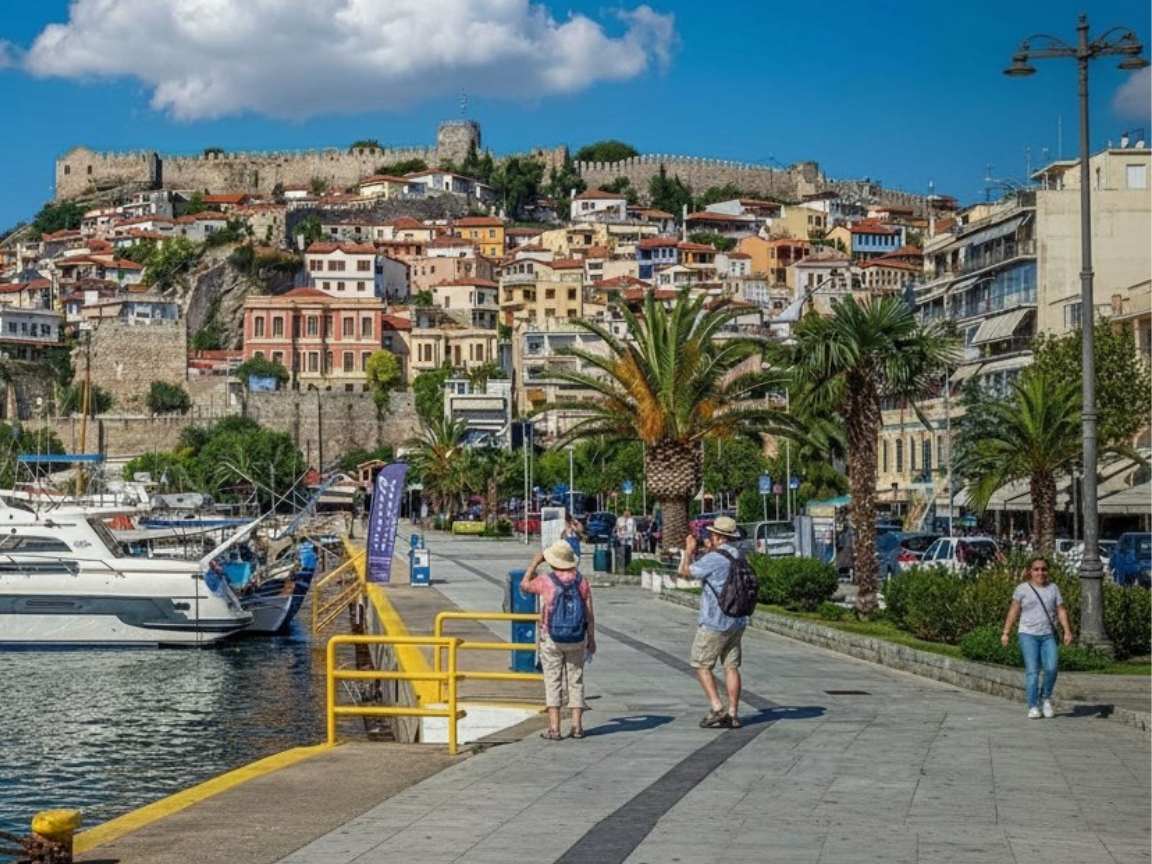
Kavala cruise port is one of the more underrated stops on a Greek itinerary. The ship docks at the commercial port, a 10-minute walk from the centre of a city that most cruise passengers know nothing about before they arrive and leave genuinely impressed by.
The old quarter of Panagia occupies a peninsula above the harbour, topped by a Byzantine-Ottoman fortress with views across the bay. The Kamares aqueduct, a Roman structure later restored by the Ottomans, runs through the middle of the modern city and is the kind of landmark that stops people in their tracks.
Philippi, 15km away, is the stronger historical draw for those with time. The UNESCO-listed Roman ruins mark the site where St Paul first preached Christianity in Europe, and where the battle that ended the Roman Republic was fought in 42 BC. Taxis and local buses both serve the site independently, no shore excursion required.
Corfu Cruise Ship Port Guide
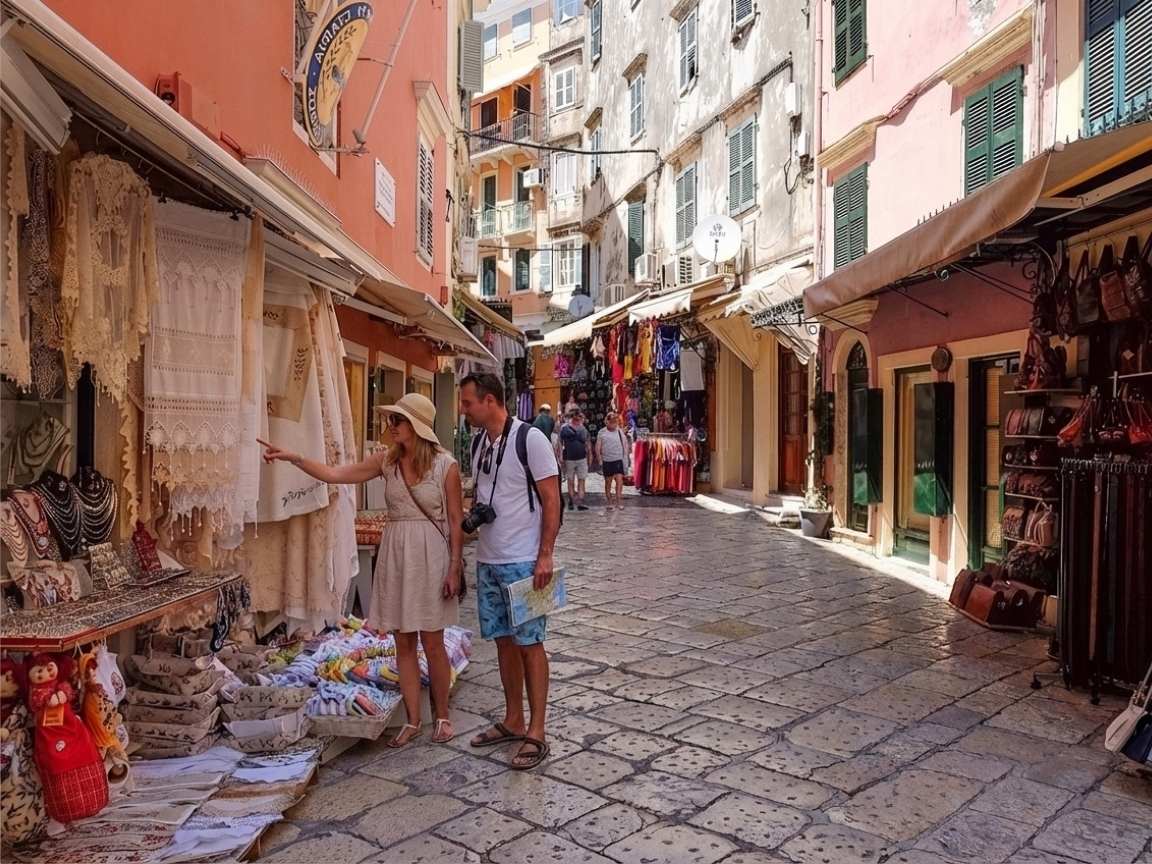
Corfu cruise port sits 3km from the UNESCO-listed Old Town. Most cruise lines run shuttles to the New Fortress area, which puts you at the edge of the Old Town’s Venetian lanes in under ten minutes. Alternatively the public bus is cheap and runs every 15 minutes, or it’s a walkable 20-30 minutes along the seafront if the weather is on your side.
The Old Town is the main event. St Spyridon Church and the Palace of St Michael and St George are both worth the time, and the narrow streets between them are genuinely atmospheric rather than purely touristic. Corfu has a softness to it that the Aegean islands don’t, a legacy of prolonged Venetian and then British rule that shows in the architecture.
Paleokastritsa, on the northwest coast, is around 25-30 minutes by taxi from the port and is Corfu’s most celebrated beach destination. The bus takes closer to 45 minutes but runs regularly. It’s achievable on a port day if you’re not trying to do the Old Town as well, but attempting both requires an early start and a tight schedule.
Gythion Cruise Ship Port Guide
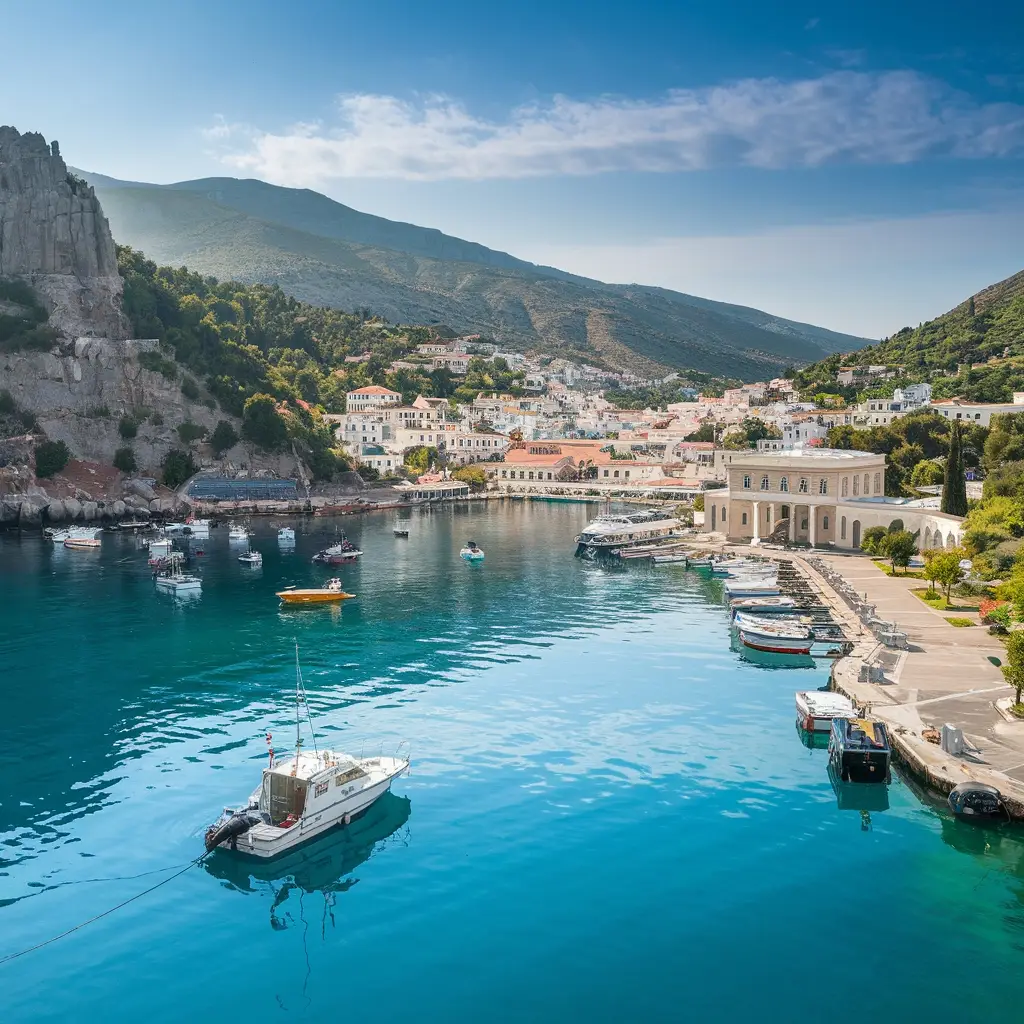
Gythion cruise port is a tender operation, ships anchor in the bay and small boats bring passengers to the waterfront. It’s one of the more relaxed arrivals in Greece, a genuine working fishing town rather than a port built around cruise tourism.
The waterfront promenade is lined with pastel neoclassical buildings and seafood tavernas, and it’s worth an hour of anyone’s time. Cranae Island, connected to the town by a short causeway, is where legend places Paris and Helen’s first night together before they sailed to Troy. The Historical and Ethnological Museum sits in the Tzanetakis Tower on the island and is a better use of time than it sounds.
The real draws are further out. Sparta is around 40km north, about 30-40 minutes by taxi, and while the modern city is underwhelming, Mystras, the abandoned Byzantine citadel 6km from Sparta, is one of the most extraordinary UNESCO sites in Greece. The Mani Peninsula begins south of Gythion, with Areopolis about 26km away, a landscape of stone tower houses and an atmosphere unlike anywhere else in the country. Neither Mystras nor Mani is a quick detour, so choose one and commit to it rather than attempting both on a single port day.
Kefalonia Cruise Ship Port Guide
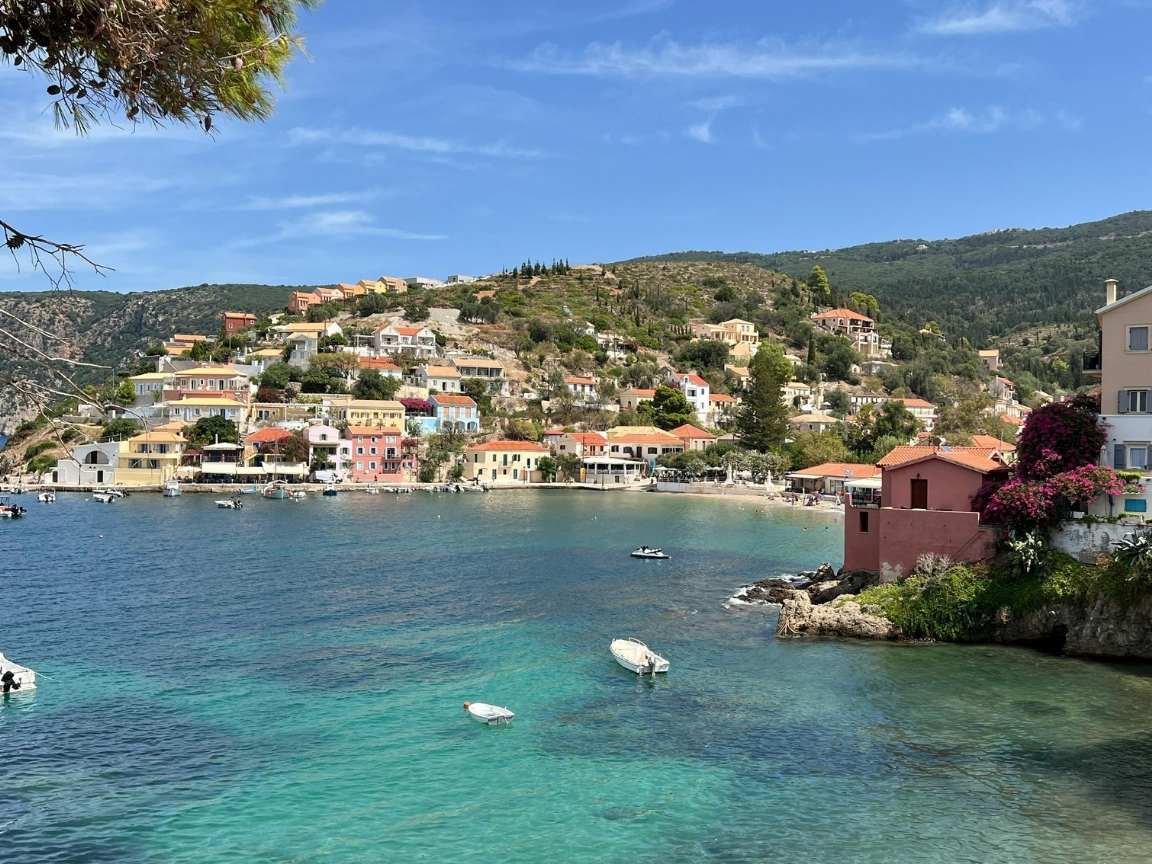
Kefalonia cruise port docks at Argostoli, the island’s capital, with the terminal a short walk from the waterfront and town centre. Before you head anywhere, check the harbour for loggerhead sea turtles — they genuinely frequent Argostoli’s waters, particularly in the mornings, and most passengers walk straight past one of the more unexpected wildlife encounters in the Greek islands.
Argostoli itself is pleasant but not the reason to be here. The real draws require transport. Melissani Cave, an underground lake where sunlight through the collapsed roof turns the water an extraordinary blue, is around 45 minutes away by taxi near the town of Sami. Myrtos Beach, one of the most photographed in Greece, is a similar distance north. The viewpoint above the beach is worth stopping at regardless of whether you descend to the shore. Fiskardo, the only village to survive the 1953 earthquake intact, is an hour’s drive north, a Venetian harbour town that operates at a different pace from the rest of the island. Trying to cover all three in a single port day is optimistic.
St George’s Castle, a short drive from Argostoli, gives panoramic views across the island without the travel time of the northern sights. The Robola Winery in the Omala Valley is around 25 minutes away and produces one of Greece’s more distinctive white wines, worth knowing about if the caves and beaches aren’t the priority.
Zakynthos Cruise Ship Port Guide
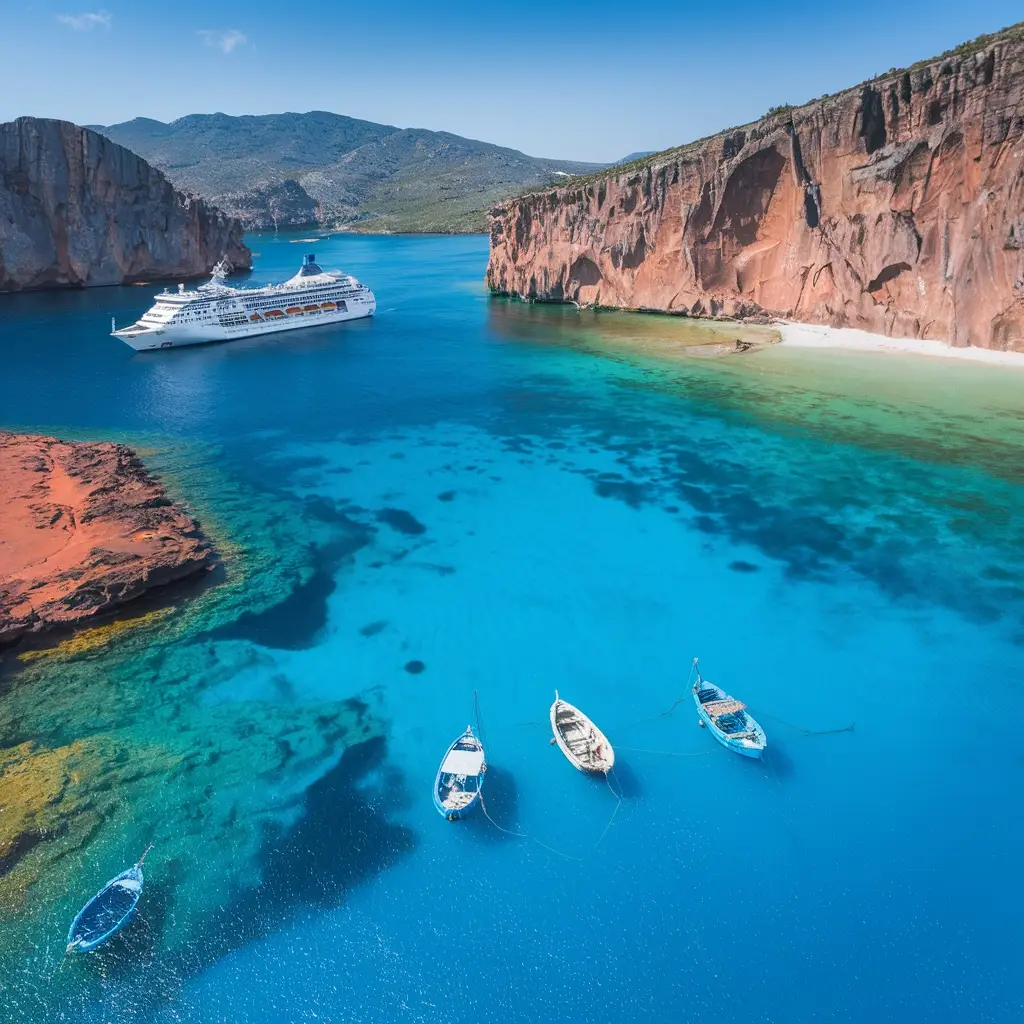
Zakynthos cruise port docks close to the capital, Zakynthos Town, with St Mark’s Square, St Dionysios Cathedral and the Strada Marina waterfront all within easy walking distance of the terminal. The town is a pleasant base but most passengers are here for the island’s bigger draws, which require transport.
Navagio Beach, the shipwreck cove on the northwest coast, is the island’s signature image. Since January 2024, landing on the beach has been prohibited due to rockfall risk, but boat tours still navigate close enough to see and photograph it from the water, and the clifftop viewpoint above remains accessible by road, around 45 minutes from the port by taxi. The view from above is, by most accounts, the better photograph anyway.
The Blue Caves on the northern coast are typically combined with Navagio on boat tours, and worth it — the way the light refracts through the cave openings onto the water is the kind of thing that justifies the trip. Loggerhead turtles nest on several of the island’s southern beaches, particularly Gerakas, and can be spotted by boat in Laganas Bay. Bochali Castle, a short taxi ride uphill from the port, gives panoramic views over Zakynthos Town and the bay without the time commitment of a full island excursion.
Volos Cruise Ship Port Guide
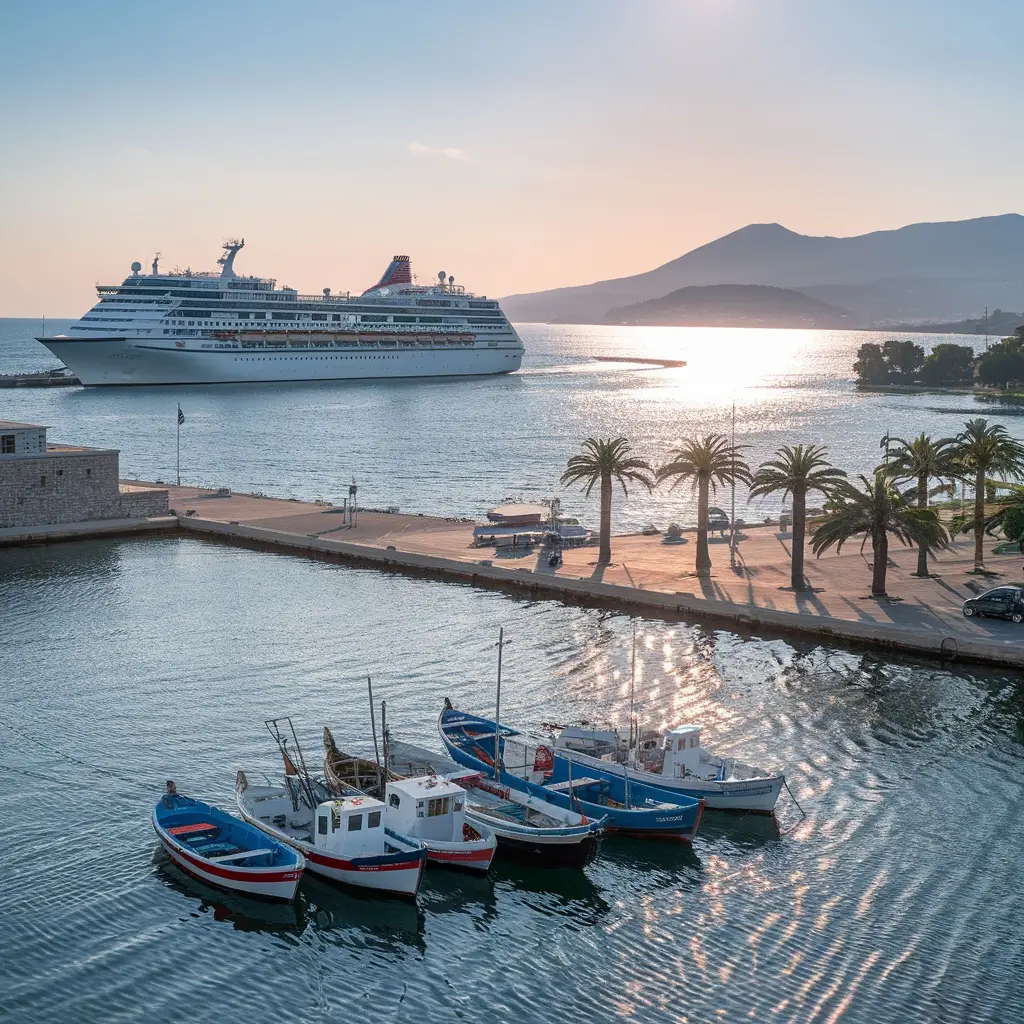
Volos cruise port sits on the Pagasetic Gulf with Mount Pelion rising behind the city, around 330km north of Athens. The terminal is close to the waterfront, and the city is immediately walkable, this is one of the more authentic stops on a Greek itinerary, a working port city that doesn’t particularly cater to cruise tourists, which is precisely its appeal.
The waterfront tsipouradika are worth knowing about. These are informal tavernas built around tsipouro, a strong grape spirit, served with small plates of mezedes, the tradition started with factory workers and has barely changed. It’s the right way to spend an hour in Volos before or after exploring further afield.
The Moutzouris, a narrow-gauge heritage steam train built in the 1890s under the supervision of Evaristo de Chirico (father of the surrealist painter), runs from Ano Lechonia, 12km from the port, up through the Pelion villages to Milies. The journey takes around 90 minutes each way and the train operates on weekends. If the timing aligns with your port day, it’s one of the more genuinely memorable experiences in Greece. If it doesn’t, the Pelion villages of Makrinitsa and Portaria are reachable by taxi and offer stone-built architecture and views across the gulf that justify the detour.
Volos itself was ancient Iolcos, the city from which Jason departed on the Argonaut expedition. The Archaeological Museum covers this and the wider Thessalian history well enough to be worth an hour.
Common Questions About Greek Cruise Ports
Can you get to a beach from every Greek cruise port? Not equally easily. Rhodes is the standout — Elli Beach is a 20-minute walk from the ship. Heraklion requires a short taxi ride to Ammoudara or Karteros. Mykonos has beaches but they require transport from Tourlos. Athens is the weakest option for a beach day; the Acropolis is a far better use of limited time there.
Which Greek cruise port gives you the most without needing transport? Rhodes, by a distance. You walk off the ship and into a UNESCO World Heritage medieval city within ten minutes. Everything worth seeing in Rhodes Town is on foot from the port gates. Zakynthos Town and Argostoli in Kefalonia are also compact and walkable. Santorini is the opposite — everything requires either a cable car or onward transport from Skala.
What’s the biggest mistake cruise passengers make at Santorini? Underestimating the logistics. Santorini is a 100% tender port with no pier, the cable car queues build fast when multiple ships are in, and the final tender back to the ship leaves well before departure. Passengers who don’t plan around these constraints often spend more of their day queuing than sightseeing.
Which ports are worth prioritising for history over beaches? Athens (Piraeus) for the Acropolis, Katakolon for ancient Olympia, Kavala for the UNESCO site at Philippi, and Patmos for the Cave of the Apocalypse and the Monastery of Saint John. Heraklion for Knossos and Mystras from Gythion are in the same category — sites that justify the port call on their own.
Is it worth booking a cruise line excursion or going independently in Greek ports? In most Greek ports, independent exploration is straightforward and significantly cheaper. Rhodes, Corfu, Zakynthos and Kefalonia are all easily managed without a tour. Santorini is the exception where a cruise line excursion routed via Athinios can save you the cable car queue. Olympia from Katakolon is another where the train or local taxi makes an independent visit perfectly viable.
Part of our full cruise port guides index.