
La Goulette isn’t the sort of cruise port that makes it onto Instagram highlight reels. It’s industrial, functional, and honest about what it is: your gateway to some of North Africa’s most layered history. If you’ve come expecting a postcard-pretty waterfront, you’ll be disappointed. If you’ve come for Carthage, Sidi Bou Said, and the chaos of Tunis Medina, you’re in exactly the right place.
La Goulette Cruise Port is the dedicated cruise terminal serving Tunis, situated about 12 kilometres from the city centre. Ships dock directly at one of three berths along a 657-metre quay, so no tendering. The terminal itself, officially called Goulette Village Harbour, is a purpose-built passenger facility with shops, cafés, and a restaurant arranged in a faux-souk layout. It does the job, though it’s more functional than charming.
This guide covers the terminal facilities at La Goulette, transport options into Tunis and nearby sites, what to do with a half day versus a full day, honest advice on shore excursions versus going independent, and the practical warnings cruise lines won’t mention in their glossy brochures.
Port and Terminal Practicalities
La Goulette is a working port first, cruise terminal second. Your ship will dock alongside the quay, which means a straightforward walk off the gangway into the terminal. No tenders, no waiting. The terminal building is compact, around 6,500 square metres, and designed to funnel you through immigration and into the shopping area before you’ve had time to think about where you’re actually going.
What You’ll Find at the Terminal
- Shops selling Tunisian ceramics, jewellery, leather goods, and the usual tourist tat. Prices are negotiable if you’re willing to engage, but don’t expect bargain-basement rates just because you’re at the port.
- A café and restaurant offering coffee, pastries, and light meals. Nothing memorable, but serviceable if you want a caffeine hit before heading out.
- ATMs dispensing Tunisian Dinars. If you’re planning to use taxis or shop in the Medina, withdraw cash here. Card acceptance outside tourist areas is patchy at best.
- Toilets, Wi-Fi (variable quality), and the usual passenger services.
The terminal tries hard to evoke a North African market vibe, but it’s too clean and too organised to be convincing. Think of it as a holding pen with air conditioning rather than a destination in itself.
Getting Into Town
Your realistic options are taxis, ship excursions, or private tours booked in advance. Public buses do run from La Goulette into Tunis, but coordinating timetables with your ship’s departure time is asking for trouble. Most cruise passengers stick with taxis or organised tours for good reason.
- Taxis: Available right outside the terminal. Agree the fare before you get in, as meters are often “broken” or ignored. Expect to pay more than local rates, but still considerably less than ship excursions. A round trip to Carthage and Sidi Bou Said with waiting time should be negotiable. Budget around what you’d pay for a decent lunch ashore, per person.
- Ship excursions: Convenient, guaranteed to get you back on time, and often with English-speaking guides. You’ll pay a premium for the certainty, and you’ll be moving in a pack.
- Pre-booked private tours: Middle ground between the two. Arrange through a reputable local operator before you arrive. You’ll get flexibility and personal attention without the ship’s markup.
- Walking: You can walk into La Goulette town itself in 10–15 minutes, but there’s limited reason to unless you’re after a proper local café experience away from the cruise crowds. For Carthage, Sidi Bou Said, or Tunis, walking isn’t realistic.
Journey Times (Roughly)
- Port to Carthage ruins: 15–20 minutes by car
- Port to Sidi Bou Said: 20–25 minutes
- Port to Tunis Medina: 20–30 minutes depending on traffic
- Port to Bardo Museum: 25–35 minutes
Traffic in Tunis is unpredictable. Allow buffer time, especially if you’re going independent and need to be back for all-aboard.
What to Do
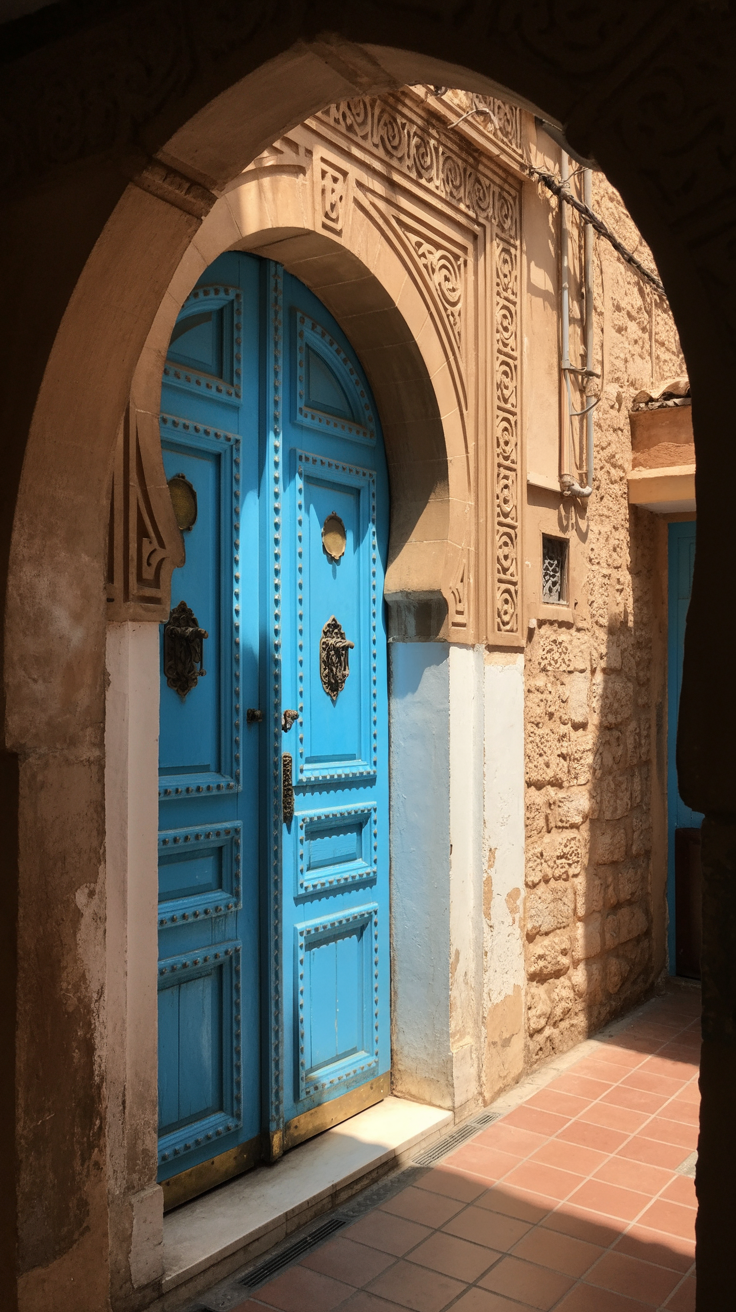
Your time in port will almost certainly revolve around some combination of ancient Carthage, photogenic Sidi Bou Said, and the UNESCO-listed Tunis Medina. How much you fit in depends on how long your ship is docked and how efficiently you move.
Half Day (Four to Five Hours Ashore)
If your ship is only in port for a short call, you need to be selective. Trying to do everything will mean you do nothing properly.
- Carthage and Sidi Bou Said: The classic pairing. Spend an hour or so at the Antonine Baths and the Byrsa Hill archaeological site (the two most accessible Carthage ruins), then head to Sidi Bou Said for a wander through the blue-and-white streets and a stop at Café des Nattes or Café Sidi Chabaane for mint tea with a view. This is manageable in half a day if you’re efficient.
- Tunis Medina only: If ancient ruins don’t excite you, skip Carthage and head straight for the Medina. Give yourself at least two hours to wander the souks, visit the Zitouna Mosque (exterior only for non-Muslims), and take in the atmosphere. It’s chaotic, it’s loud, and it’s brilliant if you’re comfortable navigating crowded, maze-like streets.
Full Day (Eight Hours or More)
A full day lets you combine all three major attractions without feeling like you’re speed-running through North African history.
- Start at Carthage. The site is sprawling and split across multiple locations. The Antonine Baths are the most visually impressive, but the Byrsa Hill site has better context and a small museum. If you’re keen, add the Tophet or the Roman villas, though diminishing returns set in after the first two sites.
- Move to Sidi Bou Said for lunch. The village is tiny, but the setting is lovely and the cafés know how to make the most of it. It’s touristy, but unapologetically so. Wander, take photos, drink mint tea, repeat.
- Finish at the Tunis Medina or the Bardo Museum. The Medina is better if you like markets and street life. The Bardo is better if you like mosaics and want to see some of the finest Roman and Byzantine collections outside Italy. You won’t have time for both unless you’re very disciplined with your schedule.
If You’ve Been Before
Returning to La Goulette? Consider skipping the big three and trying something less obvious.
- La Marsa: A quieter coastal suburb just beyond Sidi Bou Said, with a more local feel and fewer tour groups.
- Dar Ben Abdallah Museum: A beautifully restored 18th-century palace in the Medina, showcasing traditional Tunisian life. Far fewer visitors than the main Medina sights.
- La Goulette itself: The port town has a faded charm if you’re willing to look for it. The old Spanish fort, local fish restaurants, and genuinely local cafés offer a different perspective.
Shore Excursions vs Independent
The honest truth is that Tunisia works reasonably well for independent exploration if you’re comfortable negotiating with taxi drivers and managing your own time. It also works well as a ship excursion if you’d rather not deal with logistics.
| Factor | Ship Excursion | Independent (Taxi or Private Tour) |
|---|---|---|
| Cost | High. Expect to pay significantly more per person than a private taxi. | Low to moderate. Taxis are cheap by Western European standards, even with the tourist markup. |
| Timing | Guaranteed return. The ship will wait if the excursion is delayed (extremely rare). | You’re on your own. Miss all-aboard and you’re arranging your own transport to the next port. |
| Flexibility | None. You see what the itinerary says, spend the time allocated, move when told. | Total. Stay longer at Carthage, skip Sidi Bou Said, add an extra stop. Your call. |
| Language | Guide speaks English. No communication issues. | Variable. Many taxi drivers speak enough French or English to get by. Some don’t. |
| Crowds | You’re part of the crowd. Buses full of fellow passengers, all hitting the same sites at the same time. | You’ll still encounter tour groups at major sites, but you can time your visit to avoid the worst of it. |
If this is your first visit and you’re not confident negotiating or managing transport in an unfamiliar country, a ship excursion makes sense. If you’ve travelled independently in North Africa or the broader Mediterranean region before, you’ll find Tunisia straightforward enough to tackle on your own. Somewhere in between? Pre-book a private guide or driver through a well-reviewed local operator and split the difference.
Practical Warnings
La Goulette and Tunis aren’t difficult, but there are a few things worth knowing before you step off the ship.
- Currency hassles: Tunisian Dinars aren’t widely available outside Tunisia, and you can’t take large amounts in or out of the country legally. Withdraw what you need at the port or in Tunis, spend it, and don’t worry about having leftovers to convert back. Exchange rates at the port are reasonable enough.
- Taxi negotiations: Agree the fare before you get in. Write it down if there’s any ambiguity. Drivers at the cruise port know you’re on a clock and will price accordingly. It’s not extortionate, but it’s not local rates either.
- Medina navigation: The Tunis Medina is a proper medieval maze. Google Maps works, but not perfectly. If you’re going in without a guide, download an offline map and pay attention to landmarks. Getting lost is part of the experience, but not if you’re trying to make it back to the ship on time.
- Site opening hours: Carthage and the Bardo Museum have set opening times. The Medina doesn’t, but shops and souks are liveliest mid-morning through mid-afternoon. Fridays can be quieter due to prayer times.
- Dress code: Tunisia is relatively relaxed by regional standards, but you’re still in a Muslim-majority country. Shoulders and knees covered is a good rule for the Medina and mosques. The coast and tourist areas are more liberal, but modest dress will make your life easier.
- Street vendors and touts: You’ll be approached. Persistently. In Sidi Bou Said especially, guides and vendors can be relentless. A polite but firm “no thank you” and keep walking works better than engaging.
- Security: Tunisia has had security concerns in the past, and cruise lines will brief you if there are active issues. As of recent visits, Tunis and the tourist sites feel safe with visible police and military presence. Stay aware, follow your ship’s advice, and you’ll be fine.
Where to Stay Before Your Cruise
If you’re joining or leaving your cruise in Tunis and need a hotel, you’ve got options in three main areas: the Medina for atmosphere, La Marsa or Gammarth for beach proximity, or the city centre for convenience.
- Medina area: Boutique riads and guesthouses offer character and easy access to the souks. Can be noisy and chaotic, but that’s part of the appeal if you’re into it.
- La Marsa or Gammarth: Coastal suburbs north of La Goulette with resort-style hotels, quieter streets, and sea views. Further from the Medina but closer to the port if you’re embarking early.
- Central Tunis: International chain hotels near Avenue Habib Bourguiba. Practical, comfortable, and dull. Fine if you’re only staying one night and need easy transport links.
The drive from central Tunis or the northern suburbs to the cruise port is straightforward, and taxis are cheap. Book something near where you actually want to spend your time, not just the closest option to the port.
Where to Eat Close to the Port
The terminal café and restaurant are fine for coffee or a snack, but nothing you’ll remember. If you want proper food, you need to leave the port area.
- La Goulette town: A 10-minute walk from the port gets you to local fish restaurants along the waterfront. Poisson et Autres is a local favourite for grilled fish, calamari, and Tunisian salads. It’s unpretentious, cheap, and exactly the sort of place cruise passengers miss because they’re bussed straight to the big sites.
- Sidi Bou Said: Café Sidi Chabaane and Café des Nattes are the two most famous spots for mint tea and views. The food is secondary to the setting, but the mint tea with pine nuts is excellent and the terraces are worth the markup.
- Tunis Medina: Dozens of small restaurants and street food stalls. Brik (fried pastry with egg and tuna) is the local speciality. Dar El Jeld is upmarket and touristy but does refined Tunisian cuisine in a beautiful old mansion if you want something more formal.
Weather
Tunis sits on the North African coast, so summers are hot and winters are mild. Cruise calls are most common in spring and autumn when the weather is warm but not oppressive.
- Spring (March to May): Warm, dry, and ideal for walking around ruins and old towns. Daytime temperatures in the low-to-mid 20s Celsius. This is peak cruise season for good reason.
- Summer (June to August): Hot. Temperatures in the 30s are standard, and the humidity along the coast makes it feel worse. If your ship calls in high summer, plan indoor time at the Bardo Museum or stick to shaded Medina streets during the hottest part of the day.
- Autumn (September to November): Similar to spring. Comfortable temperatures, occasional rain but nothing prolonged. Another excellent time to visit.
- Winter (December to February): Mild by northern European standards, but cooler and wetter than you might expect for North Africa. Daytime temperatures in the mid-teens. Fewer tourists, but some sites can feel bleak in grey drizzle.
Pack sunscreen, a hat, and comfortable walking shoes designed for all-day wear whatever the season. Carthage involves a lot of exposed walking, and the Medina’s cobbled streets aren’t kind to inappropriate footwear.
Common Questions
Do I need a visa to visit Tunisia on a cruise?
UK, EU, US, Canadian, and Australian passport holders don’t need a visa for stays up to 90 days. You’ll go through immigration at the port, but it’s usually quick.
Is La Goulette walkable, or do I need transport?
The port town itself is walkable from the terminal, but all the major tourist sites require a taxi, tour bus, or pre-arranged transport. Don’t plan on walking to Carthage or Tunis.
Can I use euros in Tunisia, or do I need dinars?
Some tourist-facing businesses will accept euros, but the exchange rate will be poor and you’ll get change in dinars. Withdraw dinars at the port ATM and use local currency for taxis, food, and shopping.
How long should I spend at Carthage?
One to two hours is enough for the main sites (Antonine Baths and Byrsa Hill). Archaeology enthusiasts might want three hours to see multiple locations, but casual visitors will start to glaze over after the first two.
Is Sidi Bou Said worth visiting, or is it just a tourist trap?
It’s absolutely a tourist trap, but a lovely one. The blue-and-white buildings are genuinely picturesque, the views are excellent, and the mint tea is good. Go with appropriate expectations and you’ll enjoy it.
Can I visit the Tunis Medina independently, or do I need a guide?
You can visit independently. It’s chaotic and you’ll probably get lost briefly, but it’s navigable with a map and basic awareness. A guide adds context and can negotiate with shopkeepers on your behalf if you’re buying.
What’s the best way to get back to the ship on time?
If you’re on a ship excursion, they’ll handle it. If you’re independent, agree a pickup time and location with your taxi driver in advance, or arrange for them to wait. Build in extra buffer time for traffic.
Are there any other Tunisia cruise ports I should know about?
Yes, Sousse is another cruise port in Tunisia further south along the coast. It’s smaller and less historically significant than Tunis, but worth a visit if your itinerary includes it.
Why Trust About2Cruise
- I’m Patrica, and I’ve researched this port by cross-checking terminal facilities, transport options, and site opening patterns against current cruise passenger reports.
- This guide is updated when terminal facilities change, new transport options appear, or reader feedback suggests the practical advice no longer matches conditions on the ground.
- We don’t take payment from tour operators, cruise lines, or local businesses. If something’s not worth your time, we’ll tell you.
For more about how we research and write these guides, visit our About Us page.
La Goulette won’t win any beauty contests, but it does exactly what it needs to do: get you efficiently to some of the most historically layered sites in the Mediterranean. If you’re visiting Western Mediterranean cruise ports on a longer Mediterranean cruise itinerary, Tunis offers something genuinely different from the usual European stops. It’s less polished, more chaotic, and considerably more interesting than another afternoon in a picture-perfect Italian hill town. Just don’t expect it to be easy, and you’ll have a far better time than those who arrive expecting Santorini with minarets. If your cruise also calls at ports in Morocco or Malta, you’ll find Tunisia sits somewhere between the two in terms of tourist infrastructure and cultural intensity.