
Venice’s cruise terminal looks orderly from the outside, but step inside during peak hours and you’ll find yourself in a proper scrum. The Marittima area operates multiple terminals – 103, 107, 108, 117, 123 – and while each has dedicated check-in desks, the sheer volume of passengers creates bottlenecks that can turn a simple check-in into a two-hour affair if you hit it wrong.
The queues form in layers: security screening first, then document verification, then the actual cruise line check-in desks, and finally passport control before you even reach the gangway. Unlike airports where the process flows steadily, cruise terminals bunch everyone together in waves, creating these massive surges that the staff struggle to process quickly. Knowing how the system actually works – and when to show up – makes the difference between breezing through in 30 minutes or standing around wondering why you bothered arriving early.
Want to know more about getting to the terminal and what’s available once you’re there? Check out our complete Venice cruise port guide for transport options and terminal layouts.
The Actual Check-In Process (Step by Step)
Here’s what really happens when you arrive at Venice’s cruise terminal, in the order you’ll encounter it:
- Terminal identification and drop-off: Your taxi or bus drops you at whichever terminal your ship is using. The terminals aren’t adjacent – some involve a short walk or even a bus transfer between where you’re dropped and where you actually check in. If you’re driving, parking areas sit near the terminals but you’ll need to haul luggage to the terminal entrance yourself or use a porter service.
- Luggage drop: Just inside or sometimes outside the terminal entrance, you’ll find luggage collection points where porters take your tagged bags. This bit usually moves quickly, but during the 11am-1pm rush you might queue here too. Keep your carry-on with valuables and anything you need for boarding.
- First security screening: Standard airport-style X-ray for bags and metal detector for you. This is often where the first major queue builds because they’re funnelling thousands of passengers through just a few machines.
- Document verification desk: Staff check your passport, printed boarding pass, and any required health documentation. If you haven’t done online check-in or don’t have printed documents, you’ll be directed to kiosks or help desks, which adds significant time.
- Cruise line check-in desks: The actual check-in where you get your cruise card and finalise any onboard account details. The number of desks varies by ship size and passenger volume. This is where priority boarding really shows its value – separate, shorter queues.
- Final passport control and security: Another document check and sometimes another bag scan before you’re cleared to proceed to the ship.
- Boarding the ship: Depending on your terminal and where the ship is berthed, you might walk directly to the gangway, take a short bus ride, or even wait in another holding area until your boarding group is called.
The whole process takes anywhere from 30 minutes if you time it perfectly with all documents ready, to 2+ hours during peak arrival times or if you need to sort out paperwork.
Which Terminal You’ll Use and Why It Matters
Venice Terminal Passeggeri operates multiple terminals around the Marittima basin, and they’re not interchangeable. Your cruise documents will specify which one – usually Terminal 103, 107/108, 117, or 123. Each has slightly different facilities and layouts, though they all follow the same basic check-in structure.
Terminal 103 and 107/108 handle most of the large ships and tend to be the busiest. They have more check-in desks but also process more passengers simultaneously. The smaller terminals like 117 sometimes feel less chaotic simply because fewer ships use them. Check Venice cruise terminal facilities for what’s available at each location – some have better cafés or seating areas than others if you arrive very early.
The confusion happens when passengers assume all terminals connect internally or that you can just walk between them. You can’t. If you’re dropped at the wrong terminal, you’re looking at either a trek along the waterfront or waiting for a shuttle. Double-check your cruise line’s terminal assignment before you leave your hotel.
Timing Your Arrival (The Honest Truth)
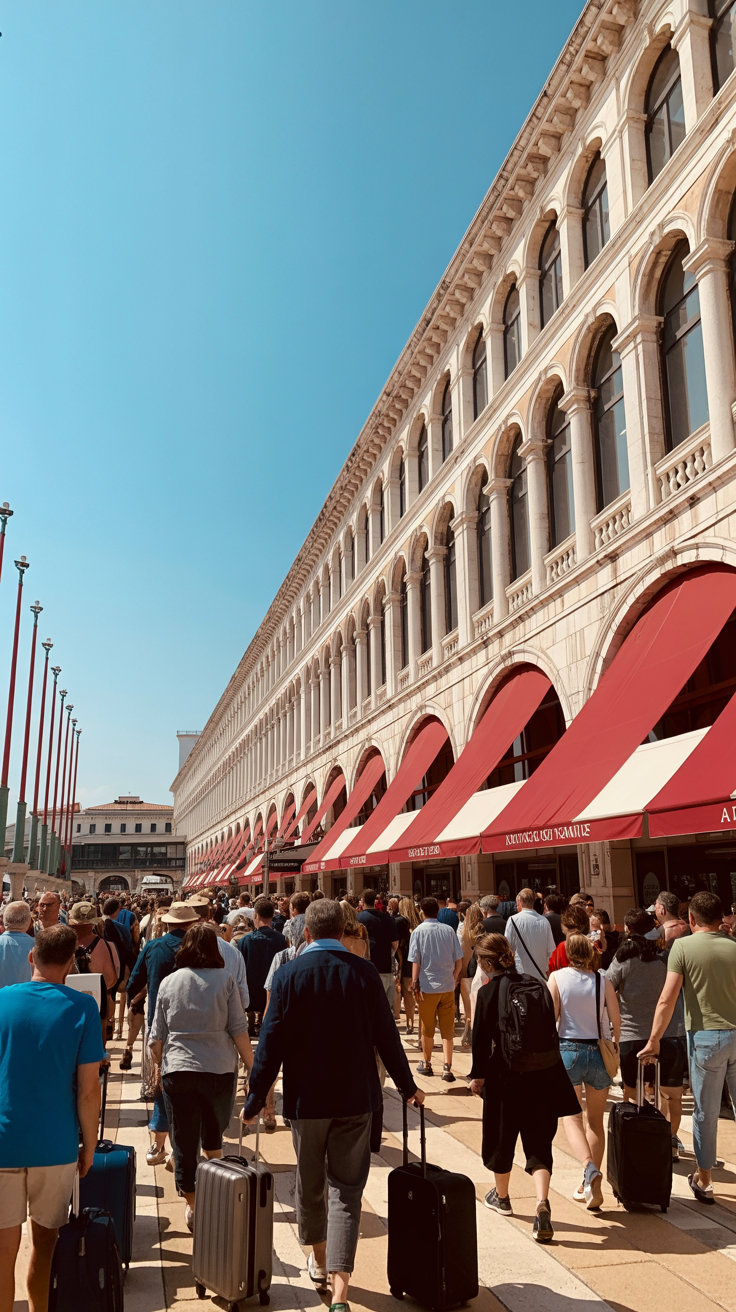
Cruise lines typically recommend arriving 2-3 hours before departure, which sounds sensible until you realise that everyone reads the same advice and shows up in the same window. Here’s what actually happens hour by hour:
If you’re visiting Venice the night before your cruise and staying in the city centre, you have the flexibility to time this well. The People Mover connects Piazzale Roma to the Marittima terminals, and water taxis or Alilaguna boats can drop you close to the port area. Arriving after lunch but before 2:30pm gives you the best balance of low crowds and safe timing.
| Time | Crowd Level | What to Expect |
|---|---|---|
| 9:00-10:30am | Moderate | Early arrivals and anyone doing online check-in. Lines exist but move steadily. Good option if you’re organised. |
| 10:30am-1:00pm | Chaos | Peak arrival time. Every queue is long. Security, check-in desks, even the loos. This is when the 90-minute waits happen. |
| 1:00-2:30pm | Light | The sweet spot. Most passengers are already aboard. You’ll breeze through with minimal queuing. |
| 2:30pm onwards | Very light but risky | Hardly any queues but you’re cutting it fine if your ship sails at 4pm or 5pm. Only for confident cruisers. |
Time-Saving Tricks That Actually Work
Some advice you’ll read online is generic rubbish. These tactics genuinely speed things up based on what works at Venice specifically:
- Complete online check-in fully: Don’t just start it – finish every screen, print your boarding pass and luggage tags at home, and bring the lot in a folder. The check-in desk staff can process you in under a minute if everything’s ready. Skip this and you’ll spend 20 minutes at a kiosk that half the terminal is also trying to use.
- Organise a document folder before you leave your accommodation: Passport, boarding pass, any health forms, travel insurance details, and a pen. You’ll pull this out multiple times. Fumbling through bags at each checkpoint annoys everyone behind you and slows your progress. A travel jewellery organiser works brilliantly for keeping small documents and cards secure and accessible.
- Use priority boarding if you have it: Suite passengers, loyalty programme members, or anyone who paid for priority access should absolutely use it. The separate queues at Venice genuinely save 30-60 minutes during peak times.
- Travel light to the terminal: One carry-on is ideal. Navigating the terminal with multiple bags while queuing is miserable. If you’ve got several cases, use the luggage drop immediately and keep only essentials. An anti-theft backpack keeps your valuables secure during the crowded terminal experience.
- Avoid terminal cafés during peak hours: If you need coffee or a snack, grab it before you enter the terminal. The small cafés inside get overwhelmed, and you don’t want to lose your place in a queue or miss boarding announcements. Pack a collapsible water bottle to stay hydrated during the wait.
- Screenshot or photograph important documents: Your boarding pass barcode, passport photo page, and booking confirmation. If you drop something or printing smudges, you’ve got backup that staff can often scan from your phone. Keep your phone charged with a portable charger with built-in cables so you don’t lose access to digital documents.
If your cruise starts in Rome’s Civitavecchia port instead and you’re connecting to Venice afterwards, the check-in process at Civitavecchia is generally smoother and less crowded. Many cruisers doing Mediterranean cruises find the Italian mainland ports easier to navigate than Venice’s more compact, tourist-heavy terminals.
Getting to the Terminal Without the Stress
How you arrive at the Marittima terminals affects how frazzled you’ll be before you even start queuing. Your main options:
- Water taxi from central Venice: Expensive (€100-150 depending on pickup point) but drops you directly at your terminal. Worth it if you’ve got a lot of luggage or mobility concerns. Book the day before and confirm your terminal number.
- Alilaguna water bus: The orange line connects various Venice stops to the cruise terminal area. Much cheaper (around €15) but slower and can be crowded with luggage. Fine if you’re travelling light with compression packing cubes keeping your belongings organised.
- People Mover from Piazzale Roma: An automated cable car system that runs from Piazzale Roma (where buses and taxis from the mainland arrive) to Marittima. Quick and cheap but involves stairs and isn’t great with heavy bags.
- Private transfer or taxi: If you’re coming from Marco Polo Airport or mainland accommodation, a pre-booked transfer drops you at the correct terminal entrance. Reduces stress considerably compared to figuring out public transport with luggage.
- Driving and parking: Parking near the terminals exists but fills up during cruise season. If you’re driving, book a space in advance and allow extra time to park, unload, and walk to check-in.
The People Mover and Alilaguna are fine for experienced travellers with modest luggage, but if you’re a family of four with multiple cases, pay for the water taxi or private transfer. The time and aggravation you save is worth the cost. A digital luggage scale helps you avoid overweight bag fees before you even leave your hotel.
What to Do If It All Goes Wrong
Even with planning, Venice’s cruise terminal throws curveballs. Here’s what to do when common problems hit:
- You’ve joined the wrong queue: Ask staff immediately. Don’t wait 20 minutes hoping you’re in the right place. The terminals have representatives walking around – flag them down.
- Your documents aren’t printing correctly: Head to the cruise line’s customer service desk, not the general information desk. They can reprint boarding passes and luggage tags, though you’ll queue for this service.
- You’re running late: Call your cruise line’s port agent (number should be in your cruise documents) and inform them. They can sometimes hold boarding or arrange expedited check-in, but don’t abuse this – only use it for genuine delays like traffic accidents or missed connections.
- Your luggage hasn’t reached your cabin: Very common at Venice due to the luggage volume. Give it until sail-away time before reporting it missing. The porters are usually just running behind, not losing bags. Keep essentials like medications and a change of clothes in your hardside carry-on luggage.
- You need accessible services: The terminals have assistance available but you need to request it in advance through your cruise line’s special needs team. Showing up on the day and hoping for a wheelchair or mobility support often doesn’t work well here.
Customs and What They Actually Check
Entering or leaving Venice by cruise ship involves customs and immigration checks, though the process varies depending on your itinerary. For EU passengers on cruises within the EU, it’s usually straightforward – passport checks but minimal customs scrutiny. Non-EU passengers need to clear full immigration, which adds time but is generally efficient at Venice.
On disembarkation, if you’ve been shopping enthusiastically around the Mediterranean and are returning to Venice, customs officers can and do spot-check bags. The duty-free limits apply, and expensive purchases like jewellery or electronics sometimes trigger questions. Keep receipts accessible if you’ve bought anything significant. The Venice cruise port customs information page covers the specific allowances and declaration requirements.
Most passengers walk straight through without any checks, but trying to rush through looking nervous is a good way to get stopped. Act normally, have documents ready if asked, and don’t overthink it.
Comparing Venice to Other Mediterranean Ports
If you’ve cruised from Barcelona’s cruise port, you’ll find Venice significantly more cramped and chaotic. Barcelona’s terminals are purpose-built and spread out, while Venice’s Marittima area is hemmed in by geography and urban constraints. The queues at Venice bunch up more, and the facilities feel older and less spacious.
That said, Venice offers something Barcelona doesn’t – you can actually see the city from the ship as you depart, gliding past St Mark’s Basin and out into the Adriatic. The check-in hassle is partly offset by the unique embarkation experience, though that’s cold comfort when you’re standing in a queue for 90 minutes.
Extend Your Stay in Venice
Given the potential for check-in queues and the fact that Venice is one of Europe’s most stunning cities, many cruisers add a night or two before their sailing. Accommodation in Venice ranges from budget B&Bs to luxury canal-view hotels, and staying over lets you arrive at the terminal during the optimal low-crowd window without rushing.
Hotels in Venice book up quickly during cruise season (April-October), so sort this well in advance. Areas like Cannaregio or Dorsoduro offer more authentic Venetian atmosphere than the heavily touristed San Marco zone, and they’re still easily connected to the Marittima terminals by water bus or water taxi. If Venice’s accommodation prices make you wince, Mestre on the mainland offers cheaper options with good transport links to both the cruise port and Venice’s historic centre.
Spending an extra day or two also means you can explore Venice properly rather than just ticking off St Mark’s Square and the Rialto Bridge in a mad dash before boarding. The city rewards slower exploration, and you’ll board your cruise feeling relaxed rather than frazzled from a rushed arrival. Don’t forget to bring a European power adapter for charging your devices at Italian hotels.
What to Pack for Your Venice Cruise
Venice’s weather can be unpredictable, especially during spring and autumn cruise season. April through June brings pleasant temperatures but frequent rain showers, while September and October offer comfortable sailing weather with occasional storms. Having the right gear makes terminal queuing and shore excursions far more comfortable.
- For women, a packable lightweight puffer jacket layers easily and compresses into minimal luggage space. If you’re cruising during the wetter months, a women’s rain jacket keeps you dry during Venice’s sudden downpours without overheating indoors. Men should consider a men’s lightweight puffer for cool morning departures and a men’s rain jacket for weather protection.
- Organisation matters when you’re dealing with multiple ports and limited cabin storage. Use compression packing cubes to maximise suitcase space and keep outfits organised by day or activity. A hanging toiletry bag saves counter space in compact cruise bathrooms, and shoe bags for travel protect clean clothes from dirty footwear.
- Walking Venice’s cobblestones and exploring Mediterranean ports requires comfortable footwear. Proper walking shoes for men and walking shoes for women prevent fatigue during long shore excursion days. Add blister prevention strips to your first aid kit – they’re lifesavers when breaking in new shoes or walking more than expected.
- For shore excursions and port days, an anti-theft messenger bag keeps valuables secure in crowded tourist areas. Store electronics safely with a cable organiser for travel so chargers don’t tangle in your luggage. Long flights or bus transfers to the port are more comfortable with compression socks for travel and a memory foam travel pillow.
- If your cruise includes beach stops, pack a waterproof dry bag for keeping phones and valuables safe near water. A waterproof phone pouch lets you take photos worry-free, while reef-safe sunscreen protects both your skin and marine environments. Men’s and women’s rash guards provide sun protection during snorkelling or beach days.
- For cabin comfort, bring a portable door lock for added security and peace of mind. A travel steamer freshens up formal night outfits without needing ship services, and a quick-dry beach towel supplements the ship’s pool towels for shore excursions.
Personal Experience
We showed up at Venice’s cruise terminal thinking we’d breeze through check-in like at an airport, but wow, were we unprepared for the reality. The main terminal building gets absolutely packed, especially between 11am and 1pm when it seems like everyone decides to arrive at once. We spent nearly 90 minutes in various queues – first for document verification, then security, then another line at the actual cruise line desk. The signage isn’t great either, so we watched plenty of confused passengers (ourselves included) accidentally join the wrong line and have to start over.
Here’s what actually helped us on our second cruise from Venice: arrive either before 10:30am or after 2pm to dodge the main crowds. Print everything at home – boarding passes, luggage tags, the works – because the kiosks inside are always swamped. Keep your passport, boarding documents, and health forms in one folder that’s easy to grab since you’ll need them multiple times. Also, if your cruise line offers priority boarding for any reason, take it. We used it on our return trip and cut our wait time down to about 30 minutes total. The process itself isn’t complicated, there are just too many people funneling through limited checkpoints, so timing really is everything.
Common Questions & FAQ
How early should I really arrive at Venice cruise terminal?
The official recommendation is 2-3 hours before sailing, but the smart move is arriving either before 10:30am or between 1pm-2:30pm to avoid the midday crush. If you’ve completed online check-in and have all documents printed, you can comfortably arrive 90 minutes before departure during off-peak times. Earlier is safer if you’re anxious or it’s your first cruise, but you’ll spend more time waiting around the terminal.
Can I leave my luggage at Venice cruise terminal before check-in opens?
Some terminals have left-luggage facilities, but they’re not consistently available across all terminals or guaranteed on every cruise day. Your best option is contacting your specific cruise line or checking the Venezia Terminal Passeggeri website for your sailing date. If you need to store bags before check-in, look at luggage storage services in Venice’s city centre near Piazzale Roma instead.
What happens if I miss my boarding time at Venice?
Cruise lines publish a final boarding time (usually 60-90 minutes before sailing) and they mean it. Miss that and the ship can legally leave without you, though most will try to contact late passengers if they know you’re en route. If you’re genuinely delayed by circumstances beyond your control, call the cruise line’s port agent immediately – the number is in your cruise documents. They may hold boarding briefly or arrange for you to rejoin at the next port, but you’ll pay for that transport yourself.
Do I need to print boarding documents or can I use my phone?
Print them. Seriously. While some cruise lines accept mobile boarding passes in theory, Venice’s terminals don’t always have reliable connectivity or staff equipped with scanners that read phone screens properly. You’ll use these documents at multiple checkpoints, and having physical copies speeds everything up. Print your boarding pass, luggage tags, and any health declarations at your hotel or accommodation before you leave for the terminal.
Is priority boarding worth paying for at Venice?
If your cruise line offers paid priority boarding and you’re sailing during peak season (May-September), yes, it’s worth it. The separate priority queues can save you 45-60 minutes during the busiest arrival windows. If you already have priority through a suite booking or loyalty status, absolutely use it. For off-season sailings or if you’re confident about arriving during quiet times (early morning or early afternoon), you can probably skip paying extra.
Can I walk between Venice cruise terminals if I’m dropped at the wrong one?
Technically yes, but it’s not pleasant with luggage. The terminals aren’t adjacent and you’re looking at a 10-15 minute walk along the waterfront, longer if you’re hauling multiple bags or have mobility issues. Shuttles sometimes run between terminals but they’re not frequent or reliable. Check your terminal assignment carefully before you set off from your hotel, and confirm it with your taxi or transfer driver.
What if my luggage doesn’t arrive at my cabin after boarding?
This happens frequently at Venice because of the sheer luggage volume the porters are handling. Don’t panic immediately – wait until after sail-away (when the ship leaves port) before reporting it missing. The luggage delivery process can take several hours, especially on large ships. If your bags still haven’t appeared by sail-away, visit guest services with your luggage tag receipts and they’ll track them down. They rarely go missing entirely, they’re usually just sitting in a corridor waiting to be delivered.
Are there cash machines and currency exchange at Venice cruise terminal?
Limited facilities exist but they’re not comprehensive. A few ATMs are scattered around the larger terminals like 103 and 107, but they often run out of cash on busy cruise days or charge hefty fees. Currency exchange is minimal. Sort out cash and euros before you arrive at the terminal – withdraw money in Venice’s city centre or at the airport where you’ll find better rates and more reliable machines.