
If you’re expecting Venice’s cruise terminals to match the city’s romantic charm, prepare for a reality check. These facilities are functional at best, and the main terminal at Marghera sits in an industrial port zone that feels about as Venetian as a motorway service station. The older terminals closer to the city centre offer marginally more character, but even those won’t win any design awards. Here’s what you’ll actually find when you arrive, and how to make the best of it.
The truth is, Venice’s cruise infrastructure has always been a bit of an afterthought. The city wasn’t built for massive modern ships, and the terminals reflect that awkward compromise between preserving Venice’s delicate lagoon and accommodating the cruise industry. You’re not going to find marble floors or panoramic views of St Mark’s Square – think more along the lines of “place to process passengers efficiently and move them along.”
Want to know more about getting to and from these terminals? Check out our complete Venice cruise port guide for transport options and timing tips.
Marghera Terminal: The Main Event
Marghera is where most modern cruise ships now dock, and it’s about as industrial as it sounds. Located on the mainland roughly 20 minutes from Venice proper, this terminal handles the largest vessels and the bulk of passenger traffic. The facilities are basic but functional.
What you’ll actually find:
- One small café selling sandwiches, coffee, and snacks at prices you’d expect from a captive audience
- Basic toilet facilities that get overwhelmed when multiple ships are in port
- Limited seating in a waiting area that fills up quickly
- Sporadic or non-existent WiFi – don’t count on it working when you need it
- A few vending machines as backup
- Porter services and baggage handling areas
- Currency exchange with predictably poor rates
The building itself looks like a temporary structure that became permanent. There’s no architectural flourish, no nod to Venetian style. It’s a large shed with air conditioning and fluorescent lighting. If you’re comparing it to terminals at Barcelona or even Naples, you’ll be disappointed by the lack of polish.
Insider tips for Marghera:
- Bring your own snacks and water. The café is expensive and often has queues
- Download anything you need beforehand – maps, entertainment, boarding documents – because the WiFi is unreliable
- Arrive prepared for limited seating. If you’re early, you might be standing or sitting on your luggage
- The toilets are basic and can run out of supplies during peak times. Use them before you leave your hotel if possible
- There’s minimal climate control in the waiting areas, so dress in layers
- Don’t expect duty-free shopping or boutiques. There’s essentially none
The terminal’s main advantage is its efficiency. Check-in usually moves quickly because there isn’t much else to do or get distracted by. For detailed information about the check-in process and what documents you need, our dedicated guide covers everything you need to know.
Stazione Marittima: The “Old” Terminals
Before the big ships moved to Marghera, Stazione Marittima near the city centre was Venice’s main cruise hub. Some smaller ships still use these terminals, and they’re marginally better than Marghera simply because of their location.
The terminals here include:
- Terminal 103 (San Basilio)
- Terminal 107
- Terminal 108
- Terminal 117
- Terminal 123
These are separate buildings along the waterfront, each serving different ships. The facilities vary slightly between them, but they all share similar characteristics: they’re functional port buildings with limited amenities.
What’s available (generally across all terminals):
- Small cafés or snack bars – better than Marghera but still limited
- Basic toilets that are usually cleaner than Marghera’s
- Some waiting areas with seating
- Porter and baggage services
- Taxi ranks and water taxi access right outside
- Slightly better mobile signal and occasional working WiFi
- A few small shops selling tourist basics in some terminals
The big advantage here is proximity to Venice. You can actually see the city from some of these terminals, and it’s much easier to pop into town if you arrive early or your ship departs late. The vaporetto (water bus) stops are nearby, making it simple to reach central Venice without expensive taxis.
What you won’t find (despite being in Venice):
- Charming Venetian architecture inside the terminals
- Decent restaurant options
- Proper shopping facilities
- Comfortable lounges or seating areas
- Reliable charging stations for devices
- Much in the way of tourist information desks
Similar to other Mediterranean cruise ports in Italy, Venice’s terminals prioritise function over form. If you’re sailing from Rome’s port at Civitavecchia, you’ll find the facilities there are actually better equipped despite being further from the city.
What to Do While You Wait
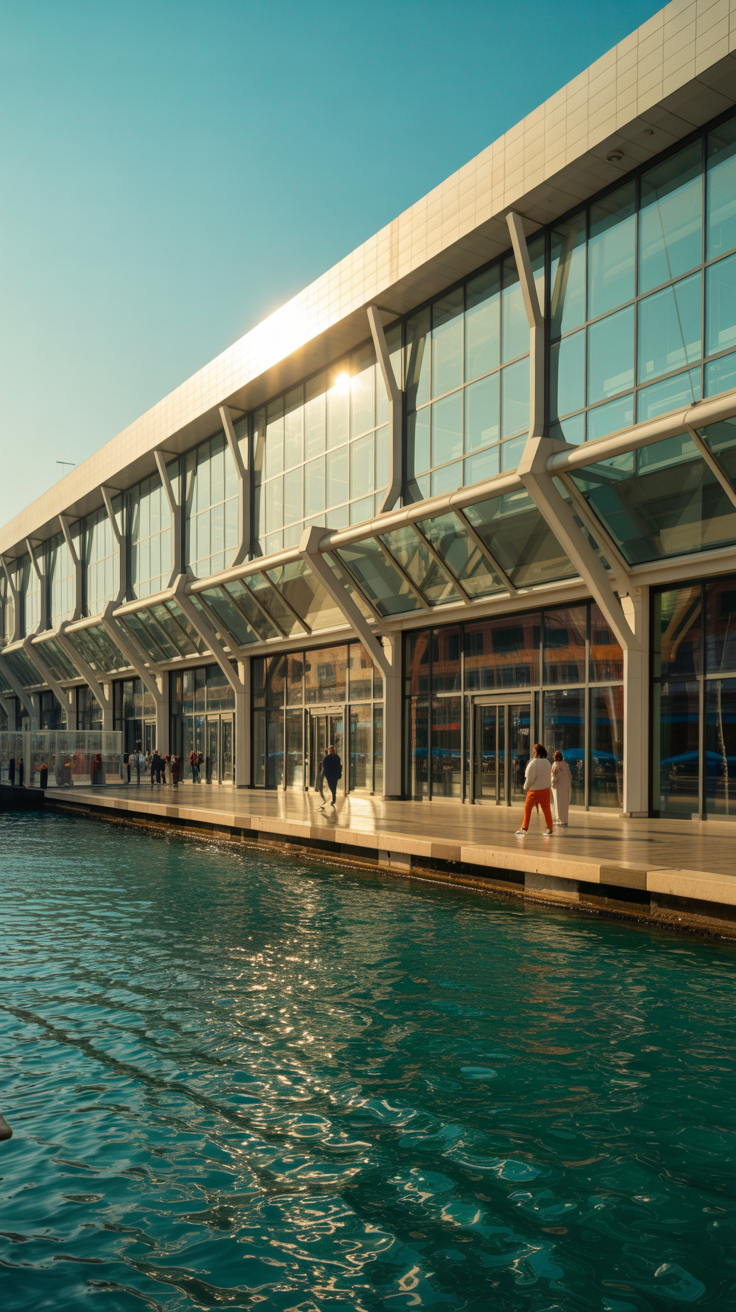
Since the terminals themselves offer little in terms of entertainment or comfort, planning around them makes sense.
At Marghera:
- There’s genuinely not much to do in the immediate area. It’s an industrial port zone
- Some passengers walk to a nearby shopping centre about 15 minutes away, but it’s not a pleasant walk
- Your best bet is to time your arrival close to check-in opening to minimise waiting time
- If you have hours to kill, take a bus or taxi into Venice proper rather than sitting in the terminal
At Stazione Marittima:
- You can easily walk into the city if you have time (about 20-30 minutes to central areas)
- Water taxis and vaporettos are right outside for quick access to St Mark’s, Rialto, or other areas
- The Marittima area itself has a few bars and cafés just outside the terminal buildings
- There’s a park nearby (Giardini Papadopoli) if you want a quiet spot to sit
For customs and immigration procedures at Venice, which can add time to your terminal experience, see our detailed Venice cruise port customs information guide.
Why Venice’s Terminals Are Like This
It’s worth understanding why these facilities are so underwhelming. Venice has been in a long-running debate about cruise ships for years. Environmental concerns, the impact on the lagoon, and the city’s delicate infrastructure have all led to restrictions and relocations.
The move to Marghera was part of keeping large ships out of the Giudecca Canal and away from St Mark’s Basin. The trade-off is that passengers now start their Venice experience in what’s essentially a commercial port. The terminals reflect this compromise – they’re built for efficiency and processing large numbers of passengers quickly, not for creating a memorable arrival experience.
The older terminals at Stazione Marittima were never designed for today’s mega-ships either. They’re converted or repurposed port buildings from Venice’s commercial shipping days. The city has invested minimally in upgrading them because the future of cruise shipping in Venice remains politically contentious.
Practical Tips for All Venice Terminals
Before you arrive:
- Download offline maps of Venice and the port areas
- Save your boarding documents and passport photos to your phone
- Pack snacks, a collapsible water bottle, and any medications in your hand luggage
- Charge all devices fully before leaving your hotel – or bring a portable charger with built-in cables so you’re not caught with a dead phone
- Check which specific terminal your ship uses – don’t just assume
- Pre-book any transfers rather than arranging them at the terminal
At the terminal:
- Keep expectations low and you won’t be disappointed
- Use the toilets before security if the queues after are long
- Don’t rely on terminal WiFi for anything important
- Bring something to read or keep yourself entertained during waits
- Keep an eye on your belongings – the terminals can get crowded and chaotic. An anti-theft backpack gives you peace of mind in crowded spaces
- If you need currency exchange, do it in the city beforehand for better rates
Money-saving reality:
- That terminal café sandwich at Marghera? It’ll cost you three times what you’d pay in the city
- Water is expensive at both terminals – bring your own
- Currency exchange rates at ports are universally terrible
- Taxi and water taxi drivers at the terminal may quote higher prices than you’d get elsewhere
Comparing Venice to Other Ports
If you’ve cruised from other major ports, here’s how Venice stacks up:
| Port | Terminal Quality | Proximity to City | Amenities |
|---|---|---|---|
| Venice (Marghera) | Basic | 20 minutes | Minimal |
| Venice (Stazione Marittima) | Basic | Adjacent | Limited |
| Barcelona | Modern | Varies | Good |
| Civitavecchia (Rome) | Decent | 90 minutes | Moderate |
| Naples | Basic to Moderate | Adjacent | Limited |
Venice’s terminals are among the most basic you’ll encounter in major Mediterranean ports. They serve their purpose but offer little else.
Extend Your Stay in Venice
Given the underwhelming terminal experience, many passengers choose to spend a night or two in Venice before or after their cruise. The contrast between the terminals and the city itself is so stark that it’s worth giving yourself proper time to experience Venice without the pressure of embarkation or disembarkation.
Accommodation in Venice ranges from budget hostels in Mestre to luxury hotels along the Grand Canal. Staying on the mainland in Mestre or Marghera offers better value and easier access to the Marghera terminal, while staying in Venice proper means you can maximise your time exploring before heading to Stazione Marittima or taking transport to Marghera.
Hotels in Venice book up quickly during cruise season, so planning ahead is essential. Even a single extra night lets you experience the city at sunset or early morning when the day-trippers have gone – something you’ll miss if you’re just passing through the terminal. If you’re extending your stay, pack compression packing cubes to keep your belongings organised between hotel and ship.
Personal Experience
When I arrived at Venice’s Marghera cruise terminal last spring, I expected something charming and quintessentially Italian – maybe a historic building with views of the lagoon. Instead, I got what basically looks like an industrial warehouse in a port area about twenty minutes from Venice itself. The terminal is functional but pretty bare-bones: there’s a small café that sells overpriced sandwiches, basic restrooms, and not much else. The waiting area has some seating, but don’t expect WiFi that actually works or anything fancy. It’s really just a place to check in, drop your bags, and board your ship. The staff were helpful enough, but the whole setup feels more like a temporary structure than what you’d imagine for one of the world’s most beautiful cities.
The older terminals closer to Venice proper, like Stazione Marittima, are slightly better but still surprisingly underwhelming. You get a bit more atmosphere since you’re closer to the city, and there are a few more shops and services, but it’s still pretty utilitarian. What struck me most was the contrast – here you are, about to visit this incredibly romantic, historic city, and you’re starting your journey in what feels like any generic port facility anywhere in the world. Bring snacks, download anything you need beforehand, and just think of these terminals as a quick stop before the real Venice experience begins.
Essential Items to Pack for Venice Cruise Terminals
Since Venice’s terminals offer so little in terms of amenities and comfort, coming prepared makes a significant difference to your experience. Here’s what seasoned cruisers bring to make their time at these basic facilities more bearable:
For entertainment during waits: The unreliable WiFi means you’ll want downloaded content on your devices. Make sure you have a high-capacity portable charger because there aren’t many charging points and you’ll be using your phone for boarding documents, photos, and killing time during delays.
For comfort in unpredictable conditions: The terminals have inconsistent climate control, and you might be moving between air-conditioned interiors and humid outdoor waiting areas. A lightweight packable jacket is perfect for this – it takes up minimal space in your hand luggage but keeps you comfortable when the terminal feels like a refrigerator or when you’re waiting outside for transport.
For staying organised: With limited seating and crowded conditions, you’ll be rummaging through bags while standing or balancing on your luggage. Packing cubes keep everything accessible, and a travel cable organiser prevents the inevitable tangle of chargers, earphones, and adapters at the bottom of your bag.
For document access: You’ll be showing boarding passes, passports, and various documents multiple times. An anti-theft crossbody bag keeps everything secure but easily accessible, which matters in the crowded, chaotic terminal environment.
For hydration without expense: Terminal prices for bottled water are ridiculous, and the tap water in the bathrooms isn’t always appealing. Fill a collapsible water bottle at your hotel before you leave – it takes up almost no space when empty but saves you money and keeps you hydrated during long waits.
For European compatibility: If you’re flying in from outside Europe, you’ll need a European power adapter for any last-minute device charging at the terminal or in your cabin once aboard.
Common Questions & FAQ
Is there luggage storage at Venice cruise terminals?
Not really. The terminals have areas where you drop off checked luggage for the ship, but there are no proper left-luggage facilities for storing bags if you want to explore Venice before check-in or after disembarkation. Your best option is to use a luggage storage service in Venice itself – there are several near the train station and in other tourist areas. Don’t plan on leaving bags at Marghera or Stazione Marittima terminals for any length of time.
Can I buy a vaporetto ticket at the cruise terminal?
At Stazione Marittima, yes – there are ticket offices and machines near the water bus stops just outside the terminals. At Marghera, no – you’ll need to arrange transport before you arrive or take a shuttle bus that drops you somewhere in Venice where you can buy tickets. If you’re planning to use public water transport, buy a multi-day pass in advance online or get one as soon as you reach Venice proper. Don’t count on convenient ticket purchasing at Marghera.
How early should I arrive at Venice cruise terminals?
Most cruise lines recommend arriving two to three hours before departure, and that’s sensible for Venice. At Marghera especially, check-in can get backed up when multiple ships are boarding. At Stazione Marittima it’s usually quicker because the terminals are smaller and handle fewer passengers at once. If you’re arriving from the airport or another city that morning, build in extra buffer time because Venice transport can be unpredictable. Having a luggage scale before you leave your hotel helps avoid surprises at check-in.
Is there anywhere to eat a proper meal near Marghera terminal?
Not within easy walking distance. The terminal café sells snacks and sandwiches, but there’s no proper restaurant in the immediate port area. Your best bet is to eat in Venice before heading to the terminal, or if you’re staying nearby in Marghera town, eat at your hotel. Don’t expect to find authentic Venetian dining options near the cruise terminal – it’s an industrial zone, not a tourist area.
Can I walk from Marghera terminal to Venice?
Technically yes, but it would take you well over an hour and the route goes through unappealing industrial areas and busy roads without proper pavements in places. It’s not a pleasant or practical walk. Take the shuttle bus, a taxi, or pre-arranged transport instead. The walk from Stazione Marittima terminals into central Venice is much more reasonable – about 20 to 30 minutes on foot and you’re in the city proper. If you do plan to walk from Stazione Marittima, wear comfortable walking shoes and consider blister prevention if your shoes are new.
Do Venice cruise terminals have shops for last-minute souvenirs?
Barely. Marghera has essentially no shops beyond a small kiosk selling basics. Stazione Marittima has a couple of tiny shops in some terminals selling tourist trinkets, but the selection is limited and prices are inflated. If you want proper Venetian souvenirs or forgotten items, buy them in the city before you head to the terminal. Don’t count on terminal shopping for anything beyond emergency supplies.
What happens if I miss my ship at Venice?
The terminals themselves won’t help you much – they’re not set up with passenger services for missed departures. You’ll need to contact your cruise line immediately. Most ships depart from Marghera, so your first challenge will be getting to the next port of call, which could be anywhere in the Adriatic or Mediterranean. The terminal staff can call you a taxi to the airport or train station, but arranging flights or alternative transport to rejoin your ship is entirely your responsibility. Make sure you have travel insurance that covers missed departures.
Are there ATMs at Venice cruise terminals?
There’s usually at least one ATM at the larger terminals, but they’re not always reliable and sometimes run out of cash when multiple ships are in port. There are also currency exchange services with poor rates. Your better option is to get cash from ATMs in Venice itself before heading to the terminal, or just rely on card payments where possible. Don’t arrive at the terminal assuming you’ll easily get cash there.
What should I do if I arrive at the terminal very early?
At Marghera, your options are extremely limited – there’s genuinely nothing to do in the surrounding industrial area. If you arrive more than an hour before check-in opens, consider taking transport into Venice proper for breakfast or a quick walk, then returning when check-in starts. At Stazione Marittima, you’re much closer to the city, so you can easily pop into Venice for a coffee or stroll along the waterfront. Just keep track of time and allow for getting back through security. Bring a travel pillow if you’ll be waiting for extended periods – the terminal seating isn’t comfortable.
Is there anywhere secure to leave valuables while exploring before boarding?
No. The terminals don’t offer secure storage lockers or safe deposit facilities. Your checked luggage goes straight to the ship and you won’t have access to it until you reach your cabin. Keep valuables, medications, documents, and anything else important in your hand luggage, and keep that with you at all times. An anti-theft backpack with hidden pockets and slash-proof material gives you peace of mind in crowded terminal areas. If you’re staying in a hotel before your cruise, use their safe deposit box and only take what you need for the day you’re exploring Venice.
Last Updated: 10 January 2026