
Key Takeaways
You need:
- A basic fitness level to enjoy most cruise activities. You can choose easier or harder options that suit you.
- Steady walking ability and good balance for two key activities: getting in/out of Zodiac boats and walking on rocky beaches.
- Simple pre-trip exercises to build your strength. Try daily squats, stretches and core movements.
- A doctor’s approval before your trip. This confirms you’re fit enough for expedition activities.
- Support from the crew at all times. You’ll get help with activities and clear safety instructions whenever you need them.
Tips for preparation:
- Walk regularly before your trip
- Practice standing up from sitting
- Test your balance with simple exercises
- Build leg strength through gentle activities
- Keep moving in your daily routine
Remember: The activities aren’t meant to be challenging – they’re designed for everyone to enjoy the Arctic or Antarctic safely.
Physical Demands During Shore Landings
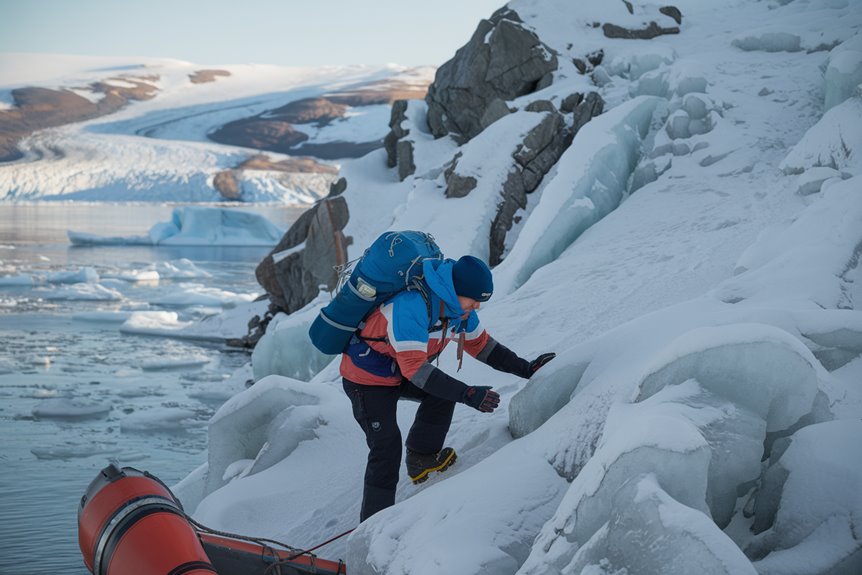
Shore landings need basic physical fitness but stay manageable.
You’ll walk on uneven ground and need good balance. Wet landings involve stepping into shallow water and walking on rocks, but you’ll get waterproof boots to keep your feet dry.
Some landing sites have gentle slopes, and you can choose your activity level. You can skip any hike or activity that feels too challenging. The crew will help you during all shore visits and match activities to your fitness level.
Your Antarctic adventure moves at your pace. You decide which activities suit you best, and the expedition team creates flexible landing plans.
The crew stands ready to support you throughout each shore visit. Comfort and safety remain the priority, so you can opt out of any activity at any time.
Medical Considerations Before Departure
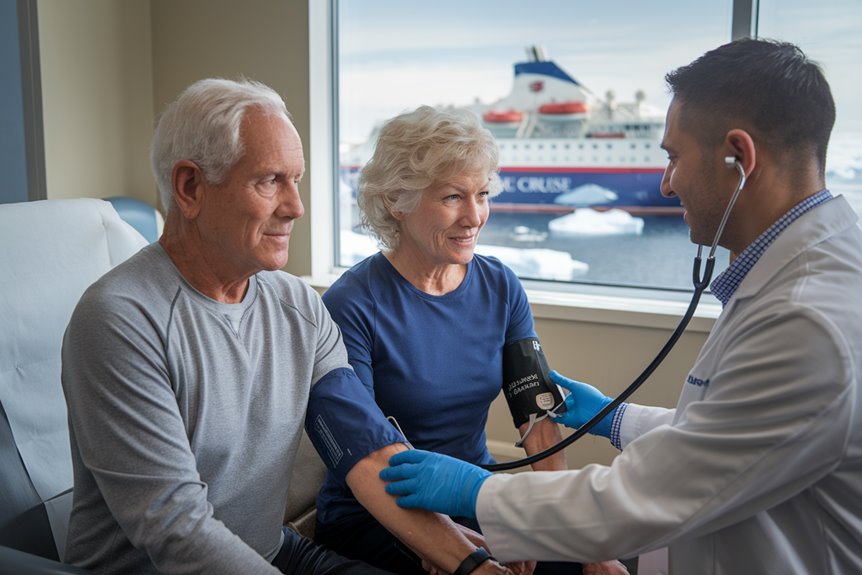
Medical Checks for Your Polar Cruise
You need several medical checks before your polar voyage begins. A medical evaluation is mandatory, and you must provide clear details about your health.
Your pre-departure checklist:
- Submit your medical screening forms
- Get your doctor’s approval for any existing health conditions
- Arrange medical evacuation insurance worth £120,000 minimum
Ships carry basic medical equipment only, and rescue operations in polar areas can be difficult. You must tell the cruise operator about all your health conditions. Some medical issues might stop you from boarding.
Important points to remember:
- Bring all your medical paperwork
- Pack enough medication for your entire trip
- Check pregnancy restrictions if applicable
- Keep copies of your health documents handy
The cruise line needs this information to keep you safe during your journey.
Medical help can be hours or days away in polar regions, so being honest about your health is vital.
Getting Around The Ship
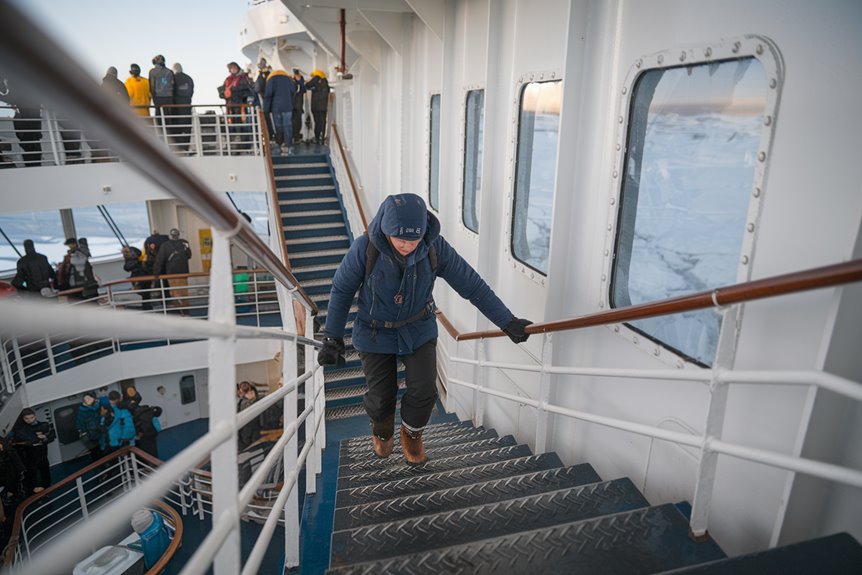
Navigating Your Polar Ship
You’ll find most polar ships easy to move around in, though some specific challenges exist. Your ship has multiple deck levels connected by stairs, and surfaces can become slippery in cold conditions.
Ships like the Silver Cloud provide wide decks and helpful butler services. You still need basic fitness levels, particularly for getting in and out of Zodiac boats. Most vessels use stabilisation systems to reduce movement at sea. You’ll discover convenient viewing spots throughout the ship to minimise walking.
The ships offer useful features for your comfort:
- Glass observation lounges
- Well-planned public areas
- Clear pathway markers
- Anti-slip floor surfaces
Your ship’s crew stands ready to help you move about safely. You must attend safety briefings before joining any off-ship activities.
Tips for moving around:
- Hold handrails on stairs
- Wear non-slip footwear
- Watch for wet or icy patches
- Ask crew members for help when needed
Preparing Your Body
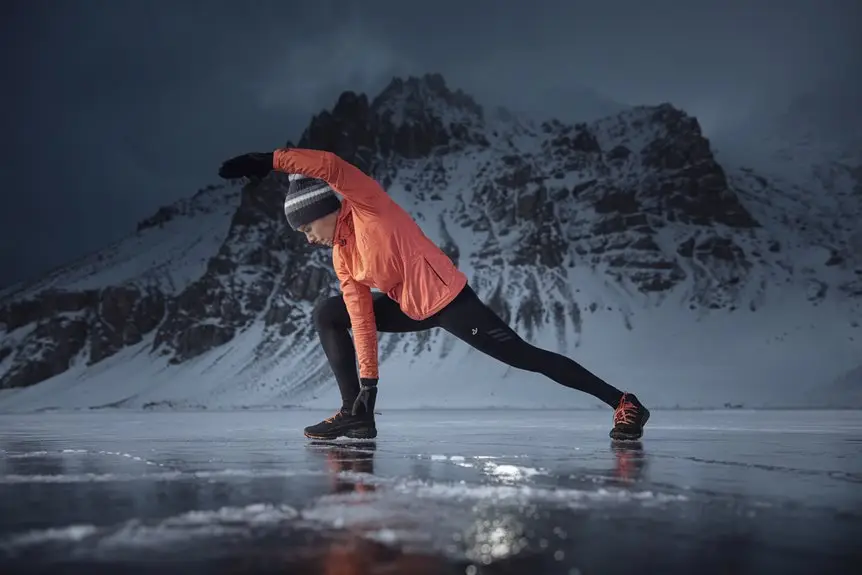
Body Preparation for Polar Travel
You don’t need elite fitness for polar expeditions, but good physical preparation will make your adventure more enjoyable. Your daily activities will include walking on uneven ground and getting in and out of Zodiac boats.
Complete these exercises to prepare:
- Walk regularly on varied terrain (beaches, nature trails) to improve your stability
- Do basic squats and planks to strengthen your legs and core
- Stretch daily to increase your flexibility for boat transfers
Your fitness level matters less than your mobility. You can join an expedition at any age if you can:
- Move independently
- Step into small boats
- Walk short distances
Remember: You can skip any activity and stay on the ship if you feel tired or unsure. Most excursions remain optional throughout your journey.
Key Tip: Start your preparation at least two months before your departure to build strength and confidence gradually.
Emergency Procedures and Safety
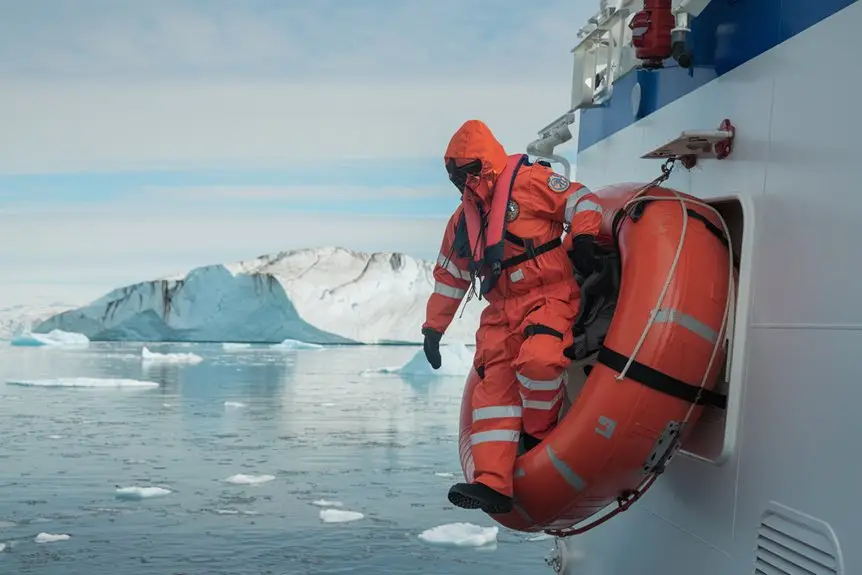
Safety in polar waters requires extra emergency steps beyond regular ship safety rules. Your rescue time in these distant areas will likely be longer, so understanding proper safety measures is essential.
You need to know where to find your thermal protection suit – every passenger must have one to stay warm.
Your lifeboat contains:
- Emergency food supplies
- Fresh water
- Polar-specific communication tools
- Group survival equipment
Your mandatory safety briefing will show you:
- How to use survival equipment
- Where to find emergency items
- Evacuation routes specific to icy conditions
- Special lifeboat launch methods for polar waters
Look out for clear safety signs around the ship and keep your emergency guide in your cabin.
Always follow your crew’s safety instructions and ask questions if anything isn’t clear to you.
Remember that polar conditions create unique challenges, so staying alert and prepared is crucial.
Frequently Asked Questions
Can I Bring My Own Mobility Equipment Like a Wheelchair or Walker?
Yes, you can bring your own mobility equipment onboard. You need to inform the airline before your flight and check that your wheelchair or walker fits the cabin storage requirements. You’ll find it easier to travel when you notify the airline’s special assistance team in advance. Contact them directly through their website or customer service line to register your equipment.
Are There Age Restrictions for Pregnant Women Traveling to Antarctica?
You don’t face specific age limits when pregnant and travelling to Antarctica, but you must follow important medical guidelines. You need your doctor’s written approval before booking your trip. You should tell your tour operator about your pregnancy during the booking process. Most Antarctic cruise companies recommend against travelling whilst pregnant because the region has basic medical facilities. The nearest hospital could be days away by emergency evacuation, which poses risks during pregnancy.
What Fitness Level Do I Need for Wildlife Photography Excursions?
You need moderate fitness for wildlife photography excursions. Most wildlife shots (around 85%) are taken from boats, requiring you to maintain your balance whilst handling your camera gear. You’ll need basic mobility to:
- Stand steadily on moving boats
- Walk across uneven ground
- Carry your photography equipment
- Hold positions for extended periods
A general level of fitness is sufficient – you don’t need to be an athlete. Your stability and ability to handle equipment matter more than endurance or strength.
Do Ships Offer Special Dietary Options for Health-Restricted Passengers?
Cruise ships accommodate many dietary requirements to keep you healthy and satisfied. You can choose from vegetarian, gluten-free, and low-cholesterol meal options. You must notify the cruise line about your dietary needs when you book your trip. Kosher meals aren’t currently available on polar cruises.
Are There Accessible Cabin Options for Passengers With Limited Mobility?
You can find several accessible cabin options on cruise ships to match your mobility needs. Cruise lines offer adapted cabins with specific accessibility features:
- Wider doorways for wheelchair access
- Roll-in showers with support rails
- Lowered wardrobes and storage spaces
- Accessible balconies with ramps
- Grip bars in bathrooms and living areas
- Extra turning space for wheelchairs
You’ll need to book these cabins early, as ships typically have limited accessible rooms available. Contact the cruise line directly to discuss your specific requirements and ensure they can accommodate your needs properly.