
Your best beach on a Nassau cruise day is Junkanoo, 10 to 15 minutes’ walk from Prince George Wharf, with calm shallow water and everything you need on the sand. Want quiet?
Saunders Beach, a short ride west. Secret is a marketing word: nothing you can reach from the pier is undiscovered.
Hidden beaches in Nassau: four that really are quiet
Saunders, Jaws, Montagu and Goodman’s Bay are the four where the quiet is real and not a line in a brochure. Saunders rarely holds more than about ten people at once, and taxi drivers are surprised anyone wants to go there at all. Jaws has no lifeguard, no snack bar and, most days, nobody else in sight.
Montagu keeps quiet on weekdays and fills up at weekends, with no resort development and no beach bars. Goodman’s Bay is a public park beach that doesn’t usually get crowded.
The other four wear the label without earning it. Junkanoo is the closest sand to the ship and nobody’s idea of serene, since two shore tours build a stop there.
Cable Beach only feels calm because most passengers take the nearer free beach, and the quiet is at the western end, not where a taxi drops you near Baha Mar. Cabbage Beach has a quiet eastern end away from Atlantis and a western end thick with vendors.
At Love Beach the bar end is a beach bar’s front garden, though a free public path runs just west of it, which is the bit you want.
Nassau secret beaches map
Each pin shows how far that place is from the nearest cruise pier. Tap a pin for directions.
- Prince George Wharf / Festival PlaceWhere ships dock
- Junkanoo BeachBeach · About 1 km from Prince George Wharf / Festival Place
- Saunders BeachBeach · About 3 km from Prince George Wharf / Festival Place
- Montagu BeachBeach · About 4 km from Prince George Wharf / Festival Place
- Goodman’s BayBeach · About 5 km from Prince George Wharf / Festival Place
- Cable BeachBeach · About 7 km from Prince George Wharf / Festival Place
- Cabbage BeachBeach · About 3 km from Prince George Wharf / Festival Place
- Love BeachBeach · About 15 km from Prince George Wharf / Festival Place
- Jaws BeachBeach · About 22 km from Prince George Wharf / Festival Place
- Blue Lagoon IslandBeach island · About 8 km from Prince George Wharf / Festival Place
- Rose IslandBeach island · About 19 km from Prince George Wharf / Festival Place
How many ships are in Nassau on your date
Nassau Cruise Port at Prince George Wharf has six berths and can tip up to 30,000 passengers into downtown in a single day. The port’s chief executive has said that in one 60-day stretch of the year, 45 of those days carry five or six ships.
That number picks your beach for you. The same sand is empty on a two-ship day and towel to towel on a six-ship day, and the first wave hits downtown mid-morning. Getting off the ship early beats any transport trick you’ve read about.
Count your time ashore from the moment you clear the terminal, not from the arrival time on the itinerary. Getting off and finding a taxi can eat 30 to 45 minutes when several ships are in port. Ship numbers go up by date, so look yours up before you choose.

Nassau beaches compared: minutes from the pier, fares and facilities
All eight are free to walk onto. What separates them is how long it takes to get there, how you get there and what’s waiting when you arrive.
| Beach | From the pier | How you get there | Entry | Facilities and shade | Water and who it suits |
|---|---|---|---|---|---|
| Junkanoo Beach | 10 to 15 minutes | On foot, west along Bay Street past Margaritaville | Free; chairs and umbrellas from vendors | Vendors, chairs, restrooms, outdoor showers, little natural shade | Calm and shallow, faces west and is partly sheltered from the easterlies. Families and short calls |
| Saunders Beach | A few minutes west by taxi | Taxi, or No. 10 jitney stopping opposite the Shell station | Free; no chairs to hire | Restrooms, outdoor showers, small playground, security on the sidewalk, shade only under the trees | Calm, with sharp coral in places and a rock pile near the restrooms. Near-empty sand with basics |
| Montagu Beach | 10 minutes by road | Taxi, or the bus in about 15 minutes; free car park | Free | No lifeguards; whether there are bathrooms and vendors is unsettled, so take supplies | Shallow and calm for wading, but keep clear of the boat ramp. Quiet weekdays |
| Goodman’s Bay | A short ride west | No. 10 jitney or taxi | Free | Park with jogging path, lawn and playground; treat bathrooms as uncertain | Calm bay. A park day with sand attached |
| Cable Beach | 15 to 20 minutes | Taxi, or the No. 10 jitney; about 6 miles west | Free | More palm shade than Junkanoo; restrooms in nearby restaurants and hotels, some charging non-guests | Gentle waves and a gradual increase in depth. The longer beach, quietest at the western end |
| Cabbage Beach | Water taxi plus a 10 to 15 minute walk, or a taxi over the bridge | Water taxi from Woodes Rogers Wharf, or taxi | Free; loungers from vendors | Vendors on the sand; restroom provision inconsistent | Stronger waves and currents when the wind is up. The big beach day, not for small children |
| Love Beach | About 30 minutes | No. 10 or No. 12 jitney, or taxi | Free via Love Beach Walk; small charge at the bar end | Bar end has bathrooms, showers, wifi and a bar; barely any shade elsewhere | Reef offshore, entirely dependent on conditions. Snorkelling and plane spotting |
| Jaws Beach | 25 to 40 minutes | Hire car, or a taxi booked for the round trip; no bus service | Free | Nothing: no restrooms, no food, no lifeguards | Open Atlantic swell, currents in winter, rocky underfoot. Empty sand and the sculpture garden |
Cabbage Beach trades one crowd for a journey: a boat or a taxi over the bridge, then a walk at the far end of it. Cable Beach versus Paradise Island for a beach day weighs that against the plain taxi ride west.
How much sand time each beach leaves you
A six-hour call is not six hours on the sand. Clearing the terminal costs you 30 to 45 minutes, and you want an hour in hand before all-aboard for the ride back and the walk to the gangway. Call it four and a half hours of actual beach.
- Junkanoo Beach: 10 to 15 minutes on foot, so about four and a half hours on the sand, the most of any beach here.
- Saunders Beach and Goodman’s Bay: a few minutes by taxi or jitney, so about four hours.
- Montagu Beach: 10 minutes by road, so about four hours.
- Cable Beach: 15 to 20 minutes each way, so three and a half to four hours.
- Cabbage Beach: a crossing that leaves when full, then a walk, so around three hours.
- Love Beach: 30 minutes each way, so around three hours before the afternoon traffic builds.
- Jaws Beach: 25 to 40 minutes each way, and only if your driver comes back. Two and a half to three and a half hours.
On an eight-hour call, add two hours to every one of those. That changes the answer for Love Beach and Jaws, and changes nothing at all for Junkanoo.
Taxis, jitneys and the water taxi: what each really costs
Nassau taxis don’t use meters. Fares are set by the government, by destination, and cover up to two passengers, with a surcharge for each extra person. The idea that Nassau taxis charge per person is wrong, and it’s the most common way cruise passengers overpay.
Beyond the base fare the sums get fuzzy. The extra-person surcharge and the Paradise Island bridge toll both move about, so agree the total for your group before you get in, not the base fare.
A tip of around 15% is customary. Uber and Lyft don’t operate anywhere in the Bahamas.
The jitney is the cheap option: a privately run minibus network on 18 numbered routes out of two downtown terminals. The No. 10 loads at Frederick Street and runs Bay Street out to Saunders, Goodman’s Bay, Cable Beach and Love Beach. The fare is pocket change in cash, paid to the driver as you get off, and exact change saves an argument.
Jitneys run from about 6:30am to 6pm with a thin Sunday service. There are no transfers, so a round trip is two fares, and there are no jitneys to Paradise Island at all. If you’ll be using more than one route, taxis, jitneys and local transport in Nassau covers the rest of the network and where each line loads.
The Paradise Island water taxi leaves from Woodes Rogers Wharf, a few minutes’ walk from the terminal, and costs a few dollars each way. The crossing takes 10 to 15 minutes and boats run every 30 minutes between roughly 9am and 6pm, leaving when full.
It doesn’t land you on Cabbage Beach: it drops you near the bridge and Margaritaville, and the public access path is another 10 to 15 minutes on foot, about half a mile. Departure times are loose, and boats have stopped earlier than the advertised last sailing.
Getting back to the ship from each beach
Three of these beaches have no taxi rank, and that’s the one Nassau mistake you can’t fix from the pier. Saunders generally has nothing waiting, so arrange a pickup with the driver who drops you or walk out to the roadside for the No. 10.
Jaws has no public bus service at all, which leaves a hire car or a taxi booked for the round trip as the only way in and out. At Love Beach the last jitneys are around 4pm, the afternoon run back into downtown can add an hour, and a cab phoned from the bar can take 30 minutes or more to arrive.
Cabbage Beach usually has cabs on the sand for the return. Everywhere else, set your own deadline at least an hour before all-aboard and confirm the pickup spot with your driver before you go down to the water.
Ship-sponsored beach excursions cost more, but the ship waits for them if traffic runs late, and that’s worth paying where the ride back is the weak point. The trade-off between ship excursions and self-guided days in Nassau is mostly about that one thing.
Blue Lagoon and Rose Island: the secret beaches that are day trips
You can’t just turn up at Blue Lagoon or Rose Island. Blue Lagoon, also called Salt Cay, is about a 25-minute crossing with the ferry bundled into a day package, and no separate boat ticket is sold. If you’re on Disney, Norwegian, Royal Caribbean or Carnival you book through the ship’s shore excursions desk; on other lines you can book direct.
Rose Island is a water taxi from Woodes Rodgers Walk, 30 to 40 minutes each way, and it’s sold as a fixed-departure tour with two departures a day. That’s not a public beach, it’s a timetable: on a short call there’s nothing you can improvise. Blue Lagoon’s boats also can’t take motorised powerchairs or non-collapsible wheelchairs.
The islands people picture when they picture a secluded Bahamas beach, Eleuthera, Exuma, Cat Island, Andros and Bimini, are separate destinations with their own ports. A Nassau port day doesn’t reach them, and a beach worth planning a whole cruise around is a different list: beach days across the Bahamas worth leaving the ship for.
What a free Nassau beach really costs
Every public beach in Nassau is free to walk onto, and that’s where the free part ends. At Junkanoo, chairs and umbrellas come from vendors on the sand and the asking price for two chairs and one umbrella runs from pocket change to serious money, so settle it before you sit down.
At Love Beach the bar end charges a few dollars a head for access, which includes bathrooms, showers, wifi and the bar, with chairs on top; cards often don’t work there, so bring cash.
Cable Beach borrows its restrooms from nearby restaurants and hotels, some of which charge non-guests. Cabbage Beach loungers come from the vendors on the sand. Tips go on top of all of it.
Add the fares and the food and a free beach day stops being free once access, shade, food and transport are counted. Budgeting for the taxi alone is how people get caught out. If the fares are what tips the day over budget, most free things to do in Nassau are in town rather than on the sand.
What quiet costs you, and what to take instead
The emptiest beaches are empty because they cost you facilities, transport certainty and time. Saunders has restrooms, outdoor showers, a small playground and security guards on the sidewalk, but no chair or lounger rental and little shade unless you sit up under the trees off the beach.
Jaws has no lifeguards, no restrooms and no food vendors at all, and its unpaved approach and soft sand make it no good in a wheelchair.
Montagu has no lifeguards and nothing you can rely on buying on the sand, so carry your own water and snacks. Goodman’s Bay has a park with a running path, lawn and playground, and you should plan around the bathroom question rather than count on it. Love Beach has barely any shade outside a few trees west of the bar.
Take water, your own shade, towels and small US dollar notes for chairs, drinks and tips. Pack water shoes: Love Beach’s rocky areas, Jaws’ pebbles and the submerged rock pile near Saunders’ restrooms all punish bare feet. Reef-safe sunscreen goes on before you leave the ship, and a quick-dry beach towel earns its place in a bag with no lounger to drape it over.
A swimsuit and a cover-up handle both the sand and the taxi; add shoes you can walk in, because the walk to Junkanoo is on pavement and the terminal floor is hot underfoot. For one outfit that works on the beach and in town afterwards, start with Nassau cruise outfits for a port day.
Currents, rocky entries and the lifeguards who are not there
Assume no lifeguard on any of these public beaches, and don’t expect much raking, cleaning or maintenance either. The prettiest water is usually the least sheltered, and nobody is watching it.
Cabbage Beach gets stronger waves and currents than the sheltered beaches, particularly when the wind is up, which makes it a poor choice for small children or nervous swimmers. Jaws Beach has no reef breaking the swell, so open Atlantic rolls in unfiltered and the currents strengthen in winter; it’s unsuitable for very young children or non-swimmers, and there are rocky outcrops and scattered pebbles underfoot.
Saunders has sharp coral in places and a rock pile hidden under the water near the restrooms. Montagu’s shallow, calm water is good for wading, but swimmers should stay clear of the boat ramp channel and the harbour traffic using it.
Cable Beach is the gentle one, with a gradual increase in depth. Junkanoo faces the harbour channel rather than open ocean, so the water near shore is calm and shallow and a safe bet for younger children.
Nothing official is posted about water quality, currents or jellyfish at these beaches, so judge it on the day and keep children within arm’s reach.
Snorkelling from the sand
Love Beach has the best shore snorkelling of the public beaches, with reef within swimming distance of the sand, though the coral is mostly dead, choppy water ruins it, and the whole thing depends on the conditions that morning. Go in to the left in front of the bar and follow the rocks; the right side is rockier and harder to navigate.
Jaws Beach’s rocky margins hold small fish but no reef walls. The Clifton Heritage underwater sculpture garden lies offshore from Jaws: shallow portions are reachable from the sand, the deeper installations need a boat or dive certification, and visibility varies with the weather.
Montagu has rocks along a seawall edge and snorkelling is possible, though algae and debris turn up in the water. Junkanoo’s water is calm and clear but holds little for snorkellers; the value there is a swim, not a reef. Anything more than that needs a boat, and there are water adventures in Nassau you can book without going through the ship.
When the quiet beach is the wrong call
On a four-hour call, none of this works. Clearing the terminal and getting back for all-aboard leaves you two to three hours, and the far beaches eat most of it in a taxi. Same story on a five-ship day, with anyone who has mobility limits, and with small children who won’t sit through a 30-minute ride each way.
Walk to Junkanoo instead, or buy a day pass. The British Colonial Nassau is about a five-minute walk from the terminal and sells day passes with a private beach, two pools, loungers, towels and changing facilities. Margaritaville Beach Resort Nassau is 10 to 12 minutes on foot. Family activities within walking distance of the ship covers the rest of the short-call options.
Atlantis Aquaventure day passes are capped and sell out on days when several ships are in Nassau together, so settle whether an Atlantis day pass is worth it before you sail rather than on the pier.
A short call is also a town day. The Straw Market sits next to the docks, Bay Street runs inland from the terminal, and Nassau walking routes that hit the main sights will fill four hours without a taxi. If you’d rather shop than walk, Nassau shopping beyond the Straw Market is a street or two back from the waterfront.
Or stay aboard. On a six-ship day the ship is quieter than anything ashore until the first wave troops back.
Public sand, private paths: beach access in Nassau
Under Bahamian law, the beach up to the median high water mark is owned by whoever owns the land abutting it. Saunders, Montagu, Goodman’s Bay and Junkanoo are public because the adjoining land is public, but there’s no automatic public right of way to a beach anywhere. The law protects the high water mark, not your right to walk to it.
That matters most at Cabbage Beach, where access is in active dispute. Construction fencing went up across the beach with a temporarily closed sign; the Ministry of Tourism intervened and the fence came down, and further fencing and pilings are expected as part of erosion and renourishment works.
The Four Seasons Ocean Club Residences development’s Heads of Agreement requires the developer to use best efforts to give vendors access through the project site during a 30-month construction period, plus a permanent 15-foot public right of way on completion, itself temporarily closed during the build.
The historic eastern access point, used mainly by Bahamians, has been closed for about a year and is guarded by private security, while the hotel-side entrance has stayed open. Nobody knows which entrance will be open on your date, so if you’re set on Cabbage Beach, aim for the free public path behind the resorts near the RIU.
Access points at Love Beach and near Sun Fun and Rock Point have also been locked or restricted at times. At Cable Beach, parts of the beach sit beside private property, so ask your driver for a public access point rather than assuming every entrance, or every chair set-up, is open to day visitors.
You don’t need a day pass to walk through Baha Mar or visit its casino; pool and waterpark access is reserved for hotel guests.
Where to eat near Nassau cruise port
The best place to eat near Nassau cruise port is Arawak Cay, the Fish Fry, west of downtown, for conch salad and conch fritters, and the No. 10 jitney stops right outside. Closer in, the beach bars along Junkanoo Beach sell conch fritters, Bahamian beer and rum punch.
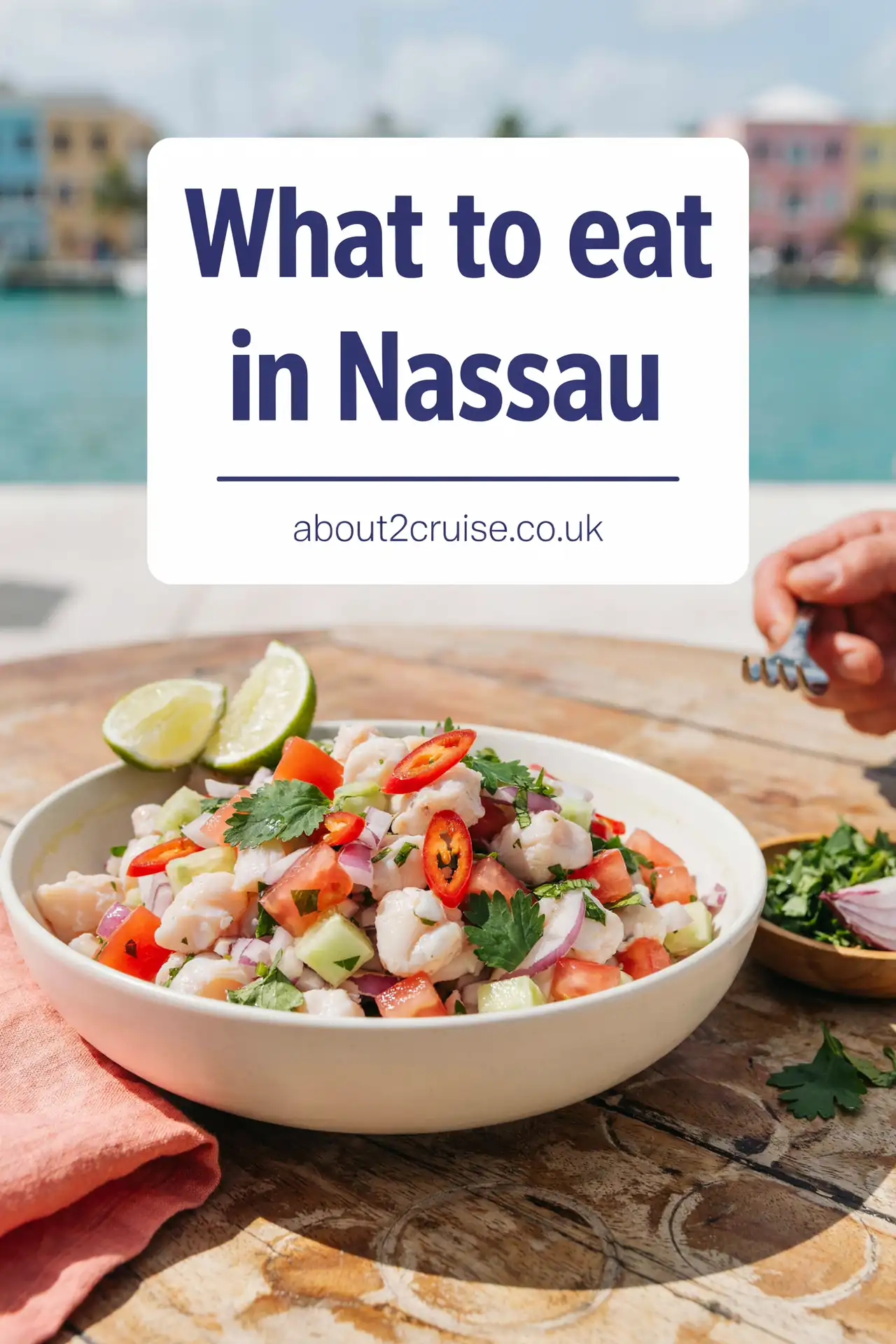
- Conch salad: raw conch cured in lime juice with onion, pepper and tomato, made to order at Arawak Cay.
- Conch fritters: deep-fried batter with conch, sold at the Fish Fry and at the Junkanoo beach bars.
- Sky Juice: gin, coconut water and condensed milk, the local beach drink.
- Bahamian beer and rum punch: the standard order on the sand at Junkanoo Beach.
Potters Cay Fish Fry sits under the Paradise Island bridge, a short ride from the pier, and you’ll be queuing with locals rather than passengers. For more than a snack, the Bahamian dishes worth seeking out near the cruise port runs through the rest, and a day built around food rather than sand is one way into Bahamian culture in a short port stop.
Best photo spots in Nassau
The best photo stops on a Nassau beach day are the stone cannon emplacements at Fort Montagu above Montagu Beach, Junkanoo Beach in the late afternoon, and the stretch of Love Beach sitting under the airport approach.
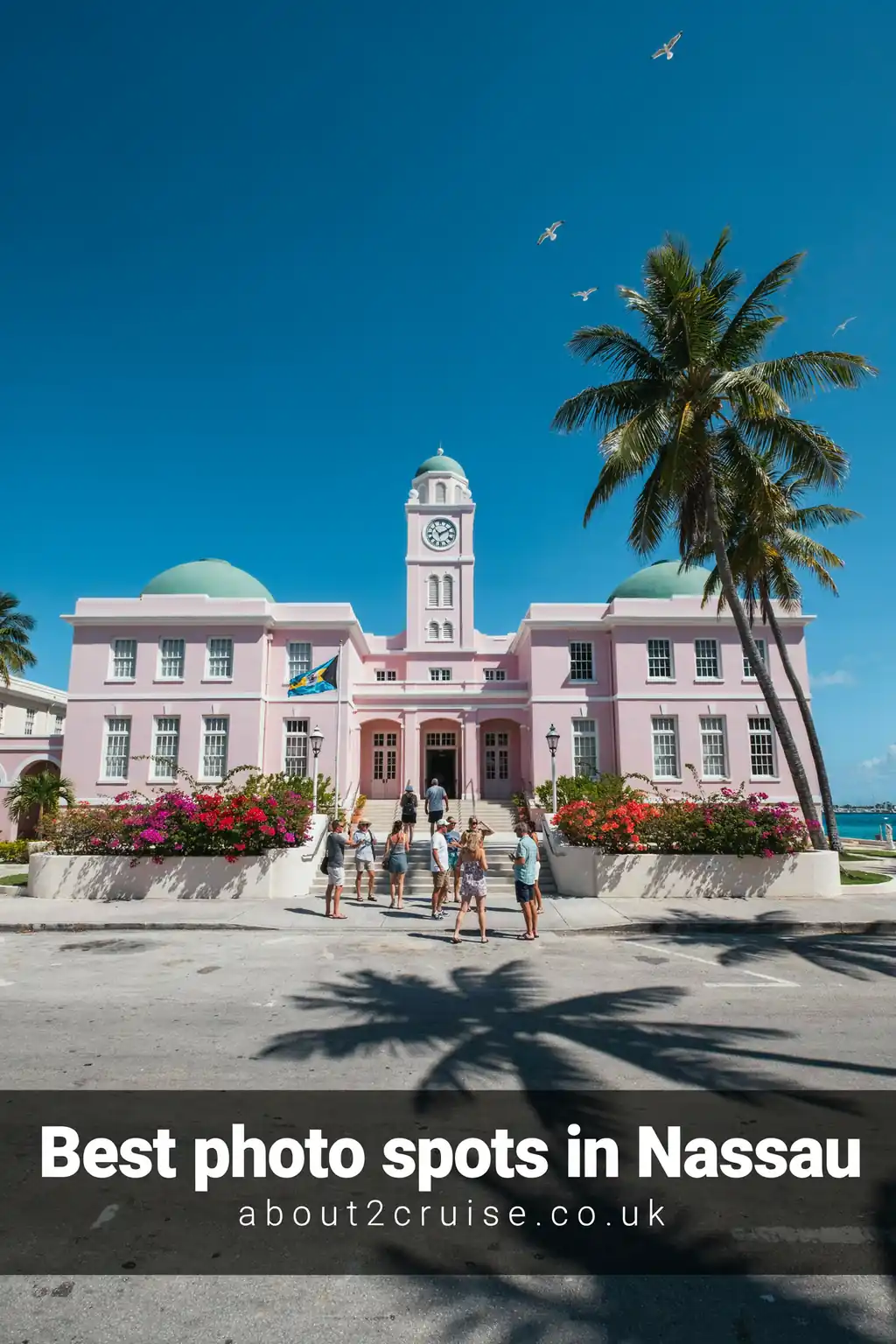
Get to Fort Montagu early for clean light and an empty frame, and look down on the working fishing ramp below for colourful boats and fishermen. Junkanoo faces west, which makes the afternoon light the reason to still be there. At Love Beach, planes pass low overhead, directly on the flight path into Lyndon Pindling International.
Fort Montagu is one of the historic sites in Nassau that tell the story of the island, and it’s a two-minute stop on the way to the sand. For shots away from the water, photo spots in Nassau worth the detour covers the harbour and the streets.
Nassau beach FAQs
What is the least crowded beach in Nassau?
Saunders Beach, west of downtown, where the whole beach rarely holds more than about ten people at once. There are no chairs to hire and no lifeguards, and taxis don’t wait there, so fix your ride back before you settle in.
Can you walk from the Nassau cruise port to a beach?
Yes, to one. Junkanoo Beach is 10 to 15 minutes west along Bay Street from Prince George Wharf, past the Margaritaville resort. Every other beach here needs a taxi, jitney, water taxi or hire car.
Which Nassau beach is best for families?
Junkanoo Beach, because the water near shore is calm and shallow, the walk from the ship is short, and there are restrooms, outdoor showers and food on the sand. Quieter beaches have no lifeguards and less shade.
Do Nassau taxis charge per person?
No. The regulated fare is per vehicle and covers up to two passengers, with a surcharge for each extra person, plus a bridge toll on Paradise Island runs. Agree the total for your group before you get in.
Do you need a day pass to use a Nassau beach?
No. All eight public beaches here are free to walk onto. You pay for chairs, umbrellas and food, and Love Beach’s bar end charges a small entry that includes bathrooms, showers and wifi.
Is the beach at Atlantis open to cruise passengers?
Cabbage Beach, the public beach on Paradise Island, is free to reach through the access path behind the resorts near the RIU. Atlantis’s pools and waterpark need a day pass, which is capped and sells out when several ships are in port together.
How long before all-aboard should you leave the beach?
An hour, on your own deadline rather than the ship’s. At Saunders and Jaws you must arrange the return yourself, and at Love Beach the jitney stops around 4pm while afternoon traffic can add an hour.
Last Updated: 14 November 2026