
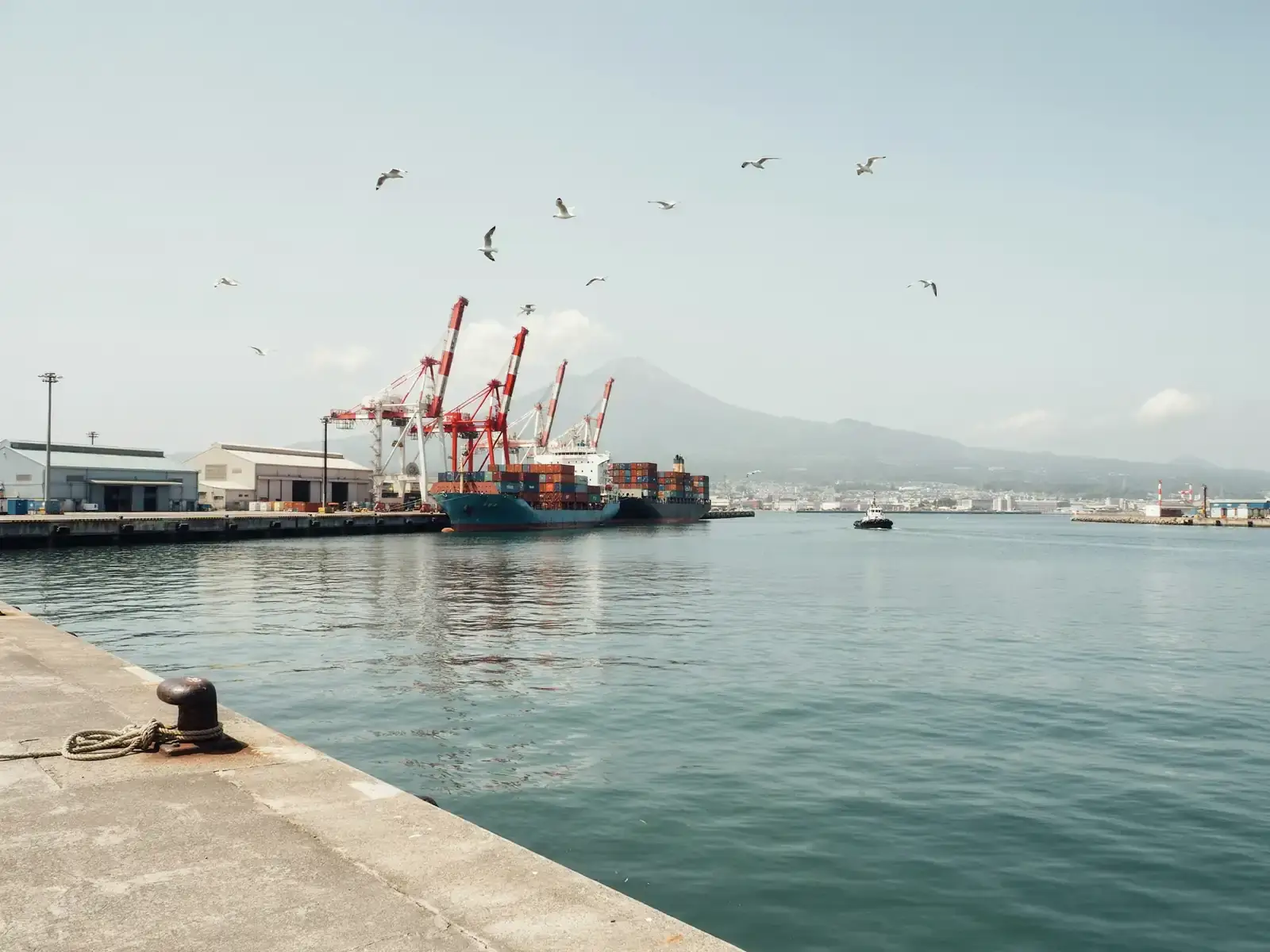
Kagoshima’s cruise ships dock at Marine Port Kagoshima, a modern, no-frills terminal on Kinko Bay, sitting roughly halfway between Kagoshima City and Mt. Sakurajima. Most big ships tie up alongside rather than anchor off and tender in, and from the pier you can reach Tenmonkan, the Sakurajima ferry, or the hop-on hop-off City View Bus inside about half an hour.
This guide covers what matters on a short day ashore: how the Kagoshima cruise port shuttle bus works, the quickest way from the pier into town, and how to link up with the Sakurajima ferry across the bay to the volcano itself.
Kagoshima Cruise Terminal Quick Facts
If you’re trying to pin down the Kagoshima port terminal before you go, here’s everything in one place.
| Detail | What to expect |
|---|---|
| Terminal name | Marine Port Kagoshima |
| Location | On Kinko Bay, between Kagoshima City and Mt. Sakurajima |
| Docking | Alongside for most ships; tendering is rare |
| Distance to Tenmonkan | Reported as roughly 5 to 8 kilometres, depending on the source |
| Nearest tram stop | Wakida, with walking time estimates ranging from about 10 to 30 minutes |
| Terminal amenities | Limited; most passengers head straight into the city |
| Alternative berth | Kagoshima Main Port North Pier Terminal (Kagoshima Honko Kitafuto), used by some smaller ships |
Kagoshima Port, Marine Port Kagoshima and Dolphin Port: What’s the Difference
The names get thrown around loosely, so it’s worth untangling them. Marine Port Kagoshima is the big-ship cruise terminal on Kinko Bay, sitting apart from the city rather than inside it.
Smaller ships sometimes call instead at the Kagoshima Main Port North Pier Terminal, known locally as Kagoshima Honko Kitafuto, a separate berth from Marine Port. Between them, these two piers handle the large majority of cruise activity at Kagoshima Port, with Marine Port and Kitafuto together accounting for around 70% of all calls to the prefecture’s cruise piers, according to Minami Nippon Shimbun.
Dolphin Port is a different animal entirely. It’s a waterfront leisure and shopping spot in central Kagoshima that some shuttle services use as a drop-off point, but it isn’t the cruise terminal, and there isn’t much documented about it as a passenger facility beyond that.
Which Berth Will Your Ship Use?
There’s no single published list matching cruise lines to Marine Port or the North Pier, so don’t take someone else’s review as gospel. Check your cruise line’s port information, or ask at guest services once you’re aboard. It changes the walking distances and shuttle options you’ll have that day, so it’s worth two minutes of your time.
Kagoshima Cruise Port to Town: Shuttle Bus, Taxi or Tram
Estimates of the distance from Marine Port Kagoshima to the main Tenmonkan shopping district swing between about 5 and 8 kilometres, depending who you ask. Either way, it’s too far to fancy with luggage or in the heat, so most people take the shuttle bus, a taxi, or the tram.
Cruise lines and the local port authority often run a free shuttle into the city, usually every 15 to 30 minutes, with the ride taking around 25 to 30 minutes depending on traffic. Drop-off points are usually near Tenmonkan and the waterfront, though don’t count on the stop announcements being in English.
Taxis wait at the terminal too, worth considering if the shuttle queue’s gone round the block or you’d rather go straight to one spot.
The tram is the cheapest way in once you reach it, but getting to the nearest stop, Wakida, is where the stories stop agreeing. One source describes a flat, well-signed 20 to 30 minute walk of around 1.5 kilometres, while others reckon 10 minutes will do it. Treat the shorter figure with suspicion unless you’re built for speed walking. If you’re covering much ground in Kagoshima’s heat and humidity, comfortable footwear matters more here than it might elsewhere, and a few blister prevention strips tucked into a day bag are cheap insurance.
The One Thing That Catches People Out: Missing the Last Shuttle
When a big ship empties out, shuttle buses fill fast, and the queue back can stretch long in the late afternoon. The real risk isn’t the ride in, it’s missing the last shuttle before all-aboard.
The fix is simple. As soon as you board the outbound shuttle, ask the driver or check the port handout for the final return time, and note it before you disappear into Tenmonkan. Miss it, and a taxi back to Marine Port is your fallback, so keep a little spare cash or a card handy for exactly that scenario.
Kagoshima Cruise Port to Sakurajima Ferry
The Sakurajima Ferry is a public service run by Kagoshima City, crossing Kinko Bay between Kagoshima Port and Sakurajima Port. It runs 24 hours a day, with departures roughly every 15 minutes through the day and hourly overnight, though some sources put daytime departures closer to every 10 minutes. Either way, you’ll get a boat within a few minutes rather than standing about.
The crossing itself takes about 15 minutes and gives you a proper look at Mt. Sakurajima, the 1,117 metre volcano that dominates the bay and gives Kagoshima its skyline.
From Marine Port Kagoshima, the ferry terminal isn’t on your doorstep. Some passengers take a metered taxi straight there, others walk in via Tenmonkan, from where the ferry terminal is a further 15 to 20 minute walk. Either way, budget the fare as a small unavoidable extra rather than chasing an exact figure, since accounts don’t agree on one.
A useful shortcut is the Welcome Cute pass, a one-day unlimited ticket covering the ferry, city buses and trams, available from the service counter on the second floor of Kagoshima Port between 7.30am and 7pm.
Getting Around Kagoshima: Trams and the City View Bus
Kagoshima’s tram lines link the city centre attractions and both ferry-adjacent stations, and they’re easy enough to work out without a word of Japanese. The Kagoshima City View Bus is the tourist-friendly option, a hop-on hop-off loop calling at most of the big sights, including Sengan-en Garden and the Shiroyama Park Observatory.
One older traveller account mentioned the route had been trimmed to a single loop, having once run two, so take any old brochure or blog post showing two coloured routes with a large pinch of salt. Confirm the current City View Bus map at the port information point or a tourist counter on the day, rather than planning around something you read months ago.
A one-day pass covers unlimited rides on the trams, city buses and City View Bus, and the same Welcome Cute pass mentioned above works across all three plus the ferry, which makes life considerably easier if you’re covering a lot of ground in one afternoon.
Things to Do Near Kagoshima Cruise Port
With a few hours ashore, here’s what’s realistic without trying to do it all.
- Nagisa Park, a coastal park scattered with volcanic stones, is a short walk from the cruise terminal, handy if your time really is that tight.
- Tenmonkan, Kagoshima’s largest shopping arcade, is a covered pedestrian network running from the department store Yamakataya through countless smaller boutiques, souvenir shops and restaurants.
- Mt. Sakurajima itself, just across the bay, is the city’s defining sight and reachable via the ferry described above.
- Yunohira Lookout, on Sakurajima, gives sweeping views back over Kagoshima harbour and the volcano, reachable by a two hour hike or a 15 minute drive from the harbour.
- Look out for Kagoshima Kurobuta, the local Berkshire pork, on menus around Tenmonkan, and Satsuma pottery, sold in both a pale, historically upper-class style and a darker everyday style, as a souvenir with more than 380 years of history behind it.
- Near the Sakurajima ferry terminal, the roadside station store sells local specialities like Sakurajima radish, small mandarin oranges and Yogan-yaki pottery, with a small restaurant if you need a break.
Heading up to Yunohira Lookout? Take a collapsible water bottle, since chances to top up along the trail are thin on the ground.
Kagoshima often shares an itinerary with other Kyushu and Honshu calls, so if you’re mapping out the wider trip, our guide to Japan’s cruise ports is a good place to start, alongside our separate guides to the Fukuoka Hakata cruise port guide and the Shimizu cruise port guide for Mount Fuji.
Common Questions
Where do cruise ships dock in Kagoshima?
Most big ships dock at Marine Port Kagoshima on Kinko Bay. Some smaller ships use a separate berth, the Kagoshima Main Port North Pier Terminal, also known as Kagoshima Honko Kitafuto.
How do I get from the cruise port into central Kagoshima?
A shuttle bus, a taxi, or a walk to the Wakida tram stop, take your pick. The shuttle is usually simplest, running every 15 to 30 minutes into Tenmonkan and the waterfront.
Do I need to book the Sakurajima ferry in advance?
No. It’s a public, walk-up ferry running 24 hours a day, departing roughly every 15 minutes through the day and hourly overnight.
What happens if I miss the last shuttle bus back to the ship?
Take a taxi back to Marine Port Kagoshima. Confirm the shuttle’s final return time when you board, either from the driver or the port handout, so you’re not caught out later.
Is Marine Port Kagoshima the same as Dolphin Port?
No. Marine Port Kagoshima is the cruise terminal itself, while Dolphin Port is a separate waterfront leisure and shopping spot in the city that some shuttles use as a drop-off point.
Can one ticket cover the tram, bus and ferry?
Yes. The Welcome Cute pass is a one-day unlimited ticket valid on the tram, city buses, the City View Bus and the Sakurajima ferry, sold at the Kagoshima Port service counter.
How busy does the port get with multiple ships in at once?
Busier every year, by the look of it: cruise calls to Kagoshima Prefecture hit a record in the most recent year on record, up 21% year-on-year according to Nikkei, so shuttle queues and taxi ranks can build fast on peak days.
Is there anything to do without leaving the immediate port area?
Nagisa Park, a small coastal park scattered with volcanic stones, is a short walk from the terminal, enough for a quick stretch of the legs if time’s tight.
Why Trust About2Cruise
This guide draws on official Japanese port authority and tourism board information, cruise line port profiles and first-hand traveller reports shared on forums, checked against each other rather than leaning on a single source. Where sources disagreed, on walking distances or bus routes for instance, we’ve said so rather than inventing a tidy answer. You can read more about how we research and fact-check our guides on our about us page.
Last Updated: 19 October 2026